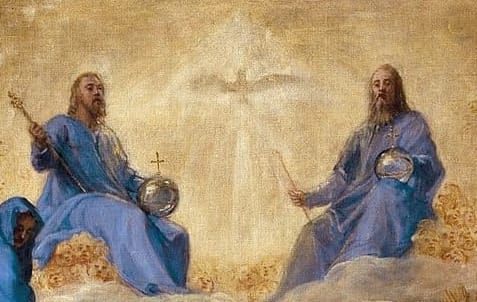
Pentecost commemorates the Holy Spirit’s descent upon the twelve apostles. He came down upon them in the rush of mighty wind that resounds from heaven and in tongues of fire (Acts 2:1-3). This is the last visible sending of a divine person. With it, finally the three divine persons have been fully revealed. So, the Sunday following Pentecost, the Church celebrates the mystery of the Holy Trinity.
None of the interviews and articles published since Trinity Sunday last year has been dedicated expressly to this truth of the faith. Occasionally, however, one of the recommended books has focussed on some aspect of “the central mystery of Christian faith and life.” (Catechism of the Catholic Church 234). To celebrate Trinity Sunday, this edition of Five Books for Catholics picks out five such items. You can also check out last year's retrospect for Trinity Sunday.
- On the Holy Spirit
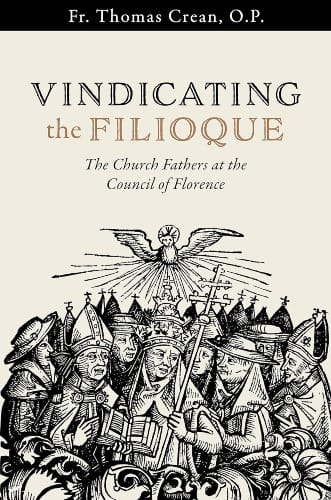
by St. Basil the Great - Vindicating the Filioque: The Church Fathers at the Council of Florence
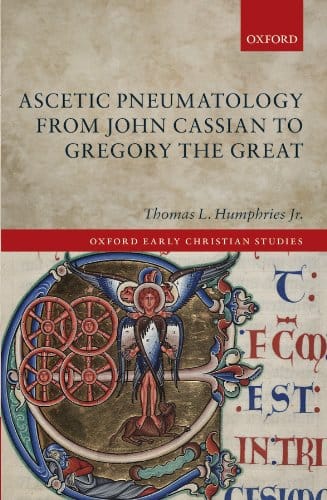
by Fr. Thomas Crean OP - Ascetic Pneumatology from John Cassian to Gregory the Great
by Thomas L. Humphries Jr. - On The Trinity (De Trinitate), Book 11
by St. Augustine - The Masses
by Anton Bruckner, Bavarian Radio Symphony Orchestra, directed by Eugen Jochum
By chance, several of the books surveyed since last Trinity Sunday have coalesced around the third divine person and the ecumenical councils that defined the Church’s faith in the Holy Spirit.
The first two ecumenical councils—Nicaea I (325) and Constantinople I (381)—had to defend the truth of the Trinity against the various strands of Arianism, according to which only the invisible Father was truly God and uncreated. Nicaea I condemned the Arian doctrine that the Word, though the first mediator between God and the rest of creation, was merely the first and most godlike creature. Constantinople I condemned the ensuing Arian thesis: that the Holy Spirit is the next down the chain and the second most godlike creature.
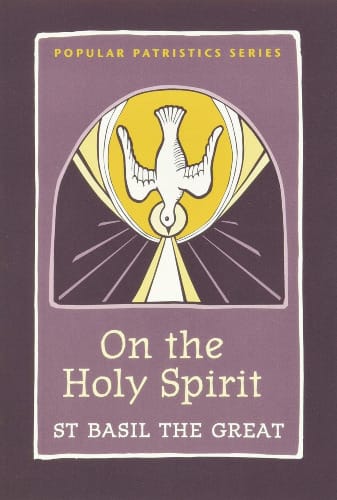
Prior to Constantinople I, several Church Fathers had written rigorous rebuttals of the Arian reduction of the Holy Spirit to a creature. One of the most notable was St. Athanasius the Great’s Letters to Serapion. Another was St. Basil the Great’s On the Holy Spirit, which Stephen M. Hildebrand singled out in his survey of the Cappadocian father’s writings.
1.
Prof. Hildebrand explained why we need to read such works of the Church Fathers.
While Constantinople I revised the Nicene Creed to assert unequivocally the divinity of the Holy Spirit, “the Creed does not give an argument. St. Basil’s On the Holy Spirit does and engages the opponents of Nicaea. In the process, all kinds of wonderful things come up: the way that the Scriptures speak of both the Father and the Holy Spirit, along with questions about Tradition and doctrinal development…"
"On the Holy Spirit, therefore, is a window into a whole range of theological arguments and issues, even though it addresses a question that has since been settled."
"This is true of many theological questions. The Lord has left so much undone and so much for the Church to figure out. This attests to the dignity with which he has created us and the way he has saved us. We participate in the ever deeper unfolding of the truth revealed in Christ. There is a wonderful dignity to this. However, once progress has been made, we do not leave it behind."
"It is good for us to kind of relive these developments with the Fathers of the Church and participate in them. It is beneficial for our own souls and minds. Contrast that with technological developments. Nobody goes back to use the technology of first-generation smartphones. There is no point in that. It does not help us. Similarly, a farmer with a tractor will not bother to learn how to use a horse-drawn plough. With the faith, it is different. There is a tremendous benefit in going back and getting inside the mind of St. Basil, St. Athanasius, and their opponents. We relive and retrace their steps in this development of doctrine. This is very fulfilling spiritually and intellectually. The Lord has made us for this sort of thing.”
God the Father unbegotten,
only-begotten Son,
and Holy Spirit, the Comforter;
holy and undivided Trinity,
with all our heart and voice
we acknowledge Thee,
we praise Thee, and we bless Thee:
Glory to Thee forever.
***
Te Deum Patrem ingenitum,
te Filium unigenitum,
te Spiritum Sanctum Paraclitum,
sanctam et individuam Trinitatem,
toto corde et ore
confitemur, laudamus, atque benedicimus:
Tibi gloria in saecula.
2.
The divinity of the Holy Spirit was defined dogmatically not long after Basil died in the First Council of Constantinople (381). Constantinople I revised the Nicene Creed. Above all, it expanded on the article on the Holy Spirit. The council fathers did not state that the Holy Spirit is consubstantial (homoousios) with the Father and the Son. They avoided that vexatious and widely misunderstood adjective. Rather, like Basil, they opted for biblical expressions and descriptions of the Christian tradition of worship. They professed that the Holy Spirit is “the Lord, the giver of life," who “with the Father and the Son, is adored and glorified.” They thereby professed that he is God, just as much as the Father and the Son are, and equal to them in every way. They also professed that the Holy Spirit proceeds from the Father.
However, the Western Church subsequently inserted "and from the Son" (Filioque) into this last article of the Nicene-Constantinopolitan Creed. This became, particularly with Photios, a source of disagreement between the Catholic and Orthodox Churches.
Later ecumenical councils, Lyon II (1274) and Florence (1439), addressed this issue and successfully if only briefly restored communion between Rome and Constantinople.
The Council of Florence was the subject of one this last year’s interviews. In it, Fr. Thomas Crean OP explained how Florence brought about an agreement between East and West on the Filioque.
“They (the council fathers) agreed that the Father and the Son are one principle of the eternal procession of the Holy Spirit. They agreed that the Son has it from the Father, because he has all that he is from the Father, to be the with the Father the one principle of the eternal procession."
"They also agreed that this truth could be expressed suitably by saying either that the Holy Spirit proceeds from the Father and the Son or that he proceeds from the Father through the Son. These two formulations are complementary. Each brings out a slightly different aspect of the same truth."
"By saying that the Holy Spirit proceeds from the Father and from the Son, we bring out that the Father and the Son are a single principle of his procession. It is not as if the Father contributes part of the Holy Spirit, and the Son contributes another. That would obviously be nonsense."
"By saying the Holy Spirit proceeds from the Father through the Son, we bring out a different aspect: that the Son, who proceeds from the Father, has it from the Father to be the single principle, with the Father, of the procession of the Holy Spirit. The Son has this from the Father, but the Father does not have it from the Son. We profess that the Holy Spirit proceeds from the Father through the Son, but not from the Son through the Father."
"The council fathers agreed that both these formulations were correct. They argreed on the dogma behind these formulations and that this dogma was the teaching of the Fathers of the Church."
"This was all expressed with great clarity in the final decree."
"Today, there people who claim that the council fathers did not understand each other and may have meant different things. Such a view is untenable. The discussions and the final decree, a marvellous crystalline piece of writing, do not bear it out.”
To clear up such interpretations of the council and address calls to abandon the Filioque, Fr. Crean wrote his Vindicating the Filioque: The Church Fathers at the Council of Florence.
“I had been studying the Council of Florence and was struck by the prevailing myths that float around in the ecclesial consciousness."
"One myth is that there was not any free discussion and that the Greeks were pressured."
"Another is that the Latins relied on false patristic citations, were only interested in scholastic philosophy, and made statements that the Greeks did not understand. As a result, there was no real meeting of minds and the union achieved was not genuine."
"When I read the Acts of the Council, it was evident that this was not true at all. I thought, therefore, that it would be interesting to write something to show this."
"I was also struck by the modern attempts to challenge the Catholic dogma of the Filioque."
"It has become fashionable to claim that the Catholic position, rightly understood, is no different from that of Photius of Constantinople, which became the official position of the Orthodox Church: that the Holy Spirit proceeds from the Father alone. In my view, that is not the case, and it is important to be clear about that. As part of this misguided attempt to reinterpret the Catholic position, a certain amount of work has been done on the Fathers of the Church. This work makes unclear what is actually clear. It casts doubt on whether this or that Father of the Church—St. Ambrose, St. Hilary, or St. Gregory the Great—would have accepted the doctrine of the Filioque, as defined by Florence. They would have and I considered that it was important to explain why. All these ideas came together in this book, which has three parts."
"In the first part, I look at the Fathers of the Church who talk about the subject, especially those who were important to Florence."
"Secondly, I look at what an ecumenical council is. One of the complaints that's made about Florence is that it is not a true council because it does not fulfil the criteria for one. Hence, I consider what those criteria are and argue that Florence fulfils them all impressively."
"The third part looks at the proceedings of the Council of Florence and tries to dispel some of the myths about it."
"The three parts come together to showing how the Council of Florence accomplished a great work. It vindicated the doctrine of the Filioque and its work withstands the modern criticisms.”
Fr. Crean also contested the view that the Filioque is suspect because the Greek Church Fathers never endorse it.
“In my view, they certainly do. However, this is not a question that you can answer by pointing to one sentence. Nor can you do so with the Latin Fathers. You need to look at the Fathers in detail, read their words in context, and compare one passage to another. This is what I do at some length in the first third of my book."
"Some Fathers are clearer than others. Among the clearest is St. Gregory of Nyssa. He draws a famous comparison between the Blessed Trinity and three torches, where the first torch lights the second and the second the third. St. Cyril of Alexandria is also very clear. Others less so. There is a lot of room for discussion about St. Basil and St. Gregory Nazianzen. I argued that the only way you can make sense of what they say is to understand them as teaching the same doctrine as Florence. In that case, they would have accepted the definition of Florence. However, they were not addressing the question of the Filioque. Rather, they were asserting the full divinity of the Son and the Holy Spirit. That is why you cannot just go to them for a proof text on the Filioque. There are proof texts, but they cannot be pulled out as if there is no room for discussion. They need to be studied and interpreted carefully. That takes a long time.”
3.
By condemning the erroneous view that the Son and the Spirit were the creatures most like God rather than truly God, the Councils of Nicaea and Constantinople clarified the Trinitarian faith of the Church. They were not merely articulating abstruse theological doctrines but describing the faith by which we enter into communion with the Trinity. They had an enormous bearing therefore on the development of Christian spirituality. As Thomas Humphries explained in the interview on St. John Cassian, ascetic pneumatology was one of the developments they prompted.
“I invented the phrase for my dissertation. Pneumatology belongs to Trinitarian theology and has been widely studied. It considers the Holy Spirit and his relation to the Father and the Son."
"By the fourth century, the Councils of Nicaea and Constantinople had determined that the Holy Spirit was in no way less than the Father or the Son."
"But what about the fifth century theologians? Did they simply restate more adamantly or in new ways what the fourth-century theologians had said? They did not. Rather, they applied Nicene pneumatology by pondering what it meant for Christian life. They argued that Christian asceticism consists in training of our body and our soul to be perfectly permeable to the Holy Spirit."
"This is an ascetic pneumatology. It was developed in the fifth century by authors such as Cassian, who were interested in what the full divinity of the Holy Spirit means for my life and my ascetic discipline. However, Cassian’s pneumatology went unnoticed. No one had stopped to inquire into what he said about the Holy Spirit in the life of the monk."
"He argues that the Spirit is the monk’s partner and co-worker. He uses the Latin term index. We still use this word. We speak of our index finger. For Cassian, therefore, the Holy Spirit is the divine person who always points to the deeper truth of God's existence and how we should live in conformity with him. The Holy Spirit provides the grace—what Cassian calls the protection and the motivation—to follow that path rather than others."
"With this picture in hand, it becomes easier for the historical theologian to consider whether other writers of the period were addressing the same questions and developing an ascetic pneumatology. I argue that there were several who did so. They were interested not only in the doctrinal controversies of the Councils of Nicaea and Connstantinople, but also in those about grace, free will, and full commitment to the ascetic life.”
Those interested in what the Church Fathers have to teach on this aspect of our life in the Trinity can read Thomas Humphries’ Ascetic Pneumatology from John Cassian to Gregory the Great.
“The mystery of the Most Holy Trinity is the central mystery of Christian faith and life. It is the mystery of God in himself. It is therefore the source of all the other mysteries of faith, the light that enlightens them. It is the most fundamental and essential teaching in the ‘hierarchy of the truths of faith’. The whole history of salvation is identical with the history of the way and the means by which the one true God, Father, Son and Holy Spirit, reveals himself to men ‘and reconciles and unites with himself those who turn away from sin.’ ” Catechism of the Catholic Church 234.
4.
A more curious callout to the Trinity occurred in Gregory Reichberg’s shortlist of the best readings on attention, the gateway to the soul. Some of the books he selected were on psychology, modern mass media, marketing, and the attention economy. Others, were theological, including the somewhat surprising choice of St. Augustine’s massive On the Trinity.
Specifically, Reichberg proposed Book XI of On the Trinity. There Augustine sees in attention a creaturely trace (vestigium) of the Trinity. In the process, he explains the nature of attention.
Underlying St. Augustine’s comparison between attention and the Trinity is the doctrine that human thought resembles the generation of the Word; and the human will, the Holy Spirit. Scripture itself suggests these analogies. The Gospel of John opens by describing the only-begotten Son of the Father as the Word. St. Paul, on the other hand, describes how “God’s love has been poured into our hearts by the Holy Spirit who has been given to us” (Romans 5:5). The apostle appropriates love, the fundamental act of the will, to the Holy Spirit.
How then does this help us understand the dynamics of attention?
As Gregory Reichberg explained, “Book XI is part of Augustine's wider discussion within On the Trinity of psychological analogies of the Trinity.”
“It is only through divine Revelation that we know that God is triune. However, to understand what it means for God to be triune, we need to look for aspects of our experience that are analogous to God’s threefoldness. In De Trinitat/e, Augustine spends a lot of time looking at such possible analogies.”
“In Book XI, he discusses the outer man. The idea is to show how there is a trace of the Trinity in the functions of the soul that are common to both humans and other animals: sensation, imagination, and memory. Here, Augustine is not discerning an image of the Trinity in the human being but vestiges of it that are common to humans and other animals. Later, he looks at analogates of the Trinity that can be found in the inner man.”
“Augustine tracks a double trinity in the outer man. There is the first trinity: a sensible body; a sensory power trained on a sensible body; the act of will that unites the two.”
"Take, the fragrant smell of a turkey roasting in an oven. The turkey is a sensible body. Smell is the sensory power trained on that body. As it smells really good, there is a third aspect—the act of wanting to smell it—that joins the two together. However, by finding the scent of the roast turkey attractive, my emotional, appetitive life is awakened. I can’t wait to eat it. I focus on it. I might start to think back to when my mother prepared turkey during my childhood and how good it was."
"Augustine argues that the sensible body corresponds to the Father. The sensory cognition begins with the thing itself, which informs the senses. Then there is the sensory perception itself. It corresponds to the Son. The desire to focus on that object and experience it sensorily corresponds to the Holy Spirit. The Holy Spirit is the binding power that joins together the Father and Son."
"That is the first vestige of the Trinity. The second that Augustine highlights in Book XI is: the image preserved in one's memory; the act of focusing on that image; the act of will that joins the two together. For example, I may have in my mind an image of the roasting in the oven, back when I was a kid. I can voluntarily direct my mind to that image and attend to it."
"To reflect on an image or past-experience, three things need to be present. I need to have that image. However, I must also want to recall the image. It is only then that I have the actual cognition that flows from it. The coupling act provides a vestige of the Holy Spirit. At this level, attention emerges. Again, your attention is focused on an object because it is moved by appetite. If you did not have that appetite, your mind would not be engaged."
"This is the trajectory that Augustine follows in Book XI. Successively, he fills it out.”
5.
As Augustine illustrates, we need to reflect more deeply on ourselves to discovery analogates by which to understand the Trinity, but also that we truly understand ourselves by meditating on the mystery of the three divine persons.
However, there are various ways of meditating on the mystery of the Trinity. The preceding books do so through the medium of discursive thought and as exercises of teaching. Moreover, they aim to lead us into the most elevated form of such meditation: worthy participation in the liturgy. For its part, the liturgy marshals not just language but also the visual arts and music. It does so to engage our whole person in contemplation and worship of the Triune God. For that to happen, the works of sacred art and music must not only be technically accomplished but also lead us into contemplation of the mysteries they represent.
In this regard, Anton Bruckner’s musical settings of the Common of the Mass are majestic mediations on the mystery of the Trinity. The Kyrie, the Gloria, the Credo, the Sanctus, and even the Agnus Dei are all prayers to the Trinity in one way or another. Each invokes the Trinity, if only implicitly, through its tripartite structure.
Last year Five Books for Catholics commemorated the bicentenary of the birth of Anton Bruckner (1824-1895) with two articles: one on his symphonies and the other on his sacred music.
The great Austrian composer deserved a call out because his deep Catholic faith permeates all his music.
Wilhelm Furtwängler, one of the most influential twentieth-century conductors, deemed that, “Bruckner is one of the few geniuses in the whole history of music whose appointed task was to express the transcendental in human terms, to weave the power of God into the fabric of human life. Be it in struggles against the forces of the underworld, or in music of blissful transfiguration, his whole mind and spirit were infused with thoughts of the divine, of God above and God on earth. He was, in fact, not a musician but a mystic, in the line of men like Meister Eckart and Jakob Böhme.”
Furtwängler was referring to Bruckner’s music in general: to his symphonies just as much as his Masses and sacred motets.
Eugen Jochum, another German conductor, was of the same opinion. He stated that, “As the background to all his music, lie a piety and a mystical personal relationship to God known otherwise in European music only to Bach.”
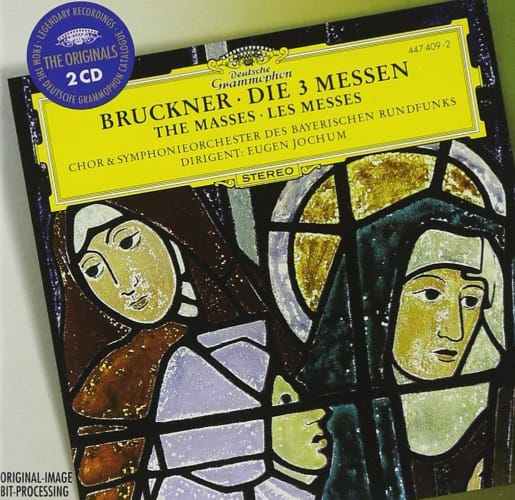
Jochum was one of the leading Bruckner conductors and his recording of Bruckner’s three great Masses with the Bavarian Radio Symphony Orchestra and Choir remains a classic.
Bruckner’s Masses No. 1-3 are not the first ones that he composed. He had composed three in the early 1840s (WAB 25, 146, and 9) when assistant schoolteacher at Windhaag and Kronstorf. However, it was in his three great Masses—composed at Linz between 1864-1868 and subsequently revised between 1876-1882—that he found his distinctive voice and deployed the characteristic compositional techniques that were later used in his great symphonies. Just as his symphonies have sometimes been called Masses without text, so too have his Masses been described occasionally as vocal symphonies.
Nevertheless, Bruckner’s Masses are deeply rooted in the earlier tradition of Catholic liturgical music. Mass No. 2 in E Minor (1866), for example, imitates various stylistic traits of Palestrina and even cites a theme from Palestrina’s Missa brevis in the Sanctus. Paradoxically, the most symphonic of the trio, Mass no. 3 in F minor, is the one that is most deeply rooted in the Church’s traditional liturgical music.
Hans Ferdinand Redlich pointed out that “The thematic material of the Mass in F is fertilized by plainsong to an even greater extent than that of the two preceding Masses; it is also closely organized by virtue of a common root-motive of unmistakably liturgical flavour: a falling or ascending fourth that determines the thematic subject matter in all parts of the work, thereby assuring its symphonic coherence.”
Equally appropriate for Trinity Sunday is Bruckner’s magnificent setting of the Te Deum for SATB soloists, choir, orchestra, and organ (1881-1884). the work of which Bruckner was proudest: ostensibly, because it was the one that gave greatest glory to God—was his It was also widely acclaimed and performed from the outset. Once again, Jochum’s recording of the Te Deum is one of the finest.
Hopefully, one, the other, or all these resources can help you deepen your relation with the Triune God, whom we celebrate today in a special way.