
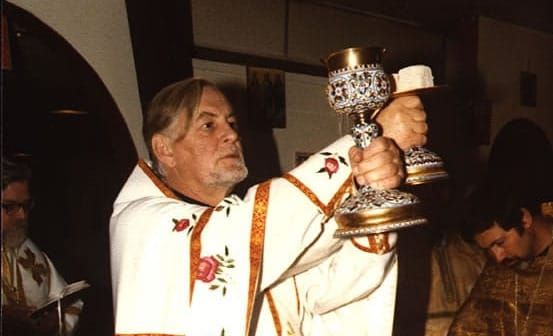
Alexander Schmemann (1921-1983) was a protopresbyter and leading theologian of the Russian Orthodox Church.
He was born in Tallinn, Estonia, to émigrés from St. Petersburg who had fled Russian after the October Revolution. When still a child, his family moved to Paris, where he was educated. During his preparation for the priesthood at the St. Sergius Institute, he studied under Sergei Buglakov. He was also influenced by Catholic theologians such as Jean Daniélou and Louis Bouyer.
He was ordained a priest in 1946. Five years later he moved with his family to the United States to teach, at the invitation of Georges Florovsky, Church history and liturgical theology at St. Vladimir’s Orthodox Theological Seminary. He was an observer at the Second Vatican Council and for thirty years his homilies were transmitted by Radio Liberty to the Soviet Union, where they won the admiration of Aleksandr Solzhenitysn. He was also active in establishing the Orthodox Church in America, which was granted autocephaly by the Patriarch of Moscow in 1970. An influential proponent of liturgical theology, his writings continue to be widely read and admired.
In this interview, AndrewT.J. Kaethler offers an introduction to Schmemann and his work.
Andrew T.J. Kaethler is Academic Dean and Associate Professor of Theology at Catholic Pacific College. He is co-editor of Between Being and Time: From Ontology to Eschatology (Fortress Academic) and the author of The Eschatological Person: Alexander Schmemann and Joseph Ratzinger in Dialogue (Cascade Books).
- For the Life of the World: Sacraments and Orthodoxy
by Fr. Alexander Schmemann - O Death, Where Is Thy Sting?
by Fr. Alexander Schmemann - Great Lent: Journey to Pascha
by Fr. Alexander Schmemann - The Journals of Father Alexander Schmemann, 1973-1983
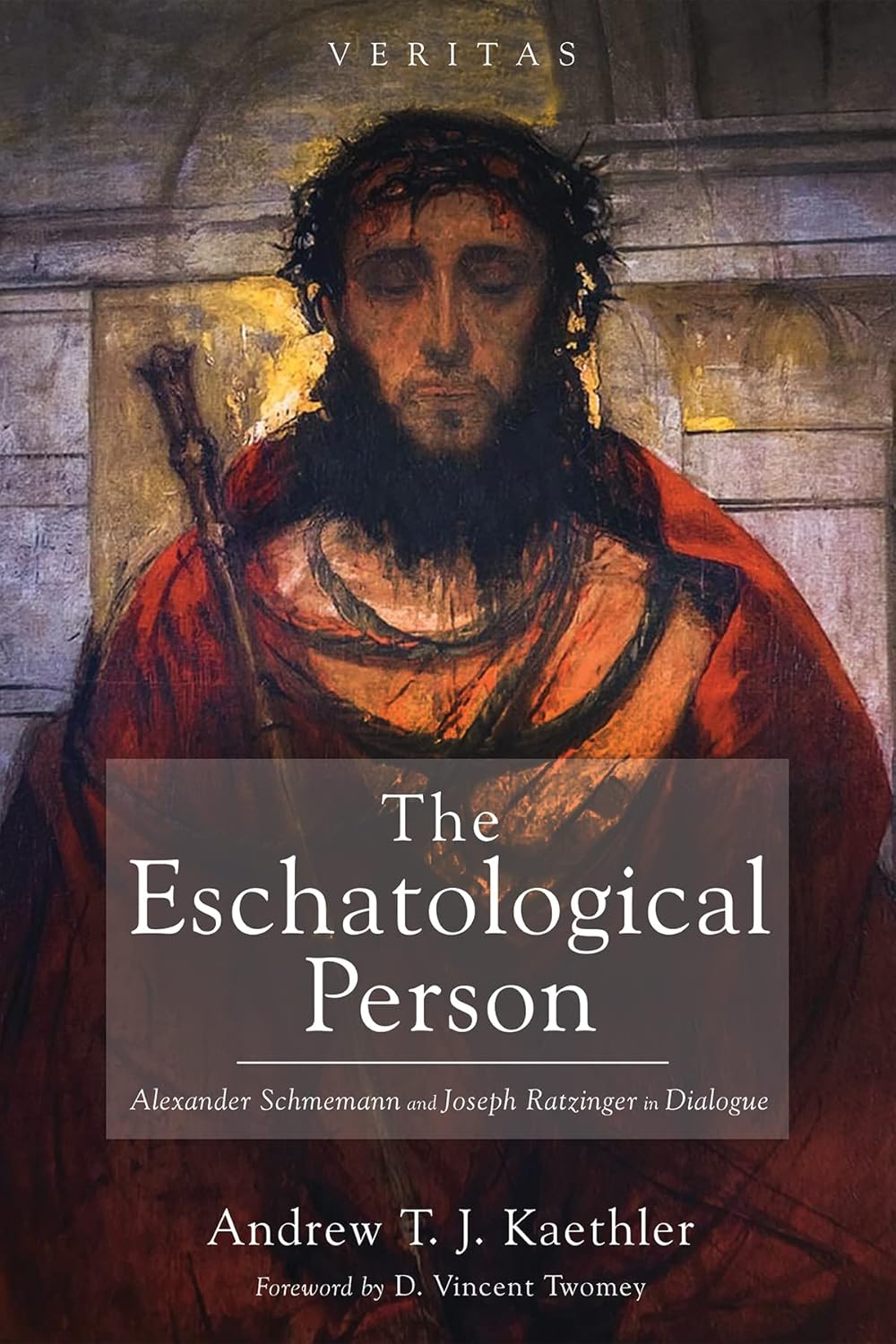
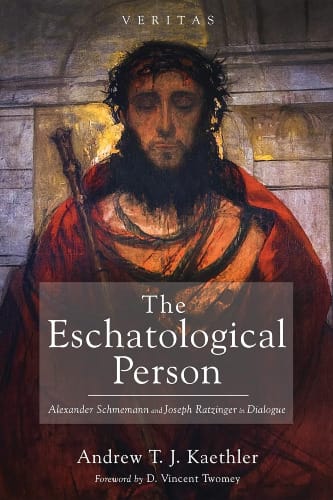
by Fr. Alexander Schmemann - The Eschatological Person: Alexander Schmemann and Joseph Ratzinger in Dialogue
by Andrew T.J. Kaethler
Who was Alexander Schmemann?
Alexander Schmemann was a twentieth-century thinker and Russian immigrate. His family moved to Paris, where he grew up in an Orthodox home and became an Orthodox priest and scholar. At a fairly young age, he moved with his family to the States, to teach at St. Vladimir's in New York. He spent the rest of his life teaching there and was the Dean for most of that time.
You have written on Schmemann. What drew you to study him?
It is a funny story. One day I sat down for lunch with my friend, the theologian Hans Boersma, and asked him for five books every theologian must read. Besides Henri de Lubac's Catholicism and Augustine's Confessions, one of the books he mentioned was Alexander Schmemann's For the Life of the World. So, I went to the bookstore and pulled all those books off the shelf.
At the time, I was a new teacher, working at a university in Lithuania, and did not have much time on my hands. All the books seemed too long except for For the Life of the World. So, I bought it and began reading it. I was sitting in a car when I finished it. My wife came back into the car from shopping and I told her, “If I ever do a PhD, I'm going to do it on Alexander Schmemann.” That is exactly what happened.
I spent four years at St. Andrew’s, looking at Schmemann alongside Joseph Ratzinger.
"For Schmemann, there is no theology outside of the liturgy."
Schmemann was an important proponent of liturgical theology and has influenced Catholics, such as Aidan Kavanaugh OSB and David Fagerberg, who have written extensively on the same theme. For Schmemann the liturgy is not just one of the many sources of theological reflection. It is not just another locus theologicus. What exactly does he mean by liturgical theology?
David Fagerberg puts it very well: the liturgy is prima theologia. It is the heart of theology. All theology comes out of the liturgy. The Latin phrase—lex orandi, lex credendi—provides a simple way of thinking about this.
For Schmemann, there is no theology outside of the liturgy. It is fairly easy to substantiate this thesis. The early Church baptized in the name of the Father, the Son, and the Holy Spirit, without a developed Trinitarian theology. The theology came later. Everything began with worship.
You see this in the way that Schmemann talks and writes. Everything leads back to worship. Hans Urs von Balthasar said something similar: theology begins on one’s knees. True, but the person praying on his knees does not do so out of some individualistic pietism but within the life of the church. Everything is received from the Church, then contemplated.
Systematic theology, therefore, is secondary theology. It comes out of our experience of worship.
Arguably Schmemann’s most important academic work is his doctoral dissertation, Introduction to Liturgical Theology. It has not made your shortlist. Is this because it is too technical and academic?
Yes, Introduction to Liturgical Theology and his book, The Eucharist: Sacrament of the Kingdom, are quite technical. Moreover, he swirls around a lot in the latter as he attempts to get to the heart of what the Eucharist is. Most of the former book, which is more historical in character, comes out in his other books in a more digestible manner.
"We need to understand that we exist in a sacramental world."
Schmemann appreciated and acknowledged the contribution of various Catholic theologians to a renewed sense of the primacy of the liturgy. Nevertheless, as a member of the Russian Orthodox Church, he does not accept that the Bishop of Rome is “the perpetual and visible principle and foundation of the unity both of the bishops and of the multitude of the faithful” (Lumen gentium, 23). Moreover, he makes the common Orthodox criticism that the Western Church has gone astray by embracing rationalism. Most of what Schmeman writes is valid and illuminating for Catholics. What should Catholics not take away from his works?
That is a big question. Schmemann is very critical of the West and often claims that Orthodoxy has been held captive by Western thought. However, he caricatures Western thought. Unfortunately, except for his PhD dissertation, in his works he either does not acknowledge his engagement with Catholic thinkers—such as Jean Daniélou, Henri de Lubac, and above all Louis Bouyer—or only does so minimally. He never brings them up in his other books. Hence, it sounds as if he has discovered these great flaws within Western thought. However, ressourcement theologians had made the same critiques. They had called for a return to a liturgical mode of thought and the Eastern fathers. They had moved away from the manualist tradition. Consequently, one should be a little wary of Schmemann's critique of the West and realize that it is inspired by Western thinkers or at least that Western thinkers were aware of these issues.
 Five Books for Catholics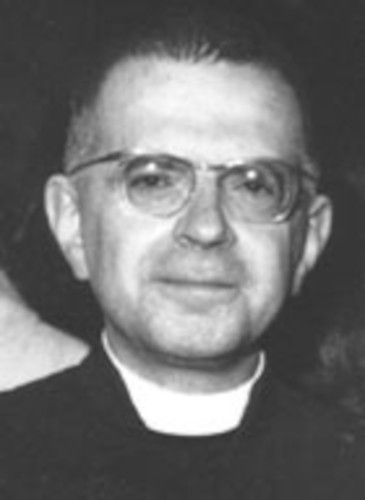
Moreover, he misreads Western theologians such as St. Thomas Aquinas. He repeatedly claims that Western theology has been prisoner to a juridical mentality and rationalism. As a liturgical theologian, he is very wary of rationalism and believes that we need to encounter the joy of Christ in the present. We are not Gnostics. Hence, he detects within Catholic theology a tendency to rationalize and get stuck in the head: to be too juridical and think in terms of obligation and rules. Instead, he wishes to draw his readers back to the spirit of the liturgy to use Guardini's title. Schmemann is important for us Catholics because he highlights pitfalls to which we can succumb, even though, in my opinion, he learnt about them from various Western thinkers.
For example, he is quite concerned about transubstantiation and the Western Church’s definition of it, as if, once we have defined it, we can walk away from it. Schmemann reminds us that that we can never walk away from this great mystery. For him, all the sacraments and above all the Eucharist, the sacrament par excellence, are epiphanic. They reveal. They are not some sui generis thing that are like nothing else in the world and which we can never understand. They are not simply miracles that we accept by faith. Schmemann rejects such a view and insists that, if we enter into the mystery of the Eucharist, it reveals all reality. Hence, we cannot claim to have defined it and then move on. No, the definition just leads into a greater mystery and should make us think in a Eucharistic manner.
Here Schmemann’s observations are really positive and important for us Catholics. The problem is that he misconstrues how we Catholics perceive things. He gives the worst-case scenario of Catholicism or one very specific read of Catholicism. We need to be aware of this when reading him.
Theologians are not known for their elegant prose and readability. However, like various other twentieth-century Orthodox theologians, Schmemann is an engaging writer whose works are accessible. To what do you attribute this?
In many ways, I think this is why I fell in love with Schmemann. My PhD supervisor thought Schmemann had too much purple prose which was in need of semantic hygiene. However, I love his writing.
He writes in a very poetic and inspiring manner, which leads you not into some academic exercise but into prayer. Why is that?
Well, he was a lover of poetry and was shaped by it. His Journals is one of the books I have recommended. Unfortunately, it has been edited for the English translation, which does not have as much about poetry in it. His wife figured that English-speakers would not be able to appreciate his reflections on poetry. However, the original Russian contains many such reflections. He also loved novelists, especially French ones, such as Bernanos, whom he quotes. This comes out in his writing.
The form of his theology matched its content. His writing is beautiful just as the liturgy is. The liturgy is not some rational argument, in the manner of, given A and B, therefore C. It is an experience one enters. This comes out in his writing.
"Schmemann argued that most Americans were secularist not because they did not believe in God, but because they did not think in the light of God for the rest of the week. They only thought about things in the light of God on Sundays."
1.
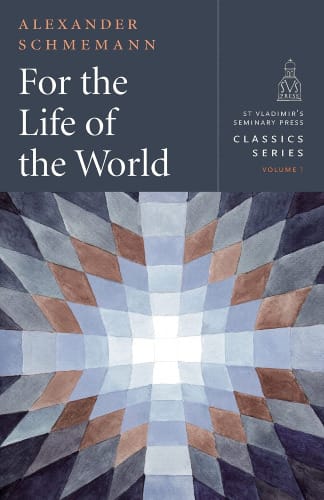
The first work you have chosen is For the Life of the World: Sacraments and Orthodoxy. It outlines the Christian worldview and how it “stems from the liturgical experience of the Orthodox Church.” Why does this work top your list?
Largely on account of what he says on the first page of that book. He begins by quoting Feuerbach’s remark that we are what we eat. With great brilliance, Schmemann flips the meaning of Feuerbach’s remark. He agrees with Feuerbach. We are what we eat. If we eat dead food, we are led onto death. However, if we eat the Eucharist—and the Eucharist is Jesus Christ, God himself, life itself—we live.
This sets the tenor for the rest of the book, which is a fantastic read but also challenging. Why is it so important? Well, although he is not entirely successful, he attempts to set out a sacramental way of seeing reality: a sacramental ontology. He wants us to realise that the world is full of meaning and that this life matters. It matters because God is communicating to us through everything there is in this world, if we can have the eyes to see this.
This is vitally important for us Catholics. We need to understand that we exist in a sacramental world. The whole world is a type of inchoate, limited communion with God. Schmemann rightly concludes that if we fail to understand the world as sacramental, we will never be able to understand the sacraments.
In For the Life of the World Schmemann, criticises secularism. Is his liturgical theology also a social teaching, one rooted in the sacraments?
Yes, because it gives us eyes to see how things are. Schmemann’s understanding of secularism is quite profound. He says that secularism is not simply how twenty-first century thinkers see the world and where people who believe in God are regarded as a strange anomaly. No, it is deeper than that.
Back in the sixties and seventies, he argued that America was the most secular nation on earth. That might seem a strange claim. At the time, the majority of Americans attended church on Sunday. However, Schmemann argued that most Americans were secularist not because they did not believe in God, but because they did not think in the light of God for the rest of the week. They only thought about things in the light of God on Sundays. The rest of the week they separated the sacred from the secular. This is the type of thing secularism does.
So yes, his liturgical theology is a critique of the social and a way of engaging with the world. He is not that concerned about rubrics per se. Rather, he is concerned about the spirit of the liturgy and what the liturgy tells us about reality. Through the liturgy, we begin to see the world aright: as symbolic. It teaches us to see God present in the world. Secularism does not see this; it regards the world as an end in and of itself.
"The body is so important because it is the way by which we communicate with one another and God communicates with us."
2.
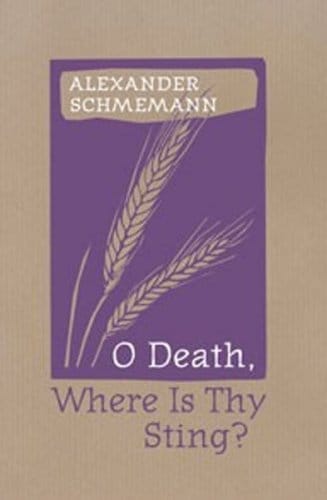
For many years, Schmemann preached sermons in Russian that were broadcast by Radio Liberty to the Soviet Union. Many of theme have been published posthumously in collections. The next book—O Death, Where is thy Sting—is one such collection. Why have you chosen this collection over the others?
One reason is that it is quite short. Like me, when I first discovered Schmemann, you think, “I can read this.” It is short, pithy, and very clear, largely because it was a radio broadcast.
It is also very insightful, and yet it is another example of how Schmemann comes at things in a unique way.
His thought is quite consistent because he is repetitive. What he says in one book comes out in various ways in the others. That said, his thought is not entirely consistent. If we follow it all the way through, it can be self-defeating in some regards.
Something he stresses repeatedly is that Christianity is not utilitarian. He makes this same point in the appendix of this book. Christianity is neither a form of self-help, nor does it explain away death. Whereas secularism and philosophy try to explain it away, Christianity confronts it head on. Hence, Our Lord wept at the death of Lazarus. Death is the great enemy of Christianity and is always a tragedy. Christianity converts death so that death is no longer an end, but a beginning and a passageway into life. This is because Christ himself has gone into death and sits behind it. Only if Christ is life is death the enemy.
The Christian view of death is unique. This is very important for us because our culture increasingly naturalises death, whereas St. Paul teaches us that the wages of sin are death. In this regard, Schmemann’s take is insightful.
He is very concerned about the language of immortality that Catholics use. He considers it too Platonic. Instead, he emphasises the resurrection of the body.
The body is so important for us as Christians. Christianity is the only approach to reality that can defend the goodness of the body properly. The body is so important because it is the way by which we communicate with one another and God communicates with us. Death is tragic, therefore, because it breaks us apart from our body.
3.
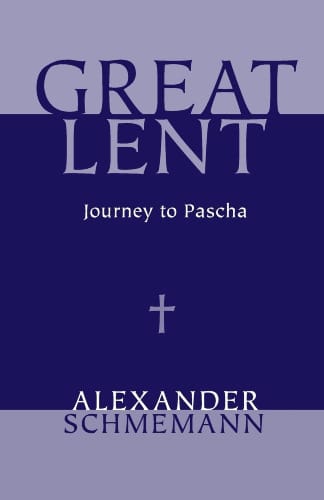
Is the Schmemann’s Great Lent a good guide for Catholics of the Latin Church even it refers heavily to the Orthodox Lenten liturgy and discipline?
Yes, in large it is. Schmemann says that the purpose of Lent is to soften our hearts. He discusses a beautiful prayer from St. Ephrem the Syrian. Typically, the Orthodox Church prays it as part of their Lenten tradition.
“Lord and master of my life!
Take from me the spirit of sloth,
Faint-heartedness, lust of power, and idle talk.
But give rather the spirit of chastity,
humility, patience, and love to thy servant.
Yea, Lord and King!
Grant me to see my own errors
and not to judge my brother;
For thou art blessed unto ages of ages. Amen.”
Schmemann’s reflection on this prayer is really helpful for all, whether Orthodox or Catholic.
Sloth, he remarks, is the basic spiritual disease. It convinces us that it is impossible to change. It is a deeply rooted cynicism. It results in our faint- heartedness, a state of despondency that makes it impossible to see either good or evil, and this leads to the lust of power. The lust for power takes the wrong attitude towards others. If God is not my Lord, then everything is all about me. Then idle talk follows.
Schmemann observes that speech is our greatness. No other animal has this great gift. Due to its greatness, speech can also be our downfall. Separated from the divine Word, speech becomes idle. How do we counter this? The latter part of St. Ephrem’s prayer explains how: through chastity, humility, and patience.
Chastity is wholeness. It counters sloth and the inability to see the whole.
Humility sees truth for what it is. It sees things as they are because it does not put us in God’s position or make us the ultimate end. Through it, we begin to see the world for what it is and others for who they are.
Patience consists in an infinite respect for all being.
These three elements—chastity, humility, patience—are brought to the fore in the practices of Lent. They counter sloth, faint-heartedness, the lust of power, and idle talk.
Schmemann thereby offers us a very profound reflection for Lent.
Characteristically, he also tells us that we should not think about Lent as a set of obligations or rules to be followed. Rather, he notes, Lent is the pattern of the Christian life. The Christian life is a fight. It requires the endurance to battle against the powers that be and our own brokenness. Christianity is not a call to relax. Rather, it is call to vigilance and to be always ready for Christ.
Hence, fasting is a great preparation. It reveals to us in a physical way the reality of what the Christian life is.
Schmemann also discusses the nature of sin. He has an interesting perspective on it. As he sees it, sin is the rejection of our incredibly high calling. It is a belittling of who we are. Repentance begins with our shock at this rejection and fall, and the desire to return to be sons and daughters of God.
Sin, therefore, is a deviation of our love from its ultimate object: God, who makes us his sons and daughters. Lent, on the other hand, reminds us of what we lack and reveals what we are meant to be.
Schmemann claims that there are two kinds of Lenten fasts. There is the total fast and the ascetical fast. The former is the one that precedes reception of the Eucharist. In current Catholic discipline, we are not to eat for at least one hour before receiving the Eucharist. However, Schmemann notes, total fasts are broken in Lent with reception of the Eucharist. The Eucharistic celebration, which itself is a kind of feast, should always lead to feasting.
However, the ascetical fast perdures throughout Lent. The Orthodox have a much more demanding Lent than we do. They progressively give up meat, dairy, and so on. They do not give up on the ascetical feast during the Sundays of Lent, even though Sunday is the celebration of the Lord's Day and a kind of feast. The ascetical fasting goes on because it is a purgation. It strips back the things that inhibit us from being fully alive.
This is a very important lesson for us Catholics. Indeed, Schmemann calls out Catholics for making Lent too easy since the Second Vatican Council and lowering expectations to the bare minimum. He insists that we need to have high expectations. We need these demands, partly so that we might realize that we cannot achieve them on our own but only through grace. My Orthodox friends tell me that they will probably fail to observe Lent perfectly. There is a humility that comes with this: the acceptance of one’s littleness and need for God.
These are very important lessons that we in the West can learn from Schmemann.
"We already encounter eternity in this life: whenever we encounter Christ."

4.
Fourth, are a series of writings that Schmemann did not intend to be published: the journals from the last ten years of his life. Have you recommended them because they combine interesting reflections with experiences that many will find relatable?
Very much so. Schmemann has an interesting take on most things. He flips things in a way that I would not think of.
When I was a student at St. Andrews, I had an interesting encounter with Rowan Williams, the former Archbishop of Canterbury, who had come to the university to address the students. It was a nightmare of a day. Everything was going wrong. Somebody was moving into an office above the place of the talk. There was banging from above and the chandelier was swinging. Just as that started to calm down, the fire alarm went off, and we had to vacate the building.
That gave me a chance to talk to Rowan Williams, who is influenced by Schmemann. He told me that he has often read Schmemann's journals as a sort of devotional.
There is something to be said about that.
There is a pace to the journals that makes you want to slow down and ponder what is written.
One example is Schmemann’s reflections on the problem of equality. He says that in our current culture equality is everything. However, it is a false ideal. We are all different. Some people are smarter than others. Some are more musical. Some are stronger. Some are more inclined to forming relations, and so forth.
According to Schmemann, this concern for equality comes from the logic of comparison. Maybe you can speak many more languages than me and that bothers me. Are we actually equal? For Schmemann, this logic of comparison is the genealogy of the devil. It is how the devil fell. Lucifer compared himself to God and there began his fall.
However, there is no equality within the Christian life. There is love, and love involves persons. You love another person who is different from you and so not equal to you. The other person is different and has qualities that make him better than you, sometimes worse, or a bit of both. Love unites these differences.
Thinking about equality in terms of this logic of comparison is profound.
Here is another example. He writes,
“Eternity is nor the negation of time, but time’s absolute wholeness, gathering and restoration. Eternal life is not what begins after temporal life; it is the eternal presence of the totality of life.”
We often we think of eternity as that which is not time. However, Schmemann points out that it is fundamentally a relation because God is eternity. We already encounter eternity in this life: whenever we encounter Christ. Moreover, Christianity is a blessed memory. It is really the conquering of the fragmentation of time. It is the experience of eternity here and now.
The religions and spiritualities which tend to annihilate time are false religions and pseudo-spiritualities. Henri de Lubac also talks about this when he claims that there is no history without Christianity. Time is meaningful because it has a story: a beginning and an end. Christ holds all these together and, the Eucharist, is the consummation of all time. In Christ, we experience the meaningfulness of time. The past is no longer mere absence nor memory as a simple reminder of things past. “Do this in remembrance of me!” The past becomes present, something we can touch.
Schmemann’s Journals are full of such beautiful little reflections. In them, you see the mind of a very holy and honest man. In his honesty he critiques not just the West but also himself and the Orthodox tradition. Some of his critiques of the West are valid, thoughtful, and challenging. Moreover, while he tends to speak negatively about Catholicism, not all his observations on it are negative. For example, he was very touched by the Catholic culture in Mexico and remarks that only in Catholic countries do people make the mistake of succumbing to communism or some other utopianism. Why? Because Catholics have such a great vision of reality that they can dream. They can imagine so much more than, say, a country like America that is deeply Protestant, where the people are pragmatic and cannot dream. Don't get me wrong. Schmemann is against communism. His point is that Catholics mistakenly fall for it because they can imagine and hope for something better. They can imagine some kind of paradise now because they encounter one in their own liturgy, with the celebration of the Eucharist.
5.
Finally, there is you own study, The Eschatological Person, which brings Schmemann and Ratzinger into dialogue. What is Schmemann’s conception of the human person and how is it eschatological?
That is a big question. In my book, I think through Heidegger's question: What does it mean to be a being in time? To answer it, I bring together both Schmemann and Ratzinger. Hence, I inquire into what time is for Schmemann and Ratzinger. Of course, they always understand time theologically: in relation to eschatology.
For Schmemann, the words ‘eschatology’ or ‘Kingdom’ are basically on every page he wrote. Everything is eschatological for him. Eschatology is the tenor of Orthodoxy.
Now, how does this affect his understanding of the human person? Put simply, the human person is meant to be a priest: one who lifts up the world to God in gratitude. Moreover, the priest is an intermediary. He can thank God in the way that the rest of creation cannot. He is the bridge who takes up matter and creation and thanks God for it. This process is also eschatological.
Schmemann’s account is both unique and problematic.
For Schmemann, we were given a second chance with the Incarnation. Adam and Eve messed up everything. With Jesus Christ, God gaves us another chance. However, instead of embracing Christ, we killed him. Schmemann concludes that the world thereby lost its chance to become joy. There is no longer the possibility of natural joy and the world is broken. However, with his death and his Resurrection, Christ established the Kingdom, which is completely outside of this reality. Hence, to encounter the kingdom, we need to leave this world. If Christ were to enter into our reality—the old eon—he would subsume it. However, Christ wants to give us our freedom. So, to encounter Christ in his Kingdom, we need to leave this world.
The Eucharist is this passage from the old eon to the new one. Through the liturgy—which is a passage climaxing in the Eucharist—we ascend to the heavenly table and partake of the meal with Christ. We then need to return to this world, bringing back the light from Mount Tabor and seeing things with the eyes of the Kingdom: seeing things in this world as they will be. We come back with an eschatological sense and an eschatological symbolism. The world as it is now has damned itself. However, there is hope because, by partaking in the Eucharist, we have seen what the world will be. That is how the Eucharist and priestly action become eschatological.
Perhaps you have already hinted at this, but in The Eschatological Person, you conclude that Schmemann’s conception of the human person’s relationality is “inconsistent and leads ultimately to the denigration of temporality.” Could you explain why you deem it defective?
In For the Life of the World, Schememann articulates why this world matters and how Christianity makes this world meaningful. If there is no God, there is no meaning to what I do here or to life. If there is no sacramental sense of reality, we need to simply escape this world. Unfortunately, Schmemann succumbs to this escapist position because he views the sacraments as a passage. In that view, this world becomes a stairway to heaven. We only use this world to get beyond it.
Schmemann overemphasizes this aspect. From a Catholic perspective, the Eucharist is Christ coming to meet us. This is not to deny the eschatological element of the Eucharist, which is still Christ-veiled. However, Christ does descend to us in the Eucharist. It is an instance of the divine condescension. This is how the love of God works.
Hence, wherever we participate in the Eucharistic feast, not only do we encounter Christ here and now, but this world becomes a place in which we encounter God and his love. The world is not simply a signpost which points beyond itself. It is a sign, but one which participates in the reality to which it points.
For Schmemann, on the other hand, the Eucharist only ever involves a leaving behind of this world. He thereby ends up denigrating temporality, albeit unintentionally. He thinks in terms of relationality or what I call a relational ontology: that being a human person consists in being in relation. However, he does not apply this to reality as a whole. He ends up relegating relationality within time. If we need to leave this eon to have relationship with Christ, then time precedes relation, whereas it should be the other way round. With a robust understanding of relationality, the ultimate reality—reality itself—is understood as the blessed Trinity, which is relation. Time fits within relation and relation is the most fundamental reality.
By getting this wrong, Schmemann cannot uphold the goodness of temporality. He does not understand temporality as a means of relating but an imprisonment of relating.
In your study also focus on Joseph Ratzinger. Do any of his books counter these deficiencies that we find in Schneemann?
Yes. Interestingly, it was Schmemann who led me to Ratzinger, and Ratzinger who in many ways led me into the Church. There is some continuity between Ratzinger and Schmemann. And in a way, Ratzinger completes what Schmemann aims to do but is unable to. We can see this in books such as The Spirit of the Liturgy, Introduction to Christianity, Eschatology, and some of the articles in which he engages with time.
In Eschatology, like Schmemann, he says that Christ is the Kingdom. However, he then follows through with logic on what that means.
Schmemann is very critical of the Western take on eschatology. He says that the West took eschatology and placed it at the end of systematic theology, as it were the last little thing, the cherry on top, or the whipped cream on the dessert. That, he says, is all wrong. Rather, eschatology needs to be the tenor of theology. You cannot make sense of theology without eschatology. Whereas the West develops these strange notions that eschatology is all about the four last things—death, judgement, hell, and heaven—Schmemann insists that it should be all about the Kingdom. All those other things are juridical, individualistic, anti-historical conceptions.
In Eschatology, Ratzinger sets out brilliantly the opposite view: that the immortality of the soul, purgatory, heaven, and hell are all only understood in terms of relationality.