
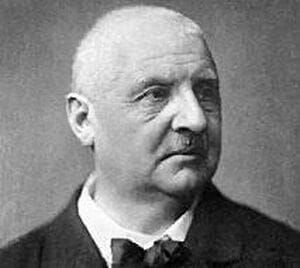
This September marked the bicentenary of the birth of Anton Brucker (1824-1895).
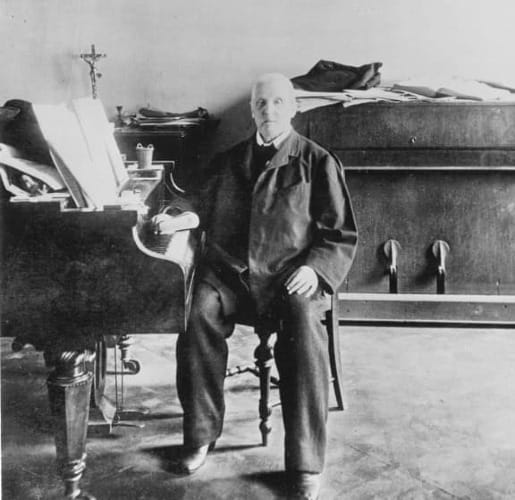
Bruckner was not just a composer who happened to be Catholic but one whose faith permeates his music deeply. Like several other of the great composers active in Vienna during the classical and Romantic periods—Haydn, Mozart, Haydn, Beethoven, and Schubert —he was a cradle Catholic. Like them, he composed masterful Masses and liturgical motets. However, Bruckner’s faith figured far more prominently in his daily life than it did in theirs. Many would argue that it features more prominently in his music too.
This is second of two articles on Bruckner. Whereas the first article covered his life and sacred music, this one surveys his symphonies and will recommend five recordings of them.
- Complete Symphonies
Rundfunk-Symponieorchester Saarbrücken, conducted by Stanisław Skrowaczewski - Symphony No. 4
Berlin Philharmonic Orchestra, conducted by Günther Wand - Symphony No. 7
Vienne Philharmonic Orchestra, conducted by Karl Böhm - Symphony No. 8
Orchestre de la Suisse Romande, conducted by Marek Janowski - Symphony No. 9
Vienna Philharmonic Orchestra, conducted by Carlo Maria Giulini
“Bruckner is one of the few geniuses in the whole history of music whose appointed task was to express the transcendental in human terms, to weave the power of God into the fabric of human life. Be it in struggles against the forces of the underworld, or in music of blissful transfiguration, his whole mind and spirit were infused with thoughts of the divine, of God above and God on earth. He was, in fact, not a musician but a mystic, in the line of men like Meister Eckart and Jakob Böhme.”
That was the verdict of Wilhelm Furtwängler, one of the most influential conductors of the twentieth-century. Moreover, Furtwängler was referring to Bruckner’s music in general: to his symphonies just as much as his Masses and sacred motets.
Many concur that Bruckner’s deeply lived Catholicism permeates the ethos of his instrumental works just as much as it does his sacred music. For this reason, his symphonies have been described as “Masses without text.”
 Five Books for Catholics
Bruckner’s final symphony is his unfinished Ninth. However, the numbering is misleading. Though he published nine symphonies, he composed eleven. The two unpublished ones are numbered 00 and 0 and are the first and third ones that he wrote. The former, the “Study” Symphony in F minor, was written to round off his instruction in musical form and orchestration under Otto Kitzler. The latter, the “Nullified” (Die Nullte) in D-minor, takes its title from the annotation Bruckner made at the beginning of the manuscript to indicate that, in his view, it was not fit for publication.
The numbering of Bruckner’s symphonies is not their only confusing feature. So is the proliferation of editions in which they exist.
One reason for this proliferation is that Bruckner revised some of his symphonies several times.
The other reason is that scholars have been divided over the authenticity of the editions published by Bruckner and his associates. This has prompted some to produce alternative editions that are purportedly more faithful to the original manuscripts and Bruckner’s actual intentions.
Bruckner’s symphonies had been prepared for publication by a circle of his collaborators, above all Josef and Franz Schalk. In the 1930s, however, Robert Haas, the curator of the music manuscripts collection of the Austrian National Library and the editor-in-chief of a critical edition of Bruckner’s works, pointed out that there were differences between the manuscripts and the previously published editions of the symphonies. The implication was that Bruckner’s close collaborators had persuaded the impressionable composer against his better instincts to make changes that they had come up with. They may have even interpolated unauthorised revisions of their own.
Unfortunately, Haas engaged in a bit of gaslighting. He interpolated a couple of passages composed by himself into his editions of No. 2 and No. 8.
Haas was also a member of the Nazi Party and supported its promotion and unwarranted appropriation of Bruckner. True to form, he even made anti-Semitic charges about the Jewish members of the composer’s circle and their influence on the earlier published editions of the scores.
A new edition was undertaken in the 1950s by Leopold Nowak but was not well accepted because, while faithful to the documentary evidence, the reliability of the original manuscripts was disputed.
That is not to say that Bruckner did not occasionally succumb to the insistence of his associates. It simply occurred less frequently than Haas supposed. Rather, Bruckner revised his symphonies mainly because he believed they were in need of revision. Moreover, his own revisions consistently shorten the movements, simplify the orchestration, intensify the contrasts. In other words, he improved the works with his revisions.
Picking recordings by the edition the conductor follows is better left for cognoscenti and not something that those working their way into Bruckner’s symphonies need worry about. They are more likely to wonder which symphony they should listen to first and which recording will unlock the work’s beauties to them.
Therein lies a challenge.
First, there is the question of which of the eleven symphonies should make the list. One way of getting around that is to pick a recording of the complete symphonies and then individual recordings of four of his mature symphonies. The four selected here are Bruckner’s Fourth—arguably the first to exhibit his full mastery of the genre and his distinctive voice—and his last three.
Then there is the question of which recording from the extensive and ever-growing discography should be picked in each case. The recordings selected here are widely recognised to be among the finest available, if not the finest.
"As the background to all his music, lie a piety and a mystical personal relationship to God known otherwise in European music only to Bach."
Eugen Jochum
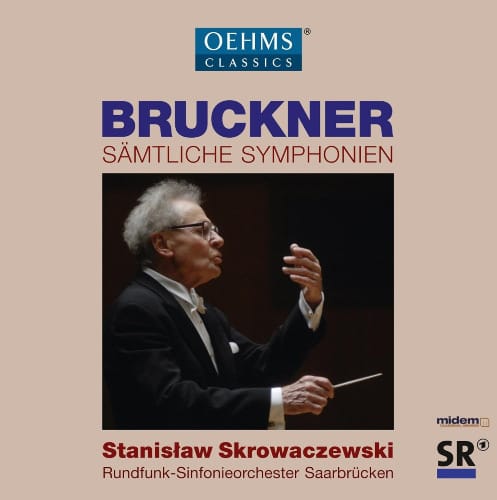
1.
There is no shortage of recordings of Bruckner’s nine symphonies under a single conductor. Many of these sets are excellent. Unsurprisingly, the finest tend to be from renowned Brucknerians, such as Herbert von Karajan, Eugen Jochum, Günther Wand, Bernard Haitink, and Daniel Barenboim. Some of these conductors, have even recorded more than one Bruckner cycle. Barenboim, for instance, has recorded three, each with a different orchestra. Jochum recorded two: one with the Berliner Philharmoniker; the other with the Staatskapelle Dresden. He also wrote various essays on the interpretation of Bruckner’s symphonies. However, one of the best surveys of Bruckner’s complete symphonies come from a less well-known ensemble and conductor: the Saarbrücken Radio Symphony Orchestra under Stanisław Skrowaczewski.
Recording any composer’s complete symphonies is a challenge for a conductor. Pulling off each work with a comparable level of excellence is no mean feat. Skrowaczewski does so in his Bruckner cycle. So does Barenboim with the Chicago Symphony Orchestra or Jochum in his cycles. Where the Skrowaczewski set has an edge over these equally consistent cycles is that it truly is a recording of Bruckner’s complete symphonies. It includes all eleven: not just no. 1-9 but also no. 00 and 0. Barenboim’s Chicago Symphony Orchestra set comes close but omits no. 00.
Skrowaczewski’s set, therefore, allows the listener to follow Bruckner’s entire development as a composer of symphonies. So does the recent cycle of Markus Poschner with the Bruckner Orchester Linz and the ORF Vienna Radio Symphony Orchestra. In addition to performing all eleven symphonies and following the New Anton Bruckner Complete Edition, it even records the different versions of each symphony whenever they differ significantly from another (Nos. 1, 2, 3, 4, 8). Poschner’s interpretation is fleeter and less ponderous than that of most conductors, but the performances are uneven in quality and sometimes summary. Poschner's set is interesting for its comprehensiveness and some of the performances but not a go-to one.
In some regards, Bruckner’s approach to the symphony was conservative. He followed the classical four movement structure that had been developed by Haydn and given more dramatic expression under Beethoven. There is none of the extravagant genre-blending that characterises each of Berlioz’s four symphonies: the Symphonie fantastique, Harold en Italie, Roméo et Juliette, and the Grande symphonie funèbre et triomphale. Moreover, Berlioz published the first of these four symphonies in 1830, just three years after Beethoven’s death, and the last in 1840. Bruckner composed his earliest symphony in 1863, more than thirty-five years after the death of Beethoven. Nevertheless, although his symphonies are more distant in time from Beethoven’s than those of Berlioz, they are far closer in terms of their formal design.
Each of Bruckner’s symphonies follows the four-movement structure that Beethoven established. There is an opening movement in sonata form, a scherzo, a slow movement, and a finale. Moreover, in the first movement Bruckner opts for an extended sonata form, with three subjects instead of two. Except for the Fifth, there is no introduction and, like Beethoven’s Ninth, a Bruckner symphony normally begins with a string tremolo and the gradual emergence of the first theme.
In certain regards, however, his symphonies are more like Schubert’s Ninth than those of Beethoven. Whereas Beethoven builds the symphony up from a few ideas, Bruckner, like Schubert, develops more melodic threads.
While Bruckner shows none of Berlioz’s interest in blending music and literature and follows the classical symphonic form, his symphonies, particularly the last ones, are no less monumental or dramatic than those of the great French composer.
Nor was Bruckner, with his more conventional approach to the symphony, uninterested in the more experimental composers of the day. Quite the contrary. He admired Berlioz, Liszt, and, above all Wagner. From them, he drew many lessons in orchestration and chromatism. Critics of the day picked up on this and branded Bruckner a “Wagnerian” rather than a classicist. Such a label was shallow and obscured far more than it brings to light. This is because deep down Bruckner’s musical idiom is pre-Romantic.
As already noted, it is pre-Romantic in form. It is also non-Romantic in its selflessness. As the conductor Günther Wand once noted, composers of the Romantic period shift detrimentally from giving expression to the world around them to expressing their own self and private feelings. For Wand, however, Bruckner never commits this mistake. Rather, “he goes back in thinking sometimes to Bach and the Middle Ages. You never can feel a private feeling in Bruckner’s music.”
Another great Bruckner conductor, Eugen Jochum, was of much the same view and asserted that “Bruckner scarcely deserves the name of a Romantic.”
“Wagner,” Jochum noted, “expresses all the nervous sensibility of his own time in his monumental oeuvre, which is filled with ardent eroticism and boundless subjectivity, joined to a view of nature as a grandiose spectacle. Bruckner is wholly free of this sensual eroticism, but is filled instead with the warmth and vitality of the landscape and the native folk culture of Austria. Behind that, however, as the background to all his music, lie a piety and a mystical personal relationship to God known otherwise in European music only to Bach.”
While the Skrowaczewski set is a fine recording of Bruckner’s complete symphonies, it does not necessarily contain the finest let along the definitive recording of each symphony. Listening to a fuller range of performances is necessary to discover further facets of each symphony or fresh takes on it.
Trying other sets of Bruckner’s nine symphonies is one way to go about this.
Often, however, the finest recordings of a Bruckner symphony do not belong to a complete set. This is the case with the remaining four recommendations.
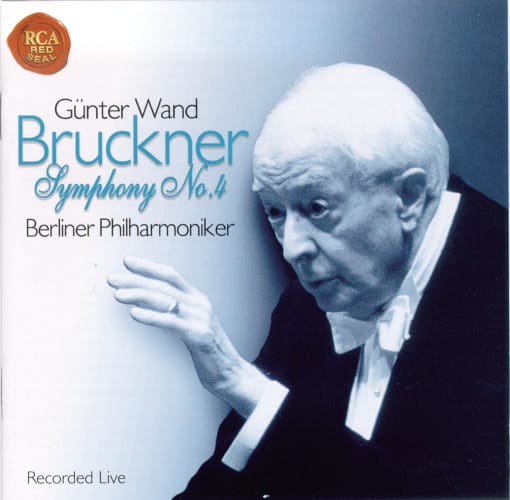
2.
Jochum asserted that “Bruckner scarcely deserves the name of a Romantic.” Wand also pointed to the pre-Romantic ethos of his music, and yet Bruckner himself appears to belie their assessment when he entitled his Symphony no. 4 the “Romantic.”
Of course, Wand and Jochum knew about the symphony’s title. Indeed, the reference recording is Wand’s with the Berlin Philharmonic, which the New Yorker Magazine once included it in its list of ten perfect orchestral recordings. Jochum and Wand simply did not put much stock by the work’s title and paid more attention to the substance of Bruckner’s music.
Not only did Bruckner give this symphony a title. There are also reports of him giving it a programme.
On one occasion, he described the first movement as if it were a scene from Wagner’s Lohengrin: "A medieval city—Sunrise—Reveille is sounded from the towers—The gates open —The knights sully forth into the countryside on their spirited horses, surrounded by the magic of nature—Forest murmurs—Bird songs—And so the romantic picture develops."
On another occasion, he claimed that the second movement represented a rustic love scene and the third, with its horns, a hunt that is interrupted by the dancing at a festival. However, he broke short his description of the work’s programme. He had forgotten what the finale was all about: a telltale sign that the purported programme did not really matter.
Indeed, just as Schumann gave many of his early piano works their descriptive titles after he had composed them, Bruckner entitled this symphony the “Romantic” two years after he had completed it. The title and its purported programme were afterthoughts. They had no bearing on his actual conception of the work and are a hindrance to listening to it on its own terms.
The Fourth, written in 1874 but revised in 1888, is one of Bruckner’s most popular and accessible symphonies. It is the first that he wrote in a major key (E-Flat). It is also the first fully mature symphony, written entirely in his own distinct voice. For those listening to him for the first time, it is the best entry point.
3.
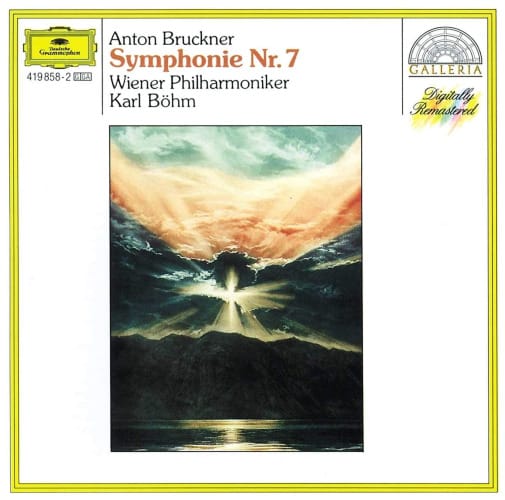
The story goes that the slow movement of No. 7 was written as an elegy in commemoration of the recently deceased Wagner. That was not the case. The movement had been completed before Wagner’s death. Still, there is a Wagnerian connection. On the one hand, the symphony was dedicated to Wagner’s eccentric patron, Ludwig II of Bavaria. On the other hand, Bruckner introduces four Wagner tubas and a contrabass tuba into the slow movements of his last three symphonies. When deployed, these give a greater gravitas and fuller colour to the music.
Unlike the Eighth and Ninth, the Seventh opens with a long, soaring, lyrical theme on cellos and horns, which ranges over two octaves. It is reprised in slightly altered form at the beginning of the finale.
The slow movement, on the other hand, is a rondo in which the principal theme is played three times and the contrasting couplet twice (first in F sharp Major and then in A flat major). At each reprisal, the principal theme is developed more elaborately. The principal theme contains a reference to the Non confundar section of Bruckner’s Te Deum, which was composed contemporaneously.
The Scherzo is in A Minor, with the “Bruckner rhythm” featuring heavily in the Trio in F Major. The “Bruckner rhythm” is a motif that recurs frequently in his works and consists in a duplet followed by a triplet (or vice versa).
The finale is in reverse sonata form, namely, the themes are presented in reverse order during the recapitulation. Timothy L. Jackson notes that “the reversed recapitulation combined with the displaced tonic has programmatic significance, representing tragic peripety wraught by capricious and unkind Fate.” By choosing this form, Bruckner may have intended to heighten the drama of the finale in this symphony in a major key and which, unusually, is the lightest of the four movements. At any rate, any drama and darkness is dispelled by the triumphant fanfares of the rapturous coda.
Among the many fine recordings of the symphony, Karl Böhm's with the Vienna Philharmonic is sometimes overlooked but, with its unmannered elegance, is a worthy representative.
"This Symphony is the creation of a Titan, and in spiritual vastness, fertility of ideas, and grandeur even surpasses his other symphonies."
Hugo Wolf on Bruckner's Eighth Symphony
4.
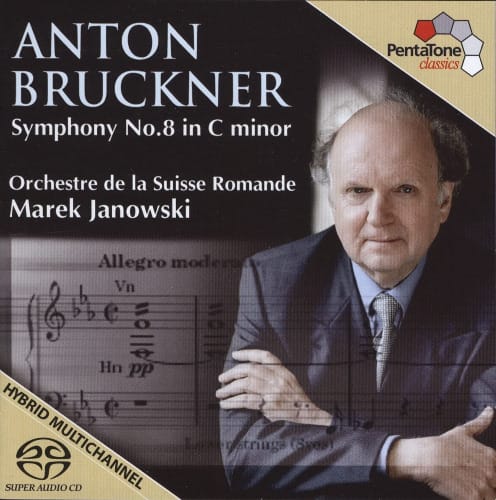
The Eighth is the most monumental of Bruckner’s symphonies, not just in terms of length and scope, but also on acount of the size of the orchestra required: strings, triple woodwind, 8 horns, 4 Wagner tubas, 3 trumpets, 3 trombones, tuba, 1 but preferably 3 harps, and percussion.
Though in C Minor, the work opens in F Minor, and the tonic is only grazed in passing. The opening theme is stated piano, followed by a counterstatement that is forte. In the recapitulation, however, it is stated fortissimo and, contrary to the rules, is not in the tonic. It is only with the third theme that the tonic is finally reached in the recapitulation. Such tonal ambiguity is dispelled, however, with the final statement of the opening theme in the coda of the movement.
Breaking with convention, Bruckner places the scherzo prior to the adagio. He will do the same in the Ninth. He may have been consciously following the precedent set by Beethoven’s Ninth. The slow movement of Beethoven’s Ninth is far longer and larger in scope than its relatively brief scherzo. The slow movement of Bruckner’s Eight is similarly solemn and monumental in scope. Following with the scherzo would have been anticlimactic and deflated the symphony’s interior momentum. That said, the scherzo is substantial and built from fragments of the theme played in the first four bars and repeated insistently throughout. In contrast to the energetic propulsion of the scherzo, the trio is serene and pastorale in tone.
The slow movement is in D Flat, a key suited to its moments of ecstatic wonder, and the orchestral colouring is thick from the outset. It too is in sonata form. The second theme is played on the cellos and the third is a chorale for tubas. As in the Seventh, upon each reprisal the polyphony and orchestration become more detailed.
The finale is in extended sonata form and opens with the strings marking a galloping motive and the tubas stating the first theme. The descending and ascending sixth at the beginning of second theme hark back to the slow movement, whereas the march-like third one ties in with the opening theme. The immense coda—63 measures long—begins in C Minor but passes to C Major for the last 23 measures, where the first theme of each movement is combined. With the recapitulation of the whole work, Bruckner stresses the work’s internal logic and unity. At the same time, he brings its dramatic narrative to a triumphant resolution. Writing after the premiere, Hugo Wolf described the symphony as “an absolute victory of light over darkness.”
5.
Frustratingly, Bruckner died when he was on the verge of completing the finale of his Ninth symphony. Nevertheless, this unfinished symphony remains the most accomplished and advanced of the cycle.
It belies the barb that Brahms made about the length of Bruckner’s symphonies: “Symphonic boa constrictors!” Though long, the first movement of is also a model of compactness. The development, the coda, and, to a certain extent, the coda, overlap.
This mastery of form is coupled with the daring and startling chromatism of some central passages. During the opening, for example, eight horns play the first theme, fragment by fragment until bringing it to an adamant conclusion. However, they bring it to a conclusion with a leap from E flat through B flat to E flat. This chromatic movement and its accompaniment jars with the D minor of the work and establishes a duality of key. This conflict of key is reprised at the movement’s dark and mysterious conclusion. The trumpets play E flats against a D minor chord. Similarly, the tonal centre of the scherzo is often uncertain while the third movement opens by groping its way uncertainly toward the key.
These moments of tonal uncertainty sometimes convey a sense of anguish, sometimes a sense of mystery. Indeed, the first movement is marked Feierlich, misterioso (solemn, mysterious). There are even grounds for supposing that these indications had a specifically Christian import.
As several scholars have noted, Bruckner’s uses many motifs with specific functions or connotations in the sacred music of earlier periods. Given Bruckner’s extensive musicological knowledge, it is probably no coincidence that they feature.
One such reference is the key of the work: D-Minor. One might suppose that Bruckner chose the key in homage to Beethoven’s Ninth. Nevertheless, there are probably more significant reasons for the choice of key.
Although we currently treat C as the first tone, that role used to be played by D. It was called D because it stood for Deus (God). In Italian, it is called re (as in do-re-mi….), namely ‘king.’ So, Bruckner chose the key that refers to the Lord God for the symphony that he dedicated to the “the dear Lord.”
Moreover, as Leopold Nowak observed, Bruckner sometimes used related sharp keys to refer to Christ. The German for ‘sharp’ is Kreuz (cross). The F-sharp of the trio in the second movement or the E major of the third movement and the chorale of the finale may have such a meaning.
“The pure intervals of the octave, the fourth and the fifth are mostly used to express God’s omnipotence. And on the other hand there are protagonists of the Redemption whose nucleus is already hidden in the mysterious elemental sound heard at the outset: in the opening motif of the horns, arranged in ascending steps on the scale, we find the notes D-E-F-A-D. They reappear in descending and inverted order in the third woodwind subject, quoting the Agnus Dei of the D minor Mass. Lightened into the major and shaken about somewhat, the same motif also appears in the trumpets at the beginning of the adagio. With this sequence F sharp-A-D-E-F sharp in the treble, Bruckner is quoting the ‘non confundar from his Te Deum, which plays a special role in the finale: this so-called ‘Horngang’ (a progression of natural notes characteristic of the horn) is an old symbol of the circle and of eternity.”
These are just some of the symphony’s many Christian motifs to which Benjamin-Gunnar Cohrs points in his essay for Harnoncourt’s recording. Others are the augemented fourth (diabolus in musica) or the dotted rhythmic annotation that symbolise Christ’s flagellation. Taken together, these indicate that Bruckner’s Ninth is, much like Liszt’s Dante Symphony, a symphonic representation of the eschatological states and the centrality of Christ the Redeemer.
A further indication of the Christian import of the work is Bruckner’s proposed substitute for the finale: his Te Deum.
The motif in fourths and fifths that recurs throughout the Te Deum also appears in his drafts of the Ninth’s finale (check out Nikolaus Haroncourt’s recording of the Ninth for a discussion and performance of the unfinished drafts). This suggests that there may have been not just a musical but also a thematic connection in Bruckner’s mind between the Te Deum and the finale of the Ninth Symphony.
Nevertheless, virtually no conductor follows Bruckner’s instruction about the replacing the finale with the Te Deum. The only recording to do so that I have come across is Herbert von Karajan’s 1962 live performance with the Vienna Philharmonic.
Whether conductors are right to ignore Bruckner’s instructions about the finale is debatable. Nevertheless, performing the symphony as it stands does work. This is because, as in the Eighth, Bruckner places the scherzo before the slow movement. With its beautiful valedictory coda, it brings Bruckner’s last work to a poignant conclusion.
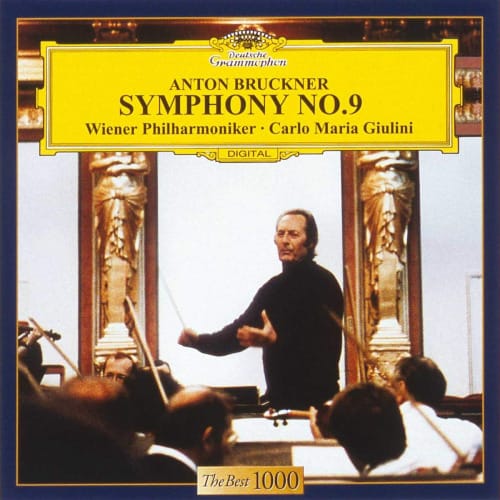
Carlo Maria Giulini was widely admired not only for the rigour and integrity of his performances, but also for his capacity to bring out a work’s deeper spiritual overtones. His recordings of Beethoven’s Missa solemnis and Verdi’s Messa da Requiem are examples, as is his acclaimed performances of Bruckner’s Seventh, Eighth, and Ninth with the Vienna Philharmonic.