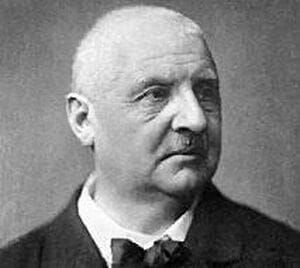


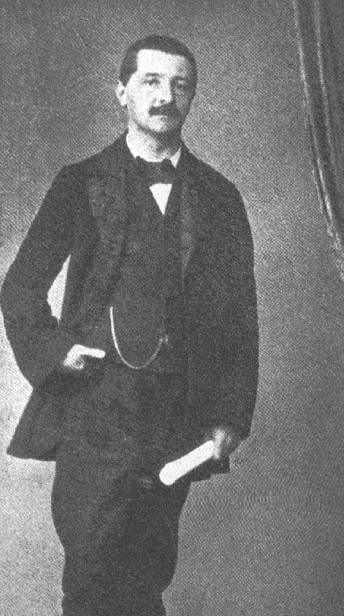
This September marked the bicentenary of the birth of Anton Brucker (1824-1895).
Bruckner was not just a composer who happened to be Catholic but one whose faith permeates his music deeply. Like several other of the great composers active in Vienna during the classical and Romantic periods—Haydn, Mozart, Haydn, Beethoven, and Schubert —he was a cradle Catholic. Like them, he composed masterful Masses and liturgical motets. However, Bruckner’s faith figured far more prominently in his daily life than it did in theirs. Many would argue that it features more prominently in his music too.
This is the first of two articles on Bruckner and will recommend five recordings of his sacred music. A later article will propose five recordings of his symphonies.
- Requiem, Psalms 114 and 112
Akademie für Alte Musik Berlin, RIAS Kammerchor, directed by Łuckasz Borowicz - The Masses
Bavarian Radio Symphony Orchestra, directed by Eugen Jochum - Motets
Tenebrae, directed by Nigel Short - Te Deum
Chor des Bayrischen Rundunks, Vienna Philharmonic Orchestra, directed by Bernard Haitink - Psalm 150
Bach-Collegium Stuttgart, Gächinger Kantorei Stuttgart, directed by Helmuth Rillin
Bruckner was born near Linz in the village of Ansfelden. His father was the local schoolmaster and his first music teacher. The organ was the instrument the young Anton learnt.
When he was sent to school in Hörsching, he had the good fortune to continue his musical instruction under the schoolmaster there: Johann Baptist Weiss, a gifted organist. At the age of twelve, he had already completed his first composition: a setting of the Pange Lingua.
Upon his father’s death in 1837, Bruckner was sent to continue his education as a choirboy at the Augustinian monastery of Sankt Florian, which became his spiritual home.
After attending the teacher-training school, he took up the family trade and started working as an assistant schoolteacher at Windhaag, Kronstorf, and Sankt Florian. In the meantime, he continued his musical education.
One of his responsibilities as assistant schoolteacher was to play the organ and put together a choir and musicians for the liturgical celebrations.
Bruckner continued to study composition, write pieces, obtain qualifications, and work his way up. In 1851, after several years as an assistant organist, he was appointed organist of Sankt Florian. In 1856, he became the organist at Linz Cathedral. Finally, in 1868, he was made professor of Organ and counterpoint at the Vienna Conservatory.
These appointments were deserved. Bruckner was a world-class organist. In 1869, he gave several organ recitals in France; in 1871, in England. The reports attest that audiences in each country were struck above all by his skills at improvisation. Curiously, though, he wrote little music for the organ.
Bruckner’s real ambition was not to be a world-class organist but a composer of note. His 1844 motet Asperges me is one of the earliest indications. He signed it as “Anton Bruckner, Composer.” He was so set upon becoming a composer that he doggedly undertook a rigorous musical education, notwithstanding the constraints of his job, age, or humble background.
In 1855, he started a six-year correspondence course in counterpoint with Simon Sechter. Sechter was a leading music theorist. Even Schubert had turned to him once for instruction. So assiduous was the organist of Linz that Sechter regarded him the most dedicated of all his students. That is probably why, when Sechter died, Bruckner was picked to succeed him as professor of harmony and counterpoint at the Vienna Conservatory.
Sechter had advised Bruckner not to compose any music until he had completed his course in counterpoint. The obsequious student complied and so, whereas Schubert died at the age of 32, Mozart at 35, Bruckner began to compose his mature works at the age of 37.
Following his rigorous studies in counterpoint under Sechter, Bruckner turned to Otto Kitzler, the music director of the Linz Municipal Theatre, for instruction in musical form and orchestration. Whereas Sechter gave Bruckner a rigorous grounding in the traditional grammar of composition, Kitzler introduced him to the more experimental Romantic composers of the day, such as Berlioz, Liszt, and Wagner. Indeed, it was through Kitzler that Bruckner first met Wagner.
Bruckner was deeply impressed and influenced by Wagner’s music. His Third Symphony is dedicated to the older composer and quotes several of his themes. Unfortunately, during his lifetime, and often to his detriment, Bruckner’s committment to Wagnerian artistic ideals was exaggerated. As Dermot Gault observes, “Wagner’s influence is otherwise manifest only in certain generalized aspects of Bruckner’s music from this time onwards: increasing harmonic audacity, fuller orchestration with heavier brass, and a more epic and ambitious approach to musical form.” Apart from these influences, Bruckner pursued his own course, one far removed from Wagner’s. He had no interest in theatre or programmatic music. He composed Masses and sacred cantatas, not operas; four-movement symphonies, not tone poems. The genres he chose are those of the classical period. Though a Romantic composer, his music is imbued with his Catholic spirituality. In Bruckner, there is none of the neo-paganism that initially attracted Nietzsche to Wagner’s music. Nor did he share any of Wagner’s anti-Jewish sentiment. He always treated his Jewish students with respect and esteem.
"Bruckner simply has a lot to say and a language unique to him. Many people relate it to Wagner. If one looks at it properly, however, it only approaches Wagner externally. It is, of course, the language of a contemporary of Wagner, but if you take a close look, it has nothing at all to do with Wagner inwardly. Bruckner's musical precursors are on the one hand Schubert (not forgetting Beethoven in many respects), and on the other hand the great old church composers Palestrina and Orlando, and possibly Monteverdi."
Eugen Jochum
Through hard work, Bruckner had won prestigious appointments as an organist and music professor. Through hard work, he composed one of the most impressive, enduring symphonic cycles and body of sacred music of the nineteenth century. There were certain desired successes, however, that he could not achieve by sheer work. He was disappointed by the poor reviews that his works often received, some written in good faith by baffled music critics, others penned with gleeful spite by downright hostile ones, such as Eduard Hanslick. Above all, he was disappointed in love.
Many of Bruckner’s difficulties arose from his psychological limitations. For all the sophistication he acquired as a musician, he was not so proficient when it came to picking up social graces. Even Gustav Mahler, who venerated Bruckner as a composer, considered him “a simpleton – half genius, half imbecile.” It was not just that he cut a bumpkinish and socially naïve figure in imperial Vienna. Even in his home setting, he was clueless and obtuse when it came to certain social mores. He made marriage proposals to many of the young women with whom he was besotted, even when he was over seventy-years old. He was always rebutted. In 1867, he suffered a nervous breakdown. He also developed numeromania. However, his maniacal behaviour only broke under certain circumstances and when he was under stress. Nevertheless, these eccentricities have been exaggerated. Bruckner was deeply kind, intelligent, and could not have been so productive had he been suffering from chronic mental illness.
Of his Ninth Symphony, Bruckner said, “I dedicate my last work to the majesty of all the majesties, the beloved God, and hope that he will give me so much time to complete the same.” Unfortunately, Bruckner died before he could complete the last movement. Fittingly, he was buried under his beloved organ in the Church of Sankt Florian.
1.
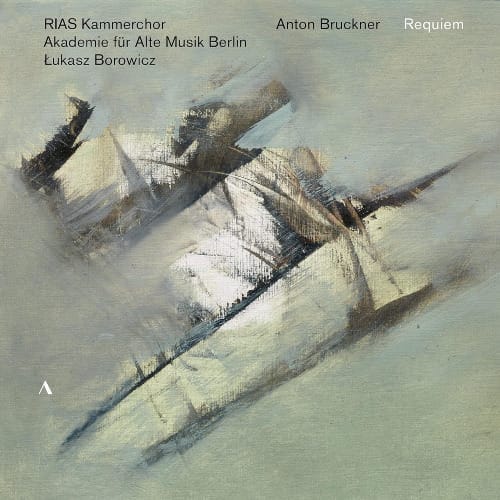
An interesting place to start this survey of Bruckner’s sacred music is his first major work for chorus and orchestra: the Requiem Mass in D minor (1849, revised in 1892), composed to commemorate the anniversary of the death of his friend, Franz Sailer.
Bruckner’s mature works are shot through with the musical idiom of nineteenth-century German Romanticism. The Requiem, on the other hand, sounds as if it had been written forty or fifty years earlier, by an Austrian composer of the classical period. Indeed, it is modelled on Mozart’s Requiem in D minor. Not only is it written in the same sombre key, but also contains citations from that work.
 Five Books for Catholics
Just as Mozart set “Quam olim Abraham promisisti,” to a fugue, so does Bruckner. Indeed, it is his first detailed fugue, although most of the choral writing is homophonic. Also redolent of Mozart’s Requiem, is the way he uses the trombones to enhance the solemnity of the choral passages.
However, whereas Mozart’s Requiem is his last great work, Bruckner’s is his earliest major work. Nor is it one of his greatest or most distinctive compositions. In fact, it is one of his least distinctive works. Nevertheless, it is an intriguing entry point. Listen to it and then the other works on this list. You will be surprised by the startling difference in style and how much Bruckner developed as a composer.
2.
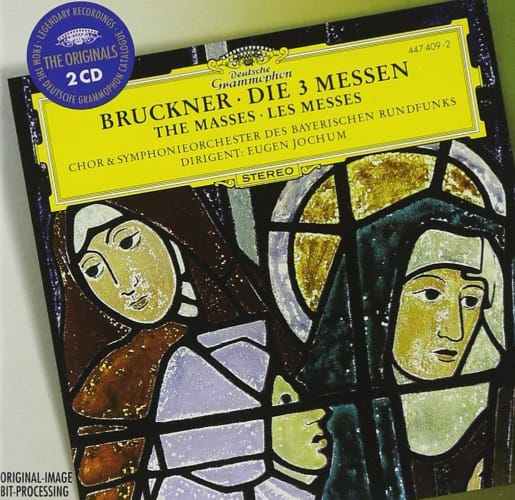
Bruckner’s Masses No. 1-3 are not the first ones that he composed. He had composed three in the early 1840s (WAB 25, 146, and 9) when assistant schoolteacher at Windhaag and Kronstorf. However, it is his three great Masses—composed at Linz between 1864-1868 and subsequently revised between 1876-1882—that he finds his distinctive voice and deploys the compositional techniques that are characteristic of his great symphonies. Just as his symphonies have sometimes been called Masses without text, so too have his Masses been described occasionally as vocal symphonies.
Mass No. 1 in D Minor was composed a few months after his Symphony No. 0 (the Nullified) in the same key. Paul Hawkshaw has described it as “mature Bruckner—monumental in conception, symphonic in development, economic in material and dramatic in expression.” Hawkshaw also points to Wagner’s influence on the way that Bruckner uses the orchestra to develop the themes, extend the range of tonal colour, heighten the contrasts between sections, and increase the overall drama of the work.
The work was first performed at the Mass in Linz Cathedral for the Feast of St. Cecilia, patron saint of music. A month later, it received a concert performance and good reviews. Even one of the most important Viennese music critics, Eduard Hanslick, gave it a good review. Later, Hanslick would become one of Bruckner’s fiercest critics and cause him considerable grief.
Mass No. 2 in E Minor (1866) differs from the other members of the trilogy in the choir and instrumental forces it employs. Instead of orchestra and organ, it adopts an ensemble of woodwinds and brass. Furthermore, it is written for an eight-part mixed choir instead of a four-part mixed choir and soloists. Bruckner probably chose this particular ensemble on account of the occasion for which the Mass was composed: the dedication of the Votive Chapel of Linz Cathedral.
The occasion for which this Mass was written determined not only the forces for which it was written but also its peculiar style. Mass 2 imitates various stylistic traits of Palestrina, such as his modalism and, at the opening of the Sanctus, his polyphony. In the Sanctus, he even cites a theme from Palestrina’s Missa brevis. Not only does the evocation of Palestrina serve as a homage to the to Linz cathedral’s neo-Gothic architecture of the cathedral. It may also have been a conscious act of compliance with the ideals of the Cecilian Movement so as to avoid miring the solemn event in any controversy with that group.
Cecilianism was a movement that originated in Bavaria and advocated the reform of Church music, namely, a turn away from the post-Enlightenment repertoire and a return to the Church’s older traditions. Its most influential representative was Franz Xavier Witt, a Regensburg priest and composer. In 1865, he wrote a manifesto on the state of liturgical music in Upper Bavaria and, the following year, founded Sacra Musica, a monthly journal for liturgical music that functioned as a platform for the Cecilian Movement. Witt disapproved of the operatic style that was then in vogue in liturgical music. He advocated, therefore, a return to the soberer traditions of Gregorian chant or Renaissance polyphony. As a result, there was a renewed enthusiasm for Palestrina.
Bruckner began Mass No. 3 in F minor while he was recovering from a nervous breakdown. He composed it to give thanks to God for his recovery.
Johann Ritter von Herbeck tried to conduct a premier performance but gave up and deemed the worked unsingable. Ludwig Spiedel, the music critic of a Viennese newspaper, questioned the appropriateness of certain parts of the Mass because they were too theatrical. He was probably referring to the Resurrexit section of the Credo when he said that he felt he was “right in the middle of a Christian Wolf’s Glen Scene,” a reference to Weber’s Der Freischütz.
Even so, at the 1872 premier in the Church of the Augustinians, the work was acclaimed. At the final rehearsal, the conductor Joseph Hellmesberger told Bruckner that it was on par with Beethoven’s Missa solemnis.
Indeed, Beethoven’s Missa solemnis was one Bruckner’s models for the Mass. As were Schubert’s Masses 5-6 and Liszt’s Gran Mass. Nevertheless, as Hans Ferdinand Redlich pointed out, “The thematic material of the Mass in F is fertilized by plainsong to an even greater extent than that of the two preceding Masses; it is also closely organized by virtue of a common root-motive of unmistakably liturgical flavour: a falling or ascending fourth that determines the thematic subject matter in all parts of the work, thereby assuring its symphonic coherence.”
The classic recording of Bruckner’s Masses No. 1-3 is Eugen Jochum’s with the Bavarian Radio Symphony Orchestra and Choir.
"Anyone who doesn't know Bruckner's church music cannot understand him fully. His motets, for example, are small forms, three to five minutes, but they are so perfect of their kind that I actually say they are more perfect than the great symphonies"
Eugen Jochum
3.
Though he had been a professional Church musician, Bruckner was no strict adherent to the ideals of the Cecilian Movement. If he were, he would never have written works so symphonic in nature as the Mass in F-minor or the Te Deum. Nor did he reject the movement outright but appears to have shared some of its concerns.
He was both impressed by Berlioz’s Te Deum but also concerned that it was not “ecclesiastical” (kirchlich). He probably meant that it was not suited to a liturgical celebration. Of course, the same concern could be raised about some of Bruckner’s sacred works. Still, it is telling that Bruckner voiced such a concern rather than dismiss it.
Furthermore, some of his finest sacred music—not just Mass No. 2 but above all his motets—embodies various ideals of the Cecilian Movement.
Most of them are written for unaccompanied choir. The instrumental accompaniment in the few that have some is sparse and standard: organ and maybe some brass.
Moreover, the motets span the whole of Bruckner’s activity as a composer. His earliest composition, his first setting of the Pange Lingua, was a motet. His final motet, the Vexilla Regis was written in 1892. One specialist, A. Crawford Howie, has described them as “the most intimate and, arguably, the most profound expressions of his Christian faith.”
The few integral recordings of Bruckner’s motets are less polished than selections recorded by the most distinguished choirs and conductors.
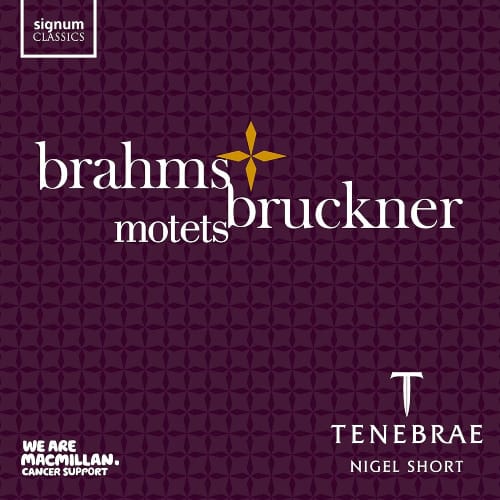
One of the best selections is that of Tenebrae, directed by Nigel Short. It opens and closes with the two Aequale (WAB 114 & 149) for three trombones that Bruckner composed in 1847 in honour of a deceased aunt. The motets performed are Ave Maria (1861), Locus iste (1868), Tota pulchra est (1878), Os justi (1879), Christus factus est (1884), Virga Iesse floruit (1885), and Ecce sacerdos magnus (1885).
Moreover, Short and Tenebrae couples them with motets by Brahms, one of the most accomplished and experienced choral composers of the second half the nineteenth-century.
Brahms and Bruckner were active at Vienna at the same time, but often depicted as figureheads of enemy camps. Brahms was held up as the champion of Viennese classicism whereas Bruckner was cast as a Wagnerian innovator. Never mind that Brahms admired Wagner and was innovative in his own right, just as Bruckner was also deeply rooted in the classical tradition and even earlier music.
This is not to underplay the stylistic differences in their motets. Brahms was born a Lutheran. Most of his motets are in German (though there is also his charming setting of the Ave Maria), whereas Bruckner’s are in the Latin of the Roman Rite. Moreover, Bruckner’s motets sound as if he were praying and not just composing them. The same cannot be said of the agnostic Brahms’s motets. They do possess religious feeling, but it is not as distinctive. Most would work just as well if the religious text was substituted with a secular one.
Listen, on the other hand, to Bruckner’s Ave Maria (WAB 6) for a seven-part mixed choir, one of the most beautiful ever composed.
He wrote it in 1861, after his six-year course on counterpoint with Simon Sechter and hiatus from composing. The first part ends climatically, with the choir singing the name of Jesus three times in crescendo A-major chords. There follows intense and densely textured overlapping antiphonal singing of “Sancta Maria,” before the work winds down to its serene conclusion. The intensity with which the names of Jesus and Mary are sung at the centre of the piece makes it clear that this is a prayer made to persons with whom one is in a deep relation.
For a fuller selection, try Matthew Best's with the Corydon Singers.
"In a certain sense, Brahms is the more complete composer. In another sense, namely that of depth of content, Bruckner is far superior, and I always say, 'Thank heavens we have both of them.' "
Eugen Jochum
4.
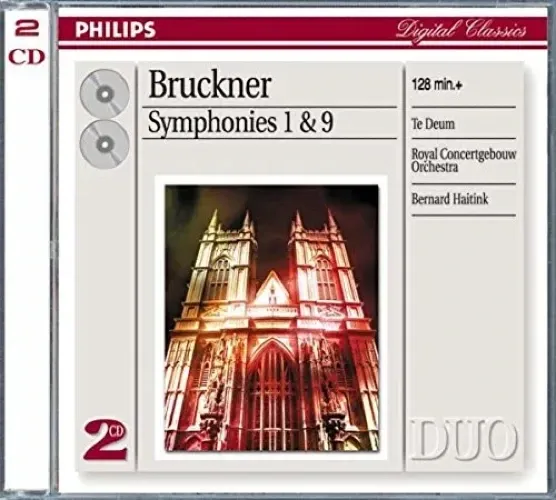
The work of which Bruckner appeared to be proudest—ostensibly, because it was the one that gave greatest glory to God—was his magnificent setting of the Te Deum for SATB soloists, choir, orchestra, and organ (1881-1884). It was also widely acclaimed and performed from the outset.
Gustav Mahler was among those who were impressed by the work. He probably imitated aspects of it in the opening movement of his Eighth Symphony. On his copy of the score of Bruckner’s Te Deum, he struck out the initial description of the ensemble required and penned his own: “for angelic tongues, for God-seekers, tormented hearts, and for souls purified in flames.”
The Te Deum is in five sections andopens with bare fifths (a chord with only the tonic and the fifth). The quaver motif throbs for the first 170 bars. The serenity of the second and fourth sections stands in contrast with the drama of the rest of the work. In these two sections, the tenor poignantly implores divine aid. The work concludes with a fugue that develops a motif introduced at the Non confundar in aeternum and closes on a triumphant note.
One of the finest recordings is Bernard Haitink’s with the Vienna Philharmonic and the Bavarian Radio Choir. The polished performance of the soloists gives it an edge over his late live recording with the Bavarian Radio Symphony Orchestra.
5.
Psalm 150 for soprano, choir, and orchestra is Bruckner’s final large-scale sacred work for choir and orchestra.
In 1891, the composer and music critic Richard Heuberger decided to commission a hymn or cantata for a projected exhibition of music and theatre. Brahms turned the offer down but Bruckner, Heuberger’s second choice, accepted it. Bruckner chose Psalm 150 on account of its solemnity.
As Hans Ferdinand Redlich noted, it shares several similarities with the Te Deum, Bruckner’s other late large-scale choral work. Both are in the triumphant key of C-Major, quadruple rhythm, stress fourths and fifths, and end in an exultant double fugue.
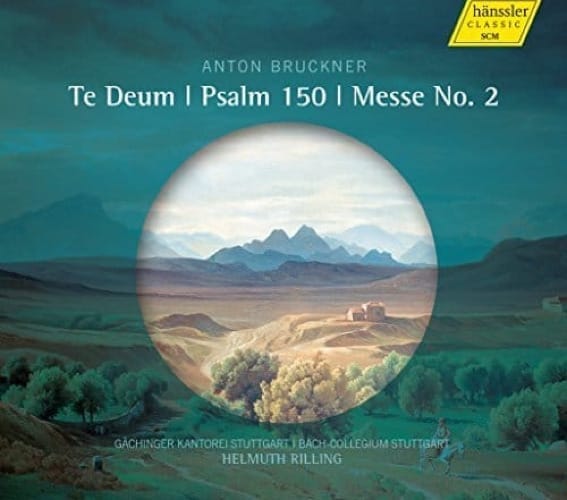
One excellent recording is Daniel Barenboim’s with the Chicago Symphony Orchestra. However, the clarity of Helmuth Rilling’s recording and its stress on the work sacral rather than operatic character give it an edge in the field.
Hopefully, listening to these works will lead some to discover Bruckner and those who are relistening to them to rediscover him or uncover new facets of this profoundly spiritual and original composer.