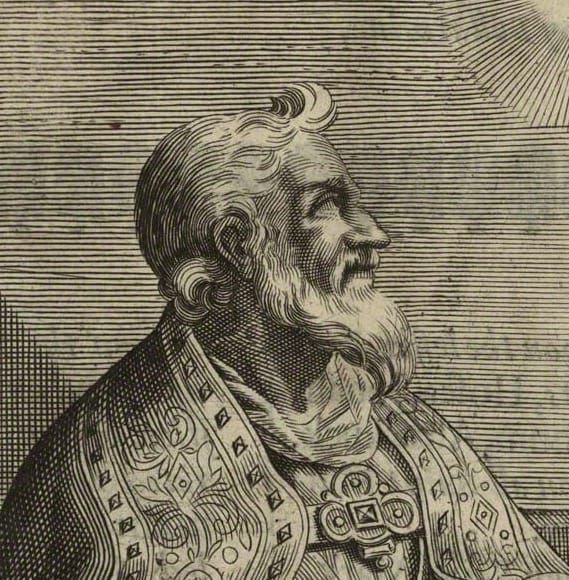
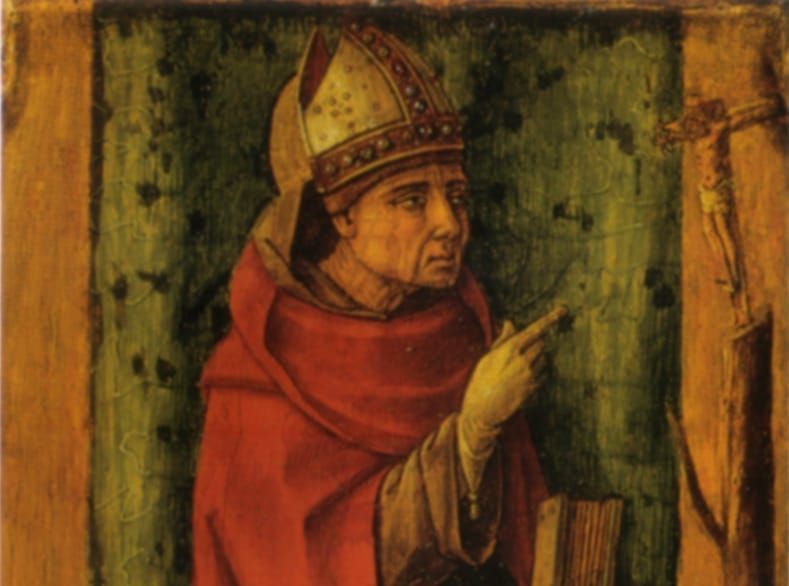
St. Bonaventure (c. 1217/1221-1274) was a Franciscan friar, the seventh Minister General of the Order of Friars Minor, Bishop of Albano, and a cardinal.
Born Giovanni di Fidanza, in Bagnoregio, he began his studies at Paris in 1235 and entered the Order of Friars Minor in 1243. Later, he held the Franciscan chair in theology at the University of Paris.
In 1257, he was elected Minister General of the Franciscans. During his seventeen years in that office, he addressed several crises within the Order, such as the mendicant controversy and the Joachimites.
In 1273, he was created a cardinal, appointed bishop of Albano, and charged with preparatory work for the Council of Lyons. He died during the fourth session of the council. He was canonised in 1482 and declared a Doctor of the Church in 1557.
In this interview, Randall Smith discusses St. Bonaventure and how to start reading his works.
Randall Smith is a Full Professor of Theology at the University of St. Thomas in Houston, Texas. His areas of research are moral theology, historical theology, sexual ethics, faith and culture, sacred architecture, and architecture and urbanism. He is the author of Aquinas, Bonaventure, and the Scholastic Culture of Medieval Paris: Preaching, Prologues, and Biblical Commentary(Cambridge University Press), From Here to Eternity: Reflections on Death, Immortality, and the Resurrection of the Body (Emmaus Road Publishing), Reading the Sermons of Thomas Aquinas: A Beginner's Guide (Emmaus Academic), and Bonaventure's 'Journey of the Soul into God': Context and Commentary (Cambridge University Press)


- The Journey of the Soul into God (Itinerarium mentis in Deum)
by St. Bonaventure - Mystical Opuscula
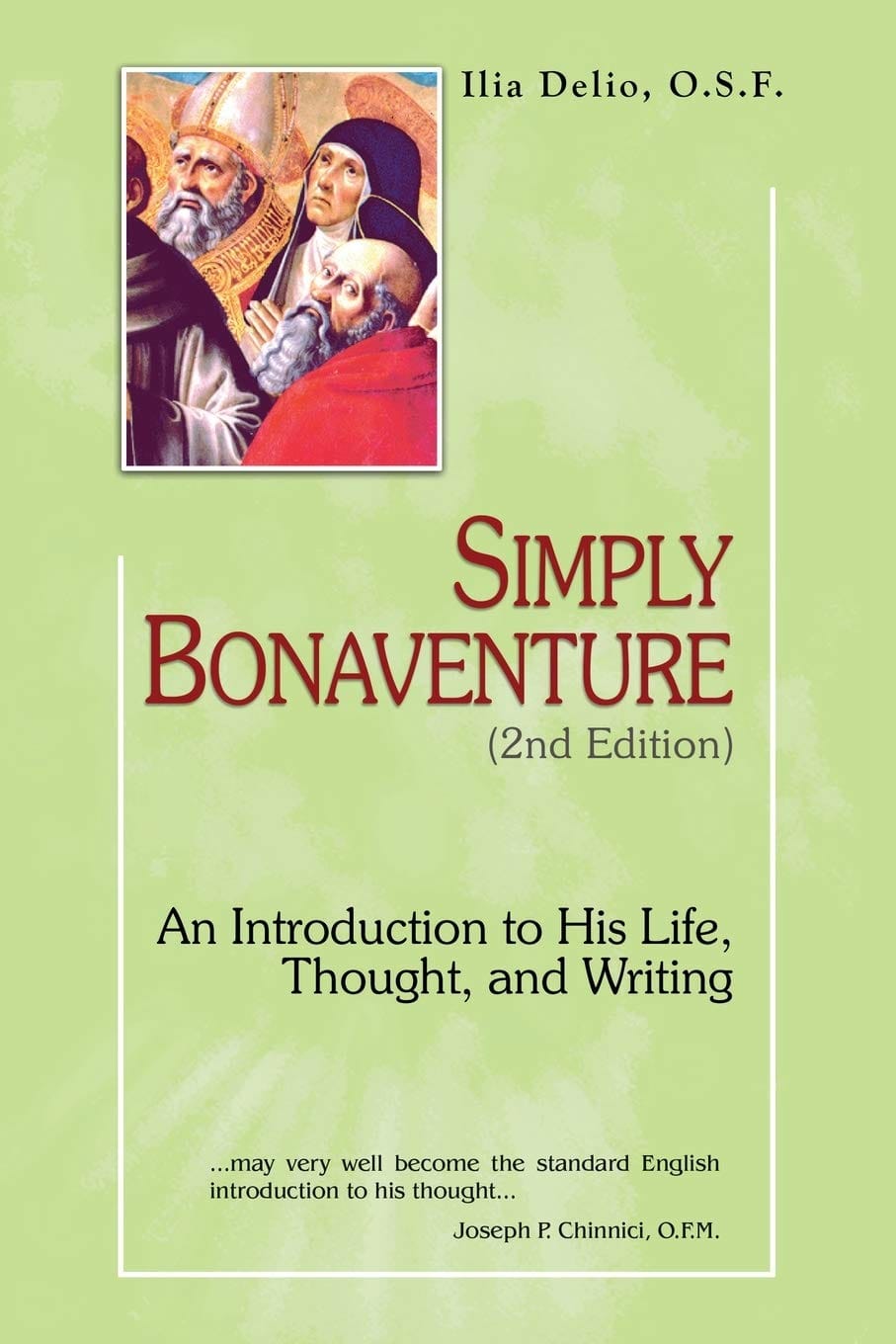
by St. Bonaventure, translated by Jose de Vinck - Simply Bonaventure: An Introduction to His Life, Thought, and Writings
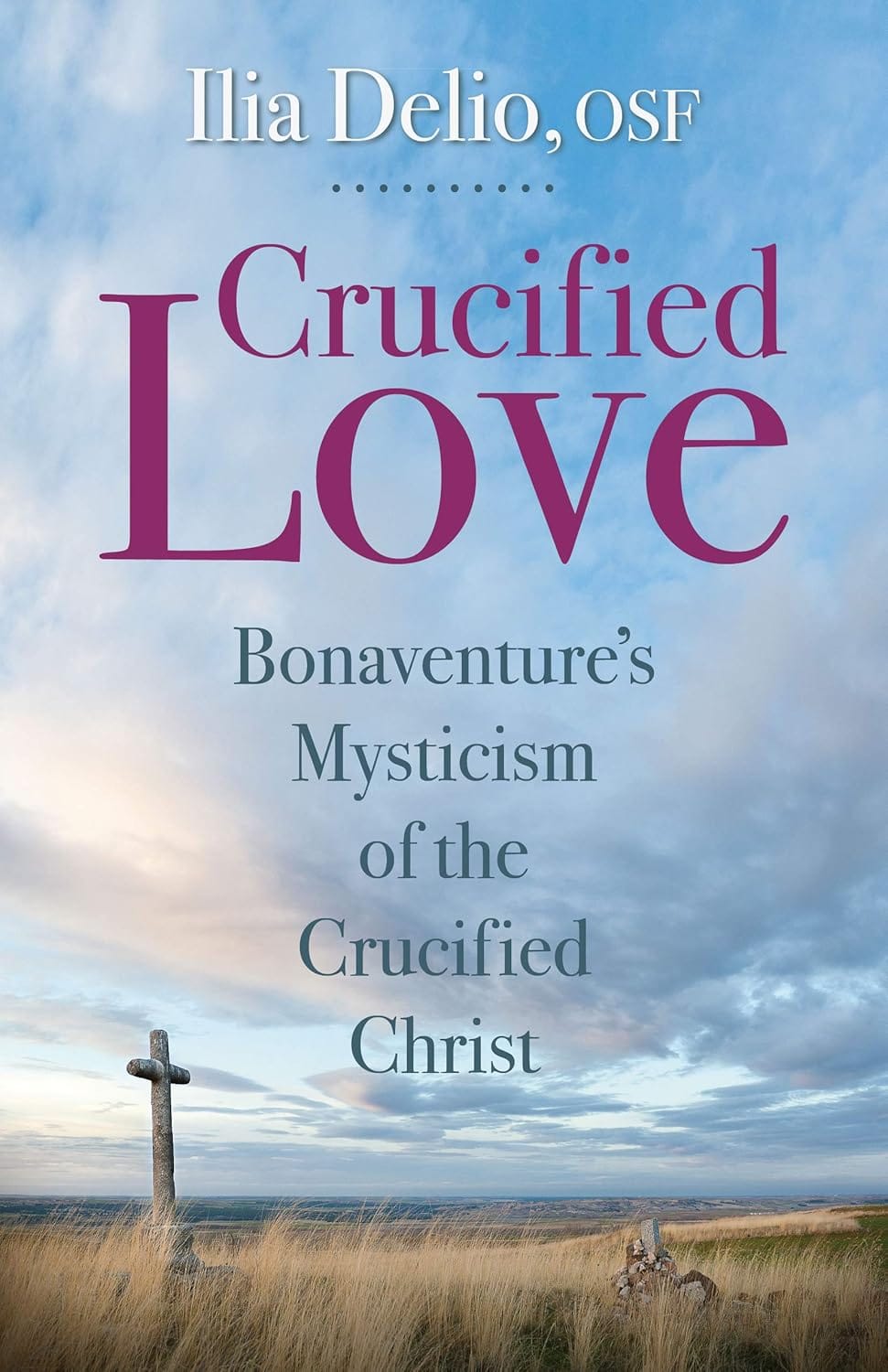
by Ilia Delio OSF - Crucified Love: Bonaventure's Mysticism of the Crucified Christ
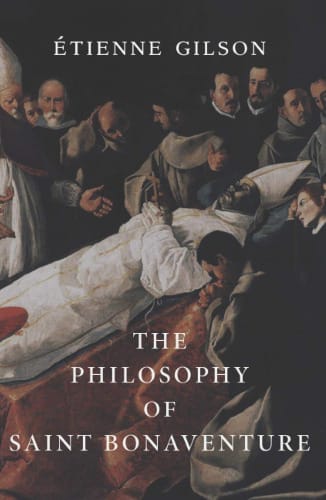
by Ilia Delio OSF - The Philosophy of Saint Bonaventure
by Étienne Gilson
There are plenty of books on theology and spirituality. Why read Bonaventure instead of the latest literature?
This is always a difficult question because I write contemporary stuff. For example, I write almost once a fortnight in The Catholic Thing, where there is a lot of good articles. So, I do not want to discourage people from reading the many good things that are coming out.
Today, I just read in Church Life Journal a selection today from Fr. Thomas Joseph White's book on the Incarnation and a wonderful piece by Brant Pitre on Christology. However, there are also tremendous writing in the ancient and medieval world that we do not want to miss. One is Bonaventure's Itinerarium mentis in Deum (The Journey of the Mind into God or The Journey of the Mind into God). It has been a mystical masterpiece for generations. Like literary masterworks, such as Hamlet and King Lear, Homer's Iliad and Odyssey, or St. Augustine’s Confessions, it is a classic that has inspired people for generations, almost a thousand years.
That makes you wonder why it has been one of Bonaventure’s most popular books and a classic of Western mysticism. In fact, one of the major works Bernard McGinn included in the Classics of Western Spirituality series is Bonaventure’s Itinerarium.
“Bonaventure had fourteen years of training at the University of Paris. He had a tremendously high literary sensibility."
At Paris, St. Bonaventure probably studied under a brilliant group of early Franciscan theologians: Alexander of Hales, Jean de la Rochelle, Odo Rigaud, and William of Middleton. Moreover, many of his writings regard the Franciscan order and its spirituality. What are the distinctive Franciscan characteristics of his theology?
Bonaventure’s relationship with the Franciscans is fascinating but has also been controversial, both during his own life and ever since. Some believe that he led the Franciscans in the wrong direction. Instead of concentrating on the simple piety of St. Francis, he got them involved in academic pursuits and moved the headquarters of the Franciscans to Paris.
Of course, he was a great scholar. He had been a Master of Theology at the University of Paris. I argue that he was not a bad Franciscan. However, that is a matter for Franciscans to determine.
He was certainly deeply Franciscan in his spirit and his approach to things. However, he also shared more in common with the other Masters of Theology at the University of Paris than any major differences there might be among them. In academia, we make a big deal about the matters on which they differ. However, I like to look at the many ways in which they are deeply similar. There is a deep convergence among them. They all believe that genuine learning begins in humility and should lead ultimately to knowledge and love of God.
Of course, there are also differences among them. People read different texts. For example, the Victorines—Hugh of St. Victor and Richard of St. Victor—are much more important for Bonaventure than they are for Aquinas, whereas John Damascene is very important in the work of Aquinas but shows up hardly at all in Bonaventure. Different people read different books and are inspired by different things in different ways. This makes things interesting.
Bonaventure had fourteen years of training at the University of Paris. He had a tremendously high literary sensibility. His preaching moves at a very high level. Thomas, on the other hand, spent his time at the University of Naples, studying logic. He did not have the same high literary characteristics that Bonaventure acquired at Paris, but was a tremendous logician and, under Albert, studied natural philosophy and the works of Aristotle far more than Bonaventure ever did. That said, Bonaventure showed in his sermon Christ the One Teacher that he too was very knowledgeable about Aristotle.
The mendicant controversy was one of the challenges that St. Bonaventure had to address as Minister General of the Order of Friars Minor. What was the controversy about and how did he deal with it?Both Bonaventure and Aquinas, both the Dominicans and the Franciscans, had to deal with the issue of mendicant life, which was controversial at the University of Paris for various reasons.
There was a debate within the mendicant orders, at least within the Franciscans, over whether they should be professors at a place like the University of Paris. However, the secular clergy who taught at the University of Paris were also against the mendicants being part of the faculty. Before Thomas and Bonaventure were accepted as masters, they had gone on strike but the Franciscans, such as William of Middleton, had refused to join them. The secular clergy disliked the mendicants for that reason and that is why the inception of Bonaventure and Thomas was held up for several years. The pope had to intervene for them to be incepted as Masters at the Faculty of Theology in the University of Paris.
There was also the question of whether it was noble for friars to beg for a living. Were they not stealing money from the more needy? Was it appropriate for them to be masters at a university.
The same sort of objection goes on today. Franciscans and Dominican do not own anything but people give them things. Hence you might see a Franciscan or a Dominican driving a pretty nice car that somebody donated. This kind of thing has always been somewhat controversial. The issue is that the mendicant friars do not own anything yet receive donations from people and sometimes do not look as poor as people who are homeless. Their vocation is not exactly the same as that of Mother Teresa's of Calcutta’s Sisters of Charity, who really do live without anything.
Bonaventure was appointed Minister General to succeed John of Parma, who had been made to step down because he had looked favourably upon the millenarianism of Joachim of Fiore. Why were a significant number of Franciscans Joachimites?
That is a good historical question.
Gioachino da Fiore was a monk who saw the Trinity as a sort of historical development. First, there was the age of the Father, followed by the age of the Son, and finally the age of the Holy Spirit's particular activity in the world.
The bottom line was that whoever somehow fully embodied this new final age would also embody Christ. The Joachimites and the Franciscans said that Francis had done so. He was not just a saint nor the founder of an order. For them, he was in some regards the definitive figure within the Church. It was as though Scripture had said, “And in the fullness of time, God chose Francis to be the model and embodiment of this new age.”
You can see why the Franciscans would be happy to suggest that their man was this important. Often, there have been legitimate and wonderful movements of spiritual renewal within the Church. They have their place. The question is whether they are somehow definitive or and whether everyone should live in their way. The tradition of the Church has always maintained that there are different spiritualities. For example, there are Franciscans, Dominicans, and Benedictines, each with a very different life. The Benedictines take a vow of stability and stay in their monastery, whereas Franciscans and Dominicans are monks that have always been able to travel around. Similarly, the Dominicans have promoted the Rosary, a very fine devotion, whereas the Benedictines have promoted the Liturgy of the Hours. The original Benedictine idea was to chant all 150 Psalms every week.
At any rate, the Joachimite tendency was popular among the Franciscans. However, it made them less popular among other religious orders and church officials, who admired Francis but could not approve of the Joachimite tendency to separate the Trinity.
The Joachimites proposed what we would call process theology. Back then, it was deemed heretical. It still is. Joachim was generally considered to be a heretic. Hence, embracing a heretical movement was not the kind thing that would make the Franciscan Joachimites popular in the Church.
What drew you to study St Bonaventure?
Thomas and Bonaventure are sometimes called the duo lumina, the two great lights of the Middle Ages. Though I am interested in the theology of the Church in general, my areas of special interest have always been, in addition to Ancient Greek philosophy, patristic and medieval theology.
One of the things I liked about the Medieval Institute at Notre Dame and the reason I went there was that I had always admired classicists. Classicists seem to know something about a whole world. They can talk about works of literature, such as those of Sophocles and Homer, a philosopher such as Plato, or the history of the period. I found their knowledge of a whole world and culture fascinating. So, when I went off to study patristics and medieval theology, although I was primarily interested in Augustine and Aquinas and Aristotle, I was interested in the whole intellectual world of the Middle Ages.
Bonaventure is a very important and interesting part of that world. Hugh of St. Victor and Richard of St. Victor are unbelievably brilliant and amazing twelfth-century figures, Similarly, if you study the thirteenth century you should undoubtedly study not only Thomas Aquinas but also Bonaventure. Sometimes, however, people do not study both.
When I sent Aquinas, Bonaventure, and the Scholastic Culture of Medieval Paris: Preaching, Prologues, and Biblical Commentary to Cambridge University Press one reviewer was shocked that I liked both Aquinas and Bonaventure. There is a tendency for those who like Aquinas to deem Bonaventure second rate, and for those who like Bonaventure to dismiss Aquinas as a logician. I am a big fan of both.
 Five Books for Catholics
The works by St. Bonaventure that you have selected for new readers belong to his writings on the spiritual life. However, he also wrote major works of a more academic and systematic character. Presumably, you have not recommended them because they are more challenging and suppose some training in theology. Which of these works are the most important?
I did select books that are more accessible to general readers and are related to the Itinerarium, of which are there are several very good translations with notes, such as Into God. One of the beauties of some of the other volumes on the list is that they contain other wonderful works of Bonaventure in them.
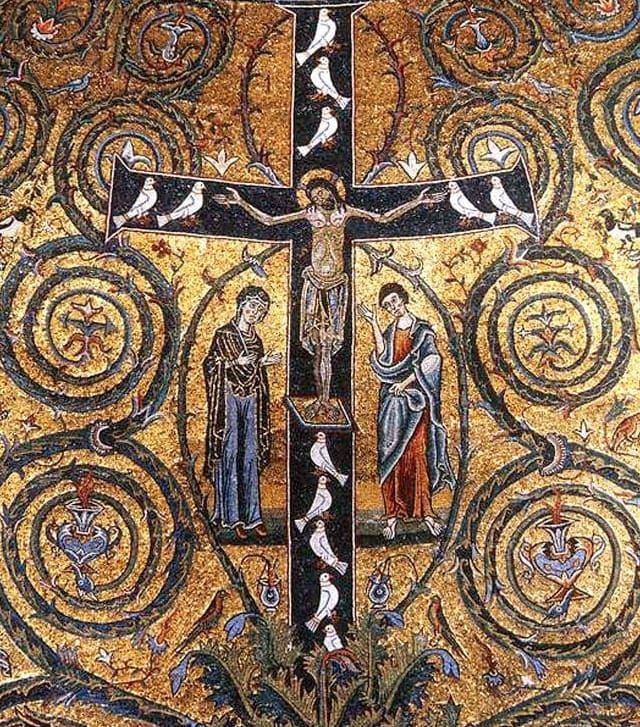
If you get a chance, read The Tree of Life. It is very accessible and based on the beautiful image of a tree with twelve branches and fruits.
His inception address as a Master of Paris, The Reduction of the Arts to Theology, is dense but brilliant and fascinating.
Many have written on Bonaventure. I recommend Étienne Gilson’s The Philosophy of St. Bonaventure, which is now back out in print. For those looking for something shorter, I recommend the online article by Ed Houser and Tim Noone for the Stanford Encyclopedia of Philosophy.
I would also recommend his Breviloquium, a short summary of theology.
Yes, this is a very important work. It is called the Breviloquium because it is a brief introduction to the basics of theology. It is a beautiful and short work. It gives you a sense of Bonaventure’s genius but is just as accessible and readable as St. Thomas’s sermon conferences (collationes) On the Ten Commandments, On the Creed, and On the Hail Mary. The Breviloquium is not deeply philosophical but lays out the basics of the faith. It is Bonaventurian in its simplicity. That makes it very beautiful and elegant.
As you mentioned, St Bonaventure was one of main three main theologians of the thirteenth century. But the school of theology that most Franciscans followed was that of Blessed John Scotus. How come St Bonaventure did not gain as wide a following among the Franciscans as St Thomas Aquinas did among the Dominicans?
This is another question for the Franciscans. Though there are brilliant things in Scotus, he has never been quite to my taste.
The Franciscans have been devoted to Bonaventure. For example, St. Bonaventure University has published an English translation of his works. Moreover, the Franciscans brought out a modern critical edition of the complete works of St. Bonaventure at the end of the nineteenth-century while the Dominicans, who were commissioned by Leo XIII to bring out a critical edition of the complete works of St. Thomas Aquinas, have still not completed the task.
However, Bonaventure had barely been appointed Master at the University of Paris when he was elected Master General of the Franciscans. Though the works he wrote as Master General are brilliant and deeply theological, they are not as academic as those of Scotus. Modern academics intent upon comparing Thomas' Summa with the Franciscan intellectual tradition of the period will probably turn to Scotus rather than Bonaventure. Scotus takes the same scholastic approach.
 Five Books for Catholics
On the other hand, in my works I often ask why we are less interested in Thomas's sermons and biblical commentaries than in his Aristotelian commentaries. Part of the reason is that the nineteenth-century revival of Thomism, promoted by Leo XIII and others before him, was interested primarily in the scholastics for their philosophical arguments: as a way of opposing Enlightenment rationalism and German idealism. In that case, you would turn to Thomas and Scotus rather than the less academic Bonaventure and Bernard of Clairvaux. Similarly, those working in philosophy tend to look at Anselm's ontological argument rather than the less philosophical but equally profound reflections of other twelfth-century authors.
“He was telling them that learning can and should lead to the knowledge and love of God. It begins in humility and leads to Christ."
1.
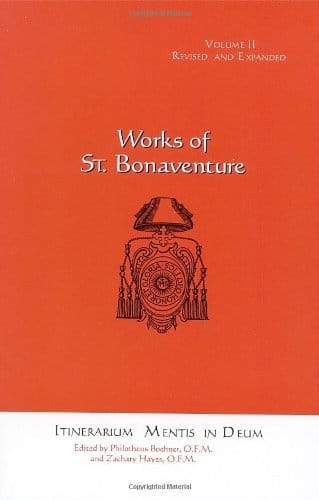
First up is what is arguably St. Bonaventure’s most famous work, The Journey of the Soul Into God (Itinerarium mentis in Deum). What is its main argument?
It is a complex, beautiful work. Bonaventure says that, while on his way to the general council of the Franciscans, he stopped to make a retreat at Mount Alverna, where Francis received the stigmata. There, Francis also had a vision of a seraph, a six-winged angel. In the middle of the seraph was an image of Christ crucified. Bonaventure says that, during his retreat, he was inspired to write an account, based on that vision, of the soul’s ascent to God.
The two lower wings of the seraph represent our perception of the material world and how we can rise to God from it. The two middle wings indicate how we can rise to a vision of God by looking inside ourselves. The two upper wings represent our journey through looking at what is above our mind: being itself and goodness itself. Beyond these, there is a final seventh step, in which our minds must go dark and blank, as it were. This is the vision of the crucified Christ. What surpasses all understanding is that there a Triune God who loves us so much that he is willing to become an actual human person and die on the cross for us.
This is the basic structure of the Itinerarium.
My argument is that Bonaventure was leaving a message to the spiritual Franciscans, who were worried that the world of learning would corrupt the Franciscan spirit. He was telling them that learning can and should lead to the knowledge and love of God. It begins in humility and leads to Christ.
His message to the conventional Franciscans who were studying and teaching at places like the University of Paris was the same. All this sophisticated teaching and learning must begin in humility and ultimately lead us to Christ, who is above our minds and beyond our understanding.
This is the basic sort of structure of the work. However, it has many other intricate levels. With his tremendous imagination, Bonaventure explains how we can see God in the many different parts of creation and our souls or understand both things and God as being and goodness.
The mind meant something quite different for medieval scholastics than it does today. For them it was not just consciousness but a deeply theological concept. Following St. Augustine, they understood the mind to consist of memory, intellect and will and to constitute the image of the Triune God in man. Is this the notion of mind with which Bonaventure’s Itinerarium mentis in Deum works?
That is as good a description of the scholastic sense of ‘mind’ as any. I make this point in the book, as do many commentators. That is why the title is sometimes translated as The Journey of the Soul into God rather than The Journey of the Mind into God.
The problem here is that Bonaventure would challenge you were you to suppose that the soul is entirely spiritual but not related to thinking and the life of the mind. He would also challenge you were you to regard the mind as mere logical discourse that has nothing to do with the spirit and mysticism. All these things are connected. The Itinerarium is clearly the journey of the soul, the heart of our very being. It is about how we live in the world. This journey involves our love and our emotions. The intellect is also deeply involved. The fourth stage of the Itinerarium goes through all the different realms of teaching that were imparted in a medieval university: grammar, rhetoric, and dialectic. Those three disciplines were a representation of the Trinity for Bonaventure. He wants us to constantly see God reflected in creation, our souls, our minds, and so to pray constantly.
He wrote in partly in response to sophisticated world of the Middle Ages in which he lived.
During the thirteenth-century, there was a growing group of educated laity in the cities and towns. For many of them, simple piety was not enough. The works of Aristotle had been rediscovered. Many were studying them and finding in them a very sophisticated philosophical underpinning for life. The priests preaching to such people in an increasingly educated society needed to be equally learned. Bonaventure was aware of this and that there was ever more widespread knowledge of natural philosophy. A more sophisticated theology was needed to incorporate St. Francis's great insight that creation is our brother and sister and help us see creation sacramentally: as a gift of grace through which God reveals himself to us. As science became more developed, a more sophisticated theology was needed to retain this sacramental notion of creation. You cannot use fourth-grader theology to talk to people who have PhDs in cosmology, astrophysics, chemistry, biology, and law.
You have recently published the first full commentary in English on The Journey of the Soul Into God. In it, you argue that Bonaventure deploys the techniques of the sermo modernus. What is the sermo modernus and how does it shape St. Bonaventure’s writing?
Sermo modernus is just Latin for ‘modern sermon’. We might find it amusing that thirteenth-century people thought of themselves as modern. The point is that they did.
At the time, there had been many attempts at reforming preaching, both to get pastors to preach and to preach in an orthodox way. First, it was is easy for those preaching to go off the rails as they read the Scriptures and start making unorthodox statements. Second, it seems that many priests did not preach at all. Often, there was no homily at Masses.
Hence, during the late twelfth and early thirteen centuries, efforts were made to reform preaching and ensure that all the faithful were preached to continually.
The Dominicans and the Franciscans picked up this idea and ran with it. They wanted to train themselves in how to preach.
One style of preaching that developed in the thirteenth century was that of the ‘modern sermon.’ Previously, the common style of preaching consisted in a line-by-line exegesis of the text, somewhat as St. Bernard does in his Sermons on the Song of Songs. Alternatively, the sermon consisted of little pious morality tales. However, sermons did not tend to be deeply theological or well organized.
The modern sermon style, though very strange to us, seems to have been very popular. I wrote Reading the Sermons of Thomas Aquinas: A Beginner's Guide to introduce people to the modern sermon style.
The modern sermon style begins with a biblical verse. For example, Thomas's sermon for Advent uses a little passage from Matthew (21:5; Zecheriah 9:9): “Behold, your king is coming to you, humble.” However, he does not comment on that verse as we would expect. Instead, he uses each word in it as a mnemonic device to key in the various sections of the sermon.
For example, he says that there are four different ways in which we can understand ‘behold’. It can mean that something new is happening. Well, Advent is a new thing which Jesus is doing.
After going through the various sense of ‘behold,’ he inquires into ‘your king’ and explains that there are four ways in which Christ is our King.
This style of sermon is for people who love word games, poetry, and the ways in which words can signify different things in different ways. It is fun. It can be very interesting, hold your attention, and structure the sermon. Moreover, academic preachers were required to use the same verse—the thema verse—in both their morning sermon and when they preached later that day at Vespers. So, Thomas in his sermon for Advent stops at ‘Behold, your king is coming,” and then says at Vespers, “Well, you remember that this morning I said, ‘Behold, your king is coming.’ Now, I need to explain how he is coming ‘to you.’” He goes on to explain that Christ is for us because he gives us salvation and he guides us from a cross, and so forth. He then explains how Christ is ‘humble.’
The sermon is tremendously structured. All you need to do to remember its whole structure is recall the thema verse: “Behold, your king is coming to you, humble.”
I argue that the Itinerarium, though not a modern sermon, uses many of the same methods. In it, Bonaventure makes the same kinds of division. This is very important. It makes it easier to remember the brilliant structure of the Itinerarium.
“Often what impresses people about Bonaventure is his creative use of imagery."
2.
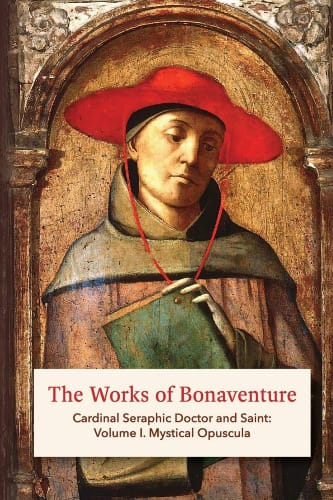
During St. Bonaventure’s canonization process, The Threefold Way, together with the Itinerarium, was cited as proof of his saintliness. Why were medieval theologians so impressed with this summary of mystical theology?
I can only speculate as to why. These are impressive works. Often what impresses people about Bonaventure is his creative use of imagery. I know people who are more interested in Renaissance literature. However, they love Bonaventure because he has that same sort of creative mind as Renaissance authors. He was not as tied to the academic texts as, say, Scotus and Aquinas.
Those teaching at a university need to write academic works. The little articles that I write for The Catholic Thing would never get me tenure. The university expects me to write technical academic articles, that hardly anybody will read, and publish books with Cambridge University Press. So, that is what I do. However, it takes a lot of time.
St. Bonaventure did not have to spend as much time on that kind of writing. Moreover, he was tremendously creative and could produce works—such as The Threefold Way, the Tree of Life, the Breviloquium, and the Itinerarium—that are both very dense and short. They tend to be short because they are so dense. Their density allowed Bonaventure to write works that are much shorter than the Summa of St. Thomas or large works of Scotus.
It only takes an afternoon to read one of these works by Bonaventure, but it would take a lifetime to delve deeply into the words. These works condense a huge amount of material into very small package that is written in a beautiful high style of Latin.
Bonaventure’s fourteen years at Paris paid off. As I said, Thomas was a logician who learned to preach, whereas Bonaventure was a scholastic with the soul of a poet. Unfortunately, this does not come out as much in the English translation of Bonaventure’s works as much. That is a shame, but it is just how things are.
The profundity of these brief texts and their beautiful imagery impress most readers. I have read the Itinerarium with my students. They really liked it. Even though it is a very dense work, they, like many others with whom I have spoken about the work, say the same thing about it. They love it, find it very profound, but do not really understand it. Funnily, even though it goes over their head, they find it very profound. Whatever Bonaventure is doing, he somehow fastens onto the soul of his readers and draws them in. That they are willing to go back to this work, just as people read Hamlet and King Lear over and over, always discovering something new. This is a testimony that Bonaventure is doing something right.
3. & 4.
Reading St. Bonaventure can be challenging for modern readers, most of whom are unaccustomed to his scholastic terminology or his penchant for symbolism and allegory. The remaining books are guides to St. Bonaventure. First up are two by Sister Ilia Delio’s two studies. Her Simply Bonaventure is an Introduction to His Life, Thought, and Writing. Her other study is on Bonaventure’s Mysticism of the Crucified Christ. No doubt there are many overviews of this theology. Why have you picked these two?
There are many kinds of reader. When people ask me what they should read about the Christian faith, I would like to tell them to just pick up the Summa theologiae and read it. Of course that would not be a suitable book for most readers. Instead, I recommend C.S. Lewis's Mere Christianity or G.K. Chesterton's Orthodoxy. For the more literate, I might recommend Newman’s sermons or St. Augustine’s Confessions.
 Five Books for Catholics
When it comes to recommending books on Bonaventure, the dynamic is similar. Those interested in his philosophy at a technical level should read the fine article at the Stanford Encyclopedia of Philosophy. If they want a longer, deeper study, I would recommend Gilson’s book. Those looking for a work that is more suitable for beginners, yet deep and beautifully written, should go to the books by Ilia Delio.
The first is more general. It is on Bonaventure’s life and work. The other, on his mysticism of the crucified Christ, is more closely related to the themes of the Itinerarium.
5.
Finally, there is Étienne Gilson’s monograph on The Philosophy of St. Bonaventure. This work was written a little over a hundred years ago. Does it still hold up?
There is a prejudice, particularly when you send in articles, about quoting less recent scholarship. I have two responses to that. One is that Gilson live in the heroic age of scholarship. Those scholars, on account of their background and knowledge of the languages, were much better than almost all of us. So, I am not at all embarrassed about recommending works of early twentieth-century scholarship, such as those of Gilson. There have been developments since then. More texts have been discovered. There are some wonderful articles, for example, in Brill’s A Companion to Bonaventure. Moreover, we now have wonderful annotated English translations of Bonaventure’s works, such as those in the series from St. Bonaventure Press. Nevertheless, these early twentieth-century scholars left us tremendous. Dismissing them is a bit like saying that historians have surpassed Christopher Dawson. So, my second point is that though we may know more, it is still worth reading these scholars.
You could say, to use a scholastic distinction, that we know more extensive but not intensive. We have a broader but not a deeper knowledge.
Yes. The other thing I would say is that up to the fifties and sixties scholars were willing to write big works and take up the big questions of meaning.
You also feel that there is something at stake for many of them in the works they write. They are believers. They are all about ressourcement. Not all of them are ressourcement theologians in the technical sense but they believe that they are recovering something important for the life of the Church. They address living questions. Scholarship is not just an academic exercise for people like Gilson. It is a way to revivify the life of the Church. So, it is deeply important for them. You get the same sense with Dawson. As believers, they feel that they need to get things right. For example, I think it is important to read Bonaventure. He can really help people map out their road toward God.
This vision of the intellectual life had dwindled from the seventies on.
I had a housemate once who was writing a dissertation on the arguments for the existence of God. I asked him whether he was a believer or a theist.
“No,” he replied, “Why would you think that?”
“Well, because you are writing a dissertation on arguments for the existence of God.”
“No, it is just an academic exercise.”
There was nothing at stake for him. His research was not meant to change his life, whereas there was a lot at stake for the early twentieth-century historical theologians in their work.
 Five Books for Catholics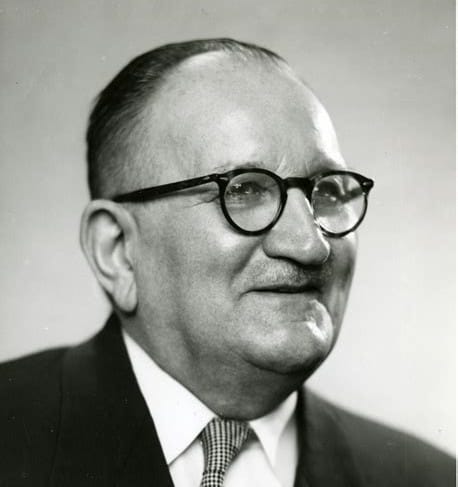
Gilson’s argument—that Bonaventure had a coherent philosophy—was contested by Ferdinand van Steenberghen. According to the latter, Bonaventure was really a theologian who did not develop a self-standing philosophy in the way that St. Thomas did. Which of the two is right?
Neither. I say that with all due humility and respect. These were two giants in the history of the Church's intellectual life.
They were involved in a fascinating debate about the nature of philosophy and Christian philosophy. It is worth reviewing that debate.
The premise of the question is that Thomas had a freestanding philosophy.
Gilson’s views on the philosophy of Bonaventure were controversial. However, even more controversial was his claim that figures such as Aquinas had a Christian philosophy. But what is a Christian philosophy? Does it somehow dilute or destroy its philosophical character?
I have always been a fan of Anton Pégis’s view that medieval theologians develop a philosophy within the context of a theology. They deeply understand the difference between faith and reason. By the same token, they would not have recognised the distinction that the modern university makes between philosophy and theology departments, as if philosophy has nothing to do with theology and theology is related dubiously to philosophy. This is not something they would have recognised.
The discussion on Christian philosophy is a fascinating and important one. However, the terms by within which we enter into that discussion need to be examined deeply.
Gilson and Steenberghen were both right in a sense, but in another sense, they were both wrong. In a disputed question on Christian philosophy, the determining master in a medieval university would say, “Right and not right can be said in many ways that we must always distinguish.” The medieval motto was, “Rarely affirm, never deny, always distinguish.”
Neither Bonaventure nor Thomas had a freestanding philosophy, but both have a philosophy. Much depends on what you mean by ‘a freestanding philosophy.’