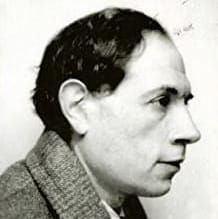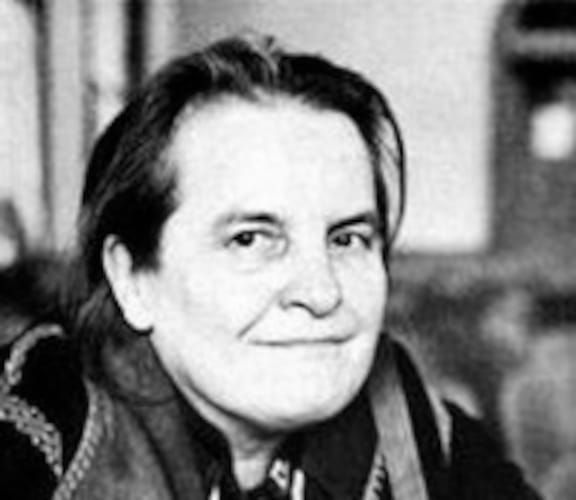

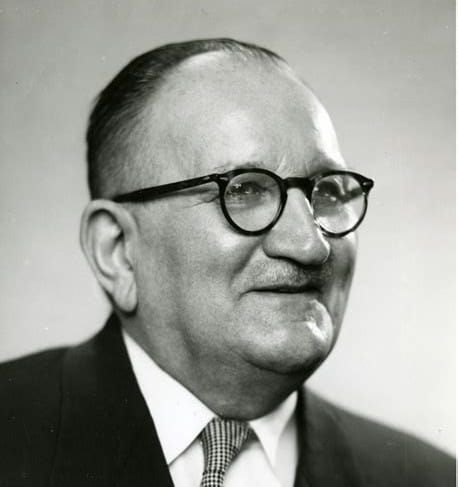
The French academic, Étienne Henri Gilson (1884-1973), was an important historian of medieval philosophy and one of the leading twentieth-century Catholic thinkers. A devout Catholic his entire life, he studied philosophy at the Sorbonne under Victor Delbos and Lucien Lévy-Bruhl and at the Collège de France under Henri Bergson. His doctoral research on the scholastic sources of Descartes inducted him into the study of medieval philosophy. After serving in World War I, he taught at the universities of Lille, Strasbourg, Paris, and Harvard, before founding the Pontifical Institute of Medieval Studies in Toronto. Following World War II, he became a member of the Académie Française, served briefly as a member of the French Senate, was a technical consultor of the French Delegation to the San Francisco Conference, which instituted the United Nations, and was a delegate to the conference that led to the establishment of UNESCO. In his numerous books and articles, he not only surveyed the history of Western thought but made the case for Christian philosophy, particularly that of St. Thomas Aquinas.
In this interview Dr. James G. Colbert will discuss Gilson and his pick of some of the author’s works.
James G. Colbert is Professor Emeritus of philosophy at Fichtberg State University He has translated several of Étienne Gilson's works: Greco-Arabic Sources of Avicennist Augustinism, Medieval Essays, Theology and the Cartesian Doctrine of Freedom, John Duns Scotus: Introduction to His Fundamental Positions, Studies in Medieval Philosophy, Metamorphoses of the City of God, and The Tribulations of Sophia. He has also translated Florian Michel's Étienne Gilson: An Intellectual and Political Biography.

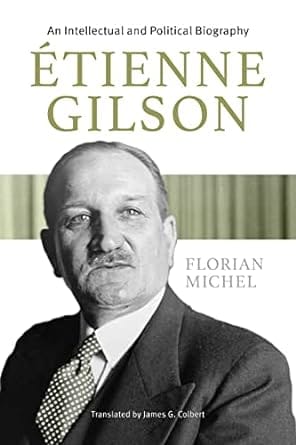
- Mass Society and its Culture
by Étienne Gilson - Metamorphoses of the City of God
by Étienne Gilson - The Tribulations of Sophia
by Étienne Gilson - The Philosopher and Theology
by Étienne Gilson - The Spirit of Medieval Philosophy
by Étienne Gilson
...and some supplementary recommendations... - Being and Some Philosophers
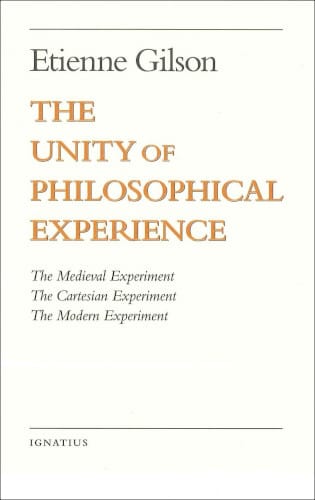
by Étienne Gilson - The Unity of Philosophical Experience
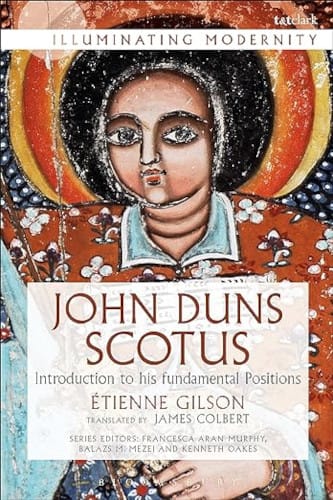
by Étienne Gilson - John Duns Scotus: Introduction to His Fundamental Positions
by Étienne Gilson
What are the main events in Gilson’s life that the reader should take into account?
Gilson was born into a Catholic family and went to a Catholic school, indeed one that doubled as a minor seminary. He did his university work and taught at public institutions in France.
We might single out Gilson's eminently readable doctoral thesis on Descartes (Theology and the Cartesian Doctrine of Freedom) where he discovered that Descartes had roots in medieval philosophy. This reversed a widely accepted view that philosophy disappeared after the Greeks and was reborn with Descartes. Gilson, by the way, in 1925, published an edition of Descartes' Discourse on Method intended for use as a secondary school textbook.
Gilson submitted his first scholarly articles from a German prisoner of war camp during World War I. Beside writing, Gilson put his time in the camp to use studying languages, notably Russian. After World War I, he was an envoy to Ukraine during the famine.
Subsequently, Gilson became friendly with Joseph Vrin in Paris, who facilitated publication of Gilson's research and that of other medievalists, and whose successors are now publishing Gilson's complete works.
During the period between world wars and while Gilson was a professor at the Sorbonne, he crossed the Atlantic regularly to teach and lecture in Canada and the United States. The first book by Gilson that I read was his Reason and Revelation in the Middle Ages, originally given as the Richard Lectures at the University of Virginia in 1937. Gilson left his family in France during these trips, which were understood as cultural missions. He was a devoted family man and had to leave them with great distress. Immediately before World War II, when the U.S. still maintained its neutrality, Gilson was asked to conduct speaking tours around the U.S. trying to win support for the Allied cause.
To the academic community's surprise, but making clear where his priorities lay, Gilson turned down the offer of a permanent position at Harvard because of his encounter with the Basilian Fathers who persuaded him to come to Toronto to found the Pontifical Institute of Mediaeval Studies.
Gilson's single most important theme is 'Christian philosophy.' Very roughly, there were themes that would not be treated in the way they are without Christianity, but they are not axioms, not givens, as they would be in theology. They are the core of Christian philosophy.
Has Gilson had an enduring influence on modern Catholic thought?
Not only do scholars associated with Vrin Publishing in Paris re-edit his works and collect his articles and correspondence. Even more importantly, his successors carry on his work in North America, notably at the Pontifical Institute for Mediaeval Studies. He is not, however, as widely read as he deserves.
Is Gilson a writer of dry, technical philosophical prose or are his works interesting and accessible?
Gilson is an exquisitely clear writer in a field where murkiness is rampant! For instance, there are numerous editions with improvements of Le Thomisme (English Edition). His older friend, Henri Bergson, got a Nobel Prize in Literature. (There is none in philosophy.) I frequently tell myself that Gilson deserved the same.
Why is Gilson still worth reading today?
Gilson himself makes a good case for re-reading great thinkers. The Unity of Philosophical Experience presents a kind of study with three experiments, medieval, Cartesian, and modern thought. Philosophy is not like pharmaceuticals or even physics where earlier work is left behind. Real philosophical issues are perennial. The history of philosophy can be used as a laboratory.
Let me hasten to add that Gilson also participated in writing histories of philosophy pure and simple: by himself History of Christian Philosophy in the Middle Ages; Modern Philosophy, Descartes to Kant; with Thomas Langan and Armand Maurer, Recent Philosophy, Hegel to the Present.
Is there a central idea running throughout Gilson’s works?
Probably, Gilson's single most important theme is "Christian philosophy." Very roughly, there were themes that would not be treated in the way they are without Christianity, but they are not axioms, not givens, as they would be in theology. They are the core of Christian philosophy. The most important is surely the insight obtained when we reflect on the name God gives himself: I Am Who Am.
More technically, Gilson also teaches that we know being not as we know dogs, cats, dirt, and cabbage in concepts. We grasp it when we make judgments about things that are. See the last two chapters in Being and Some Philosophers. Warning: reading this can be habit forming.
What led to your own interest in Gilson and activity as a translator of his works?
During my student years I bumped into people who liked Gilson. As I tried to figure out why, I became an enthusiast myself. He was clear, well informed and made me think about many questions and some answers.
At a period of commotion in the Church, Gilson seemed to be worried about the same things that worried me. See The Tribulations of Sophia.
1.
The first book you have recommended is not only one of Gilson’s least well-known ones, but also on one of his least-known areas of specialization, the philosophy of art. What makes this book a good entry point into the writings of Gilson?
The first book I recommended consists of two smaller books, one of which contains an essay on Christian philosophy as well as another on art. ("Christian philosophy" was a very controversial notion among Catholic intellectuals when Gilson began to advocate it. Critics of the notion felt that at best it meant theology.) I wanted to pre-empt any suspicion that Gilson was not a real philosopher. This presentation of "Christian Philosophy" is the work of Henri Gouhier, Gilson's first doctoral student, who became a lifelong friend and succeeded him as the holder of chair 23 in the Acadèmie française.
In the second little book by Gilson himself, we are presented with a discussion of culture in mass society, our society.
Gilson’s analysis of mass society’s impact of culture may be even more relevant today, the digital age. What are the chief points of his assessment of mass society?
A quick (and inadequate) answer that I hope will catch readers is that while a mass produced book is a book the photo of a painting or a recording of a concert are not works of art, even if they have the merit of bringing joy to vast sectors of society. (Gilson loved music and theatre.) A surprising challenge connected with Gilson's reflections is that the Church has an obligation to have a liturgy for a mass society.
"This part of the City of God, sojourning in time, is also the leaven of the temporal city that seeks to be born, whose idea is the Heavenly City." Étienne Gilson
2.
Gilson was active in French politics and public life for a while. Recently, you translated Florian Michel’s Étienne Gilson: An Intellectual and Political Biography. With this subtitle is Michel not only surveying Gilson’s political thought but also suggesting that it is worth retrieving?
I would guess that Florian Michel (who has edited the first two volumes of Gilson's collected works, with more to come) would say that Gilson's political views are always worth understanding in their philosophical depth, rather than retrieving. My sense is that Gilson would agree. Gilson's involvement in French public life (as opposed to electoral politics) was of long standing. His output in newspapers and journals is simply staggering.
The Metamorphoses of the City of God is arguably his most important writing on political thought. He examines the Christian conception of the City of God and the various attempts throughout history to secularize that city or reduce it to a temporal society. Is this work worth reading not only for its summary of Augustine’s political thought but also for understanding our current situation?
The Metamorphoses is a wonderful overview of different political philosophies through the centuries. The lectures that compose it were delivered as what is now the European Union was taking its first faltering steps. Although Gilson does not say so, it can be understood as a background to a united Europe.
The tenth and last chapter encapsulates what we can learn about the relation between the two cities. I think we could sum up Gilson's view best as "Caution!" He would be happy about the existence of a strong Europe and critical about particular actions. It seems to me that to understand Gilson's desire for a strong Europe, one has to remember how he helped put the case for France and England to an American public before World War II without much success.
In recent years, there has been a rise of post-liberal Catholic political thought. What were Gilson’s views on the relation between Church and temporal society?
Remember that Gilson died fifty years ago. My guess is that Gilson would have many recommendations about temporal society, with the general warning offered in the previous answer. Do not confuse the two cities. Accept the fact that you will live in a "city" that is likely to be far from perfect
3.
The Tribulations of Sophia consists of three lectures and three essays. The lectures, given in Italy in 1965, are on Thomism and its Current Situation. The essays are on Teilhard de Chardin, Marxism, and Vatican II. Is this book Gilson’s assessment of Catholic intellectual life following the Second Vatican Council? If so, is it still relevant?
The Tribulations (as its name indicates) is a book by an author worried about confused attitudes toward Marxism, Teilhard de Chardin, and liturgical experimentation. We are not in the same place that we were forty years ago. But it is important to understand how we got to where we are now.
4.
The next book is The Philosopher and the Theology. Have you recommended it because it is Gilson’s stab at an intellectual autobiography?
The Philosopher and Theology is a wonderfully revealing book for Gilson lovers as he narrates his journey from a Catholic family to a secular university. For the sentimental, the English translation has the charm of being the work of one of his daughters. But it really isn't about Gilson primarily. It's about ideas: theology, the philosophy of Henri Bergson, about Christian philosophy.
In the preface to The Philosopher and Theology, Gilson describes his intellectual career as if it were not very successful: as his long inquiry into the nature of theology, only to have found the answer too late to put it to good use. Is Gilson being ironic or passing on the lessons he has learnt about how a Christian should philosophize?
Gilson is being ironic, humble, sharing lessons, though he says he learned them too late. (After all, he's a philosopher, not an executive.) But perhaps he already anticipated the troubles of the sixties.
"The spirit of medieval philosophy is the spirit of Christianity penetrating the Greek tradition, working within it, drawing out of it a certain view of the world, a Weltanschauung, specifically Christian."
Étienne Gilson
5.
Fifth, there is The Spirit of Medieval Philosophy, the Gifford Lectures that Gilson delivered at the University of Aberdeen in 1931-32. In these lectures, Gilson defines that essence of medieval philosophy as “Christian philosophy par excellence” and defends the validity of Christian philosophy. Is this book a good guide to both the central ideas of both medieval philosophy and Christian philosophy?
The Spirit of Medieval Philosophy is indeed an excellent guide to medieval Christian philosophy and therefore to Gilson's concept of Christian philosophy and its validity, To my mind, it is all the more helpful in being a work in progress that invites the reader to wrestle to work out what is original in the genesis of medieval thought, for instance, in the treatment of free will.
The Spirit of Medieval Philosophy also ties in with a debate in France in the early thirties. Gilson was one of the key participants in this debate over the very possibility of Christian philosophy. Are the questions raised in that debate still pertinent and The Spirit of Medieval Philosophy a good guide for addressing them?
Yes and yes. The Spirit of Medieval Philosophy is a clear vantage point to perceive how Christianity needs to solve intellectual problems where philosophy and theology have something to say, and needs to avoid confusing philosophy with theology in solving them. It seems to me that there is more of a sense of work in progress here than in other books, and also a sense that Christianity may have different sorts of influence on philosophy in different issues, say free will as opposed to providence.
6.
You have some extra recommended readings, ones that are more suited for those with some grounding in philosophy. The first is what is arguably Gilson’s main book on metaphysics: Being and Some Philosophers. When it comes to metaphysics, Gilson is a Thomist. However, there are various interpretations of St. Thomas’s metaphysics. Gilson’s is known as existential Thomism. On the one hand, he argues with St. Thomas that the fundamental intrinsic principle of a being (ens) is not its form or essence but the act of being (esse), by which it partakes of God (ipsum esse subsistens). On the other hand, he believes that the metaphysics of St. Thomas, by insisting on the primacy of existence or the act of being, is a far superior variety of existentialism than that of Kierkegaard, Heidegger, or Sartre. Moreover, like Heidegger, he addresses these problems by surveying the history of philosophical reflection on being. Is this an accurate summary of Gilson’s metaphysics?
You reflect Gilson accurately in the discussion of the primacy of esse. The historical "conversation" make this difficult to abbreviate, but helpful to work though. It becomes quote accessible and leads the reader to accept the metaphysics of St. Thomas as cogent and accurate. Being and Some Philosophers seems to me to be less of a debate, maybe even less of an intellectual experiment, than The Unity of Philosophical Experience.
What are some of the main critiques of Gilson’s metaphysics?
Perhaps you're asking the wrong person. But since philosophy is perennial, I think you will find some of the same objections as were made to Christian philosophy. Lurking in the background there is usually someone who wants to say that there is no more Christian metaphysics than Christian mathematics. Then too there are attempts to begin over from scratch, for example, without talking about "being."
Does Being and Some Philosophers make a good introduction not just to a central aspect of Gilson’s thought but to metaphysics in general?
Yes, it is a good introduction. Remember that an introduction has a continuation. This is not the end of the story. Remember also that philosophizing is a habit. So it is good to go back and check out some of the steps.
7.
In The Unity of Philosophical Experience, Gilson argues that not only that the history of philosophy is an essential source of philosophical reflection but also makes sense from a philosophical sense. It can be broken down into a series of experiments that make up philosophical experience and attempt to clarify the nature of philosophical knowledge. Have you chosen this book because, like Being and Some Philosophers, it helps the reader see that the history of philosophy is not simply a series of contradictory positions and intractable debates, but has an underlying unity?
Beautifully put! Yes, the title The Unity of Philosophical Experience is meant seriously. Even if it's the unity of a fight. Gilson envisages the great philosophical systems as experiments, ways of dealing with the same problems, however little the participants themselves on occasion have realized that.
8.
Finally, there is Gilson’s monograph on Blessed John Duns Scotus. In it, he presents and explores the Franciscan theologian’s fundamental positions. You called this book Gilson’s “crowning achievement”? Why should one read Gilson as a guide to Scotus’s fundamental positions? Not only did he write his monograph prior to the publication of the modern critical editions and compares Scotus to Thomas Aquinas rather than Henry of Ghent, the actual target of the Franciscan’s critiques. He is ambivalent about Scotus. While he does not dispute Scotus’s orthodoxy, he believes that the metaphysics underlying his theology is mistaken because it is essentialist. Indeed, he claimed that that, “Personally I wholly disagree with Duns Scotus. His is a climate of thought in which I cannot live,” and “There is no one less Scotist than I am.”
There are other monographs, on Augustine or Bonaventure. My intention in recommending Gilson's Scotist book is precisely to present him at work on something difficult in itself and for the student. It certainly wasn't to suggest that Gilson's work on Scotus is Gilson's crowning achievement, not even that it is the best thing on Scotus, although I think it is very good. Indeed, Gilson's clarity will make Scotus better known. I wanted to present Gilson as a scholar, who was willing to work on difficult themes.
That said, in trying to bring the footnotes up to date, I was surprised at how much remains to be done in a critical edition of Scotus. Maybe it's not a bad thing to work with a version of Scotus that our predecessors have accepted (or fought with) for hundreds of years. Gilson gives us a good book on the Scotus who influenced philosophers and theologians for hundreds of years.