
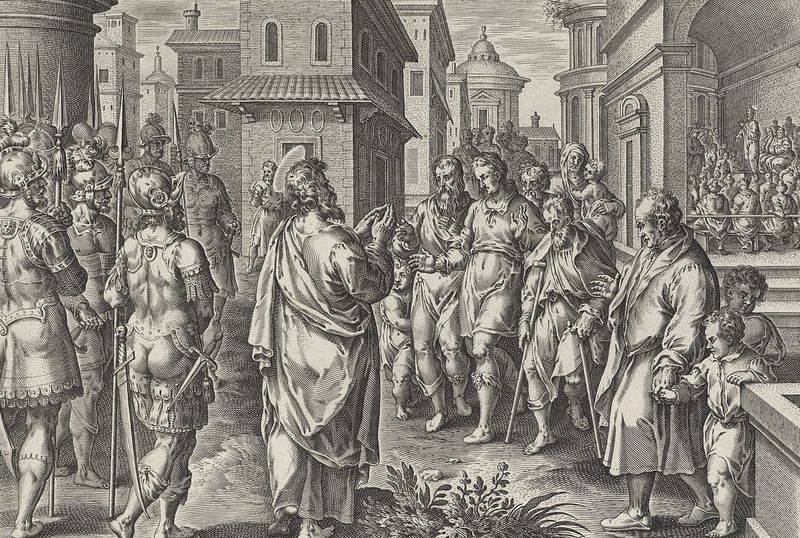
Many believe that urban culture is less conducive to the faith and that Christian life is more likely to flourish outside big cities. Nevertheless, the books of the New Testament are full of details on how, from Pentecost on, the early Church spread throughout the cities of the Roman Empire. This trend continued throughout the first centuries of Christianity. The early Church’s evangelization of the ancient cities may enclose important lessons for Christians today.
In this interview, Mike Aquilina, the author of Rabbles, Riots, and Ruins: Twelve Ancient Cities and How They Were Evangelized, discusses the early Church’s evangelization of cities and selects some of the best books on the subject.
Mike Aquilina is author of more than sixty books, including The Fathers of the Church and The Mass of the Early Christians, and Rabbles, Riots, and Ruins: Twelve Ancient Cities and How They Were Evangelized. He is executive vice-president of the St. Paul Center for Biblical Theology. He also serves as a contributing editor of Angelus News and general editor of the Reclaiming Catholic History series published by Ave Maria Press. He hosts the “Way of the Fathers” podcast for Catholic Culture. He has co-hosted eleven television series on EWTN. Aquilina is also a poet and songwriter, whose works have been recorded by Dion, Paul Simon, Van Morrison, Amy Grant, Bruce Springsteen, and others.

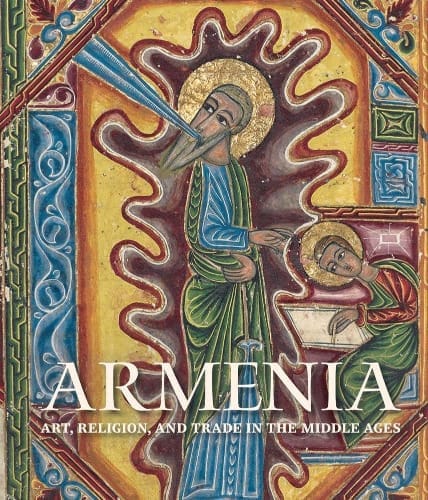
- Armenia: Art, Religion, and Trade in the Middle Ages
edited by Helen C. Evans - Cities of God: The Real Story of How Christianity Became an Urban Movement and Conquered Rome
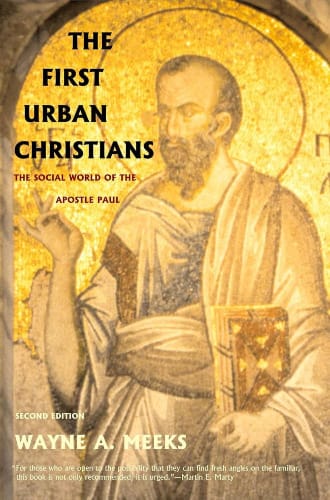
by Rodney Stark - The First Urban Christians
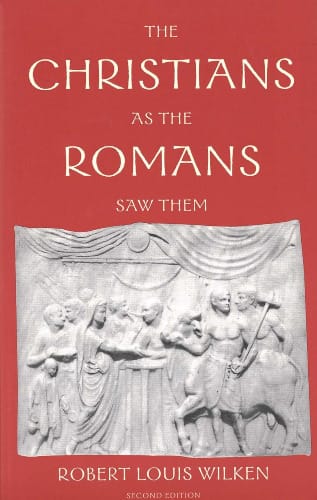
Wayne Meeks - The Christians as the Romans Saw Them
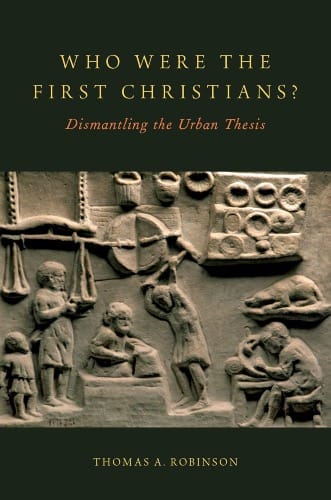
by Robert L. Wilken - Who Were the First Christians: Dismantling the Urban Thesis
by Thomas A. Robinson
To what extent do the main cities in which early Christianity took root continue to influence the Church today?
The standard thesis is that Christianity usually took root in the cities first. We see that already in the Acts of the Apostles. Christianity exploded on Pentecost in the city of Jerusalem. When it moves out from Jerusalem, it tends to settle in another major Roman city, such as Antioch.
It moves from city to city because at the time transportation was designed that way. The trade winds had been discovered shortly before the time of the apostles. That meant that, instead of stopping at many small ports, those travelling on the open sea moved directly from one major port to another.
Coincidentally, during the first century open commerce was underway for the first time because Caesar Augustus had suppressed piracy definitively on the high seas. So, there was open travel. Many ships were moving from one major city to another. The roads were built to connect one city with the next expeditiously in a continuous line across the empire.
At the time, it was convenient for the apostles to move to cities, whether big or small. That is what they did.
Historians point out that Rome, the empire, was made up of 5,627 local municipalities. The surrounding rural areas were ruled from the cities. To have influence in a region, you went to the city first. It is a standard strategy, I would suppose. You go wherever there is a high concentration of people.
“In Christian antiquity, evangelization was not carried out according to a method...All the evidence suggests that back then evangelisation took place in the context of friendship."
You have written extensively on the Church Fathers. Is your most recent book, Rabbles, Riots, and Ruins, simply a survey of the world of the Church Fathers?
That is a good question. No matter what, the Church has a diocesan structure. The dioceses are based in cities for the most part. So, even today, the Church is structured around cities. The evangelization of rural or remote areas is still carried out with reference to some nearby city. It relies on some of the resources of that city.
That said, once Christians arrive at the city or a rural area, evangelization becomes person to person. It was that way in the ancient Church too.
In Christian antiquity, evangelisation was not carried out according to a method. There was no package to be bought for your diocese. You did not learn a technique or memorise an elevator pitch to get your message across. All the evidence suggests that back then evangelisation took place in the context of friendship. The early Christians bore witness among their neighbours, the people in the next booth in the marketplace or the people with whom they worked. They made friends and then they made Christians of their friends.
We see this occurring in what I consider one of the most remarkable documents of the second century: the Octavius of Minucius Felix.
It is a simple document, a lawyer’s reminiscence of a vacation he took with two of his friends, who were also lawyers. Two out of three went into the vacation as Christian, but all three came out Christian. Minucius Felix is tracking the conversion of one of his friends and colleagues. He shows how Christians bore witness to the faith in that context.
He does so in a book, the only mass media around at the time. We cannot even call them mass media because they needed to be copied out laboriously by hand and were very expensive and labour intensive. Moreover, owning such books was illegal since Christianity was a forbidden religion.
How then did the early Christians gain access to people? They got into their lives by means of friendship. It is not that they were instrumentalising that friendship. Rather, their evangelisation came about naturally. They made friends and then they made friends for Jesus Christ. That is what we see occurring over the course of the Octavius. That is the way conversions were brought about in all the 5,627 cities of the Roman Empire. That is how they were brought about in the rural areas as well. It was a matter of friendship.
“Christians differed from the wider culture in how they treated women, children, and family life."
 Five Books for Catholics
The twelve cities you examine in Rabbles, Riots, and Ruins are Jerusalem, Antioch, Rome, Alexandria, Ephesus, Edessa, Lyon, Ejmiatsin, Constantinople, Milan, Ravenna, and Carthage. Why these twelve?
I wanted to show a range of different of cities. I did not want to survey just the cities that we see in the New Testament and which were essentially Greek. Instead, I wanted to show that Christianity reached many different cultures and civilizations, and that it had a transformative effect on them.
It was important to cover Lyon, Lugdunum, a city that we do not often hear about.
Though it was somewhat remote from Rome, it was an important city for trade. It helps show the patterns of travel in the ancient world. There is plenty of evidence of Christians moving from Smyrna, İzmir in modern Turkey, to Lugdunum. There was steady trade between the two cities. Christians could just piggyback on it, get to the new city, and evangelize it. It seems that that is what happened. That is why I included Lyon.
1.
I included Ejmiatsin because people do not know about Armenia. It was the first Christian nation. The king converted and the people converted with him. This really did establish a distinctive Christian culture. It was dependent on earlier Christian literature, but the king made a real effort to translate materials from Greek and Latin into Armenian. Many works of the Greek and Latin Fathers have only survived in Armenian.
Armenia was not only an important Christian nation. It also had an exotic culture. Its artwork and icons are suggestive of art from the Far East: India, Persia, and even China. It is different in style from the Greek icons and the artwork of Western Latin culture.
Many years ago, I went to the Armenia exhibit at the Metropolitan Museum of Art and was riveted. I bought the book that they put together for that exhibit and was transfixed by this beautiful art. It shows us a Christian world that is far different from ours. The Armenians have suffered so much over the last 150 years. So many were killed in the genocide perpetrated by the Turks. They continue to suffer persecution and martyrdom. So, in my book, I wanted to draw attention to Ejmiatsin, their ancient capital and the cultural capital for their distinctive brand of Christianity.
Some of the cities I chose are no-brainers. You need to include Jerusalem, Antioch, Alexandria, Rome, and Constantinople.
Edessa needed to be included to represent Syriac culture. The Syriac Fathers are an important part of the ancient Christian world and its literature.
It was hard to narrow down all the major cities of Christian antiquity to just twelve. I started out with a long list and gradually pared it down. Every time I cut a city out, it hurt. However, I knew that the book needed to be fairly short and not too daunting. Very few people would persevere through a book about twenty-four ancient cities, but most could handle a dozen.
“It is good for us to go back and learn from the first Christians. Why? Because they succeeded, and at an amazing rate. "
One for every apostle.
You mentioned that the early Christians evangelized through forming friendships. Are there any other lessons we can learn from them on how to evangelize the cities in which we live?
I would recommend Rodney Stark's book, The Rise of Christianity. He nails it. He saw that Christians differed from the wider culture in how they treated women, children, and family life. These are very important factors. The hand that rocks the cradle rules the world, but it is a Christian world that it rules.
Christianity was attractive to women in antiquity. Many of the converts to Christianity were women. Sometimes the Church Fathers even complained that their congregations were made up mainly of women.
However, women make the Church attractive to men. There was a shortage of marriageable women in all the ancient cities because, except for Jerusalem, all of them practiced female infanticide. Women were seen as a drag on the family economy. You had to provide a dowry for a girl and support her all the years she was in your household. However, she never had any real earning power in the Greco-Roman economy. So, many girls were killed at birth. They were killed by drowning or were exposed at the town dump. We have ample evidence for this. Baby dumps have been found at Ashkelon in the Holy Land, in Scotland, and in Athens, three widely dispersed points of the Roman Empire. Sometimes there are the bones of more than a thousand babies. Mostly, they are the bones of baby girls. Practicing that kind of child murder leaves a shortage of marriageable women.
During early Christianity, women were attracted to the Church because they saw that Christian women did not have to undergo these traumas. There was also a different marriage economy within Christianity because Christians condemned child marriage, which was commonly practiced in the Roman world. There were many advantages to becoming Christian for a woman.
In addition to the Church’s treatment of women, Stark mentions the attractiveness of Chrisitan charity. Some Christians virtually boast about this in their works. Tertullian especially talks about the practice of kindness among Christians: that they took care of each other and others too. Cyprian insisted that Christians need to take care even of their pagan neighbours, their pagan persecutors, during a third-century plague.
We can do what these ancients did. We can practice charity. We can be neighbourly to those around us. It makes a huge difference if we take the effort to make these deep connections.
We need to make the effort today. Back then, you needed to know the people who lived around you. You lived most of your life outside the house, in close contact with other people. If you wanted to know the news, you needed to go down to the town square or the marketplace and listen to what other people were saying. That was the only way to get news. There was no radio, television, or internet.
In the world we live in, you might live in the suburbs, drive into your garage, pull the garage door down, and not come out of your house again until the next morning. All your social life might take place somewhere else. So, you may not know the names of your next-door-neighbours. That is a disorder. We Christians should be out there. We should be meeting the people around us. If they resist us at first, that is okay. At least we are on their radar. At least they know who we are and that they can come to us in a time of need.
This is such an important thing for Christians to do right now. Friendship does not come naturally to moderns. Friendship is a social reality but it is a natural institution that is disappearing. Longitudinal studies have demonstrated this. Many people today report that they do not have a single person to whom they can confide their deepest concerns and thoughts. They do not have a single friend.
We need to be out there and be friends to others. This is a time of famine. The famine is loneliness. There is an epidemic of loneliness. People are hungry for friendship and we can provide it. People are sick with loneliness, and we can provide a cure. This is something that the early Church provided. The Church should do the same today. It is the simplest act of charity in many respects. You do not need to buy anything, take a class, or receive a special certification. You just need to be a friend.
That chimes in with the next question. You just explained how the world of the early Christians was very different from our digital age. They interacted with one another directly or in the forum, the public square. Nowadays the forum has moved online and increasingly people have very few interactions in the flesh. If I have understood you correctly, your view is that the evangelization of ancient cities is still pertinent because Christians today, in our unprecedented situation, should just be outgoing and try and establish one-on-one relations, face-to-face relationships with people.
Yes. What we have online is neither real nor deep, but extremely shallow and curated. You can think carefully about what you will say before you fill in a comments box. In fact, I wish more people would.
Real life conversations, however, go in unexpected directions and have a certain degree of confidentiality and mutual trust. That is how you build trust. This does not happen in online relationships, at least not at the same level. People who interact mostly online still hunger for that kind of personal connection. Online interactions do not really satisfy our need for friendship. Studies show that people miss having a real-life flesh and blood friend.
The Roman Empire, as you explained, was made up of cities that in many ways were self-governing. However, we live in nation states. Most accept Max Weber’s definition of the state as “the form of human community that successfully lays claim to the monopoly of legitimate physical violence within a particular territory.” Moreover, Weber insists that the state is characteristic of modernity and does not have any real historical precedents. Is the challenge we face different from that of the early Christians? They had to evangelize cities, whereas we are under the constraints of evangelizing states.
I have no training in sociology and cannot speak authoritatively on that. However, we seem to be living at a time that is analogous to that of the earliest Christians.
Back then, Rome was breaking down certain walls. Many regions were suddenly being shepherded into an empire. Augustus was shrinking the world by building roads or increasing commerce and military presence. People could move a lot more on the high seas. So, for the first time, there was fairly free travel. When you read the New Testament, you find Paul running into the same people in different cities, such as Priscilla and Aquila, who are also moving around from city to city.
This is one of the things that Wayne Meeks brings up in his book, The First Urban Christians. There was a new kind of mobility. There was also a new social mobility that people could tap into and improve their lot. All this was happening as a result of the Romanization of the world. Meeks points to the common culture that many of these Roman cities shared. They had the same forms of government, architecture, and inscriptions. There was a growing unity in the world.
Something similar is going on in our own time. We have easy access to each other online. We are consuming content from all over the world. Something can go viral and break down all the walls. We travel fairly easily.
2.
These changes are analogous to what happened in the ancient world. So, it is good for us to go back and learn from the first Christians. Why? Because they succeeded, and at an amazing rate. The Romans thought the early Christians were succeeding at an alarming rate. In The Rise of Christianity and Cities of God, Rodney Stark contends that the Church grew at a steady rate of 40 % per decade for two and a half centuries. Moreover, those were centuries of persecution when it was a capital crime to practice Christianity. Christianity has that kind of power. It can change hearts, lives, and spread like wildfire, whenever God wants it to and we want to correspond to the graces that he gives us.
3.
You just mentioned Wayne Meeks' reconstruction of the social context in which St Paul moved. The Acts of the Apostles tells us how St. Paul evangelized several of the major cities of the Roman Empire. How does Meeks' study help us understand the Apostles' missionary activity and the subsequent spread of Christianity?
He provides a clear vision of what was happening, not only in these individual cities, but throughout the Roman world, which was both changing and unifying quickly. He shows how many seemingly disparate historical events¾such as the discovery of the trade winds, the building of a system of roads, the rapid movement of the military¾all contributed to the spread and rise of Christianity.
He also points out that Paul seems to be addressing urban leaders: well-educated people of means. This is most explicit in his Corinthian correspondence. He flatters the Corinthians for their intelligence and prosperity. However, he also chastises them because he sees these things as occasions of temptations to elitism, division, and so on.
Paul had certain strategies. He was aiming high. However, he did not dumb the religion down. His letters are addressed to influential, educated people who can handle ideas, process them, and then put them into action.
Meeks’s book is eye-opening and justly praised for opening our eyes to all these things.
4.
Robert Louis Wilken has surveyed ancient pagan sources on Christianity. He looks at what Pliny, Galen, Celsus, Porphyry, and Julian the Apostate had to say about Christianity. While this gives us an insight into how they saw Christian belief, what does it tell us about the urban growth of the early Christian communities?
For one thing, it shows the entrenched hostility that Christians had to overcome. Significant sections of the book deal with the urban legends about Christianity. Throughout the cities, rumours were spreading that behind closed doors Christians ate flesh, drank blood, practiced cannibalism, and held orgies in which they loved one another. Nor were these harmless rumours. They led to real violence. The early apologists in Christianity had to address these particular rumours, on the assumption that their addressees had not only heard them but probably believed them. The rumours were that common. They show up in the plays of the ancient world.
Wilken, therefore, shows us what Christians were up against when they evangelized. Both popular opinion and especially elite opinion were against them. As Wilken deals with the documentary record, he deals mainly with the literature that has survived. It was produced by educated people, usually for other educated people.
I find this encouraging. Today, Christians often feel outnumbered and outgunned. They feel overshadowed by the elite institutions of society, the universities and the government, all the places where we should have a presence. It seems as if we have been gradually eased out of the public square.
Well, we can see that our ancient ancestors had no place either in the public square and that we are actually better off than they were. This helps us see what we can do with what we have and how much we can change the world. We have a little bit of leverage, whereas they had none.
“From early on, Christianity had many different cultural expressions but also a monoculture in its creeds."
5.
In Who Were the Christians?, Thomas A. Robinson challenges the idea that early Christianity spread mainly in and through cities. He maintains that contrary to certain scholarly accounts, such as those of Meeks and Stark, Christianity was more present in the countryside and rustic in character. Do you agree?
He is a good brake on the thought of historians. It is very easy for us to conclude that all Christian activity happened in cities. This is because most of the surviving documents come from cities and were kept there in libraries. However, the documents of the poorer rural people were not preserved or passed on from one generation to the next. For them, the evidence we have comes largely from inscriptions.
Robinson does a good job of gathering both the archeologic and documentary evidence that Christianity flourished in the rural areas, the desert, remote towns, and little villages.
One example he mentions is the story of St. Anthony of Egypt.
St. Anthony grew up in a remote village during the middle of the third century. His parents were Christian. They may have been Christian for a long time because they brought up their children with a very good formation.
Anthony inherited his parents' farm but also attended a parish church, even though he lived far from the city. That sounds quite developed.
This is just one of the stories Robinson draws from the documentary record to warn us against making sweeping conclusions about the importance of cities. Much important great activity was going on in the countryside as well.
One of the tropes he challenges is that ‘pagan’ (paganus) meant rustic or referred to country folk when designating non-Christians. He dismantles that trope that comes from tracing the etymology of pagan back to countryfolk. I found that very interesting.
He is very good at that. The other thing he points out is that even though the Roman cities that I discuss were widely dispersed, they did have a monoculture.
From early on, Christianity had many different cultural expressions but also a monoculture in its creeds. There was a catholicity to Christianity from the very beginning. Robinson shows that Christians everywhere, whether in the cities or the countryside, believed the same doctrines and practiced the same rites. This is an important point. In several books, Robinson has argued against those who posit that there were many early Christianities and no Christian monoculture. He rejects this position. All the evidence indicates that there was only one Christianity and it was Catholic.