
Christians are called to be perfect and attaining perfection resembles the passage from childhood to adulthood. Scripture draws this analogy. For example, St. Paul exhorts us to become “to full-grown men, to the measure of the stature of the fulness of Christ; so that we may no longer be children, tossed to and fro and carried about with every wind of doctrine, by the cunning of men, by their craftiness in deceitful wiles. Rather, speaking the truth in love, we are to grow up in every way into him who is the head, into Christ.” (Ephesians 4:13-16)
Of course, we might succumb to temptation and refuse to grow up in our spiritual life. We need to think seriously, therefore, about what Christian maturity means and the dire dangers of shirking it.
In this interview Fr. John Gavin SJ discusses Christian maturity and recommends some of the best books on the subject.
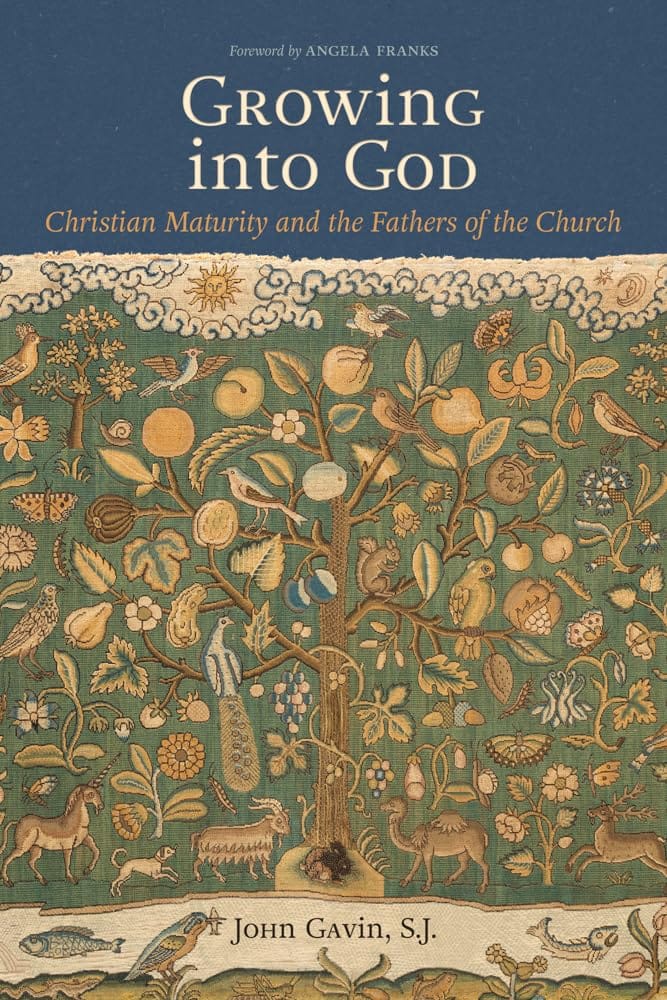
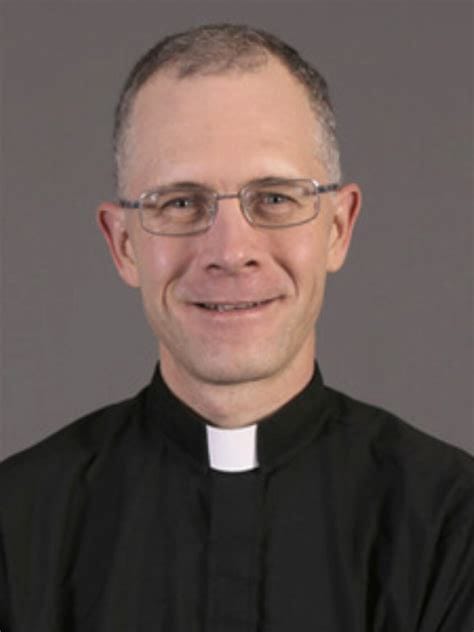
Fr. John Gavin, S.J., is an Associate Professor in the Department of Religious Studies at the College of the Holy Cross in Worcester, MA. He specializes in Patristics. He is the author of Mysteries of the Lord's Prayer: Wisdom from the Early Church and Growing into God: The Fathers of the Church on Christian Maturity.
- On the Apostolic Preaching
by St. Irenaeus of Lyon - The Mystery Hidden for Ages in God
by Fr. Paul Quay SJ - Instructing Beginners in Faith
by St. Augustine - On Perfection
by St. Gregory of Nyssa - The Ascetic Life
by St. Maximus the Confessor
What do you mean by Christian maturity?
The Scriptures often use the Greek word teleios (perfection) to describe growth in the spiritual life. For instance, Christ says “be perfect as your heavenly Father is perfect” (Matthew 5:48). This word continues to be used by the Fathers of the Church and beyond. They speak of Christian perfection.
I emphasize that the metaphor of maturation is also involved. In fact, teleios can also mean maturity. That implies that one has an underlying nature and is growing into something. An apple tree does not mature into a peach tree. There is an end for which it is formed. We see the same thing in the Christian life. We are growing into the fullness of our human nature, as created by God. However, in Christ we are also destined for a greater maturation and growth: into what the Fathers of the Church called theosis, deification. This an intimate union with God.
We see this in the Scriptures too. For instance, in Ephesians 4, Paul calls for this growth and maturation into the fullness of humanity in God.
So, by Christian maturity I mean not only growth into the fulfilment of our human nature, but more significantly, the gifted full maturation of who we are meant to be through union with Christ.
Some listeners might not capture the association between perfection and maturity. Perfection in Greek and Latin also means complete or fully grown. Does talk of Christian maturity capture certain nuances or have certain advantages that the concept of perfection does not, besides the ones you have already mentioned?
Yes, it does. I would like to recover the image of maturity, which has never been completely lost, not only because it is used by the Fathers but also because growth is an essential part of any created being. As St. Irenaeus and others teach, we are not complete when we come into being. Rather, as human beings we are called to be formed through the exercise of our freedom and responsibility. We do not mature in the way an apple tree does. We make choices and respond in love. Hence, the image of maturation also captures the significance and absolute need for divine grace.
We cannot attain our end and full maturation by ourselves. Rather, it needs to be gifted by God. The notion of maturity conveys the full sense of our ongoing growth into God. Hence, the title of my book. I have taken that title from St. Paul and St. Basil the Great. It takes in both our responsibility and our freedom, but also the divine giftedness of Christian maturity. It brings out both elements. We think of maturation as one’s growth from infant to adult. In a way, this is what takes place in our responsible but gifted maturation in Christ.
Normally when we talk about maturity nowadays, we refer to psychological and emotional maturity in a more general sense. What distinguishes Christian maturity from psychological and emotional maturity?
Christian maturity is not entirely separate from those elements. We are embodied. Every aspect of our humanity is taken up in maturation. Our psychological and emotional growth can obviously be shaped by the gift of grace and by the responsible decisions that we make as Christians following Christ.
However, what really distinguishes Christian maturation is the supernatural end that is gifted to us. The root of teleios, the Greek word that means both perfection and maturity, is telos, which means end or fulfilment. We find this word in Aristotle, who uses it to designate a thing’s coming to its proper fulfilment or end. Christian maturity, however, is a supernatural end. It cannot be brought about by purely natural processes. Hence, psychologists cannot bring us to this end, even though they might be an aid. Rather, we attain it through an intimate relationship with Christ and what he has won for us on the Cross and gives us in the sacraments. This is what distinguishes Christian maturity from emotional or psychological maturity.
In some cases, those struggling with mental illnesses or an addiction may be maturing more in a Christian sense than someone who does not have those issues. They may be attaining it through their struggle and Christ’s gift. The world’s measures for psychological and emotional maturity do not coincide exactly with those for Christian maturity.
“Maturation is no longer possible once we abandon the idea that we grow within a particular nature and in our relationship with others but believe instead that we can constantly define our end for ourselves."
There is some evidence that young people in the West are not maturing as early and easily than former generations. Is this the case and does it pose a pastoral challenge?
I think this is the case. I work with young people. I teach in an undergraduate college in the United States. We see this, not just in young people, but in modern culture in general.
One reason is that our culture has abandoned the idea that we humans have a nature and an end. Instead, we believe that we define ourselves and our end. Maturation is no longer possible once we abandon the idea that we grow within a particular nature and in our relationship with others but believe instead that we can constantly define our end for ourselves.
Moreover, there is an interpersonal element and relationship in the distinct calling that is a vocation. A vocation implies that someone is calling us. It implies a relationship. No maturation can take place if I am my own vocation and my movement in life is simply towards whatever I call out as my desire and have it echo back to me. This is reflected in our culture today.
According to the Fathers of the Church, this is what happens with the demons. I am not claiming that everyone is in a relationship with the demonic but that demons are angels who reject God as their end. They even reject their vocation. To be an angel is to be a messenger. They reject who they are when they turn from God and try to self-define themselves. As a result, the arts and literature depict demons as amorphous. They have no form. They are not growing into anything. They are condemned to never mature. Theirs is the greatest temper tantrum of all time. They are raging against what should be their greatest fulfilment, happiness, and end. We see elements of this in our modern culture, in people both young and old: this despair for lack of full maturation in Christ.
What prompted you to write Growing into God: The Church Fathers on Christian Maturity?
What prompted me was noticing how the Scriptures and the Fathers of the Church use again and again this metaphor of maturation—whether physical or psychological—but apply it to our spiritual growth toward our supernatural end in God: theosis (deification). I also realized that, given the crisis in modern culture, which affects the young especially, we need to recover and emphasise this image in evangelizing and speaking about growth in the Christian life. It is very applicable to our world today.
In Growing into God, you distinguish various pillars of Chirstian maturity. What are these pillars?
The first I look at is form and finality. We have a specific, supernatural, gifted end in God. The recovery of the form, which gives our nature and person their shape, comes through our finality in Christ. He both reveals and realises this in himself, in his death, Resurrection, Ascension, and union with the Father and the Spirit.
The second pillar is virtue and character. Just as the first pillar takes in grace, Christian maturity’s giftedness, the second and the third take in our freedom and growth in virtue.
Virtues for the Fathers of the Church are not just perfections of our nature. They also reflect what they call divine characteristics. Here, they draw on Platonist thought, but also rework it, because Christ is the exegete of the virtues. He shows us what they are. To grow in the virtues, therefore, such as mercy, one that Gregory of Nissa emphasises, is to grow in the divine likeness. It is to grow from the image of God, in which we are made, into the divine likeness.
The last pillar is vocation and mission. Again, this involves our free will. Our response to the divine call also gives shape to our personal life. This begins with the divine call received in baptism, something we do not take into account enough. However, there are also the other vocations on which the Fathers write, especially marriage, priesthood, and the monastic life. These vocations also shape and form as we mature through our response to a call from God.
These are the primary pillars that I emphasise in the book.
You distinguish four figures of Christian adulthood: the Witness, the Teacher, the Servant, and the Fool. Are these different ways of living Christian maturity or is each of us called to embody all four facets in various ways and degrees?
We are called to embody each facet in various ways and degrees. Some persons, on account of their vocation and particular gifts, embody one more than the others.
In our own way, however, we are all called to be witnesses: martyrs, if not by blood, by the way that we live out our baptismal promises.
We are all called to be teachers in some way or another. Augustine says that one does not actually own something, such as the faith, until one gives it away. We are all called to express our faith in our particular vocation and way of life.
Maybe the fool is the surprising figure here. However, if we live out our faith to the fullest, the foolishness of the cross will become evident in us and in the world’s eyes. St. Paul describes this. The fool is one who abandons himself fully to Christ and does not follow the dictates of the wisdom of the world but those of the gift. The fool looks especially toward the poor, the needy, and to overturning of the values of the world. This is what we hear in Mary's Magnificat. That is the foolishness that I am talking about here. It is a transformative stance in the world because it a stance in Christ.
Is there a reason you focus mainly on the writings of the Church Fathers when it comes to Christian maturity rather than canvas later spiritual authors?
I turn especially to the Fathers of the Church because, for starters, that is my own field but also because they are theologians, preachers, and teachers from the first seven centuries of the Church.
To borrow from Hans Urs from Balthasar, they are figures who do theology on their knees. The majority of them are saints. Though the idea of Christian maturation is not lost in later generations, they capture it in particular ways. So, it worth going back and seeing what they have to say about it. Doing so can be an awakening for us Catholics, who live in the modern age. Their perspective has a perennial value. They lived so close to the formative years of the Church and the councils. They are a rich font of wisdom and holiness.
“In this movement from the Old Testament into Christ and beyond, we can see the various stages of our own spiritual growth "
1.
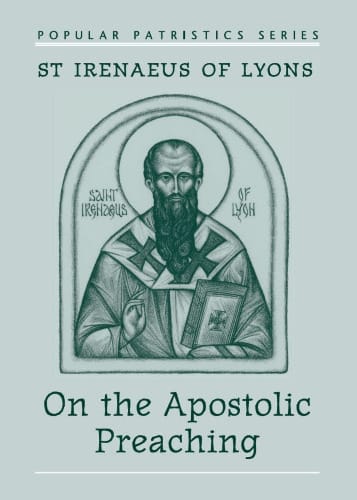
The first book you have chosen is St. Irenaeus of Lyon’s On the Apostolic Preaching. This narration of salvation history appears to be a catechetical work or an overview of Scripture rather than a treatise on the spiritual life. Why is it a good entry point into the subject of Christian maturity?
Yes. This is a wonderful book. As you said, it is more a work of apologetics. Moreover, it was only rediscovered at the turn of the twentieth century in an Armenian translation.
One reason why I chose it is that it is a short work and a wonderful introduction to Irenaeus.
Another is that it provides an overview of salvation history. But in doing that, Irenaeus also looks at the human person: Adam and Eve in Paradise prior to the fall. He says,
“Now having made the man lord of the earth, and of everything that is in it, He secretly appointed him as lord over those who were servants in it. But they, however, were in their full-development, while the lord, that is, the man, was very little, since he was an infant, and it was necessary for him to reach full-development by growing in this way”
Irenaeus goes on to say that Adam and Eve, prior to the fall, were in conversation with God, with the Word, and were being matured through that relationship.
This is something that Irenaeus emphasizes here and in his longer work, Against the Heresies (Adversus haereses): that human beings are created incomplete and are meant to grow in their relationship with the Word and with God. He also emphasises that, through our disobedience, we stunt our growth. We are cut off from the relationship that nourishes our maturation. So, Irenaeus presents salvation history as one that God restores step by step to its fulfilment in Christ.
This brings me to the second theme of the book that I would like to highlight: recapitulation in Christ. The Greek word is anakephaliosis. In this little book, Ireaneus shows that what Christ does in himself, not only summarizes or recapitulates all salvation history, but also of our whole maturation. He brings all that should have taken place in that relationship with the Word and elevates us to the fullness of supernatural life by becoming man, living out a full human life, dying for us on the Cross, rising from the dead, and ascending to the right hand of the Father. This recapitulation and summation of all things in himself is in fact the fullness of maturation. He brings it about in himself, shows what it is, and brings us into that recapitulation of salvation history.
These two themes come through marvellously in this little book.
2.
The next book is inspired a great deal also by St. Irenaeus of Lyon. Fr. Quay's book was prompted by a conversation he had with a Jewish friend. What's the story behind the book?
Fr. Paul Quay was a Jesuit. He had doctorates in physics and philosophy, and taught at the University of St. Louis. This book, which was his great passion project and a work of theology, was edited and published posthumously by his good friend, another amazing Jesuit, Fr. Joseph Koterski, who died tragically a few years ago.
That conversation with a Jewish friend and his reflection on the Fathers of the Church, especially Irenaeus, led him to address two things in the book.
The first is what he describes as the New Marcionism. Frequently, Christian spirituality and Catholic thought fail to take into account the whole of the Old Testament and how it figures not only in our theology, but also our spiritual maturation. Marcion was a second century figure, eventually declared a heretic, who wanted to cut off the Old Testament and even sections of the New Testament. He thereby ignited a debate in the Early Church that corroborated its full adoption of the Old Testament. However, do we take the Old Testament fully into account in our spiritual life?
The other thing Fr. Quay considers is why the grace that we receive in Baptism, the liberation from original sin, is so often stunted in our personal life and that of the Church.
He addresses these questions by recovering this idea of the recapitulation of all things in Christ.
This is a remarkable book and well-worth the effort of reading. It draws on psychology, theology, Scripture, and the Fathers, to see how we personally recapitulate the Old Testament and salvation history—as Christ does in himself—in the various stages of our spiritual growth, and how the Church does so in the various stages of ecclesial growth. We need to recover this recapitulation, in conjunction with God's grace, to grow into that supernatural and gifted end of Christian maturity.
Fr. Quay also addresses the crisis in masculinity and femininity. Is this one of the main cultural difficulties people face today in pursuing Christian maturity?
Yes. If anything, this has become more of an issue since the time in which this book was written. Now there is so much confusion around it.
Fr. Quay considers how, even though we are dealing with a supernatural end, we mature as embodied human beings. We are embodied as either male or female. We need to take that into account in our maturation in Christ. It affects the relation that we have to one another and to God. So, Fr. Quay does take that into account and looks at various figures in the Scriptures. If we lose sight of our embodiment, we risk ending up defining ourselves, or becoming like the angels and falling into the demonic temper tantrum that I described earlier on. They were neither male nor female. They decided to define themselves and became amorphous. That is their torture. Our maturation is one of giftedness, even in our masculinity and femininity.
“In salvation history, there is a movement from infancy, to childhood, to adolescence, to young adult, to fully grown adult, to middle age, to old age."
3.
Third is St. Augustine’s Instructing Beginners in the Faith (De catechizandis rudibus). How is this instruction manual on catechizing converts to Christianity a guide to Christian maturity?
This is another wonderful short book. All the books from the Fathers that I have chosen here are short. I chose short ones in the hope that people will be encouraged to pick them up.
People do not talk about this work a lot. However, it is such a wonderful book.
It was written on request by Augustine as a guide to evangelising those who are not catechumens yet but simply approaching and asking questions about the Christian faith.
Augustine provides a great deal of helpful and practical information on how to do this. For example, he advises that you should provide them with a chair, so they are comfortable, use a little bit of humour, but most of all, infuse the encounter with love. You need to love those who come to you with these questions about the Christian faith.
He also talks about the inquirer who is bored (tristis, which also means sad) and how to overcome this boredom. Such people are infants in the faith. They are not even infants. They are still in the womb here.
In this regard, Augustine gives two wonderful sample discourses. Each is basically an overview of salvation history and the salvation that takes place in Christ. One is a long form of this introductory discourse, the other a short form. Everyone should read them. However, he frames them in the context of the seven ages of man (he does this in some other works, such as De Trinitate). He divides salvation history according to these ages.
In salvation history, there is a movement from infancy, to childhood, to adolescence, to young adult, to fully grown adult, to middle age, to old age. Here he is not entirely original, he divides salvation history in seven phases: from Adam to Noah; from Noah to Abraham; from Abraham to Moses; from Moses to David; from David to the Babylonian exile; from Babylon to Christ; and then from Christ to the consummation of history. Hence, Augustine sees within salvation history a movement from infancy to fullness in Christ and the supernatural end.
In other works, he applies this to our interior life. In this movement from the Old Testament into Christ and beyond, we can see the various stages of our own spiritual growth. By reading and reflecting on the Scriptures, both personally and as a Church, we can see how we should grow and enter into that growth. This is Augustine's version of Irenaeus's recapitulation.
Instructing Beginners in the Faith is a wonderful introduction to this theme. It is also great for going back to our infancy and initial formation, as we sometimes need to do. Sometimes, to grow more fully, we need to be inquirers into the faith again. This is great book for doing that.
4.
Fourth is St. Gregory of Nyssa’s On Perfection. In it, he unpacks each of the thirty terms St. Paul uses to describe Christ and the various ways in which we must become like Jesus. Have you chosen this work because it explains how Christian maturity consists in becoming like Jesus through the virtues?
Yes, this is one reason why I chose this book. It shows this in a wonderful way.
St. Gregory starts out by saying that we human beings, by growing into perfection or maturity, are always growing toward the better.
In another work, he emphasises that, since God is infinite, our growth into God in an ever-moving rest, even for those who are in that full union with him. On the one hand, we have reached our maturity and our end. On the other hand, since God is inexhaustible, one grows evermore into that joy, perfection, and maturity.
On Perfection offers a wonderful approach to the virtues. Christ is the summation of those virtues. He shows us what they are. Gregory considers Christ’s virtues by looking at the various titles or names that Paul gives to Christ. He unpacks them for us and invites us to see how we take them on. He considers, for instance, the virtue of peace and how Christ himself is peace by becoming man and overcoming sin.
Christ is also our light. Light is another name for Christ. It is also another name for baptism, our enlightenment in the Lord. Gregory does a wonderful job at bringing together these titles or names of Christ and opening a whole way of contemplating St. Paul and the Scriptures. He does this so that we might grow into the virtues that the Lord reflects. This is a way of taking on Christ or, as we say, of the imitation of Christ.
“The ascesis of love is the exercise that unites all the others. "
5.
Have you chosen St. Maximus The Ascetical Life because it lays out in more detail the means by which we attain Christian maturity?
Yes. This short work is wonderful. It is a dialogue between an elder and a servant. As a seventh-century work, it is by one of the later Fathers.
It describes some of the traditional exercises that we associate with the ascetical life. Remember that ‘ascetic’ comes from the Greek word askesis, which means exercise. These are exercises by which we use our free will to better dispose ourselves to the action of divine grace.
Maximus looks at traditional exercises of asceticism: fasting, prayer, poverty, and simplicity of means. However, one thing that comes through in this work and other works of Maximus (especially his Second Letter) is the importance of love in asceticism.
The commandment of love comes from our Lord himself. The askesis of love is the exercise that unites all the others. What ignites our separation from the false loves of the world is our response in love to the love that we receive from God. The reception of divine love, and responding to that love in love, is really the central ascetic work. This is a theme that Maximus emphasises throughout this work: the commandment of love is the defining element of all Christian asceticism.
The Ascetical Life includes an exhortation to trust in God’s mercy. Is discouragement one of the many temptations we need to overcome in the pursuit of Christian maturity?
Absolutely. Maximus highlights this in the work because one of the errors into which we can fall in the Christian ascetic life is the idea that somehow we power our way through by sheer acts of willpower. Of course, such an idea goes back to Pelagius. However, it is an idea that can lead to despair.
In Christian asceticism, we need to recognize that hope is a theological virtue that can only be gifted in God's grace. This brings us back to the theme of love. It is the love we receive that ignites the love by which we overcome all despair. Real Christian maturity consists in the hope in what Christ has done for us and our union with him.