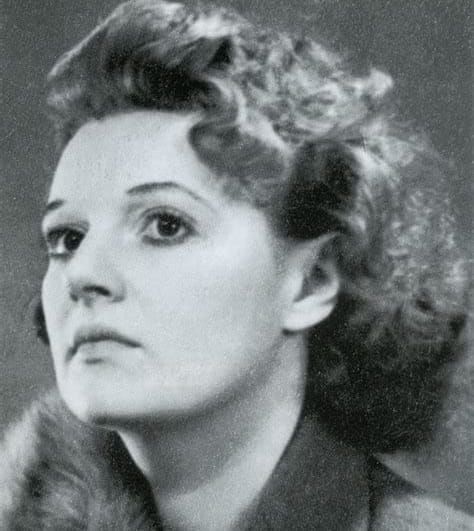

Enid M. Dinnis (1873-1942) was an early twentieth-century Catholic writer and the author of numerous fairy-stories. The daughter of an Anglican vicar in the East End of London, she was educated in a Belgian convent and converted to Catholicism in 1897. She made a living as a writer of journalism, verse, and short stories. Upon her father’s retirement, she returned to England. In 1918 she entered The Daughters of the Heart of Mary and later became the Mother Superior of its Wimbledon house.
In this interview, Julia Meszaros discusses the life and short stories of Enid Dinnis.
Julia Meszaros is a lecturer in Systematic Theology at St. Patrick’s Pontifical University, Maynooth. She is also interested in the fruitful interplay between theology and literature and, together with Bonnie Lander Johnson at Cambridge, edits Catholic Women Writers, CUA press’s first series of fiction. This series recovers the works of the forgotten members of the Catholic Literary Revival by republishing them with long introductions to the author and her work. Julia has a particular interest in the theologically rich writings of the English mystic Caryll Houselander, and has published widely on her and others. She is the author of Selfless Love and Human Flourishing in Paul Tillich and Iris Murdoch (OUP, 2016).
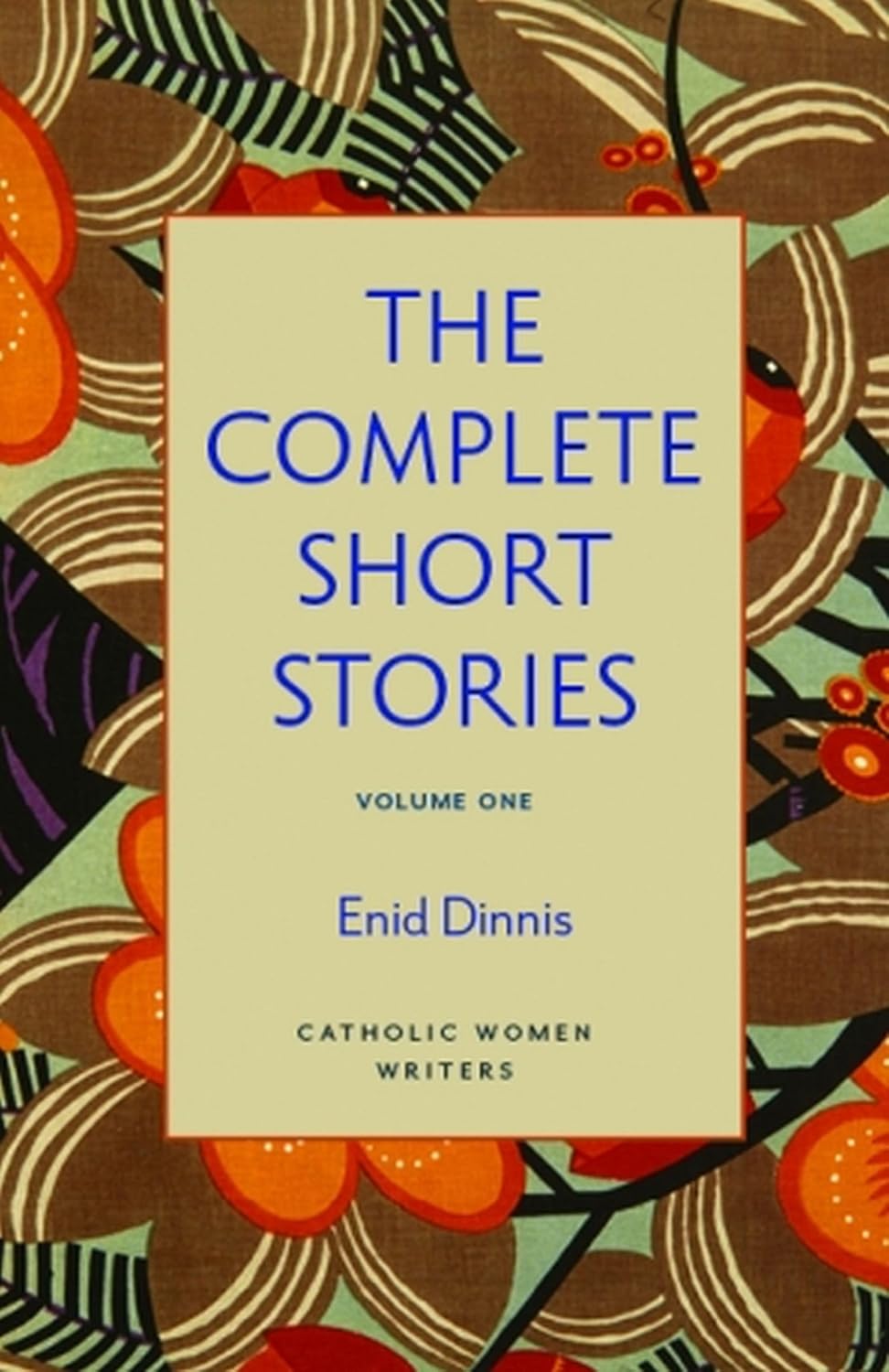

- The Complete Short Stories: Volume 1
by Enid Dinnis
Who was Enid Dinnis?
Enid Dinnis (1873-1942) was an English convert to Catholicism.
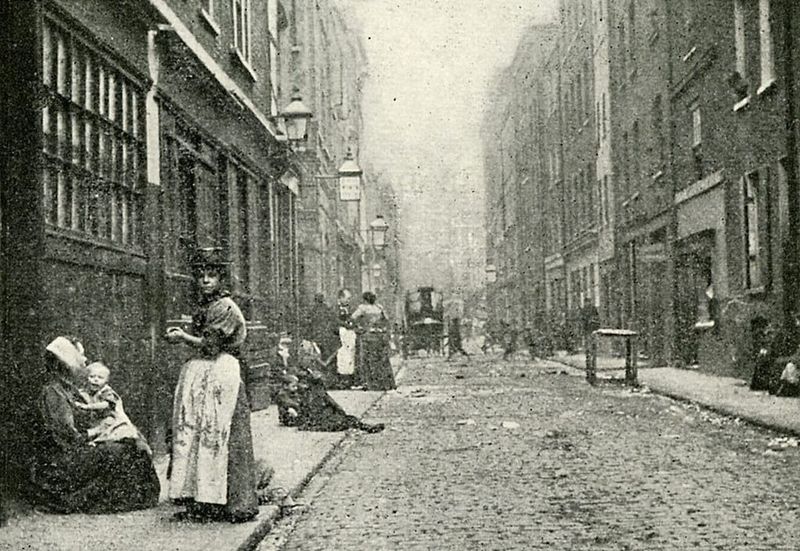
Her father was an Anglican vicar. Though a learned man, he worked in a parish in London’s East End. So, she grew up around the simple folk about whom she wrote later in her stories.
She converted to Catholicism in 1897 and around that time began to dedicate herself to writing. She wrote satirical sketches for Punch and other London periodicals.
She then stayed in Belgium for a time, partly to be out of her father's way. Her conversion to the Catholic Church was a little tricky for him since he was part of the Anglican establishment.
When she returned to London a few years later, she remained deeply immersed in the writer's scene there. She was a regular at Fleet Street salons, a member of the Writer's Club, and editor of a journal.
However, from our research is seems that her approach to writing changed during World War I. She began to bring her faith into it much more explicitly. She clearly saw an urgency for a writing that was much more explicit about the supernatural and was also mystical in tone.
So, around 1917 she began to write the fairy stories for which she became quite famous. Most of these were published in American periodicals that had a very wide readership at the time. She really wrote dozens, maybe hundreds, of these stories.
We still do not have a full grasp of her work as a whole because it has been largely forgotten.
In 1918, she joined the Daughters of the Heart of Mary. Later she became a superior.
The Daughters of the Heart of Mary were one of the hidden congregations that flourished in England and on the continent in the late nineteenth and early twentieth centuries. They were founded around the time of the French Revolution, when Catholics were not allowed to openly wear or demonstrate any symbols of their faith.
The sisters of this hidden congregation wore secular clothes and lived in regular houses. They did have religious names but only knew them among themselves. In public, they went by their baptismal names.
It is interesting that people like Dinnis were drawn to these hidden congregations. We can only speculate as to why she entered but there were probably several reasons.
First, it was handy for her writing career. It allowed her to continue to mingle with regular writers in all those London salons, gain ideas and inspiration in exchanges with others, without being put in a box.
Second, it might have suited her on account of her father and the delicacies of his Anglican identity.
I would venture to say that, more importantly, it had something to do with her work and spirituality. Overall, her work is about the hiddenness of God in the world, and in the ordinary lives of ordinary people. She has a spirituality of the hidden.
All her stories are about ordinary people. She really identified with them. To have written about them, she clearly had to have mingled with them. She believes that God is in the ordinary and that we need to train our eyes to see him there and discover the supernatural in the natural world. In many ways, this is what both her whole religious vocation and her writing are all about.
"Her stories are fairy tales in that they involve some turning-upside-down of the world and a totally unforeseen resolution of the kind that regular fairy tales have."
As you mentioned, her writing changed toward the end of World War I, a year before her entry into religious life. From then on, her writing focused more on Catholic themes and mysticism. Was that simply due to her growth in the faith or were there other factors at play?
Again, we have so few records of her life that this is all a bit speculative.
The London house of the Daughters of the Heart of Mary is in Wimbledon. There are still a few surviving sisters. They are in the process of compiling a Dinnis Archive, which I hope to visit once they open it to researchers.
I have not looked at her diaries, for example. However, she seems to have been part of wider current that existed at the time—among Catholics and beyond— and which was interested in restoring a different vision of the world. They were reacting against the rationalist materialism that came out of modernity and the Enlightenment and which had been furthered a great deal in England by the Industrial Revolution.
So, she wrote in the context of an overall interest in the folkloric, magic, and fairy stories as an antidote to an overly rationalistic, simplistic, and materialistic view of reality, one that allowed no room for wonder at the world, for mystery, or for anything that might lie beyond what we can see and touch with ease, but which might be just as real, if not even realer.
G.K. Chesterton, for example, was almost an exact contemporary of Enid Dinnis. I cannot say whether they knew each other. However, I would venture to say that they certainly knew of each other and of each other's work. Catholic circles in England and London were relatively small.
Chesterton, of course, had a lot to say about this matter. He wrote about how belief in fairies was, in many ways, more rational than science. He liked to make bold polemical claims of this kind. More specifically, he argued that fairy tales are able and willing to acknowledge not only the contingency of reality, but also the mystery and intention implicit in this contingency. They contain a willingness to submit to this intention. Hence, Chesterton argued that it is not fairy tales that are naive and illusory, but oftentimes our modern realism.
Here is an illustration he uses. We see that grass is green and conclude that grass must always be green. However, that is an overextension of logic. Just because grass is green does not mean that it must be green. Logically speaking, it could be purple. The fact that it is green suggests, for Chesterton, that there is some kind of intention behind the world: that someone wills grass to be green. The facts of the world point to a mind and a will that willed the world to be as it is.
Of course, this is simply Catholic thinking. Hence, Chesterton believes that fairytales are better at acknowledging this than scientific logic, which is too quick to jump to simplistic conclusions. In a story like Cinderella, the various characters are willing to accept certain facts: that she cannot go to the ball unless she wear the right clothes and that her new accessories will change back at midnight. All these facts are accepted. At the same time, the characters are willing to go along with an alteration of these facts. There is both an acceptance of reality, but also a fluid going along with reality. Chesterton believes that this is the more rational and open-minded perspective.
Dinnis writes in the context of such Catholic and even non-Catholic deliberations about modernity; its overly rationalist and narrow perspective on reality; the reduction of the world to the natural world; the complete bracketing out of the supernatural, mystery, or anything divine. Through her writing, she is trying to correct this simplistic, reductive worldview.
 Five Books for Catholics
Have you been able to uncover which authors influenced Dinnis the most?
Unfortunately, I have not. The archive of her of her work, letters, and diaries has still not been established.
The tragedy is that she, like so many other members of the Catholic Literary Revival, has been completely forgotten. She, like others, was wildly popular in her day. However, for various reasons she has been dismissed since then.
The canon of Catholic literature was forged at the universities between the sixties and the eighties. The criteria for who was to go into that canon and who wasn't were defined very narrowly, often along quite political lines. There was a search for critically minded Catholics, especially women writers, who were very optimistic about modernity. Perhaps publishers wanted a more critical, angrier Catholicism. Authors of this kind continue to remain in print.
So, after the Angry Young Men of the 1950s, in the 1960s they wanted the Angry Catholics.
Exactly. Of course, authors such as Evelyn Waugh and Graham Greene made the cut. That probably has something to do with their more male style of writing. Obviously, they are amazing writers. However, they often have a bigger-picture view that has certain political implications. For example, many of Greene's characters move in politically charged environments and a sociopolitical commentary is going on. Even Evelyn Waugh’s Brideshead Revisited is commenting on the decline of the aristocracy and the shifts brought about by World War II.
 Five Books for Catholics
Many of the women writers, especially the more faith-filled ones, often focused on ordinary everyday settings. Their characters are often regular people: children, mothers, or priests working in an ordinary London parish. Their settings were not quite as grand or glamorous.
Dinnis, moreover, was belittled by some of the secondary literature because she wrote fairy stories. The few commentaries that we do have on her by scholars or literary critics are quite derogatory and dismissive of her. Fairy stories were considered naive and too didactic.
“Overall, her work is about the hiddenness of God in the world, and in the ordinary lives of ordinary people."
That is curious. During the sixties, in Italy you had a writer such as Italo Calvino, who was a modernist but wrote fairy tales.
Yes, that is interesting. I have a couple of his books and need to immerse myself in them more.
This dismissal of Dinnis is genuinely curious and my colleague, Bonnie Lander Johnson, and I have not got to the bottom of it.
We edit the Catholic Women Writers series. In it, we put back into print many of these forgotten writers. We would love to include some men as well. However, most of the unduly forgotten writers are women, especially those who were more faithful to their tone of writing. CUA Press wanted just a more delineated series. So, we are focusing on the women writers for the moment.
We have not got to the bottom of why they were forgotten. There were commercial reasons. There were reasons pertaining to the Church of the sixties, seventies, and eighties. Maybe there was also some degree of circumstance and chance. These things are somewhat obscure. In any case, many of these writers deserve to be restored to memory and included in the Catholic canon of literature. They deserve a readership because their books are beautiful and very formative.
Last year, the first volume of the Complete Short Stories of Enid Dinnis came out. How many volumes are projected?
We still have not got a full grasp of how many more stories there are, but there are at least two more collections.
Initially, the stories were all published in periodicals. The collections were published later and were probably not the primary way in which readers had access to her stories.
Anyway, there will definitely be a second volume.
With these writers, we suddenly find that they had written a novel as well. We have not found one by Dinnis yet. However, oftentimes a writer will be known primarily for one genre and turns out to have written in more.
For the longest time, Caryll Houselander was known as a spiritual writer. However, she wrote an amazing novel too. It is the first volume in our series. It had been forgotten completely. Those who knew it had dismissed it entirely but wrongly. It is a beautiful, life-changing read.
So, sometimes a writer turns out to have had published some other piece. You just need to find it. We search for such publications on archive.org and eBay. Sometimes things pop up. There was no record of it but someone had a copy in their attic.
“She is simply highlighting how the Gospel—the drama of Christ's salvation—continues in everyday human life today, especially in the lives of those on the margins."
Does the first volume publish a collection of short stories in chronological order?
It contains three of the collections that she published. The titles of these collections already say a lot about how she thought of her stories. The first is called
God's Fairy Tales. So, she writes fairy tales in an explicitly Christian vein. The second is called Mystics All and the third Once Upon Eternity.
Each title gives away how her stories are deeply mystical: that, in a real sense, this world and the next pervade each other in some way.
These collections appear in the chronological order in which they were published. However, we were not able to verify whether the stories within each collection were published in the order in which they appear or according to some other logic. The dates of each story were not always given in each collection. But in fairness, we have not found any major evolution in the style of her writing.
All the stories are similar enough in tone. That might make you suppose that reading them becomes boring after a while. Honestly, it doesn't. They draw you into another world.
Dinnis says that the Church is the gateway to wonderland and that Christianity is a fairy tale come true. Her stories leave you with a sense of this. They leave you incredibly convinced of the reality and everyday occurrence of miracles, of the efficacy of prayer, and such things. One critic wrote that they almost hypnotise you: not in a manipulative way but because they are engrossing.
Writing many stories in a similar vein was intentional. This was part of her project of helping us to see the world with greater wonder. She succeeds at that.
 Five Books for Catholics
You just mentioned her view that the fairy tale of the Historic Church was true. That is very similar to the view that Hugo Dyson and J.R.R. Tolkien expounded in a conversation with C.S. Lewis, an exchange that was one of the turning points in his conversion. They explained to him that Christianity was the fairy tale that was true. Is her conception of fairy tales similar to or quite different from that of, say, Tolkien’s On Fairy-Stories?
That is a very interesting question. Many writers in that first half of the twentieth century were attempting something similar: to provide an antidote to modernity and its narrow rationalism.
Each did that though in slightly different ways. I cannot speak for Dyson, but Lewis obviously used metaphor in The Chronicles of Narnia, while Tolkien used fantasy, which is a touch different to the fairy tale. I would even include Flannery O'Connor in this group. She uses Gothic hyper-realism. Each of them wants to stir the reader out of the conventional ways of seeing the world, which are materialist and reductionist, and which even we Catholics have adopted by dint of being children of our time. Each wants to draw us out of that mindset and offer us a different way of looking at things.
 Five Books for Catholics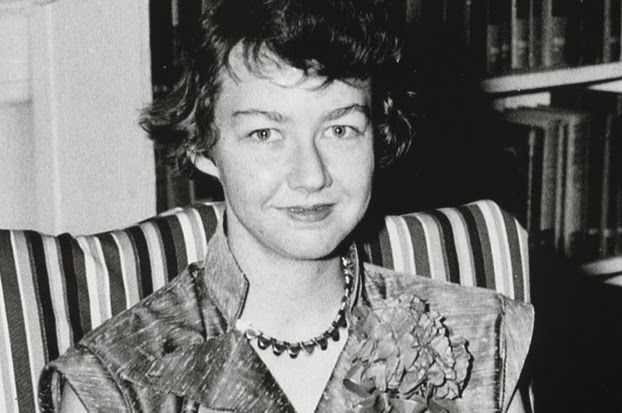
Of those authors, Dinnis would be closest to Tolkien in this regard. However, whereas Tolkien creates a whole new world of fantastical creatures, Dinnis does not. Although she calls her stories ‘fairy-stories’, they do not contain any mythical creatures. That is the point. Instead, all her stories have everyday settings of the time, whether it be a parish in the London Docklands, a village school, or a country house. There are some references to the upper-class, but the protagonists of her stories tend to be ordinary, simple folk: the poor, children, the disabled, pickpockets, sometimes a somewhat deranged person, and other sorts who are on the margins. In that sense, the settings of her stories are very naturalistic and realistic.
So, why does she call them fairy-stories? I suppose it is because her plot-lines involve the same suspense and resolutions as those of traditional fairy stories, such as the tales of the Brothers Grimm, except that she replaces magic with miracles and efficacious prayer. She replaces princes and princesses with a spiritual aristocracy of the meek and lowly. Of course, she is inspired entirely by the Gospels in this.
Her fairy stories are trying to enact this idea that Christianity and the Gospel are a fairy tale come true. So, she retains the realism of the Gospel but transposes its stories into the everyday English life of her time.
Her stories are a commentary on Christianity as a whole and its inversion of values. They question worldly assumptions about good and evil.
One illustration of how her stories narrate some enactment of the Gospel in the everyday life of her day is that of Mandy, a pickpocket.
He loiters in a church with a view to stealing from those who are waiting in line at the confessional. He is very set in his identity. He is caught by a policeman and forever getting into trouble. For him, it seems obvious that humanity is divided into bad boys, like himself, and good boys, like the Scouts that he sometimes sees in the streets and whom he resents. So, he is quite defeatist and even a little bitter about this.
Anyway, as he hangs around the church, looking for the right moment to grab some lady’s purse, he hears someone refer to a side-altar that has an image of the good thief who died at Christ's side. That totally turns this boy's world around. From that moment on, the church becomes a fairyland for him: a place of wonder and amazement to which he is mystically drawn. Hitherto, he just came there for material gain. Now he wants to keep coming back because somehow it opens a whole new vista to him and a way of questioning his own identity.
His world is turned even more upside down when, in another visit, he espies in line for confession the policeman, who had caught him many times before. In the meantime, he had learnt that confession is for those who have done something wrong. This throws him off entirely. He had placed the policeman on the side of those who, ostensibly, are good. Now, he suddenly realises that, according to the Church, there are good thieves and bad policemen. He gets so frazzled that these visits to the church mess him up as he plies all his clever tricks at robbing people of their purses. Eventually, he learns by chance that Jesus Christ died out of love for people like the thief beside him: for people like Mandy himself.
From there on, things unravel. The ending is both beautiful and sad.
This is the kind of story Dinnis tells: a story of some transformation that takes place through an incredible act or everyday circumstances. It could be a profound act of faith or love on the part of child or a beggar, a mystical vision or a simple realisation like that of Mandy. She is simply highlighting how the Gospel—the drama of Christ's salvation—continues in everyday human life today, especially in the lives of those on the margins.
Her stories are fairy tales in that they involve some turning-upside-down of the world and a totally unforeseen resolution of the kind that regular fairy tales have. However, hers do not draw on mythical creatures.
Her stories are relevant and enjoyable for both young and old. Per se, they are maybe not suitable for young children. They are too doctrinally dense for them. However, they are suitable for teenagers and older.