
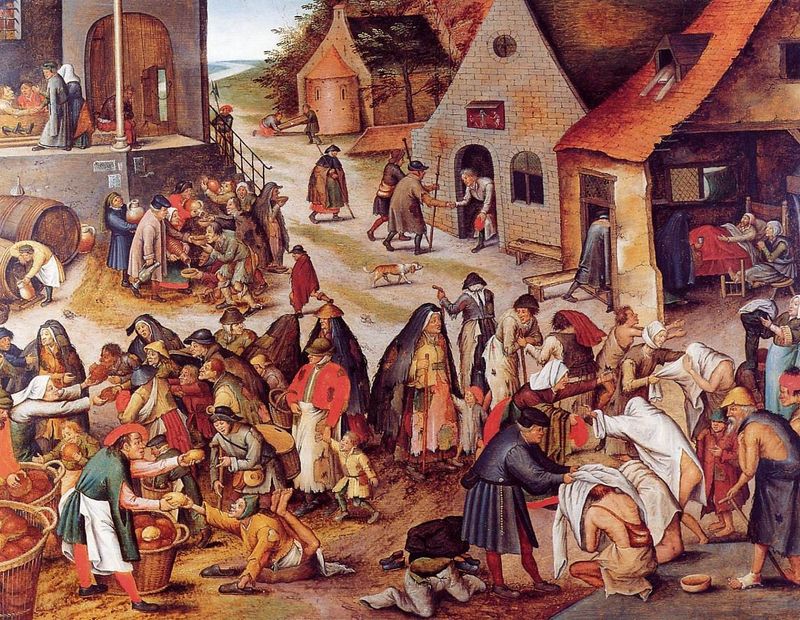
In Sacred Scripture, the Church Fathers find various references to an order of love or charity (ordo amoris, ordo caritatis). One is Song of Songs 2:4. More important still is Christ’s teaching that all the law and the prophets depend on two commandments: “You shall love the Lord your God with all your heart, and with all your soul, and with all your strength, and with all your mind; and your neighbour as yourself.” Jesus thereby teaches that one should love God first and above all else, then oneself, and third one’s neighbour as oneself. However, just like the lawyer to whom Jesus imparts this teaching (Luke 10:29), people have always had many questions about the exact implications of these two commandments.
Here then are some books from the Church's tradition that introduce the concept of the order of love, develop it, and spell out its implications.
- The Song of Songs, Commentary and Homilies
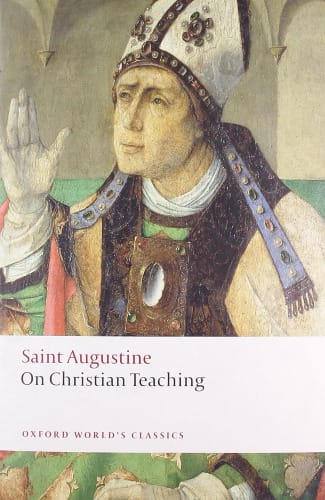
by Origen of Alexandria - On Christian Teaching (De doctrina christiana)
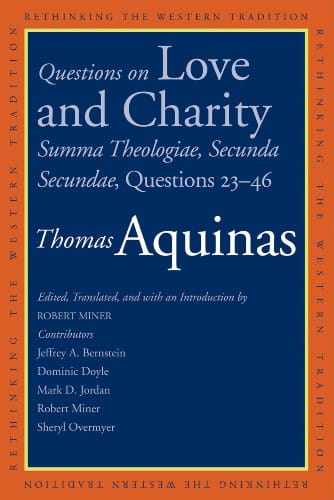
by St. Augustine - Questions on Love and Charity: Summa Theologiae, Secunda Secundae, Questions 23–46
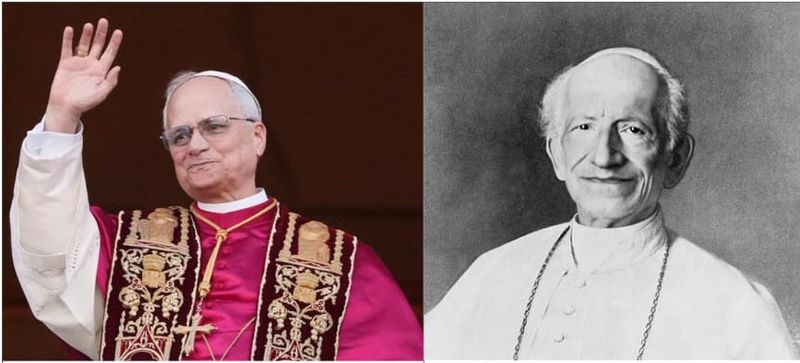
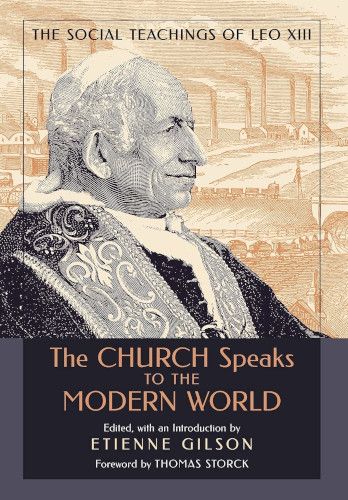
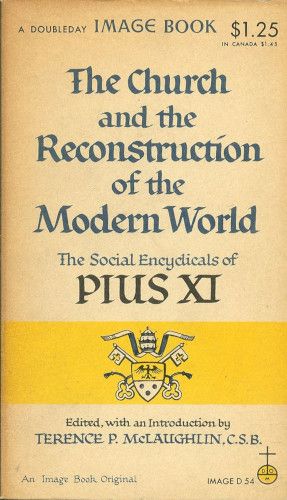
by St. Thomas Aquinas, edited by Robert Miner - The Church Speaks to the Modern World: The Social Teachings of Leo XIII and The Church and the Reconstruction of the Modern World: The Social Encyclicals of Pius XI
by Leo XIII and Pius XI - Catechism of the Catholic Church
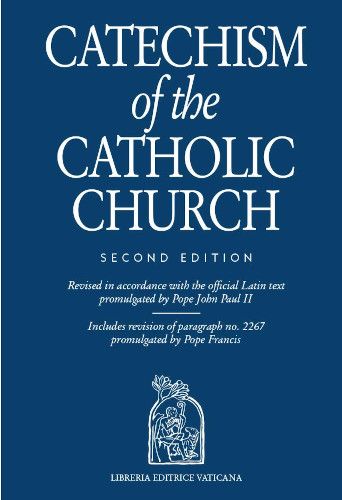
by John Paul II
Recently, there has been a debate among Christians and the chattering classes over the order of love and its bearing on public policy. Surprisingly, this debate was not set off by the Pope, a pastor, or a professor, but by a politician: a remark made by US Vice-President J.D. Vance in an interview with Fox News at the end of January.
During the interview, Vance referenced the order of love in all but name when justifying the current administration’s clampdown on illegal immigration.
“But there’s this old-school [concept] — and I think a very Christian concept, by the way — that you love your family, and then you love your neighbor, and then you love your community, and then you love your fellow citizens in your own country, and then after that you can focus and prioritize the rest of the world.”
Vance went on to accuse the far left of adopting policies that invert this order.
In the ensuing X-storm (formerly twitterstorm), quite a few posts contested the biblical pedigree of the notion. Some did so quite vociferously For example, Joash Thomas stated, “I am a theologian trained at one of America’s top conservative evangelical theological seminaries. This is not a Christian concept; it’s a Western individualistic one.”
Now that the flurry of commentary on Vance’s remarks has passed, it is worth asking whether the order of love is a biblical teaching and, if so, what bearing it has on our lives. For those who want to study the matter more closely, here are five books on the order of charity.

1.
The great third-century biblical scholar and theologian, Origen of Alexandria, was the first to bring many Christian doctrines into focus. The order of love is a case in point. He does so in his Commentary on the Song of Songs (III, 7). Specifically, he finds a reference to the order of love in Song 2:4.
It is difficult to find any such reference in a modern translation of the Bible. Take the RSVCE. It translates Song 2:4 as: “He brought me to the banqueting house, and his banner over me was love.” However, the Greek and Latin translations used by the Church Fathers render the verse somewhat differently (and bear in mind that the authors of the New Testament used the Septuagint). In the version of the Septuagint that Origen references, the verse is “order love in me” (taksate en’eme agapēn). In the Latin translation that Augustine uses, it is rendered as, “he set in order charity in me” (ordinavit in me caritatem). Accordingly, both Origen and Augustine speak of the order of love or charity.
Arguably, this is still not sufficient proof of the concept’s biblical pedigree. It could be objected that Origen and Augustine rely on a questionable translation of Song 2:4. However, they rely on the available translations for the term, ‘order of love’, not the substance of the concept. For the concept, they rely on the whole sweep of Sacred Scripture.
 Five Books for Catholics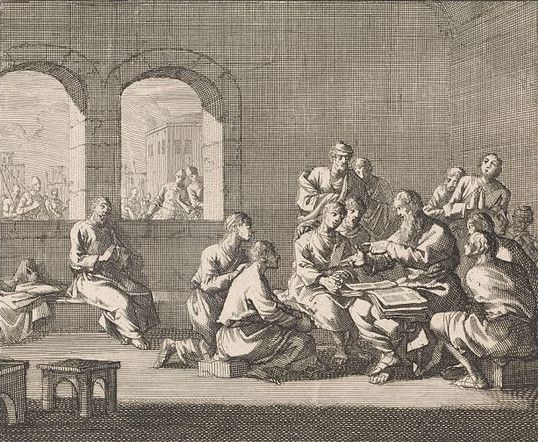
In explaining rightly ordered love, Origen refers principally to the two commandments on which the law and the prophets hang (see Matthew 22:35-40; Mark 12:28-34; Luke 10:25-28). He also appeals to the way in which God has “arranged all things by measure and number and weight” (Wisdom 11:10). In other words, Origen is arguing that order in which we should love things is determined by the way God forms, governs, and sanctifies creation.
While, ‘order of love’ is not a direct quote from the Bible, and the way in which the Church Fathers draw the term from Song of Songs 2:4 is questionable, the concept is deeply biblical. It refers to an order that is described in Scripture as a whole. That order is rooted in the nature of things and God’s ordering of creation. It is implicit in the two commandments on which “all the law and prophets depend.”
Only because there is an order in which we should love things, can we distinguish between ordered and disordered loves: between a love that is directed to the right things and in the right order as opposed to loving things in the wrong order or even loving the wrong things.
“We say that charity is out of order in a person, when he either loves what he ought not to love, or else loves what he ought to love either more or less than it is right for him to do. In people of the latter kind charity is said to be inordinate; but in the former—and they are very few, I think—those, namely, who go forward on the way of life and turn not aside to the right hand nor to the left, in those and those alone charity is ordinate, and keeps the order proper to itself”
Origen goes on to offer various considerations about of whom we ought to love most. For example, he argues that one should have a special love for spouse, parent, or sibling. Still, his considerations on the order of love do not have the systematicity of, say, St. Thomas Aquinas. Moreover, the spiritual life, not social teaching, is the main focus of his Commentary on the Song of Songs.
Origen’s Commentary on the Song of Songs, which has come down to us in Rufinus of Aquileia’s Latin translation, coins the term ‘order of love.” This is one way in which this highly influential work has shaped Christian doctrine and spirituality over the centuries. As St. Jerome wrote to Pope Damasus,
“While Origen surpassed all writers in other books, in his Song of Songs he surpassed himself.”
However, the Western Church’s reflection on the order of love was shaped more decisively by St. Augustine.
2.
Perhaps St. Augustine’s most celebrated reference to the order of love comes from the City of God. There he identifies rightly ordered love with virtue itself. Like Origen, he draws the notion from Song 2:4.
“It seems to me that a brief and true definition of virtue is ‘rightly ordered love’
(definitio breuis et uera uirtutis ordo est amoris).
That is why, in the holy Song of Songs, Christ’s bride, the City of God, sings, ‘Set charity in order in me!’”
(St. Augustine, City of God XV, 22).
However, St. Augustine’s fullest explanation of rightly ordered love appears in an earlier work: On Christian Teaching (De doctrina christiana).
As the title suggests, this work is concerned with the proper way of teaching the Christian faith. In Book One, Augustine develops an influential theory of biblical interpretation.
Teaching, Augustine notes, conveys the truth about things through signs. To classify the various kinds of things about which Scripture teaches us, he draws on the Stoics.
The Stoics had pointed out that actions are not just the internal choices we make but the actual execution of those choices. The execution of a choice consists in making actual use (chresis) of our powers, members, and external realities. The virtuous person will use the right things and use them properly. Moreover, the virtuous person will find enjoyment (chara) in the appropriate things. Augustine agrees and assumes that Scripture teaches us about which things are meant to be enjoyed (frui), which are meant to be used (uti), which can be both enjoyed and used.
To enjoy something is to adhere to it and love it for its own sake. We use things, on the other hand, to attain that which we love for its own sake. Hence, only that which is absolutely good deserves to be loved for its own sake alone. Happiness consists in the enjoyment of such a good, namely, God.
Creatures, on the other hand, are meant to be used for God’s sake. Following Romans 1:20-21, Augustine believes that everyone is aware of this.
We must not enjoy a creature as if it were an absolute good, even though we may be inclined to do so. That is not only inappropriate but also impedes human fulfilment. Instead, we should make use of a creature according to its real though relative value. This also leads to happiness.
Certain creatures, however, are worthy of enjoyment and love, not just use. Such creatures are ends in themselves, albeit in a qualified sense. The commandment to love one’s neighbour as oneself indicates that each human is such an end. The precept of love-for-God, on the other hand, indicates that one’s love of self and one’s neighbour must be directed towards love for God.
At any rate, the commandment to love one’s neighbour indicates that those who commune with us and God (our fellow humans and the angels) and any part of the self that can receive God’s benefits (the body), are deserving of love.
Hence, there are four things that deserve our love: one is above us (God); another is the thing we are (self); the third consists of those who stand alongside us (our neighbours, the angels); the fourth is the one below us (our body). Moreover, we should love them in this order.
This may seem an odd way of classifying things for a work about the teaching of Christian faith. For Augustine, however, Christian teaching is not just about what we should believe. It is also about what we should hope for and love. Accordingly, one of his works of catechesis—Handbook on Faith, Hope, and Charity (Enchiridion de fide, spe et caritate)—is structured around the three theological virtues. For Augustine, Scripture basically teaches us about which things we should love and the order in which we should love them.
Some appeal to the order of love, however, to explain how certain neighbours have a greater claim on one’s love than others. This is not Augustine’s view. In On Christian Teaching and some other works, he argues that, in principle, everyone is equally deserving of one’s love. This is because every human is created in God’s image and likeness. Ties of kin or kingdom do not give someone an inherent claim of preference. However, it is impossible to give everyone an equal share of one’s love. In practice, therefore, you should give most attention to those who are closest to you in terms of time, place, or some other circumstance.
Although Augustine’s On Christian Teaching does not mention the order of love explicitly, it develops the notion significantly and provides a framework for addressing various moral problems. For example, in Book One of the City of God, he clarifies that suicide is always wrong by showing how it is contrary to love of self. He argues that murdering others is wrong only if killing oneself is wrong. Murdering another person goes against love of neighbour. However, if you should love your neighbour as yourself, murder is an act against love of neighbour if and only if suicide goes against love of self. Murder is wrong, as the fifth commandment teaches us. That can only be the case if killing oneself goes against love of self.
3.
Medieval theologians, such as St. Thomas Aquinas, were familiar with the main ideas of St. Augustine’s On Christian Teaching and deeply influenced by it. This was mainly because Peter Lombard drew heavily on the work in his Sentences, which for over four-centuries was the main theology textbook in the West. Consequently, as Thomas Osborne has argued, Augustine’s account of the order of love became “the driving force behind medieval ethical theories.”
Moreover, the most important medieval writer on ethics is St. Thomas Aquinas.
He discusses the order of love in various works, but most systematically in his Summa theologiae (II-II, qq. 25-26). These two questions belong to the section on the theological virtue of charity (II-II, qq. 23-46). The first question works out what we should love with charity; the second, the order in which we should love them.
While St. Thomas is deeply influenced by St. Augustine, he also disagrees with him on an important point and thereby shapes the subsequent tradition decisively.
In certain passages, Augustine argues that, in principle, every other human has an equal claim on our love. Thomas disagrees. He argues that, in principle, those who either have a greater similarity to God in some regard or are more closely united to us by natural or social bonds are inherently more entitled to one’s love and should be given preference.
Thomas also clarifies the regard in which you should love yourself more than any neighbour. While there can be circumstances in which you should your neighbour more than your own bodily wellbeing, you should never love your neighbour more than your soul. There can be grounds to sacrifice your health and life for the good of others. However, you should never sin for the sake of others.
Of course, these two questions do not explain all the various implications and applications of the order of love. Working out all its various implications is complicated. This is what Thomas does over the rest of this section of the Summa theologiae, the Secunda Secundae, when addressing questions such as almsgiving or ownership. Indeed, his treatment of these and many other questions have become the basis of the Church’s official teaching.
It is also worth bearing in mind that, while the doctrine on the order of love is a Christian one and unpacks Christ’s teaching on the two fundamental commandments, it is not a truth that is known through Revelation alone. Rather, it is a truth that no one cannot not recognise. It is a truth of natural law. Like Augustine, Thomas insists that the two commandments of love of God and love of neighbour are fundamental precepts of natural law. They “are the first and common precepts of natural law, which are known to human reason in virtue of themselves, both by nature and by faith. Hence, all the precepts of the Decalogue are referred to those two in the manner of conclusions to common principles.” (Summa theologiae, I-II, q. 100, a. 3, ad 1).
4.
The recent social-media commentary on the order of love was provoked by a politician’s appeal to the notion.
That politician rightly pointed out that the order of love has wide-ranging implications for public policy. That does not mean that it is primarily a political principle nor that it is always easy to work out which policies are congruent with it.
It is primarily a spiritual principle. Following Sacred Scripture, the order of charity of which Origen, Augustine, and Aquinas speak consists first and foremost in loving the Triune God above all else.
On the other hand, in their social teaching the modern popes have taken on the challenge of working out many of its general implications for public policy.
It can be hard to work through the large and unwieldly body of modern Catholic social teaching. One strategy is to focus on the encyclicals of the two popes who did most to articulate it: Leo XIII and Pius XI.
In recommending the five best books on Catholic social teaching, Russell Hittinger suggested a similar strategy. Specifically, he proposed that the best way into the social encyclicals is to read Leo XIII’s Arcanum and Pius XI’s Casti connubii, their respective encyclicals on marriage:
“If you read those two and understand them, you will learn eighty percent of what you need to know about Catholic social teaching.”
Maybe these two encyclicals on marriage encapsulate so much of Catholic social doctrine because that teaching is largely about the family. The Church’s teaching on property, subsidiarity, and Catholic schools is grounded in the rights and responsibilities of married couples. Whereas Marx and Engels proposed the removal of the traditional grounds of marriage in the Communist Manifesto, Catholic social teaching stresses that marriage is the principle out of which polity grows and on which a flourishing society and Church depend. This focus on family is one upshoot of the order of love.
Another implication of the order of love that modern Catholic social teaching spells out is the duty of any society toward the true religion and the one Church of Christ. Here, Leo XIII draws out an implication of the first of the Ten Commandments. On the other hand, as Michael Dunnigan explained in his discussion of Vatican II’s Declaration of Religious Liberty, the popes have still to explain how to harmonise the duty of political authorities toward to true religion and the one Church of Christ with the right to religious liberty. There are still many matters to be settled concerning the order of love.
The order of love, therefore, is a lens through which to read the social encyclicals of Leo XIII and Pius XI. Conversely, modern Catholic social teaching spells out many implications of the order of love.
5.
The social encyclicals of the popes are occasional writings. As such, they pose a challenge. The reader needs to separate the prudential judgments the encyclicals make on particular situations from the universal principles and authoritative moral teachings that they articulate. The reader then faces the additional challenge of piecing them all together. For this reason, a more systematic overview can be handy for understanding the Church’s teaching on the order of love.
The Third Part of the Catechism of the Catholic Church provides one such overview. It has two advantages over the Compendium of the Social Doctrine of the Church. First, it is a magisterial document. Second, it is arguably more systematic.
The main way in which the Catechism invokes the order of charity is by tracing the Church’s various moral teachings back to the Ten Commandments, which it traces back in turn to the two commandments of love.
The Catechism also refers explicitly to the order of love, particularly in connection with the fourth commandment. There, the Catechism sees family as an exemplar of the rights and responsibilities of the political community. It argues that the order of love that we find in family applies analogously to polity.
For example, it sees the virtue of patriotism as an upshot of the fourth commandment and grounds it in the order of charity.
“The love and service of one’s country follow from the duty of gratitude and belong to the order of charity.”
(CCC 2239)
Similarly, just as better-off families have the duty to help their neighbours, so too does the Catechism teach that “more prosperous nations are obliged, to the extent they are able, to welcome the foreigner in search of the security and the means of livelihood which he cannot find in his own country.” (CCC 2241). This is not an unconditional obligation without any limits. Just as the first responsibility of parents is to their family, so is the first responsibility of political authorities toward the common good of their own country (CCC 2241).
The doctrine of the order of charity is an important yet complex one that has to be applied discerningly amid ever changing circumstances. The aforementioned readings will help you understand that doctrine and its intricacies better.