
As Catholics, we are called to live our faith and spread the Gospel in a specific nation or political society. Often, this is challenging. The existing regime may thwart rather than facilitate authentic human flourishing and political order. One of the most acute and compelling analysts of modernity, secularism, and the current political order is the French political philosopher, Pierre Manent. Moreover, as a Catholic, Manent acknowledges the role that the Church has played, and must continue to play, in shaping the political order.
In this interview, Paul Seaton discusses Manent’s important contributions to political philosophy and selects five of his books.
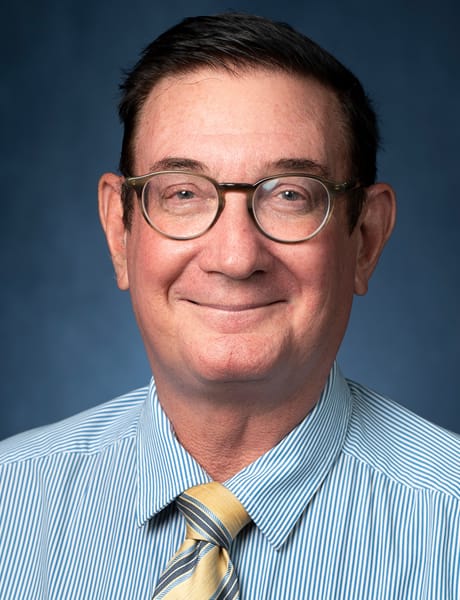
Dr. Paul Seaton is a professor emeritus from St. Mary’s Seminary & University and the book review editor of the journal Perspectives on Political Science. His has written extensively on political philosophy and French thought, and translated a number of works by Rémi Brague, Chantal Delsol, and Pierre Manent, including the latter’s Democracy without Nations?, Modern Liberty and Its Discontents (with Daniel J. Mahoney), Montaigne: Life without Law, and, most recently, Challenging Modern Atheism and Indifference: Pascal’s Defense of the Christian Proposition.
- Democracy without Nations?: The Fate of Self-Government in Europe
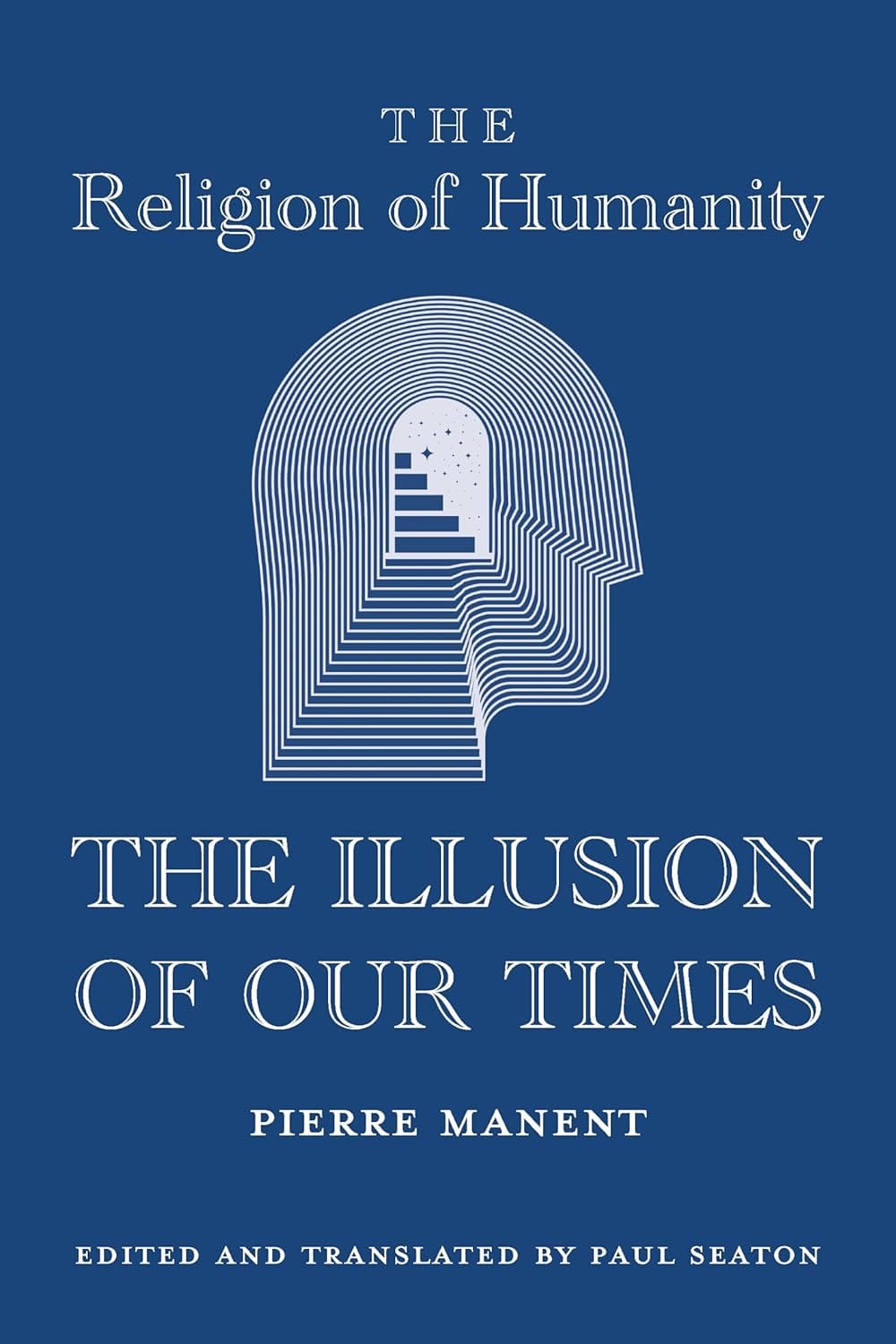
by Pierre Manent - The Religion of Humanity: The Illusion of Our Times
by Pierre Manent - Metamorphoses of the City: On the Western Dynamic
by Pierre Manent - Challenging Modern Atheism and Indifference: Pascal’s Defense of the Christian Proposition
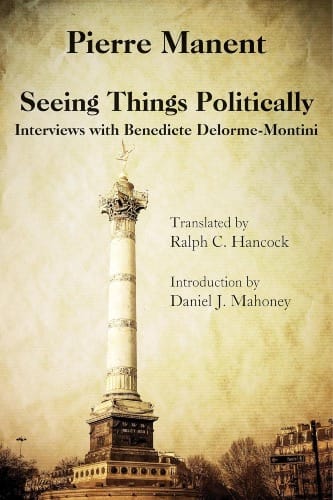
by Pierre Manent - Seeing Things Politically: Interviews with Benedicte Delorme-Montini
by Pierre Manent
Who is Pierre Manent?
Born in 1949, a convert to the Catholic Church as a young man, the French political philosopher Pierre Manent has been about articulating the nature and vocation, and the dramatic political and spiritual history, of Europe since the early 1970s, with a special focus on his native France.
Producing incisive studies that go back-and-forth between present and past, he has engaged in tracking the “special paths” of Europe and his beloved France during the course of a career that can be divided into three periods (1972-1994; 1994-2010; and 2010 until today).
He began his intellectual work during the Cold War and the global contest between liberal democracies and totalitarian regimes. During this period he primarily studied the distinctive modern regime, modern liberal democracy, with the aid of modern philosophers such as Locke and Montesquieu, as well as the unclassifiable French thinker Alexis de Tocqueville.
In 1982 he published what immediately became a minor classic in Tocqueville studies, Tocqueville and the Nature of Democracy, while in 1987 he published a highly regarded and still read An Intellectual History of Liberalism. In 1986, Les libéraux, a hefty anthology of twenty-three liberal thinkers – those who made the fraught relationship between “power” and “liberty” their theme – showed a thinker who had done his homework and was able to comment expertly on this variegated tradition. This initial period of intense work from 1972 till 1994 culminated in a magisterial work of political philosophy, The City of Man, whose Augustinian title indicated the secularism at work in decisive currents of modern thought.
With the collapse of Soviet Communism in 1989-91, a number of pressing questions came to the fore in Europe.
A first set revolved around victorious democracy itself: What exactly is liberal democracy? What should victorious democracy do with its victory?
A second set revolved around the inherited political form that democracy had made its own, the nation-state. What is the nation-state in its specific traits? What should be the status of the nation-state in the dawning European order?
Then there were more encompassing and fundamental questions: what exactly is Europe? What should a united post-Cold War Europe be based on and aim at?
From the early 1990s till today, he has tracked the answers given to these questions by European elites, chiefly, a certain sort of democratic humanitarianism (more on this further on), and the resistance offered to them by partisans of democratic peoples and “the old nations,” while also providing his own political philosophical answers to the questions. The title of a small work published in English translation in 2007, Democracy without Nations? The Fate of Self-Government in Europe, indicated these issues and concerns.
2010 marked a certain highpoint and conclusion of a first round of studies of these questions. In that year, Manent published two books, one, a study of the political and spiritual history of Western mankind, intriguingly entitled The Metamorphoses of the City: On the Western Dynamic, the other an intellectual autobiography that was initiated, not by Manent himself (he is too modest for that), but by students who wanted to know about his intellectual and spiritual itinerary. Seeing Things Politically is a fascinating authorial “trip down memory lane.”
After 2010, he entered into a third phase of his thinking and has continued to produce a steady stream of rich and varied work.
2014’s Montaigne: Life without Law brought to light the radical thought of a usually overlooked founding father of modernity; while 2016’s Beyond Radical Secularism is that rarest of books, the political deliberations of a political philosopher. In it, Manent raised and pursued the urgent political question, what should France and Europe do vis-a-vis the unincorporated Muslim communities in their midst? This required profound reflections on the undeniable (but often denied) Christian character or “mark” of Europe, together with the recognition that issues such as these are best addressed by deliberate action and collaboration, not the imposition of grand schemas of “modernization,” “secularization,” or “the reform of Islam”. Merely hoping they would work their magic effect, or merely extending to Muslims the olive branch of individual and group rights, did not a political community make.
2018 saw him give the prestigious Etienne Gilson Lectures in Paris, as he took up a longtime theme, the distinction and possible relations between natural law and human rights. This saw light in English translation in 2020 as Natural Law and Human Rights.
Manent begins this gracefully written book with a penetrating analysis of the status of natural law on the contemporary scene, one of theoretical and practical rejection, then turns to its cause majeure, its critique and replacement by modern philosophers, and a sketch of the new situation for human action created by the establishment of the regime of the modern state at the service of human rights.
The foregoing is part of the education of the human agent, who still exists and must operate within this situation. The other part is to positively articulate his nature and the nature of action. Manent does so with a unique blend of Aristotelian elements - the cardinal virtues, reflective choice, and what he calls “commanding reason” - and the Christian contribution of conscience.
More recently, he produced a fascinating study of Pascal, the brilliant scientist and even more brilliant Christian apologist, who took the measure of the dawning modern order in France, and sought for ways to make the Christian kerygma intelligible and cogent to modern men and women. An English translation appeared from the University of Notre Dame Press in 2024.
From this cornucopia of work, I have chosen five books that would serve to bring the reader into the thought of Pierre Manent.
Naturally, most Catholics wishing to take an informed and authentically Christian stance on political issues will turn first to the Catechism and papal teachings to find their bearings. What do the writings of the political philosopher Pierre Manent offer that they will not find there?
As you righly suggest, Catholic Social Thought is a vast and estimable resource for believers seeking guidance from the Church, as we make our way as citizens of two cities through the pilgrimage of this life. However, it neither claims to nor provides all that is needed in this regard. It tends to speak in general principles that need specifying and concrete application. When it comes to the political world, it has next to nothing to say about “the regime,” the specific order of offices, form of justice, and way of life defining a country, which classical political philosophy maintained was the chief theme of political philosophy, and is a decisive factor in sound political deliberation and action. Finally, while it does list “polity” as the second of three forms of societates with which it is concerned (the family and the Church being the other two), it says next to nothing about the various forms of polity that make up the human scene and are the arenas and often the objects of high politics.
This is particularly true of the bone of contention in the West today, the nature and status of the nation-state. While Catholic Social Thought rightly recognizes that “polity” has distinct “propria,” or specifying features and goods, it tends to simply presuppose the nation, and spends little time articulating its nature beyond broad generalities. There are exceptions to this general rule, of course. Because of his deep roots in Poland, Saint John Paul II wrote incisively and beautifully on the nation. But his example has, in the main, not been followed by other authoritative documents.
Manent supplies these lacunae of CST: as a political philosopher he has written extensively on regimes, political forms, including the nation, and placed them in the context of a philosophical understanding of “man, the political animal,” the nature of politics, and what he calls “the political condition of humanity”. All this, in turn, is located within, and is used to take the measure of, the past political and spiritual adventures of Western humanity and our current situation. One of Manent’s favorite terms is “mediation.” For me, and for many others, he has been a great mediator, as we toggle back-and-forth between CST and the actual configuration of the human world.
 Five Books for Catholics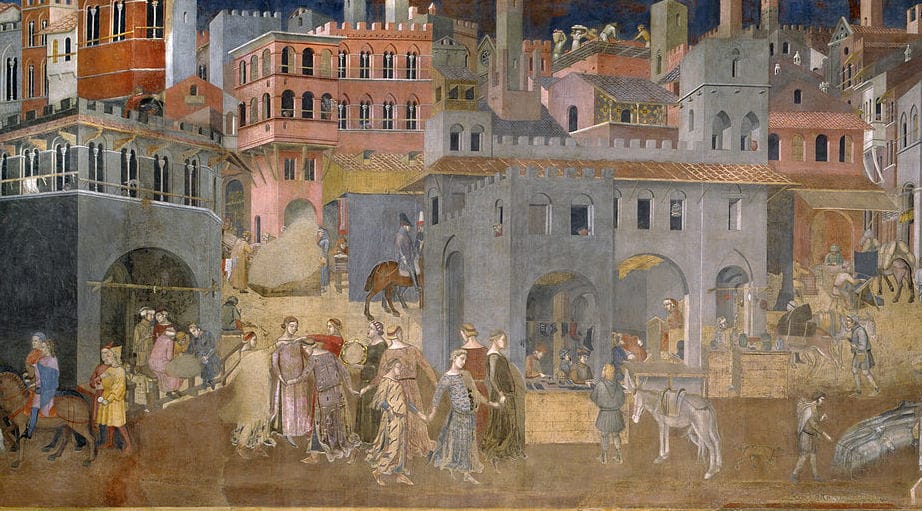
You have worked extensively on various contemporary French Catholic philosophers: not just Manent but also Rémi Brague and Chantal Delsol. What attracted you to them? Do they bring something to the table that contemporary Anglophone political thought overlooks?
It is very kind of you to ask about my personal story. I learned French in a French Benedictine monastery (Fontgombault) in the early ’70s and returned home to America during some of the dark days of the Cold War. The best Sovietology was done in France, so I kept up my French in connection with that important topic. One thing led to another and, thanks to the good offices of my friend, Daniel J. Mahoney, I encountered a chorus of French worthies: Raymond Aron, Alain Besançon, Manent, Chantal Delsol, the too-little known Philippe Bénéton, and, finally, Rémi Brague.
What attracted me to them, besides their intelligent and intransigent anti-communism, was the breadth, depth, and illuminating power of their thought. Aron, Manent, and Bénéton tended to work the political side of things, while Delsol and Brague (along with Cardinal Ratzinger, whom I discovered and loved) worked the cultural side. Between the two, one had a fuller view of things, the past and the present, the political and the cultural. These French thinkers showed that the old authors (Aristotle, Augustine, Montesquieu) still have great illuminating power, but that we today have our own tasks for thought (modern ideologies, Islam, a democracy in danger of losing its moorings). Translating them has been an education in the great books and thinkers of France and the West and a sustained conversation with first rate contemporary minds.
At the Collège de France, Manent was the assistant of the Raymond Aron, a leading political thinker and the main exponent of liberalism in France. To what degree has Aron influenced Manent’s work?
Aron (1905-1983) influenced Manent considerably, but finally in the way that a great teacher influences a great student: he gave Manent all that he had to give, then led him to other teachers who could help him on his personal path of investigation.
I would say that Aron principally taught Manent two things. In the series of autobiographical interviews included in the list of books, Seeing Things Politically, Manent says that Aron was decisive in showing him that when it comes to politics, “there is something to be known,” it is not necessarly a matter of ideological constructs, or partisan gaslighting. This was a liberating lesson in the midst of a highly ideological and partisan time (one much like our own). Second, as your question suggests, Aron taught Manent the fraught nature of defending human liberty and “the liberal liberties” in modern circumstances. Constant attention and vigilance are required, and an almost superhuman moderation joined with moral and intellectual courage.
“He is one of the most radical critics of philosophical or theoretical liberalism you can find."
With the fall of the Soviet Union and its Eastern Bloc, Francis Fukayama heralded the end of history. In his view, liberalism had won hands down and definitively all the arguments in political philosophy. Since then, an increasing number of Catholic scholars have argued that we need to awaken from our dogmatic slumber, recognise that liberalism is predicated upon fallacious premises, move beyond it, and draw on the Catholic tradition to retrieve an authentic conception of political order. Is Manent a fellow-traveller of Catholic post-liberals or part of the other team?
A necessary question in our current circumstances. In an important sense, this question is “Americo-centric” and thus presumes debates in which Manent is not involved. France and Europe have their own intellectual constellations and divisions. Nonetheless, I will give an answer that will satisfy no side. With Manent, tertium datur.
On one hand, he is one of the most radical critics of philosophical or theoretical liberalism you can find. Many anti-liberal readers are attracted to him for that reason. On the other hand, he vigorously eschews any talk of radical “transformation” or revolutionary “structural change,” whether emanating from secular or ecclesiastical quarters. There is a mystery here for many, who want him to fish-or-cut bait. His practice, however, reveals some of the reasons for this complex attitude.
With the critique, he instructs or enlightens his readership, who might not be aware of the radicality and problematic character of things they take for granted, in this case “liberalism” as a philosophical proposition about man and the human condition.
However, the critique is never just critique, it also recalls the original rationales for certain liberal democratic institutions, such as representative government, and considers them in the light of political philosophy. For example, with his canonical understanding of the necessary connection between deliberation and action, Aristotle can help us better understand the constant tensions between the executive and the legislative branches in the liberal constitutional set-up. Together with Montesquieu, this enhanced understanding can lead to more appropriate expectations of our political life, as well as contribute to its more effective conduct.
To bring these two points together: Manent is a penetrating critic of many (but not all) liberal anthropologies, while having a good deal of sympathy for the institutional mechanisms that the original liberals established for the protection and exercise of modern liberty, a liberty at once individual and collective.
As for the exceptions,Tocqueville said he was “a liberal of a strange sort.” His anthropology was not Locke’s and his liberalism was premised on a view of human liberty and dignity–even greatness–still worth considering. Aron’s liberalism, to give another example, was a “political liberalism.” Not all liberalisms are created equal.
Above, you described Alexis de Tocqueville as unclassifiable. Nor is it easy to situate Manent within any school of political or Catholic thought. How would you classify him?
I would start by pointing out the partial truth of previous efforts at classifying Manent. Early on, he was called a “sad liberal,” a phrased used to designate those like Tocqueville and Benjamin Constant who lived after the French Revolution and saw that liberal principles could be invoked and coopted for terrible ends, or a “chastened liberal” who knows that, contrary to the promises of some of its early proponents, the liberal regime with its many estimable features is still beset with regime-based difficulties. Manent’s early book on Tocqueville and the Nature of Democracy was an effort to bring these to light, so as to instruct democratic citizens and politicians of the need for what Tocqueville called “the art of liberty”. He therefore was also called a “Tocquevillian liberal”.
Others, however, characterized him as a “neo-Aristotelian,” because of the central role Aristotle played in his early analyses of modern political philosophy and modern politics. In these, Aristotle was both foil and critic, even as Manent dealt with intellectual and historical material unknown to the Stagirite. In the subsequent phases of his thought, Aristotle continues to be a trusted companion and guide to the nature and requirements of the political animal in today’s circumstances. Contemporary human beings still have the natural vocation and task of “putting speeches and deeds together in common”. One can go far in assessing and helping a contemporary people by applying this single Aristotelian criterion to their current practices.
But Manent has also gone considerably beyond Aristotle. Chief among these additions is a general teaching about “political forms,” the distinct forms of political community other than the city that Aristotle analyzed so well, and in particular a rich teaching about the nation. Aristotle’s ethnē were not modern nations.
There are other differences occasioned and required by the unique content and trajectory of the West. Aristotle did not engage Biblical religion, especially in the form of the Catholic Church, nor the contemporary ersatz religion of democratic Humanity (see below). While there was indeed a universal dimension to Aristotle’s thought, these two universals go infinitely beyond his field of vision. All in the all, the novelties of the West and the unprecedented features of today have prompted Manent to go beyond his predecessors and teachers.
So, how would I characterize Manent as a political philosopher? Besides the features mentioned above, I would characterize him as a thoughtful and learned defender of “man, the political animal” and “man, the imago dei”. Secularism in its totalizing form denies the latter, while too much of contemporary Catholic thinking effectively ignores the former. To “defender” I would add “tutor” or teacher. In all his work, Manent defends and sheds light on these two figures of man found in each of us. In this, he is like his great French predecessor, Charles Péguy, who believed that in modern circumstances the Republic (or self-governing political community) and the Church stand or fall together.
Manent has been writing since the seventies. The works you have selected, apart from some of the pieces in The Religion of Humanity, belong mainly to the last twenty years. Is this because he later work has focussed more on secularism and the Christian proposition?
That is a very asute observation! The guiding principles of the selections that were indeed weighed more toward our times were, first, that they would be more readily intelligible and interesting to readers; and, second, precisely what you suggest: secularism has proceeded apace in France and the Europe of the European Union. Since the mid-90s, Manent has tracked this worrisome development, critiqued and descried it, and, more recently, has been more explicit about things Catholic and Christian in the formation of Europe and the European soul. As I said above, his newest book on Pascal is a bold effort to “re-propose” the Christian faith to his compatriots. One can only wish him well.
1.
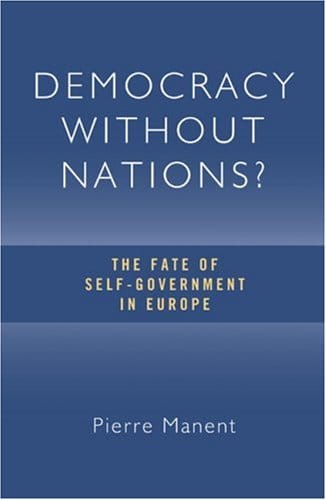
First on your list is Democracy without Nations:The Fate of Self-Government in Europe. Why is this a good entry-point into the writings of Manent?
Democracy without Nations: The Fate of Self-Government in Europe (2007) has the virtue of being relatively short, only 103 pages, while brimming with learning, insight, and brilliant aphoristic formulations. In important ways, it sets the stage and presents the dramatis personae of developments to come in Europe. Its three parts deal, respectively, with the modern trajectory of democracy in France and Europe, the nature and remarkable history of the European nation-state, and a closing chapter on “Religion” which deals with Christianity, Judaism, and Islam.
Its chief thesis is that advocates of an inflated notion of “Democracy” believe it can do without the nation-state, or any political circumscription, in the Europe under construction. This pipe dream, warns Manent, will alternate between a dangerous political and spiritual weakening of Europe and a new form of “Democratic” (sic) authoritarianism, where elites tell peoples to bow before an ever expanding canon of “rights” and enforce a morality of “democratic values” as defined by them. Manent saw the current contest between elites and populaces much earlier than many.
2.
Next is your anthology of Manent’s writings on a strikingly named topic, “the religion of Humanity”. What does Manent mean by the religion of humanity?
The religion of Humanity is the complement to the hegemonic notion of “Democracy” I just discussed. The phrase was coined by the nineteenth-century French positivist, Auguste Comte, and adopted by Manent to designate what he saw dawning on the European scene as early as 1993: a Democratic-Humanitarian ideology or worldview. (The capital letters are de rigueur, as both are apotheosized.) This worldview has become the unofficial religion of the European Union and the guiding faith of misguided European elites.
It consists in a particular view of humanity, understood as autonomous and sovereign, i.e., independent of God, and as having a natural-historical vocation to full unification and Unity. Open borders and an open arms welcome of “the Other” are dictates of this view, and humanitarian “compassion” replaces the rigors and demands of Christian charity in effecting human solidarity. Whatever significant differences there are between individuals and groups are seen as benign ‘vibrancies’ in the tapestry of humankind, or as destined to erode away in the humanitarian paradise of the European Union. What a pipe dream!
This false view of humanity occludes Europeans’ political and spiritual sight – it especially blinds them to “the political condition of mankind” – and wages war against the imago dei and the political animal, the two founding figures of the human in Europe. Alas, not only has it taken hold of many European leaders, it has infiltrated precincts of the Church as well, to some imponderable extent.
Could you elaborate upon this last point and give some examples of how some within the Church have bought into the religion of humanity?
On this score, I can let Manent speak for himself (1) (2). For his own succinct statement of the proper relationship of the Church to “real” humanity, see a talk he gave to the Pontifical Academy of Social Sciences in 2012.
“Manent takes the long view and goes back to the origins of the Western dynamic, and then retraces the major steps to its current malaise and even self-loathing."
3.
The next book, whose title recalls a work of Étienne Gilson, is Metamorphoses of the City: On the Western Dynamic. He argues that the city is the principle of the development of the West and modernity, with the various phases of that development being metamorphoses of the city. How does this work help us understand modernity?
To address this question, I will have to put on seven-league boots and proceed with the delicacy of Atilla on campaign. The reader is forewarned.
Manent begins the work with a striking contrast between the self-confidence, energy, and grand promises of the philosophical founders of modernity – the promises of freedom, self-determination, the conquest of Nature, the relief of the human estate – and the lassitude, facile humanitarianism, and political debility of Europe circa 2010. This striking contrast is a puzzle that calls for investigation. To do so, Manent takes the long view and goes back to the origins of the Western dynamic, and then retraces the major steps to its current malaise and even self-loathing.
That dynamism began with the Greeks (although Manent makes sure to include the Jewish contribution as well, with the Promises made to a particular people, but for the sake of all of humankind). The Greeks may have been the most inventive people in human history, certainly the list of their inventions and discoveries is long and illustrious: political community itself; human action as such; “the universal” as the lodestar of thinking; the soul or psuchē; regime-analysis; and much else in art, historiography, and the exploration of the human.
Manent points out that all of these innovations presented themselves as “tasks,” as solicitations and challenges “to more” – to more community, more justice, more virtue, more truth. As a kind of script for human endeavour, they formed a dynamic agenda that, when it encountered and touched other peoples, became the impetus for new forms of community and thinking. This particularly impacted the Romans, themselves a dynamic force, who encountered not only the Greek legacy but saw a new sort of dynamic community, the ecclesia, emerge from the hinterlands of their empire. Here was a most volatile mixture! To their credit, both the empire and the Church creatively engaged with the Greek models, while the two universals, the empire and Church, engaged in a dramatic pas de deux.
This complex dynamism was interrupted and then reprised by the tribes that conquered Rome (while submitting to the Church) and formed the basis for Christian kingdoms and, eventually, the confessional nation-states of Europe. The modern philosophers were heirs to these great encounters and the accumulated energies of the original impulse, while deciding to take things – philosophy, science, political community, human endeavour – in bold new directions.
From here, Manent focuses on what has caused the modern project to eventuate in the current condition in Europe, one of unjustified Democratic-Humanitarian hubris and real political and spiritual weakness and confusion. While the causes are many, both general and particular, because he knows the terminus ad quem of the process: the ascendancy of a particular Universal that eschews concrete political circumscription, he can link it to prior efforts on Europeans’ part to embody this-or-that universal. The confessional nation-states took one or another version of the Christian universal and sought to embody it; then the French Revolution took a new universal, that of Humanity under a god of Reason, and sought to embody it.
In the aftermath of the Revolution, various European nations tried this-or-that combination of Christian and humanitarian universals as their foundation, while eventually Hitler’s Germany repudiated the Christian component and elevated a racialist version of the human race. In reaction to this catastrophe, Christian democrats in Europe tried a restoration of the Christian foundations of Europe; but in the aftermath of the collapse of the Soviet Union, yet aother universal was adopted, the Democratic-Humanitarian Universal of the European Union. Having arrived there, Manent halted. Other works, including Democracy without Nations? and Beyond Radical Secularism, retraced its ascendency and adoption.
“The Christian apologist at the dawn of the modern era is recalled in order to speak to late-moderns who have forgotten any vital relationship with Christianity."
4.
Fourth is Manent’s Confronting Modern Atheism and Indifference: Pascal’s Defense of the Christian Proposition. Manent has written monographs on several modern political thinkers. In this book, he looks at Pascal, whom we do not tend to consider a political thinker. What is the Christian proposition and why is Pascal’s defence of it instructive when addressing modern secularism?
The book begins by recalling the essential contribution of the Christian proposal of a “God who-is-the-friend-of-man” to Europe’s original constitution and dramatic history, then sketches contemporary efforts to excise it from its memory, its present, and its future. This is the remarkable situation within which he proposes a rereading of Pascal. The Christian apologist at the dawn of the modern era is recalled in order to speak to late-moderns who have forgotten any vital relationship with Christianity.
Thus, while the work is tour de force of exegesis, it is also an engagement with contemporary mentalities. Serving once again as a mediator, Manent “intercedes,” as it were, for Pascal before a contemporary audience.
Among its virtues are Pascal’s intimate acquaintance with modern science and “modern reason” more broadly. He knew our rationalism intimately, and thus could address it en connaissance de cause. There are limits to, and human consequences of, scientific knowing that too-often are ignored by us; Pascal makes sure to point them out and drive them home. He also points out the awkward truth that “self-love” often is at work in what we believe to be our most reflective or rational activity.
The same is true when it comes to the moral plane and, even deeper, what Pascal calls “the self” (le moi). Manent carefully lays out Pascal’s articulation of the “greatness and misery of man” in which man is a “monster” and a “mystery” to himself, as well as the dark secret that we all know but rarely tell ourselves: I fail to live up to the law within, indeed I am incapable of doing so. These are defining features of the human condition that, Pascal argues, only Revelation can illumine and a divine Physician heal.
Before turning to these Christian realities, Manent, exercising his role as mediator, conducts rather pointed comparisons and contrasts, first with Montaigne and Rousseau, who provided alternatives philosophical accounts of the human condition and human evil, then with contemporary views, which tend to be resigned to human moral incompetence or blame “society”. In this way too, Pascal becomes “our contemporary”.
The last four chapters of this book turn to Christ, his Church, and the Christian life. The first deals with Pascal’s distinctive reading of the relationship between the Old Testament that promised and prophesized a Messiah and Christ and His Church; the second does double duty by gathering together Pascal’s reflections on “the style of the Gospel” and then sensitively retraces Pascal’s meditation on “Le mystère de Jesus” by way of a triangulation with the Synoptic Gospels and St. John’s account. In it, Manent provides a remarkable reading of what exactly “the cup” was that constituted Our Lord’s challenge and agony in the Garden.
The final two chapters trace the phases and elements of the Christian way of life, beginning with repentance and conversion, continuing through prayer and perseverance, reflecting on the joy of union with God and the concomitant fear of losing Him, and ending with a moving account of Pascal’s own mystical experience of “the God of Abrahm, Isaac, and Jacob,” “the God of Jesus Christ,” late one November night in 1654, which he memorialized in a document that he sewed into his coat and was only discovered after his death.
 Five Books for Catholics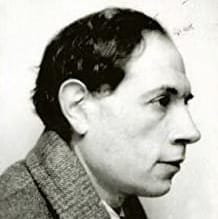
5.
To close, you have recommended a book-length interview with Manent, Seeing Things Politically. Does Manent reveal anything new in the more informal conversations that make up this book?
Does he! In it, we learn about the reasons for his conversion to the Catholic faith (“As Pascal said, it knows well man.”), his decisive intellectual encounters with Raymond Aron, then the writings of Leo Strauss, and the full itinerary of his intellectual life and work until 2010. There are intellectual deepenings and self-corrections that he recounts, as well as the friendships and debates that make up an intellectual life. The blessings of teaching as well. One even hears about a salon he attended as a young man, hosted by a much older couple, Stanislas and Aniouta Fumet. Aniouta in particular “was a lovely elderly lady, … who brought you immediately into a world truly very different from the one you had left at the door. It was all about the play of grace and freedom. God was perpetually and visibly active in Aniouta’s world.” May we all have such asylums!
However, the most important and interesting take-away from this fascinating series of interviews is the witness and model provided by Manent himself of a human being faithful to his vocation: in his case, that of the political philosopher. He is one of the “fruits” intended by the Second Vatican Council when it called for greater participation of the laity in “temporal affairs.” For over five decades, and sometimes employing the parrhesia that Pope Francis said he welcomed, Manent has shed political philosophy’s “healing light” on the continent that Benedict XVI said in the Regensburg Address enjoyed a providential privilege and world-historical significance. A true son of France, a true son of Europe, Pierre Manent is a true son of the Church.