“The social doctrine of the Church developed in the nineteenth century when the Gospel encountered modern industrial society with its new structures for the production of consumer goods, its new concept of society, the state and authority, and its new forms of labour and ownership.”(Catechism of the Catholic Church 2421) It “comprises a body of doctrine, which is articulated as the Church interprets events in the course of history, with the assistance of the Holy Spirit, in the light of the whole of what has been revealed by Jesus Christ.” (n. 2422) It “proposes principles for reflection; provides criteria for judgment; gives guidelines for action” (n. 2423).
Nevertheless, deciphering and reconciling the ever-growing corpus of papal documents and pronouncements on modern society can be challenging. In this interview, Prof. Russell Hittinger discusses some recommended readings that can help us understand Catholic social teaching.
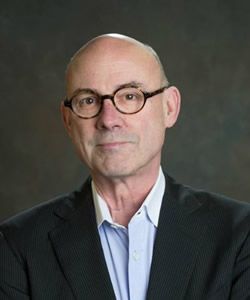
Dr. Russell Hittinger is currently Executive Director of The Institute for Human Ecology at the Catholic University of America, where he is also a Research Professor Ordinarius in the School of Philosophy. He is Emeritus Professor of Religion at the University of Tulsa and has taught or been a fellow at numerous other institutes of higher education. Since 2001, he is a member of the Pontifical Academy of St. Thomas Aquinas, to which he was elected a full member (ordinarius) in 2004, and appointed to the consilium or governing board from 2006-2018. On Sept. 8, 2009, Pope Benedict XVI appointed Professor Hittinger as an ordinarius in the Pontifical Academy of Social Sciences, in which he finished his ten-year term in 2019. His books and articles have appeared through the University of Notre Dame Press, Oxford University Press, Columbia University Press, Fordham University Press, the Review of Metaphysics, the Journal of Law and Religion, the Review of Politics, and several law journals (both American and European).
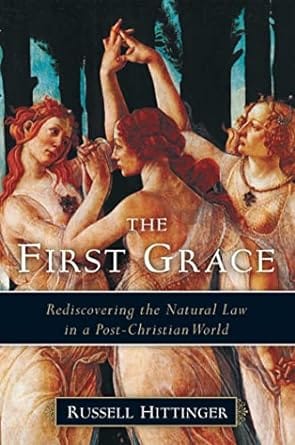
- Arcanum and Casti connubii
by Leo XIII and Pius XI - The Social Teachings of Wilhelm Emmanuel Von Ketteler: Bishop of Mainz (1811-1877)
edited by Rupert J. Ederer - Catholic Social Teaching: A Volume of Scholarly Essays
edited by Gerard V. Bradley and E. Christian Brugger - The Teachings of Modern Roman Catholicism on Law, Politics, and Human Nature
edited by John Witte Jr. and Frank S. Alexander - Selected articles (1) ( 2) ( 3) (4)
by John Courtney Murray SJ - Infidels and Empires in A New World Order: Early Modern Spanish Contributions to International Legal Thought
by David M. Lantigua
I opened with the Catechism’s description of Catholic social teaching. Scholars such as you might find it accurate in some regards, inaccurate in others. How would you define or describe Catholic social doctrine?
I often use the word “thought” because CST consists not only of formal teachings by councils and popes, along with the ordinary magisterium of bishops, but also of the works of philosophers and theologians, both clerical and lay. So, for example, Jacques Maritain’s Integral Humanism (1936) is one of the most important and influential books on CST in the last five centuries. Even so, it would be misleading to call it “doctrine.” Moreover, a significant portion of magisterial documents about social matters explicitly target contingent and changing situations. Since I am not an ecclesial authority it seems best to speak of “thought.”
The main focus of CST is the study of human social orders. In modern times the teaching begins with what Leo XIII called the three necessary societies: Domestic (marriage and family), political, and ecclesial. Each is rooted in necessity understood as need. Men and women need one another to procreate, and then to jointly govern the household. Of course, children need the domestic order under parental authority. The child’s prospects for human flourishing are rather limited with that formation. But the domestic order itself needs a more comprehensive social order called polity. This need is rooted chiefly in the quest for justice beyond the household. The Church is rooted in perhaps the most profound need, namely the forgiveness of sins.
However, each of these social organizations is a potential theatre of excellence. They begin in a need, but if everything goes well, a rainbow of virtues emerges. Take a parent’s virtues of governance. Being parents is the greatest lesson in their lives and they become excellent at it. Plus, in doing so they perfect their own spousal concord. Similarly, a polity is not just about preventing murders, theft, and fraud. All sorts of important institutions emerge within it, such as public libraries, and monumental buildings. Several other kinds of associations begin to flourish. Traditionally, we call them arbitrary societies because membership usually depends on human choice, such as to enter the medical profession, academic life, or a soccer club. Of course, membership in the Church is more than just the forgiveness of sins. Baptism is the beginning of supernatural life and the exercise of theological virtues.
You mentioned the polity as one of the three necessary societies. Does Catholic social teaching bear the label of social teaching as opposed to political thought or political teaching to highlight that the polity is not the only society?
Yes, that is exactly right. That change was not made formally until the early twentieth century. Pius XI is important in this regard. Prior to him, churchmen referred to doctrina civilis – teaching on the most comprehensive social order, namely government. Pius changed the term to doctrina socialis, which includes teachings on political order. Social problems of the late nineteenth century and the twentieth centuries are not just political in kind. Rather, there are multiple and complicated social problems.
One of the issues you have underlined in your writings is that, amid the growing body of papal pronouncements on social issues, the core doctrine remains unvaried, but the explanations and emphases are not always consistent. Does the general Catholic face any difficulties when trying to get a handle on Catholic social teaching?
We can speak of a very coherent epoch. It is sometimes called the “great coherency,” even in Roman documents. It goes from Leo XIII to Pius XII. Leo was born in 1810 and Pius died in 1958). Many of these popes knew one another. Pius XI was Leo’s student. Pius XII was ordained in Rome when Leo had published Annum sacrum for the new century. John XXIII was a seminarian in Rome. He wrote a fan letter to Leo about Rerum novarum. Paul VI had already been born. All these popes were united, in one way or another, around Leo XIII, who published Aeterni Patris, on the renewal of philosophy, particularly that of Thomas Aquinas.
What gave this epoch that coherency was the fact that we had three generations of popes who knew each other. This is very unusual. Second, they were all trained in a similar scholastic philosophy and theology. They had control over their terminology. It is as simple as that.
They were not hidebound to it, by any means. However, if you read what Leo says about the necessary societies and then what Pius XI and Pius XII have to say, you know that the framework has hardly changed. It changes towards the sixties. Indeed, everything changed in the sixties.
One of the things that happened is that Catholic thinkers began to approach the social sciences seriously. The social sciences were born during Leo’s time. That is also when all the great social scientists, such as Durkheim, were active. However, in their social teachings, the popes did not mention them, bar the occasional reference to Karl Marx or some French positivist. There was not a consistent or deep reckoning with the social sciences until the middle of the twentieth century. The Pontifical Academy of Social Sciences did not come into existence until John Paul II’s pontificate.
The third important thing: the popes began to teach more about international order. Take John XXIII’s Pacem in terris and Paul VI’s Populorum progressio. As that picture became bigger and more complicated, the terminology began to change. So, in Pope Francis's recent document, Fratelli Tutti, there are around forty instances of ‘family’. Only five pertain to an actual family, as opposed to, say, the ‘family of nations’ and so on. That is a change.
I really urge students to start at the beginning and become familiar with the main chassis of Catholic social doctrine. You might have some trouble doing that if you start with Pacem in terris.
Is the Leonine synthesis still applicable given Catholic social teaching’s current, broader focus on international affairs and modern social science?
My career in writing over the past twenty-five years tells me that it is. In fact, the Leonine synthesis on social order is indispensable.
Leo of course brings back Thomas's position on social order. Thomas insists that social order is not a substance. Some Platonists think that it is and that the body politic has an actual soul. Aristotle noted however that social form cannot be a substance. If it were, all of us, who are members of that society, would turn into one thing. On the other hand, neither is it a mere aggregate, such as the pile of sand in your driveway. The grains in a pile of sand are only related accidentally. Society lies somewhere in between. It is not a substance and it is not a mere aggregation. Rather, a society is a unity of order having a common end and a form of order, that is to say, a constitution or a paradigm for how common action is to be undertaken and preserved.
The next question for Leo is, “How many kinds of society are there?” Every society will have an intrinsic common good. We call this the form of order. Namely, how we do things together, like a crew team. A crew has an end: winning the race. The same is true of natural marriage-family, polity, and the Church. In the case of marriage and church, however, we notice not only a common end but also a fixed form of order. In marriage, we simply call it matrimony: one man and one woman who vow to be “as one” until death for the ends of procreation, mutual edification, and the sacramental life. The constitution of the Church is also fixed. It is apostolic, given by Christ, and animated by the Holy Spirit.
What makes polity tricky and international relations even trickier is that there is no fixed form. A polity can be governed by one, a few, many, or some combination of them. The chief end is justice, but the organization is somewhat left to human choice.
"These encyclicals are still the doctrinal heart and soul of the modern Catholic doctrinal understanding of marriage. I tell my students that they should read them first because they lay out the essentials of social ends and forms better than anywhere else."
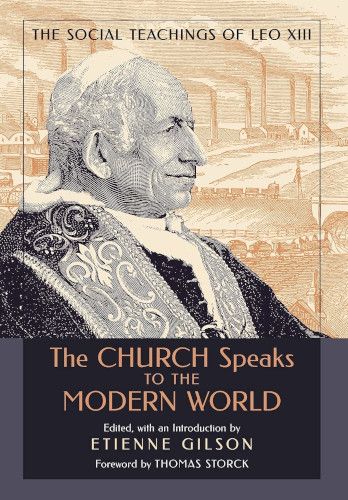
1.
The other problem is that many believe that Leo's social teaching is encapsulated in Rerum novarum which deals with the problems and fallout of the Industrial Revolution. However, he did not take that to be his sole contribution to social teaching. He wrote a whole series of social encyclicals before that.
Yes, he waited eleven years to write Rerum novarum. In fact, he wrote his principal social encyclicals before Rerum novarum. Here is the supreme example. Since the Council of Trent, there have only been two doctrinal Pontifical writings on marriage. Leo wrote Arcanum divinae in 1881. His student, Pius XI, wrote Casti conubii in 1931 to commemorate Arcanum on its fiftieth anniversary.
These encyclicals are still the doctrinal heart and soul of the modern Catholic doctrinal understanding of marriage. I tell my students that they should read them first because they lay out the essentials of social ends and forms better than anywhere else. Moreover, they are quite readable. If you read those two and understand them, you will learn eighty percent of what you need to know about CST.
You have written an essay on those two encyclicals in Christianity and Family Law (Cambridge University Press). Is that essay a good primer and guide to them?
Yes. But it is best to sit down and read the encyclicals first. None of it is rocket science.
Nowadays, when people talk about Pontifical documents on marriage, most think of Familiaris consortio and Amoris laetitiae. Why are the two encyclicals by Leo XIII and Pius XI, which virtually no one reads, so much more important than the better known conciliar and post-conciliar documents?
Because they are explicitly doctrinal. They are not just doctrinal, in the broader sense of teaching something. Take, for instance, the issue of contraception. It was resolved in the late sixties with Humanae vitae. However, the decisive doctrinal teaching of Humanae vitae goes back to Casti connubii on matrimony, and Casti in turn relies upon Leo’s Arcanum. Yet even beyond the issue of contraception, the social form of matrimony is ground zero for understanding social order. We naturally begin to make definitions and distinctions about social order on the basis of what we know about marriage and family. Even the more radical theorists who have little use for the traditional practices of marriage and family observe the importance of the most basic human social order. Their critique is actually an acknowledgement of the first society.
You have not included the Compendium of the Social Doctrine of the Church. Is this because, as you have explained in various interventions, it does not present the Church’s social teaching within a satisfactory theological and philosophical framework, but collates teachings, somewhat in the manner of a patchwork (stromateis)?
Yes. A brief history of the Compendium is in order.
In Ecclesia in America, John Paul II pleaded for a brief catechism on Catholic social teaching. It was meant to be a brief catechism. He probably had in mind something like the Old Baltimore Catechism: a slim volume with the essentials.
What came out was the Compendium. It is not brief at all. The index is almost as long as the document itself. What the authors of the Compendium thought they needed to do to meet John Paul II’s request was just to collect everything and show that, over the last century and a half, the Church had touched upon virtually all the different areas of social life. But it is not always well organized. For example, there is about as much said on the Kyoto freshwater treaties as there is on the topic of justice itself. I advise caution in using it for the purpose of gaining an integrated understanding of CST.
"Leo credits Wilhelm Emmanuel von Ketteler as the initiator of Catholic social teaching, at least in the modern sense of the term. That credit is well deserved."
2.
Your next recommended book is a collection of writings by Emmanuel Von Ketteler (1811-1877), the bishop of Mainz. His writings on the situation of workers in the wake of the Industrial Revolution were one of the sources and inspirations of modern Catholic social teaching. Why are they still worth reading today?
Leo credits Wilhelm Emmanuel von Ketteler as the initiator of Catholic social teaching, at least in the modern sense of the term. That credit is well deserved.
The French Revolution lasted ten years and did not really conclude until Napoleon was defeated. In its aftermath, all kinds of Catholic thinkers, clerical and lay, tried to put together an explanation, and to some extent a criticism, of the breakdown of social order that followed the French Revolution. Catholic thinkers, clerical and lay, needed a unified teaching on social order. At mid-century, Bishop von Ketler emerged. He was resisting the Prussian effort to sideline the Church in social life. Eventually, in Leo’s time, this effort came to be known as the Kulturkampf.
In 1848, von Kettler preached a series of sermons. The University Press of America has issued a nice translation with good footnotes. When you read these sermons you say, “Whoa, this is where it began.” The sermons are exceedingly clear and cover all the main topics one at a time. What is the state? What is subsidiarity? What is the freedom of the Church in issues of marriage? What is citizenship? But the marriage issue never goes away. By the middle of the nineteenth century regimes all over the world were changing the law to permit not just divorce, but divorce without the onus of proving there is a flaw in the marriage. Marriage is treated as just one option among others. Today, we call it no-fault divorce. In effect, marriage is an arbitrary rather than a necessary society. One can check into it and check out of it like joining a motorcycle club. Von Kettler is one of two nineteenth-century Catholics who, in addressing these matters, set the table for Leo XIII.
Von Ketteler’s sermons are extremely enlightening all these years later. Some of his other essays are also well worth reading.
The other nineteenth-century figure Luigi Taparelli SJ. He was part of Pius IX’s circle. By the 1860s, things were even worse in the Papal States, which were lost to the new Italian government. The Pope was a prisoner in the Vatican. The new regime was closing down Catholic presses and confiscating Church properties, such as monasteries. La Civiltà Cattolica, a Jesuit-run newspaper, throughout the crises of the 1850s and into the 1860s published articles that were similar to von Kettler’s writings. In every issue, a team of scholars examined a new problem. Taparelli was part of that circle. Later, he went to Sicily, became a teacher, and wrote his magnum opus. A Theoretical Essay on Natural Right From an Historical Standpoint. Unfortunately, the whole work has not been translated into English. Read Thomas Behr’s work in the Bradley volume (below). However, people credit Taparelli with writing the first systematic account of subsidiarity. Enough of him has been translated into English for one to dig into.
3.
Next is a collection of scholarly essays, edited by Gerald V. Bradley and E. Christian Brugger. In your view, does this collection constitute the best comprehensive commentary on modern Catholic social teaching that is currently available?
Well, I am very impressed with it. Now when you have about twenty-five authors, the quality is going to be somewhat mixed, but not that much. By the way, you should read the contribution of Professor Behr, the main Taparelli scholar in the English-speaking world.
For a single volume, many of the essays are very good. However, I cannot say that it is the very best. Nor would I wish to say that the volume I was involved in, edited by John Witte for Columbia University Press, is the very best. It covers similar ground. However, you should read both collections of essays on CST.
4.
Well, that brings us to the next book: The Teachings of Modern Roman Catholicism on Law, Politics, and Human Nature edited by John Witte Jr. and Frank S. Alexander. It contains a selection of texts by Leo XIII, Jacques Maritain, John Courtney Murray SJ, John XXIII, Gustavo Gutiérrez OP, Dorothy Day, and John Paul II. You are the author of two of its introductory essays: the one on modern Catholicism, the other on Leo XIII. Is it to these two introductory essays that you wish to draw the reader’s attention as a summary of Catholic social teaching?
I worked hard on those essays and had great editors. The original work was on Catholic. Protestant, and Orthodox teaching. However, it would have been too big. So, they had to parse it out into multiple volumes.
The author of each essay had to include a selection of central texts. This is a very valuable method. You can go from the essay to some key texts from the teachings of Leo XIII, Pius XI, Pius XII, or Dorothy Day. This book is very useful and still in print all these years later.
You have also recommended a series of articles that John Courtney Murray SJ published during the early fifties in the journal he edited, Theological Studies. In these articles, Courtney Murray argues that Leo XIII’s teaching on the relation of Church’s spiritual power to the state’s temporal power regards the peculiar circumstances of nineteenth-century Europe and does not constitute a timeless standard for current Church-State relations or Catholic political goals. Do you propose Courtney Murray’s articles because, in your view, his assessment of Leo’s teaching and its applicability is correct?
You can read those four articles online. They were written at a crucial moment between the Leonine era, the great coherency, which was into a new phase after WWII and the mid-1960s. He raised issues that were on everyone's minds later at the Second Vatican Council. Remember, even a relatively young bishop at Vatican II, like Karol Wojtyla, was born in the 1920s! J.C. Murray SJ was born in 1904. The common experience of the first half of the 20th century is crucial to that Council.
I do not agree with everything that Murray says, but he asked all the right questions, and did so in a way that was very influential during the Council and its aftermath. That is the reason enough to read him.
Dignitatis humanae (1965) on religious liberty is the second shortest document of the Second Vatican Council. The committee charged with putting it together faced a huge problem. If they treated everything that was relevant since the death of Napoleon, it would have been a monstrous document. It would have been hundreds of pages long. The committee had to figure out how to say what they wanted to say in just a few words. This took a lot of work. Of all the documents of the Second Vatican Council, this little document was the one to receive the most objections, emendations, and calls from the Council floor to put this in and take something else out.
John Courtney Murray turned out to be rather crucial in that debate. He went over to Rome during the second session of the Council and gave the bishops a précis of his position: his view on how seventeenth-century and late twentieth-century world orders differ on questions of religion. This was very valuable. Some are too enamored of Fr. Murray while others are far too critical. If you do not take Murray into account, you are not well prepared to understand what has happened since 1965 in Catholic thinking. So yes, he should be read. It is not a terrible amount of material. If you read one of those essays a day for four days, you are up and running. That’s how I learned. Sit down and read it.
The debate over the relation between the temporal and the spiritual powers has been revived in the last decade. A whole series of different groups is debating this issue just now in the English-speaking world. Without trying to address or broach these issues, do they have some common ground and get some things right?
Most of the integralists are not adequately historical and you need to be somewhat historical in this matter.
There have been changes in the Church’s official position and they did not occur simply as abstract political or philosophical issues.
When the Church entered the twentieth century, Leo XIII was still alive. He was the first pope to be born in the nineteenth century, and the first to die in the twentieth, just as Karol Wojtyła was the first to be born in the twentieth and to die in the twenty-first. At the beginning of the twentieth century, especially in societies with a significant Catholic population, it seemed that there were only two options. One was to reject “liberalism” and all of its works. It’s very suffix, an -ism, tips you off that it was regarded by many Catholics as an ideology that infested all the different sectors of society. That was one position. There were plenty of people who held that. But after WWII, this point of view, or, really an attitude, was subsiding.
However, if you reject liberalism and all of its works, what are you to put in its place? Traditional Catholic teaching? By around 1900, Leo was still alive but nobody had put all his teaching into effect yet. Leo was not an Integralist as he himself would have understood the term. To use that term for understanding Leo is like the hermeneutics of Alice in Wonderland. After all, the real French Integralists always called him “the Liberal Pope.”
Integralism of one sort or another was one option. According to one version, the state pledges its allegiance to the Catholic Church and uses its political powers to enforce obligations that follow upon baptism. This was attempted in Spain during the 1930s, Italy in the 1930s, and in a part of France in the 1940s. Poland did not get a chance to try it out because it was suppressed repeatedly by the occupation of foreign powers. Nevertheless, many subscribed to this position. They supported a unity of church and state, with each having different functions, and the state under the obligation to use civil power to enforce Catholic doctrine and morality. It is important to note, from the outset of the apostolic era, Catholic teaching agreed and insisted that the state is obligated by natural law.
Liberalism was the other option. In real historical time, it was associated with France and the Anglo-American world. But whether France of 1900 is usefully “liberal” in the same sense of the Anglo-American polities was a real question. Ideological descriptions of various regimes can misrepresent social order on the ground, so to speak. For example, virtually all nations today with recognized flags self-report as democratic or republican, even North Korea.
It was with Leo that Catholics began to look for a philosophy of social order that is neither integralism nor liberalism. A true philosophy of social order that is not an ism.
In the essay you wrote for Modern Catholic teaching on Law and Politics, edited by John Witte you described Leo's position as being anti-separationist. He envisages some sort of concord between the spiritual power of the Church and the temporal power of the city. However, you also note that though the state does not have the competency to teach doctrine—the point Courtney Murray always emphasised—it is nonetheless competent to be taught and to learn from the spiritual power. It is epistemically competent to recognise the spiritual power. That seems to me a very good summary of what Leo was getting at, along with the authors of the manuals or public ecclesiastical law. Do you still stand by that description of Leo’s position? Is this still the Church's teaching on this issue?
By the late nineteenth century ‘separation’ meant many things. Both Leo and Pius XI have good things to say about the separation of Church and state, provided this meant that grace, especially sacramental grace, is needed to order human beings to the Kingdom, and that Caesar cannot accomplish this. But we must remember that the contested issues pertained to schools and marriage. Both of those belong to the order of natural law as well as to the order of juridical rights. So, when the Church publicly teaches about parental choice in schools and the indissolubility of marriage it is not dumping a truck full of theology at the front door of parliament. There is to be sure an essential difference between Church and state. Nevertheless, it does not prohibit the Church from teaching about good morals. In fact, from Leo's pontificate onward many of the encyclicals are about natural law and good morals. In them, the Church is not imposing an obligation upon Caesar. Caesar is already under the obligation to not murder; to recognize valid marriages including those contracted in sacramental form, and that parents are the first teachers of their children. We do not need to go to John 18 to have that conversation.
Let me point out another meaning of ‘separation.” The main meaning is theological: “My Kingdom is not of this world.” Almost half of the New Testament could be cited in defense of that. However, beginning with the French Revolution, modern regimes did not get rid of religion. They conquered it and made it part of the state. For example, the 1901 French Law of Associations was followed by the 1905 Law of Separation of Church and State.
However, the French state did not separate anything at all. It brought all the Church’s societies—universities, schools, and parishes—under the state. That is not a separation. Rather, this is what I call a hostile takeover that is the most radical integralism.
By the way, this is what China is doing. So, we need to be careful when talking about the separation of Church and state. There are good versions and terrible ones, and often the very term separation masks the fact that it is an establishment of religious order within the state.
The twentieth century ensued, with all its problems and wars. In 1965, the Council Fathers knew exactly what they were doing. Who is best at teaching us how to understand and follow the precepts of Christ? It is not Caesar. It is the Church. This is the upshot of Christ’s solemn commission to the apostles: “Go therefore and make disciples of all nations, baptizing them in the name of the Father and of the Son and of the Holy Spirit.” The Council Fathers had seen quite enough of state takeovers. And they also understood the ideological tendencies to call liberal take-overs separation and to call right-wing take-overs integral.
Yes, many questions are being posed today. I do credit the more radical left and the more radical right with a very true insight. As we look at the social facts of the early twenty-first century, what else can we conclude but that there is widespread moral corruption? This is apparent not only in the United States but also in England, Ireland, and Italy. In Italy now, perhaps only 30% of Catholics are married in the Church. Indeed, in many of the developed and prosperous societies of the Western world we could not count on a majority to prescribe to the natural predicates of marriage. At least not as imposed by civil law.
Nor can the solution be a return to the softer Catholic despotism. That despotism has not existed in real traction since the mid-seventeenth century, and it was very deleterious to ecclesiastical institutions and authorities. Moreover, it may be softer, but it still needs to use a lot of force. What kind of force do you need to make someone’s sixteen-year-old son go to Mass on Sunday? Put him out in the gallows in the town square? Lure him in with an internet credit?
Indeed, this is the problem with the moral corruption of the society. There is no condign force that can fix that kind of corruption. The force will be as bad as the disease. That is why we are out of luck in a way. But the good news is the Good News. We can convert people without internet credits for Lattes much less threatening them with banishment from civil participation. Read the New Testament.
5.
Much of Catholic social teaching is rooted in St Thomas and the post-Reformation Iberian Scholastics, who developed his thought to address the social changes ushered in by the decline of Christendom, the discovery of the New World, the expansion of international commerce, and the emergence of nation-states. Your final recommended book is David M. Lantigua's study of their contribution to the debate on the colonisation of the New World and to international legal thought. Why do you recommend this book?
There were two big issues in the sixteenth century. Columbus discovered the New World and then there was the Protestant Reformation. All the Catholic kingdoms in Europe wanted in on this. They built ships and navies. Within a generation, the Catholic Church went from Europe to being on all five continents. There was this incredible dynamism and then the Reformation occurred. However, the first issue they tackled was the discovery of the New World and the implanting of Catholic order from China to Japan; from the Moluccas to the coast of Africa and Madagascar; and, of course, in the Americas.
The churchman faced a daunting issue. What rights do these people, the naturales have? Can they be conquered just because they are non-believers? Do they have real marriages? Do they have real polities? Do they know the sciences? Do they have the literature? What kind of people are they?
During much of the sixteenth century, it was mainly Dominican and Jesuit missionaries who were trying to figure this out. This reached a climax in a series of controversies at the University of Salamanca in Spain. The different sides made their arguments and the Pope listened.
The arguments are fascinating and David Lantigua's book Infidels and Empires is the place to start. It is the best I have ever read on the debate. Our natural rights language has its beginnings in these debates.
One final point. In your essays, you have mentioned that there is a change or development in Catholic social teaching from Leo to Pius. There is a passage from a more political register to a Christological one. This culminates with the teaching on Christ the King. We are about to celebrate the centenary of the institution of that feast. Is that still the culmination of Catholic social teaching? Is it the key to understanding modern Catholic social teaching’s developments over the last century?
We cannot understand them at all without understanding how important Leo's Annum sacrum is. It dedicated the twentieth century to the Sacred Heart of Jesus. It is followed up with the institution of the feast of Christ the King. Crucially, Pius XI institutes that feast right in the middle of the 1920s. We know what was going on in Italy during the 1920s. The Fascists were taking over Italy. Something similar was going on over in Spain. Around the Catholic world at that time, the temptation to adopt the despotic solution was strong. That solution was then foisted onto Christology. Pius XI had to issue Quas Primas. Significantly, he does not say that the state is the key to the social mission of Christ. He speaks instead of the social kingship of Christ. This is very important. Had he said that the state was the key to the social mission of Christ, he would have had a terrible situation on his hands. People would say, “That is Mussolini.”
Christ’s kingship is social. It reaches all the way down into all these necessary societies. It goes from parishes, to universities, to institutions of charity, and international relationships.
That is what converted Jacques Maritain away from Action Française, a very right-wing Catholic movement that claimed Catholics had no option but to take over the state, by whatever means worked.