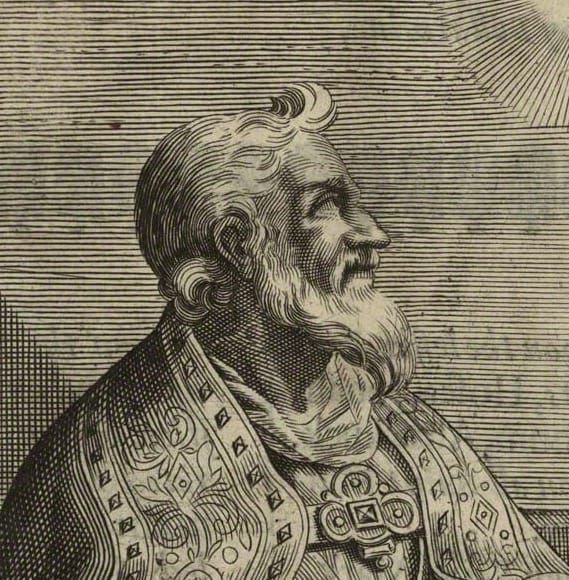

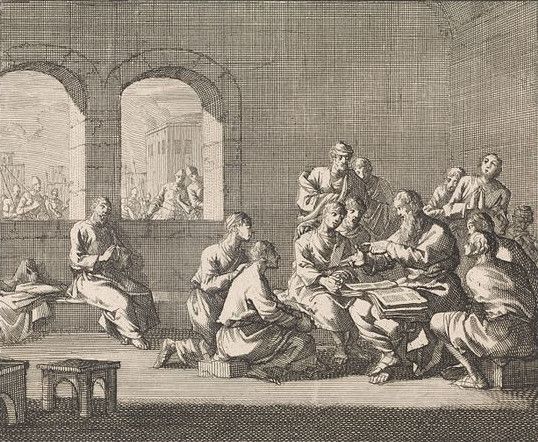
The ecclesiastical writer Origen of Alexandria (185-253) exerted an enormous influence on the Church Fathers and the development of Christian doctrine. He is the first and arguably the greatest Christian scholar of Sacred Scripture. He was instructed rigorously in letters and the study of Sacred Scripture by his father, St. Leonidas. After his father’s death, one wealthy benefactor financed the precocious youth’s education. Another, Ambrose, whom Origen had converted from Gnosticism to orthodox Christianity, provided him with a staff to write out and copy the books dictated by the brilliant biblical scholar. Still a teenager, Origen was appointed a catechist by Demetrius, the bishop of Alexandria, and for many years headed the city’s prestigious catechetical school. During a visit to Palestine, the bishops who had invited him to preach to their congregations, ordained him a presbyter. Enraged, Demetrius condemned Origen in missives to the heads of the local churches and started some of the spurious accusations that would affect his reputation in the following centuries. However, the bishop who had ordained Origen, Theoctistus of Caesarea, welcomed him into his church. There he continued to write and directed a school, where he would teach his students—mostly pagans with an interest in becoming Christians—philosophy and then theology. Under the persecution of Decius, he was arrested. Tortured repeatedly during his two years of imprisonment, he refused to renounce the faith and died shortly after his release. Only a small fraction of his 2000-odd works is extant. Campaigns to condemn Origen as the source of later heresies were launched in the late fourth and the sixth century. As a result, many copies of his writings were destroyed or neglected. Among his main works are the Hexapla, Contra Celsum, De principiis, On Prayer, Exhortation to Martyrdom, along with numerous homilies and biblical commentaries.
In this interview, Dr. Thomas P. Scheck will take us through some of the great Alexandrian theologian’s writings.
Dr. Thomas P. Scheck (PhD, University of Iowa), taught for 16 years at Ave Maria University as Associate Professor of Classics and Theology. He currently teaches Latin at Naples Classical Academy, Naples, Florida. He is a translator of many works of the Church Fathers, including Origen, St. Jerome, St. Chromatius, and of Renaissance scholars such as Erasmus and St. John Fisher.

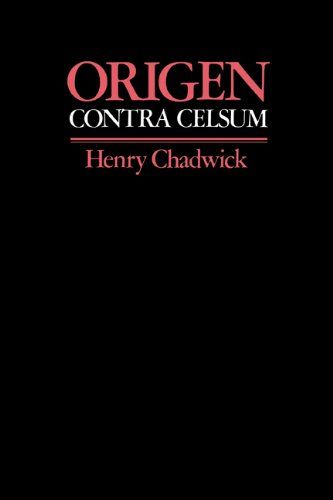
- Contra Celsum
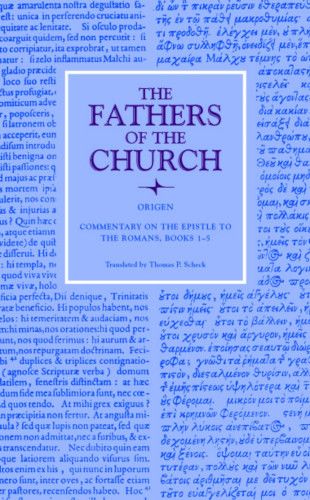
by Origen (edited by Henry Chadwick) - Commentary on the Epistle to the Romans (vol. 1) (vol. 2)
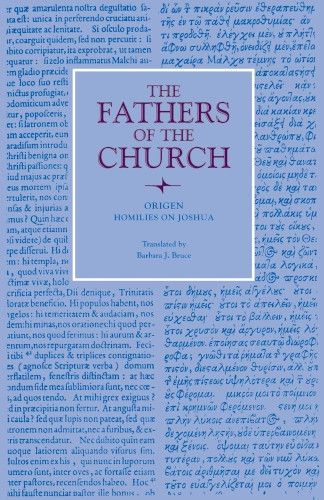
by Origen (translated by Thomas P. Scheck) - Homilies on Joshua
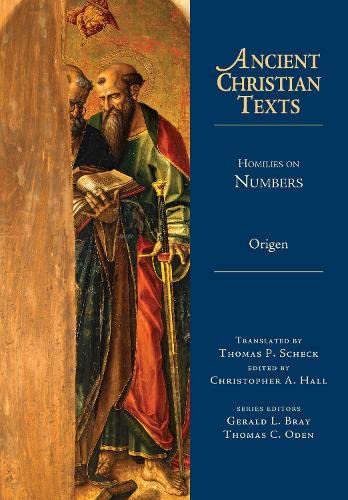
by Origen (translated by Barbara J. Bruce) - Homilies on Numbers
by Origen (translated by Thomas P. Scheck) - Apology for Origen
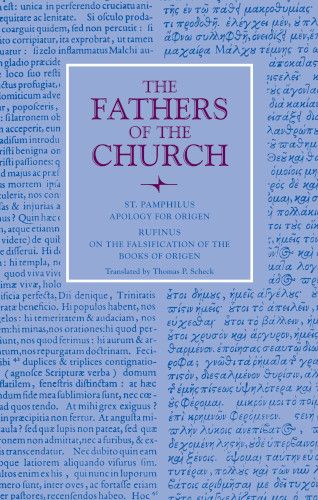
by St. Pamphilius (translated by Thomas P. Scheck)
....and some bonus recommendations... - Church Fathers: From Clement of Rome to Augustine
by Benedict XVI - The History of the Church
by Eusebius of Caesarea, translated by G.A. Williamson, revised and edited by Andrew Louth - Origen: The Life and Thought of the First Great Theologian
by Henri Crouzel
What would you add to fill out the opening sketch of Origen?
His story is deeply moving. His father became a martyr when Origen was 16 or 17 years old. Book Six of Eusebius of Caesarea’s Ecclesiastical History is devoted to Origen and tells his story in such a way that his life becomes a sermon. Eusebius reports that, when his father was arrested, Origen wanted to rush out and join him. However, his mother hid his clothing so that he could not go outside. Then, he wrote a letter to his imprisoned father, telling him to be true to his faith, in other words, do not commit apostasy in order to be released from prison, for the sake of his family. You must remain faithful to God.
For me, becoming familiar with his heroic Christian life and virtue was deeply inspiring. I wanted to get to know him better. In many ways, I feel unworthy even to speak about him. He was so otherworldly and mindful of Jesus. He lived in the age of martyrdom and many of his pupils also became martyrs. He himself was arrested and tortured. So, before anybody criticises him, they should first acknowledge that he lived a very heroic Christian life: the life of a saint.
1.
How did you become interested in Origen and translating some of his works?
When I was in my late twenties, I came across his great work of apologetics, Against Celsus (Contra Celsum). Celsus, a philosopher, wrote an attack on Christianity. Origen was asked to reply to it. This is the first of his books that I would recommend.
When I read the preface to this work, I was deeply moved. Here is how he begins it.
“Our Lord and Saviour Jesus Christ was silent when false witnesses spoke against him and answered nothing when he was accused. He was convinced that all his life and actions among the Jews were better than any speech and refutation of the false witnesses and superior to any words that he might say in reply to the accusations. And. God-loving Ambrose, I do not know why you wanted me to write an answer to Celsus's false accusations in his book against the Christians and the faith of the churches. It is as though there was not in the mere facts a clear refutation better than any reply, which dispels the false charge and deprives the accusation of any plausibility and force.”
It was almost as if he is disarming the accusations at the very beginning, by recognising that they were manifestly false. Later, he says that he may hurt the cause of the Church by replying to Celsus. Nevertheless, he wrote this massive reply.
I was struck by the profundity with which he introduced the work. Origen is always referring to the Lord Jesus and speaks tenderly of him. The preface was thought-provoking, and then, as you read the work, it becomes clear that Origen towers over his opponent intellectually. He knew Judaism way better than Celsus did. He knew philosophy with greater appreciation than Celsus. So, point by point, he wrote a reply in answer to Ambrose’s request to refute Celsus.
However, the way that he began the work—by referring to when the Lord Jesus was on trial, and how he did not speak in his own defence—this really captivated me. It was as if someone were to accuse a Mother Teresa of ridiculous things and bring charges against her. Do we really need to reply to such nonsense? Just look at her life. There is no need to say anything else. Basically, Origen says, “Look at the Christians. Look at how they live. Are these criminals worthy of persecution?” This was the era when the Church was quite pure in its standards and morality. Maybe it does not fit that well with our situation today. However, this remarkable preface to his great apologetic work captivated me and drew me to him. I wanted to be near this figure and learn from him.
That work was my first introduction to Origen. It was back in the early 1990s. Then, I went to Germany as a missionary.
I am a revert to the Catholic Church. I grew up Catholic and converted to evangelical Protestantism when I was in college. I was an evangelical for seventeen years. As part of that pilgrimage, I felt the call to become a missionary to Germany and went there in 1994. I stayed for three years, and our first two children were born there.
That was shortly after I had started to read the Church Fathers intensely. In Germany, I learned that Origen had written a commentary on Romans and that it had just been translated into German by a nun in Southern Germany named Teresia Heither. I acquired the work, a five-volume bilingual edition in German and Latin. I thought that it would be a great work to read in order to learn German. It had the theological words that I wanted to learn for preaching and effective missionary work.
So, shortly after I arrived in Germany, I acquired this massive commentary on Romans. I soon learned that it had never been translated into English. Initially, my only motive in reading it was to learn German better. Then, when I could read and comprehend it in German, I would look across at the Latin text. I had taken a couple of years of Latin in high school and college, but now after I had acquired a solid knowledge of German, it was as if a light went on and, all of a sudden, I could look at a Latin sentence and figure out how it worked. So, for me, the experience of learning German quite well was the key to learning the next language, Latin.
I then started working on a translation from the Latin text. I devoted about five years to that task and eventually got the completed work published with Catholic University of America Press in the Fathers of the Church series: the two-volume Commentary on Romans by Origen.
"Contra Celsum introduces you to the person of Origen, his intellect, his service to the Catholic Church, and his defence of Jesus Christ against the attacks of Celsus."
Some of our readers might not understand why Origen, who was a Greek, has left us works in Latin. Could you explain why some of his works are preserved only in Latin editions?
Yes. He wrote in Greek, his native language. Some of his works, such as Contra Celsum (Against Celsus), are preserved in Greek. However, many of his works started to be translated into Latin in the late fourth century. St Jerome was one of the pioneers of that movement. Around the year 380-85 he translated a group of homilies that Origen had written on the Old Testament prophets: Isaiah, Jeremiah, and Ezekiel. Then, he translated Origen’s Homilies on Luke. He was completely familiar with Origen’s Greek writings and initially, as a young scholar, his ambition was to translate as much of Origen as he could. However, at some point, he decided that he would become an author himself. He would write commentaries in his own name instead of just translating Origen into Latin.
Then, a monk, Rufinus of Aquileia, picked up where Jerome left off. He started translating other writings of Origen into Latin as well as the writings of other Greek Church Fathers. Rufinus translated the Commentary on Romans, De principiis, Origen’s speculative philosophical work, and Homilies on the Pentateuch.
Then, a couple of centuries later, when Origen became controversial in the Greek church, many of his Greek writings were destroyed, while the Latin translations survived in the West. So, for the Commentary on Romans, there are fragments from the Greek text, but, for the most part, the work survives only in the Latin translation. Many of his extant writings have only survived in Latin.
"Pope Benedict XVI, in his two catecheses on Origen, recommended Origen’s spiritual writings and especially his homilies."
Have you left out Origen’s On Principles (De principiis) from your list because you consider Contra Celsum to be Origen’s best presentation of Christian doctrine as a whole?
Well, I would not necessarily consider Contra Celsum Origen’s best presentation of Christian doctrine. Rather, it is the most accessible of his works for the modern reader who wants to become acquainted with his intellect and religious thought. My personal pilgrimage helped determine the list of books that I have recommended.
Contra Celsum introduces you to the person of Origen, his intellect, his service to the Catholic Church, and his defence of Jesus Christ against the attacks of Celsus.
De principiis is not necessarily the first work that I would recommend to a Catholic. Many of the discussions are difficult to comprehend, though some portions are quite accessible.
However, there has been another motivation for me in compiling my list of Origen’s five best books. Two of the works on my list are Origen’s Homilies on Joshua and Homilies on Numbers. Well, Pope Benedict XVI, in his two catecheses on Origen, recommended Origen’s spiritual writings and especially his homilies. He actually quotes from the Homilies on Numbers at the end of his first catechesis, and says,
“I invite you - and so I conclude - to welcome into your hearts the teaching of this great master of faith. He reminds us with deep delight that in the prayerful reading of Scripture and in consistent commitment to life, the Church is ever renewed and rejuvenated. The Word of God, which never ages and is never exhausted, is a privileged means to this end. Indeed, it is the Word of God, through the action of the Holy Spirit, which always guides us to the whole truth.
And let us pray to the Lord that he will give us thinkers, theologians and exegetes who discover this multifaceted dimension, this ongoing timeliness of Sacred Scripture, its newness for today. Let us pray that the Lord will help us to read Sacred Scripture in a prayerful way, to be truly nourished with the true Bread of Life, with his Word.”
I want to follow the Pope's exhortation and hearken to the Holy Father’s counsel. He was instructing Catholics worldwide on the Church Fathers and distilled their most valuable contributions. For him, Origen’s most valuable contribution lay in his reflections on Sacred Scripture and the power of his homilies to edify, transform us, and bring us closer to Christ. So, I think that Pope Benedict would agree that Origen’s homiletical meditations on Scripture should be given a place of prominent importance.
That is another reason why, for me, De principiis should come later in one’s study of Origen and not at the beginning. It is the work that got him into trouble, on account of its speculations on the pre-existence of souls. I would put it later for students interested in more advanced study. There are many good theologians who might want to just dive right into that to that work and give it a place of prominence. However, I prefer to begin with his spiritually edifying scriptural interpretations.
2.
Next is your own translation of Origen’s Commentary on the Epistle to the Romans. You have already explained what led you to undertake that project. Which aspects of this commentary would you point out to those interested in reading it?
This topic is very dear to me. It is a great exposition of Paul's Epistle to the Romans. It is really the first detailed Christian exposition of Romans.
Origen defends the freedom of the will. His main opponents in this work are the Gnostic heretics, who denied the freedom of the will. The Gnostics taught a form of predestinarianism, whereby the nature you receive when you are born determines your eternal destiny. There was no real freedom in this system of thought. In the preface to his Commentary on Romans, Origen claims that the heretics were using statements from Paul to defend their doctrines. So, he puts great emphasis on freedom of the will. His interpretation is remarkable for that very reason. He calls attention to many passages in Paul’s writings and in other Scriptures that are neglected by other interpreters of Romans.
It has become ingrained in modern Christian thinking that St. Paul taught some form of predestination. Many of the mainstream Protestant Churches defend this teaching, and it has also been emphasized in some Catholic theologians who are extremely Augustinian in their formation, such as Thomas Aquinas. Origen has a different approach to interpreting Paul, radically different. Let me mention another recent research project I have been working on that is related to this theme.
St. John Fisher, who was martyred in England in 1535, wrote a work in 1523 in response to Martin Luther, who was an extreme “Augustinian” and a fervent defender of divine predestination. In it, Fisher defends freedom of the will, the real existence of which Luther had denied. That was one of the errors for which Pope Leo X censored Luther’s teaching. Fisher on the other hand opposed Luther and defended the existence of free will in his A Confutation of Luther’s Assertion, which I am translating. Strikingly, he quotes Origen’s writings repeatedly, both the De principiis and the Commentary on Romans, in his refutation of Luther's interpretation of Paul. I have been delighted to see this great English saint and martyr making use of Origen like this. Fisher claims that Origen’s teaching on free will is not an isolated case but is really the common doctrine of the Church. He even says that Augustine has basically the same teaching as Origen on this. I am not so sure that modern scholars would agree entirely with Fisher on that point. They might say that, in his late period, Augustine developed a doctrine of predestination that stands in tension with some of his own earlier views and with the views of the Greek Fathers. Augustine comes close to teaching in his latest period that divine grace cannot be resisted.
The main point of interest for me, though, is that Origen was being studied carefully and used by Catholic theologians at the beginning of the 16th-century. Erasmus and St. Thomas More also loved Origen and cited from his writings to refute early Protestant teaching. In general, I have a great interest in the early 16th century revival of interest in Origen, especially among the Renaissance Catholic scholars of this period.
3.
You have already hinted at one of the reasons why you chose Origen’s Homilies on Joshua. What other features stand out in this commentary in this book of the Bible?
He brings out the way that Joshua foreshadows Christ. They have the same name and so he calls Joshua Jesus.
Some years ago, I was asked to write a review for an Italian journal of the Homilies on Joshua. It was the easiest task I have ever received. I was so edified by Origen’s Homilies, the first time I read them. I have heard people say, “Who would ever want to give us a sermon on the book of Joshua, with all its warfare and the violence?” Well, read Origen’s Homilies on Joshua and you shall come away edified.
"The doctrine that outside the Church there is no salvation needs to be carefully qualified today, because it can be misunderstood, but I was fascinated to discover that Origen was the bold originator of that teaching."
Here is one passage. He is expounding on Rahab, who hid the spies. She was instructed to tie a scarlet thread and let it down from her house, to signal that she and her family were there, so that the Israelites would not destroy that house. Here is how Origen expounds on the passage.
“Therefore, if anyone wants to be saved, let them come into the house of this one who was once a prostitute. Even if anyone from that people wants to be saved, let him come in order to be able to attain salvation. Let him come to this house in which the blood of Christ is the sign of redemption. For among those who said, ‘His blood be upon us and upon our children’, the blood of Christ is for condemnation. For Jesus has been appointed ‘for the ruin and resurrection of many’. Therefore, for those refusing his sign, his blood affects punishment; for those who believe, salvation.
Let no one persuade himself, let no one deceive himself. Outside this house, that is, outside the Church, no one is saved. If anyone goes outside, he is responsible for his own death. This is the significance of the blood, for this is also the purification that is manifest through the blood.”
There is a footnote there to St Cyprian, who said, “Outside the Church, there is no salvation.” Given the context, Origen is warning Christians not to leave the Church: not to be tempted to join heresies and to exit the church. There is no safety in doing that. The doctrine that outside the Church there is no salvation needs to be carefully qualified today, because it can be misunderstood, but I was fascinated to discover that Origen was the bold originator of that teaching. In this context, he is perfectly justified in declaring it. It is a warning to Catholic Christians not to leave the Church. There is no salvation if you willingly and deliberately exit the Church. This whole group of homilies is filled with deep theological insights like this,. It is a very edifying, transformative experience to encounter Origen’s spiritual teaching in this way, at least it has been for me.
Again, this is part of my personal pilgrimage. Reading those homilies, I have been deeply inspired and edified by this exposure to Origen’s teaching.
The Homilies on Numbers have a similar edifying power. Pope Benedict XVI quotes from several of them and so it is obvious to me that he had read them. I feel honoured that I had the opportunity to translate those twenty-eight Homilies on Numbers. Homily 27 had already been translated and was quite well known, but as I was working on the translation of the other homilies, I sensed that every one of them was of the same quality. So, I feel proud and excited about that volume, though I think Origen’s deserved a more learned and eloquent translator. There are such riches in it. Maybe I am not the most learned translator, but nobody else seemed to be stepping forward to do that work.
"I have just found Origen to be a spiritual guide and teacher, who has helped me keep my faith, persevere, and not give up."
4.
Numbers is probably one of the books in the Bible that many find most boring. How does Origen bring it to life and help the modern reader make sense of it?
Yes, it's an amazing body of homilies. Homily 27 focuses on expounding Numbers 33, which lists the stages and stopping points of Israel’s journey through the wilderness. Origen interprets this as symbolic of our own journey through this world to, hopefully. the promised land of heaven. Whether it be the twelve palm trees or the waters of Meribah, he sees it as a symbol of something we face in our pilgrimage. We are only passing through this world. Our ultimate hope is in the next world. For me, it is helpful and inspiring just to be reminded that this world is a place of affliction and trial, but our goal is the next world: that this physical, tangible life here below is not all there is. There is hope for the future if we persevere. So, I have just found Origen to be a spiritual guide and teacher, who has helped me keep my faith, persevere, and not give up.
Many books of the Old Testament are obscure and difficult, but Origen draws connections to Christ and to the Church and makes it a pleasure to be reminded of the content of these Old Testament books. He brings them to life. That is not to say that he is doing modern historical exegesis in these homilies. That was not his aim. His aim was to edify the Church and to speak to our spiritual senses: to preach to the Christians that were in the congregation and to edify their souls by connecting the Old Testament to the New Testament. He was a master at that.
5.
Fifth, there is St. Pamphilius of Caesarea’s Apology for Origen. Why is this defence of Origen and his orthodoxy, of which only the first book is extant, still important for readers today?
Catholics may be somewhat wary of Origen when they first hear his name, since he was never canonized. They may think he was a heretic or be suspicious of him. There have been saints who described him negatively. I would like to remind Catholics that there were also saints who defended Origen. True, there were saints who attacked him and accused him of heresy, but there were saints who wrote in defence of him and who argued that he had been misrepresented and misunderstood. St. Pamphilus is one of the most important of these. For one thing he was a martyr, which adds authority to his views which he wrote in his own blood. He collaborated with Eusebius of Caesarea to write an apology for Origen. It was composed in prison and is an extremely important little work that survives. The English translation happens to be mine.
It is a very important work that I feel passionate about, because of who wrote it: a martyr and a saint. He defended Origen by quoting from his writings to respond to the accusations that have been levelled against him So, it resembles an anthology of passages from Origen’s writings and includes many lengthy passages from De principiis.
Basically, St. Pamphilus argues that Origen has been misunderstood and taken out of context. For instance, Origen did not deny the historical sense, when he interpreted Old Testament stories allegorically, but he is bringing out the spiritual meaning. He had been accused of denying the historicity of Genesis, for instance. That was not his intention. Pamphilus documents this and proves this by quoting many passages in Origen’s writings.
He also calls attention to Origen’s humility. He says that Origen spoke tentatively when he made conjectures about different topics and would often finish his discussion by saying, “If anyone is able to speak better on this topic, I invite you to do so. But this is the best that I have been able to formulate.” Not many people speak like that. So, he had a very humble spirit when it came to discussing doctrine. Clearly, that is not the spirit of a heretic, of somebody who is rising up against the teaching of the Church. Origen wanted to be a member of the Church.
The introduction of Pamphilus’s Apology is fascinating because you can almost eavesdrop on the criticisms that were being made against Origen at the time and then listen to Pamphilus’s defenses.
It is tragic that Origen became so controversial after his death. There were some well-meaning bishops who were concerned about some of his discussions, and they attacked him. They treated him as a heretic. But as I have said there were also saints who defended him. Epiphanius and St. Theophilus of Alexandria were among the bishops who attacked and accused Origen. To me, that was a tragedy. He deserved to be honoured and respected. Sometimes saints are not well treated in subsequent periods. I would recommend that you read Pope Benedict's two catecheses on Origen as a starting point. When I taught theology at Ave Maria, I used to give a take-home midterm test in which among others I asked the following question: “Does Pope Benedict XVI treat Origen as a heretic?” The answer is, no, he does not.
There are many other Catholic theologians who have the greatest respect for Origen: Henri de Lubac, Hans Urs von Balthasar, Jean Daniélou, Henri Crouzel, many of whom ended up cardinals. They were defenders of Origen and wrote scholarly works about him. I admire these men and wish to align myself with them.
Is it not the case that modern scholarship has also rehabilitated him by showing that many of the accusations made against him were historically unfounded.
Yes, it is very similar to what Pamphilus tried to do in his Apology for Origen. He argued that the accusations were unfounded. That is not to say that all of Origen’s opinions were correct. However, we need to remember that, when he lived, many things had not yet been clarified. He was a pioneer in discussing many doctrines. He had very little tradition to build upon. Fr Lienhard, from Fordham University, who is one of my theological mentors, used to compare Origen’s work to the Lewis and Clark expedition to the Pacific Ocean. Nobody had mapped it out before. An early Christian writer like Origen did not have ten centuries of tradition to build upon. There was actually very little tradition that he could consult to formulate the Church’s teaching on certain things. Overall, his achievement was admirable.
"We should distinguish Origen’s Old Testament interpretation from his interpretation of Paul's letters. Origen’s Commentary on Romans is very different from his Homilies on Genesis or Exodus."
You have already mentioned his use of the spiritual sense and how his exegesis differs from modern biblical criticism. What were the main guiding principles of Origen’s interpretation of scripture?
For the Old Testament, he followed St. Paul’s principles. In Romans (15:4), Paul says that what was written in the Old Testament was written for our edification. Then, there are some examples of allegorical interpretation of Old Testament in Paul's writings: the interpretation of Hagar and Sarah in Galatians 4, for example. Origen was a very careful student of how Paul and the author of Hebrews treated Old Testament figures and brought out the Christological meaning from the Old Testament narrative. He tried to imitate that method and apply it to every detail of the Old Testament text. That is probably where he went too far. He was right to model his approach to exegesis and preaching on that of Jesus and St Paul, but he carried it out for every line of Scripture. If you study Paul's writings, you see many examples of the Old Testament being interpreted allegorically. Furthermore, Jesus compared Moses’s exaltation of the bronze serpent in the wilderness to himself. “As Moses lifted up the serpent in the wilderness, so must the Son of man be lifted up, that whoever believes in him may have eternal life.” (Jn 3:14-15). Origen has a beautiful discussion of this passage in his Homilies on Numbers but Jesus, we must remember, was the original source of this interpretation.
Origen does not take this method from allegorical Homeric interpretation. Though he admired Philo of Alexandria and was influenced by him, the primary influences were Jesus and St Paul.
Another point. We should distinguish Origen’s Old Testament interpretation from his interpretation of Paul's letters. Origen’s Commentary on Romans is very different from his Homilies on Genesis or Exodus. With Romans, he is not trying to allegorize Paul’s verses. Rather, he is trying to explain and interpret Paul's historical meaning and argument. One thing that frustrates me is that in general discussions of the patristic interpretation of Scripture, no distinctions are made between the books of Scripture, e.g., the Pentateuch, the Psalms, the prophets, the Gospels, and the New Testament epistles. Yet we should make such distinctions. Especially in his interpretation of Paul's letters, I believe that Origen comes the closest to modern methods of biblical interpretation. He is not trying to allegorize the verses of Romans or Galatians. He is aiming to interpret them in their historical context.
Some modern works have a very advanced and penetrating understanding of Paul's argument in Romans. These authors recognise that Paul is trying to mediate and arbitrate between Jews and Gentiles who had come together in the Church. This is called the New Perspective on Paul and it is very similar to Origen’s perspective. In his book Romans in Full Circle, Mark Reasoner, a close personal friend, basically argues that 1800 years ago, Origen anticipated the New Perspective on Paul.
Could you tell us a little bit about the Hexapla, Origen’s pioneering work of biblical textual criticism.
I am currently translating and annotating a collection of Saint Jerome's Epistles and Catholic University Press is going to publish this in two volumes in 2023-24. The first volume should come out this fall, and the second volume next spring 2024. Jerome's Epistle 106 is a defence of the Gallican Psalter, his translation of the Psalms, which was based on Origen’s Hexapla. In this letter, he responds to criticisms that some readers had made of his new translation. He works through the criticisms, one by one, and explains why he rendered things the way he did. That epistle reminds us that Jerome knew Origen’s Hexapla inside out. For him, it was indispensable for the study of the Old Testament.
The Hexapla was a six-column synopsis of the Old Testament text. The first column was the Hebrew text. The second column contains a Greek transliteration of the Hebrew text. Each of the next four columns contained a different Greek translation of the Old Testament: that of Aquila of Sinope, Symmachus, the Septuagint, and Theodotion. For the Psalms, he added two more columns.
The Septuagint was the Greek translation that was in use in the churches. Whenever he came across variations in the translations of, say, Aquila or Theodotion, he would mark it with critical marks in the Septuagint column so that the reader could see that the Septuagint did not have these words, but they are found in, say, the translation of Aquila.
So, the Hexapla constituted an incredible effort to study the Bible in depth in its various translations. Origen devoted twenty-eight years of his life to the Hexapla. As I said, Jerome was intimately familiar with Origen’s achievement. He had copied it out and used it in his commentaries on the Old Testament. Unfortunately, the original text of the Hexapla does not survive.