
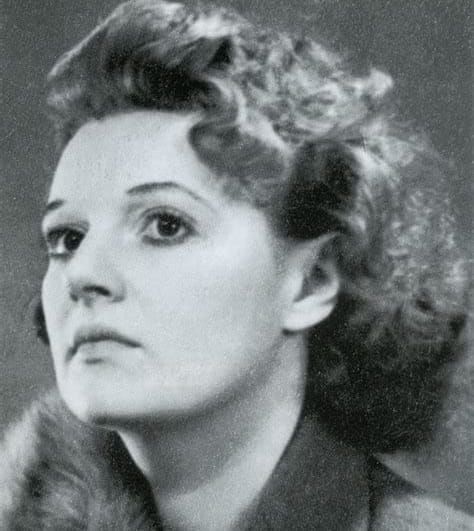
Muriel Spark (1918-2006) was a Scottish author and one of the major novelists within late twentieth-century English literature. She was also a convert to Catholicism. Indeed, she singled out her Catholic faith as one of the keys behind her career as a novelist. However, her stories are neither pious nor sentimental. Rather, they are satires and tragicomedies, shot through with black humour. Are they simply cynical or also insightful explorations of the struggle between human sinfulness and divine grace?
In this interview, Christopher J. Scalia discusses this question and some of Spark’s best books.
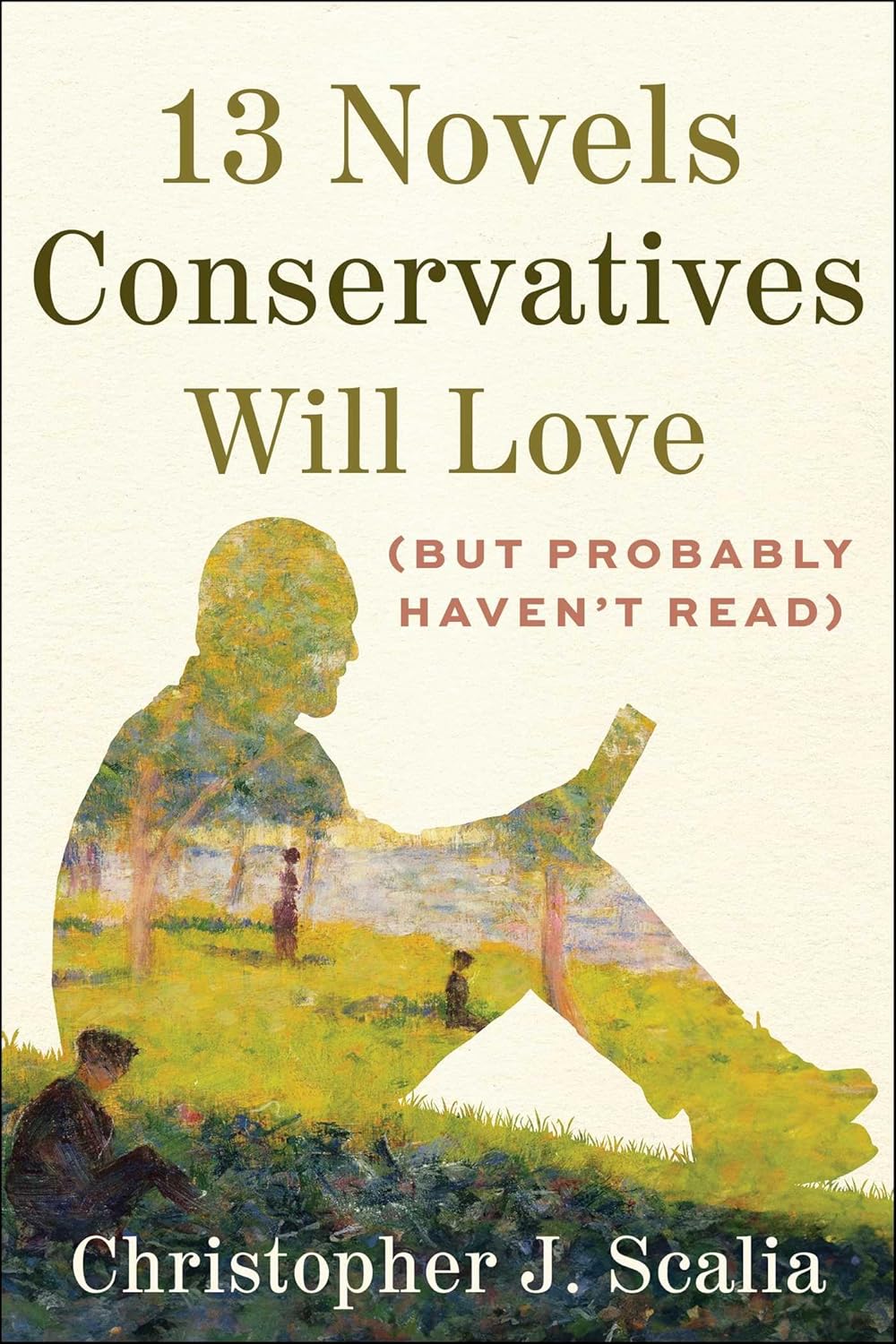
Christopher J. Scalia is a senior fellow in the Social, Cultural, and Constitutional Studies department at the American Enterprise Institute, where he focuses on literature, culture, and higher education. His new book is 13 Novels Conservatives Will Love (but Probably Haven't Read (Regnery). A former English professor, he specialized in 18th-century and early 19th-century British literature. He also spent three years as director of AEI’s Academic Programs department, where he led educational and professional-development programs and events for college students around the country. His articles, essays, and reviews on literature, music, higher education, and other topics have appeared in the Wall Street Journal, the Washington Post, USA Today, Commentary, National Review, First Things, the Washington Free Beacon, the Times Literary Supplement, the Spectator World, and FoxNews.com, among other outlets. He is the co-editor of On Faith: Lessons from an American Believer (Crown Forum, 2019), and Scalia Speaks: Reflections on Law, Faith, and Life Well Lived (Crown Forum, 2017).

- The Prime of Miss Jean Brodie
by Muriel Spark - The Girls of Slender Means
by Muriel Spark - Loitering with Intent
by Muriel Spark - All the Stories of Muriel Spark
by Muriel Spark - Muriel Spark: The Biography
by Martin Stannard
Muriel Spark’s life was as eccentric and messy as any character from her novels. Are any parts of her biography worth knowing for readers of her novels?
It's funny you say that. Some of my favourite novels by her are quite obviously autobiographical to some degree. So, it is helpful to know the basics of her life.
She was born in 1918 in Edinburgh. Her father, an engineer, was from a family of Russian Jews. Her mother was English and Christian. Their mixed marriage was important in Spark’s life, especially on account of her relationship with her son.
When she was nineteen, she married an older man: Sydney Owen Sparks. His initials—S.O.S.—would prove all too relevant.
Shortly after they married, they went off to Africa: to what is now Zimbabwe.
Their marriage was not good. He was an alcoholic and abusive. They had a son, but she left him before long and went back to the United Kingdom a few years later, during World War II.
Towards the end of the war, she worked for the Foreign Office. She described her work as writing “detailed truth with believable lies” (Basically, she was spreading anti-Nazi propaganda). That phrase is perfect for understanding what her fiction is all about.
She began her literary career after the war by writing short stories. She won a short story award in 1951 and that put her name on the map.
She wrote reviews and was general editor of a poetry journal. But then she had a nervous breakdown. She was taking appetite suppressants and was certainly taking too many of them. She was also in a bad relationship with a man called Derek Stanford, another bad figure in her life. She did not have much luck with men. At any rate, she started experiencing paranoid hallucinations. She thought that the things she was reading, including the plays of T.S. Eliot, contained secret messages that were just for her. Her first novel, The Comforters (1957), was based on those hallucinations. Funnily enough, Waugh had just written his own novel about similar paranoid hallucinations, The Ordeal of Gilbert Pinfold, but thought that Spark’s novel was the better of the two.
 Five Books for Catholics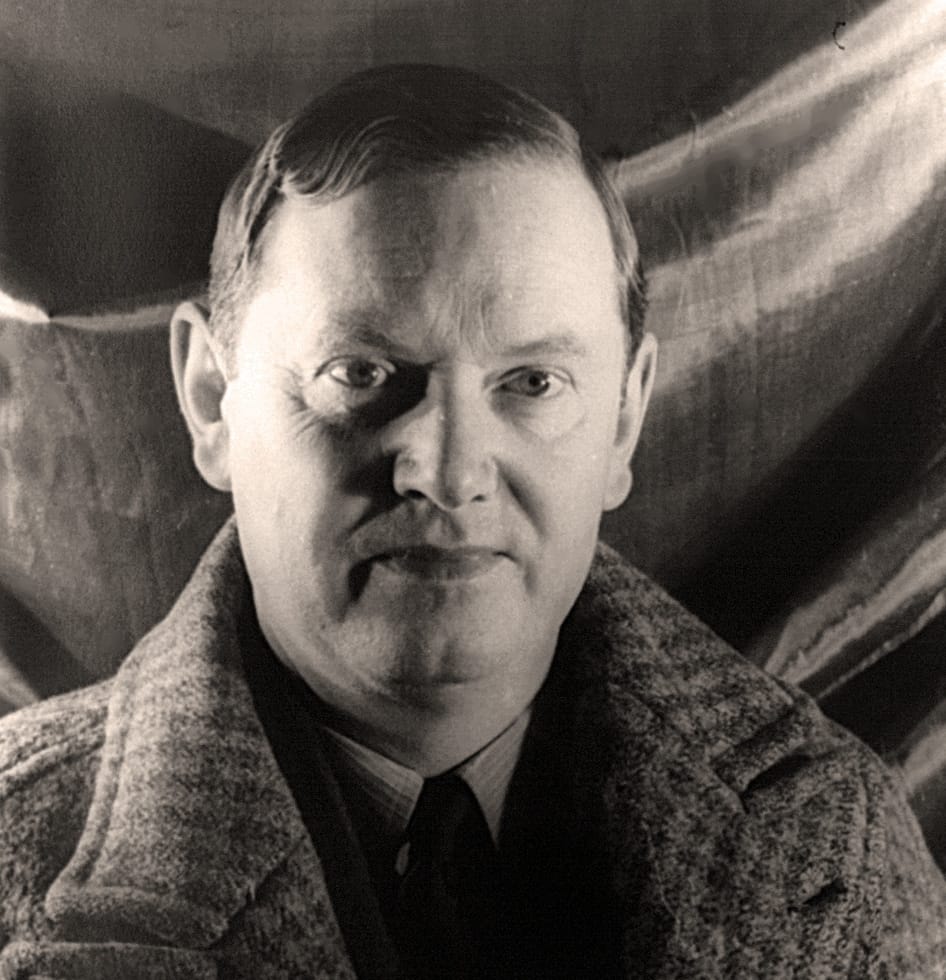
She received support from the already well-established major novelist Graham Greene, another Catholic convert. When she got over these hallucinations, she converted to Catholicism.
With the publication of The Comforters, her career really took off and she began to write a novel a year, even publishing two in 1960.
Her conversion and especially her interest in John Henry Newman were important to so much of her fiction. Virtually all her novels feature a Catholic convert who is also an important character.
She ended up writing twenty-two novels.
She began her literary career in London, spent some time in New York, before moving for good to Italy, where she passed away in 2006.
As you mentioned, you have been drawn to autobiographical novels, or those that are partly biographical. Indeed, each of the three novels you've selected is partly autobiographical. The Prime of Miss Jean Brodie is set in an Edinburgh school for girls, somewhat like the one Spark attended. Moreover, the novel begins in 1930, right when Spark was the same age as the girls in the story. The Girls of Slender Means is set in 1945, in a London residence that bears some resemblance to the Helena Club, where Spark stayed upon her return to Britain in 1944. Fleur Talbot, the protagonist of Loitering with Intent, is a writer whose job, pursuits, and reading interests are very similar to those of the young Spark. Did you settle upon the more autobiographical of her novels by chance or design?
By chance. However, she writes about her past and examines it in such interesting ways. Her imaginative representations of her past are fascinating.
I am especially drawn to the first two novels that you mentioned. In The Prime of Miss Jean Brodie and The Girls of Slender Means she plays with flash-forwards and flashbacks. These are formal rather than specifically autobiographical elements, but they allow her to play with her autobiography in fascinating ways.
The inscription on her tombstone is Muriel Spark, Poeta. Early in her career, she was editor of Poetry Review. She also published several collections of poetry. How does she rate as a poet?
I thought about including one of her collections. Her poetry is interesting but not nearly as interesting as her fiction. She never gained a reputation as a poet. Some poets toil in obscurity and that is unfair. However, her poetry never reached the height and quality of her fiction.
Interestingly, however, she always described her fiction as poetic. Even when she was writing fiction, not poetry, the basic approach was the same and she always made it seem as if her novels were extended poems. This is helpful for understanding her early novels. Not only do poetic passages often drift in and out, but they are also quite repetitive. They repeat the description of a character or a particular event, or certain phrases, as if they were the refrain from a ballad. In her memoir, she wrote that Scottish ballads were one of her early literary fascinations. They are narrative poems that often feature abrupt moments of violence. She said she that particularly liked the bite of those ballads. I think that she tried to apply these same techniques or traits of the ballad to her own fiction.
"Spark is underappreciated as a Catholic novelist."
Spark only began to write novels when she was almost forty years old. In fact, she claimed that her conversion to Catholicism was one of the factors that made this possible. It enabled her “to see life as a whole rather than as a series of disconnected happenings.” However, her novels are not tales of edification, but satires shot through with black humour. Are they Catholic in any meaningful way or do they lack any such intent?
Her early novels, from the 50s and 60s, are Catholic ones. Of course, Catholics are not the only ones who will enjoy them. However, in her early works the effects of grace are particularly profound. She put aside that thematic interest as her career progressed.
The Prime of Miss Jean Brodie and The Girls of Slender Means are certainly Catholic novels.
Spark is underappreciated as a Catholic novelist. Waugh and Greene are considered the great Catholic novelists of that time, but Spark in not taken into consideration enough. Perhaps this is because her focus on Catholicism waned towards the end of her career. However, she deserves to be in any conversation about Catholic novelists.
How orthodox is Spark’s theology?
It is not orthodox.
When I talked to you about Waugh, you asked me if he was a snob and I simply answered, “Yes!” There is a similar snobbishness to Spark. She was off-putting and difficult to deal with in much the same way as Waugh. However, she was not nearly as orthodox as he was. In her approach to the faith, she was more like Graham Greene. That is especially true in her later novels, such as Loitering with Intent.
She was not a regular Mass attendee and she sometimes enjoyed expressing frustrations with the Pope, though so do many orthodox Catholics.
For a long time, she lived with a female companion, Penelope Jardine, who was also the sole beneficiary of Spark’s estate. It has often been suspected that they had a lesbian relationship. There is no evidence to support that.
Perhaps the most significant chapter in The Informed Air, a collection of Spark’s essays, is her 1970 speech, “The Desegregation of Art.” There, she gives a prescient diagnosis of victim culture, virtue signalling, and some insights into the goal of her novels. She denounces art which aims to stir compassion for the victims of social ills because it “cheats us into a sense of involvement with life and society.” Instead, the current mission of art is to mock the absurdities of the modern age while entertaining us. “To bring about a mental environment of honesty and self-knowledge, a sense of the absurd and a general looking-lively to defend ourselves from the ridiculous oppressions of our time, and above all to entertain us in the process, has become the special calling of arts and letters.” Does Spark stay true to this manifesto in her fiction.
I am so glad you brought up this essay. I had considered including this collection of essays. There, she says:
“But the power and influence of the creative arts is not to be belittled. I only say that the art and literature of sentiment and emotion, however beautiful in itself, however stirring in its depiction of actuality, has to go. It cheats us into a sense of involvement with life and society, but in reality it is a segregated activity. In its place I advocate the arts of satire and of ridicule. And I see no other living art form for the future.
Ridicule is the only honourable weapon we have left.”
This reminds me of Flannery O'Connor’s complaint that people emphasize the literature of compassion too much, which to her just seemed like an excuse for all human failings. In a similar way, Spark and O'Connor tend towards, for want of a better word, a more cynical perspective on their characters.
 Five Books for Catholics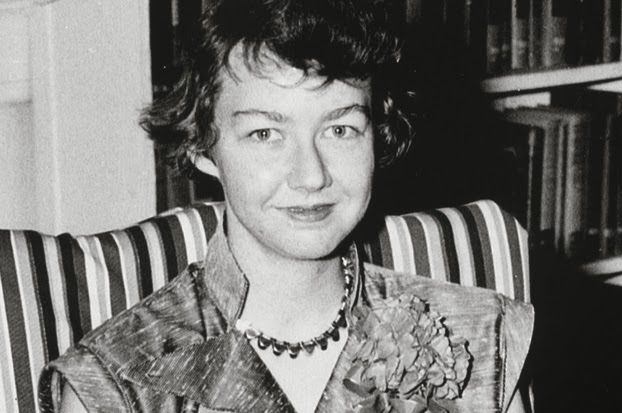
Spark certainly had this attitude. A great example of it is her short novel The Abbess of Crewe.
She wrote it shortly after she delivered this talk. It is generally understood to be an allegory of the Watergate scandal, even though she never mentions Watergate. If she had wanted to be politically engaged and active, she would have been much more specific about it. Instead, she turns the Watergate scandal and Nixon's tapping of all of his recordings into a hilarious scandal at a convent, where there is a power-hungry Mother Superior, affairs with the Jesuits next door, and all the politics that can go on in a convent. It is a hilarious masterpiece in the art of detached political ridicule.
"All her novels also feature moments of surprising, shocking, sudden violence. There is not just the unpredictability of grace, but also of fate and of death."
What are the main themes of Sparks novels?
The most important and consistent theme is the surprising presence of grace and how it can work in our lives. We can see it in all of the novels I have chosen.
All her novels also feature moments of surprising, shocking, sudden violence. There is not just the unpredictability of grace, but also of fate and of death. This is another recurring theme. Memento mori is perhaps her best representation of that theme. It is her first masterpiece and a great examination of the unavoidability of death.
In Memento Mori, a mysterious stranger calls the protagonist and politely converses with them, while reminding each that he or she will die. The protagonists take that in different ways. That might lend some support to the opinion of one critic who pronounced that the main character in Spark’ss novels is God himself. Is that an accurate assessment?
That is true of a couple of her early novels, especially The Prime of Miss Jean Brodie.
In the late 50s and early 60s, Spark experimented with an omniscient narrator who seemed to enjoy messing with the characters and giving them a hard time. This was not a Catholic God but a Calvinist God.
As the narrator in this period saw everything, Spark was able to toy with flash- forwards and flashbacks so effectively, especially in The Prime of Miss Jean Brodie. This omniscient narrator has the effect of presenting a God who really enjoys toying with us and maybe even abusing people. That is especially apt for that novel because it is a variation of the title character herself: Miss Jean Brodie. She sought to control everybody in her life, especially her students. One character, the main student, Sandy Stranger, observes that Jean Brodie thought she was the God of Calvin.
Do any of Spark’s novels feature in the baker’s dozen surveyed in your 13 Novels Conservatives Will Love (but Probably Haven't Read?) If not, is that because she was not a conservative?
I have included The Girls of Slender Means. Although Spark would not have voted Republican, that book, along with her depictions of authority and religious belief in some of her other novels are especially amenable to modern day conservatives. That is why I included it.
1.
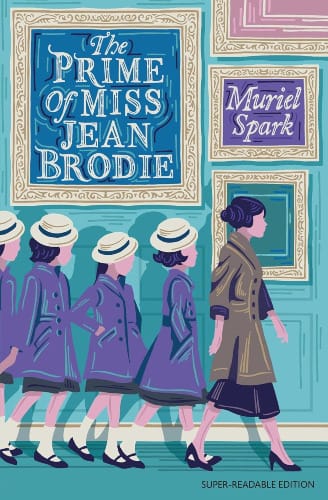
You have already talked about Spark’s most famous novel, The Prime of Miss Jean Brodie. It is set in Edinburgh, 1930. The protagonist is a headstrong and romanticising teacher, determined to mould her favourite students according to the plan she has for each. Is this simply a story about memorable yet eccentric characters or is there a theological side to it as well?
As I mentioned a moment ago, the main student in the novel, Sandy Stranger, is part of what is known as the Brodie set, the small clique of girls that Miss Jean Brodie wants to mould, shape, and set on their ways.
However, during her time at the school, Sandy realizes that Brodie is a pernicious force in their lives that does more harm than good.
There is also the sense that Sandy is jealous of Brodie. The teacher with whom Sandy has an affair seems obsessed with Brodie. Nevertheless, Sandy converts to Catholicism and, as a nun, writes a book, The Transfiguration of the Commonplace. The title of that book indicates that she is interested in the transfiguration and the elevation of the everyday into something transcendent. This invites us to consider how that happens in the novel, particularly to Sandy.
She has an affair with a teacher, a married man. Obviously, that is not a good thing to do. Yet, as the narrator observes, she leaves the man but takes his faith. Is it possible for that sinful relationship somehow to be an occasion of grace? Frankly, I do not know what the Church teaches on that score. However, the novel brings up this theological question or conundrum. That is in keeping with the novel's general ambiguity.
Miss Brodie herself is certainly a bad teacher in some ways. She tries to control her students' lives. She sends one off to Spain to fight for Franco. She admires Mussolini and seems to support the Nazis. Only at the end of the war does she bring herself to acknowledge that—and this is one of the great understatements in literary history—"Hitler was rather naughty.”
However, there are other reasons to admire Brodie. She seems to really care for her students. She is a rebellious figure, who pushes back in a school that does seem dusty and in need of some reform, if not the one she brings about. She has a sincere love for artistic beauty and goodness, and not just rote memorization.
Though we sympathize with Sandy for turning against Brodie (this is not a big spoiler because we know about it early on), we never know why or how she did so. We can understand why she does it, but later in life she does not seem to believe that she did the right thing.
How does the Oscar winning film adaptation compare to the novel?
The film is excellent. Famously, it stars Maggie Smith.
Before that, it had been adapted into a play. Later, there was a TV series, but it is not as very good. The film version, on the other hand, is very good.
It is hard to pull off the film adaptation because the novel covers so much time. The same actress plays Sandy Stranger as a young girl and a much older girl in the movie. That is not very believable. However, Smith's performance is legendary. The director generally stays true to the novel, even though he takes some interesting liberties to connect the story with some of the political goings-on of the late 60s.
"A vision of evil may be as effective at converting one as a vision of good."
2.
Second is The Girl of Slender Means. In 1963, the Jesuit Nicholas Farringdon is killed in Haiti. The journalist Jane Wright looks into his story and looks back to the days in 1945 when she resided at The May of Teck Club and Farringdon, then an anarchist, was a frequent visitor. Why have you selected this novel?
Depending on what day you talk to me, I like this novel more than The Prime of Miss Jean Brodie.
The two novels do a many of the same things. Spark is working with the same kind of omniscient narrator, though this one is slightly less cruel than the narrator from The Prime of Miss Jean Brodie. She does a lot of the same things with flashbacks, flash-forwards, and rapid character descriptions.
What sets this novel apart is its more interesting consideration of grace.
It is set in the summer at the end of World War II. Nicholas is an anarchist, an aspiring poet, and so a little pretentious. He is drawn to this group of girls at the May of Teck Club. He is drawn to one intellectually and another sexually, and has an affair with Selena Redwood, a very graceful but superficial young woman. However, towards the end of the novel, Nicholas sees a couple of things that draw him to convert to Catholicism. We get passages from a journal he was working on. In them, he writes that a vision of evil may be as effective at converting one as a vision of good.
At the beginning of the novel, we learn about his death in 1963 and want to know how he died. However, as the novel progresses, the question becomes, “Why did he convert?”
That passage from his journal gives us a clue.
I call this novel a martyr mystery. Why was he martyred, but, even more importantly, why did he convert in the first place? What enabled him to become a martyr? We know it must have been some vision of evil. There are two visions he has: one involving an incredible act of selfishness, the other one of Spark’s trademark moments of sudden violence.
This sets it this apart from The Prime of Miss Jean Brodie. It has a climactic scene in which a main character dies. Spark does a masterful job of depicting the scene, heightening the tension and suspense. The passages grips you and forces you to read every word carefully, even as you want to jump ahead and find out what happens. It is a remarkable piece of writing.
3.
Third, is Loitering with Intent. Fleur Talbot begins to suspect that her employer, Sir Quentin Oliver, is carrying out deeds inspired by the novel she is writing, while he is alarmed to discover that her novel may be exposing his crimes. Like Spark’s first novel, The Comforters, this one appears to centre on the relation between art and reality, fact and fiction. Is that the case?
It is a strange, almost hallucinogenic work. The comparison to The Comforters is helpful. Like the Comforters, it is autobiographical and based on her early literary career. I chose it largely because, though it deals with the same period of her life as The Girls of Slender Means, formally it is so different.
By the 1980s, she had moved to more straightforward first-person perspectives. Two of her novels from this period stand out and deal with the same period from her life: Loitering with Intent and A Far Cry from Kensington. I enjoy Loitering with Intent a little bit more because it is so hallucinogenic.
It is about Fleur Talbot. She works for an organization called the Autobiography Association, which is led by a very sinister character, Sir Quentin. He and Miss Jean Brodie are emblematic of a character Spark loves to write about: somebody who thinks he is above the common moral code and not accountable to the same moral standards as everybody else.
Sir Quentin is working with a group of random people in London. He encourages them to write their memoirs. Fleur's job is to spice the memoirs up with scandalous occurrences that are fictitious but will help sell the books. However, she comes to realise that Sir Quentin is using these stories to blackmail the people he has brought on.
Now, Fleur encourages one of the people in this group to read Newman’s Apologia pro Vita Sua, one of the greatest memoirs ever written, in the belief that there are stylistic similarities between it and this person’s memoir. However, Sir Quentin reads Newman and takes away the wrong lesson.
In one passage of the Apologia pro Vita Sua, Newman describes his early interest in antinomianism, the belief that you are beyond the common moral code, have a special direct relationship with God, and cannot really sin. Sir Quentin latches onto that and teaches the people in his group to believe it too.
Miss Jean Brodie has a similar belief. Hers is a sort of Calvinistic heresy. She was the god of Calvin, so it made sense to her to think this way. Decades later, Spark is still very interested in these antinomian characters.
What is surreal about the novel? Fleur begins to realize that Sir Quentin is lifting passages from a novel she's working on and using them in the autobiographies that his group is working on. Eventually, however, Sir Quentin becomes more and more like a character from the novel she has written, even to the extent that he dies in a similar way.
So, it is a hallucinogenic novel. As you suggested, reality and fiction become blurred in impossible ways. Initially, there's a perfectly reasonable explanation for the overlap between Fleur's novel and these memoirs. By the end of the novel, the connections and the overlap are inexplicable.
4.
Fourth up is a collection of Spark’s complete short stories. Are these as good as her novels?
Some of her short stories are as good as her novels. The early ones are particularly fascinating.
A handful of them, unlike any of her novels, are set in Africa and based on her time in Zimbabwe. These are among her best short stories: “The Seraph and the Zambezi” (for which she won a prize in 1951), “Bang-Bang, You’re Dead”, and “The Go-Away Bird.” They also feature sudden moments of brutal violence, but also with supernatural elements that only appear on the odd occasion in her novels.
“The Portobello Road,” also uses the supernatural to great effect. As in some of her novels, we learn early on that somebody has died, but we do not know who or why. This a very effective way to get your attention. However, unlike The Girls of Slender Means or The Prime of Miss Jean Brodie, it is a ghost story.
“The Black Madonna” is another one I really like. It is a fascinating account of Mary’s apparent intervention in response to prayers made to her. The effect of those prayers is unexpected and those blessed by them do not like at all the graces they have received.
As I mentioned earlier, Spark’s Catholicism became muted in her later works. Fleur Talbot, the narrator of Loitering with Intent, is another Catholic. However, she is much more critical of the Church than any of the Catholic characters from Spark’s early novels. Miss Jean Brodie did not like Catholicism, but she was not Catholic. In Fleur Talbot, we get a Catholic convert who really despises Catholicism, especially another character’s devotion to Mary. Ironically, it is this other character who ends up leaving the Church later in life. Make of that what you will.
5.
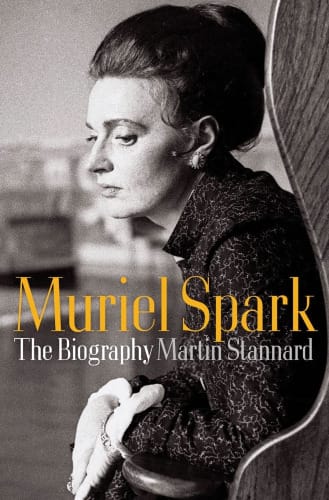
Finally, there is Martin Stannard’s official biography of Muriel Spark. Is it a reliable and insightful guide to her life? Spark felt it was unfair.
Spark thought it was unfair. She regretted asking Standard to write it and giving him access to her archives.
She had liked his biography of Waugh (vol. 1) (vol. 2) and asked him to write hers.
She had written a memoir, Curriculum Vitae, that is interesting but does not tell much about her life.
Although Spark did not like Stannard’s biography, most critics thought it was, if anything, too kind to Spark. She was the only person who thought it was unfair.
One reason why it is superior to Curriculum Vitae is that it covers her whole life. Alan Taylor’s memoir, Appointment in Arezzo: A Friendship with Muriel Spark, was written to commemorate the centenary of her birth. It too is insightful. However, Taylor did not know her his whole life and focused on the period in which they were friends.
Stannard’s biography is especially insightful regarding her relationship with her son, Robin. Putting it kindly, Spark was not a very attentive mother. Stannard did not criticise her much for that, but even so, she did not like how she was depicted as a mother. He was quite forthright about the tension between Robin and her.
Robin accused her of being anti-Semitic and trying to cover up her Jewish heritage. He claimed that her family background was much more Jewish and observant than she let on. She denied that constantly. It frustrated her, partly because she was proud of her Jewish heritage and wrote about it in in what was her longest though not her best novel: The Mandelbaum Gate (1968). It is about a character who, like her, is a Catholic of Jewish background. It is very respectful and admiring of that Jewish background. The protagonist goes to the Holy Land on a pilgrimage. In some ways it is a fascinating novel, even if it is not entirely successful.
Elsewhere, Spark defended Israeli Prime Minister, Golda Meir, frustrated at how the Pope Paul VI had handled an audience with her and the publicity surrounding it afterwards.
So, she was not ashamed of her Jewish heritage and resented that her son should suggest otherwise. That is one of the most interesting facets of Stanner's biography.