
Apologetics consists in defending the faith by explaining the reasons for belief in Revelation. It is summed up in Saint Peter's exhortation to “always be prepared to make a defence to any one who calls you to account for the hope that is in you” (1Peter 3:15). However, recently, several apologists have been stressing the need to engage not just the minds but also our imagination. This strand of apologetics has been called imaginative apologetics.
In the first half of this two-part interview, Holly Ordway explains imaginative apologetics and recommends some of the best books on the subject. You can read part two here.
Holly Ordway is the Cardinal Francis George Fellow of Faith and Culture at the Word on Fire Institute, and Visiting Professor of Apologetics at Houston Christian University. She holds a PhD in English from the University of Massachusetts Amherst, and is the author of Tolkien’s Modern Reading: Middle-earth Beyond the Middle Ages (Word on Fire Academic, 2021). Her other books include Tales of Faith: A Guide to Sharing the Gospel through Literature (Word on Fire Institute, 2021) and Apologetics and the Christian Imagination: An Integrated Approach to Defending the Faith (Emmaus Road, 2017). She is also a Subject Editor for the Journal of Inklings Studies and a published poet.

- On Fairy-stories
by J.R.R. Tolkien - Planet Narnia: The Seven Heavens in the Imagination of C.S. Lewis
(also available for Kindle)
by Michael Ward - An Experiment in Criticism (also available for Kindle)
by C.S. Lewis - An Unexpected Journal
A Quarterly Journal - The Beauty of Holiness and the Holiness of Beauty: Art, Sanctity, and the Truth of Catholicism
by Fr. John Saward
First of all. What is imaginative apologetics as opposed to conventional apologetics?
Well, that is a great question to start with because, in a sense, our idea of conventional apologetics has become unhelpfully narrow in the last fifty or hundred years. We tend to think of apologetics as being only intellectual arguments. However, imaginative apologetics is picking up on a thread or strand of the defence of the faith that is actually very old and has only recently been left in the dust: the use of the imagination and the aesthetic sense to help make those arguments. The premise behind the imaginative approach is that we are not just floating intellects. We are incarnate beings, and so we have an appreciation of emotion, of aesthetics, of the physical world. If we ignore those things when we are presenting the truth of the faith, we are only giving kind of one angle of it. It is only touching one aspect of our being, and it is going to resonate with some people, but not with everyone. It will not have the full impact that a more integrated approach will. God is truth. God is goodness. But God is also perfect beauty. Each of these leads to the others. So, the whole idea of imaginative apologetics is basically to reclaim the imagination as a human faculty, and to use that as we as we present the faith.
If apologetics must appeal to the imagination and not just to reason. Is this not just an inherent characteristic of the Word of God and so of evangelization more broadly? Scripture is full of stories. Jesus appeals to our imagination when he teaches us with his parables and analogies.
Exactly, and that is one of the biggest arguments for picking up the imagination in our apologetics work. We see that our Lord himself is effectively using an imaginative approach. But that has often been dropped.
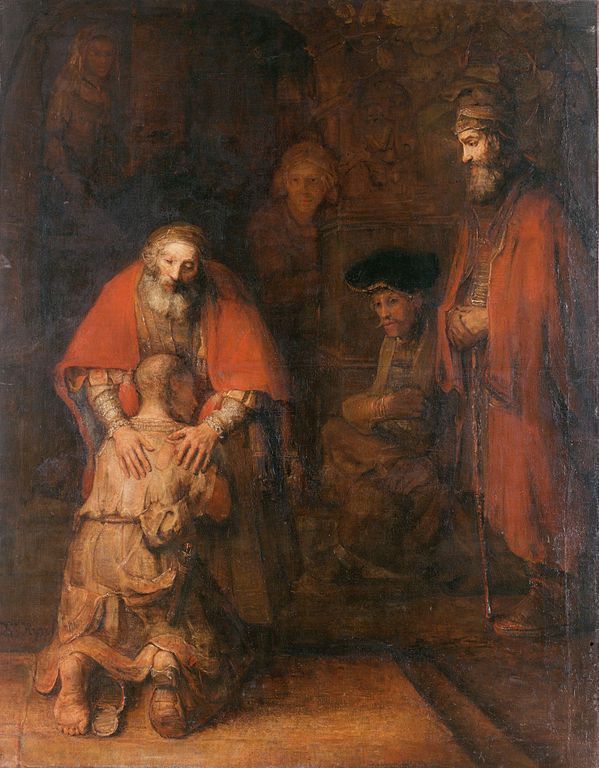
We have the parables in Scripture, but when we try to talk about who God is, we often go straight to the philosophical arguments and forget that God's own self-revelation is giving us stories to tell us who he is. That is a big part of it that we need to reclaim. These profoundly important modes of engagement that our Lord himself has demonstrated are so vital to presenting the truth. Take for example the idea of God's love and forgiveness. This is such an important concept to convey to people. Who is God? Is he an abstract idea? No! God is the loving father who wants us to come home to him. Well, how do we convey that? Certainly, we can say, “God loves you. God wants to forgive you, etc.” But that is very abstract, especially if somebody does not have a good relationship with their father, or has never experienced forgiveness, or has never experienced unconditional love. To them, these words are just abstract. They are cold and empty. They do not do a whole lot. “Yeah, whatever. Move on with your life!” But we can tell a story, just like our Lord tells the parable of the prodigal son.
The whole idea of imaginative apologetics is basically to reclaim the imagination as a human faculty, and to use that as we as we present the faith.
This parable is a miniature masterpiece of imaginative apologetics. We have this son who rebels. He runs off and wants to do his own thing. He ends up with no money, with nothing. He is looking at the pigs eating their husks and he thinks, “How I wish I had some of that!” It is not just a statement. He was destitute. It is a vivid image that we can relate to. Then we see the internal dialogue, where he says, “Oh well. At least I can come back and be part of the staff. I can be a hired labourer.” He is taking these steps. He is not expecting forgiveness. He is just thinking, “I need to put my pride aside and get something.” Then, he goes home and there is this beautiful image of the father seeing him from far off, running to meet him, leaving his dignity behind. He is the father of the family. He is dignified, but he runs out to meet the prodigal son, embraces him, brings him in, and gives him a party. We have the very realistic figure of the elder son saying, “Oh yeah.What about me?” Again, there is a very realistic family. So, what we have is something that imaginatively embodies what repentance looks like and what the acceptance of it looks like. It embodies what forgiveness looks like and it presents it in an appealing way. The son is rehearsing his speech and he never even gets a chance to say it, because the father embraces him.
Now after somebody has fully engaged with that, then the statement that God loves you and wants you to come to him is going to have real meaning, as opposed to just being abstract. In my own work as an imaginative apologist, this conveying of meaning is at the heart of what I am doing, My contention is that a lot of our apologetics and evangelism just falls flat because the words that we are using do not have any meaning for people. What does forgiveness mean? What does the word ‘God’ mean? What does the word ‘sin mean? It is abstract Christian talk. So, we need to reclaim meaning for these words. How do we do that? Not by giving dictionary definitions. We do that by telling stories, showing art, and appealing to the imagination. That lays the foundation to then have a more intellectual discussion about these concepts.
My contention is that a lot of our apologetics and evangelism just falls flat because the words that we are using do not have any meaning for people.
Was there any particular experience that ignited your own interest in imaginative apologetics?
What brought it about is how I came to the faith. I am an adult convert. I was an atheist and I became a Christian in my early thirties. What brought me to the point of wanting to know, “Is this true?”, was not philosophy, or apologetics, or theology, or any of that. It was stories. It was the work of C.S. Lewis, such as the Chronicles of Narnia, the works of J.R.R. Tolkien, and the work of poets like Gerard Manley Hopkins.
I had written my dissertation on fantasy literature. I centred it on Tolkien. All these writers whose work I loved turned out to be Christians. The vision they were putting forward was so appealing and the imaginative worlds they presented were so compelling that I found myself wanting to know what they believed. I was not looking to become a Christian at all. I was, in fact, very much against it. But I was drawn to it by the imagination. Then, as I looked into it, I realised, “Wow! They believe these things because they are actually quite convincing. They believe these things because it is true? Oh no!” I became a Christian and a few years later, again by a similar process, became a Catholic. By the way, I have written about this at greater length. I have a memoir called, Not God's Type, but this is the short version.
So having had that journey for myself, where the imagination got me to the point where the questions were meaningful, then I asked the questions. But I would never have asked the questions before I had that imaginative engagement. Then, as a Christian, as a Catholic, I thought, “Well, if this the case for me, surely it is the case for others.” Since then, I have devoted my energies to developing this approach to apologetics.
You are a scholar of English literature and you are picking books on imaginative apologetics for an anglophone audience. In your extended list, you mention Dante's Divine Comedy. Are there modern instances of imaginative apologetics in other languages just now?
That is a good question and a difficult one, because I am a scholar of English literature. Dante's Divine Comedy is so big that it cannot be missed, even in English translation. I would not be able to off the top of my head recommend non-English language works, with the slight exception that the Arthurian legends often have a deeply Christian base. There is a massive French tradition of Arthurian literature. That is one area in which that mythopoetic Christian ethos is probably being expressed, although I would not be able to name any modern titles along those lines.
1.
The first book you have picked is J.R.R. Tolkien’s On Fairy-stories. In this essay, Tolkien identifies the marks of a fairy-tale (Märchen), yet concludes that the Christianity and the Gospel constitute the supreme fairy-tale. Why does this essay top your list?
It topped my list partly because Tolkien himself is a profound exemplar for doing imaginative apologetics. The Lord of the Rings is a deeply Christian book. Tolkien himself describes it as a fundamentally religious and Catholic work. But it is not overtly so, it is subtly so. (That is its own whole discussion and I have just written a book about it.) He is presenting a beautiful vision. Everything he is writing comes out of his Christian vision and it is beautiful and compelling. So, it makes sense to ask, “Well, if he is doing this, let's look at his own understanding of what he is doing.”
On Fairy-stories ought to be required reading for everybody who is interested in imaginative apologetics. Tolkien is thinking through one genre: fantasy. He is not making claims for literature, broadly speaking, but for the genre that he is working in, fantasy literature. He sets out to explore how it works and why it matters. He comes up with three characteristics of effective fantasy literature and I think that they are applicable much more broadly. They are recovery, escape, and consolation.
Recovery means that as we enter into a fairy-story world, we get a fresh view of things, because they are they are magical and different. Then, we come back into what he calls the primary world, our everyday world. We are able to see that world afresh. We recover a kind of clarity of vision. To give an example, Lord of the Rings has the Ents, the great tree-shepherds, who are amazing figures. You come back out of the Lord of the Rings and you look at a regular tree and think, “Wow! That is kind of cool.” You see the tree as something more than just that thing with leaves outside my window. If that holds true for a tree, how much more so for an appreciation, say, of human beings and our relationships? Of good, evil, and of moral choices? That is the function of recovery.
He also talks about the desire to escape from our limitations. It is not the same as escapism, which is an attempt to hide from our problems. True escape is recognising when we are in a prison. We want to get out of it. It is important to remember that Tolkien was a veteran of the First World War; he is thinking about escaping from, say, a prison camp. When he was on the front lines, that was a real possibility: he could have ended up in a prison camp and then had to think about what to do. Tolkien points out that one of the profound limitations of our lives is death. We want to escape from death. This is a true longing.
Finally, consolation. He talks about the consolation of the happy ending. He invents a word, eucatastrophe (the good catastrophe) to convey this. This where he makes a direct connection to the Gospels. He says that the Gospels are a kind of fairy-tale, but one that happened in history. The Gospel is the true myth, the fairy-tale that actually happened. In this story, the Resurrection is the eucatastrophe of the Incarnation. When we have this lifting of the heart at a happy ending, it is actually an echo of the true happy ending of the universe, which is the resurrection. So, he links the delight in a happy ending with the Resurrection of Christ, but not in an overt way. It has to do with the very structure of the way we tell a story. This understanding of the deeper functions of a story gives us a conceptual framework for thinking about how we present the truth of Revelation and in ways that will connect with people. Recovery, consolation, and escape function in any genre. In fact, they function in other forms of art as well, but literature is my area.
2.
If I am not mistaken, Tolkien’s reflections on Christianity as the true fairy-tale and a source of joy were fundamental in the conversion of C.S. Lewis, who alludes to this in Surprised by Joy. That brings us to your next book: Michael Ward’s Planet Narnia: The Seven Heavens in the Imagination of C.S. Lewis. Not only do we stay with one of Tolkien’s fellow Inklings, C.S. Lewis, but we consider whether Lewis’s The Chronicles of Narnia is a seven-volume imaginative story or fairy-tale about Christ. Could you explain a bit more about the thesis of Michael Ward's Planet Narnia?
This is a fantastic book. Again, a must-read for anybody who is interested in imaginative apologetics. The seven volumes of Lewis’s The Chronicles of Narnia—beginning with The Lion, The Witch, and The Wardrobe—are some of the best-known imaginative apologetics stories. They are more overt than Tolkien's writings. For instance, it is relatively easy to recognise that Aslan is Christ in the world of Narnia. In The Lion, The Witch and The Wardrobe we have him dying and being resurrected. This is relatively clear. But it is not an allegory. That is important. There is not a one-to-one correspondence. It is a “supposal,” Lewis said. Suppose Christ was present in another world: that gives us Aslan. These stories convey just a lot about what it is to be a Christian. Lewis himself said that the Narnia chronicles were all about Christ. But it has not necessarily been entirely clear what he meant by that.
Michael Ward realised that Lewis created an imaginative substructure to the whole Chronicles of Narnia. It was based on the mediaeval seven heavens. Originally, there was going to be just one story: The Lion, The Witch, and The Wardrobe. Lewis focused it around the planet Jupiter, which in mediaeval imagery is the kingly planet, that one associated with joy and joviality. Lewis explores in the imagery and the structure of the story Christ as the king and bringer of joy. Having realised that this worked, that it was resonant and successful, Lewis then goes on in each of the other Narnia chronicles to explore Christ in a different way. In The Voyage of the Dawn Treader, it is solar imagery: Christ as the Sun of righteousness. In Prince Caspian, it is the imagery of Mars: Christ as the warrior. We see this through all of the seven chronicles. It is buried deep, but once you see it, you recognise it. Michael Ward does a fantastic job of showing this to be the case. Lewis has done this in every detail of the Chronicles of Narnia, and it comes out of his own deep knowledge of the Middle Ages. He was a medievalist and he wrote a poem called The Planets, which basically gives the key. He identifies each of the planets and their symbolism, and it maps right on to the Chronicles of Narnia. So Planet Narniais a marvellous book if you want to understand what Lewis was up to. It revolutionised Lewis studies. It is a fantastic book.
It is also an effective case study in imaginative apologetics because it shows how Lewis translated these concepts and conveyed Christ in all these different ways: as king, as sun, etc. He does it imaginatively: through imagery; through language; through story; woven in deeply. This is a great case study of why the Chronicles of Narnia are so powerful. It is not just about popping in a Christ figure into an otherwise ordinary story. If that were the case, Narnia would be forgotten, like so many other books of the of the 1950s. Why has it lasted? Because there is a real coherence to it.
3.
For your third pick, not only do we stay with C.S. Lewis and the Inklings. As with the first book, you have picked another essay on literary criticism: An Experiment in Criticism. Besides challenging the distinction between highbrow and lowbrow literature, Lewis argues that we should distinguish between literary and unliterary readers. For the unliterary, reading is a last resort and each book a one-time read. The literary dedicate time to giving books of quality multiple readings. How is this relevant to imaginative apologetics?
Well, this whole book, An Experiment in Criticism, is basically on how to read effectively. The points that you have just mentioned are obviously key ones. Another key point that he makes is the difference between using literature and receiving literature. When you use it, you are approaching it in a sort of utilitarian way. What can I get out of it? What can I make this do? When you are receiving literature, you are entering into it and you are allowing the author to show you whatever the author wants to show you. You are with him in that moment. For anybody who is interested in imaginative apologetics, this distinction is really important to grasp. As apologists, the temptation is always going to be to move immediately to using literature. How can I use this text to show this or that point about the faith? There is nothing wrong with that, in itself. It becomes wrong when it is the only way that we approach the text. Then, we miss what literature is. It is not just a tool. It is an experience.
An Experiment in Criticism, is basically on how to read effectively.
In An Experiment in Criticism, Lewis teaches us how to receive literature and how to enter into it. That is really important, especially today. A lot of people, maybe even a lot of Christians especially, do not know how to let themselves enter into a story. They are always slightly on guard. A certain amount of caution is always necessary, but if you are going to enter into something, you have to let the author show you what he wants to show you, and then afterwards you can ask, “Do I agree with that? Do I want to use that? How does that line up with what I believe?” But we need to see through that author's eyes if we are going to understand the work. Lewis is a master at teaching us how to do that.
4.
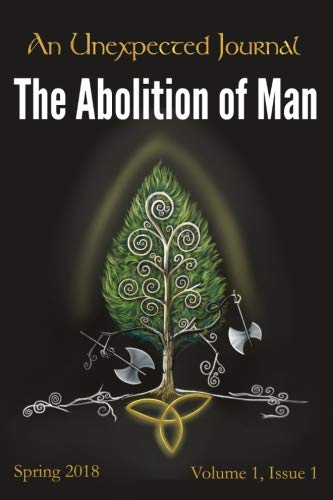
The subtitle of Tolkien’s The Hobbit is evoked in the title of your fourth pick, An Unexpected Journal, a quarterly journal on imaginative apologetics. Is this a journal for full-time apologists or the general reader?
For the general reader. That is one of the reasons that I have picked it. This journal is near and dear to my heart because it was launched by some former students of mine, graduates of Houston Christian University’s MA in Apologetics program. They just went off and launched the journal. I thought, “Golly! That is some initiative. Good for them!” Now it is four or five years in, and it is it is well established.
What I think is particularly valuable about An Unexpected Journal is that it is a quarterly journal. It is a regular engagement. They are attempting not just to talk about imaginative apologetics, but to do it. So, each issue has fiction and poetry as well as essays and book reviews. It is a mix. There is a real attempt to say, “Okay! Let's roll up our sleeves and start doing this.” Over time, issue after issue, you start to see that the possibilities. It is an approach that engages the imagination and reason. Here we see a multiplicity of ways in which that can unfold. There are also different scholarly perspectives. They are always presented in a way that is readable for the intelligent, interested layperson.
That is one of the great strengths of the imaginative apologetics approach. It is well suited for the evangelization of somebody who is sort of interested or on the fence.
That has always been a hallmark of my teaching, and I was quite pleased to see that it was taken up as they launched this journal. We need to be able to have something that anybody who is interested in this can pick up and engage with it. There is no reason why everything has to be in abstruse philosophical language. Sometimes things need to be, if you are talking about very specific philosophical topics. But there is a real need to engage at a level where we are using language that people will understand. An Unexpected Journal becomes a place where you can then use these pieces for evangelization. The individual stories, poems, and even the essays, are the kinds of things that you can recommend to someone who is not a Christian and say, “Well, here is a new story. Let's talk about it,” or, “You might find this interesting.” That is one of the great strengths of the imaginative apologetics approach. It is well suited for the evangelization of somebody who is sort of interested or on the fence. I know this, being a convert myself. If you give them a big book or even a little book that is specifically about why you should become a Christian or what the Church believes, it is a little bit too much, too soon, and it can scare people off. “Oh, no! I am not ready to think about that. No, no.” But suppose you say, “Here is a really cool story. Here is something that moved me: that I found meaningful and interesting. You might like it.” This is non-threatening. It is an entrance point and gives them something to think about. It plants some seeds and maybe starts a conversation. Here the imaginative approach is particularly well suited for and we need lots more of it. We need to plant seeds and prepare the ground a lot more so that people will get to the point of saying, “Oh well, I would like to know more about this.” Great. Now we can give them the more theological and directly catechetical pieces.
5.
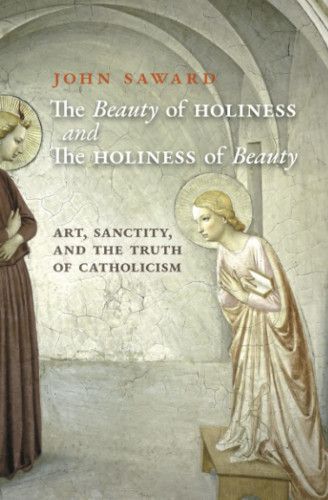
For your fifth pick, you turn from literature to a theological meditation on Blessed Fra’ Angelico’s Madonna and Child from the San Marco Museum in Florence. What can we learn from John Saward’s The Beauty of Holiness and the Holiness of Beauty: Art, Sanctity, and the Truth of Catholicism?
Well, first of all, read whatever Father John Saward writes. He is a gifted theologian in this area and such a good writer that it was difficult to pick a single title to recommend. When he wrote this book that I recommended, he was a Anglican priest, and then became a Catholic and later a Catholic priest. He has a parish in Oxford.
The Beauty of Holiness and the Holiness of Beauty is a more theological book. It is denser and you have to read through it more slowly than some of the others that I recommended. But, he is writing in a way that is accessible to any reader who is willing to take the time and go with him. He is exploring the connection between art and theology. He is making the point that they are connected and we must keep that connection. We cannot go for art for art's sake, Even as Christians, we cannot just say, “Oh, that is sacred art. How very pretty and nice! We'll decorate the church with it,” and then move on with our lives. It has a direct connection with how we talk about the faith, how we explain it, and what we are teaching. We also need to ask, “What is it about holiness that is compelling? What is it about the saints that is compelling?” It is the beauty of their witness. This whole idea of holiness and beauty is interconnected. This book explores that.
One of things I like about it is that it is centred on one altarpiece. The edition that I have includes colour images of it, so you can look at it and see what Fr Saward is talking about. At first, it might sound like an odd choice. Why spend a whole book referring back to just one renaissance altarpiece? He is trying to teach us to see in a similar way that Lewis is trying to teach us to read in An Experiment in Criticism. Fr John is trying to teach us how to see the holiness that is expressed in this beautiful image. By keeping it focused on one artwork, he ensures that what he is explaining does not become purely abstract. It is very easy to become highly abstract when you talk about art and theology. He keeps it grounded in this one artist and one masterpiece. Again, it is again a case study: just like Michael Ward’s case study of Lewis literary apologetics. It is a case study of an artistic apologetics. It makes a nice complement to the other pieces that I have recommended.