
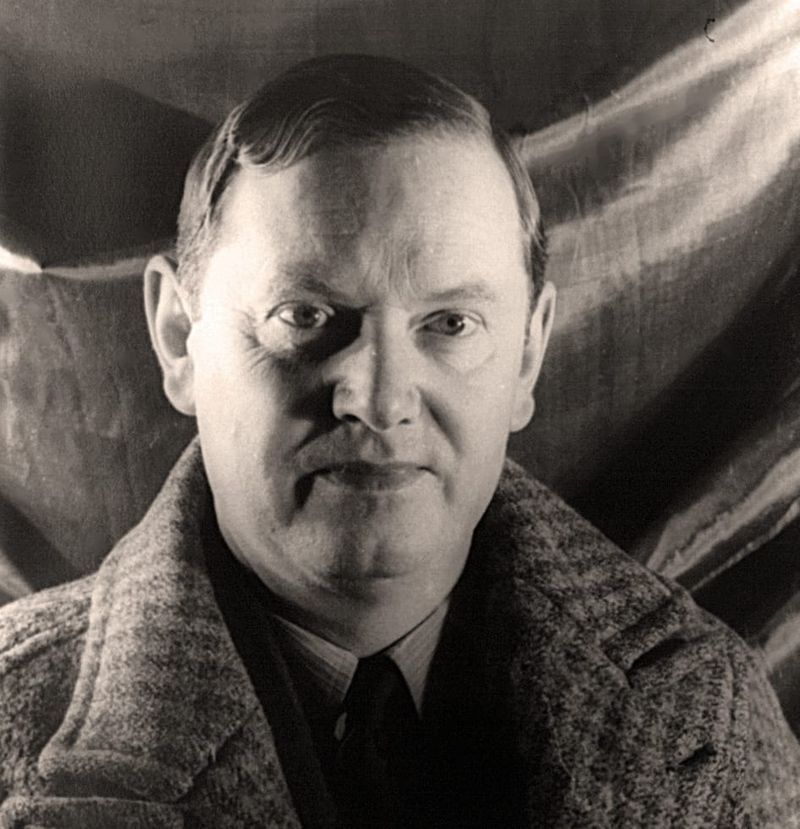
Evelyn Waugh (1903-1966) is not only one of the greatest twentieth-century English novelists and stylists, but one whose Catholic faith informs much of his writing. The son of a publisher and literary critic, he abandoned most of his religious beliefs in his late teens. At university, he befriended a circle of aristocrats, socialites, and aesthetes, combining his artistic pursuits with a dissipated life. Following university, he worked for several years as a schoolteacher and eked out a living as a writer and journalist. In 1929, his wife left him for her lover, one of his friends. They had only been married for a year. In 1930, he converted to Catholicism and in 1937 he remarried. He and Laura would have seven children. During World War Two, he served in the Armed Forces but grew disillusioned with the Allies’ abandonment of Eastern Europe to the Soviet Union. Famed for his crusty personality and unfashionable beliefs, during his final years, he struggled with ill-health, meagre finances, and discontent at both the rise of socialism in the United Kingdom and the novus ordo Mass of the Second Vatican Council.
In this interview, Christopher J. Scalia discusses his pick of five of Waugh’s novels.
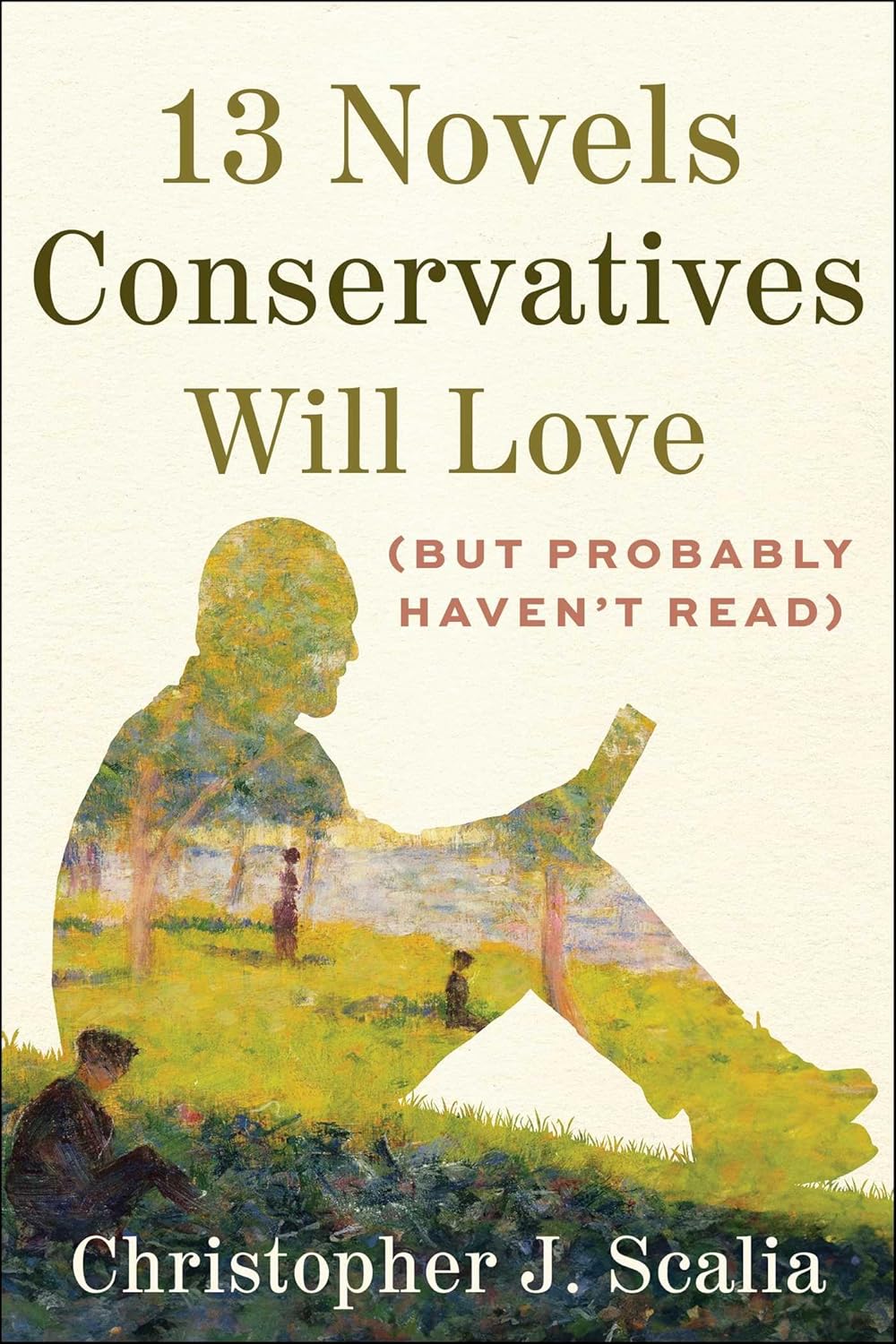
Christopher J. Scalia is a senior fellow in the Social, Cultural, and Constitutional Studies department at the American Enterprise Institute, where he focuses on literature, culture, and higher education. A former English professor, he specialized in 18th-century and early 19th-century British literature. He also spent three years as director of AEI’s Academic Programs department, where he led educational and professional-development programs and events for college students around the country. His articles, essays, and reviews on literature, music, higher education, and other topics have appeared in the Wall Street Journal, the Washington Post, USA Today, Commentary, National Review, First Things, the Washington Free Beacon, the Times Literary Supplement, the Spectator World, and FoxNews.com, among other outlets. He is the co-editor of On Faith: Lessons from an American Believer (Crown Forum, 2019), and Scalia Speaks: Reflections on Law, Faith, and Life Well Lived (Crown Forum, 2017), and the author of 13 Novels Conversatives Will Love (but Probably Haven't Read (Regnery).

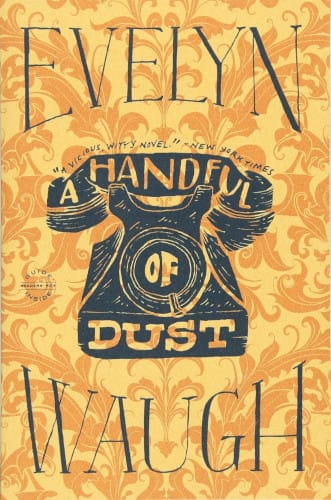
- A Handful of Dust
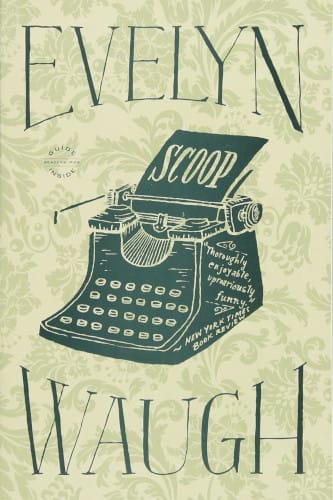
by Evelyn Waugh - Scoop
by Evelyn Waugh - Brideshead Revisited
by Evelyn Waugh - Helena
by Evelyn Waugh - The Sword of Honour Trilogy
(Men at Arms) (Officers and Gentlemen) (Unconditional Surrender)
by Evelyn Waugh
“The reputation of Evelyn Waugh rests on two premises: that he was one of the great prose stylists of the twentieth century, and that as a man he was a monster.” So begins Selina Hastings’s biography of Waugh. Did he deserve this reputation for behaving monstrously?
He was a difficult man and a curmudgeon. There is no doubt about that. However, he was a lovable curmudgeon.
There is a famous exchange he had with Nancy Mitford. She pointed out that he a monster and wondered how, being a Christian, he could he be so mean. He replied that were he not a Christian he would be even more horrible.”
He had a great sense of his foibles, weaknesses, and the importance of Catholicism to his life. A more recent biography—Philip Eade’s Evelyn Waugh: A Life Revisited—is more generous to him. Eades does not justify all his foibles, but, generally, casts him in a more favourable and friendlier light. This counters some of Waugh’s past reputation for monstrousness. Regardless of what he was like in person, he is undeniably a marvellous writer. He is superior to almost every other twentieth-century writer, whether it be as a stylist, a comic writer, and an explorer of the significance of faith in the modern world.
"I regard writing not as an investigation of character, but as an exercise in the use of language. And with this I am obsessed. I have no technical psychological interest. It is drama, speech, and events that interest me.”
Evelyn Waugh
Waugh is often cited as one of the greatest writers of English prose of the twentieth century. In his essay, “Literary Style in England and America”, he lists lucidity, elegance, and individuality as the three characteristics of literary style. He even explains them. Presumably, Waugh writes with these three characteristics.
That is absolutely right. He writes with a very unvictorian and twentieth-century style. Like Mark Twain, his sentences are short and direct sentences. They are always clear, sophisticated, and deceptively simple.
Furthermore, he does not give a lot of explanations. He lets the actions, gestures, and details of his characters gestures speak for themselves. This is one of the things he does especially well but, as with his humour, poses a challenge to many readers. A character will say something stupid, barbaric, or intentionally funny. However, the narrator does not slow down to advert the reader to the joke funny incident. There are no laugh tracks in Waugh’s novels. Rather, he expects the reader to be sharp and attentive enough to recognise these beats and the skill of his timing.
Late in his career, in an interview with the Paris Review, he spoke about another peculiarity of his writing. “I regard writing,” he said, “not as an investigation of character, but as an exercise in the use of language. And with this I am obsessed. I have no technical psychological interest. It is drama, speech, and events that interest me.”
That is slightly misleading. It can give you the impression that his characters are flat, uninteresting, and have no complexity whatsoever. That is not the case at all. However, his third person narrators— and, with the great exception of Brideshead Revisited, he almost always wrote in the third person—do not explore at length what the characters are thinking. Instead, his narrators attend to what the characters do and say. Remarkably, he still draws such complex and interesting characters.
What are the main points of Waugh’s biography?
He was born in London in 1903. His family had been involved in the publishing business for a couple of generations. He attended Oxford but was not a particularly good student and did not complete his degree there.
He had written throughout his childhood but the visual arts, especially some of the medieval ones, were his first artistic love. He provided crude illustrations for his early novels and his first major publication was a biography of the Pre-Raphaelite artist Dante Gabriel Rosetti (1928). It earned favourable reviews and much praise, but one reviewer thought mistook the author for a woman because on account of his first name. In the reviewer's defence, Waugh’s wife was also called Evelyn (though her name is pronounced differently). To this day, biographer refer to them as He-Evelyn and She-Evelyn.
Their names were compatible, but their lives were not. She carried on an affair very early in their marriage, and they divorced in 1929. Around that time, he published his first novel, Decline and Fall. It is a great comic novel, based on his experience as a grammar school teacher. He followed it up with Vile Bodies. It is a lesser comic novel, but still very funny. It is about the Bright Young Things set that was around in England at the time.
At the time, he was also travelling a lot writing travel works. Over his career, he wrote thirteen novels total, a handful of travel books, two biographies (one of the sixteenth-century Jesuit martyr Edmund Campion, and another of Ronald Knox, the Catholic Chaplain at Oxford).
This brings us to a turning point in Waugh’s life: his conversion to Catholicism in 1930. At first, there is no discernible change in his writing. He does not suddenly take on explicitly Catholic subjects. He does eventually and his works take on a very Catholic focus.
In 1936, his first marriage was declared null. The following year, he married Laura Herbert, with whom he had seven children.
As you mentioned, though Waugh is best known as a novelist, he was also a journalist and widely read travel writer. Why have none of his essays or travel writings figured in your list?
Because I am primarily a reader of novels and Waugh’s reputation rests on his novels. I considered including his biography of St. Edmund Campion, but I just decided that all his novels are superior to everything else he wrote. That is not to say his other works are not worth reading. However, I have not enjoyed them as much and his reputation does not rest on them.
Nevertheless, his travel writing had an enormous influence on his novels. His travels really shaped the plot of some of his novels. You could argue that his biographies shaped one of the novels, Helena.
"I am drawn to him as a Catholic because he takes the faith seriously. He is not overly pious. He recognises the flaws of Catholics and the way they can manipulate their faith for self-deception."
Waugh became known as a novelist for his early satirical novels, Decline and Fall, Vile Bodies, and Black Mischief. However, you have selected books that he wrote after his reception into the Catholic Church. Was this a conscious choice, happenstance, or simply indicative of how, like many artists, his work matured as he grew older?
The latter. His early novels are extremely good, but he progressed significantly as a novelist. If I were to include one of them, it would be Decline and Fall. It is an even better novel than Helena. However, Helena is remarkable for what it says about Waugh’s faith.
That said, not all the novels he wrote after his conversion, such as Scoop and A Handful of Dust, are explicitly Catholic. A Handful of Dust is a Christian novel insofar as it is about the absence of Christianity. It makes a point about the absence of any spiritual life in the characters.
“Catholic literature is rarely pious. In ways that sometimes trouble or puzzle both Protestant and secular readers, Catholic writing tends to be comic, rowdy, rude, and even violent. Catholics generally prefer to write about sinners rather than saints.”
Dana Gioia
Why should Catholics read Waugh?
For the reason any lover of fiction should read him: he is such a good novelist. His writing is pristine, powerful, and amazing. His stories are memorable. However, I am drawn to him as a Catholic because he takes the faith seriously. He is not overly pious. He recognises the flaws of Catholics and the way they can manipulate their faith for self-deception.
It is helpful to remember something that the American Catholic poet and critic Dana Gioia has said about Catholic writers. “Catholic literature is rarely pious. In ways that sometimes trouble or puzzle both Protestant and secular readers, Catholic writing tends to be comic, rowdy, rude, and even violent. Catholics generally prefer to write about sinners rather than saints.” That is especially true of Waugh. You can also see it in any number of great Catholic writers of the twentieth century, such as Flannery O'Connor, J.F. Powers, Graham Greene, and Muriel Spark. Waugh is clearly a devout Catholic, but he presents the struggles of Catholics in the modern world particularly well.
Do any of Waugh’s novels feature in your forthcoming book, Eleven Conservative Novels You Must Read…but Probably Have not?
Yes, Scoop. I could have included a handful of his novels. However, I chose Scoop because people on both the left and right—and these days conservatives in particular—can appreciate its timeless depiction of the press. It depicts the shortcomings of the media particularly well.
In 1999, The Modern Library solicited experts to draw up a list of the best one hundred novels of the twentieth. Three of Waugh’s novels made the list: A Handful of Dust, Brideshead Revisited, and Scoop. That gives you a sense of just how much there is to choose from in his works. Of those three, Brideshead Revisited is the only one that deals explicitly with the Catholic faith and its significance.
Waugh often laments the decline of an aristocratic, chivalric ethos for an egalitarian one in Britain and many other countries. Is his conservatism separate or linked intrinsically to his Catholicism?
It is linked to it and very much so. This comes through most clearly in The Sword of Honour trilogy. The main character, Guy Crouchback, is a cradle Catholic who is excited to participate in the Second World War. He sees it as a sort of chivalric crusade against the modern age, with the forces of Nazism and Communism representing all that is wrong with modernity; England and Christianity representing the greatness of European tradition. However, he becomes deeply disillusioned over the course of the trilogy. He realises that this is not what the war is about. This is not a completely autobiographical representation of Waugh, though Crouchback’s encapsulation of Catholicism and conservatism does match Waugh’s own beliefs.
As you mentioned, Waugh had a disdain for egalitarianism. He did not love America, to put it mildly. His send-up of certain American values, The Loved One, is one of the books I considered including on this list. In other venues, he spoke critically of United States’s deeply democratic institutions and beliefs. Several of his novels feature characters who represent the modern age and its beliefs. He enjoys poking fun at them and showing just how shallow and oblivious they are.
Was Waugh a snob?
Yes, he was.
1.
Let us turn to the books you have selected and treat them in chronological order. The first is A Handful of Dust (1934). It takes its title from T.S. Eliot’s The Waste Land. Like that poem, it depicts the barrenness of secular humanism. For this reason, some see it as a turning point in Waugh’s oeuvre. Why have you chosen it?
This is my favourite Waugh novel. It is a remarkable combination of laugh aloud funny and cry aloud sad. Its humour is dark and ironic. The fate of the central character is simultaneously tragic and funny. This is remarkable in twentieth-century literature.
The novel is about Tony Last, a member of the English nobility. He has inherited the family estate, albeit not an especially glamorous one. It is run-down, dark, and cold. Brenda, his wife, is unhappy there and is always trying to convince Tony to spend more time in London. However, he likes his estate. So, Brenda often goes off to London on her own and eventually strikes up an affair there.
Hurt by his first wife’s affair, Waugh wrote many Brendas into his novels. Many such unfaithful, shallow women pop up in them. Brenda Last is the most outstanding version. This comes out most clearly when the couple’s son, John Andrew, dies in an accident. Brenda is not there when he dies. When she receives the news that John has died, she assumes that it refers to her lover, John Beaver, and is distraught. When she realises that it is really her son who has died, she exclaims, “Thank God!” She is relieved that her son, not her lover, has died. This gives a powerful insight into her character and shallowness. Then she regrets her reaction. This is an example of how Waugh lets he reader pick up on the significance or what the characters do rather than explain it.
Brenda eventually requests a divorce. Tony is not a religious man, and to get away from things and search for a purpose, goes off to the Amazon.
Spoiler alert! He is trapped in the Amazon for the rest of his life. This comes about in an incredibly funny and tragic way. The guide of the expedition dies. Tony gets lost and ends up in a camp with an Englishman and Amazonians. The old Englishman is delighted. He has the complete works of Charles Dickens and now has somebody to read them to him. He assures Tony that he will get help for him eventually. Soon, Tony realises that he is destined to spend the rest of his life reading the works of Charles Dickens to this crazy man in the Amazon.
Ironically, Tony ends up having this great English domestic life. He gets to read one of the great English novelists out loud to somebody. However, it is not in England but the Amazon, with a crazy person, and he grows weary of Dickens.
Meanwhile, no one back in England knows what has happened to Tony. They assume that he has died and set up a memorial for him. This is vintage Waugh. In Waugh’s early novels, there is a helpless character, with no real control over his fates and destinies, who is mistreated by women. Tony fits that bill. However, Waugh’s conversion also informs the work, even though it is not explicitly Christian or Catholic. The novel is about empty humanism and a set of vapid people who have no higher purpose or beliefs. One biographer has called this Waugh’s single greatest achievement and a definitive statement about the spiritual condition of Western man.
"He satirises aspects of the press that both liberals and conservatives, Americans and the British, still complain about."
2.
Many will have heard of The Daily Beast. However, the original Daily Beast is the fictional rag at the centre of Waugh’s next novel, Scoop (1938), a satire of English journalism. What makes this one of Waugh’s best novels?.
It is the funniest, partly because the humour holds up the best. His send-up and spoof of the press still holds up very well. He satirises aspects of the press that both liberals and conservatives, Americans and the British, still complain about. The founding editor of the online outlet, The Daily Beast, is the English journalist Tina Brown. That she took its name from Scoop, indicates that she saw it as an enduring novel.
Scoop is about William Boot, a young aristocrat who contributes a weekly nature column, Lush Places, to the Daily Beast, a London newspaper. However, he is not a particularly good writer. Early on, the reader gets a sense of his writing: “Feather-footed through the plashy fen passes the questing vole…” This purple prose is very unlike anything Waugh himself would write. One of the managing editors of the Beast reads that sentence and concludes, “That must be good style. At least, it does not sound like anything else.” Even the editors of the Beast cannot distinguish between good and bad writing. That itself is a statement on the Fleet Street journalism of the day.
Through a case of mistaken identity, Boot is selected to travel to, Ishmaelia, Africa. This a made-up country, based loosely on Ethiopia, from where Waugh had reported some years earlier. Lady Stitch, who shows up in The Sword of Honour trilogy, recommends a friend of hers, John Courteney Boot, for the assignment. The newspaper mistakes this for a recommendation of William Boot, and assigns him instead. Boot does not want the assignment and has no idea why he has received it. However, the money is too good to pass up.
This trip is the naive young man's introduction to journalism. Along the way, he is instructed about good journalism. What he discovers is that journalists make stuff up and can thereby influence the foreign policy of colonial empires. He also learns that you never correct another journalist mistake. That is just not good form. If the mistake is better than the real story, you just let it go. It is too much trouble to try and correct it.
[The human] aversion to correcting things and taking blame is a recurring theme in Waugh’s novels. For example, in A Handful of Dust, both Tony and Brenda say no one is to blame for the death of their son. They take no responsibility for their neglectful parenting. Similarly, in Scoop, for journalism to succeed, journalists must never correct one another’s mistakes and fabrications.
Boot is not an especially good journalist. However, he happens to benefit from his connections in Ishamelia, does not fall for some of the lies the Ishmaelian government feeds the other journalists, and gets the greatest scoop of all. He saves the British government’s behind and returns a hero. However, he has had enough of journalism and is happy to resume his nature column.
The end of the novel is interesting, though. The final paragraph gives a sense that something bigger looms for Boot. There is danger on the horizon. Waugh gives a sense of the onset of war in Europe. This casts a dark pall over the end of this very funny novel.
As you mentioned, in Scoop, Waugh drew on his own experiences as a foreign correspondent to Abyssinia during the thirties. He took the side of Mussolini during the Second Italo-Abyssinian War because he thought the African county would benefit from European colonization. Quite a few his contemporaries disapproved of his politics. Today he would be branded a racist. Was he a racist and what are we to make of Waugh’s politics?
Yes, you are right. He is what we would nowadays call “deeply problematic” in his politics. However, Scoop is virtually a post-colonial novel. It makes the European colonial powers look quite idiotic. These European adventurers do not know what is going on. They are easy to mislead. They do not bring any improvements to Ishmaelia, which is run by crooks. So, Scoop is not a celebration of empire or the competence of European countries.
His third novel, Black Mischief, is a more troubling novel and more racist. In Scoop, the overt racism tends to come from characters you are not supposed to like anyway. The character who uses the most racist language is a journalist who introduces Boot to the lay of the land and to the journalistic trade. As I recall, Boot does not use any racist language.
Waugh was not enlightened by our standards, not by any stretch of the imagination. Still, Scoop will surprise readers who go into it expecting Waugh to be particularly bigoted.
3.
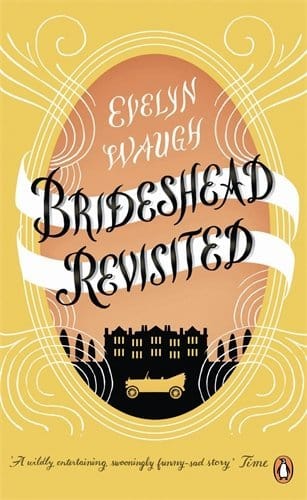
Brideshead Revisited: The Sacred & Profane Memories of Captain Charles Ryder (1945) is Waugh’s most famous novel. It is also the first that is explicitly Catholic, with Brideshead, the name of the Marchmain estate, referring to Christ, the head of his bride, the Church. What are the main themes of this novel?
They boil down to redemption and conversion.
Brideshead is the name of an estate, owned by the Marchmain family. As you suggested, its name refers to the Church. The estate is emblematic of the Church itself.
The narrator, Charles Ryder, befriends one of the Marchmain children, the eccentric Sebastian Flyte. There are clear hints that the two of them have a homosexual affair during their time together at Oxford.
Charles visits Sebastian at his home, Brideshead, and becomes enmeshed in this deeply Catholic family. Sebastian is, at best, deeply ambivalent towards his family and the Church. His elder brother is deeply Catholic but a bit of a fuddy-duddy and not a terribly likeable character. The mother is deeply Catholic. The father has left her and lives in Italy with his mistress. He wants a divorce, but she will not give it to him. There is a wide range of Catholic belief within the family.
Charles is drawn to the beauty of Brideshead and the goodness of the family itself.
After being away from the family for a while, he encounters Sebastian's older sister Julia and begins a love affair with her. She is married but not a very devout Catholic.
Towards the end of the novel, Lord Marchmain is dying and returns home. His children debate whether he should receive the last rites, as he had not shown much interest in the Church and had ceased to practice the faith. Ultimately, Julia decides that he should receive the last rites. This is her moment of conversion. She realises that she and Charles cannot maintain their relationship. The novel, therefore, does not have a conventional happy ending. We are rooting for Charles and Julia. They are happy together and they a good couple. However, we know that, for the sakes of their souls, they cannot stay together. In Catholic or salvific terms, this is a happy ending.
Waugh wrote the novel while he was on leave from the army during World War II. In the novel, Charles Ryder is in the army and his unit is about to leave England. They arrive at a new camp for departure. The camp is Brideshead. Everybody else is complaining about what a lousy place it is. There are no amenities or luxuries. Charles, however, has a different opinion. He loves Brideshead and he proceeds to tell his story. In the epilogue, there is a sign that Charles, who still loves the family, has also fallen in love with their religion and Church. He shows a glimmer of faith and conversion.
Waugh’s novels, such as A Handful of Dust and Scoop, are often dark in tone. Brideshead Revisited has a happy ending. The love affair does not end as you might like it, but, when Charles leaves the chapel of Brideshead, one of his fellow soldiers sees him and says. “You’re looking unusually cheerful today.” That is how the novel ends.
The story is tragic but there is also a sense that Charles's connection to the Catholic Church is only possible because Julia forced him to end their love affair. There is a clear sign of happiness and hope, something that is missing in some of Waugh’s other novels.
4.
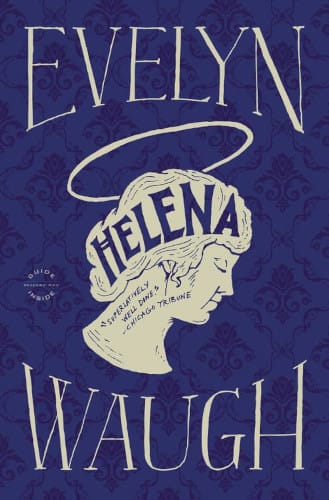
Waugh considered his historical novel, Helena (1950), "far the best book I have ever written or ever will write.” Do you agree with this assessment.
No, nobody does. Funnily, many writers identify their weakest novels as their favourite. Mark Twain thought his Joan of Arc, a novel that only Catholics read anymore, was his best novel. Nobody else does. Curiously, both Twain and Waugh, who did not have much in common, consider their biography of a Catholic saint to be their greatest work.
While I do not believe that Helena is his weakest novel, it is definitely not his best. Still, it is a fascinating novel. In particular, those interested in Waugh’s faith will be drawn to it.
It is an historical novel and Waugh did some research for it. However, it is a historical novel in in the loosest of terms. He does not try to make a Helena a woman of her times. She is a British aristocrat, albeit one living in the fourth century. She is from Colchester. Her father is a nobleman or the equivalent thereof. She meets her husband when he is a soldier of the Roman Empire, stationed in England. He is not an especially good man. They leave Britain and their travels correspond to Waugh’s own.
This is the only of Waugh’s novels in which a woman is the main character, and she is a fascinating character.
Waugh presents her son, the Constantine, the emperor who made the Roman Empire Christian, as an opportunistic Catholic, the sort that appears in the other novels. Rex Mottram, from Brideshead Revisited, is an example of this. He converts to Catholicism so that he can marry Julia and become part of her wealthy family. There is a great passage in which Julia's little sister tricks him and tells him lies about the Catholic Church. Rex believes them because he is so gullible and has such a low opinion of the faith.
Similarly, in a conversation with Pope Sylvester, Constantine describes the churches he intends to build. Basically, he says that churches are a bit depressing. There is too much crucifixion and sacrifice. Instead, he will build a church to Divine Wisdom and another to Peace. He is trying to modernise the Church. Indeed, many of the characters in Helena are modern characters displaced into this distant past. That is one of the reasons the novel is entertaining.
It is another of Waugh’s novels that ends on a clear note of hope. The novel gradually becomes about Saint Helena’s search for the True Cross. At the end of the novel, she finds it and gives the nails used in Christ’s crucifixion to Constantine, who uses them for very shallow ends. Nevertheless, Waugh describes the triumph of her finding the cross and how this confirmed the faith of so many, in Europe and around the world. The last word of the novel is “Hope.” It is a hope made possible by Helena’s dogged pursuit of the True Cross.
5.
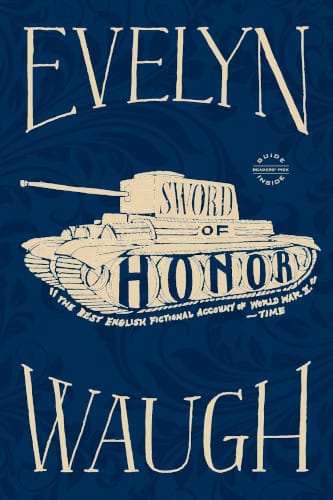
Last up is Waugh’s Sword of Honour Trilogy: Men at Arms (1952), Officers and Gentlemen (1955), and Unconditional Surrender (1962). It is set during World War Two and draws in part on Waugh’s own experiences from his military service. However, its characters are often less than heroic. Indeed, it depicts the absurdities and venality of modern warfare, geopolitics, and egalitarianism. What makes this a great novel?
I am cheating a bit by counting this as one novel. Nevertheless, during Waugh’s life, the were published as a set. He later made some changes to the novels, so it is probably best to buy them separately.
The trilogy is easily his most ambitious work. Though imperfect, it is undeniably a success. It is a remarkable depiction of World War II, one that will surprise many readers. It is neither especially patriotic nor offers an ennobling vision of World War II.
The main character, Guy Crouchback, hopes that this war shall beat back the encroachment of modernity. However, he realises that this is not possible. Waugh symbolises this effectively by contrasting two swords. The first is the sword belonging to a knight, whose tomb Guy visits at the beginning of the novel, while living abroad. Like Guy, the knight had left England and was on his way to the Second Crusade. However, he was waylaid and killed while fighting for a local nobleman. Nor was his death glorious. He fell off a castle wall. Nevertheless, he was embraced as a hero and the locals go to his tomb and touch for good luck the sword his effigy holds. Before his return to England to enlist, Guy visits the tomb and reflects on it. He sees himself as carrying on this knight's chivalric purpose. Edmund Burke be damned. Crouchback wants to prove that chivalry and honour are not dead.
Over the course of the war, it becomes clear that the conflict is not as glamorous and idealistic as he had hoped. There is no sympathy for the Germans, not by any stretch of the imagination. What really disappoints Guy is the alliance between the Soviet Union and Britain. That alliance is symbolised by the Sword of Stalingrad, which Winston Churchill gives Joseph Stalin at the beginning of their alliance. This crushes Guy. It suggests that Britain’s cause had never been associated at all with its chivalric past but just another part of modernity. All sides are fighting for modernity in one way or another.
Crouchback continues fighting and does not abandon the forces. However, all his military efforts are a series of disappointments and source of disillusionment. The most prominent example occurs in the second book. He befriends a soldier called Ivor Claire. Initially, he sees Claire as someone who, in keeping with his own beliefs, is living the chivalric code: “an Englishman Hitler had never counted on.” However, during a disastrous campaign in Crete, Claire proves himself unworthy of that respect. He disobeys orders and abandons his troops. This is another example of how Waugh’s characters often fail to take any responsibility for their actions and never blame anyone for anything. Lady Stitch, from Scoop, reappears and arranges things. Consequently, Ivor Claire avoids any repercussions for his traitorous conduct. Guy is tempted to bring Claire's misdeeds to light but realises that there is no point to it. This questionable decision how disillusioned he is.
Crouchback’s personal life is also significant and a source of great humour. He is divorced from his wife, Virginia, and, as a Catholic, he cannot remarry. However, like Brideshead Revisited, this is a novel about redemption. Though disillusioned with the war, Guy realises that he can still achieve some sort of chivalric purpose and redemption, not in the war, but in how he treats other people. Central to that is Virginia.
In the first novel, Guy tries to seduce Virginia, even though they are already divorced. She is flattered as she believes that he is passionate for her once more. However, he is seducing her because, in the eyes of the Church, she is the only person he can sleep with. She catches on to this and lets him have it: “You wet, smug, obscene, pompous, sexless, lunatic pig.’” She recognises that his behaviour is lecherous and gross. Following the letter of the Church’s law might not be a sin, but Guy does not emerge in a favourable light. However, Guy and Virginia reconcile by the third novel. He demonstrates great virtue and chivalry by the decisions he makes regarding her. Still, the ending is ambiguous. It is not entirely clear how happy he is. He has found some higher purpose to his life, but he found it in his personal life, not in the war.