Latin occupies a preeminent place in Western culture. Not only do the Romance languages descend from it, but it was the language in which many of the foundational texts of Western law, philosophy, theology, literature, and science were written. Moreover, it is especially important for Catholics of the Latin Church. It is the language of the Roman Rite. However, it is no longer a core subject in the curriculum of most schools. Fortunately, there are many courses available, not to mention resources for studying it by oneself.
In this interview, Charles G. Kim recommends some books that are especially suited for Catholics interested in learning Latin.
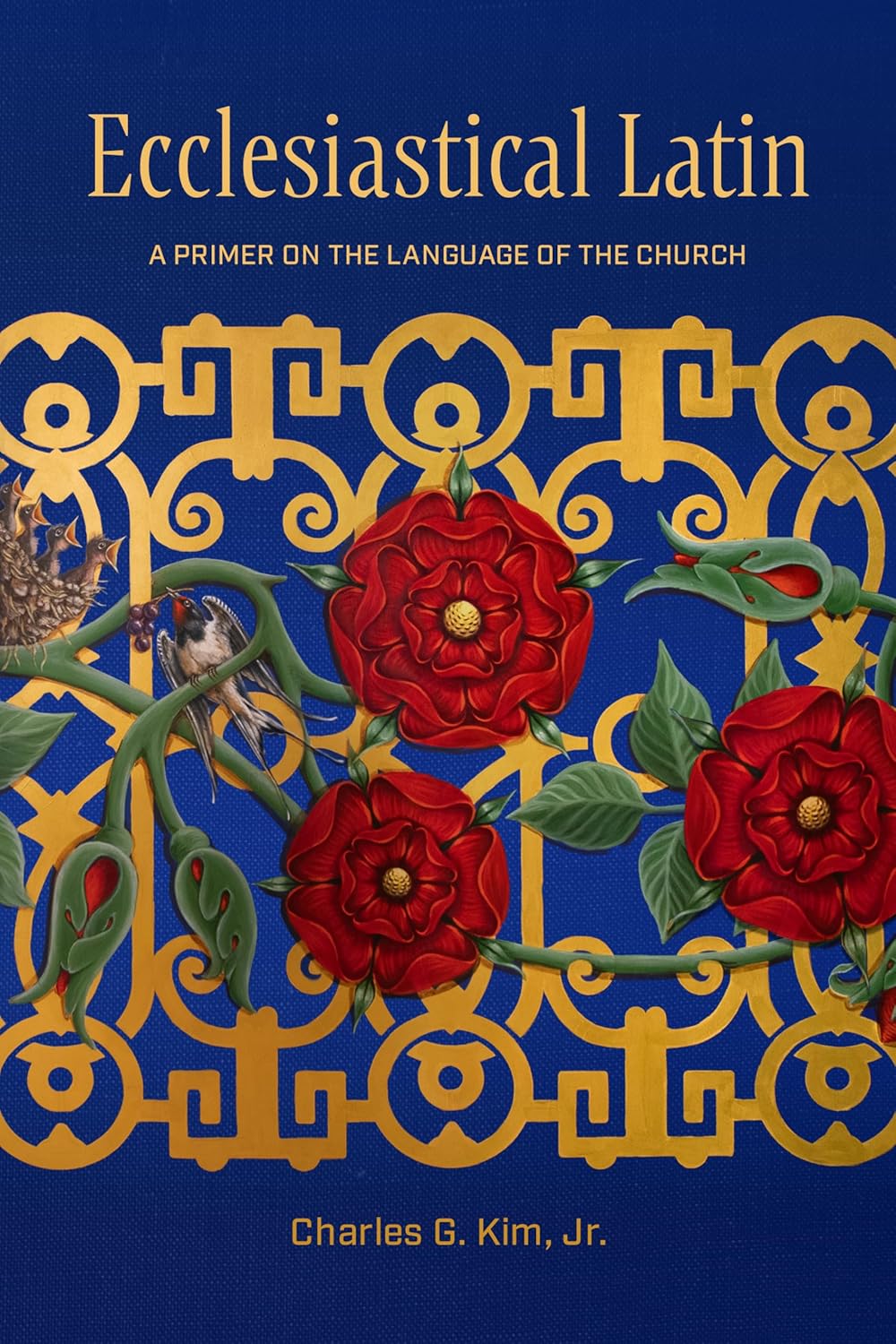
Charles G. Kim, Jr. is assistant professor of theology and classical languages at Saint Louis University. He is the author of The Way of Humility: St. Augustine’s Theology of Preaching (CUA Press) and Ecclesiastical Latin: A Primer on the Language of the Church (CUA Press). in Historical Theology focusing on St. Augustine of Hippo's theology of preaching.

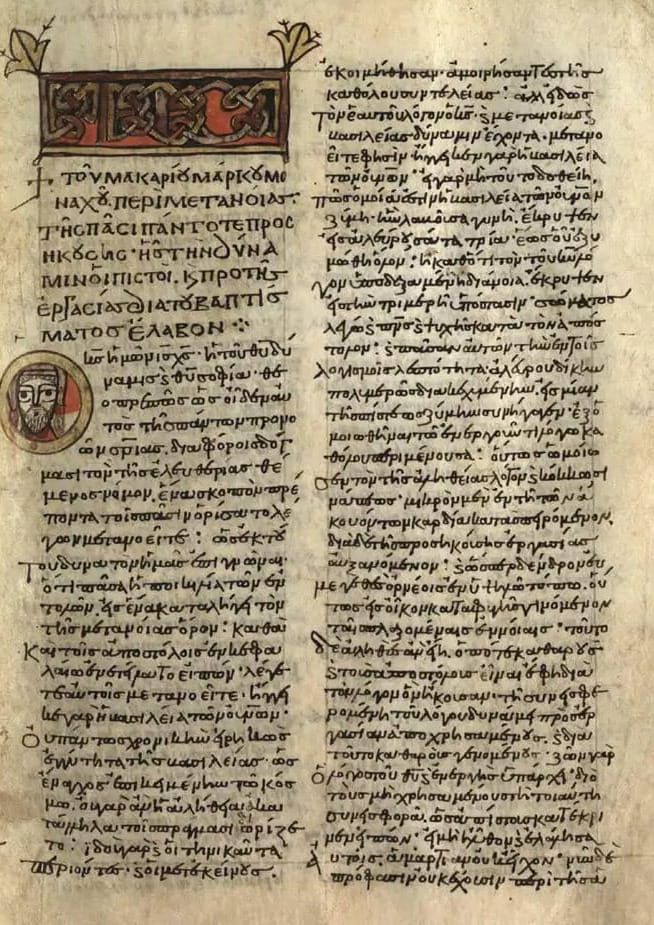
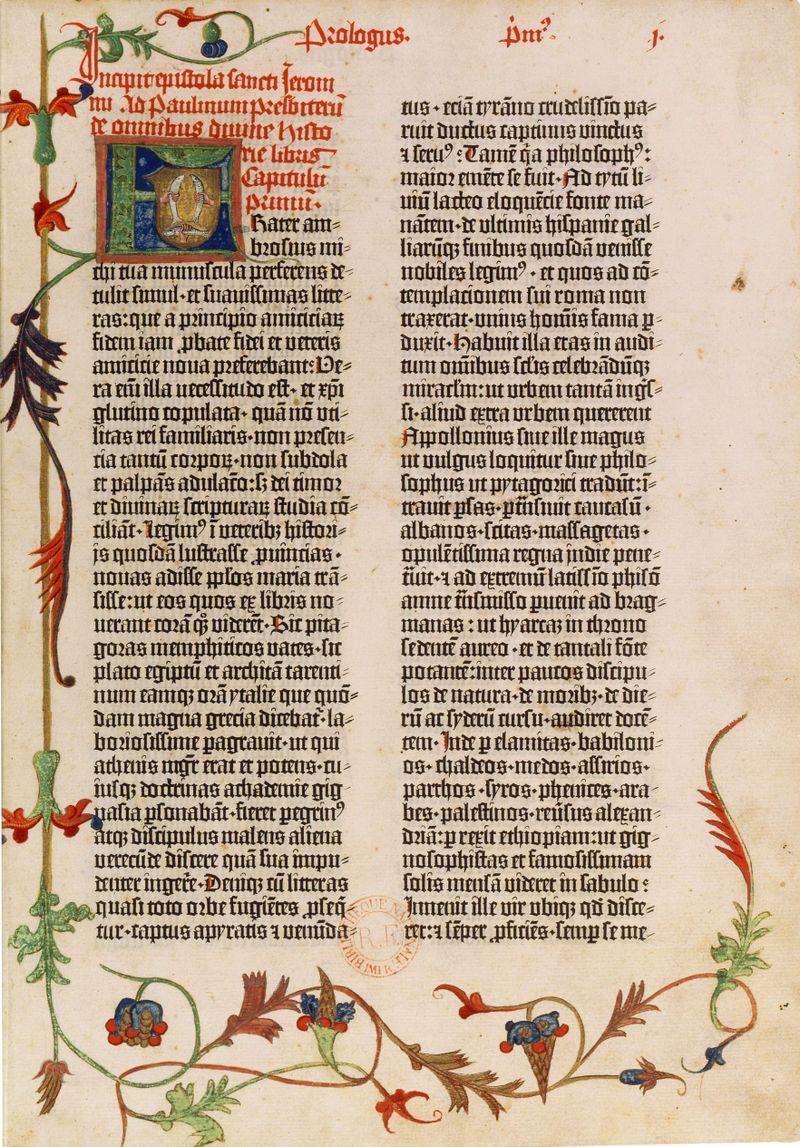
- Biblia Sacra Vulgata
- De imitatione Christi (The Imitation of Christ)
by Thomas À Kempis - Collationes in orationem dominicam (Sermon-Conferences on the Our Father)
by St. Thomas Aquinas - Sermones de tempore (Sermons for the Liturgical Year)
by St. Augustine - Epitome Historiae Sacrae
by Fr. Charles François Lhommond
Until recently, the study of Latin was an integral part of a Christian education. One reason was that it was the language of the Roman Rite, the magisterium, and ecclesiastical studies (such as philosophy, theology, and canon law). Now, we not only celebrate the liturgy in the vernacular but also have good translations of the main documents of the Catholic tradition. Studying Latin will always be necessary for certain specializations. However, it no longer seems to be an essential component of a general Christian education. Do you agree?
Not that many people study it anymore. However, people can benefit greatly from studying this language.
One of the things that brings me so much delight is to see when the light bulb turns on in my students and they see the beauty of Latin. Learning Latin brings those who study it great joy and delight. They discover things in the Scriptures and liturgy that might otherwise be difficult to see.
Are there any other reasons why it is worth studying Latin?
Some say that you should study Latin to improve your SAT scores. You will learn many medical terms, and such like. However, if you think in those terms, Latin is useless. Just learn the words that you need for medicine or law.
If you are willing to study something but do not know how you will use it or what delight it will bring, you are already submitting yourself to something greater. For me, there is a spiritual discipline to studying Latin. This is a language you neither know nor do you know what it will be like to know it. However, other people have decided that knowing it is good. The tradition has decided that it is good to know it. Once you have that mentality, you begin to take delight in it. You stumble upon things that you could never have foreseen.
In and of itself, Latin is a beautiful language. One of my favourite examples is the Latin word for ‘tree’: arbor. Oftentimes, the Bible uses lignum instead, which means ‘wood.’ This same word comes up in Genesis, Deuteronomy, the Psalms, and then, when Jesus dies on the cross. He dies on the ‘wood.’ This one word, lignum, is translated in English as wood, tree, and in some other ways. However, the Church Fathers see that there is a through line from Genesis 2 and 3, through Deuteronomy 21:23 and Psalm 1, to Christ’s death. By reading the Bible in Latin, you can make many such connections.
When I applied for university to study classics around thirty years ago, I was told that the classics graduates were being hired by computer or software firms. Does Latin help you form any valuable soft skills?
That is interesting. I have not heard that one as much, but there is a certain discipline to knowing Latin. It is a difficult language. Learning Latin, Greek, or Hebrew is much harder for an English speaker than Spanish. If you are disciplined enough to learn those languages, it is good preparation for, say, learning a programming language.
So, a kind of discipline that comes with studying a language. That is one reason that many have been required to study Latin in the Western tradition.
I usually encourage students to learn it for the delight it brings. Yes, learning Latin can be hard. However, all good things come to those who are willing to suffer for them. Hopefully, there can some joy in it along the way.
So, you do not accept the schoolboy’s jibe: “Latin is a dead language. First it killed the Romans. Now it's killing me.” What sparked your interest in Latin?
In middle school and college preparatory school, I decided to do Latin because all my friends said it was too hard. I went against the grain. I also read Augustine's Confessions and in high school and realized that it was written in Latin. It opened up my eyes to the kind of things that people wrote about in Latin.
 Five Books for Catholics
Learning Latin is as close as we can get to time traveling. If you really learn the language and have it in your mind, you can think differently than you do in English. You think differently in a different language. I joke that when I speak French, I am a little more sarcastic and dry. Each language has a different way of engaging the world. That is true for Latin.
So by learning a ‘dead language’, you learn to think somewhat like an ancient person.
Of course, the beauty of Latin is that it is not just the language of the Romans. It is also the language of the Church.
I joke that, because it has died, it has become an immortal language.
If you learn Latin, you can read documents from two thousand years: from many periods, not just from one.
What are the special features of your textbook Ecclesiastical Latin?
I like to joke that it was quite arrogant of me to think that I could write a new Latin grammar. There are plenty of them. In my text, I tried to incorporate elements of spoken Latin as well as narrative into each chapter.
We used to teach with Collins's A Primer of Ecclesiastical Latin, which is a bit of a standard for ecclesiastical Latin. My students always struggled with moving from one-off sentences to longer bodies of text. They were not used to reading large chunks. Each chapter in my book has at least half a page of continuous Latin on one topic. In that way, students see early on how the language connects between sentences, whereas Collins's usually contains twenty or thirty sentences that do not have anything to do with each other. My book also has that kind of sentence. However, it also has a lot of continuous Latin texts.
We could call the method used in Collins or Wheelock's the old grammar translation style method.
The other book that I learned with when I lived in Italy is Familia Romana by Hans Orberg. It is written entirely in Latin. It can be somewhat daunting for the self-starter or the autodidact. My book is halfway between the living language method of Orberg and the grammar translation method of Collins or Wheelock’s.
Another thing I do in my book, is include prayers and liturgical texts that match each lesson. The students, therefore, read some of the Vulgate and the Church Fathers. They also have little opportunities to memorize parts of the liturgy in Latin.
 Five Books for Catholics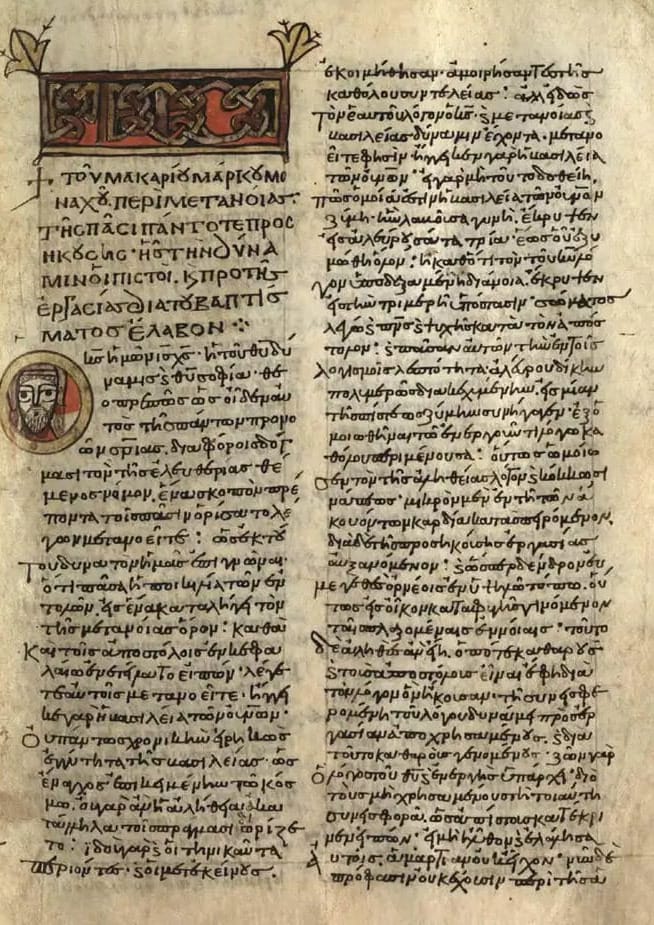
For which group is your textbook tailored? Middle schoolers, high schoolers or college students?
That is a great question. I wrote it with college students in mind. However, a high-schooler could use it. Most of the students that I teach at highschool are capable of following it, with a good guide. I am not sure you could hand it to a fifteen- or sixteen-year-old and say, “Here you go!”
Are there any textbook or programs suited for younger students, middle schoolers?
The old standard was Henle Latin. It was developed by a Jesuit at Loyola Preparatory School. It is in four volumes and is very thorough. It has an angle towards both ecclesiastical and classical Latin. It has a tonne of exercises. Someone told me the other day that it is one of his favourite books for teaching Latin.
"There is no one who is ignorant of the fact that this age is less favourable to the study of Latin, when men today are more interested in science and technology and consider the vernacular to be more expressive. Nevertheless we do not wish to ignore the important documents of our predecessors who time and again emphasised the importance of Latin even in this age, especially in so far as the Church is concerned. For Latin is in a way a universal language cutting across national boundaries and as such the Apostolic See still constantly makes use of it in letters and acts addressed to the whole Catholic family."
St. John Paul II
Does your textbook equip the student to read classical Latin authors such as Cicero, Virgil, Horace, Livy, and Tacitus?
That is a great question. The difference between so-called classical and ecclesiastical Latin is not as wide as people think. That said, the vocabulary in my book is geared more towards ecclesiastical Latin. It used to be that, after a couple of years of studying a Latin grammar, you were taught to read Caesar's Gallic Wars. So, you learnt a lot of military vocabulary. My book does not have that much military vocabulary in the book, so it might be hard to jump into Caesar's Gallic Wars after studying it. Similarly, there is less of the legal language of, say, Cicero. However, I teach all the standard structures that are needed to read Tacitus or Livy. But the question might just be sort of genre. What are the kinds of things that the person is talking about?
Choosing a textbook depends on the domain in which you are trying to read. The beauty is that, no matter the register in which you learn the structures of Latin, you can, with a bit of work, learn the vocabulary for anything from Tacitus and Livy all the way up to Aquinas and Erasmus.
Learning a language can be difficult and boring, especially in the early stages. What advice do you have for disheartened students of Latin?
My advice would be to use a book where you read a lot. I have studied a bit of second-language acquisition theory. I compared my progress in French with that in Latin. I progressed in French very quickly, partly because I was exposed to it at the appropriate level, with lots of repetition. One of the difficulties with learning a classical language is that people spend a year studying the grammar and then want to jump into Augustine’s City of God or Cicero’s Catiline Orations. Reading Cicero after a year of grammar is like trying to read Shakespeare after studying English grammar for a year. It is a big jump. I still have a hard time understanding Shakespeare.
My book, therefore, offers extensive amounts of reading at every level so that the students can feel encouraged and find somethings that reminds them of what they have learnt. In second language acquisition theory, we call this extensive reading. Reading extensively at your level gives you the confidence that you are learning something.
My book is also keyed towards Ørberg's Familia Romana. If you read a chapter in my book, you should be able to read the parallel chapter in Familia Romana.
It is also important to have proper expectations. It is really hard to go from one semester of Latin to reading, say, the Vulgate, even though the Vulgate is fairly easy Latin. It took me two years of French before I could read Le Petit Prince, a children's book.
You could also read Asterisk or Harry Potter, which are available in Latin.
That's true. They are on the shelf behind me.
On the one hand, you have selected Latin texts by Christian authors. On the other hand, with the possible exception of Augustine, you have picked ones whose vocabulary and grammar are not too challenging. Are these the criteria behind your shortlist?
Correct. I was looking for works written in real Latin, by persons who were fluent Latin speakers, yet would also be spiritually enriching.
The Imitation of Christ and St. Thomas's Commentary on the Lord's Prayer are fairly easy in terms of the vocabulary and grammar. However, I also wanted to recommend works out of which you get something: works that help you practice your Latin but also get make you think about matters such as the imitation of Christ or, as St. Thomas does in his commentary, on desire.
Are there students’ editions of the works you have recommended? If not, which printed or online dictionary do you recommend for looking up a word whose meaning the reader does not know?
There is no comprehensive Latin lexicon for medieval Latin, though there is Roy DeFerrari’s A Latin-English Dictionary of St. Thomas Aquinas.
A good online resource is Whittaker's Words. It also parses the word. Cassell’s Standard Latin Dictionary is the easiest one to get your their hands on.
For the works of Augustine, I recommend augustinus.it. I suggest that you read his sermons, which are fairly easy to read. They are listed by the liturgical calendar in one section. In particular, I recommend the homilies for Christmas..
Is there a website in which the other four works are available?
The Latin Library website has a Christian Latin section. There you can find St. Thomas’s Commentary on the Our Father, Thomas À Kempis, and Lhomond’s Epitome Historiae Sacrae. Robert Carfagni has issued a good print edition of this last work with the Academy of Vivarium Novum.
"Knowing Latin is not so great a distinction as not knowing it is shameful."
"non enim tam praeclarum est scire Latine quam turpe nescire."
Cicero, Brutus 140

1.
First up is the Vulgate, the Latin translation of the Bible, curated by St. Jerome, that is used in the Roman Rite and the Latin text of magisterial documents. Why have you selected it first?
Jerome's Vulgate is a standard for understanding Western theology. Not only did theologians refer to it. It has been highly influential on the English translations of the Bible as well. It has influenced centuries of scholars. For many, it was their first encounter with the Scripture. Hence, it is useful to read it.
Generally, the narrative books are the easiest for beginners to read. Mark or John are good places to begin. The Gospels are much easier than the epistles. The Psalms are beautiful but, as works of poetry, they can be hard.
How do you suggest that readers work through the Vulgate? Reading it from page to page or, say, following the Mass readings of the day in Latin?
My colleague, Larry Feingold, goes through the Breviary every day in Latin and Greek with students. That could be a very good way to read the Vulgate. I like to read through a whole book However, by following the lectionary of the Liturgy of the Hours, you are reading the Bible along with the Church. That is a a great spiritual practice.
2.
Next up is a classic work of spirituality and the devotio moderna: The Imitation of Christ by Thomas À Kempis. Why have you selected it?I had not read it in Latin for a while but did so when writing my textbook. Another Latin teacher recommended it and I found that the language was fairly simple. It is a fairly readable classic and it's fairly readable.
I took some of the real Latin sentences for my textbook from Thomas À Kempis. So, my textbooks will exposed you a little to five works that I have picked here.
"Yet in today’s culture, the danger of an increasingly superficial knowledge of Latin may be noted in the context of the widespread weakening of humanistic studies. This is also a risk in the context of the philosophical and theological studies of future priests. Moreover in our own world, in which science and technology play such an important role, there is a renewed interest in the Latin culture and language and not only on those continents whose culture is rooted in the Greco-Roman heritage. This attention seems all the more meaningful since it not only involves academic and institutional sectors but also concerns young people and scholars from very different nations and traditions."
Benedict XVI
3.
Third is St. Thomas Aquinas’s conferences or sermons on the Our Father (Collationes in orationem dominicam). Have you chosen this work of St. Thomas’s because it is brief and fairly non-technical?
Yes, to give the reader exposure to Thomas. The Summa theologiae is a long, expansive work. However, reading a short work gives a sense of accomplishment. Moreover, this is a commentary on a very familiar prayer. That makes it easier to read. You already have an idea of what Thomas is saying. Some teachers may say that there is a place for reading something about which you do not know anything at all. However, I aim to boost confidence. Confidence can build students up and keep them in the game. It can keep them working. It is invaluable in studying a hard language such as Latin.
"One must also point out that the sources of the ecclesiastical disciplines are for the most part written in Latin. But what must be said of the outstanding works of the Fathers and other writers of importance who use this tongue? One ought not to be considered a master of learning who does not understand the language of these writers, but who must rely only on translations, if any exist. These rarely bring out the full meaning of the original text. For this reason the Second Vatican Council rightly advised students of sacred studies that 'they should acquire a command of Latin which will enable them to understand and use the source material of so many sciences, and the documents of the Church as well' "
St. John Paul II
4.
Arguably, St. Augustine is the greatest of Christian Latin authors, both as a stylist and a theologian. Moreover, he was a professional rhetor before he converted and was ordained. Indeed, in your study of St. Augustine’s theology of preaching, The Way of Humility, you argue that his sermons are his most emblematic writings. Is this why you have recommended a selection of St. Augustine’s sermons rather than the Confessions?
The Confessions is harder than his sermons. It is a more rhetorical work. The sermons are more accessible for the beginner.
Peter Brown speaks of how St. Augustine’s “unaffected ‘Christian’ style was in reality a simplicity achieved at the other side of vast sophistication.” If course, Augustine, of course had received a great rhetorical education. His language is not entirely the simple language of a farmer or a fisherman in rural North Africa. However, there is a simplicity to it and to his preaching, as he is addressing a wide audience, but there is a charm to it. The rhetorician is still there, even though the grammar is simple enough. About 85-90% of Augustine's audience was illiterate.
What are the main findings of your study of St. Augustine’s preaching?Augustine emphasizes humility as the antidote to pride, which for him is the chief sin. He talks about this often in his various treatises. However, I wondered, what did it look like for Augustine to preach about humility?
If Augustine were to say, “Look at how humble I am,” we might consider him arrogant. How, then, did Augustine convey humility with more than just his words.
In his On Christian Teaching (De doctrina christiana), he says that one’s manner of living can be a fulness of eloquence or speaking (copia dicendi forma vivendi). The way that one lives can speak louder than words.
I inquired whether Augustine could show humility without calling attention to it. He does.
To use one example, he often speaks about the Sunday liturgy as the school of Christ and how he used to be a teacher of rhetoric. He explains that, as a teacher of rhetoric, it was his job to judge the quality of a student’s speech, whereas now he is no longer the teacher of the people. There's only one teacher: Christ. Rather, Augustine says, the faithful get to judge him and whether he is speaking well of Christ. He thereby demonstrates his humility in the way that he preaches. He preaches in a way that demonstrates that he was humble. Even his use of language and choice of speech that is suited to his audience is a form of humility. He does not show off how much he knows. Instead, he communicates with the people. It is better, he notes, that the grammarians reprimand him than the people do not understand him (melius est reprehendant nos grammatici, quam non intellegant populi). For someone who could speak at the highest register, this is an indication of humility.
5.
Finally, you have recommended the Epitome historiae sacrae (Summary of Sacred History) by the eighteenth-century French priest, Charles François Lhomond. Have you chosen this summary of the events narrated in the Old Testament as an aid to reading the Vulgate?Lhomond’s Latin is more classical than that of the Vulgate and can help one learn some different structures. Moreover, each section is a little story. In learning a language—and I am studying Syriac right now— I to read in it for thirty minutes a day. Lhomond’s book consists of little chunks from Sacred Scripture. In twenty or thirty minutes, you can get through a whole story in his book. That will give you a sense of accomplishment and help you recall some events in salvation history.