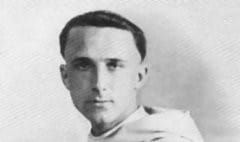
Réginald Garrigou-Lagrange OP (1877-1964) was a French Dominican priest and a leading Catholic theologian during the first half of the twentieth-century. Though not particularly devout during his youth, he had a conversion during his studies to become a doctor and entered the Order of Preachers. During his early years as a priest and professor he witnessed the anti-clerical laws in France and the modernist crisis within the Catholic Church. His superiors assigned him to teach at the Dominican house of studies in Le Saulchoir, Belgium, and then at the Pontifical University of St. Thomas, where he would remain for the rest of his life. Committed to the thought of St. Thomas Aquinas and the neo-scholastic method, he wrote extensively on a wide range of theological subjects and was known for his trenchant opposition to modernism and certain aspects of the so-called nouvelle théologie. Perhaps he is best remembered, however, for his widely read writings on the spiritual life. In them, he combined the teachings and guidance of St. Thomas Aquinas with those of St. John of the Cross. St. John Paul II was one of his students and he has continued to marshal admirers, such as the philosopher Alasdair MacIntyre.
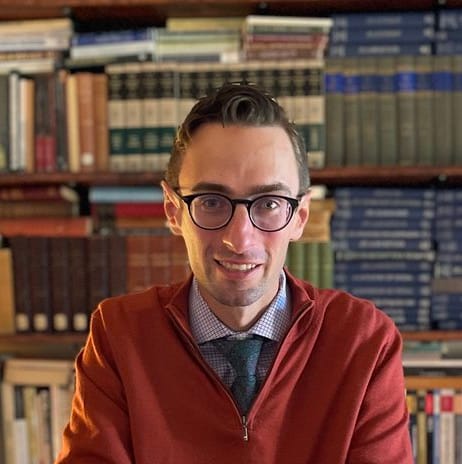
In this interview, Matthew Minerd discusses Garrigou-Lagrange and recommends some of his writings.
Matthew Minerd is a Ruthenian Catholic, husband, father, and a professor of philosophy and moral theology at Ss. Cyril and Methodius Byzantine Catholic Seminary in Pittsburgh, PA. His academic work has appeared in the journals Nova et Vetera, The American Catholic Philosophical Quarterly, Saint Anselm Journal, Lex Naturalis, Downside Review, The Review of Metaphysics, and Maritain Studies, as well as in volumes published by the American Maritain Association through the Catholic University of America Press. He has served as author, translator, and/or editor for volumes published by The Catholic University of America Press, Emmaus Academic, Cluny Media, and Ascension Press. He has published academic articles and book chapters related to Maritain and is the Secretary of the American Maritain Association. For more information on his work, visit matthewminerd.com
- Knowing the Love of God
by Réginald Garrigou-Lagrange OP - Three Conversions in the Spiritual Life
by Réginald Garrigou-Lagrange OP - Providence: God's Loving Care for Men and the Need for Confidence in Almighty God
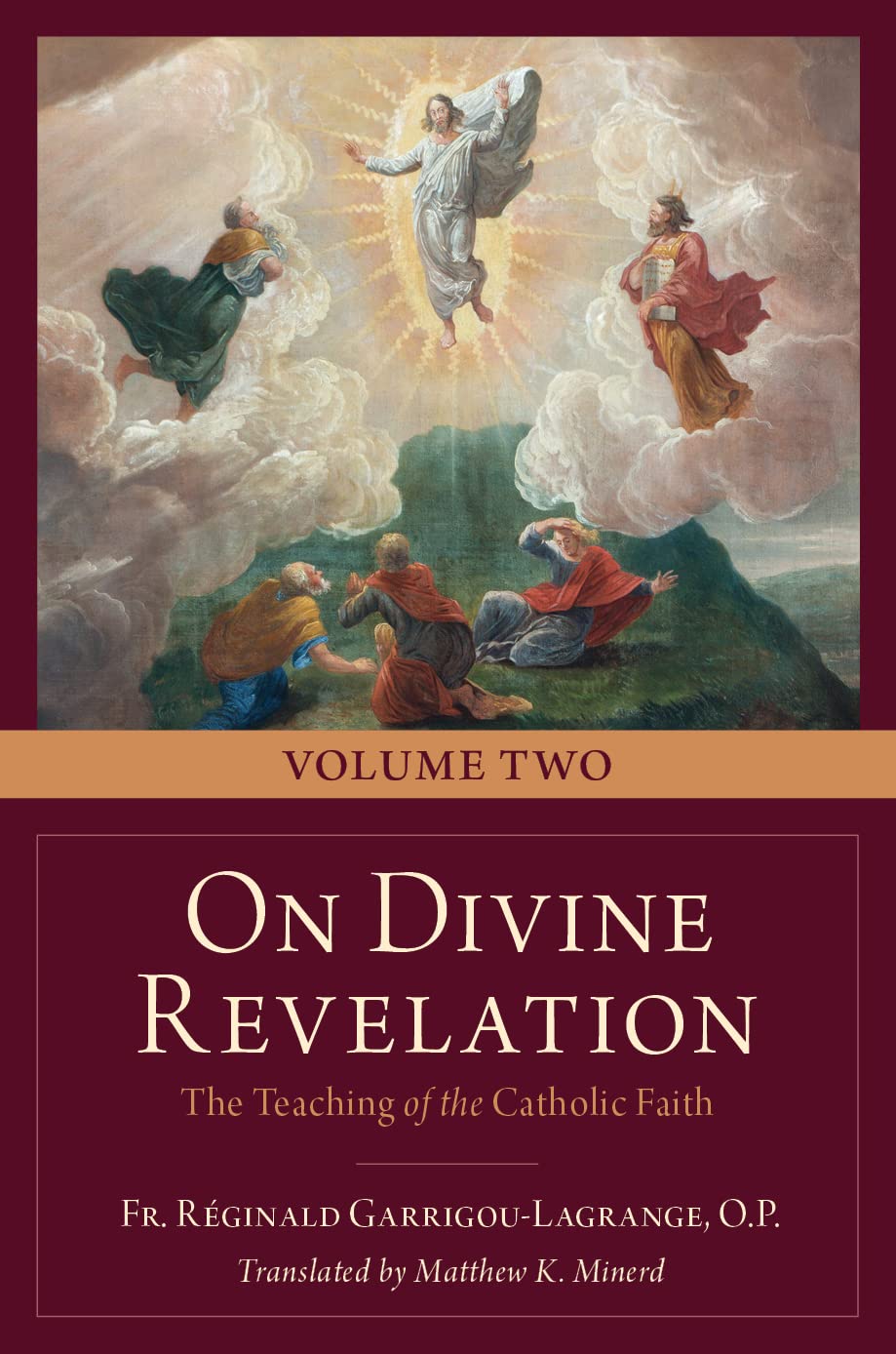
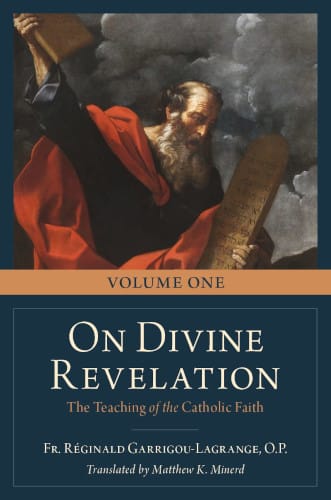
by Réginald Garrigou-Lagrange OP - On Divine Revelation: The Teaching of the Catholic Faith (vol. 1) (vol. 2)
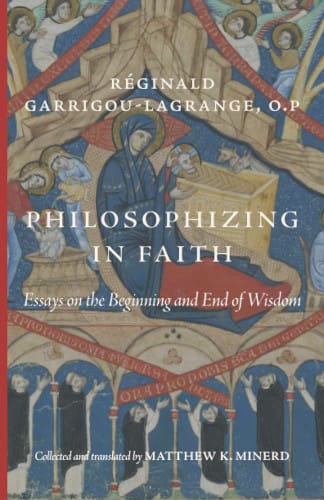
by Réginald Garrigou-Lagrange OP - Philosophizing in Faith: Essays on the Beginning and End of Wisdom
by Réginald Garrigou-Lagrange OP
What were the main events in the life of Réginald Garrigou-Lagrange?
He lived from 1877 to 1964 and so straddles the period between Vatican I and Vatican II.
He went through his training in a Dominican studium around the turn of the century and obtained his lectorate there. Then, he studied at the Sorbonne for several years.
He was at the Sorbonne at the same time as Jacques Maritain. He recalled how this young follower of the vitalist philosopher, Henri Bergson, talked about Bergson. He thought that Maritain, with this big shock of hair, was a Slav.
Due to the exigencies of priestly life, he did not complete a degree at the Sorbonne. He was called to teach philosophy at the Dominican house of studies in Le Saulchoir. Within a year-and-a-half, there was a staffing issue, and he had to switch over and fill the position as professor of dogmatic theology.
During that time, he wrote several texts. This coincided with the modernist crisis and the aftermath of the encyclical Pascendi Dominici gregis. These texts put him on the radar of the Master General, who transferred him to Rome to teach at the Pontifical University of St. Thomas Aquinas (Angelicum). He remained there for almost fifty years.
In his teaching, he would often read Billuart, one of the later commentators, and then explicate the text of Thomas, article by article.
He taught a course on fundamental theology, especially on Revelation, and a famous course on spiritual theology. The latter was very well attended, with the main hall of the Angelicum full, even during the 1950s, when he was an old man. He also taught a philosophy class on metaphysics. By all accounts, he was well-received as a lecturer.
He was involved in the controversies that followed immediately after the modernist crisis. He was a consultor for the Sacred Congregation of the Holy Office (now the Dicastery for the Doctrine of the Faith) and Congregation for Rites. He was involved as a consultor, for example, in the naming of St. John of the Cross a doctor of the Church. Then, during the 1940s, he was involved in the so-called nouvelle théologie crisis, a controversy over the nature of theological method.
He also directed a host of dissertations. Each year, he would direct four or five licentiate or doctoral theses, although these were shorter back then than they are now.
In the early 60s, his faculties began to decline. Apparently, he was aware of this happening and, by all accounts, accepted it in a very holy manner.
" His Thomism did not aim to situate Aquinas historically, to understand the context of his thought, but to engage new questions that have arisen since the thirteenth-century."
You have translated several of Garrigou-Lagrange’s works and collections of his articles. What drew you to this passion project?
It happened by accident. My dissertation director, Timothy Noone, whom I hold in great veneration, did not always answer emails quickly. I had sent him two chapters of my dissertation and, while waiting for a response, started to read Garrigou-Lagrange’s Le sens du mystère et le clair-obsur intellectuel (English edition). It struck me deeply.
I had been influenced by Maritain and was aware that the two had been very close to each other. Even amid their significant differences over politics, Maritain retained a veneration for Garrigou-Lagrange. However, I had never realized how indebted Maritain was to him. Even Yves Simon and my own quasi-teacher, John Deely, were indebted to that line of Thomism. Moreover, the spirit of the book did not quite match what I heard about Garrigou-Lagrange as a rigid, retrograde conservative who taught in Rome and was always on the hunt for heresy.
I became interested in him and started to translate the book. The other translations have followed from that decision, which occurred by accident.
 Five Books for Catholics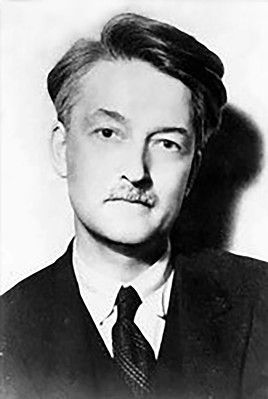
Over the last couple of decades two Dominicans have written intellectual biographies of Garrigou-Lagrange. One is Richard Peddicord’s The Sacred Monster of Thomism. The other is Aidan Nichols’s Reason with Piety: Garrigou-Lagrange in the Service of Catholic Thought. Are these good studies of his life and thought?
Overall, they are good introductions, though there are always things missing in any introduction.
A full biography is still to be written. Maybe the dust with some of the controversies he got involved in in the 1940s needs to settle. The bad feeling toward him is finally dissipating.
Peddicord gives a general overview of how Garrigou-Lagrange became a Dominican, the influence of his teacher, Ambroise Gardeil OP, and some of the controversies he was involved in, such as those with Maritain and with Marie-Dominique Chenu OP.
He had wanted Chenu, his student, to be his protege at the Angelicum. However, Chenu was more interested in historical studies and reworking studies at the Salchoir. Eventually, this put them at loggerheads. Etienne Fouilloux’s recently translated Le Saulchoir en procès (Le Saulchoir on Trial) tells that story.
Nichols’s book is more of an intellectual biography.
Though many have supposed Garrigou-Lagrange outdated, there has been a revival of interest in his works over the last couple of decades. Does he merit this renewed interest if he is outdated?
I am convinced that he does. This is not because he is an old friend and master, from whom I have learnt so much and whom I wish to defend.
Temperamentally, as even Maritain noted, Garrigou-Lagrange was very much a Roman professor. In many ways, he was detached from the flow of the world. This coheres with the conservative side of his temperament.
Though more exploratory when younger, he also evinced a living Thomism, much in the manner of Maritain, Charles Journet, or his younger colleagues at the Revue Thomiste during the forties, such as Michel Labourdette, Marie-Joseph Nicolas, and Jean-Hervé Nicolas. His Thomism did not aim to situate Aquinas historically, to understand the context of his thought, but to engage new questions that have arisen since the thirteenth-century. Engaging with the writings of the later Thomists inculcates such a habit of mind.
He differs though from Maritain and Journet in that he is more concerned with defending the positions of the Dominican school. This, combined with his conservative temperament and involvement in the modernist crisis, do make him a little dated. However, every writer from the past is dated in that sense.
Still, there is a living Thomism in his writings. This comes across whenever, as is mostly the case, he is not simply on the defensive. He engages questions. For example, his On Divine Revelation is not a mere manual. All of a sudden, over and over throughout the volumes, in a footnote that spans a page and a half, he will think through a problem he has been reading about. This inculcates the muscle memory for carrying out an engaged Thomism, like that of Maritain.
There is the historical camp of Thomists, such as Étienne Gilson, and the camp of living Thomism that is still tapped into the older scholastic debates. Garrigou-Lagrange and Maritain belong to the latter.
"Maritain noted that his lack of engagement with political questions gave him less depth in them and made them his weakest area."
You have mentioned that Garrigou-Lagrange was conservative by temperament and outlook. He supported what various right-wing figures: Action Francaise, Franco during the Spanish Civil War, and Pétain's Vichy regime. As heads of state, Franco and Pétain each committed morally reproachable actions. Can we put his support for these right-wing figures down to questionable theses in his political thought?
That is a good question. In his political thought, he does not come across in the same way as, say, Cardinal Billot, who taught at the Gregorianum. There is a political rigidity to Billot’s critiques of liberalism or conception of the proper relations between Church and state.
Nevertheless, French monarchism does influence Garrigou-Lagrange. Occasionally, it comes through in his writings. For example, he argues that when divine Revelation is proposed to the state, the state must basically accept it. He is a creature of his time and the nineteenth-century reaction to liberalism. He is influenced by papal interventions against Lammenais and follows the papal encyclicals that span from Leo XIII to Pius XI.
That said, not everyone that read that magisterium supported Franco. Nor have I ever come across a single anti-Semitic comment in his remarks on Pétain. His support of the Vichy regime was very much a Catholic reaction against the French Revolution and the Republic (especially the turn-of-the-century anti-clericalism). Many French Catholics supported Pétain for a while, until they realized what was going on. This does not exonerate Garrigou-Lagrange, but it does situate him in the historical context.
Maritain noted that his lack of engagement with political questions gave him less depth in them and made them his weakest area.
However, you get the sense that his support for such figures does not follow from any principle, other than how political authority should respond to the rational credibility of the faith, once it has been proposed sufficiently.
Cardinal Billot turned over his red hat because he disagreed with Pius XI’s condemnation of Action Française. Some say that he did so to save face and did not want to submit to Pius XI on this matter. Garrigou-Lagrange, on the other hand, submitted, albeit with incredible pain. This comes through in one of his essays. He critiques Action Française in the most indirect way, without mentioning it by name. It was difficult for him to do so because, from what I understand, his sister was very involved in it.
Nevertheless, I do not detect any fascist stream in him but simply poor political decisions, particularly during the occupation of France. His support of the Vichy regime was an overreaction to the experience of the anti-clericalism of the beginning of the century, but he was not alone in that. Many Catholics were still licking their wounds from the anti-clerical measures.
Many do not know how radical and severe the anti-clerical measures were. Congregations were turned out of the country. The whole school system was taken away from the Church and replaced by that of a lay state.
Garrigou-Lagrange did his formation in Belgium because the Dominicans had been pushed out of France and could not have a house of studies there.
Garrigou-Lagrange was a disciple of St. Thomas and, as you have noticed, belongs to a certain tradition of Thomism. Are there deficiencies in Garrigou-Lagrange's reading and application of St. Thomas' thought?
Occasionally, the later baroque thinkers addressed questions that were perhaps misplaced. In addressing the nature of theology, John of St. Thomas, for example, displaces some of St. Thomas’s more classical lines because of the way in which he responds to Suárez. The neo-scholastics, therefore, inherit a poorly posed question and this plays out sometimes in some of their positions.
This is not a universal phenomenon, and much wisdom can be drawn from the Baroque debates. However, it does create the genre of hyper-commentary, even though the neo-scholastic tradition is not just commenting. Its format for the disputation is different from that of the baroque period and there had been developments within the magisterium. Nevertheless, St. Thomas is still the base text of the genre.
At any rate, the “neo-scholastics” do risk talking about the doctrines of certain people solely within an interpretive framework wholly structured by scholastic discussions and debates. They start asking questions that are not about the data or the reality in question but because these are the standard questions that are asked. This closes the conversation and the way in which reality can manifest itself to you.
This may have been the reason why, as he got older, Garrigou-Lagrange sometimes found it difficult to read others sympathetically. He was more charitable than people make him out to be and never comes across as nasty. However, he sometimes does not give others a sympathetic reading because they are not posing the question in the same way as the neo-scholastics.
The neo-scholastics were also insensitive to certain influences on Thomas. By stressing Aristotelianism, which is essential to Thomas, they ended up crowding out all the non-Aristotelian elements, such as Neo-Platonism. They either reinterpreted those elements in Aristotelian terms or did not give them their due. Similarly, they did not always give due importance to St. Thomas’s commentaries on Sacred Scripture.
Garrigou-Lagrange’s main teacher was another important early-twentieth-century Dominican theologian, Ambroise Gardeil. He is remembered mainly for his contributions to fundamental and spiritual theology. How did Gardeil influence Garrigou-Lagrange?
First as his professor but probably most profoundly with his style of thought, which runs throughout Garrigou-Lagrange’s work.
Garrigou-Lagrange aimed to mimic Gardeil's propensity to find the essential principles operative in a given question. For example, in a set of articles, St. Thomas might all of sudden lay out a principle that guides the whole inquiry and from which everything else follows nice and clearly. The theologian's task is to call attention to those main principles rather than get entangled in every nook and cranny of a debate.
In an encomium following Gardeil’s passing, Garrigou-Lagrange compared these principles to mountain peaks on the ridge: once you see them, the rest of the ridge makes sense.
Garrigou-Lagrange is concerned with theology as a form of discursive wisdom. That is the main lesson he receives from Gardeil.
There was also some crosspollination on the questions of credibility and the nature of apologetics—subjects on which they both wrote—even though Gardeil may not have always agreed at the time with his student on the nature of theological conclusions and their definability as De fide truths.
In one of his books on mystical theology, Garrigou-Lagrange, who generally cites his master very warmly, cites a criticism of him, without making much of it, and explains the position of the commentators.
Interestingly, Gardeil was the inspiration for both Garrigou-Lagrange and Chenu. Chenu saw in Gardeil’s work on theological sources opportunities for the renewal of positive or historical theology, though he may have painted Gardeil in his own light. This is the line he wished to pursue.
This group of Dominicans is an interesting crew. It comes downstream from Gardeil and his teachers, such as Marie-Benoît Schwalm.
Garrigou-Lagrange began his career under Pius X and in the midst of the modernist crisis. Some might even claim that anti-modernism is one of the main concerns of Garrigou-Lagrange’s writings. What did Garrigou-Lagrange mean by ‘modernism’ and did such a trend exist?
Several debates were ongoing at the time of the modernist crisis. One was on biblical exegesis and the positions of Alfred Loisy. Another was on the mind's capacity to know God with demonstrative and scientific certainty and not simply with the probabilistic assertion of a first cause. This was the issue that Garrigou-Lagrange addresses whenever he moves into a philosophical mode. This preamble for the possibility of faith was incredibly important for him.
Hence, he entered into debates over epistemology and metaphysics with certain figures. He was motivated by the condemnation of these positions in Pascendi Dominici gregis and the syllabus attached to it, Lamentabili sane exitu. He was concerned with natural theology: metaphysical knowledge of God as the first cause of being.
He is also most known for his views on dogmatic development. Although some believe that it figures everywhere in his work, it only featured in a strong way at the beginning and end of his career.
Regardless of whether his critique was aimed directly at George Tyrrell, Sabatier, or someone else, he opposed their general theory of dogma and doctrinal development. This theory construes faith as a religious sentiment that is present most powerfully in Catholicism but which all humans have, insofar as God is moving each soul to know him. It holds that dogma and, in some authors, dogmatic development are simply a mythical symbolism that tries to put God’s ineffable mystery into words. Wherever Garrigou-Lagrange gets a scent of such a theory, he recalls how it was condemned explicitly in Pascendi.
Early in his career, he wrote a book that, in the English translation, is entitled Thomistic Common Sense. The word ‘Thomistic’ should not be in the title because the book is about common sense: pre-philosophical rationality. Moreover, it is not just a defence of a certain epistemology. It is about dogmatic development. He addresses this question on account of the modernist crisis.
In the 30s, he takes up the issue again because he was vexed by Maurice Blondel, with whom he exchanged many warm letters, and finds himself a loggerheads with him. However, he had always critiqued Blondel in public. His opposition to the vitalistic theory of dogmatic development—which sees faith as a nameless sense of the mystery of God and his Revelation—is what led to the nouvelle théologie crisis between 1946 and 1949/1950 and to Humani generis. (To be clear, this theory is only more or less implicit in certain figures, and it is not point-for-point something that can be directly taken from Blondel, though certain epigones of his might have fashioned it from a combination of Kantianism, Bergsonianism, Hegelianism, and Blondellianism.)
A recently published collection, The Thomistic Response to the Nouvelle Théologie, contains translations by you and Dr. Jon Kirwan, gathering essays by several Thomists, mainly from the 1940s, on what was called the nouvelle théologie. The second part of the volume contains various contributions by Garrigou-Lagrange, including his much cited article “Where is the New Theology Headed?” (« La nouvelle théologie, où va-t-elle? »). Though Garrigou-Lagrange did not coin the name, nouvelle théologie, he was the one to make it stick. Was there such a movement?
A part of me could say that there was no such movement, and another part would say, in jest, that its members did defend themselves as a group.
During the 1930s, a series of questions about dogma and Revelation had been brewing. From 1937 onward, they made the Holy Office of the Index itchy. A privately circulated work by Chenu and a book by Louis Charlier on the nature of theological science were put on the index. The official arms of Rome and the universities were on edge about this.
The best account of what actually transpired is given in one of the chapters in the book. It is by Fr. Michel Labourdette OP. He was the editor of the Revue Thomiste at the time and a generation younger than Garrigou-Lagrange.
Doctrinally, Garrigou-Lagrange and his younger confreres at the Revue Thomiste in Toulouse were in complete agreement. Maritain, who was then the ambassador for France before the Holy See, also acted as an ambassador between Garrigou-Lagrange and the younger Dominicans. He was trying to soften the debate.
The Jesuits had begun to publish their important series of patristic and early post-patristic writings: Sources chrétiennes. This series included a translation of those writings with notes. The notes of the early volumes had an anti-scholastic bias. On top of this, an associated editorial staff had begun another series: Théologie. Early volumes included Hans Urs von Balthasar’s study on Maximus the Confessor, Jean Daniélou’s on Gregory of Nyssa, and Henri de Lubac’s on Origen and his book Corpus Mysticum, an important study on the relationship between the Eucharist and the Church.
Reading these books, Fr. Labourdette noted that they shared an underlying anti-scholasticism. Hence, when Fr. Jean Daniélou published in 1946 an article on the new directions within theology, Labourdette reviewed it with an article of his own on theology and its sources. His main concern was with the anti-scholastic bias that was indeed there to some extent. Furthermore, one of the texts in the Théologie series—Fr. Henri Bouillard’s Conversion and Grace in St. Thomas Aquinas, caught the eye of Labourdette and, above all, Garrigou-Lagrange. In the final chapter, Bouillard asserted that a theology that is not up to date is effectively a dead theology. That line bothered Garrigou-Lagrange as much as Bouillard’s specific account of doctrinal development.
For Bouillard, the truths of the faith are pre-cognitional, pre-notional assertions that the mind forms. Though perceived, they are not conceptually articulable. Over the course of history, the Church and its theologians settle on certain historically situated concepts to express that assertion. For a Thomist, Bouillard’s theory of doctrinal development separates our judgments from their concepts: an assertion from its actual objective content. That put Garrigou-Lagrange’s teeth on edge and precipitated the debate.
Garrigou-Lagrange did address some other issues, such as the questions surrounding nature and grace that had been raised by Henri de Lubac’s Surnaturel. It is clear from the documentary evidence, however, that as a consultor of the Holy Office, Garrigou-Lagrange felt that the general concerns about Sources chrétiennes and Théologie could not be addressed. He did believe though that Bouillard should be condemned for reviving the modernist theory of dogmatic development.
The affair unfolded over four or five years and became very heated. All the Jesuits involved (de Lubac, Daniélou, Fessard, Bouillard, and some others) were removed from their teaching positions and some of their books removed from the Jesuit house of studies. This was done at the initiative of the Jesuits themselves. Then, Pius XII promulgated his encyclical Humani generis in the aftermath.
Some have claimed Garrigou-Lagrange was the ghostwriter of Humani generis but I am not convinced that he was. The encyclical uses certain terms and expressions that Garrigou-Lagrange would not have. It talks of “the principle of sufficient reason,” for instance, whereas he always used a different Latin (and cognate French) expression to refer to that principle. The editor or drafter is someone else. Garrigou-Lagrange was, nonetheless, involved with the Holy Office in the run-up to Humani generis, which quelched and drove underground the questions about theological methodology that had been brewing all the way back to the nineteenth century and during the first half of the twentieth century. These questions resurfaced at Vatican II.
The nouvelle théologie debate set the immediate context for Vatican II and the mind of the people who influenced it most. The more conservative members of that group were progressive in a certain regard, but conservative in others. Eventually, they founded the journal Communio, whose contributors see themselves as their heirs.
Following Vatican II, Garrigou-Lagrange was unjustly associated with the traditionalist movement in the West, though I can see why this happened. His article, “Where is the New Theology Headed?”, became part of the mythology of Western traditionalism. However, when traditionalists speak of him, they do not tend to focus on his works on spirituality or natural theology. In their mind, that article was the flipside of the nouvelle théologie.
Dr. Kirwan and I wanted to name this collection of essays Dialogue Delayed as an invitation to revisit this debate eighty years later with a much more even keel and have an honest conversation about each side, warts and all. I admit that there were certain limitations of the scholastic side. They were closed on various matters of methodology. This is obvious to me as a Byzantine Catholic.
Nowadays, those associated with the nouvelle théologie are normally called ressourcement theologians. Could you summarise and assess their main criticism of Garrigou-Lagrange or the neo-scholasticism which he embodied?
The authors who write in the neo-scholastic tradition that emerged from Leo XIII’s revival of that tradition are not characterised by a deep engagement with the Fathers of the Church or the development of dogmas. They are more concerned with appropriating St. Thomas and appropriating things to the mind of Thomas. The way they draw on Scripture often has the feel of proof texting rather than an engagement with the soul of theology. There is also a certain lack of engagement with the modern world and thought. Any engagement there is, tends to be critical. This is, at least, a very broad-brush interpretation of some real weaknesses in the movement as an institutionalized whole. Many exceptions could be cited, of course.
The proponents of the nouvelle théologie saw these deficiencies in scholasticism. They advocated instead a return to the sources, one that does not sound triumphalistic; the incorporation of all the theological loci; a critical yet thoughtful and charitable engagement with modernity.
To some degree, their critique was accurate.
Maritain, on the other hand, was different from Garrigou-Lagrance and the Roman theologians in one way. He was deeply engaged with contemporary questions.
Like most neo-scholastics, Garrigou-Lagrange put great stock by natural reason and the importance of proper philosophical analysis for theology. Moreover, like many neo-scholastics, he believed that theological heterodoxy generally resulted from a committal to erroneous philosophical analyses. With which philosophers did he engage critically or which ones were mainly in his cross-hairs?
In his books on natural theology, there is some critical engagement with classic texts of modern philosophy, such as the works of Descartes, Kant, Hegel, Herbert Spencer, or Henri Bergson. Nowadays, Bergson is considered a second-tier figure and known mainly on account of his influence on some phenomenologists, but at the turn of the century he was a very important and influential French vitalist.
Garrigou-Lagrange also engaged critically with the French Catholic philosopher Maurice Blondel. Blessed Antonio Rosmini also comes up now and again on account of his teaching on faith and reason, which was condemned during the nineteenth century.
1.
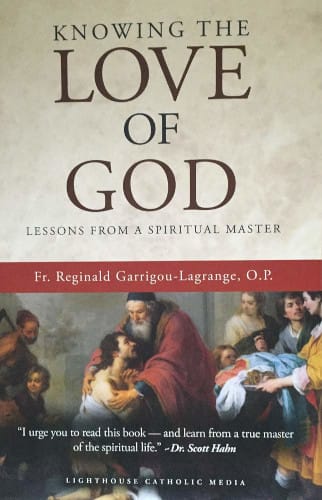
The first book you have selected is Knowing the Love of God, originally published as The Last Writings of Réginald Garrigou-Lagrange. This is an apt choice for a Dominican as it consists of his preaching at retreats. Why, though, does this book top your list?
To understand Garrigou-Lagrange’s labours, it is necessary to appreciate the centrality of his spiritual theology. This book is nice in this regard. It gathers his main principles in an accessible manner.
He worked on and off for the journal Vie spirituelle as either an editor, book reviewer, or writer. He wrote extensively for it and is more open-minded in his writings on spiritual theology.
In these articles in Vie spirituelle, he engages in all sorts of important debates. To name just one theme, he discusses with Maritain the way in which the vocabulary and conceptual structure of mystics relates to that of scientific theologians, and how the former has a certain pre-eminence.
Though the history of the matter is more complex, he is often presented as a source for Vatican II’s teaching on the universal call to holiness. In his day, there was a debate on where there was a universal call to mysticism. He was very much of the belief that all Christians—in virtue of the theological virtues—are called to the mystical life in some way.
This book, therefore, is a clear and accessible introduction to Garrigou-Lagrange. It does not dig into some of the aforementioned technical debates but does, however, present a synoptic view of his spiritual teaching.
"This book is also an entrée into a project that lay behind all of Garrigou-Lagrange’s teaching and writing on spiritual theology: reading St. Thomas Aquinas and St. John of the Cross together."
2.
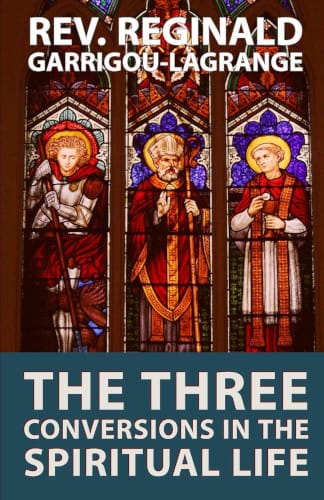
The next book, The Three Conversions in the Spiritual Life, summarises two larger works: Christian Perfection and Contemplation and The Three Ages of the Spiritual Life. It presents the path to Christian perfection as a series of three conversions: with the first we enter into the purgative life of beginners, the second into to the illuminative life of proficients, and third into the unitive way. Why have you selected this book rather than, say, The Three Ages of the Spiritual Life?
I was conflicted about this. I consulted a friend of mine, a Dominican priest. He confirmed that I should go with this book
The Three Ages of the Spiritual Life is based on writings that Garrigou-Lagrange produced over the course of twenty-five years. It can be hard to wrap one’s mind around this large work. I have recommended this shorter book instead because it can help the reader understand the principles and navigate the other subjects.
In speaking of the three ages of the development of the spiritual life, Garrigou-Lagrange is not writing as a scholastic, intent upon chopping the world up into categories. This distinction goes way back into the patristic period. Various patristic authors parsed the spiritual life into the purgative, illuminative, and unitive “ways.” These are stages or states of growth in grace, even though they are normally discussed in the context, not of the laity, but of contemplative religious life.
This book is also an entrée into a project that lay behind all of Garrigou-Lagrange’s teaching and writing on spiritual theology: reading St. Thomas Aquinas and St. John of the Cross together. By naming St. John of the Cross a Doctor of the Church, the magisterium of the day had given a stamp of approval to the Carmelite reception of the Christian mystical tradition.
This is both a of weakness and a strength of the book. On the one hand, it gives rise to ahistorical readings of these authors. It seeks to harmonise them a bit too much. At the same time, it develops insightfully what the later Thomist mystical theologians say about the gifts of the Holy Spirit and their apophatic nature: through a state of love and knowing that is non-knowing, the gifts lead to a deeper knowledge and love of God. St. John of the Cross, who had a scholastic formation, also developed this teaching.
 Five Books for Catholics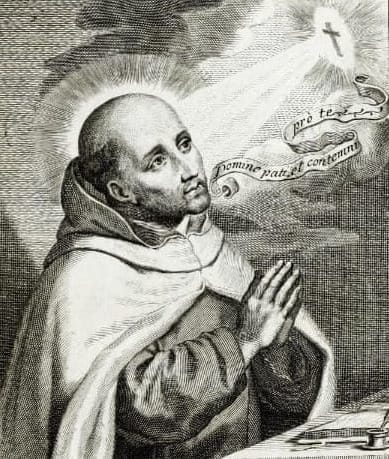
How is it that Thomist spiritual theology can be taken and deepened in the direction of St. John of the Cross and St. Teresa of Ávila? Garrigou-Lagrange goes through their teaching on the various dark nights of the soul and the way in which faith and charity are purified. Once familiar with this structure, the reader can pick up The Three Ages of the Spiritual Life.
In some ways, Garrigou-Lagrange’s two-volume work, The Love of God and the Cross of Jesus, is more cohesive. It was not written over the course of many years. However, it is also more technical.
Also important is Christian Perfection and Contemplation According to St. Thomas and St. John of the Cross.
In 100 pages, the more accessible The Three Conversions in the Spiritual Life gives the outline and the principles one needs to digest those other books.
"He takes the dogma, informed by the extensive philosophical apparatus that informs his theology, goes through Tradition, and considers the applications it has in the life of faith."
3.
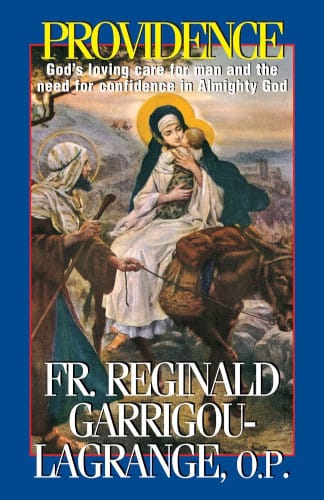
The next book, Providence: God's Loving Care for Men and the Need for Confidence in Almighty God, combines a systematic presentation of the biblical teaching of one of God’s attributes with spiritual guidance on trust in divine providence. Have you chosen this book because it combines the philosophical, biblical, dogmatic, and spiritual strands of his writings?
I chose it for that reason. When I asked my Dominican friend what he would choose, he recommended this one over the others. I thought he might have done so because Dominicans are always concerned about why they were right and the Jesuits wrong about providence and predestination. However, after further thought, I realised that it was for the reason you noted.
Garrigou-Lagrange proceeds in the same way in his book on Mariology or that on Christ and his love for us. He takes the dogma, informed by the extensive philosophical apparatus that informs his theology, goes through Tradition, and considers the applications it has in the life of faith.
He explicitly proposes to show how the moral and spiritual life are connected to dogmatic theology. We tend to associate this with Servais Pinckaers, who, interestingly, studied for the licentiate degree at the Angelicum when Garrigou-Lagrange was still teaching there.
 Five Books for Catholics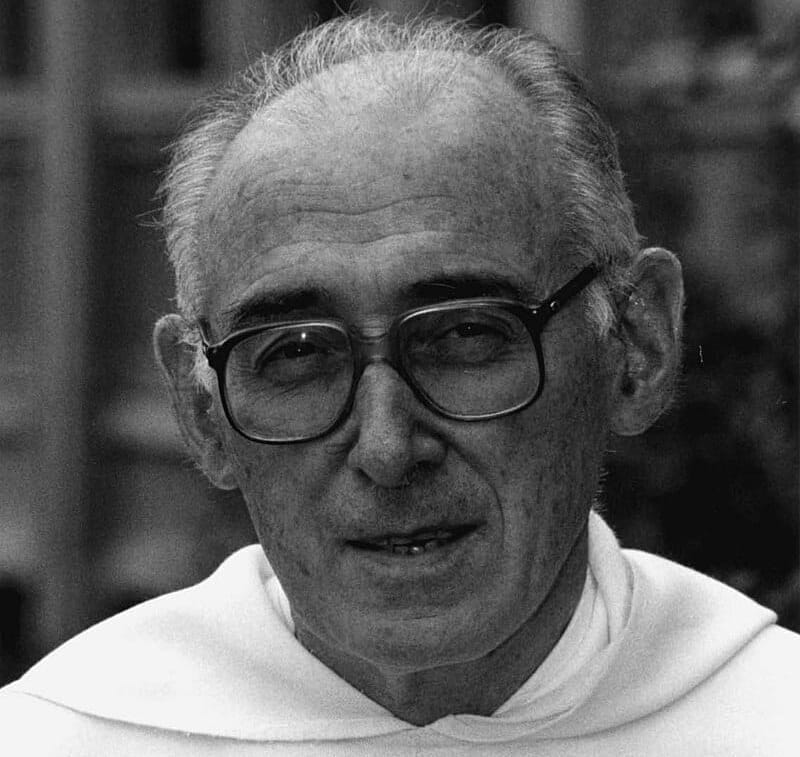
This approach may sound obvious to us. However, there was a real temptation to place dogmatics on one side and morals on the other. This temptation resulted from the way theology was taught in the universities back then and still is.
Garrigou-Lagrange, on the other hand, gives some idea of the unified nature of theological speculation on any topic.
Someone who has been bitten by the Augustinian bug of worrying about providence and whether God has not predestined one for salvation—the Calvinist misreading of Augustine—should read this book. It addresses the questions in which those who are obsessed with this topic get stuck.
4.
Fourth is Garrigou-Lagrange’s Revelation, which you have translated into English. Why is this work representative and still worth reading today?
This is a large two-volume work. It is dedicated to tracing the line that both divides and connects faith and reason.
The message of Christianity is completely supernatural. We can never discover it by the powers of reason alone. Nevertheless, it is also the most reasonable and fulfilling of all messages that can be presented to man for belief. Hence, the supernatural dogmas of faith have the property of rational credibility. It is completely reasonable to accept them.
This is the subject Garrigou-Lagrange is dealing with. It came to be called apologetics.
Nowadays, we tend associate apologetics with online videos that defend Marian dogmas against Protestant critiques or explain this or that truth about Christ or the Trinity. However, apologetics is a general defence of the rationality of faith, even though the faith goes infinitely beyond the domain of the rational.
The whole book is about a single syllogism on why faith is reasonable. During the book, Garrigou-Lagrange does not engage in extensive syllogistic analysis, but he does go into all the necessary topics. He discusses the nature of theology and critiques various errors about the powers of reason, such as empiricism, idealism, and ontologism. He then explains how our intellect is open to knowing God. This is where the whole question of the relationship between nature and grace comes in. Hence, he provides a long study of the various Thomistic positions on this matter.
He also addresses the nature of miracles and their demonstrative value: their power to prove the revealed message. He clearly follows Vatican I’s teaching on the life of the Church as a moral miracle. He goes through each of the motives of belief and applies them structurally to the Christian message and the history of the Church.
Of all his books, this is the one that comes closest to being a systematic manual. This is because it came most directly out of his teaching. Nonetheless, it is not a typical manual. It is not a summary of a subject. Rather it is a treatise. In the light of Vatican I, it adds to the first two questions of the Summa theologiae, on the nature of theology and the existence of God.
During the eighteenth and nineteenth centuries, the Church realised that it needed to answer the questions about faith and reason that had arisen with modernity. Those question became the subject of a treatise entitled ‘On Revelation,’ This book, therefore, is a primer on the relationship between faith and reason rather than Revelation in its entirety.
Written when Garrigou-Lagrange was still a young man, it is clearly the book of a thinking mind. It is full of gems and provides a great overview of all sorts of theological and philosophical positions.
How does Garrigou-Lagrange’s apologetics differ from the current prevalent trends in fundamental theology?
Some Catholic circles currently put a greater emphasis on immanentism: the way in which Revelation fulfils human aspirations. Garrigou-Lagrange is not insensitive to that but underplays it. His position on Christian philosophy that's related to certain Protestant literature and the question whether is Revelation necessary in some degree for reason to be constituted.
His position would currently be considered extrinsicist. He is concerned with showing that miracles and the life of the Church are the primary objective motives of credibility. He focuses on those elements rather than ground the credibility of Revelation in the way it fulfils our subjective aspirations. He does dedicate whole sections to the latter too and gives them their place, but with qualification.
Moreover, fundamental theology should discuss the sources of theological speculation. This treatise—classically referred to as de locis theologicis—is not treated in the text. Garrigou-Lagrange explicitly sets it aside on purpose, as it is a different topic, taught in a different seminary course. (Interestingly, his master, Ambroise Gardeil, is an important figure in the gradual re-engagement with the treatise De locis, as was Fr. Joachim-Joseph Berthier, on whom Garrigou-Lagrange and Gardeil both depend.)
Has Garrigou-Lagrange’s book been superseded by Vatican II’s Dogmatic Constitution on Divine Revelation, Dei Verbum?
That is an interesting question. Some do talk as if Dei Verbum’s teaching put the whole genre of Neo-scholastic writings on Revelation to rest. That said, Garrigou-Lagrange was a man of his age when it came to the nature of Sacred Scripture. Leo XIII’s Providentissimus Deus was the last line for him. Nevertheless, he was more comfortable than other Dominicans of the period in citing Marie-Joseph Lagrange, who was under a shadow during the modernist crisis.
In some regards, Garrigou-Lagrange’s work on Revelation and Dei Verbum address two different questions. In accord with the historically constituted genre to which it belongs, his treatise is not about Revelation as a whole. Rather, it is concerned with the rational defence of Revelation, partly in response to Protestantism, and partly against rationalist, naturalist philosophies. He was aware that he is dealing with the rational credibility of Revelation. Thus, he held that there must be a separate treatise on the nature of revelation “before the bar of reason,” followed by the treatise de locis theologicis or theological methodology. He hands off any talk of the supernatural nature of Revelation to the other areas of theology. He himself does not treat it by itself but, rather, takes it up when questions of prophecy and the theological virtue of faith are in question.
Dei Verbum, on the other hand, is about the intrinsic nature of Revelation rather than its extrinsically rational character, and what this implies for what used to be called “the sources of Revelation” (de fontibus Revelationis, a treatise that is not quite the same as the de locis theologicis). It is concerned with how Scripture and Tradition are related to one another and—following the debate over Geiselmann’s work—whether some truths are contained in Scripture, others in Tradition.
So, each is addressing a separate problem and belongs to a different area of theology. For this reason, they can be harmonised with one another.
Garrigou-Lagrange’s insistence on the extrinsic credibility of Revelation appears to have a political import. It entails that individuals and societies can and should recognise that Christ is who he says he is, and that the Catholic Church is what it says it is. It appears to entail, therefore, that in principle societies should be Catholic. Nowadays most would find it laughable to claim that the truth of Christianity is a fundamental political question. Is this due to a development in the Church’s doctrine or simply due to a change in the common theology of Revelation?
A friend of mine who had read the book before went over the translation for me. He concluded that the book’s whole purpose was to show why an integrally Catholic state is necessary and Revelation must be received by the state. I told him: you have predicted the future; this comes out in the last chapter of the second volume. It comes after Garrigou-Lagrange has explained how the individual is bound to receive Revelation. He explains, albeit superficially, why Islam and Buddhism fall short in matters of Revelation. He also explains how Judaism is a preparation for the Gospel but stops there. Only then is there a lengthy chapter on the duty of the political order to receive Revelation once it has been proposed sufficiently.
In some ways, he rides his principles all the way down and concludes that, in view of Immortale Dei and the papal magisterium of the day, if the most rationally credible belief system is incarnated and proposes its message to the civil order, then that civil order has a duty to foster that religion in some way. He is a pretty hard integralist, although he argues differently from recent exponents, such as Alan Fimister or Fr. Thomas Crean. There are some significant differences between him and them because he stops his analysis there. Moreover, his writings on the indirect authority of the state, while in clear contrast with Maritain’s view of an integrally humanist Christian order, could perhaps be brought into dialogue with Journet’s treatment of these issues (though, doubtlessly, the two theologians differ a good deal too, given Journet’s reception of Maritain).
Whatever we make of this argument, the Church still has to deal with the fact that Vatican II’s Declaration on religious liberty, Dignitatis humanae, proposes a development on this question while claiming that both individuals and societies have a duty to recognize Catholic Christianity.
I think that the debates that arose around Maritain’s Integral Humanism are still live issues. That debate was heated. Maritain was almost condemned by the Church. Garrigou-Lagrange was involved in the deliberations behind a possible condenmation and was going to entreat Maritain to write an article and exonerate himself.
People were terrified to touch the issue again because there was a reactionary element in the traditionalist world that took Dignitatis humanae as an excuse to break off from Rome. Today, these problems are being reconsidered. There are some intemperate positions. Garrigou-Lagrange does not provide a complete solution to these problems but is a voice from that era, one that is more temperate than a Billot.
The philosophical and the theological guilds are currently working through these questions. Hopefully, they will do so without any super-reactionary outcomes. Alas, though, we humans are rarely temperate in political matters.
5.
Finally, there is the collection of Garrigou-Lagrange’s articles that you have edited and translated: Philosophizing in Faith: Essays on the Beginning and End of Wisdom. What prompted to you bring this collection out?
While I was working on The Sense of Mystery and The Order of Things: The Realism of the Principle of Finality, I kept bumping into articles. I realized that The Order of Things was a series of articles. There is an unevenness to it, as if it were stapled together.
He published it when he was almost 60 years old. Maybe he wanted to publish these articles as a book in case he had a heart attack. However, I started to find little articles he had prepared for events from his early career onward. For example, he had written an important article on the logic of definition and the process of coming to a definition. This is very important for his discussion of dogmatic development. At the time, the logician Józef Maria Bochénski was his colleague at the Angelicum. He asked Bochénski to prepare a bibliography for him and he wrote a little piece about definition in the Posterior Analytics.
There were also little pieces on Church and state. Some of these are surprising and perhaps make it clear why Charles DeKoninck called him a personalist for agreeing with Maritain’s way of describing certain aspects of the political order.
Moreover, his writings on prudence blow away the idea that all Neo-Scholastics were rigid legalists in their moral theology.
He had planned to write over a series articles on the great principles of Thomism. After the thirties, he abandoned this project.
Some of his articles on faith and reason are at the edge of philosophy. He engages a bit with Hume and Descartes. His piece on Descartes is interesting because he engages him in the light of seventeenth- and eighteenth-century Thomists.
He published these articles all over the place, some with major publishing houses, but most of them in volumes that gathered papers from conferences in Rome.
I have gathered some and divided them into those on knowledge, metaphysics, moral philosophy and theology, politics, and faith and reason. The volume also gives you a sense of both his strengths and his weaknesses.
Initially, Garrigou-Lagrange was preparing to be a medical doctor, but had an intellectual conversion and became a Dominican. Then, he prepared to teach philosophy but was pulled into teaching dogmatics. However, his philosophical chops are both his strength and sometimes his weakness as a theologian. Occasionally, he is overbearing in bringing philosophy into his theological writings. This was often the case with neo-scholastics. However, the volume gives you a sense of how he philosophised in faith: hence the title of the work. That title comes from John of St. Thomas, who said that he functioned philosophically, but clearly in the role of a theologian. He sharpened the tool of philosophy and used it at the service of the faith. Similarly, this volume gives you the philosophical side of Garrigou-Lagrange. Though a theologian, in the background he is doing philosophy.
This is what Étienne Gilson would call Christian philosophy.
Exactly. There is an essay on Christian philosophy in the volume. It is striking, especially if one has read about that debate. His position is exactly the same as Maritain, Guéricault, or Gilson. It is interesting to see how he philosophised in a Christian manner.
The third part of the collection consists of essays on moral and political philosophy. Those who want to see what he thinks on those matters might get a better grasp from those essays.
Exactly. There is also a piece on kingship, where he sounds like a French royalist. However, in his article on the relationship between the state and human perfection, there is much more nuance.
This is the strangest of all of his articles. He clearly wrote it without reusing older content. Perhaps he had been reading Maritain’s The Person and the Common Good. Maritain had given Garrigou-Lagrange the draft to check and Garrigou-Lagrange was fine with it. That chapter is very sui generis.