God wishes that all men be saved (1 Timothy 2:4). At the same time, he foreknows who will be saved, predestines, and chooses them (Romans 8:29-30; Ephesians 1:3-5).
Over the centuries, Christians have struggled to reconcile apparently incompatible and contradictory aspects of salvation. God’s foreknowledge, predestination of the just, and efficacious grace appear to leave no room for human freedom or responsibility. They appear to entail fatalism instead. They also appear arbitrary, thereby making it more difficult to reconcile belief in God’s providence and goodness with the widespread evil, injustice, and suffering that exist in the world.
Much of the debate on these issues—between Catholicism and Reformation Christianity, Jansenists and Jesuits, Báñezianism and Molinism—has been informed by St. Augustine’s anti-Pelagian teachings. However, these are not just problems with which theologians grapple. They shape our understanding of the spiritual life and cooperation with divine grace.
In this interview, Taylor Patrick O’Neill discusses predestination and some of the best books on it.
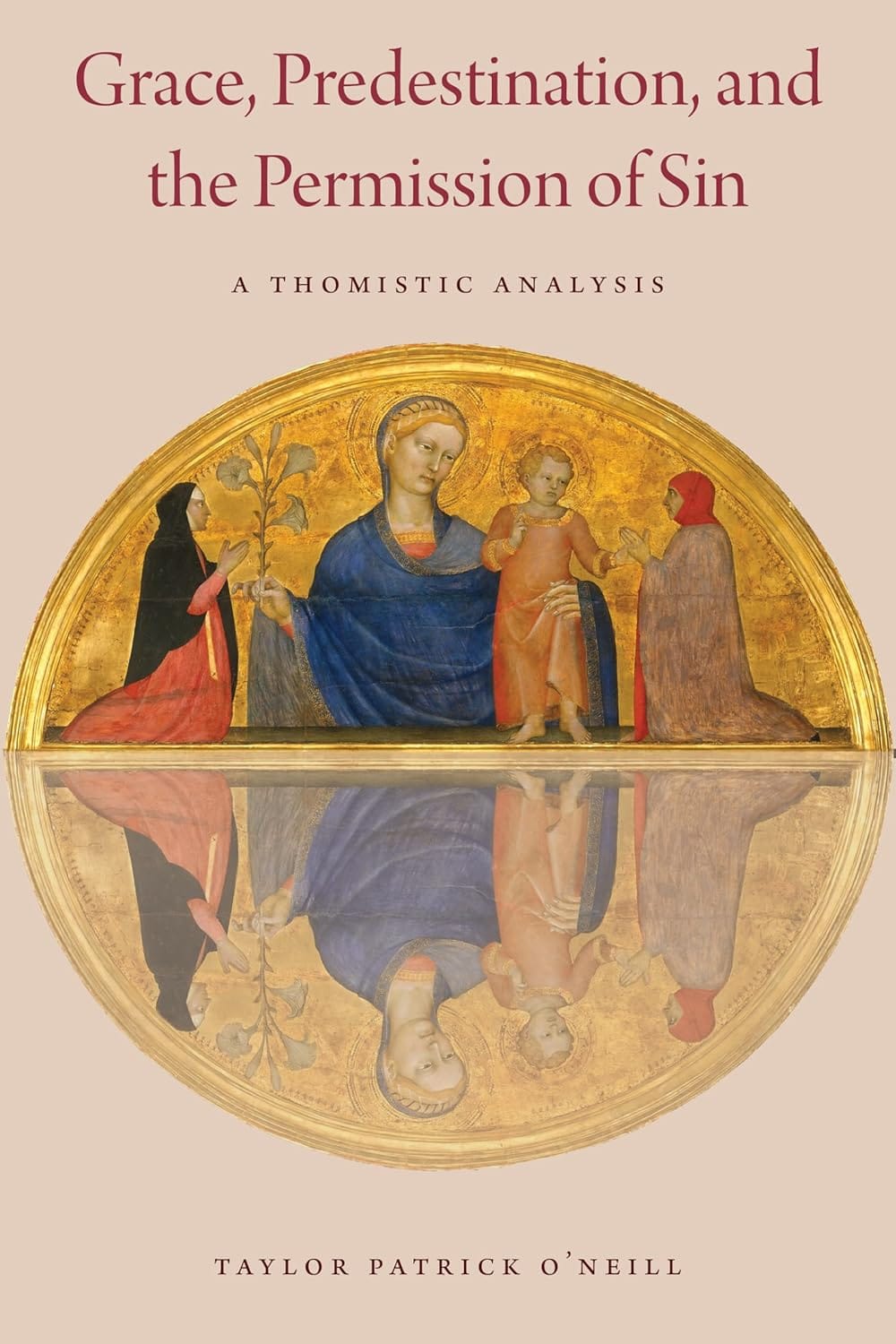
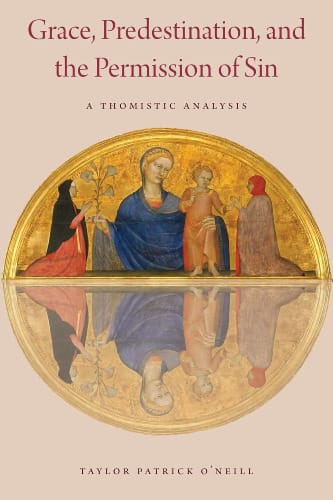
Dr. Taylor Patrick O’Neill is a professor at Thomas Aquinas College. He is the editor of She Orders All Things Sweetly: Sacra Doctrina and the Sapiential Unity of Theology (Cluny Media) and author of Grace, Predestination, and the Permission of Sin: A Thomistic Analysis (CUA Press).
- The Predestination of the Saints and On the Gift of Final Perseverance
by St. Augustine - Summa theologiae I, q. 23
by St. Thomas Aquinas - On Divine Foreknowledge: Part IV of Concordia
by Luis de Molina SJ - Predestination
by Réginald Garrigou-Lagrange OP - Grace, Predestination, and the Permission of Sin: A Thomistic Analysis
by Taylor Patrick O'Neill
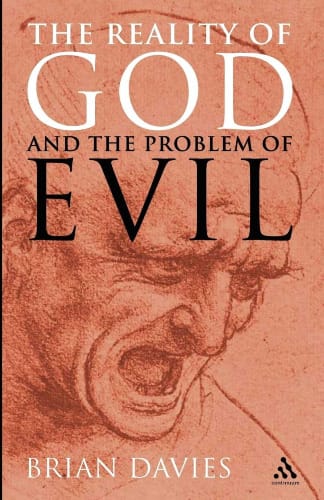
...and some further recommendations... - The Reality of God and the Problem of Evil
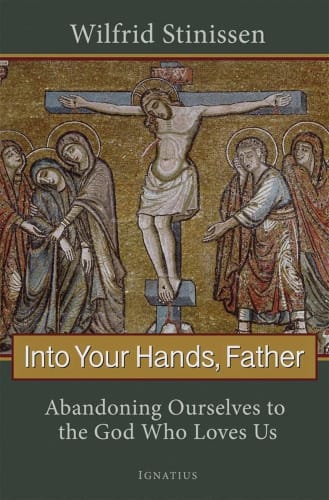
by Brian Davies OP - Into Your Hands, Father: Abandoning Ourselves to the God Who Loves Us
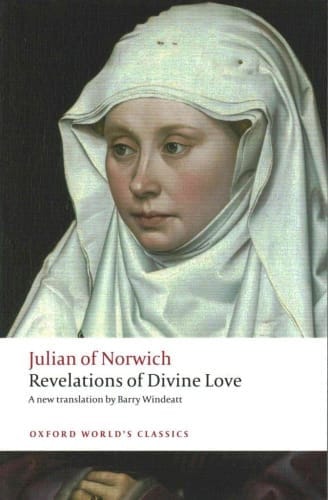
by Wilfrid Stinissen - Revelations of Divine Love
by Julian of Norwich
Is predestination a biblical doctrine?
It is. That is why St. Augustine is so important. Prior to him, other Church Fathers had certainly discussed predestination and the importance of grace. However, it was really during the Pelagian controversy and St. Augustine’s response to it that an Augustinian reading of Scripture emerges.
Augustine pulls from St. Paul these great lines on predestination, and election. These lines in Scripture become the foundation and backbone for St. Augustine's condemnation of Pelagianism and his doctrine of predestination, foreknowledge, and providence.
 Five Books for Catholics
There has been an ongoing debate over predestination since at least the fifth century. What are the main phases or stages of that debate?
It is one of the main areas on which not only has much been written but there have also been disagreements among theologians, Church Fathers, and even doctors of the Church.
There are areas in theology on which much has been written but where there is also more agreement than disagreement. This is an area where there is much disagreement. As a result, it can be hard to parse out exactly what the Church has and has not taught.
Nevertheless, the Pelagian controversy is the first major moment of this debate. It was an ongoing debate that lasted several hundred years. For example, St. Prosper of Aquitaine, a disciple of St. Augustine’s, wrote almost exclusively on it and against some other theologians.
The next major moment is the De auxiliis controversy, for which a whole congregation of the Roman Curia was set up. It began shortly after the Council of Trent. Reformation theology had its own doctrine of grace, election, and predestination. In responding to it, the Church did some soul-searching. That reignited the debate over predestination. The dispute was primarily between Dominicans, who held a sort of Thomistic position on predestination (which came to be known as Bañezianism), and Jesuits, who argued for what comes to be known as a Molinism.
During the last hundred years there has been a smaller debate among Thomistic theologians over whether the traditional Augustinian-Thomistic position differs sufficiently from Jansenism. This is the tail-end of a third major period, in which the Church dealt with Jansenism and a latent quasi-Calvinism.
 Five Books for Catholics
What are the main magisterial pronouncements on predestination?
This is a little tricky. Maybe there are not as many as we would like. However, there are several major moments.
The Council of Trent is the touchstone. At it, the Church responded to certain theologies of grace, free will, justification, and predestination. Its condemnations of some of the errors of Luther and Calvin provides, by way of negation, a minimum definition of what the Church holds.
The Church has not defined anything beyond that, but drawing primarily from Trent and some regional councils that it quotes (for example, the Council of Orange), it does seem to teach definitively a handful of particulars.
For example, it teaches that that election and predestination is ante previsa merita. In other words, God does not call or elect those who are saved merely because he passively foresees the good they will do. Rather, God is in some regard the active cause of the good that we do.
There is another principle that it is essential for all Catholics to hold: God does not command the impossible. We know this by way of negation. The Council of Trent condemns Calvin for saying that the good to which the law calls them is impossible for some people because they are reprobate or do not receive the necessary grace. Instead, the Church teaches that it would be unfair to punish someone who does not have the ability to do the good. It is always the case that we are capable of doing the good to which we are called.
These are a couple of things that the Church has clearly and definitively taught. However, the Church has not stated explicitly which exact position on predestination is correct and de fide.
“We tend to think about grace and free will as if God were passive with regard to our will, intervening occasionally, but remaining hands-off for the most part."
What is the key to understanding divine predestination aright?
It is essential to start with Scripture.
St. Augustine draws much of his teaching from a couple of passages of St. Paul. That is where we need to start. Paul asks the rhetorical question, “What have you that you did not receive?” (1 Corinthians 4:17). The answer is clearly, “Nothing!”All the good that we have comes primarily and fully from God, who is the good. There is a single source of goodness. All the goods that we possess—the good of our actions, right reason, or upright will—participate in God’s goodness. They only exist because, in some way, they are a gift from God.
It is essential to start there and recognise that grace is gratuitous. It comes from God first and does not arise on account of something that we have done and that forces God to give it to us.
Second, any good that we have results in some way from God moving us,either through grace or some natural motion.
This puts the primacy of God in its proper place. We recognize that we are radically contingent upon God for all of the good that we have. We do perform meritorious acts and merit the beatific vision in some sense, but even these are a gift from God. Merit is grace for grace, St. Augustine says. God gives us grace to do the good. We do the good because of that grace and then, because we have done the good, God gives us even more grace.
In discussing predestination, it is essential to start with the primacy of God, his love, and the divine will to give us grace. It is also essential to remember that we do not constrain God to give us grace.
A second point is that we tend to think of the divine will and the human will as competing against one another: as if God removes my room to act freely to the extent that he influences my action.
The tradition has put a lot of effort into explaining how God can, even unfailingly, cause me to perform an action that is still completely free.
There is much in Scripture and the tradition about how God, in his inexhaustible providence, rules over all things, guides them, and orders all to the good. His ordering does not exclude human free action. Rather, our free action is incorporated into it.
“Whenever we convert or do good, God in some respect does not just give us the opportunity to respond to his call but actually causes us to perform the good deed."
Is there a difference between the Catholic and Orthodox Churches on the doctrine of predestination?
That is an excellent question. Though I am not an expert on Orthodox theology, it does seem to me that there are differences between the Catholic Church and some pockets of Orthodoxy.
For example, there has been a little bit more openness to the doctrine of universalism—the belief that all human and maybe even the fallen angels are saved—among some Eastern theologians and traditions. Perhaps because of Dante and Milton, there is less openness to this notion in the West.
Could you explain, for those who are not familiar with the term, what you mean by universalism?
We grapple a little bit more with hell and the notion of damnation. However, many of the Orthodox take the reality of hell as a given as well.
For the most part, many of the debates and controversies over predestination, infallible grace, and providence that take place in the West track very similar debates in the East, which does not use however Thomistic or scholastic language.
Some would contrast the Orthodox Church's emphasis on the synergy between God and man in the process of divinization with the Catholic teaching on grace. Does the Catholic Church also share this view of the cooperation between God and man?
Absolutely. Again, it really depends upon what we mean by cooperation. The Augustinian-Thomistic tradition certainly emphasises man’s cooperation with God. However, we can think about cooperation in two different ways.
Many Thomistic theologians distinguish between subordinated cooperation and coordinated operation. In the latter case, two causes work together, without the one being contingent upon the other. A classic example of this is two people lifting a couch. Each is doing about fifty percent of the work but the one’s lifting his end of the couch is fairly independent from the other’s lifting the other end. If the one were to drop their end of the couch, the other person would still be holding theirs up. Two causes are working together, but each is on the same level of causality.
Instead of this kind of cooperation, the Augustinian-Thomistic tradition endorses subordinated cooperation. In subordinated cooperation, God and man work together, but each acts not on the same level, but on a different level and within his own order. Man’s causality is contingent upon God’s and subordinated to it.
An instrumental cause is a classic example of this. If I write on the blackboard, in one sense I am the cause of the writing, and in another sense the chalk is the cause. However, the chalk and I are operating on two different levels. Neither the chalk nor I is fifty percent the cause. Both the chalk and I are a hundred percent the cause, but in different ways and orders.
Similarly, whenever we do perform a good deed or meritorious act, we cause it along with God. However, instead of cooperating with God on the same level, our causality is itself the effect of God’s moving us to act. Our causality is contingent upon God’s, whereas the causality of one of the two people lifting a couch is not contingent upon the other’s.
This distinction is very important because we should not conceive our cooperation with God as if we were working back and forth with just another creature nor as if he were not sovereign over us. There is no pushing back and forth between us and God. He is immutable.
The Protestant Reformers often appeal to the authority of Augustine. Is there any difference therefore between the Catholic doctrine of predestination and that of Reformed Christianity?
This is an excellent question and a big one. Primarily, two things differentiate the Catholic interpretation of St. Augustine from that of, say, John Calvin.
First, the Church rejects the notion of a positive reprobation. Calvin believes that God not only leaves certain individuals to their own sinfulness and permits them to continue in their sinfulness, but even actively moves certain human beings to commit mortal sin.
Second, the Church condemns Calvin’s belief that God does not in any way desire the salvation of all men. For Calvin, God positively wills against the salvation of some and so causes them to render themselves unsaved. He makes it impossible for those who are not saved to do the good that he commands them to do. Trent teaches clearly that we cannot claim that the good that we ought to do is impossible to us.
“God does not actively foreordain or predestine those who are not saved to hell."
The Catechism of the Catholic Church teaches that, “God predestines no one to go to hell; for this, a wilful turning away from God (a mortal sin) is necessary, and persistence in it until the end” (CCC 1037). However, as you just pointed out, many wrongly assume that, according to the doctrine of predestination, God decides who ends up in hell and who ends up in heaven. Do such misconceptions circulate because of superficial, incomplete catechesis?
Another very good question. On the one hand, at the risk of sounding scandalous, for the Catholic tradition it is quite true to say that in some way God decides who goes to heaven.
The idea that God has predestined certain individuals, before foreseeing their merits, includes in some respect the notion that, out of his love, God chooses gratuitously to give to some a gift that is not owed to any human beings, not only saving them from rebellion against them, and turning them away from themselves, but even restoring us to the condition of our first parents in Eden, and elevating us to participate in the divine life. This radical gift is disproportionate to human nature. Not only is God not bound to save those who have freely chosen to rebel against him. He is even less bound to give them a gift that is infinitely beyond their nature: participation in the divine life.
It is tricky to say that God chooses to grant that gift to some individuals and not to others. However, that does not mean that his forcing them into heaven. Nor does it mean that he chooses them arbitrarily.
St. Augustine and St. Thomas find it tricky to explain therefore why some are predestined and others not.
Their answer is always that the divine wisdom is inscrutable. There may be some rationale but it is beyond what men can conceive. This comes across in Job. “Where were you when I was planning everything out? You do not see the whole picture.”
On the other hand, God does not actively foreordain or predestine those who are not saved to hell. Not only is it imprudent or impertinent to hold that God causes sin. It is impossible for him to cause the sinfulness of sin. Hence, it is impossible for him to move a person to damnation in the way that he moves the saints forward in the Christian life.
I would not put these misunderstandings down to a lack of catechesis but to the difficulty of these theological doctrines. Moreover, we do not tend to talk a lot about these theological doctrines or hear many homilies about them, maybe for a good reason. My guess is that, if anything, catechesis tends toward a kind of semi-pelagianism. We tend to think about grace and free will as if God were passive with regard to our will, intervening occasionally, but remaining hands-off for the most part. The idea that God could order the rational movements of the human will is anathema for us. It is as if he would thereby be robbing us of our freedom. Consequently, we believe that, although God presents us with grace, accepting it is ultimately up to us.
The classic image of Jesus knocking on the door is a fine image but it can imply that grace is simply a matter of Jesus knocking on each person's door and leaving it up to the individual, apart from grace, whether to open the door and accept him or leave him out in the cold. However, whenever we convert or do good, God in some respect does not just give us the opportunity to respond to his call but actually causes us to perform the good deed. He causes us to convert. Those essential elements are sometimes lost in catechesis.
The devotions to the Sacred Heart and Divine Mercy—corroborated by private revelations to saints and their subsequent incorporation into the liturgical year—were in part a reaction to the excessive rigorism and pessimism of Jansenism. Do these devotions indicate that we always need to think about predestination with the assurance that God calls us to repent and offers us his mercy?
That is absolutely correct. At that time, Jansenism had become a big problem, especially in certain areas in Europe.
In a way, Jansenism constitutes a highly Calvinistic understanding of Catholicism. Ironically, it falls into the same error as Pelagianism and Semi-Pelagianism.
If you envisage providence as competing with our freedom, then you can follow one of two directions. You can follow the Pelagian direction and assume that, since our free will competes against God's providence, we need to either dial down one to safeguard the other. Pelagius wanted to safeguard human freedom.
Though he was rightly condemned by the Church, I have some sympathy toward him. He was trying to fix great moral and spiritual laxity. Many presumed they would be saved and seemed to act as if did not really matter what they did. Pelagius objected that it did matter. They were falling into grave sin but could commit instead meritorious acts that brought them toward heaven. He insisted that they needed to be very serious and disciplined in their moral life. That is why Pelagius, emphasised free will and the role we play in our salvation.
However, he maintained the error that the created will and grace were competitive. Hence, he dialed down the exhaustiveness of providence and the primacy of God's will and grace because he felt that he needed to do so in order to fit in free will, as it were.
For Pelagius, God simply gives us free will and the blueprint for holiness. Christ is our saviour only in that he is an exemplar for how we should act. Grace does not work interiorly or cause us to convert and perform good deeds.
Unfortunately, the Jansenists hold to the same erroneous view of the competitive relation between human and divine action but turn up the other dial instead. They stress the primacy of God and his grace but turn down the dial on human freedom. They thereby fall into quietism: it does not really matter what you do because everything is already predestined.
The devotions you brought up were meant to bring us back to the proper mean, where both dials are turned all the way up. Both God’s will and the human will are a hundred percent causal in bringing about the salvation of the saints.
1.
First, you have chosen two works by St. Augustine which are really two parts of a single work: The Predestination of the Saints (De praedestinatione sanctorum ad Prosperum et Hilarium) and On the Gift of Final Perseverance (De dono perseuerantia). Have you chosen it because Augustine’s views on predestination have set the debate for later discussions within Western Christianity?
Absolutely. St. Augustine’e debate with Pelagius set off all the other debates. However, these works are essential not only because they began the debate. They also laid the groundwork for the basic principles that the later Catholic tradition maintains.
St. Augustine is known to us as one of the most important doctors of the Church, but also as the teacher of grace (doctor gratiae). The Church extols him precisely on account of his understanding of grace, predestination, and human freedom. He is the father of the theology of predestination.
The Protestant reformers quoted and leaned so much on St. Augustine and spent so much time claiming that they were the the authentic Augustinians. This shows that, in the theological tradition, nearly everyone looks to him as the giant upon whose shoulders all the later work stands. As a result, there are wildly different interpretations of St. Augustine.
Going back to the fifth century, a small number have argued that St. Augustine was mistaken on these questions and started the Church off on the wrong foot. Nevertheless, the overall project has been about interpreting St. Augustine’s doctrine and using it as a starting point.
Some Catholic scholars recently would contend that St. Augustine's teaching on predestination does not correspond entirely with that of the Church and is too extreme on some points. Do you agree with that assessment?
No, but I am sympathetic towards this assessment, primarily for historical reasons.
The Protestant Reformation, Jansenism, and quietism all claimed St. Augustine as their central theologian. So, maybe St. Augustine is responsible for these errors within the Church.
However, the scholastic tradition also took him as its central theologian. St. Anselm and St. Thomas Aquinas certainly sees themselves as Augustinians as they unpack the question of grace and freedom. To some extent, even the Jesuits and the Molinists, in arguing against the Thomists look to St. Augustine for the minimum principles of an orthodox Catholic understanding of grace and human freedom.
It is quite clear from the actual texts of St. Augustine, especially his Anti-Pelagian writings and texts on human freedom, that many of the interpretations of the Reformers were bad readings. St. Augustine argues explicitly against some of the positions of the Reformers were holding. For example, he condemns positive reprobation: the notion that God refuses grace and the ability to do the good to the reprobate. Rather, he talks of a twofold call. Some are called by election to salvation. However, in another respect, every single human being is called by the divine love to salvation. God truly desires that every single human being be saved. In some places, Calvin says exactly the opposite.
If we read St. Augustine from the heart of the Church, we will see that he is not too extreme at all. are just. There are extreme readings of St. Augustine, but his real voice is one of Catholicism and orthodoxy.
2.
From St Augustine we move to St Thomas Aquinas. However, you have not chosen his questions on grace, which are at the end of the Prima Secundae of the Summa Theologiae, but his earlier discussion of divine predestination in the same work (I, q. 23). What does he contribute to the discussion
St. Thomas certainly sees himself as picking up where St. Augustine has left off. He adds much philosophical and metaphysical nuance that helps us to understand better what St. Augustine was trying to articulate.
He contributes two things. One is his explicit rejection of positive reprobation or double predestination, several hundred years before Calvin even articulates this idea. Augustine does not condemn it explicitly condemn it though it is clear what he means if you read him carefully. The issue with St. Augustine is that he is responding to one or two errors of Pelagius. As is the case with most of the Church Fathers, he is not going through a topic systematically and addressing all the possible objections or errors.
Now, because St. Thomas addresses these issues in a scholastic or systematic mode, he takes St. Augustine as a starting point and points out what St. Augustine affirms, the various objections, and all the secondary questions that might come up. One such secondary question is that of positive reprobation. Is it true that God, as Jonathan Edwards proposes, picks someone up like a spider and casts them off into hell? St. Thomas is very clear that is impossible for God to act in this way and that we should have full faith and trust in his divine mercy. Predestination and reprobation are not the mirror image of one another. There is virtually an infinite dissimilarity between them.
This is St. Thomas’s first important contribution. The other is his beautiful articulation of how God moves us through grace to freely perform a good action.
Though St. Augustine stated numerous times, “God causes you to cause yourself to perform some good action,” it is not entirely clear what this means. Basically, St. Thomas explains that God is not thereby moving us as if we were robots but moves creatures according to each one’s proper mode as a creature. Unimpeded, an apple tree necessarily produces apples. It has no power to stop itself from doing so or to produce something else instead. It produces apples automatically. However, due to our free will, we human beings do not perform human acts automatically. We are constantly discerning and freely choosing which action we perform. Moreover, our actions are contingent rather than necessary. They could always be other than what they are.
However, as the creator and architect of human freedom, God is able to providentially bring something about with a hundred percent certitude. He is able to give to the saint the grace whereby to die a martyr and be saved. He is able to do this in such a way that the human actor is a hundred percent responsible for choosing martyrdom. The creaturely mode by which that action comes forth is contingent, even though God, in his providence, brings about the action infallibly.
3.
With the next book we move to the sixteenth-century and the De auxiliis controversy. What was the nature of this controversy?Essentially, within the Church there were two different understandings of how grace causes us to perform a good act. Each camp believed that there was a doctrine of predestination. The controversy was not over the existence of predestination but over how divine predestination is executed. Hence, it was really about what is essential for human freedom and how grace would work on the will.
On the one side, there were the more Thomistic theologians. These were, usually Dominicans. They argued that through grace God works as an efficient or agent cause in moving us to perform some good act. For example, God causes me to choose martyrdom. He acts directly upon my will, thereby causing my will to move itself toward the good.
The Jesuits, on the other side, worried that this was just not possible. They started with the view that divine causality and human freedom were somehow competing against one another from the get-go. They too wished to assert that God's divine providence is all-encompassing and infallible but argued that he cannot work upon the will interiorly and directly. Instead of causing you to act in a particular way, God can foresee how you would act in a certain circumstance and, should he want you to do something, such as die a martyr, he will orchestrate external circumstances so that you end up in the foreseen situation in which you will die a martyr.
“The moment you start to talk about something as being in competition with God, you are talking about non-being."
How does Luis de Molina propose to resolve the apparent incompatibility between predestination, the efficacy of grace, and human freedom?
Molina is best known for is this doctrine of middle knowledge (scientia media).
Prior to him, theologians talked of God knowing things in one of two ways: knowing absolutely necessary things (i.e. the divine essence and whatever flows from it) by knowing himself and then totally contingent things by knowing what he wills.
Molina argues is that in between those two kinds of knowledge there is a third: the knowledge of contingent things that God does not know by his will.
A Thomist, before the time of Molina, would argue that God knows that you exist because you are not part of the divine essence. Whether or not you exist is contingent. Either alternative is utterly conceivable. So how does God end up knowing that you do exist? He knows that he causes me to exist. He knows what he is doing.
However, Molina argues that are certain truths that God merely knows but does not will, such as “Bob” or “Were Bob to be in circumstance Y, then Bob would freely choose to help a little old lady across the street.” Molina believes that if God wants Bob to help a little old lady across the street, then that is what shall happen. What God actually desires and wills is what takes place. Nevertheless, Melina is worried about talk of God working directly upon the will and causing us directly to move ourselves. He believes that this shuts down or mitigates human freedom. He takes a different route. He argues that whatever God wills definitely takes place but that God brings this about by manipulating the external circumstances he foresees will produce the choice without him thereby causing it. He arranges things in the right way so that the choice occurs in the way that he wants.
In your opinion, which is the correct view: Bañezianism, Molinism, or neither?
I am a Bañezian. I believe Bañez was correct, even though Molina's doctrine is very elegant.
My objection against Molina is that, like the Reformers and Jansenists, he begins with the view that human freedom and divine causality are in competition with one another. Molina seems to contend that the human will needs to hermetically sealed off from divine influence for it to remain authentically human. In my opinion, that is not the authentic starting point. The assumption that something needs to be sealed off from divine causality for it to remain what it is, is utterly contrary to what we understand about God and creation. Things are what they are only on account of their being contingent upon God. Things are what they are only because they are not sealed off from God but constantly caused and moved by him, the singular source of being and goodness. The moment you seal something off from God like that, you do not preserve it but lose it altogether. It just ceases to exist or act.
Like most theologians, Molina agrees that we constantly receive our existence from God. It is not as if God just created me at some moment in the beginning and now I exist apart from him. No, I need to constantly receive being from God.
The same is true of my actions. It is not as if God just gave me the power to act in the beginning and now I can just go off and act willy-nilly, with God just watching from afar. Rather, for me to act, God needs to somehow move me or give me the act.
The view that we can somehow act as human agents and yet be sealed off from God's causality, with God only able to interact with my causality externally and by manipulating the circumstances around me, loses sight of how contingent we are upon God. It sets up the divine will in competition with my will. In actuality, in no way at all can my will be in competition with God. The moment you start to talk about something as being in competition with God, you are talking about non-being.
“It seems bad and negligent for God to permit certain things. Yet in a mysterious way, those things are gifts."
4.
You have not recommended any work by Bañez on predestination and grace, maybe because no suitable English edition is available. Does the next book, Réginald Garrigou-Lagrange’s Predestination, along with your own study, present the other side of the debate?
Exactly. There is no English translation of Bañez’s systematic treatment of grace and predestination, although some of his longer theological works have been translated into Spanish. To my mind, only my own book and R.J. Matava’s Divine Causality and Human Free Choice contain English translations of some of his writings on pre-motion, providence, and predestination.
However, Garrigou-Lagrange is a great Báñezian tomist who is also quite accessible. He is a good one-stop-shop for learning about the position of Báñez and why it finds Molinism so unsatisfactory.
 Five Books for Catholics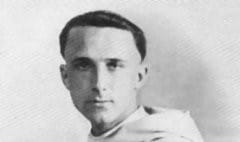
5.
Your own study looks at twentieth-century theologians who sought to solve the problem of predestination with the aid of St. Thomas but without the baggage of either Molinism or Báñezianism. You conclude that, despite their commendable intentions, they do not articulate the traditional doctrine in a satisfactory manner. How so?
Several thinkers, such as Francisco Marín-Sola and Jacques Maritain, were concerned that Báñezianism—the traditional and primarily Dominican interpretation of St. Thomas-—came too close to Calvinism and Jansenism. They attempted to reform the Thomistic position from within. They got many things right. In a nutshell, Maritain holds that God, as Bañez had argued, works directly upon the will in some extraordinary manner and moves it infallibly to perform a good action infallibly, but, in most cases moves the will with a shatterable motion. Though God starts to move the will to some good act, that movement can be stopped by the human will.
In a large respect, Báñezianism agrees with all of that. However, the devil is in the details. Whenever God moves us to a good action and we fail to persevere in that movement, is the failure something that God permits or does it occur apart from God's will and as if we are overthrowing the divine will? Maritain argues that it is not something that God permits. My critique is that this means that God does not permit sin. By ‘permitting’ I do not God is doing something causally or taking away something which allows one not to sin, but that it is within God's power to stop us from sinning. If we say that God does not permit us to sin, then we have argued against the divine omnipotence. By denying that God permits us to sin whenever we sin, we end up back with a competition between the divine will and the human will. Not only do they compete against one another, but we have a circumstance in which the human will seems to trump the divine will. It is as if God is doing all that he can to get us to perform some good action, but in the end we throw our fist up against God and say, “No, I refuse to do that,” and leave God standing there impotent. That is not a tenable position.
I have great respect for Maritain and do not intend to belittle him. I simply disagree with him on this point. Maritain acknowledges that in certain extraordinary circumstances, God can move the will infallibly. He gives Mary’s fiat, her yes to God, as an example. If God can move the human will in such a way that it shall definitely perform the good action and yet remains free in performing it, then Maritain has simply pushed the traditional questions back a step. He never addresses the question of why does God, if he can move us with non-shatterable graces that do not detract from human freedom, not bestow those non-shatterable graces upon everyone? Claiming that he gives shatterable graces that he knows might be shattered is already to bring up unsettling questions about why does God permit evil when he can prevent it or not bring everyone to heaven when he can do so. These are the very questions Maritan is trying to get away from at the very outset. However, he does not succeed in answering the objections that brought him to his own doctrine of predestination in the first place.
 Five Books for Catholics
6.
Well, that ties in with the next book, because the debate around predestination is intertwined with one of the most vexing theological problems: how can a good and caring God allow so much evil and unmerited suffering in the world? Does Fr. Brian Davies succeed in showing that the presence of evil is compatible with God’s existence and goodness?
He does. This is a remarkable and important book.
Perhaps the most important thing Fr. Davies does—though at first it may sound odd—is show how God is not a moral agent, at least not in the way that we are accustomed to define a moral agent.
We deem an agent to be moral by adhering to some extrinsic norm or law, and immoral through a lack of correspondence with that external rule or measure. However, there is no external rule or measure to which God must submit. God does submit, if you want to think of it that way, to his own nature, which is perfectly good. He always does that which is most good and just. It is not possible for him to sin. However, this is very different from what it means to say that human beings are good.
We tend to imagine that there is a universal law, say of kindnesss, and even think of God as being subject to that law. Consequently, we imagine that, should God permit evil, then he is going against the higher universal law that one ought not to permit any evil. We imagine that he is failing to be a good and moral agent.
Fr. Davies makes us to be mindful of the analogous but very different ways in which we speak about God's goodness, on the one hand, and human goodness on the other. God is not bound to, if you will, the same rules and regulations that we are.
For example, should I see someone dying and can do something about it, hopefully I shall feel that I am under the law of love and will do everything I can to prevent that person’s death. However, God sees people dying all the time. It would be the easiest thing in the world for him to prevent any person from dying. We could all just live forever. So why does he not make that happen?
If we do not attend to the difference between what God does and our moral action, we will begin to think that God is wicked because, just as we would be terrible persons were we to just let a child die, he seems to do this all the time.
We come across this argument quite often, especially in popular culture. The difference between us and God is that he, as Scripture attests, is ordering all things to the good. No human has the power to make a child’s death contribute somehow to the good of the whole universe and that of the child. Hence, we need to trust in God as the source of providence. It seems bad and negligent for God to permit certain things. Yet in a mysterious way, those things are gifts. We see this everywhere. The apostles believed that Christ’s death obliterated all the good he had done but three days later witnessed the higher good that would not have come about had he not died.
7.
The books surveyed so far focus on settling doctrinal puzzles and errors. The last two offer guidance on how we should correspond to God’s will and grace in our spiritual life. Why have you chosen Fr. Wilfrid Stinissen’s Into Your Hands, Father and Julian of Norwich’s Revelations of Divine Love?
This whole topic is so difficult and tricky, but all theology should be related to the life of contemplation and prayer. There are certain theological questions we can read about but which do not cut to the very heart of our prayer and trust in God in the way that this one does and affects how we think about God. Predestination is a dangerous topic. When it is not understood correctly, it can lead to a lot of anxiety, fear, and doubts. These two last works are essential for a proper spiritual and pastoral understanding of how it fits into Christian life and contemplation.
Fr. Stinissen’s book is a pastoral and spiritual guide. It is about recognizing the beauty of God’s providence and abandoning ourselves to it. At first, that sounds scary. It is as if we were giving up some of our power and control.
When I first started reading about this subject as a graduate student, my view on providence and human freedom was that every now and again God works a miracle or intervenes in an exceptional way. I was functionally a deist for the most part. I imagined that God mostly sat back and, every now and again, tapped people on the shoulders, leaving it up to them to listen to him or not. It was as if God had a plan for some machine but things were going wrong with it all the time: people were not listening to him and doing what they were supposed to do. So, God constantly had to come up with plan B, C, or D and fiddle with the machine.
That is obviously absurd, the more you think about it. However, getting rid of that entire idea means that God is providentially in control of all things, even particulars. Now it suddenly seems that we have lost control of everything and are just puppets.
Fr. Stinissen’s work is very good at showing that this is not at all the case. It walks us through how Christian hope consists in recognizing that God, who is all good and works all things to the good, is in control. All we need to do, in a certain respect, is to trust in him and give ourselves over to his power and plan for our life, instead of trying to squeeze things away from God and keep them to ourselves. Fr. Stinissen resolves beautifully the anxieties that commonly come up whenever we think about this topic.
8.
I commend the book by Julian of Norwich for the same reasons. Perhaps better than any other writer, theologian, or mystic, she has the deeply hopeful sanguine perspective on all the things that we have been talking about. She is clearly a little confused as to how all these things come together: not confused theologically but just because she, like all of us, is not able to completely wrap her head around these mysteries.
She is so filled with love for God and trust in him that she simply recognises that his permission of evil is for the good.
She is best known for the line, “All shall be well, and all shall be well, and all manner of things shall be well.” She says this not because she is a quietist nor because, as she is oftentimes portrayed today, she is bucking against the Church, and assuming that all souls are saved. That is not true. She talks about the reality of hell and the souls that go to hell. Very often, she states that she accepts completely everything the Church teaches. Rather, she recognises that here and now God is working everything to an infinitely higher and unimaginable good. This leads her to say things that, on the surface, sound scandalous. Another famous line from the work is, “Sin is behovely,” namely, fitting. She does not mean that sin is good. She says very clearly that it is horrid, ugly, grotesque, and pulls us away from God. Rather, she is speaking of how God's permission of sin is behovely or fitting. The ugliness of the sin that we see in history and our own life, even the natural ugliness of disease, is waiting to be transformed or shot through with light and beauty. Hence, Julian has a hopeful expectation, almost giddiness, that all the ugliness around us is being transformed into beauty. Ultimately, she compares it to the wounds of Christ, and we should compare too.
The wounds of Christ, in themselves, are ugly. They are the signs of sin. However, they remain even on the perfected and spiritualized body of the risen Christ. Their meaning has been utterly transformed. They have gone from being ugly to being beautiful signs of God's infinite love and infinite goodness. They are a beautiful and hopeful message for the Christian that God is creating a universal, holistic order where even the ugly things are going to contribute to the beauty of the whole.