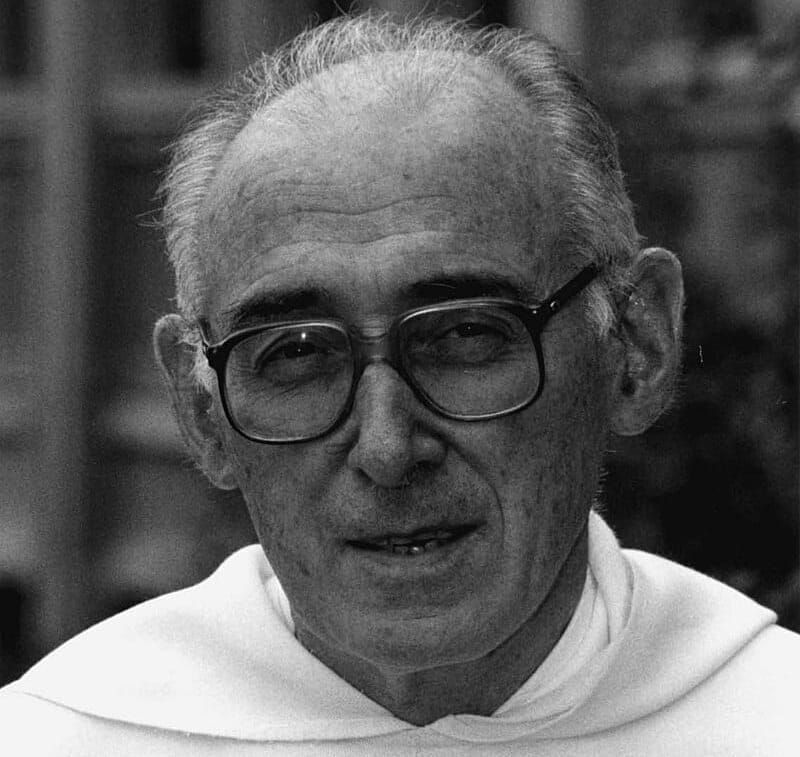
Servais-Théodore Pinckaers OP (1925-2008) was a Belgian Dominican and a leading Catholic moral theologian. After teaching moral theology at the Dominican house of studies at La Sarte, Belgium (1953-1965) and preaching for several years at the order’s Liège priory, he became professor of fundamental moral theology at the University of Fribourg in 1973. Upon the publication of his main work, The Sources of Christian Ethics, his former teacher, Cardinal Jérôme Hamer, acclaimed him as “the undisputed master” of moral theology. Pinckaers’s retrieval of the biblical, patristic, and Thomistic teaching on Christian moral life continues to inform the work of various scholars and ministries. At the same time, he was keenly aware of his mission to explain the Sermon on the Mount for the faithful and distilled his scholarship into books for the general reader.
In this interview, Craig Steven Titus discusses Pinckaers’s work and recommends five of his books.
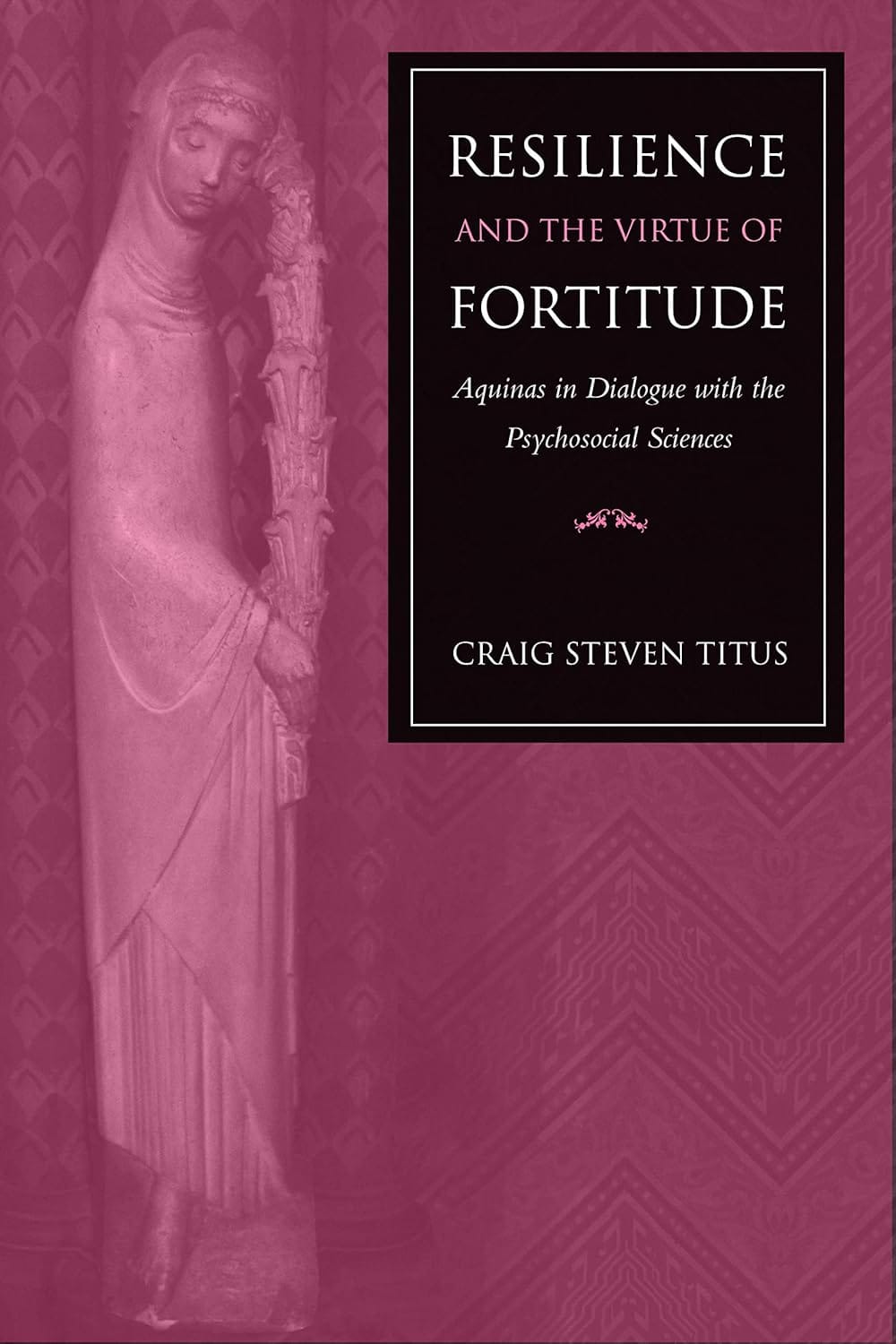
Craig Steven Titus is Professor and Director of the Department of Integrative Studies at the Institute for the Psychological Sciences and the School of Counseling at Divine Mercy University. He previously worked as a Researcher and Instructor at the University of Fribourg, where he served as Vice-Director of the St. Thomas Aquinas Institute for Theology and Culture and Vice-Director of the Servais Pinckaers Archives. He is the author of Resilience and the Virtue of Fortitude: Aquinas in Dialogue with the Psychosocial Sciences (CUA Press, 2006), editor of the Newman Lecture Series, and co-editor of The Pinckaers Reader: Renewing Thomistic Moral Theology (CUA Press, 2005). In 2020, Titus received the Expanded Reason Award (2020) from The Francisco de Vitoria University, in collaboration with the Joseph Ratzinger-Benedict XVI Foundation, for the co-edited publication entitled: The Catholic Christian Meta-Model of the Person: Integration of Psychology and Mental Health Practice (Divine Mercy University Press, 2020).

- The Sources of Christian Ethics
by Servais Pinckaers OP - The Pinckaers Reader: Renewing Thomistic Moral Theology
edited by John Berkman and Craig Steven Titus - Morality: The Catholic View
by Servais Pinckaers OP - Passions and Virtue
by Servais Pinckaers OP - The Pursuit of Happiness - God's Way: Living the Beatitudes
by Servais Pinckaers OP
...and a bonus recommendation for readers of French... - La vie selon l'Esprit : Essai de théologie spirituelle selon saint Paul et saint Thomas d'Aquin
by Servais Pinckaers OP
Professor Titus, welcome.
Thank you very much forthe invitation to address five books by Fr. Servais Pinckaers. I am glad to recognise the contribution of Pinckaers to moral theology, especially fundamental moral theology and virtue theory. He left behind him an impressive intellectual and spiritual heritage.
He is especially recognized for his contribution to the renewal of Catholic moral theology.
His work is a forerunner of the virtue revival that has drawn from the rich Thomistic and Dominican sources. This movement and this revival are part and parcel of the renewal that helped prepare for the Second Vatican Council and that continues to this day in terms of the need for evangelization and virtue renewal in five points.
1) The return to the sources of Catholic moral theology,
2) The centrality of Jesus Christ and the virtues,
3) The necessity of the New Law of grace and the gifts of the Holy Spirit,
4) The distinction between freedom of indifference and freedom for excellence,
5) The importance of the Word and Sacraments for the practice of moral theology.
"He treats the main themes of Veritatis splendor and the Catechism well in advance of their publication."
As you just mentioned, Pinkaers was a contributor to the renewal of moral theology. His early book is a collection of his papers entitled The Renewal of Morale Theology (Le renouveau de la morale, 1964). His choice of title supposes that moral theology stood in need of renewal. Was that the case?
His first book, entitled The Renewal of Moral Theology, seeks to remedy those notions that hold Christian ethics as simply a code of acts that are forbidden or permitted.
Pinckaers’s book presents the work of St. Thomas Aquinas as a foundation to remedy and renew moral theology in the light of beatitude or happiness. The focus of moral theology is ultimately friendship-love with God and neighbor.
Pinckaers offers an approach to morality that is both historically and philosophically grounded in his analysis of the concepts of beatitude, happiness, human action, virtue, and freedom for excellence.
His work is an exemplar of faith-seeking understanding, which is especially seen in the part of the book devoted to the study of the virtue of hope.
You have described briefly some of his main theses. What was his place within the twentieth-century movement to renew moral theology?
In particular, Pinckaers addresses the need to break out of the Enlightenment and the modern moulds of casuistry and moral manuals that have so affected the Church. He recognizes that the post-Tridentine narrowing of the vocation of moral theology to be simply at the service of auricular confessions followed a trend in philosophical ethics to focus on duty and obligation at the expense of the internalization of charity and the other virtues and of attention to the beatitudes and the gifts of the Holy Spirit.
While different sorts of casuistry continue in various forms of consequentialism and utilitarianism, Pinckaers offers a non-casuist approach to moral theory that acknowledges its roots in sacred Scripture and dogmatic theology, as well as in the philosophy of nature and metaphysics.
However, it does not deny the place for duty or the study of cases within the pedagogy of virtue. His vision has been instrumental in bringing ressourcement to the post-Vatican II renewal of Catholic moral theology, especially as it is epitomized in St Pope John Paul II’s encyclical Veritatis Splendor and the Catechism of the Catholic Church.
In comparing Father Pinckaers’ work to that which preceded and followed the Council, we find that he not only exemplifies the development that led to the renewal of Catholic moral theology but more interestingly, he nourishes it and prompts its growth.
He treats the main themes of Veritatis splendor and the Catechism well in advance of their publication, in particular concerning the sources of moral theology, especially Christ and sacred Scripture, but also developing the key themes of virtue and the New Law of grace and the Gifts of the Holy Spirit.
You have mentioned that he anticipated some of the developments of the Catechism's presentation of Christian moral life. More broadly, to what extent have his efforts to renew moral theology succeeded?
The current popularity of virtue theory in moral theology is a sign of the success of Pinckaers’s approach to a more dynamic vision of Christian ethics.
Pope Francis has also been supporting a thoroughly virtue-based approach in his recent Wednesday addresses.
As a proponent of the importance of the virtues for moral theology, Pinckaers participated in the renewal of virtue theory that had already started in philosophy with the works of Josef Pieper and that would follow with Elizabeth Anscombe and later with Alasdair MacIntyre.
The British theologian Fergus Kerr OP has found in Servais Pinckaers “the greatest exponent” of the virtue tradition in theology, whose strength is to draw “on deep knowledge of the theology of Saint Thomas Aquinas and the whole Catholic Christian inheritance."
As an expert in fundamental moral theology, his lifetime work was to establish a sure footing for special moral theology (though he lectured in special moral theology—focused on the virtues—as a young professor, he did not teach it during his long appointment at the University of Fribourg). Although his focus was on the nature of true happiness, finality in moral agency, and the nature of freedom, it would be incorrect to downplay his contribution to studies of the natural law and action theory.
Moreover, though Pinckaers did not write one systematic monograph on the particular virtues, one can find treatments of all of them somewhere in his 28 books and 300 articles.
A further, and perhaps more unique “success” and contribution, involves the retrieval of the gifts of the Holy Spirit and the New Law of grace in moral theology and the spontaneity that there abides.
"His calling was to share the truths of the Gospel, the great patristic and medieval sources."
If I am not mistaken, you studied under Pinckaers. What was he like as a teacher?
Fr. Pinckaers was a joy to be around. I came to Europe with a scholarship to study with him at the University of Fribourg. He had been described to me as a great contributor to moral theology and the spiritual practice of the church. He was a scholar. At the same time, he was true to his calling as a Roman Catholic priest. He was also very much a son of the Dominican tradition. In his work, he lived the motto, contemplata aliis tradere: to share with others the fruit of contemplation.
While I was there, I got a strong sense of his great devotion to his students and the truth, as well as his great compassion for people.
Interestingly, he always prepared his lectures and his retreats very carefully so that nothing was wasted. In more cases than not, he would publish them.
His calling was to share the truths of the Gospel, the great patristic and medieval sources. He had a special role for Scripture and the works of St. Thomas, of which he was a fine interpreter.
He affirmed that Aquinas was his mentor. In one sense, he was a model for us, his students, of turning towards St. Thomas and Scripture. He saw Aquinas as a model for moral theology, built principally upon Scripture, integrating the human elements that are needed for Christian life. The Scriptural model, Pinkaers affirms, encourages and helps us have recourse to the Gospel and Our Lord, from whom we will find the light, inspiration, and materials to build a Christian ethics in a style that is fit for today .
He was a great model for us all.
Do you have any particular recollections that you'd like to share?
He loved to take three-hour long hikes around the surrounding areas in the Swiss countryside, along with other Dominicans, students, friends, or anyone who wanted to come along. These outings were forums of discussion mixed with moments of contemplation and calm. You walked, talked, prayed, and observed nature.
One of his more popular articles is addressed to the solar eclipse that he experienced in one of these walks. It demonstrates his admiration for nature, as did his regular walks. They kept him in touch with the seasons and the elements.
He found in the midst of all those ways of being available for his students and the Church, he found his true communion not simply in nature but in the Lord of Nature. Adoration of Christ in the Eucharist was for him the source of moral strength and virtue.
In one of the last works he published before his death, he says, “in the still attentiveness to the unique presence of the Lord, in silent faith, adoration discretely and surely arouses and animates the moral life of the Christian with its virtues.” This devotion to Christ personally present in the Eucharist was his inspiration from his youth, as he testifies in his publication entitled: “My Sources.”
Did Pinckaers have any role in the drafting of the third part of the Catechism of the Catholic Church or in John Paul II’s encyclical Veritatis splendor?
That's a great question. One part of it is easier than the other: First, his participation in the Catechism of the Catholic Church.
The Catechism was a true work of the universal Church, with contributions made by dioceses from around the world. The work of drafting and redrafting the Catechism was centered at the Albertinum, the Dominican Priory in Fribourg, Switzerland, where Pinckaers lived. It was under the direction of Cardinal Christoph Schönborn, who at that time was also a Professor at the University of Fribourg.
In comparing Fr. Pinckaers’s work to that which preceded and followed the Council, we find that he not only exemplified the development that led to the renewal of Catholic moral theology, but more interestingly, he actually nourished it and prompted its growth.
He treated the main themes of Veritatis splendor and the Catechism well in advance of their publication, in particular concerning the sources of moral theology, especially Christ and sacred Scripture, but also in developing the key themes of virtue and the New Law of grace.
Those who have studied the works of Pinckaers and who know the history of the documents realize that Pinckaers was intimately involved in shaping the encyclical Veritatis splendor and the Catechism.
For example, the first section (Man’s Vocation: Life in the Spirit) of the third part (Life in Christ) of the Catechism bears the structure of the fundamental moral theology perceived in the structure of Pinckaers’s own courses and publications. Moreover, the main themes found in Veritatis splendor and the Catechism are found published in Pinckaers’s books well in advance of the magisterial documents.
What about Veritatis splendor? There is always more discretion about a theologian’s involvement in an encyclical. Though signed by the Pope, It was supported by theologians. From the themes treated, it is clear that Pinckaers supported it in one way or the other, though the encyclical was truly the Pope's own project.
You mentioned that most of his notes from courses and retreats made their way into his published works. You were Vice-Director of the Servais Pinckaers Archives. Does it contain interesting materials that Pinckaers did not summarise in his published writings?
The Pinckaers Archives were created at the Albertinum, the International Dominican Convent in Fribourg, to catalogue and archive the personal documents of Servais Pinckaers, as professor of fundamental moral theology at the University of Fribourg from 1975 to 2000, and to edit and publish these manuscripts.
In establishing the Pinckaers archives, its Director, Fr Michael Sherwin OP, oversaw the editing, translating, and publishing of several of Pinckaers’ works posthumously. I served a small role in identifying, collecting, and publishing Pinckaers’s works.
Fr. Sherwin should be commended for his diligence and in bringing things out of the archives and into publication. Most of the pieces have been published. However, you never know.
Those unfamiliar with his writings might suppose that the books of this academic are dry, technical disquisitions and scholarly disputes between moral theologians and of little interest to the general reader. Is that the case?
Pinckaers’ work was technical at times and more popular at others.
One of the reasons that I came to Switzerland to study with Pinckaers was that his writing was accessible. Though The Sources of Christian Ethics is full of technical detail, it reads in a way that invites you into the theological procession
Pinckaers’ work was technical at times and more popular at others. However, in all situations, he showed that the patristic and magisterial tradition, as well as the eight-century-old Dominican tradition, integrate systematic and spiritual theology and practical issues in moral considerations.
Pinckaers was able to praise the contributions of diverse scriptural, theological, and historical disciplines while calling for a thorough integration of these theological disciplines in the work of Christian ethics.
After the arid treatment found in the pre-Vatican II moral manuals, moral scholars and Church leaders today have found refreshing his conviction that moral theology cannot be simply separated from spirituality.
His insight, so much a part of Veritatis splendor and the newvangelization discussed therein, recognizes the truly theological nature of moral theology, in particular the place that Christ plays in being its master and teacher in Word and Sacrament.
This connection with spirituality and the deeply theological nature of his work made it more than dry academic considerations. It was deeply personal and experiential.
Did the years that he spent away from academia preaching have an influence on this side of his work as a moral theologian?
You are right. He did not move directly from his doctoral work to his professorial work, where he stayed for the rest of his life. He spent eight years in a pastoral charge, where he spent time in preaching, prayer, and study. Preaching, throughout his life as a Dominican, was an expression of his vocation and was the basis for continual contact with the Sacred Scripture, the liturgy of the Church, and study of the sources. His period of pastoral work was maybe a pause. In another sense, it was a time in which he dug down and developed a deep foundation ready for the demands of university teaching.
Pinckaers argues that Christian moral life is centred on the pursuit of happiness and virtue rather than, as the nominalist insists, obligation and sin. However, Pinckaers rarely addresses the complex, perplexing cases, such as those of bioethics or social policy, where the Church must give sure guidance. It could be objected that he does not show how his virtue-centred approach equips one to get into the nitty-gritty work of St. Thomas and the manualists. Is this a fair objection?
Pinckaers was focused on his principal task as a teacher of fundamental moral theology. But I would think that he is every bit a moral theologian as Aquinas was (though not in the way that manuals treated and discussed cases).
A certain contribution to the bioethics is found in his treatment of the person. Another is found in this treatment of intrinsically evil acts, a subject to which he devoted a book: Ce qu’on ne peut jamais faire: La question des actes intrinsequement mauvais: Histoire et discussion (What You Should Never Do: Intrinsically Evil Acts: History and Discussion).
The whole book has not been translated but two major sections of it have and appear in The Pinckaers Reader, namely “A Historical Perspective on Intrinsically Evil Acts” (185-235) and “Revisionist Understandings of Actions in the Wake of Vatican II” (236-270).
As can be seen in his work on intrinsically evil acts, Pinckaers seeks to rectify the tendency to focus either on concepts of ‘obligation’ and ‘right’ or on the agent and his character at the expense of his acts. Pinckaers is known for his insistence on the primacy of charity-friendship and on freedom for excellence as an efficacious moral-spiritual motivation and the center of the Christian vocation to beatitude, though not without faith, knowledge, natural law, and the prudent judgment giving form to charity.
In his view, strict obligation-based moral systems are true neither to the message of the Gospel (especially the Sermon on the Mount and the Beatitudes) nor to the human psyche. Unlike Pinckaers, the thinkers who hold that there is an inherent conflict between moral obligation and virtue see a divide separating the Decalogue and moral precepts, on the one hand, and the Sermon on the Mount and New Testament paraclesis (exhortation) on the other.
Pinckaers saw that the tendency to pit natural law against virtue theory is often rooted in modern anti-teleological approaches to morality. William E. May contended that Pinckaers did not address natural law adequately, if at all, even though a large part of his work is about natural law. May did not believe that virtue had any normative character to it. That is not at all the case for St. Thomas and Pinckaers.
Some advocates of natural law have thought to find in the works of Pinckaers a soft version of moral theology, a virtue theory unable to confront moral relativism. Likewise, others have misunderstood the attention that Pinckaers pays to the virtues, gifts, beatitudes, and the New Law of grace as a rejection, or at least neglect, of the natural law. These positions have missed important elements of Pinckaers’ thought that are needed to understand the normative character of virtue and to explain both why Veritatis splendor and the Catechism are structured the way they are, and why they are not at all in tension with Pinckaers’s vision of moral theology.
One question that comes up is why is the Third Part of the Catechism structured according to the Ten Commandments rather than the virtues? One day, I asked Pinckaers this question sheepishly. The section on fundamental moral theology is structured in the same way as Pinckaers’s course. However, the applied section does not follow Aquinas’s classic approach and is not structured according to three theological and four cardinal virtues. Fr. Pinckaers said that this is for a pedagogical reason. To reach the fullness of the virtues, people need the Commandments to ensure that they interiorize charity. It was appropriate that the Catechism be structured in this pedagogical way for the large audience that uses it.
1.
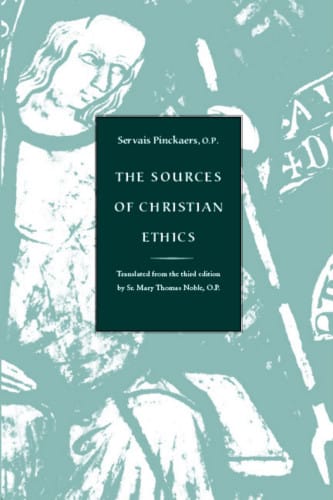
First up, is what is arguably Pinckaers’s most important work, The Sources of Christian Ethics, which was published in 1985. Which problems and debates were the backdrop of this book?
It was a condensation of his teaching at the time.
Pinckaers realized that the effort to recover a Gospel morality centered on ultimate happiness has been misunderstood from two different sides: libertarianism and legalism.
First, a libertarian perspective misses the interrelation between human virtue and true happiness, on the one hand, and the commands and precepts that spell out the path of moral development, right action, and the good life, on the other. Such a morality is based on the freedom of indifference. It bypasses or relativizes the larger pedagogical purposes of obligation, law, and commandments. It cuts itself off from the viable means (including grace and the gifts of the Holy Spirit, as well as commands and precepts) to guide the person to the end of Christian moral life—to be perfect as our heavenly Father is perfect (Matthew 5:48).
Second, the legalist or duty-driven morality (that has outlived the moral manuals) is suspicious of a moral theology centred on happiness, confusedly believing it leads to a utilitarian and hedonistic ethics. This ethics of duty counts on the purity of intention and the sentiment of duty to determine moral acts. It is a result of various forms of Kantianism or political utilitarianism.
Without denying a significant place for duty, precepts, intention, or emotion in moral agency, Pinckaers recognizes that a morality of beatitude and of a freedom for excellence—an evangelical freedom of the Spirit—takes imitation of Christ as its goal.
The legalistic position has a difficult time with this and brings it through the back door of spirituality. The theological vision of Pinckaers holds all this together. In his mindset, it makes sense that there be obligation, law, and commandments, but not an exaggerated libertarian perspective or a legalist, duty-driven morality.
Earlier you talked about Pinckaers’s principal theses. Is there anything beyond those theses that he addresses in the Sources of Christian Ethics?
The significance for moral theology of the return to its Scriptural, patristic, medieval, and magisterial sources cannot be overestimated. The title of the book is indicative of what he is doing: Christian ethics by taking us through the history of moral theology and its components. By returning to the sources, he can produce a moral theology similar to that of Aquinas. For Pinckaers, St. Thomas was a man of the sources, who looked to the wisdom of others.
Instead of taking his cue from the manuals that served the previous generation, Pinckaers takes up the primary texts for a dialogue. This dialogue is not simply historical, but contemporary and properly theological in its intent. In the sources, he there finds the way out from impasse of the casuistic approach of the manuals.
The central theses of the book are found in Pinckaers’s definition of Christian ethics.
“The definition is that: Christian ethics is the branch of theology that studies human acts so as to direct them to a loving vision of God seen as our true, complete happiness and our final end. This vision is attained by means of grace, the virtues, and the gifts, in the light of revelation and reason.”
He holds that the nature of Christian ethics is found in an integrated human and Christian perspective, that is ultimately theological in this largest sense, but takes into consideration those other sources, philosophical included.
He confirms that there are advantages to putting Christian ethics in a historical context, with attention to the major periods of moral theology: the patristic, high-scholastic, and late middle ages (with the Nominalist Revolution); the modern era of the manuals; Catholic and Protestant Ethics, and finally contemporary moral theology.
In the third part of the Sources, Pinckaers develops a very important treatment of freedom for excellence, compared the freedom of indifference, along with a thorough account of natural inclinations and the natural law.
In this last section, we see how virtue brings a normative dynamic. There has been a revival of virtue in psychology, philosophy, and theology. However, often a relativist cloud hangs over this understanding of virtue and normativity is less interesting that dispositions for most theorists than dispositions or habits, in a weak sense of the term. This is not the case with Pinckaers. He has a very strong notion of the normativity of virtue that is grounded in natural law.
"He has asked: what difference does it make whether moral theory aims primarily at obligation or beatitude? This question relates to how we're going to understand freedom."
In The Sources of Christian Ethics, Pinckaers distinguishes between two conceptions of freedom: freedom of excellence and freedom of indifference. What is the difference between these two kinds of freedom and why does it matter?
This is a really significant question because the term ‘freedom’ is often so misunderstood. We fail to see that it is a deep reality of our vocation. True freedom follows Christ.
In the Sources is found the treatment of freedom for excellence, which is another significant contribution to the renewal found in Pinckaers’ work. It is founded on the conception of the will, in which he finds the expression of “the true image of God within us, for it is in our mastery over our actions that we show forth his image.” Pinckaers has focused many of his academic studies on the center point of moral agency and ethical theory, that is, its goal or finality, which is closely related to his notion of freedom for excellence.
He has asked: what difference does it make whether moral theory aims primarily at obligation or beatitude? This question relates to how we're going to understand freedom.
One of the primary differences is found in the conception of reason and will and in the freedom that flows from them. Even if a common notion of human nature is established, when construed primarily in terms of obligation, freedom is focused on the capacity to do what one wills (regardless of whether it be good or evil and regardless of one’s vocation to Christian beatitude). The result construes the human person as primarily seeking autonomy or freedom from constraint and from coercion.
On the contrary, when seen in terms of the capacity to do the good that one wills and to fulfill one’s Christian calling in life, a freedom for excellence and even for holiness, results. While not denying the need for freedom from constraints, the focus on “freedom for excellence” involves a life consciously seeking moral-spiritual flourishing.
The pianist is an example that Fr. Pinckaers uses about freedom. Someone who has not learned how to play the piano is not free to play it. Similarly, when one trains and practices the life of virtue as well, we have the possibility of being free to be just, patient, and caring. This is found in the freedom for excellence and holiness.
2.
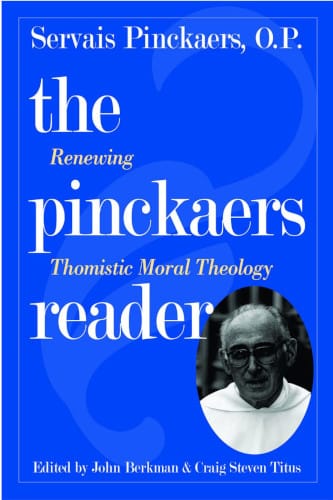
You are one of the editors of The Pinckaers Reader. In the introduction, you argue that this collection of papers from the late seventies to the early nineties is a companion volume to The Sources of Christian Ethics. Whereas that work focuses on the history of moral theology, it provides a more systematic survey of Christian moral life. Should the book be read from cover to cover, on account of its systematic intent, or can one delve into the papers separately?
It is always good to have instructions on the product in our hands.
The book was brought together with systematic intent works that had not been published in English. It is not a translation of a French anthology.
Prof. John Berkmann and I wanted to share Pinckaers’s insights with an English speaking audience. We also recognized that what he had published after The Sources of Christian Ethics was, for the most part, more scholarly still than that book, as is often the case with academic articles.
How should you read it? Most people approach it with some kind of project. The Pinckaers Reader is full of resources that can be used as you need them. However, if you have the leisure, time, or a course of studies, there is a logic to the progression of the chapters. There is some very interesting research that is worth going into, either systematically or individually, according to one's possibilities and needs.
Are there any chapters from The Pinckaers Reader that you would recommend in particular?
One through twenty.
What is most revolutionary, yet also very Scriptural and well-founded, is Aquinas’s and the tradition’s whole understanding of the New Law of Grace.
The last two chapters are “The Return of the New Law to Moral Theology” and “Morality and the Movement of the Holy Spirit: Aquinas’s Doctrine of Instinctus.” There, he recognises that the moral life is not just the individual effort of the soul. It is God's work. The gifts and motions of the Holy Spirit and are significant elements are a part of moral theology, though others doubt whether one can consider the Holy Spirit in moral life. For Pinckaers, there is a certain spontaneity within the movement of the Spirit, though it always needs to be discerned in the light of Scripture and the normativity of Tradition. Nevertheless, we are moved by the Spirit.
These last two chapters draw a close connection between faith as lived and the moral life in very concrete ways.
3.
The next book, Morality: The Catholic View, covers some of the same ground as The Sources of Christian Ethics. Is it a more accessible, condensed survey of the same subject for the non-specialist reader?
It is. It is smoother to read than The Sources of Christian Ethics, even though it has the same general structure. It is a great starting point for those who are entering into a discussion or for study of moral theology. It gives the history, the context, and a very fine explanation of freedom for excellence, happiness, natural moral law, the Holy Spirit and the New Law.
Some people imagine that there is virtue theory on one side, natural law on the other, and the two do not connect. This work shows clearly how throughout history, as Pinckaers understood, virtue, the Spirit, and natural law are connected.
4.
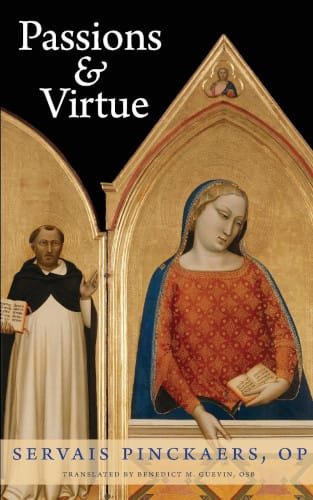
One of the criticisms of the manuals of moral theology that were written between the Council of Trent and Vatican II is that they focussed narrowly, albeit inadvertently, on coldly fulfilling obligations rather than, as one finds in St. Thomas, on responding to the good with passion and virtue. Does Pinckaers’s last completed work, Passions and Virtue, summarise for the general reader St. Thomas’s teachings on the passions and their essential role in our Christian life?
Passions and Virtue is the fruit, once again, of contemplation and immersion in Tradition. It is more popular than his other works, such as The Sources of Christian Ethics or The Pinckaers Reader, and provides a helpful overview of the virtues. It is a pleasure to read this introduction on virtue because Pinckaers writes well. This comes through even in the translation.
Passions and Virtue demonstrates Pinckaers’s interests. Though he deals with a large spectrum of virtues, in Chapter Eight he calls out one that is rarely discussed: humour or eutrapelia, to which Thomas Aquinas devoted a question in the Summa theologiae. For Aquinas and Pinckaers, this virtue reflects how the Christian is called to rest, even in one’s intellectual capacities, and to notice things that are pleasant, odd, engage us, and make the mind relax amid its labours. Pinckaers’s treatment of humour exemplifies how he brought together the tradition, his personal experiences, and his contemplation of nature.
He looks at humor in a very Thomistic way. This means going to the sources, bringing in new sources, such as the philosophical ones he quotes, and dialoguing with them, while remaining firmly rooted in truth and the good.
5.
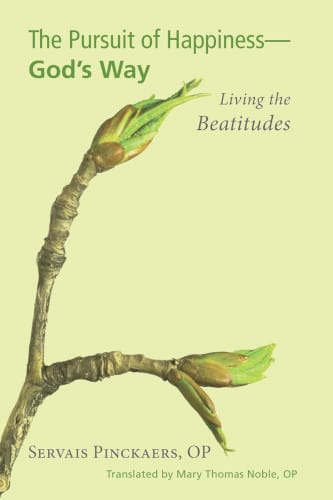
The final book is The Pursuit of Happiness - God's Way: Living the Beatitudes. It aims to help Christians live the beatitudes and understand how they are the pathways to happiness that Christ lays out for us. It is “written in the conviction that every Christian moralist should begin with an in-depth consideration of the Sermon on the Mount, acknowledging it as the primary source of his research and teaching.” Is this book a good guide for the Christian on the Sermon on the Mount and why it should be the lodestar for our daily life?
This book came out of his personal reflections, serious study, teaching, and his retreat work too. This theme was important throughout his works. The Pinckaers Reader contains some of his more scholarly, foundational, and carefully argued work on the nature of the beatitude: “Aquinas’s Pursuit of Beatitude: From the Commentary on the Sentences to the Summa Theologiae” (Chapter Six) and “Beatitude and the Beatitudes in Aquinas’s Summa Theologiae”(Chapter Seven).
In like manner, The Pursuit of Happiness seeks to explain true happiness and how it is through the beatitudes that the journey towards ultimate beatitude is played out.
This popular book is an example of the deep contemplation rooted in the conviction that Christ's teaching in the Sermon on the Mount is one of the best sources of Christian ethics and that the beatitudes are the backbone of an ethics informed by Scripture.
Some contemporary Catholic moral theology focuses on the Ten Commandments. Pinckaers draws out the significance of the whole range of sources of morality. There is not just the Decalogue. There is also the moral teaching found in the rest of Scripture, as in the Gospels and letters of St Paul's work.
In his teaching on the beatitudes, Jesus demonstrates how we are called to face the inevitable trials of Christian life in order to receive the blessedness that comes from imitating Christ. The whole project of Christian life is to imitate Christ. The beatitudes are the pathway. We need to be true to the end to the Father’s will, as the Lord was.
6.
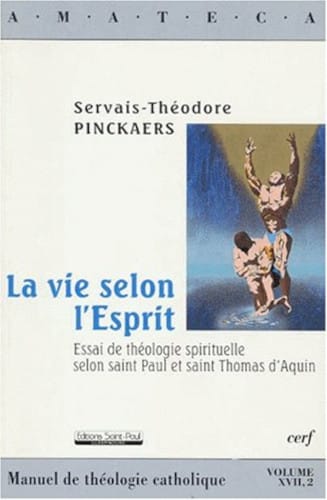
St. Thomas would never use the term ‘moral theology’ in his work because he considers theology to be a single, unitary science or form of wisdom. Pinckaers sought to undo the division that has arisen in modern academic theology between morality and spirituality. This is reflected notably in a book you have recommended for readers of French: La vie selon l’Esprit. It has also been translated into Italian. What makes this a good handbook on the spiritual life?
It is a very profound book and meant to serve a great number of needs within the Church, such as being a book for seminary formators. Once again, this is a book that grows out of Fr. Pinckaers’s teaching, studies, preaching, and prayer.
Drawing on St. Paul and St. Thomas, it shows how we achieve spiritual transformation and healing through the virtues and the life of the Spirit. It would be worth translating this book into English. It is one of his great works.
At present, we tend to break theology apart to study it. That is good up to a point. However, Pinckaers is very much part of the school for which theology is a whole.
-