In one of his main articles, “The Sacramental Foundation of Christian Existence,” Joseph Ratzinger identified the retrieval of the patristic understanding of mystery as “the most fruitful theological idea of our century,” one that “belongs to the field of sacramental theology.” Hence, “one can probably say without exaggeration that not since the end of the patristic era has the theology of the sacraments experienced such a flowering.”
He also noted that “the renewal of sacramental theology is experiencing at the same time a crisis of sacramentality, an alienation from the reality of the sacrament that can scarcely have existed with such severity and intensity within Christianity before. In a time when we have grown accustomed to seeing in the substance of things nothing but the material for human labour—when, in short, the world is regarded as matter and matter as material—initially there is no room left for that symbolic transparency of reality toward the eternal on which the sacramental principle is based. Oversimplifying somewhat, one could indeed say that the sacramental idea presupposes a symbolist understanding of the world, whereas the contemporary understanding of the world is functionalist: it sees things merely as things, as a function of human labour and accomplishment, and given such a starting point, it is no longer possible to understand how a ‘thing’ can become a ‘sacrament’. Let us put it in even more practical terms: the man of today is certainly interested in the question of God, and he is even concerned about the problem of Christ; but the sacraments are something altogether too religious for him, all too bound up with a past stage of faith for him to see any practical reason even to begin discussing them.”
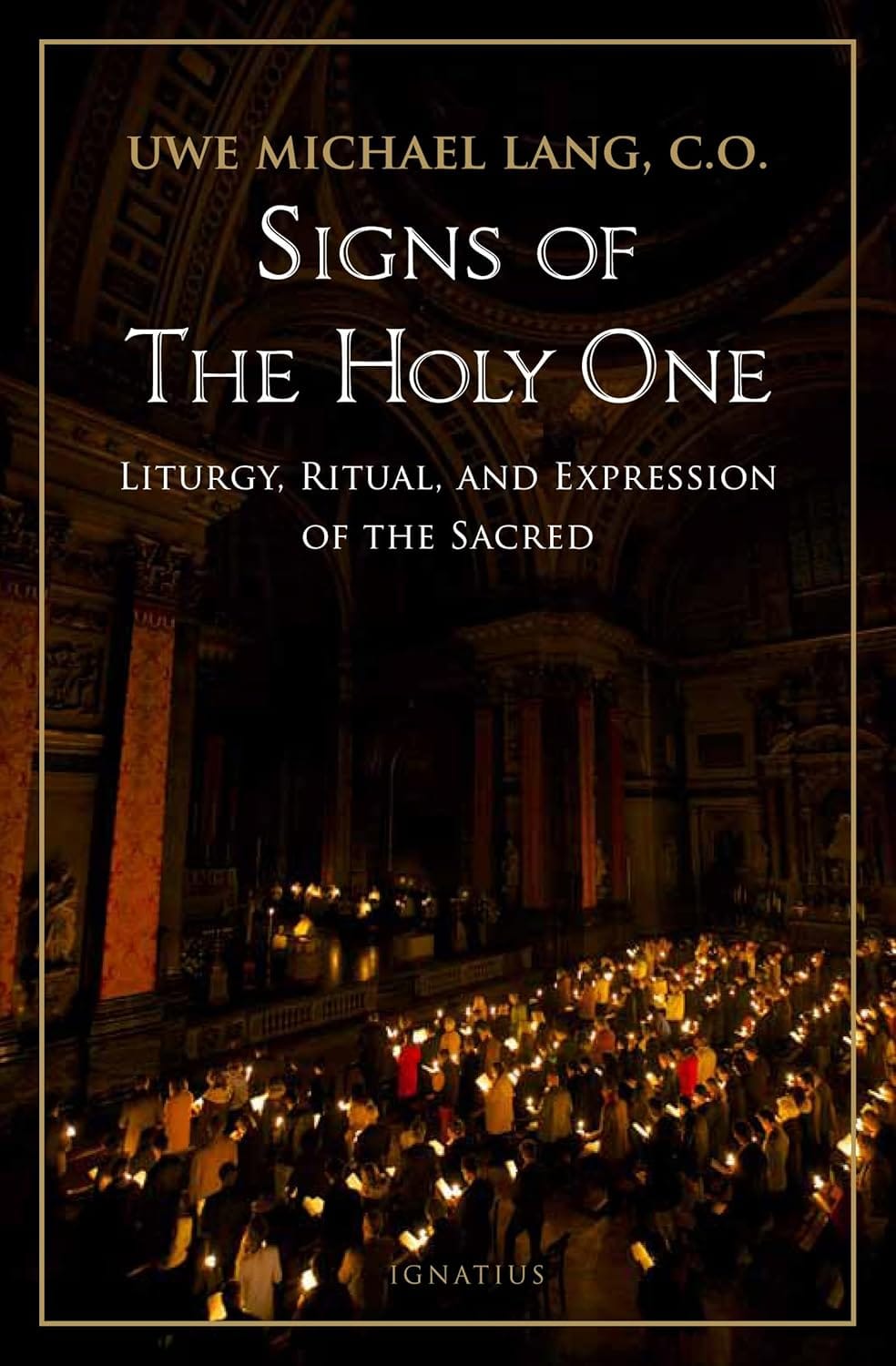
In this interview, Fr Uwe Michael Lang recommends some recent books on sacramental theology that address these problems.
Fr Uwe Michael Lang, a native of Nuremberg, Germany, is a priest of the Oratory of St Philip Neri in London. He holds a doctorate in theology from the University of Oxford and is a Senior Lecturer in Liturgy and Church History at St Mary’s University, Twickenham. He also teaches at Allen Hall Seminary, London, and is an Associate Staff Member at the Maryvale Institute, Birmingham. He is the Editor of Antiphon: A Journal for Liturgical Renewal. From 2008 to 2012 he was a staff member of Congregation for Divine Worship and the Discipline of the Sacraments, and from 2008 to 2013 he was a Consultor to the Office for the Liturgical Celebrations of the Supreme Pontiff. His current research is in liturgical studies, with a strong historical emphasis. He is the author of Turning Towards the Lord: Orientation in Liturgical Prayer (Ignatius Press), The Voice of the Church at Prayer: Reflections on Liturgy and Language (Ignatius Press), Signs of the Holy One: Liturgy, Ritual and the Expression of the Sacred (Ignatius Press), The Roman Mass: From Early Christian Origins to Tridentine Reform (Cambridge: Cambridge University Press, 2022), and A Short History of the Roman Mass (Ignatius Press). He is the editor of Authentic Liturgical Renewal in Contemporary Perspective (Bloomsbury T&T Clark) and The Fullness of Divine Worship: The Sacred Liturgy and Its Renewal (The Catholic University of America Press).
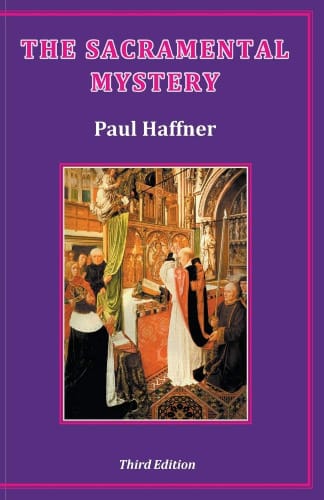
- The Sacramental Mystery
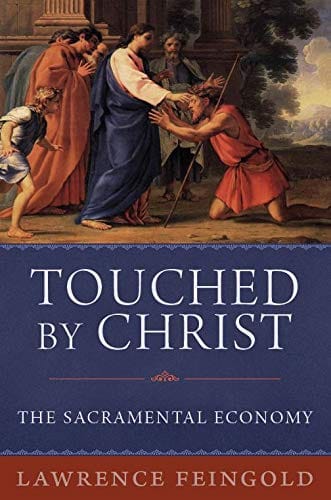
by Fr. Paul Haffner - Touched by Christ: The Sacramental Economy
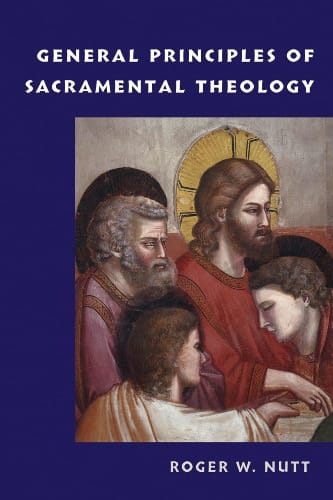
by Lawrence Feingold - General Principles of Sacramental Theology
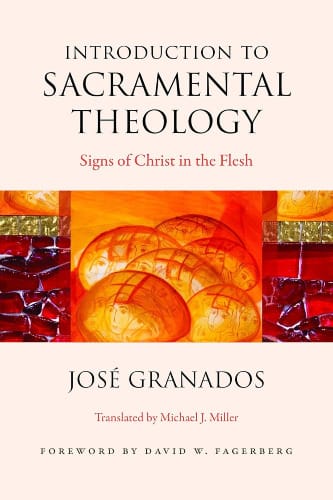
by Roger Nutt - Introduction to Sacramental Theology: Signs of Christ in the Flesh
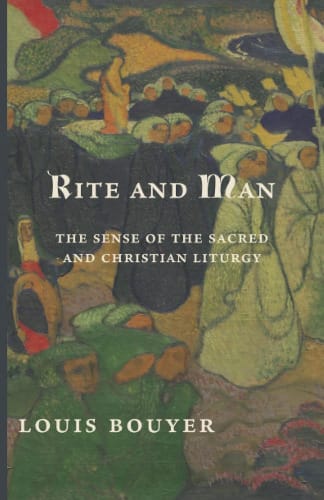
by Fr. José Granados - Rite and Man: Natural Sacredness and Christian Liturgy
by Fr. Louis Bouyer
In our previous conversation, you remarked that several good books on the sacraments had been published in recent years. In this interview, we shall discuss some of them. However, the backdrop to these books are the current debates within the Church on the sacraments.
The Church defined dogmatically its teaching on the sacraments over various councils in the Middle Ages and above all at the Council of Trent. There have been subsequent magisterial clarifications, such as that of Pius XII on the matter and form of the sacrament of Holy Orders, or that of Paul VI and the John Paul II on the Church’s lack of authority to confer priestly ordination on women. Apart from these recent magisterial clarifications, it seems that most of the major issues have long been settled. Do the more recent publications on sacramental theology add anything substantial that was not already covered by the handbooks that circulated prior to Vatican II?
The doctrinal teaching on the sacraments was developed fully in medieval period, thanks to scholastic theology, and was then formulated authoritatively by the Council of Trent. In that sense, there is not much new in Catholic sacramental theology as far as each of the sacraments is concerned specifically.
However, when it comes to general sacramental theology and its principles there have been some very interesting and significant developments in recent years. These developments mainly concern the relationship between the sacramental sign and sacramental causality.
The Church Fathers in general have a strong sense that the sacraments are efficacious for our salvation and sanctification of our soul. They work. They have Christ's promise attached to them. They offer covenanted grace.
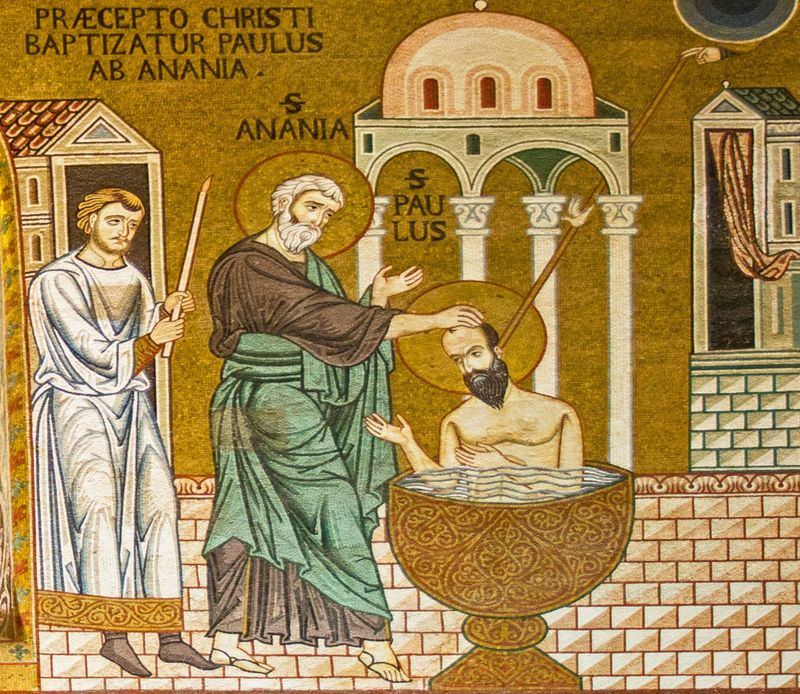
During the Middle Ages, especially with St. Thomas Aquinas, that general doctrine of the sacraments received a profound and more intelligible theological expression. St. Thomas defines a sacrament as the sign of the holy thing insofar as it makes men holy. The sacraments are sacred signs which convey grace. They communicate a particular grace that they signify. This is known as sacramental causality. The physical act of washing with water not only signifies, but also effects communicates the invisible washing of the soul from original and personal sin.
St. Thomas managed to hold together these two aspects: sign and cause. During the Protestant Reformation, however, the causal dimension of the sacraments was challenged. The Protestant reformers questioned or denied outright the causal efficacy with which the sacraments work.
The Council of Trent, and above all post-Tridentine theologians, zoomed into this aspect of sacramental theology and emphasized sacramental causality. As a result, we may not have always paid sufficient regard to the symbolic value of the sacraments: their character as a sign and the intimate link between that character and sacramental causality.
During the twentieth century, various theologians—such as Karl Rahner and later Louis-Marie Chauvet—sought to recover their value as signs and reformulate what is essentially an Aristotelian understanding of sacramental causality.
Nevertheless, I and many other theologians would argue that the sacramental theology that comes out of these efforts is not robust enough. It does not account sufficiently for how the sacraments work.
Hence, over the last perhaps ten or fifteen years, there have been various new approaches to sacramental theology that attempt to recover the best of the tradition, especially St. Thomas's synthesis between the sacrament’s character as both sign and cause. In my view, it an interesting time for sacramental theology.
 Five Books for Catholics
Each of the books that you have selected appears to retrieve classical sacramental theology of the kind that was common doctrine in Catholic faculties prior to the Second Vatican Council, while integrating it with the contributions of biblical, liturgical, patristic scholarship and other disciplines. Each appears to follow what Benedict XVI called a hermeneutic of renewal in continuity rather than a hermeneutic of discontinuity and rupture. Is this an accurate assessment?
It certainly is. Benedict XVI’s hermeneutic of renewal in continuity is bearing fruit in much English-speaking theological work today, and I find this very encouraging.
"The Church is born from the seven sacraments and is really an efficacious sign of the union between God and humanity. The Church is a source of salvation because, through the her and in her, the sacraments are made available."
You have mentioned the efforts of Karl Rahner and Louis-Marie Chauvet to recover the character of each sacrament as a sign. That brings us into the debates followed Vatican II. What have been the main theological debates over the sacraments since the Second Vatican Council?
One particular contribution of Vatican II was to broaden the term ‘sacrament’, in the manner of patristic ressourcement.
Since the scholastic period, during the high Middle Ages, we have been accustomed to speaking of the seven sacraments. However, in earlier texts, whether those of the Church Fathers or liturgical texts (many of which are still used in the Roman Rite), ‘sacrament’ is used in a broader, less definite sense.
To some extent, Vatican II recovers that older sense, as when Sacrosanctum Concilium and Lumen gentium speak of the Church as the “sacrament of salvation.” The Church is the universal sacrament of salvation because of Christ's gift of the Holy Spirit at Easter and Pentecost and, above all, because of the institution the sacraments of baptism and the Holy Eucharist. The seven sacraments communicate to the people of God the salvation and life-giving power that comes from God.
That doctrine of the Church as a sacrament of salvation spurred a theological debate on how to relate that teaching with the seven sacraments. Some clarification was necessary because Vatican II did not mean to say that the Church is the eighth sacrament. Rather, the Church is born from the seven sacraments and is really an efficacious sign of the union between God and humanity. The Church is a source of salvation because, through the her and in her, the sacraments are made available.
St. John Paul II made some important clarifications in his post-synodal exhortation on the sacrament of penance. There, he explains that the Church is said to be a sacrament because she is, as it were, created by the seven sacraments. The sacraments give supernatural life to the Church and make it an instrument of conversion and reconciliation between God and humanity. In that sense, the Church is the sacrament. Indeed, it may even be the primordial sacrament, as Karl Rahner argues. However, John Paul II affirmed, the Church is born above all from the sacrament of the Eucharist. As the title of his final encyclical indicates—Ecclesia de Eucharistia—the Church is born from of the Holy Eucharist, formed by it, and lives by it.
1.
Prior to Vatican II, the sacraments were often covered most extensively in the seminary textbooks on canon law and moral theology. Such books considered in detail the conditions required for their valid, licit, and spiritually fruitful celebration. Naturally, priests have a far greater responsibility than the laity to know about all these matters. Still, do any of the books you have selected, besides covering the theology of the sacraments, also cover the casuistry and practical aspects of the administration of the sacraments?
Yes, particularly the first book I have recommend as an introduction to sacramental theology: Fr. Paul Hafner's The Sacramental Mystery. It gives the bread and butter of sacramental theology.
First, it is an excellent, concise, and biblically grounded introduction to the principles of sacramental theology.
Then, Fr. Haffner goes through each of the seven sacraments and outlines its biblical roots and theological foundations. He also gives practical, liturgical explanations of it. Who is the minister? In what condition should you approach the sacrament? How should the sacrament be administered?
"The problem is that those who have emphasised a sacrament’s character as symbol and sign have disconnected it from causality."
Earlier we mentioned two ways of approaching sacramental theology: what Benedict XVI called the hermeneutic of renewal and continuity and a hermeneutics of discontinuity and rupture. Do proponents of theological revisionism propose hold any central theses on sacramental theology?
One very influential twentieth-century author in sacramental theology was Karl Rahner. I have some sympathy for his project. He wished to recast or reformulate classical dogmatic theology, which was based on a Thomistic-Aristotelian foundation. in what he considered the dominant philosophical idiom of the day: post-Kantian, post-Heideggerian existentialism.
Rahner rightly saw that the sacrament’s character as a holy sign needed to be more prominent in Catholic theology. He proposed to account for sacramental causality under the category of what he calls an intrinsic symbol: a sign that manifests the deeper identity of a thing.
Often, we have a very superficial understanding of symbols. Rahner argued that, properly understood, a symbol manifests something that belongs to the very being of what it represents. Hence, he saw the sacraments as signs that manifest what the Church already is: the presence of Christ's grace. There is certainly something to be said for that.
At the same time, Rahner's sacramental theology is very much tied up with his understanding of the Incarnation, the Church, and grace. He speaks of the supernatural existential. If I understand him correctly, this means that divine grace is already present always and everywhere in human existence. This is the foundation for his later theory of the “anonymous Christian.” Consequently, in Rahner’s theology, it is no longer intelligible what contribution the sacraments make to the workings of that grace. The sacraments do not appear to add anything to the supernatural existential that is already at work. That is a great weakness in Rahner’s theology. The Church’s teaching that the sacraments are necessary for salvation cannot find an appropriate place in his theological system.
The Rahnerian school of theology developed this idea. As a result, it often produced a very weak theology of the sacraments.
"Nowadays we tend to conceive causality along Newtonian, mechanical lines."
As faith in search of a deeper understanding of the Word of God—fides quaerens intellectum—theology must always draw on reason’s understanding of creation, and so on philosophy to some extent. St. Thomas Aquinas draws on Aristotle’s analysis of causality to explain the sacraments. During the twentieth-century, various Catholic theologians have drawn on contemporary philosophical schools, such as phenomenology and personalism, to elucidate the sacraments. You have already spoken of Karl Rahner. There was also, for example, Edward Schillebeeckx’s Christ, the Sacrament of the Encounter with God, which drew on phenomenology. Cormac Burke has drawn on personalism in his theology of marriage. How successful have been these attempts to draw on contemporary philosophy to elucidate the sacraments?
Some of these approaches have genuinely enriched our understanding of the sacraments. That is certainly the case with Cormac Burke's work on marriage.
For his part, Chauvet has reclaimed the symbolic dimension of the sacraments and their character as signs, which arguably had been relegated to the margins of pre-conciliar Catholic sacramental theology, with its focus on causality.
The problem is that those who have emphasised a sacrament’s character as symbol and sign have disconnected it from causality. It was easier to hold these two things together for St. Thomas Aquinas because of his Aristotelian defence of four kinds of causality. That is no longer the general, shared conception of causality. In fact, the rejection of such a conception of causality since the sixteenth century led to many problems within theology. Nowadays we tend to conceive causality along Newtonian, mechanical lines. Recovering that synthesis of sign and causality is a challenge today.
However, recent contributions in the field of sacramental theology, such as Lawrence Feingold's excellent handbook and Roger Nutt's book on the general principles, have shown not only the richness of Thomistic thought but also how it can be translated into contemporary sacramental theology.
There has also been a certain amount of bias against St. Thomas. St. Thomas has been marginalised within so-called continental philosophy compared to philosophy in the English-speaking world, where there has been a revival of interest in him. To some extent, Frege and Wittgenstein, and their criticism of the Cartesian tradition, have opened a space for the recovery of St. Thomas. Paradoxically, therefore, there has been more openness to St. Thomas in the English-speaking world, and far less among theologians who are strongly marked by strong continental philosophy.
2.
You have already spoken about Fr Haffner's The Sacramental Mystery and how it is a good, comprehensive, and accessible introduction to the Church's teaching on the sacraments. There is also Laurence Feingold's Touched by Christ. It covers much of the same ground. It too is a comprehensive textbook on sacraments, albeit a more detailed one. Have you recommended it for those who have read the first book and wish to delve deeper into the subject?
That is what I would recommend. Feingold’s is a very substantial book and draws on an incredible wealth of sources: biblical, patristic, and magisterial. It also discusses recent approaches to sacramental theology, such as those of Rahner and Chauvet. Moreover, it is very accessible book. It is an excellent textbook.
3.
The next two books do not treat the characteristics specific to each sacrament but the features common to the sacraments in general. Each book alleges that that treatises on the sacraments in general went out of favour after Vatican II and purports to fill the gap left in the literature. Has there been a neglect of the sacraments in general?
I believe this has been the case. There has been much focus on liturgical studies, often from an historical perspective. That is a very good and important development. My own research is of this kind.
However, the discipline of sacramental theology is really a part of dogmatic theology. Obviously, it has many points of contact with liturgical studies, pastoral theology, and canon law. Somehow, nonetheless, it has become relegated to a position of secondary importance. Often, even seminarians studying in houses of priestly formation are not as well equipped for their sacramental ministry as they should be.
Both Roger Nutt’s General Principles of Sacramental Theology and Fr José Granados’s Introduction to Sacramental Theology are treatises on the sacraments in general. How does each one complement the other?
Roger Nutt's book lays out the general principles, very much in the Thomistic tradition. It follows and unpacks the theology of St. Thomas Aquinas. In this regard, it is an important work. Those approaching St. Thomas directly who are not familiar with his interlocutors will miss a lot of what he is saying. One needs to enter that intellectual world to appreciate his sacramental theology fully.
4.
I recommend Fr Granados's book, on the other hand, as an advanced guide to sacramental theology. It is suited for postgraduate students. I like it very much. It takes a very interesting theological approach and opens many perspectives which you do not always find in books of sacramental theology.
For instance, there is an excellent chapter on the sacraments of the Old Covenant. That might sound like a surprising topic but is one on which St. Thomas elaborates. St. Thomas argues that there were already sacraments in the Old Covenant, such as the Passover and the various rites of sacrifice. The difference between the sacraments of the Old Covenant and those of the New Covenant is that the latter are efficacious by virtue of the Incarnation and Passion of Jesus Christ.
The book also has an excellent chapter on the sacraments in St. Augustine. In addition, it discusses specific questions of contemporary sacramental theology. However, to appreciate what Fr. Granados is doing in this book, you do need to have a basic understanding of sacramental theology and grounding in it.
5.
The final book is not exactly a recent one but was published just before Vatican II. In Rite and Man, Louis Bouyer argues that the Christian rites, as the worship of Christ and his body, are acts of both God and man. They are rooted therefore not just in the divine nature but also in human nature and man’s natural religiosity. Have you chosen this book because it offers the best treatment of the anthropological foundations of the sacraments, which has been the object of much recent research on the liturgy?
This is the reason why I have chosen this book. The anthropological foundations of the liturgy—and of the sacraments specifically—are important. That is because the sacraments draw on natural symbols. Fr. Bouyer gives a good theological account of how the sacraments are related to our natural religiosity and sense of the sacred, and of how Catholic practice is founded upon these.
He does so against the background of a debate from the 1950s. Once again, Schillebeeckx and Rahner were important contributors to this debate. They argued that the concept of the sacred has no place in Christianity. The concept of the sacred that we find in other religious traditions has been overcome by the Incarnation. Through his Incarnation, Christ has, in a way, consecrated the whole world. Through this consecration, the world is already sacred.
There is some truth to their view: the rigid barrier between the sacred and the profane has been bridged. The symbol for that is the tearing of the curtain of the temple that takes place, as Matthew narrates, during Christ’s Passion.
At the same time, the distinction between the sacred and the contingent or the sacred and the profane remains. Though distinct, they are not impermeable, utterly separate orders. Bouyer gives a good theological explanation of this dynamic distinction which exists in Catholic worship and practice.
 Five Books for Catholics
Some might push the rootedness of the sacraments in natural religiosity too far and introduce elements from other religions into Christian worship. How does Bouyer's answer to the question of the anthropological foundation of the sacraments differ from more extreme versions proposed, whether in theory or in practice, by some Catholic theologians?
First, there is the historical rootedness of Christianity and its practice. They are rooted in the incarnation of Jesus Christ, which occurred at a particular place and time. We cannot sever these ties. For example, the Eucharist is celebrated with the staples of the Mediterranean world: wheat bread and wine mixed with water. This is essential to the Eucharist and we cannot change it. We cannot inculturate the Eucharist in a way that would change the institution of the sacrament.
On the other hand, there is a legitimate inculturation. What is needed, though, is a discernment of what can really be integrated into the celebration of the Church's liturgy and what cannot. Over the centuries, certain cultural, artistic, and even religious elements of other traditions have been integrated, but always with discernment. Moreover, these elements have always undergone a certain purification before in becoming part of the Christian celebration.
.jpg)