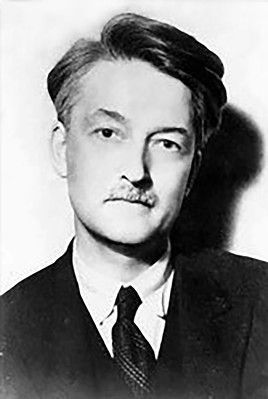
Jacques Maritain (1882-1973) was an influential Catholic neo-scholastic philosopher and many-faceted public intellectual. Raised a Protestant, he became an agnostic, A student of the natural sciences at the Sorbonne, he became disillusioned with scientism and even entered into a suicide pact with his wife, Raïssa, to be carried out if they had not discovered a deeper meaning to life within a year. The lectures of Henri Bergson helped them find some deeper meaning to life and prompted Maritain to study philosophy. In 1906, he and his wife converted to Catholicism. The following year, he discovered St. Thomas, and would dedicate the rest of his life to promoting and applying the Aquinas’s thought. Ambassador of France to the Holy See from 1945 to 1948, he joined the Little Brothers of Jesus in 1970, three years before his death. An influence on the Universal Declaration of Human Rights, the Second Vatican Council, and the Christian Democratic movement, he is one of the most important twentieth-century Catholic thinkers. Today Prof Matthew Minerd will take us through his pick of five of Maritain’s books.
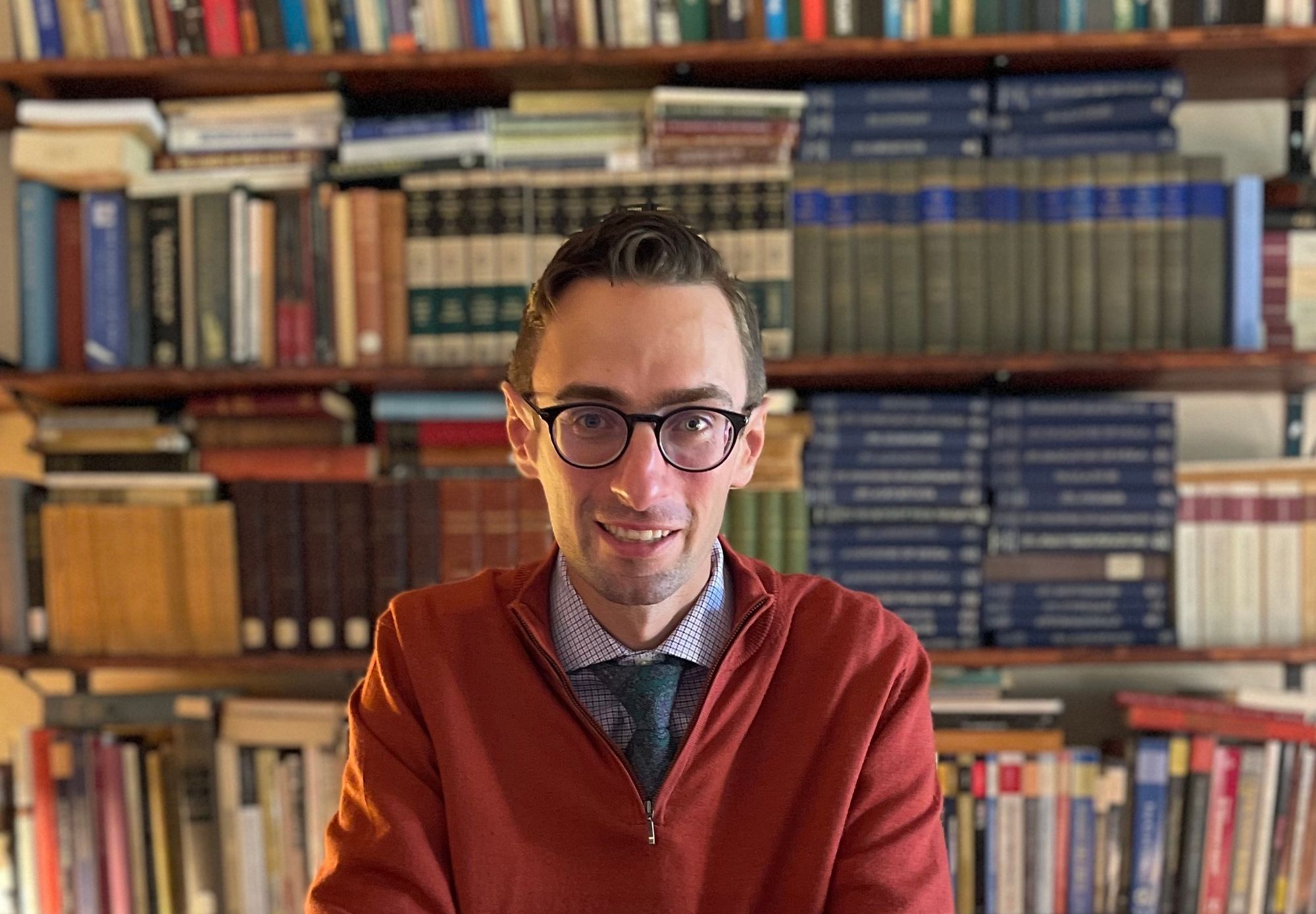
Matthew Minerd is a Ruthenian Catholic, husband, father, and a professor of philosophy and moral theology at Ss. Cyril and Methodius Byzantine Catholic Seminary in Pittsburgh, PA. His academic work has appeared in the journals Nova et Vetera, The American Catholic Philosophical Quarterly, Saint Anselm Journal, Lex Naturalis, Downside Review, The Review of Metaphysics, and Maritain Studies, as well in volumes published by the American Maritain Association through the Catholic University of America Press. He has served as author, translator, and/or editor for volumes published by The Catholic University of America Press, Emmaus Academic, Cluny Media, and Ascension Press. He has published academic articles and book chapters related to Maritain and is the Secretary of the American Maritain Association. For more information on his work, visit philosophicalcatholic.com
- The Angelic Doctor
by Jacques Maritain - Prayer and Intelligence
by Jacques and Raïssa Maritain - The Primacy of the Spiritual
by Jacques Maritain - Art and Scholasticism
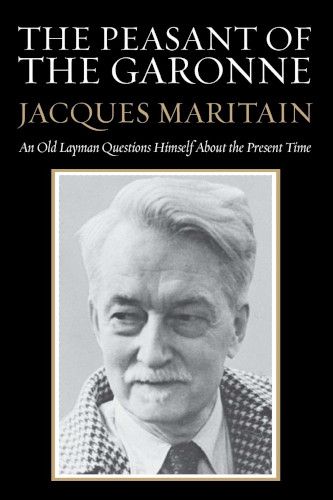
by Jacques Maritain - The Peasant of the Garonne: An Old Layman Questions Himself about the Present Time
by Jacques Maritain
Can you tell us about your research in general and, more specifically, what has motivated you to study Maritain and write on him?
My research at the dissertation level was on fourteenth-century scholasticism and the metaphysics of logic. There was little written on the subject, less contestation in the secondary literature, so it was easier. There was another reason. I was interested in the early formation of the Dominican flank of Thomism. I would not call Hervaeus Natalis, on whom I wrote my dissertation, an exponent of the high Thomistic school, but he was a significant voice there early on, and he did voice some positions in the metaphysics of logic that were close to those of John Poinsot (John of St. Thomas) later on in the Baroque period of Scholasticism. So, strangely that fascination with the historical Thomistic school came to me through Maritain. It was from my interaction with him when, juridically, I was a Roman Catholic.
As a seminarian, I was assigned his Degrees of Knowledge. It converted me to Thomism. In graduate school, I wrote my licentiate thesis on how historicity plays into the knowledge of the natural law in Maritain’s thought. So, throughout my licentiate studies and then my doctoral work, the whole œuvreof Maritain was always on my shelf. Even for my licence, I combed through the whole of the corpus a second time, just to take notes. I still have an abundance of flash cards from those days. So, Maritain became this entréeto something that was much older than the neo-scholastic period. Through Humbert Clerissac, Réginald Garrigou-Lagrange, and others, he was heavily influenced to read St Thomas through Thomas de Vio (Cajetan), John of Saint Thomas, the Salamanca Carmelites, and, to a lesser degree, Charles-René Billuart. He was led to see them as the main lights for doing Thomism.
I became interested in his whole circle as an organic growth of that world. My continued work has been as a translator. I have translated lots by the French Dominicans that were in his circle: some volumes by Réginald Garrigou-Lagrange; Jean-Hervé Nicolas, who was very close to Maritain; Michel Labourdette; Ambroise Gardeil, who was half a generation older than Garrigou-Lagrange, but for whom Maritain had a lot of respect. Strangely, as a Byzantine Catholic, I found myself reading these Latin thinkers who are often thought of as part of the mid-century turn toward themes that the post-Conciliar Church took up.
Maritain is often thought of in this way, yet he is harmoniously connected to the past. We live in an era of the Church where there is a lot of squabbling. I like to try to get people to talk to each other. Maritain has reached all the way back to the fourteenth century in many ways and to Saint Thomas. Looking at the ongoing dialogue of thinkers in that way has always been important for me and for my conception of Thomism. I got it from him.
I would never recommend that you start with The Degrees of Knowledge, unless you are sure that God is going to move you in that direction. It is a very difficult book. I joked that I probably understood five percent of it at the time. I have refused to look at the paper I wrote on it for that epistemology class because it was probably so sophomoric. In that book, you see the full swath of how he engaged with the sciences; the main themes of Thomistic epistemology and metaphysics; the debates over mysticism in St John of the Cross; the kind of epistemology that is necessary for discussing mystical experience. You see it all in one big clip. The only thing that is really missing is the political side of Maritain. Maybe some of the aesthetics as well, but it is probably operative in his long footnotes. It is a great book but it is also very difficult.
From Maritain, you learn not merely Thomism but how to be an honest philosopher. You see a philosopher at work.
In you view, why should we read Maritain?
We all need teachers. If you are a Thomist, or a westerner who reads St Thomas Aquinas, you should read someone who has been more profoundly engaged with him than you have been. I say that to myself. Maritain dedicated his life to the reading of Saint Thomas and his school in the modern world. From Maritain, you learn not merely Thomism but how to be an honest philosopher. You see a philosopher at work. Whenever you are a young apprentice, learning a craft, you have the lowliest of jobs: sweeping things up and pounding a couple nails in. Of course, the purpose is to watch people go about their craft. Just watching someone do their craft teaches you what the philosophical habitus is like.
Maybe this is the most important thing. One of the risks most scholastically inflected Catholics suffer from, is a kind of historicism: a repetition of the past. Seeing a philosopher like Maritain, or his protégé Yves Simon, be a legitimate thinker is probably the most important aspect of his work. He is a philosopher across all bounds: in aesthetics; in morals; in politics, in epistemology; in metaphysics; and so forth. Learning that lesson prevents a kind of backward-looking Thomism. It prevents, in the words of John Deely, a rearview-mirror Thomism.
Maritain also keys you in on the intellectual scene of Catholicism from the thirties to the sixties in interesting ways. One of the books that we shall talk about will show that: he was a very interesting, open-minded man, still looking at the many travails of the Church around the time of the Second Vatican Council. This book shatters narratives. It is neither traditionalist, nor ressourcement, nor is it Roman Thomism. It is an honest look by a layman at what's going on at the time.
You have mentioned or hinted at how Maritain faced criticism from other Catholic intellectuals. The great French historian of medieval philosophy, Etienne Gilson, believed that he became increasingly eclectic. Charles de Koninck believed that his personalist political philosophy was overly individualist and parted from the traditional conception of the common good. How would you defend Maritain from criticisms such as these?
The big place of critiquing Maritain is on questions political. Some of them are in the line of the Laval School of Charles de Koninck. Some are in the line of certain theologians. Garrigou-Lagrange was consulted on this in the fifties, as was Mons. Clifford Fenton. There was Julio Meinvielle in South America. They object that Maritain does not really make sufficient room for the Christianization of the civic order itself and how the indirect authority of the Church lives itself out in the civic order. One of the books that we shall talk about shows that, at least early in his career, he was well apprised of the indirect authority of the Church in civic matters. Truth be told, he was on the spectrum of the more democratically inflected thinkers of that period. Others, like Journet, were also in that line, especially given the question of integralism. Even Garrigou-Lagrange thought that Maritain could get out of condemnation if he just wrote the right article and explained his view of the Papal magisterium on the subordination of State to the Church.
On the issue of the common good, I am of the opinion of Yves Simon. In the Review of Politics, he wrote that Charles de Koninck’s book does not address Maritain and that his position on St Thomas’s thought on the common good is pretty much the same as Maritain’s. The book is kind of useless for critiquing Maritain. I do not like to be that dismissive, but I do think that Simon was keying into something. Nowhere in that book does Charles de Koninck directly cite Maritain.
Maritain was a bit of a naive child of more left-focused French thinkers. He never lost that. He had some family connection to Ernest Renan. There is some verbiage about personalism and communitarianism that he used in the forties and which Emmanuel Mounier took up. Later on, Maritain said that he did not like the direction in which it was used. He was naively comfortable with a more left-facing politics, without any self-criticism. Truth be told, I wished that he had just published a couple of the articles that Garrigou-Lagrange wanted him to write. It would have clarified his own thought, even for himself.
He started out as a member of Action française, somewhat on the periphery. If it had not been for Action française, some of his first works would not have been published. In his The Primacy of the Spiritual:On the Things That Are Not Caesar's, you can see his awareness of the importance of classical ecclesiology regarding the relationship of Church and State. World War Two shifted his mind on other things. I wish he could have harmonised the two sides of his mind.
Gilson and Maritain were made to never understand each other in the end. One could critique Gilson of being a historicist. He is very much a historian of thought. His idea of Thomism is about knowing St Thomas’s thought, and that is it. People in my tribe of Thomism sometimes get vexed with Gilson for this reason. If you read Maritain’s late works, it does fell like he is he is doing his own Maritainism within Thomism. Still, they had different ideas of what Thomism is. That would just set them in opposition. Maritain was always, at least publicly, kinder towards Gilson. Occasionally, Gilson would take swipes, although he was kind late in life. The semiotician John Deely influenced me. He was a kind of an anti-Gilsonian. In my more petulant, youthful days, I was a bit anti-Gilsonian, even though I had gained so much from him.
1.
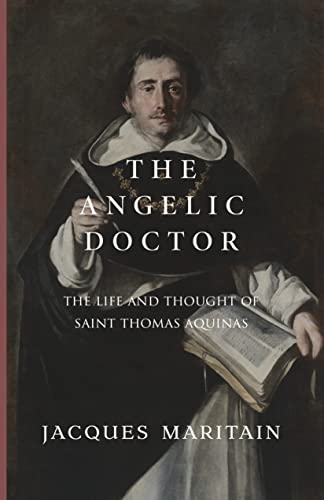
The first book that you have chosen is Maritain’s The Angelic Doctor: The Life and Thought of Saint Thomas, originally published in 1929. Since then, James Weisheipl’s and Jean-Pierre Torrell’s more authoritative biographies of St. Thomas have appeared. Is Maritain’s book worth reading to understand his take on St. Thomas and the place of Thomism in his own thought?
Recently, I finished working on the third edition of Jean-Pierre Torrell’s biography. I was helping update the edits on it, and I couldn't help but think that some of Maritain’s book is out of date. But it still stands as a good testament to what neo-scholasticism looked like at the turn of the twentieth century. There are all kinds of tales about neo-scholasticism at the turn of the twentieth century. Here you have a first-person account. It is somewhat historical in the first chapter, but then there is an account of what St. Thomas represents for our day. It is a reflection by a man who had been writing quite a bit in the Thomist tradition.
You also get a sense of some of the triumphalism of the era. This is something I notice sometimes a little bit more, looking from the Byzantine East. When you look back now, you realise how triumphalist some of these scholastics were.
The book is also a way of getting into his mind of what he thinks Thomism is and who Maritain is in general. He does not merely look back to the thirteenth century of Thomas. He also comments on the history of the reception of St Thomas by various popes and the school, and on how Thomism’s various branches relate to each other: Thomism as theology; as philosophy; its relation to modern sciences, a topic so dear to him. All of that comes up just in passing. When he is in a first-person mood, he cannot help himself and starts meandering a bit into his own reception and thought. There is a kind of Maritain spiel. You recognise that he is being himself. You see some of those themes come out within the context of a quasi-biography of St. Thomas.
The book gives you a feel for the Church of that era. This is very important today. We are still in the aftermath of the self-questioning of the Second Vatican Council. The whole twentieth century still weighs on us today. It is good to know what the ecclesial mind of the Latin Church was like in one of its main exponents at the time. It also gives you an entrée into St. Thomas, a particular reading of him, and Maritain’s own thought. What he says here holds through the whole of his career, no matter if he gets a bit weird later on. He is consistent throughout. So, this book gives you a sense of his Thomism, even if later he engages more in contemporary political matters and other things.
2.
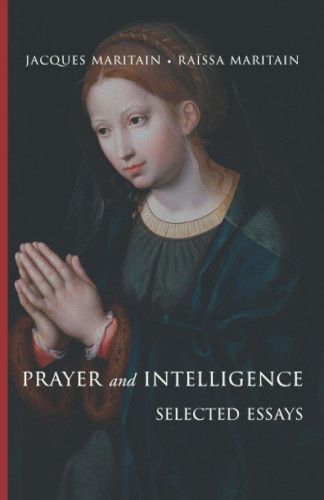
It is said that behind every great man, there is a great woman. In Maritain’s case, it is his wife Raïssa. An intellectual in her own right, she introduced her husband to the writings of St. Thomas and is his co-author in the next book you have picked: Prayer and Intelligence. They describe the work as "an attempt to disentangle and state as clearly as possible, in the spirit of Christian tradition and of St. Thomas, the main directions which seem suitable to the spiritual life of persons living in the world and occupied in intellectual pursuits." Presumably you have chosen this work to showcase Maritain’s spirituality. Does the guidance that he and Raïssa give still hold up today?
It is a lovely little book that has just been republished by Cluny Press.
They were a Josephite marriage. Early on they were Benedictine oblates. They had a very strict horarium for a number of years, at the beginning of their life. They always thought of themselves as a little household that had a quasi-monastic life, even when they became more engaged in things of the world. Vera Oumansoff, Raïssa’s sister, lived with them as well. They were this little community that lived together on both sides of the Atlantic.
I picked this text to showcase the spiritual theology that he got from Garrigou-Lagrange in particular: the Carmelite mysticism that was in vogue and being debated at that time. This spirituality was deeply important to both the Maritains.
This is just a lovely little fifty-six page book. They go through what would be treated at much greater length in Garrigou-Lagrange’s Three Ages of the Spiritual Life or The Love of God and the Cross of Jesus: the gifts of the Holy Spirit, prayer, and infused wisdom: how to think philosophically and yet subordinate being a person of the mind to theology and the life of faith. It is all there, in seed, in these tiny chapters. It takes a certain sort of erudition. It is written for intellectuals but is accessible and quite meditative in its tone. It gives you an entrée.
If you are more interested in technical matters of Maritain’s spiritual thought. you can turn to the second-half of The Degrees of Knowledgeor some of his other essays. The general spiritual physiognomy of the Maritains remains the same. People change, people adapt, but the essence of his spirituality remained the same, even when, as an old man, he is writing as a member of the Little Brothers of Jesus.
3.
Maritain is perhaps best known today for his works of political philosophy, such as Integral Humanism, Man and the State, The Person and the Common Good. These books exerted a major influence on Christian democratic parties, especially in the Spanish speaking world. However, you have chosen Primacy of the Spiritual, the book that he wrote in the wake of Pius XI’s condemnation of Action Française, the royalist political movement to which Maritain belonged at the time. By defending the primacy of the spiritual, Maritain distances himself in this book from the Action Française’s advocacy of a certain primacy of the political (politique d’abord). Why have you singled out this book from among Maritain’s political writings?
I am putting my thumb on the scales slightly, out of my desire to counterbalance what is better known about Maritain’s political thought: what you find in Integral Humanism or Man and the State.
This book is basically about the two powers, their subordination, and the meaning of the indirect authority of the Church in civic matters.
Integral Humanism (1936) clearly steps back regarding Christendom. At the time of writing Integral Humanism, his notion of Christendom is quite loose. He remarks that there was the sacral conception of the relationship between Church and State which ruled in the High Middle Ages. However, there is an analogy of Christendoms. Now, in the modern world, there is a democratic ideal of Christendom. Christendom is no longer a sacral state. That is an important development in his thought. It does mark a slight change in his thought, but he is well-enough rooted in the classical ecclesiology, that goes back to Juan de Torquemada and that he never really loses because of this connection to Charles Journet. He never totally loses the traditional view of the two powers.
This book is basically about the two powers, their subordination, and the meaning of the indirect authority of the Church in civic matters. As he ages, he emphasises the indirection of the spiritual authority in the temporal order. In other words, it is through more moral means that the Church exercises her authority in civic matters. However, he does not wholly lose the old view of the Church’s indirect authority in temporal matters.
Hermeneutically, it is not bad to see him in a mode that is a little bit different from what people expect. At least it reminds you that he is has gotten to where he is by developing out of that tradition. At the time, he thinks he is even in the same place as Reginald Garrigou-Lagrange. This is before the Spanish Civil War, which hardens lines and embitters parties. He even cites at some length an article that Garrigou-Lagrange wrote, in response to the condemnation of Action Française, on the indirect authority of the Church in civic matters. So, I would challenge people who read some of the later works of Maritain to take this one up. If one wishes to critique his later political thought on certain points, and maybe rightfully so, could one critique him in his own terms? Could one use him to critique him and correct his thought.
It is an excellent text today, amid the political debates that are going on in the anglophone world.
4.
Throughout his career, Maritain reflected on art. During the twenties he was closely associated with artists. Most notably, he influenced Stravinsky. Aptly, therefore, your fourth pick is Art and Scholasticism, in which Maritain sets out the Scholastics’ comprehensive theory of art. What does Maritain teach us about the arts and beauty?
This is an excellent introduction. This is classic Maritain, thinking in his Maritain way, within the tradition, about the philosophy of making. Some people would say that it is about the philosophy of art or aesthetics. I have certain reservations about the term aesthetics. It is an idealist term from nineteenth-century German thought.
Effectively, he has a great appreciation for the creativity, for lack of a better term, of practical knowledge: whether it is the virtue of prudence, seeking to find the moral mean and to perform truly virtuous acts; or the virtue of art, by which new forms are placed in the world. Art is all around us. Look in your office, let alone the whole world.
You need to have a good critique of what goes on in practical, artistic, technical reasoning and of how new artefacts really have this dependence on the spirit of man. This is not merely a matter of art or craftmanship. Above all, there is the experience we have as intellectual beings of beauty: beauty refracted as a transcendental and in each of the senses. There is the beauty we experience in sound. The knowledge by which a musician, within a certain tradition, creates this experience, is not a knowledge to be explained. It is a knowledge that is directed toward making. The artist then places that experience in a new creation, in the new piece of music, or in the interpretation of a piece of music.
Maritain presents an aesthetics, but also an epistemology, of art.
He develops it more fully in Creative Intuition in Art and Poetry, a beautiful text that was the inaugural A.W. Mellon Lectures in the Fine Arts. I can't imagine why they ever had another lecture because this one is so technical and scholastic. I don't know what his auditors thought. But Art and Scholasticism introduces all these themes about poetic insight: its relation to art and, in the end, to the transcendentals. Beauty is a reflection across all being. Our art and craft is our way of speaking beauties from the experience of beauty. All of that is done here in a much more accessible way than in Creative Intuition in Art and Poetry and more fully than in The Situation of Poetry, a series of essays (Some editions of Art and Scholasticism include a couple of those essays).
Maritain deals with the question of Christian art and the relationship between prudence, morality, and art. This was all developed very well by Marie-Dominique Philippe in a two-volume book, L’activité artistique. However, you never get to that excellent synthesis without going through Maritan, who broke new ground here. His questions and answers are inspired by Thomas, but he is doing something that St Thomas did not. He has been criticised because this is not a historical study of St Thomas. However, it is an example of how Thomists should think. Our life is perfused with artistic activity. Craftsmen see new forms for fixing old problems. If we cannot account for that in our epistemology, our philosophy is useless. Here, Maritain provides a model for doing that.
It is a beautiful text. Be sure to read the footnotes. This is true about Maritain in general. There is just as much gold in his very long footnotes as there is in body of the text. People know him for the political thought, but the aesthetics is very important as well.
He warmly accepts the Second Vatican Council and yet he is witheringly critical of the “chronolatrous fatuity” of the age and of the “kneeling before the world” that was going on in the sixties.
5.
Paul VI was a friend and admirer of Maritain’s and saw in his work one of the inspirations of the Council. You close your selection with Maritain’s last major work, his critique of post-conciliar progressivism, The Peasant of the Garonne: An Old Layman Questions Himself about the Present Time. Why have you chosen this book?
When I was putting this list together, I thought I should include something that is first-person. Interview books sell so well because they have that personal sound. This a good statement by him and it is close to debates and questions that people are raising today. It still holds up, but it is technical. Maritain was very bright and, in a sense, he wrote a conversation with himself. But it is a fascinating romp through the sixties and the immediate aftermath of the post-conciliar Church. It has a kind of currency that still echoes to this day. He warmly accepts the Second Vatican Council and yet he is witheringly critical of the “chronolatrous fatuity” of the age and of the “kneeling before the world” that was going on in the sixties.
It gives an interesting insight into a very openminded thinker, whom some thought to be a progressive and on the progressive wing of the reception of the Council, who immediately sees through some of the foolishness that was foisted on the Council unjustly by those who looked to instrumentalize it for their own ends.
The volume tends to go off the rails, especially regarding the thought of Teilhard de Chardin (rightly, I think, but somewhat unevenly,) which was bothering him and was so influential at the time. Even that is filled with all sorts of connections to his thought: the sciences; the relationship between Thomism and modern thought. All of this comes up all throughout the volume, which gives us a view into a world which is distended over our own.
It helps to remind people that Maritain was not some sort of raving neo-modernist. This is a foolish theme that one finds in people who link him to the nouvelle théologie crisis. They make dumb remarks about his position in some of the great theological and philosophical debates. Even when he was ambassador, he was very much in support of the conservative Dominicans, but as an ambassador, he could not say anything. He was a faithful son of the Church and a faithful Thomist, with some insightful views about what a Thomist of that era would think about all the tomfoolery that broke out during that period. It broke out everywhere and was not unique to the Catholic world. So, the book is a good quasi-intellectual biography. It is cranky. If you like cranky things, it is fun. If not, it might turn you off. But he is a high-toned crank in that book.