
During the early fourth century, a controversy arose over the doctrines of Pelagius, Caelestius, and Julian of Eclanum. The doctrines in question were not about the Trinity or the Incarnation. Instead, they regarded human nature, freedom, and their relation to grace. Their teachings were opposed by Paulinus of Milan, St. Jerome, but above all St. Augustine. They were condemned at various regional synods: the Councils of Carthage of 412 and 418, Council of Diospolis of 415, and two councils of African bishops in 416. They were also condemned by Pope Innocent I, Pope Zosimus, and the Council of Ephesus. The controversy helped crystalise the Catholic Church’s doctrines on the condition of our first parents, original sin, grace, and conversion. In a certain sense, however, it has never been settled definitively as similar controversies over the same issues have continue to arise periodically.
In this interview, Andrew Chronister discusses Pelagianism and some of the best books on it.
Andrew Chronister is associate professor of patristics and ancient languages, Kenrick-Glennon Seminary. He is the author of Augustine in the Pelagian Controversy: Defending Church Unity.

- Answer to the Pelagians I
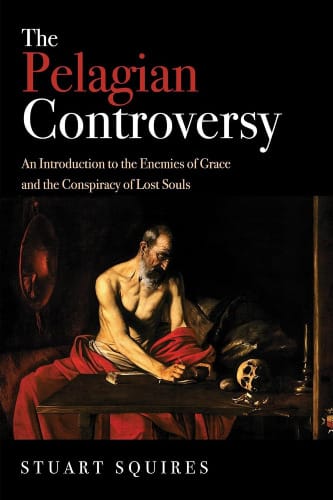
by St. Augustine - The Pelagian Controversy: An Introduction to the Enemies of Grace and the Conspiracy of Lost Souls
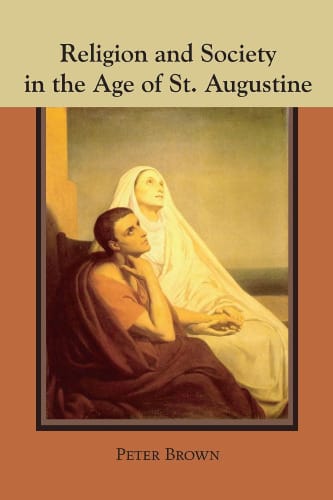
by Stuart Squires - Religion and Society in the Age of Saint Augustine
by Peter Brown - The Heart of Perfection: How the Saints Taught Me to Trade My Dream of Perfect for God's
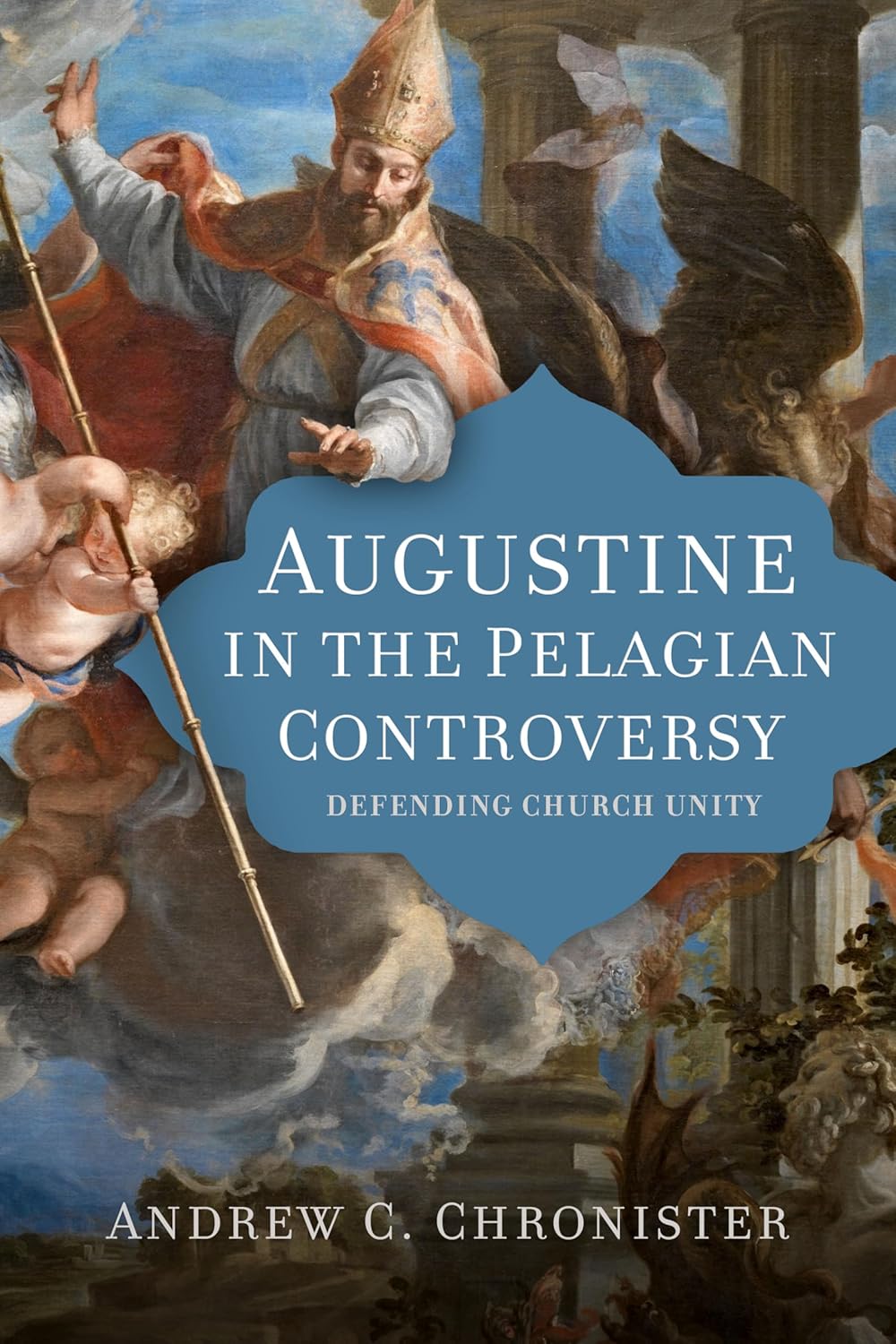
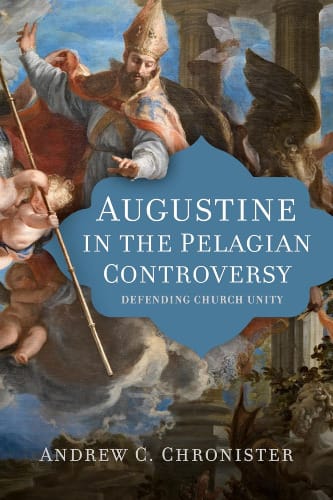
by Colleen Carroll Campbell - Augustine in the Pelagian Controversy: Defending Church Unity
by Andrew Chronister
What is Pelagianism?
Pelagianism is a heresy that came to the fore in the first couple decades of the fifth century. It was a very complicated phenomenon, but basically it was the idea that through our human nature and faculties we are fully equipped to act virtuously and reach heaven.
During the 410s and 420s, St. Augustine of Hippo pushed back vigorously against Pelagianism and emphasized the need for grace.
Pelagianism is also a doctrine about the extent to which Adam's sin damaged our humanity and capacity to avoid sin.
Pelagius denied that Adam's sin had any harmful effect on human nature or our capacity to choose the good, other than that of giving us a bad example.
These are two ways in which we can narrow down Pelagianism. It rejected the need of grace and the existence of original sin.
Scholars refer to a later group of authors as semi-Pelagians. What is the difference between semi-Pelagians and full-fledged Pelagians?
Semi-Pelagianism is a modern term. It refers to the positions that Augustine wrote against towards the end of his life and once he had finished debating Pelagius himself.
Certain monks in southern France were concerned that Augustine had gone too far with some of his views on grace. They argued that, while grace is important, we should not discount the role of free choice. They agreed that we need grace to reach heaven but believed that we do not need grace to make the first step towards God. In their view, God will reward us with the grace that we need to reach him if we make that first step towards him.
Augustine and others wrote against them to insist that we need grace even for that first step. It is God, not us, who gets the ball rolling. Growth in holiness is a process that God initiates.
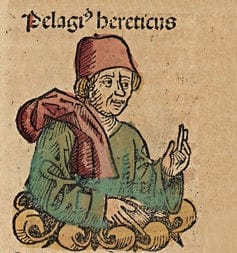
Who was Pelagius?
We do not know too much about him. He was from Britain and at some point, maybe in the 390s, he ended up in Rome.
He came to prominence in the first decade of the fifth century, when he developed a following around himself and became a spiritual guru of sorts. Somewhat like Jerome, he was known for his ascetic writings and moral exhortations.
Sometime between 405 and 410, he wrote On Nature (De Natura), which outlined his views on grace and the human soul’s capacity to avoid sin. During that period, he also wrote his commentary on letters of St. Paul.
How did the Pelagian controversy start?
Most consider 411 as a decisive moment, when Pelagius’s associate or disciple, Caelestius, applied for ordination to the priesthood in Carthage. During the scrutiny, he was accused of heresy and brought before a panel of bishops in Carthage, who condemned him of it. The Pelagian controversy erupted at this point and developed from it.
At this point, Pelagius was not involved explicitly. He only became involved when the controversy spread to Palestine. By this time, Pelagius was in Palestine and was tried for heresy there in 415.
Actually, the controversy began before 410, when Pelagius was still in Rome. Back then, he and his followers made certain claims about grace and the effects of Adam’s sin that others found unsettling. This was before the controversy broke out in North Africa and Augustine was involved.
The controversy was imported to Africa in the aftermath of the sack of Rome in August of 410. Many Roman aristocrats fled from Alaric and the Visigoths and relocated to Africa. Once in Africa, they carried on with their theological debates and discussions.
So, Augustine did not start the opposition to Pelagius. Pelagius was surrounded by controversy before Augustine was involved.
 Five Books for Catholics
As you mentioned, Pelagius was not the only proponent of the doctrinal errors that now go by his name. Rufinus the Syrian, Caelestius, and Julian of Eclanum held similar positions and were part of the controversy. Did they hold the exact same positions and what part did they play in the controversy?
Older scholarship often points to Rufinus the Syrian as the originator of Pelagianism. He is a shadowy figure about whom we do not know much. The surviving evidence points to him as an important inspiration for Pelagius and Caelestius.
When Caelestius was on trial at Carthage in 411, his accusers asked about his teaching that Adam's sin had no real effect on human nature. Caelestius argued that this was an open question and that good people held the same view as he did. When they asked for the source of his teaching, he claimed that the priest Rufinus denied that Adam’s sin was transmitted to his progeny.
For a long time, it was assumed that this was Rufinus of Aquileia, Jerome's old friend, who became his opponent during the Origenist controversy. During the second half of the twentieth century, scholars pushed back against that thesis.
In speaking of the origins of Pelagianism, Marius Mercator, one of Augustine's allies in the controversy, claimed that a Syrian named Rufinus was Pelagius’s teacher. According to Marius Mercator, Pelagius was the one who promoted Rufinus’s doctrines in Rome.
There has been much scholarship on this over the last twenty years. Walter Dunphy has made a persuasive case that there was no such Rufinus the Syrian and that the figure in question was, as had been presumed traditionally, Rufinus of Aquileia. That makes sense for various reasons. However, the evidence is insufficient to either prove or disprove this decisively.
It does seem clear that Rufinus of Aquileia was in the background, if not the direct inspiration for Pelagianism. His translations of earlier Eastern Christian texts would have provided some level of inspiration for Pelagius when he was thinking about Adam's sin, grace, and free will.
If it was Rufinus of Aquileia, might it have been the case that Pelagius and Caelestius got the wrong end of the stick when studying his writings?
That is possible. It is hard to know exactly what Rufinus believed. Most of what we have from him are his translations of Origen and other authors. In fact, most of the works of Origen that we have are the translations that Rufinus made. We need to ask, therefore, what did Origen believe and how do we distinguish that from what Rufinus believed.
It is unlikely that Rufinus himself was the architect of what we know as Pelagianism. More likely, he inspired certain ways of thinking or emphases that Pelagius and Caelestius developed in a more robust way on their own. Again, it is hard to arrive at any decisive conclusions from the existing evidence.
As scholars tend to note, we should not assume that Pelagius, Caelestius, and Julian of Eclanum held the exact same positions, even though their opponents grouped them together as if they did. That said, I believe that they were closer to one another than they were different, especially on the key issues of grace, free will, and original sin.
Now, Pelagius says relatively little on original sin. Caelestius, on the other hand, is much more interested in it and writes explicitly about it. Pelagius is more interested in exhorting people to live sinlessly and emphasizing that human nature has the capacity to live sinlessly.
It is not clear to what extent Julian was connected to Pelagius and Caelestius or in communication with them. Following their condemnation in 418, Julian stepped forward and expressed his agreement with some of their positions, or at least his hesitancy to agree with their opponents. He came forward as the leader of almost twenty other Italian bishops and refused to sign the condemnation of Pelagius and Caelestius. From then on, he was a thorn in Augustine's side. It is hard to know to what extent Julian agreed with Pelagius. I am inclined to believe that there were more similarities than differences between the two on these key issues.
"Pelagianism is a constant temptation. The same is true of anyone who has a tendency towards perfectionism."
What were the main fourth-century magisterial pronouncements against Pelagianism?
There were various local councils in Africa that issued resolutions and decrees against Pelagianism. The most important one was a pan-African council that condemned Pelagianism on 1 May 418. A few months later, Pope Zosimus issued his condemnation of Pelagius and Caelestius in a letter called the Tractoria. Unfortunately, we only have fragments of it. In January 417, Zosimus's predecessor, Pope Innocent, had also issued condemnations of Pelagius and Caelestius.
It is not exactly clear what the popes knew about Pelagianism, what they condemned, and how strong those condemnations were.
Later, there was the Second Synod of Orange, which was incorporated into the papal magisterium. It issued a condemnation of semi-Pelagianism.
Did not the Council of Ephesus also condemn Caelestius in 431?
Pelagianism—or at least Caelestius and Julian—were condemned at Ephesus. However, there is little mention of them in the actual records of Ephesus. It seems that the fathers at the Council of Ephesus were not very aware of Pelagianism. As far as they were concerned, the real problem was that Caelestius and Julian had associated themselves with Nestorius, whereas Rome was allying with Cyril of Alexandria. That was the main reason Caelestius and Julian were condemned at the Council of Ephesus.
 Five Books for Catholics
Has Pelagianism flared up again in a slightly different forms during subsequent periods?
There is always a temptation to overemphasize the human capacity for virtue and growth in holiness. This is a temptation for many of us.
It flares up continuously because it is so difficult parse out these complicated issues and get them right.
The controversy was resolved to some degree during Augustine's own lifetime with the condemnation of the extreme positions of Pelagius and Caelestius. However, the question of how to balance grace and free choice was not fully explained during Augustine's lifetime. It has continued to arise at various points in history. Even Augustine did not balance the two as well as we would have liked him to, especially in his final works.
In his commentary on the first chapter of the Second Vatican Council’s Pastoral Constitution Gaudium et spes, Joseph Ratzinger branded its treatment of free will in n. 17 as “downright Pelagian.” Is Pelagianism rife in the modern Church?
Rife might be too strong a word. At least in my spiritual life, Pelagianism is a constant temptation. The same is true of anyone who has a tendency towards perfectionism. We tend to imagine that if we do X, Y, and Z, then we will grow in holiness and things will be great. Augustine, on the other hand, calls us to recognize the priority of God and his action in all aspects of our life. Our very existence comes from God. So does our growth in holiness.
That does not mean that we are not doing anything. We contribute to our growth in holiness by cooperating with that grace. We might fool ourselves into thinking that we are holy because of what we do in and of ourselves. That is a dangerous road to go down and we are always in danger of doing so because it is so easy for pride to creep in.
"Taking Pelagius's position to its logical conclusion means that we do not really need God. While God might aid us by teaching us about right and wrong, in theory we can be perfectly good without needing his help at all."
Although the Council of Carthage of 418 and the Second Council of Orange (529) helped formulate the Church’s teaching against Pelagianism, it is only in the fourth and fifth sessions of the Council of the Trent, with the decrees on original sin and justification, that an ecumenical council articulates these truths of the faith comprehensively. Should we look to Trent for a fuller understanding of these issues?
Yes. It is a bit dangerous to look to Augustine for the proper response to Pelagianism. He gets so much right and is the doctor of grace. He is the one who really recognized the importance of grace and defended it during this controversy. At the same time, certain statements from his later writings seem to go too far. They so emphasize grace that they sound almost Calvinist, to put it anachronistically. Augustine sometimes suggests that grace is irresistible. However, in the Decree on Justification, the Council of Trent makes it clear that it is always possible for us to reject grace
That decree allows us to identify what Augustine got right and where he may have gone too far.
It also is a beautiful example of the way in which doctrine develops over the course of time.
Heroes of the faith, such as Augustine, do so much good for the faith. However, they are not inspired in themselves. They contribute to the gradual unfolding of doctrine. That process is led by the Holy Spirit. Through it, the Church understands more fully the Gospel and the Revelation of who God is. Great ecumenical councils, such as Trent, help us separate the wheat from the chaff, as it were.

1.
That brings us to the first book. It collects and translates seven of Augustine's anti-Pelagian writings. What advice would you give on reading this book? Which of these treatises are the most important?This is a nice thick book. It collects works from the first stage of the Pelagian controversy (411-418). These are the works that were written specifically against Pelagius or Caelestius, whereas some of the later works are directed more against Julian of Eclanum or the semi-Pelagians.
On the Spirit and the Letter is a good primer on Augustine's view of grace. He is not so concerned with undermining Pelagianism, but with presenting his views on grace positively and its relationship with free will. It is relatively short and not too complicated. It is a fairly early work (ca. 412). Moreover, its language is careful and precise.
A work in which Augustine tackles and responds to the doctrine of Pelagius is On the Grace of Christ and Original Sin (418). In Book One, he deals with grace; in Book Two, with original sin. Moreover, he provides many quotations from the writings of Pelagius and Caelestius. It thereby disproves a certain caricature of Pelagius. He did not reject the notion of grace or claim that we do not need grace at all. He believed that we do need grace. He even says that we need it at every moment and for every action. The real question is, “What does he mean by grace?” He certainly did not mean the same thing as Augustine. In this work, Augustine parses out the difference between their views and explains why he considers Pelagius wrong.
What were St. Augustine’s main objections to the teachings of Pelagius and his fellow travellers?
His main objection to Pelagius’s teaching on grace is that it is essentially a prideful position. It does not acknowledge our reliance on God for everything. He believes that it is contrary to the Pauline teaching. Taking Pelagius's position to its logical conclusion means that we do not really need God. While God might aid us by teaching us about right and wrong, in theory we can be perfectly good without needing his help at all. This is utterly contrary to Augustine's understanding of the heart of Christianity.
We need Christ to come down and save us. We need him to not only forgive our sins—something Pelagius believes too—but also to support us in our brokenness and sinfulness. We need him to help us to grow in holiness and know him more deeply. We need to have the love of the Holy Spirit poured out into our hearts. Hence, Romans 5:5 is so important for Augustine.
When it comes to original sin, his main objection is that Pelagianism is unrealistic and does not take either Scripture or human history seriously.
Pelagius claims that Adam does have a bad effect on his descendants by providing them with a terrible example. Augustine agrees but points out that many others, beginning with the devil, have provided us with a terrible example as well. While he does not discount the way in which the bad example of others leads us astray into sin, he believes that there is something more to Adam’s sin. That sin has broken something within the human person. Even when we know what the right thing is, sometimes we do not want to do it. Augustine considers this weakness of the will an effect of Adam's sin. He does not conceptualize original sin as clearly as the later medieval tradition, viewing it as a wound to human nature rather than the mere absence the prelapsarian graces that Adam and Eve enjoyed (especially the grace of integrity). However, he does recognize that our will now lacks the power to fully move our lower faculties, which rebel against our will. Augustine teaches that after the Fall we are in a constant war with our lower desires (concupiscence) and that this leads us to sin.
Augustine has exerted a decisive influence on the Church’s formulation of doctrines of original justice, original sin, grace, and conversion. Which aspects of his teaching made their way into the Church’s, and which facets were rejected?
Augustine's key contribution on the topic of grace is his assertion of the priority of God in one’s growth in holiness. God gives us the power to lead a holy life and make virtuous choices. The life of holiness does not come primarily or entirely from us. Rather, God draws and attracts us to it. We then cooperate with him. It is Augustine, therefore, who originates the notions of operative and cooperative grace. Medieval theologians, such as St. Thomas Aquinas, develop these notions far more extensively.
In part, Augustine does not contribute an entirely new doctrine on original sin but reaffirms what earlier Christians had recognized: Adam’s sin has wrought real damage to human nature and our capacity to lead a holy life. Through Adam's sin, all humanity has been alienated from God in a certain way. Hence, our relationship with God needs to be restored. Caelestius, on the other hand, claimed that newborn babies are born into the same state in which Adam was created, the only difference being that newborn babies are exposed to bad example.
However, the Church's magisterium has not endorsed the view laid out in some of Augustine’s later works that grace is irresistible: that the grace of Christ is so powerful that it not only makes it possible for us to will the good but makes us will it. Here, the question is whether grace forces us to will or do something. There have been various theories within Catholicism about the appropriateness of such language. This is a problematic subject. Augustine’s later views could quite easily lead to Calvinism.
As to original sin, Augustine believes that infants who die without baptism are destined to hell. Even in the Middle Ages, the Catholic Church did not follow Augustine rigorously on this matter. That is why theories about limbo come to the fore. Such theories carved out a middle space for those infants, one that was neither hell nor heaven. Everyone senses that it would be unjust for unbaptized babies, who have not committed any personal sins, to end up in hell. In 2007, the International Theological Commission published a document on the subject: The Hope of Salvation for Infants Who Die without Being Baptised. It argued that we can entrust those infants to the mercy of God and hope that they are saved, even though it is not entirely clear how they are saved.
Why is St. Augustine’s contemporary, St. John Cassian, occasionally considered a semi-Pelagian?
John Cassian was one of the monks in Southern France who balked at certain aspects of the late Augustine's theology. He was concerned that it overemphasised grace there and underemphasised free choice. Hence, he is sometimes labelled a semi-Pelagian.
Nevertheless, John Cassian clearly rejects Pelagianism and is strongly opposed to it. It is hard to categorise him exactly and so it may not be fair to call him a semi-Pelagian.
How does the Catholic conception of original sin and grace's ruling conversion differ from that of the Orthodox churches on the one hand and Protestant communities on the other?
That is a very complicated question and I am not an expert on it.
A common view is that the Orthodox do not share Augustine’s views on grace and original sin but share a more Pelagian perspective on those issues. I am not sure to what extent that is accurate. During the controversy, there were Eastern figures who opposed and rejected certain aspects of Pelagius's teaching. Moreover, there was a rejection of Pelagianism in some form at the Council of Ephesus. However, it does seem to me that there was certainly greater hesitancy in the East than there was in Augustine about the fate of unbaptized infants. Augustine is fairly certain that they end up in hell. The East held greater hope in their salvation. However, it is not fair to say that the East's perspective on original sin is Pelagian. Pelagianism denies that Adam’s fall does any “structural” damage to human nature or leaves humanity with an inclination to sin. The Eastern Fathers with whom I am most familiar do recognize that, as a result of the fall, we have an inclination toward sin. They do not align with Pelagianism in that sense.
It is much trickier to compare East and West on the issue of grace because Pelagianism was a Western controversy for the most part. It set in motion a great deal of reflection on those issues in the West. Such reflection never really came to the fore in the East in the same way. Whether East and West are on the same page about grace is an open question. It might simply be the case that there has been more reflection on it and so a more developed theology of grace in the West.
On the other hand, it is hard to fit all Protestants into single point of view. There is a range different views within Protestantism.
The Protestant Reformation has been described as a battle between Augustine's ecclesiology and his theology of grace. Catholics supported his ecclesiology: the unity and catholicity of the Church. Protestants put more emphasis on his opposition to Pelagianism and his support for grace. According to some accounts, however, Martin Luther believed that justification does not actually change the human person but simply covers one’s sin with a veneer of holiness that Christ has gained. This is not Augustine’s position. He believes that baptism and justification bring about a real interior transformation, sanctification, and growth in holiness.
I would also be hesitant to describe Augustine's views as Calvinist. It depends on which Augustine you are talking about. Even the late Augustine, gives different answers to questions about grace in free will in one treatise than he does in another. Establishing his position is complicated. Protestantism has picked up on certain aspects of Augustine's theology of grace, and the Catholic Church on others. The problem is that Augustine is an occasional thinker. He put out a work and an argument but was not constructing an elaborate theological system.
2.
What makes Stuart Squire’s study a good guide to the history of the Pelagian controversy and the doctrines of its main participants?
Stuart Squires' book offers a great overview of the controversy. The first half provides the history of the controversy and some background to both the key figures and minor ones who do not get the attention they deserve.
The second half takes a brief looks at the theology of the main participants.
A reader who is relatively familiar with theology and with the patristic period will have no problem getting through this book, understanding the main contours of the controversy and the theological efforts of Augustine, Jerome, Pelagius, Caelestius, and Julian. There is also a chapter on St. John Cassian. Squires also incorporates some of the reflection of the secondary or tertiary figures.
What is the conspiracy of lost souls to which Squires refers in the subtitle of his book?
“The enemies of grace” is a term Augustine sometimes uses for the Pelagians. Modern scholars might object that Augustine is not entirely fair. Pelagius, Caelestius, and Julian all affirm some form of grace. However, Augustine, with a polemical edge, encapsulates their view by calling them “enemies of grace.”
3.
The next book is a collection of articles and book review by the eminent Augustine scholar and biographer, Peter Brown. Have you chosen it because of its essays on the Pelagius, his patrons and supporters?
Those two articles are very important. They set the stage for what Pelagius is up to. They explain his social and intellectual context.
We sometimes approach early Christian doctrinal controversies in isolation from their social and historical context. As a result, we may misunderstand what they were all about.
For example, there is the occasional caricature of Pelagius as a proto-humanist who is against grace and is proposing that we do not really need God but fulfil ourselves through the capacities we already have.
To fully understand these early heretics, it is helpful to be attentive the historical context. This gives a better sense of was at stake in the debate.
Brown knows the historical and societal context of the third, fourth, fifth centuries very well. He points, therefore, to why people were attracted to Pelagius. This is a worthwhile project that makes early Christian heresies more intelligible. For example, it would be a mistake to think that Arius randomly woke up one morning and decided to undermine the entire Christian faith by saying that Jesus is not actually God. So too, Pelagius did not just wake up one day and decide to teach that we do not need grace or even God. So what was it that prompted Pelagius’s theology and what attracted people to him as a teacher? Here, it is helpful to look at Rome during the late fourth and early fifth century, when many aristocrats began to convert Christianity.
Hitherto, there had not been many aristocratic converts. However, once Christianity was the quasi-official religion, even the arch-traditionalists of Roman society began to finally take the plunge and jump on board. They belonged to families that had been wealthy for very long and had a particular role within Roman society. They provided funds for public buildings, games, and entertainment. In many ways, they viewed themselves as the guardians or patrons of the empire itself.
Some of them had an identity crisis when they converted to Christianity. All of a sudden, the heart of their identity had shifted from being patrons of the Roman Empire and holding it as the greatest good, to holding the Christian faith as the most important things in their lives. As they understood what it meant to take their Christian faith seriously, they turned to spiritual leaders such as Jerome, Rufinus, and Pelagius for guidance on how live the Christian faith in a compelling way.
Brown explains this context, what Pelagius was up to, and how he was able to attract such a large following.
What attracted people was not so much his teaching on grace or original sin, but his exhortation to take the faith seriously, avoid sin, and live sinlessly. That program of moral reformation became problematic because its consequences were not as fully thought out as someone like Augustine would have liked.

4.
Colleen Carroll Campbell’s The Heart of Perfection is not a history of the Pelagian controversy. Drawing on the lives of the saints but also on that of Christians whose pursuit of holiness led them to heresy, it warns against the spiritual pathology of perfectionism and the need to distinguish it from true holiness. Have you selected this book because it brings the issues debated in the Pelagian controversy to bear on the everyday lives of Christians?
I was blown away by how well written and timely this book is. It is connected to the issues of the Pelagian controversy.
Throughout the history of the Church, there has always been a tendency to forget the role that God plays in our lives. Now that we have at our disposal so many means to distract and amuse ourselves, it is easy to forget that true happiness is to be found in God alone. We cannot achieve by ourselves the fulfilment that we truly desire
Carroll Campbell points to the ways in which different saints have battled with perfectionism, scrupulosity, and such like. They have also had a turning point. They recognized that their relationship with God was the heart of all they were and did and that growing in their relationship with the Father, Son, and Holy Spirit was the way to fulfilment.
Sometimes we view perfectionism in isolation, as if it were just a me problem. You might think that you are too hard on yourself because you are a perfectionist. You might even take some pride in that, because it means that you care about details and getting things right. However, we have a wake-up call once we realise the damage that such a Pelagian inclination does to ourselves, our relationship with God, and those around us. Carroll Campbell describes that very well in her book. She had just become a mother and realized how her own perfectionism had impacted her family. It affected her relationship with her husband and her children.
I can see that in my own life as well. I realise that perfectionism can damage my relationship with my wife and children. Whenever I set a high bar or high standards for my children, I might recall that I have studied the Pelagian controversy and should know the remedy to all these problems. Sometimes, however, it is helpful to read books that give you a wake-up call and alert you to answers that are right in front of you.
"Throughout the Pelagian controversy, one of Augustine’s main concerns was to safeguard and defend the unity of the Church"
5.
In Augustine in the Pelagian Controversy, you argue that the Bishop of Hippo felt that refuting Caelestius and Pelagius was necessary to safeguard the unity of the Church. How so?
The unique perspective I offer in my book is that Augustine opposed the Pelagians not just on account of their theology. To understand why the controversy was so explosive, it is helpful to look at its context. Something else fuelled Augustine’s passion in combating Pelagianism. From his writings and other sources, it is apparent that he was really concerned about the unity of the Church. Pelagianism put that unity at risk.
First, Pelagians argued explicitly that whoever disagreed with them was also disagreeing with the Eastern churches, which were allegedly of the same mind as them. Such an argument was a particularly explosive accusation in the context of Augustine's North Africa, which had been divided by the Donatist schism for a hundred years. Donatists had split off after the Diocletianic persecution at the beginning of the fourth century. In 411, the Roman emperor finally decided that a trial was needed to bring the two churches back together.
It is in this context that Pelagianism erupted in North Africa. By accusing Catholics of not being in union with the Eastern churches, the Pelagians were perhaps unintentionally undermining the Catholic cause in North Africa. The Donatists could easily jump on those accusations and charge Catholics with not being in union with the rest of the Church. Whereas the Catholic Church in North Africa accused Donatists of being a provincial offshoot of Christianity, the Donatists could now counter that other Christians were now saying the same about the Catholic Church in North Africa: that it was not in union with the Eastern churches
At various moments in the controversy, the issue of unity came to the fore. The most explicit example occurred when Julian of Eclanum and around twenty other bishops refused to sign the condemnation of Pelagius. Augustine's writings against Julian do not make for fun reading and are not his most edifying. That is why I have not recommended them for this list. There was much back and forth and it got somewhat ugly. Occasionally, scholars put this down to Augustine’s age—he was at a stage in his life when he no longer had any time for young upstarts—and Julian’s disrespectful treatment of him. That may be true. More importantly, however, almost twenty Italian bishops had split from the Catholic Church. They were trying to muster support in the East and maybe even pushing for another council. For Augustine, this would have felt like Donatism all over again: a prolonged schism. Once bishops split off, a schism would last longer than if it were merely a movement started by some random lay people
I argue, therefore, that throughout the Pelagian controversy, one of Augustine’s main concerns was to safeguard and defend the unity of the Church. He saw Pelagians as a real threat to that unity.
Is this the main way in which your book makes Augustine's involvement in the Pelagian controversy more intelligible or are there other aspects to your argument?
That is its main contribution. It identifies this other motivation. Some scholars have noticed it but have not traced it throughout the whole controversy. I try to do so.