
When he prepared the edition of Aristotle’s works some decades before Christ’s birth, Andronicus of Rhodes entitled one set of lectures the Metaphysics or The books that come after the ones on Physics (ta meta ta Phusika). Consequently, the area of philosophy that Aristotle covers in that work came to be known as metaphysics. It is perhaps the most important area. The conclusions one reaches on the questions covered in metaphysics underlie and shape the conclusions reached in other areas.
Studying metaphysics is an essential part of an education in philosophy. It is also indispensable for theology because it regards the fundamental constitution of reality. The Church has drawn on metaphysics repeatedly to define the dogmas of the faith and interpret Sacred Scripture authoritatively. Conversely, many doctrinal errors result from unsound metaphysical views. As in any area of philosophy, there are many conflicting positions. Christians studying metaphysics, therefore, must do so discerningly.
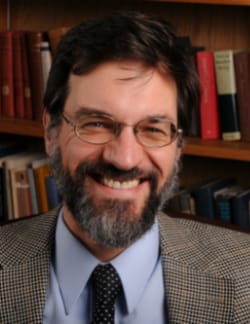
In this interview, Michael Gorman selects and discusses the five best books for studying metaphysics.
Michael Gorman is Ordinary Professor of Philosophy at the Catholic University of America and a fellow at its Institute for Human Ecology. He works primarily on metaphysics, especially the metaphysics of essence, substance, and normativity, and on applications of metaphysics in areas such as theory of mind, Christology, action theory, and ethics. He is the author of Aquinas on the Metaphysics of the Hypostatic Union (Cambridge University Press) and A Contemporary Introduction to Thomistic Metaphysics (CUA Press).
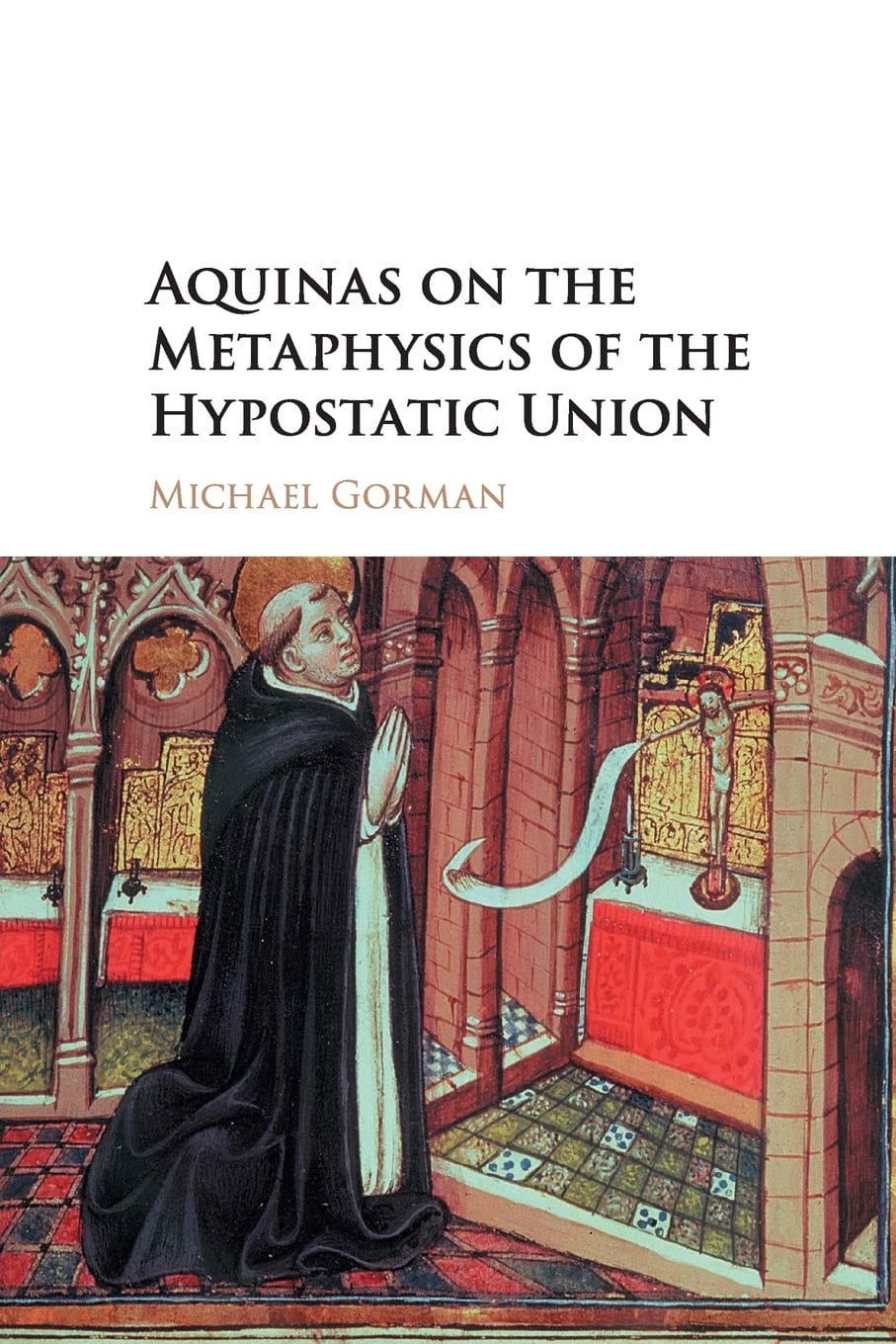
- A Contemporary Introduction to Thomistic Metaphysics
by Michael Gorman - The One and the Many: A Contemporary Thomistic Metaphysics
by Norris W. Clarke - Scholastic Metaphysics: A Contemporary Introduction
by Edward Feser - Aquinas on Being and Essence: A Translation and Interpretation (De ente et essentia)
by Joseph Bobik - Metaphysics
by Aristotle, translated with introduction and notes by C.D.C. Reeve
What exactly is metaphysics?
Classically understood, metaphysics is the study of being, or, as we sometimes say, being qua being: being as being.
You can study something, such as a squirrel, and just think about it as a squirrel. You can also think about it more generally. You might think about it as a rodent or more generally still as an animal. You could keep going. However, if you think about things in a maximally general way, you think about them as beings: as things that are. That is what metaphysics does.
Ontology—the science of being—is another name for metaphysics. It indicates that being as such is the specific object of metaphysics. It thereby supposes that being is the most fundamental description or aspect of reality. How so?
It's funny. In one way, we think that being is the most obvious thing there is. However, we scratch our head figuring out how to describe it. What do you contrast it with? In a way, you cannot contrast it with anything because the alternative is nothing. That sounds like a silly comment, but, in a sense, this is why being is the most fundamental thing there is. You could put it this way. Being is what is actual, but without actuality, there is simply nothing. Being is the ultimate sine qua non.
"Those who say that they do not believe in metaphysics still end up doing it. You cannot avoid metaphysics because it is the study of that which is most basic, and something must be most basic."
Aristotle describes the inquiry he pursues in his Metaphysics as one into first philosophy. By first philosophy, he means the philosophical discipline that provides the most foundational account of reality. He postulates that if there are immaterial substances, then the study of being as being is first philosophy. Otherwise, physics, the study of being in movement, is the first philosophy. Nowadays, many who write on metaphysics reject the existence of immaterial substances and so do not share at all Aristotle’s conception of first philosophy. Others, such as Husserl, believe that phenomenology rather than metaphysics is first philosophy. How can we even speak of metaphysics as a discipline or area of study if there is no agreement whatsoever on the nature of first philosophy?
There are many things packed into this question. The primary thing to say is that something must be the first and most basic thing there is. That is what metaphysics studies.
Now, suppose you hold that the most basic things are physical particles, such as atoms. This is still metaphysics, even if it is an impoverished metaphysics. Alternatively, suppose you take consciousness to be the most basic thing there is. Some interpret Husserl in this way. Then consciousness turns out to be what metaphysics dug up. So, those who say that they do not believe in metaphysics still end up doing it. You cannot avoid metaphysics because it is the study of that which is most basic, and something must be most basic.
" Whenever you hear or read some metaphysics, it is important to try and say it in your own, simple words as best you can."
What are the main subjects that metaphysics covers?
Many different subjects come up in metaphysics. One is the difference between substances and accidents. A substance is an independent, unified thing. However, it has certain features that come and go. Right now, I am sitting. I could have been standing instead. I am substance, but my posture of sitting or standing is an accident. That is one of the things that metaphysics covers.
However, metaphysics is also interested in the differences between individuals and generality. I am an individual human. So are you. There is something common between us: being human. This brings up the problem of universals.
Another question metaphysics gets into is the distinction between that which is actual, possible, or necessary. Some things must be the way they are, whereas others just happen to be the way they are.
Metaphysics also worries about causation. Many of the previous topics lead towards the idea that there must be some being—if that turns out to be the right word for it—that is maximally basic and the source of everything else. That is God. Some argue that at this point we have moved outside the bounds of metaphysics: that it may be better not to think of God as a being or as part of metaphysics. God may lie outside of being and so, properly speaking, is not part of the subject matter of metaphysics. Rather, he is the source of that which metaphysics studies.
Is it possible to engage in philosophical reflection or believe in a religion without implicitly engaging in metaphysics to some degree?
I would say that it is not. However, the word ‘implicitly’ is doing a lot of work here.
You might believe in God and that he created the world. That belief goes hand in hand with thinking that creatures could be or could not be, and that God cannot not exist but exists necessarily. It involves the distinction between necessary being and contingent being. This is a metaphysical topic. However, most engage in religious talk do not think about this topic explicitly. There is a time and place in which it is important to address it explicitly. However, those who do not do so all the time are not being irresponsible or negligent. They are doing it implicitly.
Metaphysics, like various areas of philosophy, is often abstruse and difficult. As a result, it can be off-putting for newcomers. Do you have any advice on how to overcome the initial difficulties?
Yes, it is tough. Whenever you hear or read some metaphysics, it is important to try and say it in your own, simple words as best you can. Try to get beyond all the technical terminology. The technical terminology can be good. Sometimes, however, we get into the bad habit of just using the technical terms as little tokens in a game, where we are good at knowing when to use them but are not sure of what they mean. Try instead to turn the ideas into concrete, practical, everyday examples. Suppose you are talking about substance but cannot think of even one example of a substance. That is a clue that you do not know what you mean.
You also need to be very patient. Learning metaphysics takes a long time because it is so general and abstract. You should probably not start the study of philosophy with it. Instead, it is much better to start with a more practical or down-to-earth area, such as ethics or human nature. In so doing, metaphysical issues will arise. You will be led into them in a more concrete way rather than worrying about the real distinction between essence and existence just because someone told you to. Such a distinction will leave most people cold if it comes out of nowhere. It is an answer to a question that they have not raised yet.
On that note, would you suggest perhaps reading some of the works of the Church Fathers that deal with the Trinity or Christology as a more practical way into metaphysics?
That is a good question. Funnily, when I started to read the Church Fathers, I thought that they would simply use a bunch of metaphors. They do use many metaphors. However, if you pay attention, it becomes clear that some hardcore philosophy and metaphysics is going on in the background. They simply tend to express it in a non-technical way.
A non-religious person is unlikely to find the Church Fathers helpful in this regard. However, reading them will be interesting for Christians. Not only are many of the great theological debates in their early stages and being thrashed out, but so are metaphysical issues. For example, what is the difference between a person and a nature? The debates between Cyril and Nestorius on Christology are great to study. You start to see how, to resolve this theological problem, they needed to sort out certain metaphysical problems. That can whet your appetite and help you see both the need for metaphysics and its importance.
In its dogmatic definitions, the Church has recurred repeatedly to metaphysics. It teaches that the three divine persons are consubstantial; that God has created all creatures out of nothing; that the two integral natures of Jesus Christ are united in his divine person; that Jesus is present substantially under the Eucharistic species; and so forth. Does theology need metaphysics?
It does, in part. Let me put it more provocatively. Maybe we should say that theology does not need metaphysics to get underway but simply brings it in as an extra help. However, it seems to me that metaphysics is involved in any theology that is going on. It may be good metaphysics, or it may be bad metaphysical thought. It may be either clear or confused. Nevertheless, some degree of metaphysical thought is already underway because you cannot talk about anything at all without raising metaphysical questions or engaging in them. Trying to do theology without metaphysics and a substantial philosophical substructure is simply doomed.
Whenever you deal with bad theology, scratch the surface, and most of the time you will find that there is bad philosophy underneath.
Étienne Gilson, a major twentieth-century Catholic thinker, argued that there is a Christian philosophy. A Christian philosophy is one whose arguments are rigorously philosophical, but which draws important hypotheses and insights from Revelation. It is important because philosophers have only ever reached certain conclusions under the influence of Revelation. Does metaphysics need Revelation?This is a classic question. Some important metaphysical topics that can be discovered and thought through quite effectively without Revelation. We know that this is the case, because it has been done. Aristotle did not have the benefit of Revelation and yet uncovered tonnes of amazing stuff.
St. Thomas Aquinas tells us that we can discover many truths about God without Revelation, whereas there are others that we can never know—such as the Trinity of divine persons and the Incarnation—without Revelation. He also teaches that discovering those truths about God that we can know without Revelation is very difficult. Very few people have the time or capability to do so. Even those who do tend to make many mistakes. Aristotle, for example, is wrong about certain things. So, Revelation is an enormous help. Not only does it give us insights into things we would never have thought of. It also puts up certain guardrails.
In doing philosophy, you need to explore all kinds of stuff. Much of it is quite wacky: and not just weird but false. Still, you need to explore it. Thanks to Revelation, it is good to know that it is ultimately false and that you are not going to be fooled. Revelation sets up guardrails and helps protect against error.
As with any area of philosophy, there are rival accounts of metaphysics. The readings you have selected initiate the reader into the metaphysics of St. Thomas Aquinas, which builds upon that of Aristotle. Do you advocate Thomistic metaphysics simply because it is the correct account or also because the Church recommends the philosophy and theology of St. Thomas Aquinas?
The Church's recommendation of St. Thomas is a good thing and should be important to us.
Interestingly, the Church has not always recommended St. Thomas in the same way. It is possible to go overboard and make it sound as if you are not really a Catholic unless you are a Thomist. That cannot be the case. Hence, it is worth considering why St. Thomas is so important.
It is not because he is always right. He and blessed John Duns Scotus disagreed about the Immaculate Conception, but it was Scotus who was right about that issue. Moreover, many of Aquinas’s positions have been held by all the other great Christian thinkers. Aquinas is basically a Cyrillian in his Christology. There are tonnes of Augustine in St. Thomas. Even Aquinas and Scotus probably agree on at least ninety percent of things. So, it is not a matter of opting for St. Thomas instead of everybody else.
However, he is special and important, and partly for quirky historical reasons. You could put this down to God's providence.
St. Thomas lived and worked when the writings of Aristotle were being processed more fully than before by Christian philosophers and theologians. By the time he came on the scene, many more of Aristotle’s work were accessible and, over several decades, had been thought through in the universities. Much of the preparatory work had been done. So, Thomas could get right down to studying Aristotle’s writings.
Even thirty years after his death, the debates in philosophy and theology had become immensely more complicated. Topics that St. Thomas had dealt with in 200 words, now needed twenty pages of discussion. Under those conditions, theologians were no longer able to cover as much ground. St. Thomas, on the other hand, was in a position to write several summaries of theology, besides more detailed investigations into specific topics. It is simply amazing how much ground he was able to cover in a compact way. Sometimes we wish he had gone into more detail. Still, he was able to provide an overview of so many different subjects. That makes him a very useful resource for study. It makes it easier to learn from him. This was partly due to his location within the history of Christian thought. He lived at a magical time.
 Five Books for Catholics
He was the right person at the right place at the right time.
Yes. If I had been there, I would not have been as good because I am not as smart as St. Thomas. However, had he arrived on the scene in either 1200 or 1370, he would not have been as equally brilliant.
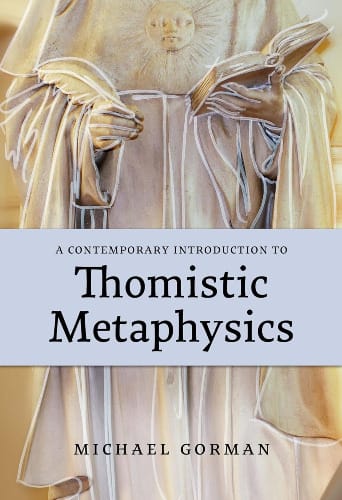
1.
There are many introductory books to metaphysics. Yours differs from most in that it is Thomistic. It differs from most introductions to the Thomistic metaphysics in that it engages with contemporary analytical philosophy. What is analytical philosophy and why must metaphysical inquiry engage with it?
Some think of analytical philosophy as a school, as if all its practitioners agree on certain principles or such like. That is not the case. Analytical philosophy is not even a method. It is nothing more than a historical tradition of philosophical inquiry and discussion.
It starts around the end of the nineteenth century and the beginning of the twentieth. There were some key founding figures. Then came those who studied with them or read their works. They were followed by those who studied with them or read their works, and so on, until there is a historical chain. Most of these analytical philosophers worked in England and, subsequently, in English speaking countries.
However, analytical philosophers disagree with one another ferociously. Some are atheists; some are card-carrying Catholics. Some are materialists; some are dualists. It is amazing how much variety there is. Whenever someone asks, “What does do analytic philosophers believe?”, I reply, “Almost anything.”
Engaging with analytical philosophy can be important and valuable for several reasons.
First, some analytic philosophy is quite good. It is very clear, well written, and explores key topics in a very helpful way.
Nevertheless, there have been phases in analytic philosophy where its practitioners were quite ignorant of the history of philosophy and sometimes ended up reinventing the wheel. That is not good, even if you can sometimes learn something from someone who is good at reinventing the wheel. There is a raw freshness to what they are doing.
Sadly, some phases of analytic philosophy have been down on metaphysics.
Still, much analytic philosophy is good. You can learn a lot from it, if it works for you. However, some do not get anything out of it. That is fine.
There is another reason to be engaged with analytical philosophy. It has been the dominant mode of philosophizing for 120 years now, at least in the English-speaking world. It still is dominant. Hence, if you know something about it, you can engage with people who have been trained in it and talk philosophy with them. With some luck, you may even persuade them to give more traditional views a hearing. On a very good day, you can show them that those views are correct. You can even find something from analytic philosophy that helps you understand St. Thomas better. Sometimes this works the other way round too. Analytic philosophers may be tied up in knots and you propose an idea from St. Thomas, a thirteenth-century thinker, that moves the debate forward. However, you cannot do any of this if you are not familiar with these debates.
 Five Books for Catholics
So, it's a bit like knowing a foreign language.
Yes, I see the point of the analogy. Unless you know the language, you cannot even talk to those people. This analogy could be unpacked in further ways. Knowing another language gives you insights into things that you might not have had otherwise. It also helps you understand your own language better.
"Agreement and disagreement are structural elements in all philosophy"
You have described the approach adopted in your A Contemporary Introduction to Thomistic Metaphysics as being analytic-facing and deflationary. In what sense is it deflationary?
I hope that I won't have to regret using that word. What I have in mind is this. In scholastic metaphysics, various key concepts refer to things that are, as it were, parts of substances (accident, form, matter, and so forth). A substance, such as a dog or human being, is an independent unified thing. You could say that all my different features—my form, matter, and so on—are like parts, whereas I am the whole composed of those parts. Indeed, it is quite hard to avoid such talk. However, it is somewhat dangerous too.
It is dangerous because we can end up thinking of those parts as little substances themselves: little wholes that we stick them together to make bigger wholes, much in the way that we build a Lego house out of Lego blocks. That is a mistake. They are not little things. So, my account is deflationary in that it aims to take some of the air out of these things and show that they are much less like things than we are apt to suppose. To treat them as things, when they are not really things, but just an aspect of a thing, is to reify them (from the Latin word res) or thingify them. My book is deflationary in that sense. It tries to de-thingify certain things that are not actually things at all, but only principles or aspects of things. This is a very difficult task. If you deflate things too much, they disappear. These are real principles of substances. They are just not substances themselves.
Metaphysics features prominently, as you have pointed out, not just in the teaching of St. Thomas but also in that of St. Athanasius, the Cappadocian Fathers, St. Augustine, and St. Anselm. Nor is St. Thomas the only major Catholic theologian to write systematically on metaphysics. So do St. Bonaventure, Blessed John Duns Scotus, William of Ockham, and Francisco Suárez. Just as your textbook is analytic facing, is not the study of Thomistic metaphysics a face-off, to some extent, with the alternative metaphysical theories of these theologians? Even though they might agree on many things, they also have substantial disagreements.
That is right. Agreement and disagreement are structural elements in all philosophy. Thomism is a place of agreement, but also of disagreement. Thomists are always disagreeing with one another and, more broadly, with scholastic philosophy (with Bonaventure, Scotus, Ockham, and such like).
An interesting question is whether it's reasonable to hope for triumph of one team over the others. In theory, it seems like this is what we should really want. We should figure out which view is the right one, refute the others, and then we are done. Sometimes this is how I think. At other times, I suppose that the human mind is so weak, reality so mysterious, that we will never get there. Hence, it is good to have these different thinkers who approach matters in differently and see different aspects of things. It would be a loss if the Thomists ever managed to sweep the Scotists away entirely.
There is truth in philosophy, but it is very hard to discover it in detail. It is important to keep this in mind when studying philosophy. You can get a pretty good sense of the main lay of the land and be quite confident about it. There are substances. They have causal powers and interact. We can be quite confident about these matters.
However, when you get more into the details of how to understand them precisely, things become tougher and tougher. Part of being good at philosophy is learning how to live with the difficulties while hanging on to the things that you really do now. The difficulty of working out those difficulties is what leads to all the differences between Scotists, Bonaventurians, and so on.
""It is metaphysics which makes it possible to ground the concept of personal dignity in virtue of their spiritual nature. In a special way, the person constitutes a privileged locus for the encounter with being, and hence with metaphysical enquiry."
John Paul II, Fides et ratio
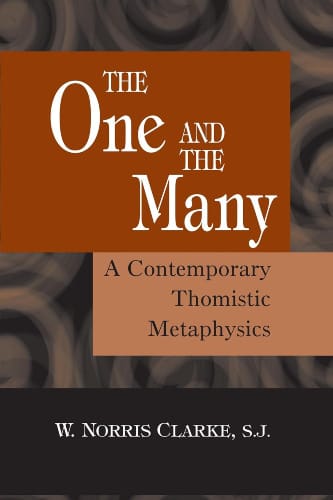
2.
The second book that you have recommended is W. Norris Clarke’s The One and the Many: A Contemporary Thomistic Metaphysics. Like several other twentieth-century Jesuits, such as Joseph Maréchal, Norris Clarke argues that classical Thomistic metaphysics is not at odds with modern philosophy’s focus on the subject and the person, but the most coherent expression of such perspectives. Have you chosen Norris Clarke’s book because, whereas your introduction looks towards analytical philosophy, his engages so-called continental philosophy?
That is a good way of thinking of it, even though I did have that that specifically in mind. I chose it because it is a popular book that is used by many yet is clear and interesting. However, it is true that Norris Clarke tends emphasise things that traditional Thomists, without denying them, have not played up in a big way.
One of the amazing things about Aquinas is that there is so much in him that we just do not notice, maybe because we are in a certain groove. Norris Clarke brings some of these to the fore.
Norris Clarke is sensitive to the issues of twentieth-century continental philosophy. So, he not only covers many traditional metaphysical topics, but also has interesting things to say about the centrality of the human person within reality. He also stresses how everything comes forth from God and goes back to God. Hence, the human person plays a very special role within reality. Only rational creatures, such as humans and angels, can understand reality. By capturing reality in our understanding, it can become part of us when we go back to God. However, Clarke observes, humans are extra special. We can do something that the angels cannot. We have a grip on the material world, which slips through their fingers. Norris Clarke even makes the bold claim that, had God created a physical universe with no rational being, it would have been a waste of time on God's part.
It is interesting to take all these traditional notions of scholastic and Thomist philosophy, while making the human person central. This is what Norris Clarke does, without getting out of control or sounding loopy, in the way that others do.
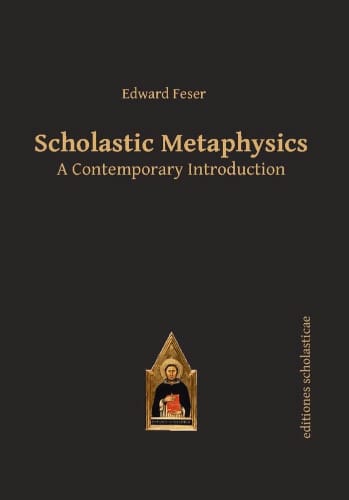
3.
What will the reader find in Edward Feser’s Scholastic Metaphysics that is not covered in the preceding two contemporary introductions to Thomistic metaphysics?
All these books are different from one another. Thomism is like a city which you can enter a city from the north, south, or southwest. Once in, you can take different routes. You might take the main boulevards or go off on side routes and explore different neighbourhoods. However, they are all in the same city. So, you can share notes with other and realise that you are all in the same place.
Feser’s book is organized differently from the previous ones. He makes a lot out of the distinction between act and potency and then uses it to shed light on causation, substances, and accidents,
His book may cover a smaller range of themes but explores them in a lot more detail. Sometimes he spells things out, and at other time he goes through a topic very fast. In the latter case, if you get to the end of the page realise that you did not get it, just leave the book open at that page, take out a piece of paper, write down some notes, and think it through.
"Wherever men and women discover a call to the absolute and transcendent, the metaphysical dimension of reality opens up before them: in truth, in beauty, in moral values, in other persons, in being itself, in God. We face a great challenge at the end of this millennium to move from phenomenon to foundation, a step as necessary as it is urgent. We cannot stop short at experience alone; even if experience does reveal the human being's interiority and spirituality, speculative thinking must penetrate to the spiritual core and the ground from which it rises. Therefore, a philosophy which shuns metaphysics would be radically unsuited to the task of mediation in the understanding of Revelation."
John Paul II, Fides et ratio
4.
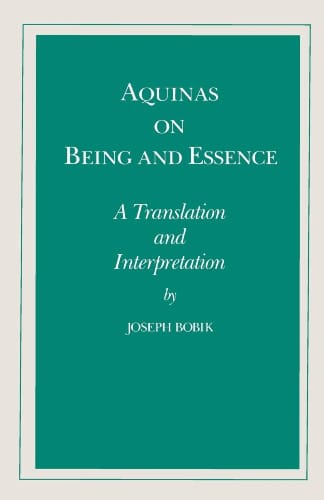
The last two books you have selected are not contemporary introductions, but classic source texts. First, is St. Thomas Aquinas’s early opuscule On Being and Essence (De ente et essentia). Have you recommended it because it is brief and presents St. Thomas’s most distinctive metaphysical thesis: that there is a real distinction between the essence of a substance and its act of being (esse)?
I worried about what to recommend. While St. Thomas does have a metaphysics, metaphysics was not his day job. He was a theologian. He lectured on Scripture and for the most part wrote books of theology books. There are many metaphysical questions for which we would love to know his considered answer. He may have one but never provides it. Instead, he talks about it a little here, and a little there, in some other context. Meanwhile, he deems it important to discuss many other topics. For example, he dedicates a whole article to whether we need to pay attention while praying. This is an important topic. However, he does not have separate discussions of many things for which we wish he did. Much of his metaphysics is scattered all over the place.
On Being and Essence (De ente en essentia) is a place where he does explore key metaphysical topics. You can use the work for that purpose. That is why I have recommended it.
It contains many of his basic ideas. He starts off talking about the difference between a being and an essence. He tells you what essences are. He explains that there are different kinds of beings and, therefore, different kinds of essence. There are substances and accidents. Some substances are material; some, immaterial.
Along the way, he ends up talking about the difference between essence and existence. He exploits this distinction to develop what seems to be an argument for God’s existence. Scholars disagree about what that argument is and whether it even works. Nevertheless, much of St. Thomas's metaphysics is packed into the difficult part of that book. So, it is a good entrance into Aquinas. It is also a good entrance because, from Chapter Two on, he engages in questions that are at the intersection between metaphysics and logic. He makes many subtle but difficult observations on this matter.
I have recommended Joseph Bobik’s edition because it has a very extensive commentary that may be helpful for the reader.
I have a sentimental attachment to the book. As a sophomore undergraduate at the University of Toronto, my first big foray into metaphysics was a course in which we spent nine weeks on On Being and Essence, even though the work is only about forty pages long. It is an exciting book if you can figure it out.
Another companion volume is his other opuscule from the same period, On the Principles of Nature (De principiis naturae). It can be helpful to read alongside On Being and Essence.
Yes. I agree. It is a great little book there. Some worry over whether it is about the philosophy of nature or metaphysics. If you worry excessively about this, you can create a lot of problems for yourself because there is so much overlap between metaphysics and the philosophy of nature. The Principles of Nature is a great little book to read because it explains subject such as matter and form, act and potency.
5.
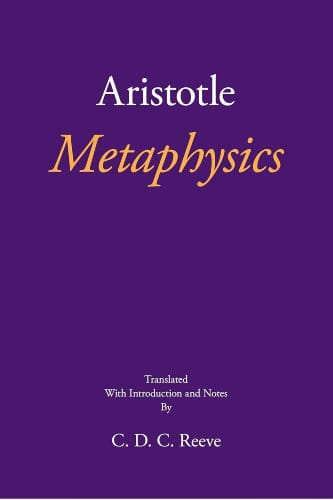
Overall, Aristotle’s homonymous work is the foundational text of metaphysics. Like many of the classical texts of Western philosophy, it is a challenging work, even for specialists. Do you have any advice on how to read it?
I would underscore what you just said. The Metaphysics is challenging even for specialists, and for various reasons.
First, it is probably a collection of Aristotle’s writings on the topic that editors put together later. So, sometimes it starts and then stops again. Sometimes you wonder whether the subjects are arranged in the right order. Maybe they are not. That is one reason why the work is so puzzling.
Another has to do with the fact that metaphysics is really getting started in Aristotle. Yes, there are metaphysical reflections in Plato and even in the earlier philosophers. However, with Aristotle you are at the very beginning of metaphysics. He says that, in its beginnings, philosophy cannot speak or pronounce the words correctly but has a lisp. Although he was referring to his predecessors, the same applies to him. He was trying to work these things out and so the Metaphysics is very exploratory. He will talk about a subject for several pages, but then he will remark that this is just one way of thinking about it and express his disagreement. You may have thought that it was his own view he was explaining, but it was someone else's. So, you need to be very patient when reading the Metaphysics.
During my career, I went through several years without looking at Aristotle's Metaphysics, even though I was teaching Aquinas and other aspects of Aristotle. Then, I was assigned a course in which I had to look at the Metaphysics again. Upon looking at it for the first time in several years, I had forgotten just how hard it is to understand. This made me think of St. Paul’s remark that some have the gift of speaking in tongues and others the gift of interpreting tongues. It struck me that sometimes Aristotle is speaking in tongues and Thomas is the guy who can interpret it. That is an unfair characterization and Aristotle scholars will rightly be mad at me. Aristotle is not crazy but knows what he is talking about. Nevertheless, reading the Metaphysics is hard sledding.
Here is another biblical analogy. In Acts 8, the Ethiopian eunuch is in his chariot and reading the Scriptures out loud, as the ancients did. St. Philip goes up and asks if he understands what he is reading. The eunuch replies, “How can I, unless someone guides me.” So, Philip hops up into the chariot and they start talking about Old Testament prophecies. In the beginning, it is okay to feel that you cannot understand Aristotle without somebody explaining it. There are people who will explain it to you. So, don't feel daunted or ashamed. Find someone who knows something about it or commentaries with notes. Don't be embarrassed. We all started there.
There are various translations of Aristotle’s Metaphysics. Why do you recommend C.D.C. Reeve’s?
It is an easily available, affordable, and carefully done translation, with many explanatory notes. Reeves refers the reader to other places where Aristotle explores a topic. He also explains some of his translational decisions. As you advance, you need to make up your own mind on how to translate certain terms, but he provides you with a lot of helpful structure.
Moreover, it is a translation into modern English. Some of the older translations are around a hundred years old. They are charming but just sound a little funny. For those starting to study metaphysics, it is nice to have the work translated into contemporary English.