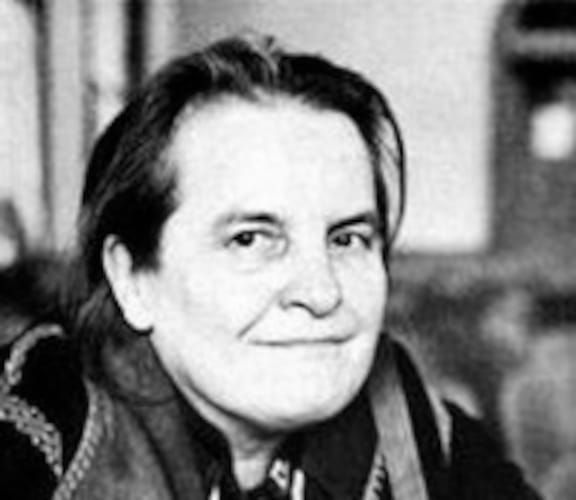

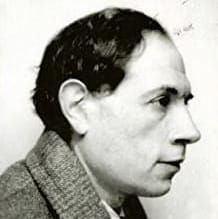
Aurel Kolnai (1900-1973) was a Hungarian philosopher. He started out as part of Freud’s circle and became a notable proponent of phenomenology. He converted to Catholicism in 1923. However, he was forced to flee Europe with the rise of National Socialism. This was because he was a Jew by birth and had critiqued Nazism in his best-selling book, The War Against the West. In addition to his contributions to phenomenology, he is best known for his essays on ethics and political philosophy, especially for his analysis of privilege, hierarchy, and utopianism.
In this interview, Graham McAleer discusses Kolnai’s thought.
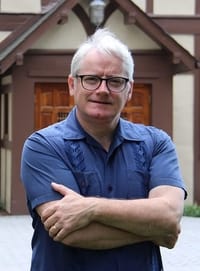
Graham McAleer is a professor of philosophy at Loyola University in Baltimore, MD. He has taught at Loyola for 30 years and was awarded Teacher of the Year in 2014. He regularly teaches course on ethics, security, strategy, war, and law. He is also a member of the Judicial Ethics Committee of the State of Maryland and a regular contributor to the national onlinemagazine Law & Liberty, where he writes on culture and politics. He is the author of Ecstatic Morality and Sexual Politics: A Catholic and Antitotalitarian Theory of the Body (Fordham University Press), To Kill Another: Homicide and Natural Law (Routledge), Erich Przywara and Postmodern Natural Law: A History of the Metaphysics of Morals (UND Press), Tolkien, Philosopher of War (CUA Press), and co-author of Time for Dying (Routledge) and The Wisdom of Our Ancestors: Conservative Humanism and the Western Tradition (UND Press)
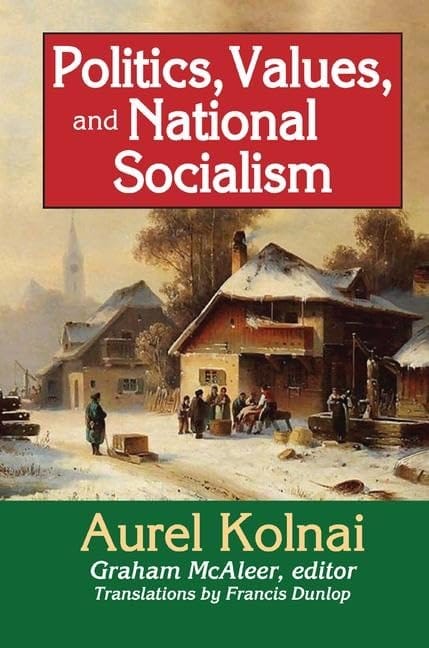
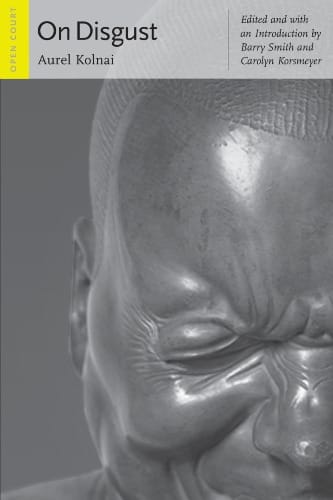
- On Disgust
by Aurel Kolnai - The War Against the West
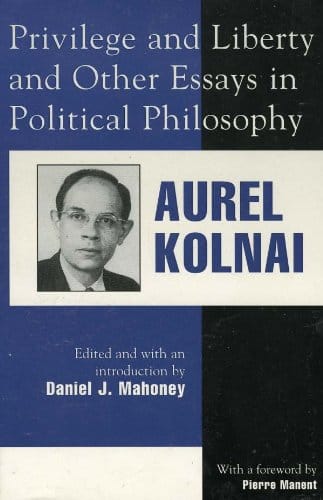
by Aurel Kolnai - Privilege and Liberty and Other Essays in Political Philosophy
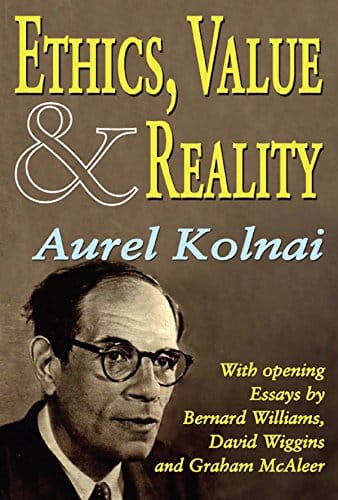
by Aurel Kolnai - Ethics, Value, and Reality
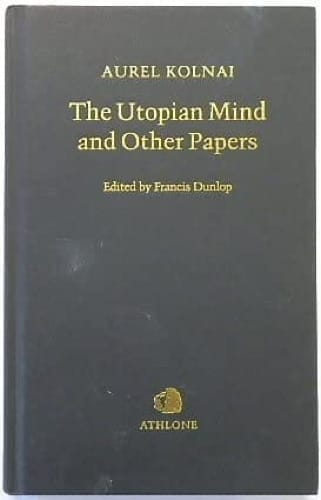
by Aurel Kolnai - The Utopian Mind and Other Papers: A Critical Study in Moral and Political Philosophy
by Aurel Kolnai
Who was Aurel Kolnai?
He was born into a completely secular Jewish family. His name was actually Aurel Stein, but he changed it when he was about twenty. The origin of this name is opaque. Francis Dunlop, who wrote a very good biography of Kolnai and who has perhaps done the most to get his work into print, investigated it. It is not a Hungarian name and seems to have been fabricated.
When he converted to Catholicism in his twenties, his full name became Aurel Thomas— after Thomas Aquinas—Kolnai. This is interesting because he was not much of a Thomist.
His biography is very interesting story but also very sad. He was a refugee for the rest of his life. Although he had converted to Catholicism, he was Jewish and had to flee Europe. He never obtained a formal academic position in the American system. He was an adjunct, always on the periphery of university life, even though he was superbly gifted and wrote philosophy in English, German, Hungarian, French, and Spanish.
He was not a thinker of pastiche. Although it is not always easy to understand who he was reading or what his sources were, he was an extraordinarily original thinker who deserved a place in the academy but never found one. This meant that he was quite poor, often living directly off the money given by Catholic charities or friends. To earn some money, his wife did translations.
He lived in Quebec for a while but did not care for it for several reasons. Ultimately, he ended up in England, which he loved. He had always been an Anglophile and came into the Catholic Church through the influence of G.K. Chesterton. Although Austro-Hungarian, this precocious teenager supported the Allies during World War One. So, he was absolutely thrilled when he landed in England and, oddly, tended to think of himself as an honorary Scotsman. He liked the idea of understatement and thought the Scottish were very understated.
What are the main areas of philosophy on which Kolnai writes?
He is quite capacious and always blends ethical thinking with political thinking.
He started off in the Vienna Circle of Freud and his first book was called Psychoanalysis and Sociology, published when he was turning twenty. However, he had a formal intellectual break with Freud and abandoned the sort of psychoanalysis for the phenomenology of Max Scheler. The thread throughout the rest of his work is the value phenomenology or the value ethics of Max Schuyler. Thate puts him in the same school or tradition as John Paul the Great. The blending of ethical and political thought is a signature of Kolnai’s thinking.
He was not much of a metaphysician. Like Max Scheler, he believes that the ethical alerts you to the fundamental metaphysical assumptions or insights He is very different in this regard from Erich Przywara or von Balthasar, who start with metaphysics and move into culture. Scheler and Kolnai start with the ethical and the political.
That is odd. One of the criticisms moved against the phenomenological movement is that it has a notable lack of political philosophy, unless there is an oblique political philosophy, as some would allege to be the case with Heidegger.
The first three great phenomenologists are Husserl, Heidegger, and, in my view, Max Scheler. Scheler introduces an ethical focus. Within the Schelerian tradition in Catholic thought, John Paul II fuses Scheler with Thomism, whereas Kolnai takes phenomenological ethics and shows the intricacies of the connective tissue that it has with political questions. For those working within the phenomenological method who wanted to look at politics, Kolnai is an avenue to take.
Why is Kolnai worth reading?
On account of the phenomenological sensitivity. There is still a divide in philosophy between the continental tradition that comes from phenomenology and the Anglo-American analytical tradition.
In the 1950s, when Kolnai ended up in England, linguistic analytical philosophy dominated. When I went to university in England, nobody read Nietzsche. We were all still reading A.J. Ayer and Quine. However, when Kolnai arrived with his Schelerian background, he was struck by the usefulness of analytical philosophy for ethical questions and so he blends phenomenology with analytical philosophy in some interesting ways.
He was gifted linguistically and he knew Greek and Latin. However, whereas Heidegger believes the ancient languages are very important for doing philosophy, Kolnai looks at modern languages. Often he begins an essays from the perspective of analytical philosophy. For example, if the topic were obligation, he would look at the word as you might find it in Portuguese, German, or Russian. Unlike Heidegger, he does not believe that there is anything mystical about what language might tell you. However, he does believe that it is an important starting point for understanding moral concepts.
Phenomenology is the method by which we examine very closely the way in which the world registers in our minds or consciousness. By looking at language, we can add to that a common-sense approach. What are the deliverances made to our ethical lives and our political lives by ordinary human interactions down through the centuries. These deliverances accumulate in ordinary language and in phenomenology. Kolmai would respond to sceptics by claiming that he is staying close to common-sense experience. That takes him into the Scottish Enlightenment.
Are Kolnai’s writing only of interest to the philosopher or do they also touch upon questions of Christian doctrine?
He is a more accessible writer than, say, von Balthasar or Przywara, but nonetheless quite a technical thinker. Though an academic writer, he engages in a phenomenology of our ethical lives and an analysis of ordinary language. Hence, his writing does not tend to be jargon driven or use technical philosophical terms.
Nevertheless, he is extremely Germanic in a sense. He constantly makes distinctions and unearths connections. In that sense, he is an academic writer.
Ecclesiology is the main Christian doctrine on which his writings have a bearing. His interest in the problem of privilege, hierarchy, and the common man bear quite interestingly on those of the papacy, authority, and the relationship the enthusiasm of spiritual ecclesial movements and the canonical Church. Kolnai might have much to say, for example, for those wondering about the intellectual justification of the papacy.
On the other hand, Kolnai has all sorts of ideas related to moral theology.
How did the works of G.K. Chesterton contribute to Kolnai’s conversion to Catholicism?
In his biography, Francis Dunlop is quite clear that we do not know about the actual intricacies of his conversion. Nor do we know why Kolnai—who prior to World War II was both a journalist and a centre-left socialist—emerged from the war as quite an interesting conservative thinker.
He was already an Anglophile, at the age of 14, and was very good at languages. As a young boy, he was already able to read English. Chesterton would be a wonderful place for a non-native speaker to enter into the English language.
Francis Dunlop had been a student of Kolnai’s but found it hard to trace Kolnai’s sources, influences, letters, or people who had known him. The reader might wonder where Kolnai’s original ideas come from and whom he was reading, because no one works in a vacuum. We know that he read Francisco de Vitoria, Edmund Burke, and the Scottish Enlightenment thinker Thomas Reid, and Scheler. Beyond what he formally tells us, it is difficult to trace the lineage of his ideas.
Is the report that G.K. Chesterton contributed to his conversion apocryphal or is there some truth to it? It doesn't explain exactly how.
In Political Memoirs, he simply says that Chesteron was very important.
This short autobiography is incomplete. Kolnai had trouble completing projects. When he was a refugee in England, he received a number of academic grants for various books that he promised to write. Very few of them came to fruition. He was given a grant to write The Utopian Mind but he never got terribly far with it, even though he had been thinking about the subject for a long time.
Of course, he was a sickly and poor. He had no position in English society. He was always on the fringes. He taught at Bedford College, one of the colleges of the University of London, but he was on the fringes there too. It is not easy to write consistently under difficult material circumstances.
How did you discover Kolnai and what made you a fan?
The book I first read was the Daniel Mahoney’s Privilege and Liberty and Other Essays in Political Philosophy. I recommend that people start with it because it is very much about political philosophy and is a set of stunningly original essays.
Anyone who wants to know why Marxism and fascism remain resilient should read Kolnai. He focussed on the fate of liberal democracies that are squeezed between fascism and Marxism, because that was the reality he lived in. However, he also believed that this would be an enduring problem. Indeed, nearly sixty years after Kolnai’s death, we are back in the circuit of these three fundamental ideologies.
Kolnai is one of several important political philosophers formed and active in Germany or Austria between the two world wars who, with the rise of Nazism, were not only forced to emigrate to English-speaking countries but who also defended classical political thought against its modern counterparts. Unlike Leo Strauss or Eric Vogelin, Kolnai was Catholic. What are the main differences between his political thought and theirs?
Great question. I would call into question the initial assumption. Although he knew Greek and Latin just as well as Vogelin and Strauss did, he was not terribly interested in either the classical or the medieval world. He believed that the emergence of liberal democracy in eighteenth-century England was a watershed moment and that there was not a lot of reason to think outside of the categories of liberal democracy, communism, and fascism. We had entered into a mass civilization, with high populations, commerce, industry, and mass communications. He thought that we have to do political philosophy within this phenomenology. In the West, we are fundamentally liberal democratic. There are two further possibilities which the West has experimented.
Vogelin presents tremendous sweeps of history. He looks not only looking at the deep history of the West, but also at that of China.
Leo Strauss tries to reclaim the Greek understanding of nature, whereas Kolnai is not a natural law theorist. Having abandoned Freud, he was no longer interested in dynamic or desire. Instead, he was a cognitive thinker, concerned with how it is that categories of meaning appear to the mind. One’s encounter with the natural world is not the starting point for his thought. However, he is a moral realist and committed to moral objectivity. Like Strauss, he wants there to be some control on the historical development of politics. In his view, that control comes from the hierarchies of value into which Scheler have given us insight.
1.
That brings us into the first book, Der Ekel, Kolnai’s phenomenological analysis of disgust. What is disgust and how does it manifest objective moral values?
This is the Kolnai book that is most in the mainstream. Anyone working on disgust or the aversive character (disgust, hatred, fear) consults it. It is widely used in phenomenology and, contemporary Anglo-American philosophy.
It was well received at the time. Husserl himself published the book. Salvador Dali recommended it to artists. It is mentioned by Jean-Paul Sartre, Georges Bataille, and others. It had an influence on art and French ideas.
This is the book for those interested in phenomenology rather than politics or ethics. It is an absolutely brilliant book.
Kolnai identifies three aversive characteristics: fear, hatred, and disgust. You tend to run away from what you fear but go towards that which you hate. You are fascinated by the thing that you hate. Disgust stands int the middle. You both want to move away from the disgusting, but it also lures you in a way. That luring has a twofold structure. On the one hand, you are somewhat happy to be seduced by the disgusting. On the other hand, the disgusting comes after us.
He defines the disgusting object as the biological that is out of place. For example, a stone or a rock cannot be disgusting. A rock covered with slime—which is biological—can be disgusting. Why? If you are on a hike, stumble, and you put your hand on a slimy rock, you will try to get the feel of the slime off your hand. You have the sense that the slime is invading you in some way. The disgusting object has, as Kolnai puts it, a proboscis.
You react aversively to it because you think it is coming for you. In this regard, it is linked with the idea of retching of vomiting. At the same time, you have a certain interest in it. Kolnai gives the example of a dead mouse in the kitchen. What do people do? Often, they prod it, to make sure it is really dead and not tricking them.
I vividly remember how my father would put his trousers inside his socks whenever there was a mouse in the house so that the mouse couldn't run up his leg. This somewhat cartoonish figure is driven by the phenomenon of disgust.
So, we probe the disgusting. We are not completely in fear of it and we certainly do not hate it. It is a sui generis category.
It is also a foundational category within the human psyche. It orients us in a world of value. It has an aesthetic quality that is linked then with the ethical. That goes to the problem of human dignity.
You try to get the slime off your hand because you feel that this biological phenomenon is trying to enter inside you and take over your space. It is intrusive.
Kolnai wrote two essays on human dignity, but the theme figures throughout all his work. Dignity is to have a certain kind of restraint and demand that others exhibit propriety around you. It is the idea that others should not get in my face and that there is a zone of non-interference around us. This leads into certain liberal ideas about consent. However, the idea is that human dignity is a principle that demands the world be restrained around me.
Disgust, however, attacks the very foundation of human dignity. The biological that is out of place has an invasive quality.
Another example he gives is our fear of a swarm of bees crowding around you and overwhelming your space.
The book is phenomenologically rich and a morally powerful investigation into the character of human dignity.
"It is no accident that Nazism and Communism arose in the West. There is an element within liberal democracy that can trigger these very phenomena."

2.
What are the main points of Kolnai’s 1938 critique of National Socialism, The War Against the West?
This is a truly remarkable book, written directly in English.
As a young man, Kolnai left Hungary to study in Vienna and then worked there as a journalist. He was sitting in the cafes and members of the Nazi political movement were handing out pamphlets and journals. He gathered all these materials and used them to write a book to educate the West on how it was impossible to reason with the Nazis.
He called it The War Against the West because, even though the war had not started in 1938, he predicted there would be a war. The Nazis were not just German nationalists. Even someone like Wittgenstein was a German-Austrian nationalist. Rather, the Nazis were serious minded pagans. Their core idea was to reclaim the world of vitality.
In this 600-page book, he identifies certain elements or themes of their thought and the Nazi psyche, such as militarism, the family, sexuality, and the vitalistic. There is relatively little philosophical commentary. Basically, Kolnai takes these categories, sets out all the documentation from the pamphlets, identifies the various theorists of the Nazi Party, and presents all this to the West to say, “Here is what you're dealing with. This is a seriously engaged movement that is utterly hostile to the West.”
He then gives an interesting discussion about the nature of the West. He argues that it is a civilization of openness.
Somebody like Pope Francis might find this book quite interesting because it examines nationalism. Kolnai categorizes a certain virulent nationalism as “tribal egoism.” Pope Francis has called this “the psychology of the mafia.” Although there is a collective or solidaristic unity, it is narcissistic and utterly preoccupied with itself. This is contrary to the long legacy of the West, with its civilizational openness to the world of reason and the foreign.
Kolnai argues that the Nazis against the West on account of their political egoism, which is incompatible with the civilizational legacy of Western openness.
This is similar to Eric Vogelin’s idea of differentiation: the West is not a tribalistic civilization. It can house tribes, but those tribes must defer to larger, more universal and general concepts. Take, for example, the centrality of natural law or humanism in the Western tradition. Both these intellectual architectures of the West are about meeting, considering, welcoming, and communicating with the other.
For example, in Fratelli tutti Pope Francis treats the question of migration as part of what he calls the law of ecstasy. This ecstasy is a sort of openness
Kolnai always thinks of the Nazis as a counter-revolutionary party. They are reacting against the revolutions that founded liberal democracy: the English and the French Revolutions.
Kolnai, on the other hand, is a liberal in that he believes that liberalism is the best at housing privilege and hierarchy. However, he is well aware of liberalism’s inherent totalitarian tendencies. He point out, therefore, that it is no accident that Nazism and Communism arose in the West. There is an element within liberal democracy that can trigger these very phenomena. He unpacks the interesting conceptual lineage between the three great ideologies.
The War on the West was a bestseller when first published. Why has it fallen off the radar and out of print since then?
That is a good question. It was published by Victor Gollancz’s Left Wing Book Club. The left, of course, was tremendously interested in Nazism.
Curiously, in the last decade the entire book has been translated into German. Germans, for obvious reasons, are very interested in this book.
Nevertheless, it does not seem to generate any discussion. This is very odd. Currently the West—at least in American politics—is quite interested in the problem of fascism. Many are accused of being fascist and so forth. However, those conversations are almost always meaningless because nobody has a clue about what fascism was. Kolnai is a perfect place to learn about it.
He was aware of the fascists in Spain and Italy and believed that Nazism was a super intensification of fascism. He was completely fluent in Spanish, had visited Franco’s Spain a few times and lectured there, though he was by no means a fascist. However, he was very aware that fascism is not the same as Nazism and this is one of the things he points out in the book.
Not that he was attracted to fascism. Quite the opposite. However, just as he analytically distinguished socialism from Marxism, he analytically distinguished Nazism from fascism, and distinguished all of them from liberal democracy, even though he thought that liberal democracy contained a trigger wire that could lead relatively quickly to these aberrant political versions.
"Importantly, privilege acts as a brake on politics and stops it from becoming totalitarian."
3.
The next book is one you've already mentioned. It takes its title from one of his most important essays, “Privilege and Liberty”. What is the argument of that essay?
It came out in 1949. As Francis Dunlop points out, we have not idea where this essay came from. Kolnai emerged from the cauldron of the Second World War and all of a sudden was a full-fledged conservative thinker of enormous range.
Of course, privilege is perhaps the dirtiest word around, but Kolnai argues that privilege is not negative. He contrasts the philosophical world of privilege with the world of the common man.
The common man is a falsification of commonsense philosophy, whereas privilege is a commonsense position.
The common man, Kolnai says, is an ideology of liberal democracy that quickly can transmogrify into fascism and communism. The idea is that there should not be anything beyond human sovereignty. Nothing should control a human being. To use an American phrase, “I bow my head to no one.” So, whenever American presidents go abroad and bow to a world leader, Americans go bananas. This is the idea of the common man. Kolnai calls it the idea of the American Yankee: a human has complete sovereignty and control over his life and death choices.
However, Kolnai argues, this is the tripwire to totalitarianism. Totalitarianism too assumes absolute human sovereignty. It does not not accept any measure of judgment or power beyond itself. Kolnai, therefore, was acutely nervous of the way that liberal democracies can switch pretty quickly and become totalitarianisms.
What does he mean by privilege? There are many examples. A member of the diplomatic or the officer corps, a college professor, a doctor, a dentist, or a veterinarian, all have a certain privileged status. In a lecture hall, everyone is sitting except the professor. The professor is standing, formally dispensing knowledge. Those seated are below the standing professor. This is one case of privilege and universities are one of the great bastions of privilege or the establishment.
Now, in privilege, there is a concentration of value. In the university professor, there is a concentration of some sort of cognition. In a military officer, there is a concentration of both cognition and certain vital values. Not everyone can go on the battlefield. In a diplomat corps, there should be worldliness and the capacity to speak both easily and cautiously. Moreover, someone who makes a good soldier will probably not be a good diplomat. The two do not go together. Nor is the university professor likely to be a good diplomat. He has sceptical doubts and might find it difficult to present a nation’s position, although there have been exceptions, such as Kissinger.
Privilege is the word for positions in society around which certain values gather. It is not elitism because the same is true for car mechanics, plumbers, or electricians. They know things that the diplomat does not.
Importantly, privilege acts as a brake on politics and stops it from becoming totalitarian.
Due to privilege, the diplomatic corps has certain expectations and benefits that are different from those of the officer corps or the professoriate. This means that each privilege is finite. Privilege, therefore, blocks totalizing power. It cannot become totalizing.
In the United States, for example, families spend an inordinate amount of time, effort, and money to get their children into the Ivy League universities. The future of the graduates of an elite American university is pretty assured. They enter the American elite. This is a case of privilege in the conventional sense. However, it is also a limited privilege. The Yale graduate does not go to Princeton or Brown, each of which has its own network of influence or patronage. A student goes to Yale to be plugged into a patronage system that eases one’s way into the upper reaches of American life. However, the reach of that network of patronage is finite.
Privilege has a dual point. It breaks up political power and makes it work its way through these various centres of value. If the United States were thinking of attacking Iran, the diplomats might think it should, the military that it should not. In a meeting where a decision will be made, each centre of privilege will contribute something different and may even be at loggerheads with the others. Privilege limits but itself is limited. It is the antidote to the problem of totalitarianism, even within a liberal democracy.
"Kolnai claimed that there was a new challenge, humanitarianism, and that it was no friend of the Catholic Church."
Late in life Kolnai described himself as a conservative. He is considered a conservative political thinker. However, like “liberalism”, there are many rival definitions and varieties of “conservatism.” In what sense, is Kolnai is a conservative?
Two of the most famous conservative political thinkers, Ronald Reagan and Margaret Thatcher, are famous for their interest in the economy and a certain libertarianism. Kolnai is not like that but insists on privilege.
Take a car mechanic's shop, where there is a young man and an older one. The young man has to go underneath the car with the spanner and try to get it working. The older man—the one with privilege—will probably stand above the car and tell the young man what to do. These relationships operate all the time in every setting.
Take another case: a hospital. There are also have significant hierarchies amongst nurses. These hierarchies are displayed typically in their uniforms. Moreover, these hierarchies are centres of privilege. Each is the focus of a certain value orientation. Nurses care for the sick, but they cannot write prescriptions. The prescription needs to be issued by a doctor, who may even have admittance privileges at a particular hospital.
These privileges are layered throughout the whole of society. There are various points of value and control.
This is the mark of Kolnai’s conservatism as opposed to the commercial libertarianism of Thatcher and Reagan, which stresses individual self-determination. Kolnai, on the other hand, was always interested in social groupings and the way in which these social identities interlock and control one another politically.
He was interested in liberty. He would have been against a more reactionary conservatism that wishes to go back to the Middle Ages or the Greeks polis. However, the Greek polis was a slave society. Kolnai would object that we should want liberty liberty for all but without collapsing into individualism or some mass totalitarian movement. How proposes that we secure liberty for all through this interlocking series of finite privileges.
He also thought—and this is why he is not a liberal in any straightforward sense—that privileges give an identity of elevation. They distinguish persons, albeit in a healthy way.
A car mechanic has a very definite identity. Phenomenologically, we known that someone is a car mechanic rather than a doctor from his clothing or even his physique. Similarly, if you go to a hospital, you can tell which cars belong to the doctors: the luxury ones.
As a conservative, Kolani avoids modern libertarian individualism and rejects the nostalgia for political forms in which there is liberty for some at the cost of the liberty of the majority.
The volume ends with a scathing critique of Jacques Maritain’s Man and the State. What were Kolnai’s main objections to the kind of Christian democracy that Maritain advocated and inspired?
This is somewhat controversial. In certain Catholic circles, especially in America, people would react negatively to any critique of Maritain, who still has a strong reputation, though not as much as he once did.
Kolnai quite disliked his ideas because he thought Maritain's philosophy was essentially a humanitarianism.
In 1944, he published in The Thomist, an American journal, an article entitled, “The Humanitarian Versus the Religious Attitude.” For anybody interested in Kolnai, this might be a very good essay to start with.
In his early work, he worried that the Catholic Church was getting too close to the Nazis. He wrote a number of essays on pre-war Catholic intellectuals who were playing around with the idea that Nazism could deliver a short sharp shock to the liberal democratic system and, once it had done its damage, Catholicism could reemerge to elevate civilization again. Kolnai thought that they were insane to imagine that they could ride that beast.
This was happening before the war when people were not sure who the Nazis were or what the Catholic Church's position would be.
After the war, Kolnai claimed that there was a new challenge, humanitarianism, and that it was no friend of the Catholic Church.
Humanitarianism is fundamentally about self-sovereignty. It exaggerates the capacity of human nature. It expects that people act under grace. It appears in religious circles, perhaps more so in American Protestantism than Catholicism. It appears wherever there is a saccharine view about Jesus, his life, and ministry, one which underplays the grim reality of the cross.
Kolnai criticises Maritain for overinflating human nature’s potential for the good and being overly presumptuous about the place of grace in our lives. He might say that Maritain makes faith an axiom. There is a sense in which, instead of having some trepidation about our degree of faith, as Jesus teaches, Maritain supposes that the faith of people is never to be doubted. Maritain has a surety that makes Kolnai nervous. Humanitarianism can quickly become presumption.
4.
The next collection—Ethics, Value and Reality contains some more of Kolnai’s most important essays. Let’s start with “Moral Consensus”. Kolnai defends moral consensus as a genuine and necessary source of moral insight, but it could be objected that it is not necessarily a reliable one. Moral consensus is always desirable as long it around what is truly good. Today, however, the prevailing moral consensus on certain issues is often wrong and marshalled in support of unjust policies.
Yes, he is very aware of that. He would counter that civilization still prioritizes truth over falsehood. courage over cowardice, self-actualization over unworthy submission.
Even though we live in a multipolar or pluralistic world, there are still expectations. In a restaurant with guests of highly diverse political and moral opinions, everyone expects their food to be served with a certain dignity. No matter your political proclivity, everyone would find it outrageous if the waiter or waitress spat on a guest. Kolnai’s point is about moral consensus is that there is a certain underlying agreement about basic values.
Take Hollywood movies. The Hollywood lifestyle is not especially moral, yet the movies they produce tend to stay very close to ordinary moral consciousness. Otherwise, the films would fall apart and make no sense. In one of those movies, Hollywood might promote something immoral. However, the underlying moral framework refers to dignity, truth, and courage. For example, Philadelphia was about the AIDS crisis and aimed to humanize homosexual relations. Ultimately, however, that film was about courage, truth, and dignity. The overarching architecture was about things that all of us do defer to and hold in respect. Otherwise, communication would collapse. This is the common sense aspect of Kolnai’s thought.
Similarly, we believe that politicians lie to us constantly. However, this annoys us terribly and enrages us. In other words, we keep coming back to the problem of truth.
Another of Kolnai’s most important essays is the not very egalitarian sounding “The Concept of Hierarchy.” It explores the phenomenon of hierarchy in general and the kind of hierarchies that should exist within society. What conclusions does Kolnai reach?
This is another great essay to begin with, especially for those who are interested in conservatism.
It begins by examining ordinary language. He considers how we talk about elementary, secondary, and higher education; a surfer catching a big wave; an army wanting to hold the high ground; a judge handing down a decision. Hierarchies constantly figure in our psyche. This is represented by all modern languages. They pick up on the hierarchical as a basic feature of order.
The essay is really an inquiry into dignity and what role hierarchy plays in supporting human dignity. Suppose you are in an institutional building, slip down the stairs, and everyone looks at you. You will try to stand up as quickly as possible and say you are fine. This is the idea of standing straight and holding your own. Or consider how John Paul the Great taught people how to die in the public eye. The basic idea of dignity is that of self-actualization. We had the sense that Jean Paul II was in some sense in control of his death. The way that he presented his failing to the world was quite conscious. Again, we have this idea of self-determination.
Kolnai gives a beautiful phenomenological example. As you climb up a mountain, you start to see things that you otherwise could not. You start to see that there is a house behind the trees that you saw when you were on the ground. The further up the mountain you go, the more capacious your vision. Then, on the top of the mountain, you are alone and in a self-contained position. Kolnai is playing with the idea that hierarchies put certain people on pedestals.
That the trainee car mechanic who is lying on his back underneath of the car and trying to understand the how it works. The older man, the trainer, is standing upright, telling him what to do. That is a hierarchical relationship. This also goes to the question of dignity.
Now, imagine a customer walking into that garage. Who would the customer naturally talk to? Not the young man, but the older one. The customer would suppose the older man is not only in charge but also knows what is going on with the car. So, hierarchies sustain human dignity.
Would this be the drift of Kolnai’s critique of egalitarianism? Egalitarianism is wrong because it tries to level all the differences that arise out of the contingencies of circumstance, time, and capacity.
Exactly. Egalitarianism, insofar as it is hostile to privilege or hierarchy, also goes against some of the most human of our relationships, such as a mentor or a patron.
Patrons have contributed to some of the high moments in our civilization. Adam Smith and David Hume were put into the limelight in Scotland by Lord Cames, the chief justice of Scotland. He dispensed his patronage and elevated two of the great luminaries of the Enlightenment. That was a very human relation.
However, a certain kind of egalitarianism, such as the Soviet Union or Maoist China, would rid the world of institutional relationships that have ennobled people and raised civilization.
At the end of the day, Kolnai is a liberal democrat despite his anxieties about liberal democracy. He believes that liberal democracy is a politics of limitation. It houses these various hierarchies and gives a place to privilege.
You only have to see how the most liberal people in America are also the ones who have the privilege of a Harvard education. Though very liberal, they are the beneficiaries of these long-standing, ancient ways that humans interact with one another.
This is what Kolnai wants to retain. This is why he is an advocate of privilege and the hierarchy that goes with it. That is also why he is hostile to the ideology of the common man, which attempts to level everything and eradicate the very institutions in which humans have flourished.
Kolnai sometimes objects that the standard critiques of socialism are insufficient. How so?
They do not take adequate notice of how socialism is an exaggerated form of liberal democracy itself.
Kolnai is not referring to a directed economy, such as that of France, or the European model of social democracy, but militant Marxism. Only by paying attention to how it is housed within certain presuppositions of liberal democracy itself, will you have an effective politics to control the problem. Fundamentally, the problem is that of human sovereignty. The idea that the human is a self-contained, utterly independent system leads to a subversive politics.
A certain exaggerated form of socialism is a subversive politics. It eradicates privilege. However, its starting point can be found within liberal democratic thinking itself. That is why certain conservatives are strong libertarians.
His critique is that these distorted ideologies insist that the individual is sovereign. They deny what he talks about in another essay as the “sovereignty of the object”.
Yes! Kolnai thought that the great deliverance of phenomenology was that we live in a world of deference to a world of values or value tonalities. We are reacting to them constantly. They saturate the world and shape our valuations.
Imagine you see someone taking a selfie while standing next to a Ferrari. You might be envious or angry that the person can afford a Ferrari. Usually, though, we find a Ferrari impressive and beautiful. We are reacting to the value tonalities of the car: its engineering and design.
We are constantly deferring to an order of values as we go through the world. Some of these values are non-moral ones, such as those of the engineering and design of the Ferrari. However, there are also moral values. This is the sovereignty of the object. The object is this panoply of values we constantly encounter.
The car mechanic, for example, is very good at getting the value tonalities of a combustion engine or a car’s suspension to work coherently.
The world is saturated with value and deferring to those values.
Liberal democracy, however, encourages us to think that we should bow the head to no one. It can encourage a disengagement with the world of value. Famously, Nietzsche writes of the last man as the consummation of liberal democracy. When asked how the moon is, the last man answers, “What moon?” The liberal democratic person right is completely narcissistic and does not deem things to have any value outside of his or her own particular concerns.
A book called The Anxious Generation worries about the role of social media in reaffirming narcissism and hyper-subjectivity. It happens all the time that people are walking down the street, looking at their phone, and bang into something or someone. They live in this self-contained world. They can become disengaged from the world of value. Of course, this erodes and subverts solidaristic communities.
"For Kolnai, the fundamental thing about utopianism is that it rejects what he calls “the splitness of reality:” that we are composite and live inside a set of finite coordinates."
5.
Jonathan Haidt, the author of the book you just mentioned, The Anxious Generation, has written another, The Righteous Mind, which ties in perhaps with the final book from Kolnai, The Utopian Mind. This volume groups Kolnai’s unfinished phenomenological study with his other related essays on he subject. According to Kolnai, what are the traits of an utopian mind, other than the ones you have already mentioned, such as its egalitarianism and denial of the sovereignty of the object.
For Kolnai, the fundamental thing about utopianism is that it rejects what he calls “the splitness of reality:” that we are composite and live inside a set of finite coordinates.
One reason he is so committed to an intellectual formulation of Christianity is that Christianity is one of the great vehicles for reminding us of our finiteness and composite nature (e.g. hylomorphism or nature/grace). The problem with utopians is that they are monistic. They tend to have a unitary conception of the mind or reality. They view people as belonging to nowhere in particular. The great insight of geopolitics, though, is that we have coordinates at some place on the planet. We have coordinates of family, civilization, and religion. These are not the same for all, whereas the utopian seeks a single set. Kolnai argues that utopianism is a complete falsification of what it means to be a human being and so, as a political project, adopts horrible cruelty. Think about just how cruel the great totalitarian systems were in their drive to impose unity.
There are all sorts of cruelties involved in liberal democracy but, whatever they may be—and they can be extreme—liberal democracy has a certain containment system built into it. Nevertheless, because liberal democracy is ultimately about self-sovereignty, it is ultimately a utopian idea. Hence, utopian exaggerations flow quite easily from the premise of liberal democracy.
Utopians set their face against splitness. Take Thomas Aquinas's great observation that grace perfects nature. Splitness is built into that idea. This splitness belongs to the very essence of what it means to be human.
At one point, Kolnai claims that the problem with utopianism is that presumes the beatific vision. This is why he is always worried about the humanitarianism of someone like Maritain. The utopian believes that the human being is owed the beatific vision and will be will be synthesized with the core underlying reality, the Alpha and the Omega. However, that is not in our gift. That is not in our capacity, for we are split. As a political project, utopianism ignores this essential human problem and thereby leads to all sorts of depredations against human dignity.