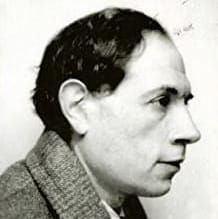
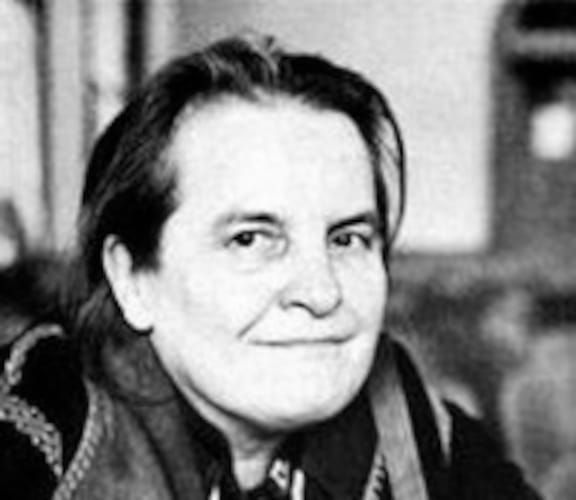
G.E.M Anscombe or simply Elizabeth Anscombe (1919-2001) was one of the most important analytical philosophers of the second half of the twentieth century. During her early teens, she read a nineteenth-century Jesuit textbook on natural theology. This book sparked her interest in philosophy. It also contributed to her conversion to Catholicism, in her late teens. While studying at Oxford, she met and married Peter Geach. The couple went on to have seven children. During her postgraduate studies at Cambridge, she studied under Ludwig Wittgenstein and befriended him. The Austrian philosopher named her one of the three literary executors of his unpublished manuscripts. She taught at Sommerville College, Oxford and in 1970 was elected Professor of Philosophy at the University of Cambridge. She authored influential papers on a range of philosophical issues whereas her book Intention is a seminal work on the philosophy of action. She was also a committed Catholic who stood up for her principles in public and was a staunch supporter of Humanae vitae. Some of her public protests against murder by unjust warfare or abortion are renowned.
In this interview, Roger Teichmann discusses Anscombe and her works.
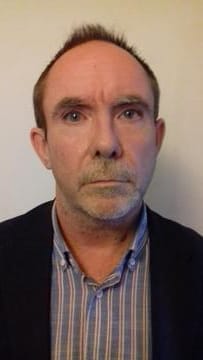
Roger Teichmann is Lecturer in Philosophy at St. Hilda’s College, Oxford. His research interests are ethics, philosophy of language, philosophy of mind, Wittgenstein, and Elizabeth Anscombe. His books include The Philosophy of Elizabeth Anscombe (Oxford University Press 2008), Nature, Reason and the Good Life (Oxford University Press 2011), Wittgenstein on Thought and Will (Routledge 2015) and Logos and Life: Essays on Mind, Action, Language and Ethics (Anthem Press 2022). He has edited Elizabeth Anscombe: Critical Assessments of Leading Philosophers (4 vols., Routledge 2016), The Oxford Handbook of Elizabeth Anscombe (Oxford University Press), and is co-editor of The Moral Philosophy of Elizabeth Anscombe (Imprint Academic 2016).
- Intention
by G.E.M. Anscombe - Ethics, Religion and Politics: Collected Philosophical Papers, Volume III
by G.E.M. Anscombe - Faith in a Hard Ground: Essays on Religion, Philosophy and Ethics by G.E.M. Anscombe
edited by Mary Geach and Luke Gormally - The Philosophy of Elizabeth Anscombe
by Roger Teichmann - The Women Are up to Something
by Benjamin J.B. Lipscomb
What are the main details of Anscombe’s life and career?
She had a very interesting life.
She was a convert to Catholicism. Her parents were Anglicans but she found Catholicism in her teens.
She was a voracious reader and among the things she read in her teens were a couple of books by Jesuits which introduced her both to Catholic thinking and, more generally, philosophy. Through those books, she felt the pull to Rome.
Her parents were not at all pleased. Indeed, they brought around an Anglican priest to try and dissuade their fourteen-year-old from taking this step. However, the vicar failed completely.
She went up to Oxford in 1938 to read classics or, as it is called in Oxford, literae humaniores at St. Hugh’s College.
While an undergraduate, she took instruction and was accepted into the Church, despite the threats of her parents to cut her off without a penny. She called their bluff, and they did not.
As a student at Oxford, she met the man who would become her husband, Peter Geach. He too was a convert and his life is also an interesting one. They went on to have seven children.
Apart from anything else, Anscombe had an extraordinary capacity to continue working, reading, lecturing, while going back and forth between Oxford and Cambridge, and bearing and bringing up seven children. As friends and colleagues have remarked, this took an enormous energy. She was a woman of great strength of will, intellect, and even physical strength.
Perhaps the two main strands in her intellectual biography are first, her Catholicism, and secondly, Ludwig Wittgenstein.
An Austrian, Wittgenstein is one of the greatest modern philosophers, if not the greatest. He published only two books: the Tractatus Logico-Philosophicus (1921) and the Philosophical Investigations. Apart from that, he wrote an enormous amount in notebooks.
Anscombe encountered the Tractatus as a student at Oxford, and was immediately fascinated by it.
She first met Wittgenstein in 1942 when she went to his lectures in Cambridge. They developed a close philosophical friendship.
Recently, I have been editing the reminiscences of Wittgenstein which Anscombe left. It is a fascinating document and indicates the many conversations they had together.
For about a decade, their lives were entwined. She went to his lectures and classes and, when that friendship became closer, he would drop in to visit her, Peter Geach, and their young family.
Around 1950, he fell ill. The illness would kill him. It was around that time that he moved in with Anscombe at 27 St. John Street, Oxford and decided to stop the hormonal treatment for his cancer, because it was interfering with his thinking.
When living at Anscombe’s, he produced some of his most important final philosophical writings and what was to be published posthumously as On Certainty.
Anscombe, along with Rush Rhees and Georg Henrik von Wright, was one of the three philosophers whom he designated to be his literary executors.
She did most of the translations. A very fine linguist, she had learnt German. She even went so far as to stay in Vienna at Wittgenstein’s recommendation, to learn the kind of German that he spoke and to better translate his works.
In the years and decades following his death, most of his Nachlass was brought out under the aegis of Anscombe and the other two executors, but mainly under Anscombe.
Her translation of the Philosophical Investigations is the standard translation and has not been surpassed.
Through your mother, you knew Anscombe and her family as a child. At university, you attended her lectures. What impression did she make upon you? Do you have any memorable experiences?
Yes, indeed. I knew Anscombe through my mother, who had been taught by Anscombe during the 1950s, when she was taking a BPhil in Oxford.
Anscombe was her main supervisor and they formed an intellectual friendship.
In 1967, my mother took up a job in Cambridge, at New Hall, as it then was (now called Murray Edwards College). A few years later, in 1970, Anscombe took up the professorship in Cambridge and was based at the same college as my mother. Thereupon, they renewed their friendship.
Anscombe would come quite often round to our house. My mother would often take me and my brother round to the Geach-Anscombe household. Frankly, I was often eavesdropping on the philosophical conversations that were going on between my mother and Anscombe. However, I got to know the younger generation. All were somewhat older than me but I ended up knowing some of them pretty well.
When I was an undergraduate, I decided to do philosophy at Cambridge and attended some of Anscombe's last lectures. She retired in 1986.
There are many stories about Anscombe. Quite a few are true.
What general impression did she make upon me? She was obviously intensely intelligent. Her lectures were rather like Wittgenstein’s. They were in no way overprepared and she did not read off notes. They were completely unlike the lectures that are given today in any university, including Cambridge or Oxford. Of course, there was no PowerPoint, but there was a blackboard. Sometimes she would scribble something on it, if the fancy took her. It is not that her lectures were unprepared. However, largely she was thinking something through aloud.
Unlike Wittgenstein, she was able to keep to whatever topic the lectures were meant to be on, for the sake of the students studying that subject.
When asked how to advertise his philosophy lectures, Wittgenstein, after a pause, simply said, “Just put Philosophy.” So, every year he lectured in Cambridge on philosophy. All you knew was that you were going to hear Wittgenstein thinking and talking about philosophy.
Anscombe lectured on more specific things. For example, she lectured on Aristotle, Plato, and causality. I went to a series of her lectures on causality. They were very interesting.
Intellectually, she was extremely engaged and never stopped philosophising. She could go on talking philosophy for hours. There are various anecdotes about this. She was not the sort of professional philosopher who only does it during lectures or when they are on the job. There was no real distinction between her general conversation and her philosophical conversation.
Christopher Coope was once talking to Anscombe about philosophy when he was a student at Oxford. About three or four hours had gone by. Chris was exhausted and Anscombe said, “I'm so sorry. I have a dental appointment in a quarter of an hour.”
“Oh well, that's fine,” Christopher said, “We will call it a day.”
“No, no,” she replied, “We can carry on talking.”
So, led him off down the street to the dentist’s, all the while continuing their discussion. “Well, I will leave you here,”
“No, no!”
She continued the discussion right up until the dentist cried, “Miss Anscombe, please!”
It was typical of her to forget time. Though she raised seven children, she had the capacity to continue her work. She did not forget what was going on around her, but put it at a distance. Amid her children running around screaming, she was able to zone out and carry on with what she was doing. She had a major power of concentration. I am not saying that she neglected her children. On the contrary, it was a very tight-knit family, though very unconventional it must be said. More conventional types sometimes looked askance at the way that she and Peter brought up their children. I remember, from when I went round as a child, that an atmosphere of liberty, with which I was not acquainted, seemed to pervade the household. It is not that I had a strict upbringing, but at the Geaches’ it felt as if anything could happen.
Anscombe’s husband, Peter Geach, was also an influential philosopher. He specialised in logic and is known for his scholarship on Frege, his contributions to metaethics, and for seminal papers that bridge analytical philosophy and Thomas Aquinas. Moreover, the couple coauthored Three Philosophers. Did Geach influence Anscombe’s thought or did the two simply share the same general philosophical outlook?
That is an interesting question. They were clearly very much of a mind and shared many interests, proclivities, and tendencies of thought. At the same time, they were very different. If you read their works, you can tell immediately whether you are reading Geach or Anscombe.
Geach’s style of writing has clarity and precision. One might liken him to Frege, his great hero, who also wrote with such clarity and precision.
Anscombe's writing is denser and more elusive. Perhaps, you can see Wittgenstein’s influence in that regard.
Of course, they met when they were both very young, about the age of twenty. Obviously, they thought and talked together a great deal. They they read a lot of the same stuff. They both read Aquinas and Wittgenstein. She was main producer of the Wittgenstein texts, but Geach found himself reading a lot of them as a result. Moreover, they had shared philosophical acquaintances, such as Anthony Kenny.
It would be slightly odd to speak of them influencing one another. They were batting around ideas between them. It would be odd if there were not quite a large overlap of theme and direction.
However, their minds were very different. This comes out in the way they wrote.
As a girl, Mary Geach, their daughter, once asked her mother, “Mummy, which is the better philosopher, you or Papa?”
Her mother replied, “Your father has the more powerful intellect, but I have the greater ability to see about and around a problem.”
This is a realistic assessment.
There is a variety of views on whether the Christian faith and reason are compatible with one another. The Catholic Church has declared dogmatically that they are compatible, albeit with certain truths of faith being inaccessible to reason working by its own lights. How did Anscombe construe the relation between her work as a philosopher and her Catholic faith?
Very good question. She took the line that you mentioned: there are many truths that are important for Christianity: in ethics for example, which must be and are accessible to rational thought, regardless of whether you are a Christian. I take it she was a Thomist in that sense.
In her work, it does make a difference whether she is addressing Catholics or not. When addressing Catholics, of course, she can take for granted many shared notions and beliefs. She does not and cannot do this when writing for a more general philosophical audience. The two kinds of article or writing are different in that respect. They are very similar because they share the same Anscombean disentangling of philosophical issues and her profound thought. However, she did not believe that there was any tension between philosophising and thinking about religion. For her, they are not distinct activities. Indeed, in her more general philosophical arts sometimes she brings up what Christianity says and how it backs up her arguments or illustrates them.
"Anscombe’s integrity would not allow her to make simple a problem which she regarded as porcupine-like in its complexity."
Most people do not read works of philosophy. How would you encourage people, particularly Catholics, to read Anscombe?
Just dive in. In contrast to David Hume, A.J. Ayer, or Bertrand Russell, she is one of those philosophers who will be difficult for a layperson.
Sometimes the comprehensibility of philosophers who are easy to read can be misleading. Ayer or Russell are very readable and hoped to be read by non-philosophers. However, if a philosopher is so easy to read, with each step seeming to follow naturally from the other, this might be because they have not noticed the depth of the problem or the quagmire to your left or right.
Like Wittgenstein, Anscombe’s integrity would not allow her to make simple a problem which she regarded as porcupine-like in its complexity. So, she is not an easy read.
Partly, this is down to her desire to be frank with herself and the reader about the complexities and difficulties of a philosophical problem. Partly, it is because in many of her articles she just dives in. She does not give the reader any background or state where this is coming from. Quite often, she starts off where her own thoughts are and just dives in. Of course, that can make things difficult for the reader.
A good place to start for those curious about Anscombe might be her famous article “Modern Moral Philosophy.” Even if you do not notice every nuance, it gives you a strong sense of her intellectual and moral seriousness. In some ways, it is a polemical work and she did have a polemical side.
1.
The first book you have chosen is Intention. It is often credited with launching the philosophy of action as a self-standing field. What is the significance and importance of this work?
It began as a series of lectures she gave in Oxford in 1957.
According to her daughter—and this seems perfectly true—she became particularly interested in intention and associated themes because of the issue surrounding President Truman.
In 1956, Oxford offered Harry Truman an honorary doctorate. Of course, Truman had ordered the atom bombing of Nagasaki and Hiroshima. For that reason, Anscombe considered him responsible for terrible massacres of innocent people. Famously, she protested as a member of the Oxford Congregation, as the body of dons is called, against the conferral of the degree on Truman.
According to Mary Geach, it was partly her thinking about who intended what and what it is to intend something that led to the book. For example, one might say that all Truman did was sign a piece of paper and that he did not kill anyone at all. Ethical concerns, such as the issues of intention, responsibility, and what can count as your own action, were important for Anscombe and she wanted to go deeper into these questions.
That is not to say there is much ethics in Intention. It is a sustained and detailed investigation of a whole bunch of concepts that are connected to intention and action.
Intention has many connections. It connects with ethics. It connects with the philosophy of mind, the mind-body problem, and the question of whether distinguishing the two is sustainable. It connects with our knowledge of the future because an expression of intention seems to be predicting something. “I will see you tonight at 8:00.” How do I know that? Do I know that? So, intention is a very fecund theme. Being a very versatile philosopher, Anscombe sensed that and was able to delineate all these various strands in one very short book.
"People often say that “Modern Moral Philosophy,” was the beginning of the Neo-Aristotelian virtue ethics movement in the twentieth century. Aristotle and Aquinas both loom large in her work."
She discusses three aspects of intention: expressions of intention, intentional action, and the intention with which one acts. Could you summarise this distinction?
This is a tripartite distinction which was later garbled by Donald Davidson.
At the start, she brings the topic under these three heads: expression of intention for the future, intentional action, and intention in acting. She does this methodologically.
One thing she learnt from Wittgenstein was that, in doing philosophy it is probably not a good idea to just start with some rather simple-sounding but unhelpful question such as, “What is an intention?” or “What is an action?” That starting point tempts you to think that you need to give necessary and sufficient conditions for something to be an intention or an intentional action. For various reasons, that is often a bad way to proceed.
That she starts in the way that she does is a sign that she has learnt from Wittgenstein. You might need to start with a provisional set of doors along the same corridor, as it were, and see where these doors take you.
Obviously, there is some connection between these three headings, but we cannot assume that at the core there is one thing which happens to be the thing we are after.
She starts with expressions of intention in terms of the future. She is talking about statements such as, “I am going to get some milk from the shop.” The word ‘intention’ does not appear in this statement but rightly we call it an expression of intention.
One thing she brings out when investigating such statements—and this is very Wittgensteinian—is that I may be saying something that might turn out false. Maybe there is no more milk in the shop, or maybe I trip and break my leg before I get there. Nevertheless, what I say is about the future and should be taken at face value in that sense. It is not really a statement that points inwards, where I find within myself an intention to do something or other. Rather, it is a statement about myself doing something. However, it is a sui generis statement.
She thereby takes us away from what is often called a Cartesian picture.
It is so easy to assume when we are philosophising about the mind that there are bodily actions and doings, and then there is the inner life of the human mind and mental things, such as intending. So, when I say, “I am going to get some milk from the shop,” do I mean that I find within myself the mental state intending, and infer therefrom that my body is going to start walking towards the shop, and so forth? That is ludicrous. This anti-Cartesian argument is part of Anscombe’s investigation. She shows that we need to turn away from this picture of inner intentions and outer actions.
As to intentional actions, what am I doing whenever I pump the pump to make water go up the tube and into the house. I may be doing many things: pumping the pump, making a squeaking noise, replenishing the water supply, and earning my salary.
Here, Anscombe introduces a very important and useful notion. It is pointless to ask whether what I am doing here is intentional. In a certain sense, I am doing many things. Or as Anscombe puts it, there are many descriptions of what I am doing. Anscombe’s important contribution is to specify that under some under some descriptions, what I am doing is intentional, and under other descriptions it is not. It is wrong, therefore, to suppose that intentionality is a property of what one is doing. One and the same action can be both intentional under one description and unintentional under another. This was a terribly useful move. Even Donald Davidson was very excited by it.
As to the third heading, intention with which, suppose I ask, “Why are you putting out that mousetrap?” You might reply, “To catch the mouse that has been pestering us.” This notion can be linked to Aristotle’s of final clause. This is notion of intention whose connection with ethics is easiest to see.
Anscombe brings these three headings together with question, “Why?” We get furthest philosophically if we remember that this question has a special sense. “Why are you writing that cheque?” “Why did you lay that mousetrap?” This is part of a dialogue. The person might reply, “To catch a mouse,” or, “To exercise.” Similarly, if you ask, “Why did you kill him?” the person might reply, “Because he killed my brother.” Such answers to the question “why?” show that the action was intentional. If the question “why” can be refused, as with “Why did you drop that plate?” and the reply is, “Because someone jolted my elbow,” you are naming a cause but not providing a reason for why the action (i.e. for why the plate was dropped). The reason-asking sense of the question “why?” is refused in this case. That is what it means to say that the action is unintentional.
Those familiar with Thomas Aquinas's account of action in the Summa theologiae will see a lot of common ground and may suspect that Anscombe is getting a lot of this from Aristotle and Aquinas without saying so. Is there an undeclared influence of Aquinas in this book and her other works?
She often expressed her enormous admiration for him and would not hide that she was getting ideas from him and Aristotle. She mentions Aquinas in Intention.
She also mentions Aristotle’s explanation of the practical syllogism.
Yes, there is an extended discussion of Aristotelian ideas. In “Modern Moral Philosophy,” she recommends that we look hard at the new at Aristotelian concepts such as flourishing, virtue, and character. For that reason, people often say that “Modern Moral Philosophy,” was the beginning of the Neo-Aristotelian virtue ethics movement in the twentieth century. Aristotle and Aquinas both loom large in her work.
"Her moral philosophy is a very good embodiment of how she did not distinguish philosophy from living and talking about real-life issues. They are one and the same. They are continuous with one another. Hence, she took war, murder, contraception, chastity, and a whole lot of other things, to be apt for philosophical treatment."
2.
The next book is Anscombe’s Collected Papers on Ethics, Politics and Religion. If Intention lays the groundwork for moral philosophy, in these essays Anscombe addresses not only the situation of modern moral philosophy, but also first-order issues such as murder, war, and the authority of the state. Why have you chosen this book?
In the introduction to this book, she says that her interest in ethical questions was usually motivated by an interest in first-order questions. She did not do ethics by way of metaethics, at a level of abstraction detached from real-life problems. Her primary interest was always in the first-order, real-life problems. This is apparent in her protest against Truman.
Her moral philosophy is a very good embodiment of how she did not distinguish philosophy from living and talking about real-life issues. They are one and the same. They are continuous with one another. Hence, she took war, murder, contraception, chastity, and a whole lot of other things, to be apt for philosophical treatment.
For Anscombe, ethics is important precisely because it has to do with how we should act and live, regardless of whether we are philosophers.
We can distinguish her approach to ethics from the one that is still very common among professional philosophers: seeing it as an opportunity for theory- building.
Often, this last approach is divorced from a close inspection of what is actually happening around you. One of the main reasons I chose this book is that it embodies her conviction that philosophy and real life should interact and not be kept separate.
3.
The next book, Faith in a Hard Ground, is the second of a three-volume edition of some of Anscombe’s uncollected and unpublished papers, edited by her daughter and son-in-law, Mary Geach and Luke Gormally. The first volume is on Human Life, Action and Ethics and so covers a lot of the same ground as the first two books on your list. However, Faith in a Hard Ground contains essays on a range of Catholic doctrines, such as faith, miracles, the Eucharist, the immortality of the soul, contraception, and usury. Have you selected this book because it showcases Anscombe’s writings on points of Catholic doctrine?
Yes, this is the collection of her essays that deals most obviously with Catholic matters. Human Life, Action, and Ethics is also a very fine collection.
In the twenty-five chapters of Faith in A Hard Ground her intense interest in real-life problems is evident.
For example, in one chapter she is protesting against simony in Africa.
There is a great range in this book, from general moral theory, though always with an eye to real life questions, to purely philosophical questions.
Take Essay 1, “What Is It to Believe Someone?” This is evidently a philosophical question.
There are also cultural critiques, as in the essay, “Paganism, Superstition and Philosophy.”
I strongly recommend Chapter 14, “Sin.” It is one of the longer chapters and began as four McGivney Lectures. This topic should be of interest to any philosopher and certainly to any Catholic.
This book gives you a strong sense of the intertwining of her faith and her philosophy.
Most of the chapters were not published in her lifetime. Quite a few were just in written down and left in her desk somewhere. Much like Wittgenstein, she wrote a huge amount but not always with a view to publishing it.
"What is the principle of unity in her thought? There is only one answer to that question: the way she does philosophy."
4.
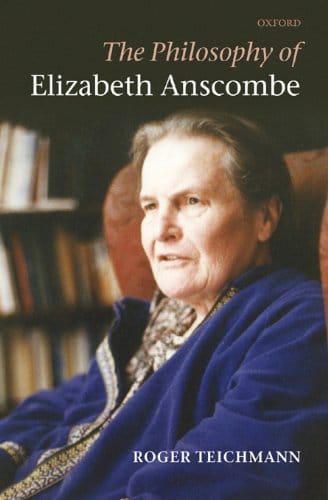
The next book, The Philosophy of Elizabeth Anscombe, is one of various that you have written or edited on Anscombe's thought. Could you give a brief overview of what you sought to accomplish in this book?
I have included it because it is still the only book-length treatment of her whole philosophical oeuvre, even though it was published in 2008, before any of posthumous publications edited by Mary Geach and Luke Gormally. If I were to write a second edition, it might be twice as long.
What was what was I up to in the book? I was hoping to show that there is a unity in Anscombe’s philosophy. There is an interconnectedness between what she writes about ethics, intention, causality, time, logic, and language.
You might think that these are all different pigeonholes. Not for Anscombe. Rightly, she would reject the idea that there are separate philosophical areas, each fenced off from the others. Instead, she roams over this large area, though not in a random fashion.
This is one of the most extraordinary things about her as a philosopher. One day she is writing about Aristotle on future contingents, the next day about the embryo, and the next day about a logical problem in Frege.
When you talk about the unity of her thought, some people might think of other philosophers in whom there is a unifying thread or central idea. Is there something similar in Anscombe's work?
No. Here again, Wittgenstein needs to be mentioned.
What is the principle of unity in her thought? There is only one answer to that question: the way she does philosophy.
What are philosophical problems? You might say that they are a bunch of problems which have come down to us and historically have been labelled as “philosophy”. That is a good starting point. However, what do these problems have in common? Following Wittgenstein, Anscombe might say that, roughly, a problem or issue is a philosophical one to the extent that it is it has a difficulty and profundity that arises from the ways in which it pervades all sorts of areas, especially our language and thought.
Knowledge is evidently a philosophical concept because the ways in “know” is used opens up a whole network of concepts: confidence, knowledge, belief, trust, authority.
When clarifying a tangled network of concepts, like this one, there will not be a unifying theme, such as the mental vs. the physical, or pure reason vs. the senses. Rather, there will be a unity of aim: an attempt to get an overview (Wittgenstein speaks of an Übersicht) of that part of the terrain you are investigating.
Hence, Wittgenstein’s Philosophical Investigations does not reach conclusions. Nor do you find a conclusion at the end of Intention or any of Anscombe’s other books and articles. Philosophy is not like that. So, many of her articles end in mid-step, as if she had just suddenly stopped speaking.
Some readers are not prepared for that and might find it odd or unsatisfying. However, she did it quite consciously. In philosophy, there are further paths for you to go down.
It is in the name, philosophy, namely, the love of wisdom. It is an ongoing inquiry.
Exactly.
"In many ways she was a a contrarian, polemical, and a tough cookie."
5.
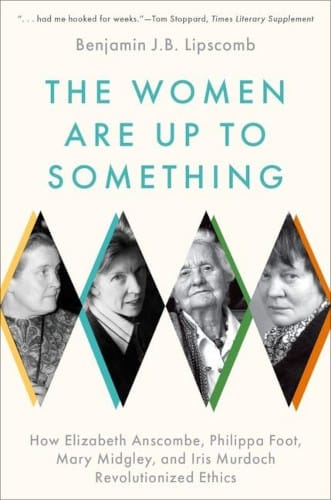
As you already mentioned, in 1956, Oxford University was deciding to confer of a honorary doctorate on Harry Truman. Some dons had gotten wind that Anscombe and several of her colleagues were going to lodge a motion to oppose the decision. “The women are up to something,” they warned. Benjamin J.B. Lipscomb has taken this warning as the title of his book on Anscombe and three of her friends who, according to the subtitle, “revolutionized ethics.” The other philosophers surveyed are Philippa Foot, Mary Midgley, and Iris Murdoch. Have you recommended this book because it describes the broader milieu in which Anscombe developed?
That is right. This is a book anyone interested in either philosophy or post-war England will find fascinating. I chose it for the reason you mentioned. It explains Anscombe’s milieu, relationships, philosophical fights, and engagements.
The main chapter on her is entitled, “Anscombe Against the World.” In many ways she was a a contrarian, polemical, and a tough cookie.
However, with justice she would say that there are things about which one needs to be tough or difficult. Possibly, she sometimes took that a bit too far. Nevertheless, she was certainly someone to be reckoned with and did not suffer fools gladly.
The four figures discussed in the book—Anscombe, Foot, Murdoch, and Midgley—knew each other and their lives intertwined in various interesting ways. Incidentally, there is another book on his quartet of female philosophers: Metaphysical Animals: How Four Women Brought Philosophy Back to Life, by Rachel Wiseman and Claire MacCumhaill.
Iris Murdoch has come back into fashion as a philosopher. However, in a sense she left philosophy for novel-writing. Her novels contain her best ideas, which are often philosophical ones.
Mary Midgley was also a fine philosopher.
However, Anscombe and Foot are the two that revolutionised ethics, in the sense of the book’s subtitle.
Foot always acknowledged how much she owed Anscombe and thought of her as one of the greatest philosophers of the twentieth century.