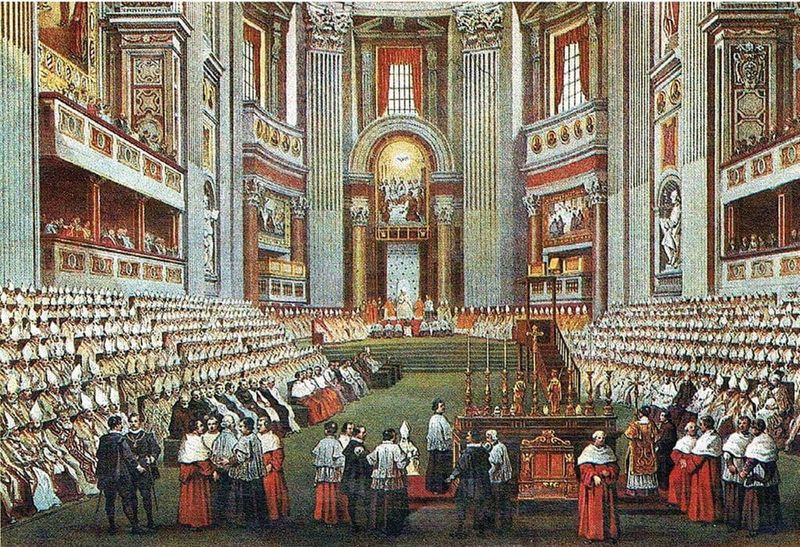
The First Vatican Council (8 December 1869-20 September 1870/5 June 1960) was the twentieth ecumenical council of the Catholic Church. It was convened by Blessed Pius IX and suspended prematurely when Napoleon III was captured during the Franco-Prussian War and the French troops protecting Rome left the city, leaving the remnants of the Papal States open to capture by the newly formed Kingdom of Italy. Nevertheless, it managed to promulgate two dogmatic constitutions: Dei Filius on the Catholic Faith (24 April 1870) and Pastor Aeternus on the Church of Christ.
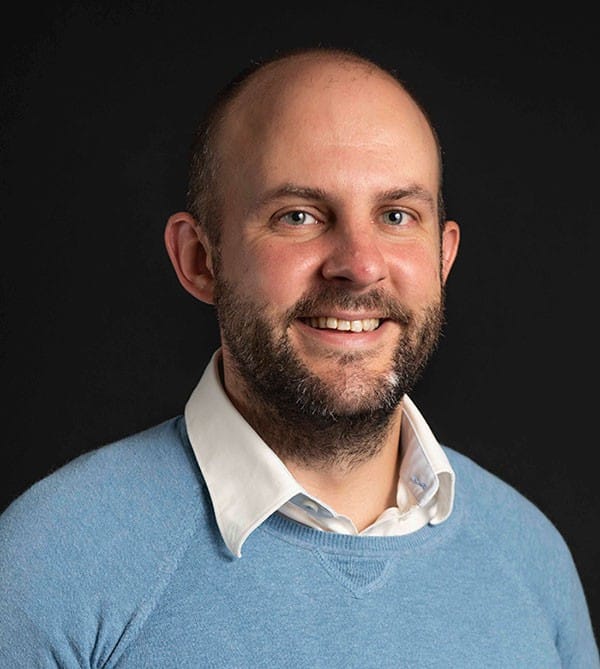
In this interview, Shaun Blanchard discusses Vatican I and recommends some books about it and its wider history.
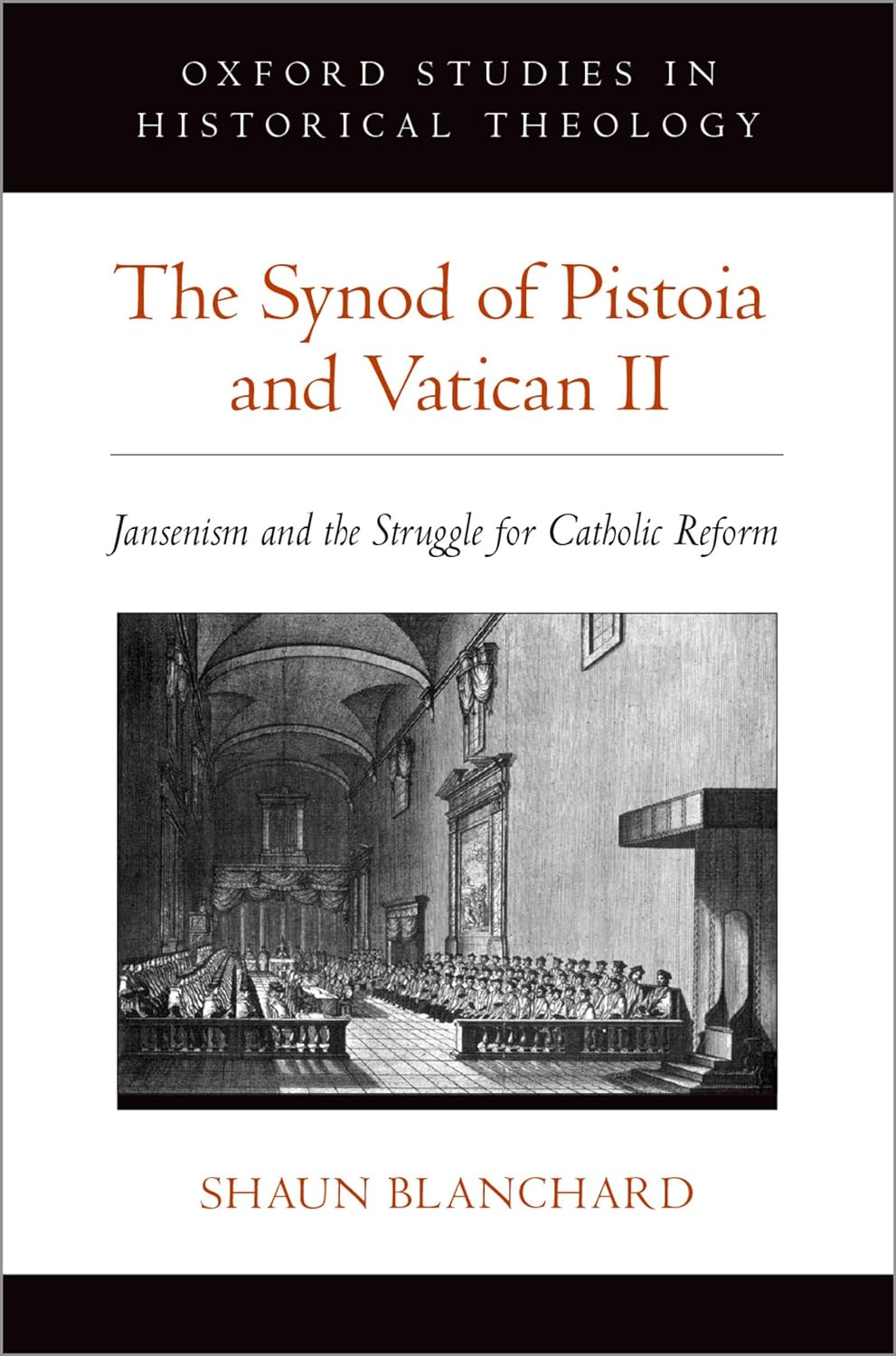
Shaun Blanchard is Lecturer in Theology on the Fremantle campus of the University of Notre Dame Australia. He writes on a variety of topics in early modern and modern Catholicism, publishing in outlets like Commonweal, America, Church Life Journal, and The Tablet. He is the author of The Synod of Pistoia and Vatican II: Jansensism and the Struggle for Catholic Reform (OUP: 2020) and, with Ulrich Lehner, co-edited The Catholic Enlightenment: A Global Anthology (CUA: 2021). With Stephen Bullivant, he co-wrote Vatican II: A Very Short Introduction (OUP: 2023) and with Richard T. Yoder, he has co-edited Jansenism: An International Anthology (CUA Press, 2024).
- Vatican I: The Council and the Making of the Ultramontane Church
by John W. O'Malley SJ - The Conciliarist Tradition: Constitutionalism in the Catholic Church 1300-1870
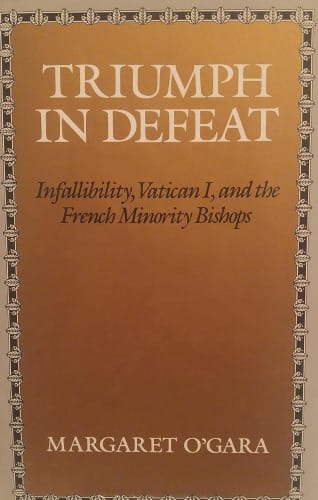
by Francis Oakley - Triumph in Defeat: Infallibility, Vatican I, and the French Minority Bishops
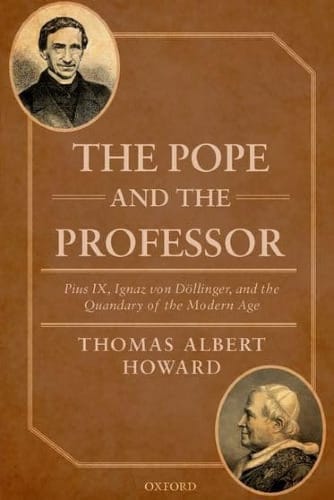
by Margaret O'Gara - The Pope and the Professor: Pius IX, Ignaz von Döllinger, and the Quandary of the Modern Age
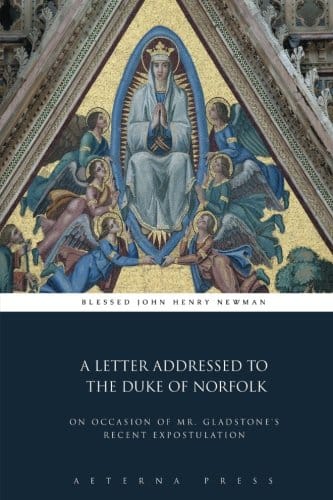
by Thomas Albert Howard - A Letter to the Duke of Norfolk
by St. John Henry Newman
Pius XI convoked the council in the bull Aeterni Patris. The goals outlined there are broad and generic. However, he expressed his intention to convoke a council two days before the publication of the Syllabus of Errors (1864) and consulted the cardinals of the Roman Curia about its opportuneness and possible agenda. What were the specific reasons for convening Vatican I?
There was a general sense of crisis in the nineteenth-century Church, a sense that the Church was under siege from various -isms external to it: capital L liberalism, nationalism, and rationalism. This was Pius IX's initial reason for convening the Council.
However, Pius IX was also concerned about internal enemies. They only came to the surface later, when the attention shifts to a particular set of ecclesiological questions.
At face value, the First Vatican Council is Pius IX's attempt to boldly— perhaps even aggressively—assert what he sees as the right Catholic vision for entering a hostile modernity.
Many assume that ecumenism began in the twentieth century and was only sanctioned by Vatican II. However, Pius IX also invited the Eastern bishops not in communion with Rome to the council (Brief Arcano divinae providentiae) and addressed a brief to Protestants (Iam vos omnes). Was there a serious ecumenical drive behind the first Vatican council?
Pius IX certainly saw himself as the father and teacher of all Christians. So, he would have seen these Christians as separated brethren. However, we would now regard his attitude as quite triumphalist.
His attitude was that they were welcome to renounce their errors and return to the bosom of the Church. However, he did not have a strong sense of the need for dialogue with separated Christians. Some of his gestures were irenic and he did have a real desire to overcome division, but his attitude was not ecumenical in the modern sense.
That does not mean there were not any Catholics who were thinking ecumenically. There was a proto-ecumenism as early as the seventeenth and eighteenth centuries.
What was the preparatory work of the Council?
The theologians who were the fathers of the First Vatican Council—in the way that we might see Congar, de Lubac, and Ratzinger as the fathers of the Second Vatican Council—were those of Roman School.
This was a fascinating group of thinkers, mainly Italians and Germans.
An very interesting new book, Engaging the Church Fathers in Nineteenth-Century Catholic Theology, Fr. Joseph Carola SJ profiles seven or eight of them.
Giovanni Perrone SJ was probably the most important one. He was the dean of the Roman School. The Society of Jesus had been suppressed in the 1770s and restored in 1814. The Jesuits came back on the scene with a lot of vigour in the nineteenth-century.
Another important figure was Carlo Passaglia.
Some, such as Johann Adam Möhler, were from the Tübingen School in Germany. He retrieved the vision of the Church as the mystical body of Christ. Of course, everyone accepted this as a New Testament teaching. However, tentative steps to rethink ecclesiology along more patristic and biblical lines were beginning to be taken, while avoiding the pitfalls of Protestantism or Jansenism. Not everyone agreed on how to express these truths. Nevertheless, these were real attempts at ressourcement.
The Roman School Theologians were certainly ultramontane. They stuck very closely to a tradition of papal encyclicals and helped to form these encyclicals. However, they were not narrowly Neo-scholastic but had a very eclectic approach. They were suffused in the Church Fathers and Scripture.
Was Vatican I in part a response to the aftermath of the French Revolution and the rise of liberalism in the nineteenth century?
Yes, the First Vatican Council was certainly a Catholic attempt, a papal attempt, to chart a new path, following the destruction of the Ancien Regime.
There were Catholics who believed that nineteenth-century liberalism, and maybe even the early stage of the French Revolution, had many positive elements. However, for Pius IX and Gioacchino Pecci, the future Leo XIII, the French Revolution was a catastrophe that had spawned a new and entirely negative way of thinking about society, philosophy, and politics.
Paradoxically, these two were forward-looking, modernizing thinkers in certain ways. The First Vatican Council was an attempt to meet the challenges of modernity, partly by going back, partly by thinking innovatively about being the Church in a new era.
Nicaea, the first ecumenical council, was convoked by Constantine. Vatican I was the first council to which the Catholic princes were not invited. How come?
This ties in with the previous question. The French Revolution had changed European society profoundly.
However, Pius IX was an innovator. He was charting a new path. For good reason, he held that the “crowned heads of Europe,” the democratic governments, and the republics no longer offered a Christian vision for society, or at least not one to which he could subscribe
Sometimes, the secular rulers would undertake actions that were beneficial to the Church. For example, French troops were guarding Rome at the time. The Papal States fell definitively to the army of the Kingdom of Italy because the Franco-Prussian War broke out and Napoleon III had to withdraw the French troops who were protecting the Vatican.
It is not that there was no positive cooperation whatsoever. However, the Ancien Regime, the old order and way of doing things, had been broken definitively.
In the run-up to the Council of Trent, there had been a back-and-forth between the Holy Roman Emperor and Pope Paul III about where the council should be held and under what conditions. By the time of Vatican I, that kind of dialogue was no longer vital in any meaningful way.
On one hand, that was scary. It provoked much rethinking and reshuffling. However, it also presented an opportunity. Specifically, it presented the opportunity for there to be a powerful pope who could act as the direct pastor of all Christians in a way that, ironically, had not been possible under the Ancien Regime.
 Five Books for Catholics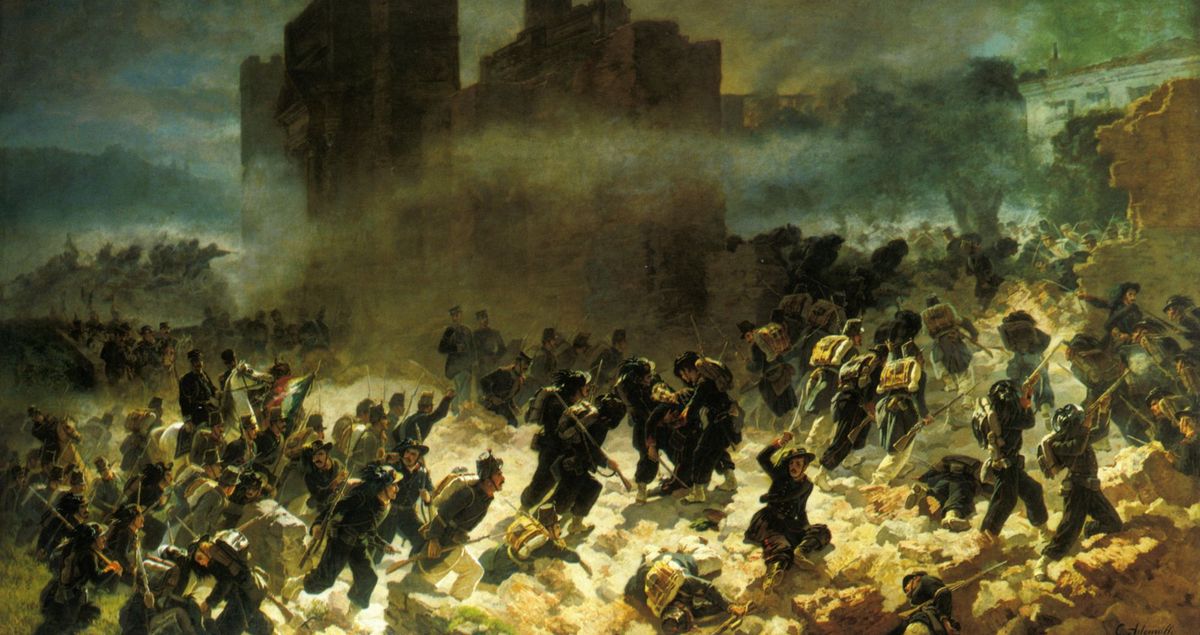
Catholic princes or their envoys may not have been present at Vatican I. Nevertheless, did any European nations exert political pressure in an attempt to steer or influence the council?
Yes, the governments of Europe were very interested in the proceedings of the First Vatican Council.
There is a lot of great scholarship on this.
Many German bishops were very nervous about a potential definition of papal infallibility. They feared a backlash from anti-Catholic Prussia.
Similarly, in Great Britain there was concern that anti-Catholic forces within the United Kingdom would be able to resurrect the old canards about papal authority.
Hence, the governments of Europe were watching Vatican I very intently. News about it was spreading very quickly.
There was a media presence at the council, though certainly not to the extent that there was at Vatican II. There were journalists and newspaper reports. Some very colourful accounts spread around Europe about the debates, potential dogmatic statements, and the policies. Governments were very concerned about these.
The see of earlier ecumenical councils held in Rome was the cathedral, St. John Lateran. Why was this council held in St. Peter’s?
By the nineteenth century, St. Peter's had become the symbol of papal authority. It was the Mother Church of Christendom. This symbolized in a more direct way the transfer of the pope’s role as Patriarch of the West to that of the supreme pastor of the entire Christian world.
There may have also been practical reasons for holding it in St. Peter’s rather than St. John Lateran.
Normally, a small group of theologians and bishops exerts a decisive influence on the deliberations and decisions of an ecumenical council. Who were the leading figures at Vatican I? Youh have already mentioned some of the theologians. Who were the leading figures among the bishops at Vatican I?
Generally, the bishops were divided into three groups when it came to the question of papal authority.
Some bishops were in favour of a definition of papal infallibility. Among the most important members of that group were Cardinal Manning, the archbishop of Westminster, Cardinal Cullen, the archbishop of Dublin, Ignatius von Senestrey, the bishop of Regensburg, and the future Cardinal Pie, the bishop of Poitiers and a relator at the council.
Then there was a much smaller but intellectually eminent group of bishops, many French, who were opposed to the definition of papal infallibility.
This second group can be divided into two: those who disagreed in principle with it and those who simply believed that, for whatever reason, it was inopportune to define papal infallibility as a dogma.
Some of the most important opponents of a definition were Josip Juraj Strossmayer, bishop of Bosnia and Syrmia, then part of the Austro-Hungarian Empire, Félix Dupanloup, bishop of Orléans, and Georges Darboy, Archbishop of Paris.
Other important figures were not present at the council but their thought was well known. John Henry Newman was invited as a peritus, a theological expert, for Archbishop Ullathorne of Birmingham, but declined the invitation.
"Dei Filius has stood the test of time."
The first dogmatic constitution, Dei Filius, is on the Catholic faith. Its four chapters are on: 1) God, the creator of all things; 2) Revelation; 3) faith; 4) faith and reason. What are the main teachings of Dei Filius?
Dei Filius promotes a positive vision, but also censures and condemns certain ideas. It condemns fideism, the belief that knowledge about God is simply a matter of faith, without reason being involved. However, its main targets are the rising secularism and rationalism. Rationalism is the secular belief that all reality is explicable through reason.
The positive teaching is that we should be neither rationalists nor fideists but hold faith and reason together.
Dei Filius asserts strongly that we can know God through reason from the natural order. This was very important in the age of Darwin, when the secular vision of science was growing: the idea that religion is outdated because science can explain the world completely.
Dei Filius has stood the test of time. With its strong emphasis on the compatibility of faith and reason, its teaching will be familiar and second nature to Thomists or those schooled in John Paul II's encyclical Fides et Ratio. Apart from this general emphasis on faith and reason, it also teaches—and some might find this in need of greater explanation—that we can know God from the natural order through reason alone and do not necessarily need Revelation to conclude that there is one God, who is good, punishes the evil, and rewards the good.
One dogmatic definition of Dei Filius regards rationalism in the human or historical rather than the natural sciences: the books of Sacred Scripture, in their entirety and all their parts, are divinely inspired. Was Dei Filius taking aim at the rise of historico-critical methods in theology?
It certainly was. The drafters of Dei Filius were aware of attempts to “demythologise” Scripture. They guarded jealously the concept that God is revealed not only in nature, but also in divine Revelation, Scripture, and Tradition. Hence, Dei Filius insists strongly on the inspiration of Sacred Scripture.
The debate did not have the same specificity as the modernist one, which took place thirty years later. Nor was there anyone as popular as Alfred Loisy around. Nevertheless, the drafters of Dei Filius understood that in no previous ecumenical council had the divine authority of Scripture been undercut as it was in the modern world.
Dei Filius was revisited in Vatican II’s dogmatic constitution on divine Revelation, Dei Verbum. Many would argue that the latter complements and completes the former. How so?
Dei Verbum is a deeper and richer explanation of what the Church believes about divine Revelation. It is concerned with the same problems as Dei Filius but also a wider range of ones.
In keeping with ressourcement and the style that John XXIII set for Vatican II, it gives a deeper, more positive, biblical, and patristic explication of what the Church believes. It is less concerned with condemning errors. Implicitly, however, it rules out all kinds of things.
It makes the brilliant move of grounding the authority of Scripture and Tradition explicitly in the person of Jesus. It thereby deepens Vatican I’s dogmatic constitution Dei Filiius.
There is also a return to the Council of Trent’s “unreal controversy” - to quote Joseph Ratzinger - the debate with Protestantism about the quantitative fullness of Scripture and Tradition (the infamous “partim-partim” debate). Rather, the fullness of Revelation is accomplished through the person of Jesus Christ. This subjective, personalist perspective complements Dei Filius, with its insistence on the objectivity and authority of Scripture and Tradition, and the knowability of God through faith and reason. Dei Verbum reiterates these teachings but grounds them, with a personalist move, in Jesus, the fullness of Revelation. We know about God’s full Revelation of himself through two trustworthy means that are intertwined with one another: Scripture and the Church’s Tradition.
The second dogmatic constitution, Pastor Aeternus, is on the Church of Christ. For all its merits and undeniable importance, its treatment of the matter is very partial. Each of its four chapters is centred on just one aspect of the Church: the primacy of Peter and his successors. Did Vatican I intend to offer a more complete treatment or is this one of the reasons Vatican II made the Church its main point of business?
Vatican I did intend a provide a fuller treatment of the Church. Originally, Pastor Aeternus was just one section of a larger document on the Church. However, the council was interrupted by the Risorgimento. Napoleon III withdrew the French troops from Rome due to the outbreak of the Franco-Prussian War. The forces of the Kingdom of Italy were able to invade Rome and Vatican I was suspended. The first act of Vatican II was to formally close Vatican I.
Nevertheless, it is fair to say that there was a lopsided emphasis on the papal office, an ultramontanism that troubled many of the bishops at the time. At Vatican II, there was certainly an explicit attempt to balance this picture of the Church as the mystical body. The visible centre of unity is the successor of Peter. His role is irreplaceable. However, he is but one part of a larger body.
1.
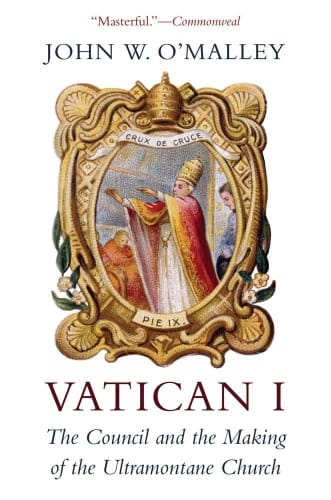
What makes your first recommended book, John O'Malley, SJ’s Vatican I: The Council and the Making of the Ultramontane Church, a good history of Pius IX’s council?
It is an excellent introduction to the events of the First Vatican Council. The council came out of the Enlightenment, the French Revolution; a series of philosophical, cultural, and political changes that occurred in Europe between 1820 and 1870; the rise of the ultramontane movement. O’Malley’s book does an excellent job at setting the scene for the council and situating it within its historical context.
Ultramontanism was a position on a set of questions that had been disputed for centuries. It maintained that pope’s legislative and doctrinal authority was superior to that of councils and unappealable. Though an old position, there was not really an ultramontane movement until after the French Revolution. Moreover, it was only in the 1820s and 1830s that it became a popular movement that involved journalists, parish priests, and different sectors of Catholic society. Symbolically, it crests with Pius IX’s encyclical Inter Multiplices (1853), which suppressed the Gallican rites, liturgical traditions unique to France. This was an emblematic moment of Roman and papal hegemony over an ancient and powerful church.
John O'Malley's history contains interesting portraits of the great thinkers and firebrand journalists. He brings in the political element, the pressure exerted by various governments. He covers John Henry Newman, the French minority bishops, and the incredibly colourful figure of Pius IX. He ties this all together as brilliantly as he does in his books on the Council of Trent and Vatican II. He brings Vatican I to life and enables the reader to better understand its documents and importance.
What other issues would the council have addressed had it not been interrupted?
Had Vatican I not been interrupted, there would have been a much broader discussion about the relationship between Church and state, the pope and bishops.
The Mansi collection of official ecclesial texts—named after its original editor, Bishop Giovanni Mansi—contains the Acts of Vatican I. The various drafts of documents included statements on various modern errors and the relationship between Church and state.
The minority party, who opposed the definition of papal infallibility, worried about it as an ecclesiological issue but also had a more general concern about the prevailing worldview behind the Syllabus of Errors. Bishops like Félix Dupanloup were worried that the basic approach of the Syllabus would be canonized infallibly by an ecumenical council. That was the tension running underneath the surface.
Was the council stage-managed or was there ample room for discussion?
A great question. Neither the one nor the other.
As in Vatican II, key individuals were appointed to key committees by the pope; others were elected. Hence, there was a rigging of a sort. This sort of thing has occurred at every council, whether it be through the actions of an emperor, a very influential group, or the pope. This is inevitable in ad hoc meetings such as a council, which does not follow established procedures such as those of the British Parliament or the United States Senate. Each ecumenical council works differently in key ways.
Pius IX certainly had a very strong vision and will. That said, some twentieth-century theologians, such as Hans Küng, have made exaggerated claims about the lack of open debate at Vatican I. That is inaccurate. The minority group of bishops had its say. However, it was clear that their position was not in favour, and actually very unpopular. Strong pressure was exerted on them, but they were neither coerced nor silenced.
They met together, planned their various strategic moves, but in the end simply lost. They were nowhere close to fifty percent of the Council Fathers. So, there was a free debate but the opinion of the majority prevailed.
"The more challenging teaching of Vatican I is its proclamation, not of papal infallibility, but of papal primacy of jurisdiction."
2.
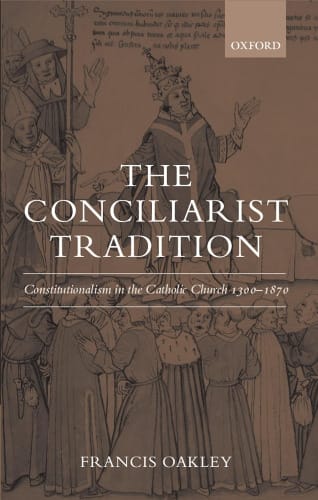
Most of the controversy surrounding Vatican I was about the dogma of papal infallibility. Three of the next four books look at some of the main participants in that debate before, during, and immediately after the council. However, the debate over the papal primacy had going on for centuries, whether it be in the disputes over the claims of the see of the Constantinople, conciliarism, and Gallicanism. Francis Oakley’s The Conciliarist Tradition traces one of these disputes and argues that Pastor Aeternus consigned constitutionalism to oblivion within the Church. Why is this book worth reading if it takes such a dim view of Pastor aeternus and appears to support a position the magisterium has ruled out?
Francis Oakley's book certainly begins and ends on a very, very dim note.
He proposes the image of a battlefield strewn with debris, where the only surviving figure is the ghost of Bellarmine, riding triumphantly through the battlefield.
One need not share Oakley’s pessimism about the Catholic Church post-Vatican I, to appreciate his scholarship on the period surveyed, 1300-1870.
That said, the more challenging teaching of Vatican I is its proclamation, not of papal infallibility, but of papal primacy of jurisdiction: the pope has supreme, direct jurisdictional authority over the universal church.
In my opinion, that is the much more important legacy of Vatican I. It affects the lives of Catholics daily.
Just as Vatican II attempted to balance Vatican I’s teaching on papal infallibility, there are important debates to be had about the extent to which the pope’s primacy of jurisdiction could or should be balanced.
Oakley raises some very important questions in this regard. He has also done the heavy-duty legwork of scouring the dense Latin tomes through which this debate was conducted, from the conciliarist crisis up until the nineteenth-century. Important figures in this debate were Cardinal Cajetan, Jean Gerson, the theologians at the Council of Constance, the defenders of ultramontanism or papalism in the late Middle Ages and early modernity. Oakley knows these authors very well and brings into English summaries of their positions, while pitting them against one another in fruitful dialogue.
What was it about the secularism of the 1800s that brought this century-long debate to a head? Was it the calls from the ground up?
There were two key moves here.
One was definitely the movement from below. This was something new. A papalist or ultramontane position was centuries old. However, the idea that a French journalist, such as Louis Veuillot, would push ultramontanism was new.
Parish priests also played a part. Due to modern technology, they could now read the pope’s teachings firsthand. His documents were being published in newspapers and discussed widely. Parish priests could now pit the authority of Rome against that of their local bishop. There was a kind of egalitarianism at play here. A local priest could detect whenever the teaching of the local seminary or bishop, or some policy of the bishop’s, discorded with what was coming from the congregations of the Roman curia or the pope himself. As a result, he could appeal directly to the authority of the pope.
Take the growth of the decretals in the early Middle Ages. One theory is that this occurred because bishops were trying to undercut the power of archbishops or metropolitans who were overstepping their jurisdictional authority. Something similar may have been going on in the nineteenth century. Priests and lay people were able to undercut episcopal authority in favour of papal authority. That was one possible trend.
The other reason the debate could not be resolved prior to Vatican I was that governments did not allow it to be resolved. For example, during the Third Session of the Council of Trent, the Cardinal of Lorraine declared that the theologians of the University of Paris did not hold Lateran V to be an ecumenical council, nor the pope to be superior to councils, and censured as heretics whomsoever held such positions. That was an overstatement of how the University of Paris operated, but the Cardinal of Lorraine had the backing of the French crown. There was a limit to papal power over a cardinal who had the backing of a kingdom as powerful as France.
By the nineteenth century, things had changed. It is not that governments no longer cared about religion or that those governing were no longer religious. Many cared deeply about religion. It is just that the French Revolution had overturned society so profoundly that those governing were no longer conceived in the manner of an anointed sovereign or a Holy Roman Emperor, whose role it was to lead all citizens or subjects to heaven. This is what allowed the ultramontane position to assert itself for the first time and not be blocked by a secular government.
Had ultramontane or papalist theologians attempted to define papal infallibility at the Council of Trent, there would have been a pushback from France, at the very least, and probably from the Holy Roman Emperor and other monarchs too. It would never have gotten off the ground.
Arguably, the next few popes carried out much of the unfinished business of Vatican I. Pius IX declared the dogma of the Immaculate Conception and Pius XII that of the Assumption. Leo XIII declared St. Joseph Patron of the Universal Church, supplemented the missing dogmatic constitution on marriage with his encyclical Arcanum, and in other encyclicals dealt with relation between Church and state. Pius X and Benedict XV carried out the request of some council fathers to codify canon law. Do the dogmas of papal primacy and infallibility lessen the need for ecumenical councils?
That is a very interesting question. Apparently, there was a sense that a Vatican II would no longer be necessary because of papal infallibility. It seemed that the decrees of Vatican I had put an end to the conciliar project and sort of dissolved itself by proclaiming papal infallibility. We now see that this was not the case.
There is a challenge to papal infallibility. It can be difficult to verify.
We have the 1870 definition of papal infallibility but no official list of infallible teachings.
Some theologians have drawn up a list but almost all of what they determine to be infallible they do retroactively.
Virtually everyone agrees that the dogmatic definitions of the Immaculate Conception (1854) and the Assumption of Mary (1950) are infallible papal teachings. However, whereas there are disagreements about other possible instances of papal infallibility, there is far more unanimity about doctrines that are clearly proclaimed in ecumenical councils. For that reason, we need to hold papal and conciliar infallibility together.
When trying to determine what has been taught infallibly or definitively with a lower level of authority, I would give a prima facie priority to doctrines that have been held clearly and repeatedly by ecumenical councils.
"Partly due to pressure from the minority, partly due to cooler heads in the ultramontane camp, Vatican I’s definition of papal infallibly was neither doctrinally deficient nor erroneous."
3.
During the deliberations, seventy-three bishops opposed the dogmatic definition of papal infallibility. Twenty-two were French. Margaret O’Gara studies their position in Triumph in Defeat: Infallibility, Vatican I, and the French Minority Bishops. Why should their position be of interest to the non-specialist if, with the dogmatic definition, the issue of papal infallibility has been settled?
The French minority bishops had a very interesting perspective. One of them was more of an academic than a pastor: Charles-Henri Maret. He coined the phrase evoked in the title. He said, “The minority has triumphed in its defeat.” By that, he meant that a certain ultramontanism contained very dangerous elements. This can be summed up by the famous or infamous quip of the ultramontane English journalist, W .G. Ward: “I should like a new Papal Bull every morning with my Times at breakfast.” Such an idea of Revelation on tap would make the Pope less a successor of Peter and more like Moses on Mount Sinai, who communes directly with God and then comes down from the mountain to inform the people about what God has said. That is not a respectable nor historically sound Catholic position.
What the French minority bishops did was apply a certain amount of pressure to force the cooler ultramontane heads to define their position more carefully. In Pastor Aeternus, there is certainly a strong emphasis on papal authority. However, the definition of papal infallibility is very clear and does not fall afoul of what the minority really feared: the proclamation of a papal infallibility that was personal, absolute, and separate.
O’Gara studied their correspondence and their writings exhaustively. She argues convincingly that in the end, partly due to pressure from the minority, partly due to cooler heads in the ultramontane camp, Vatican I’s definition of papal infallibly was neither doctrinally deficient nor erroneous. Though concerned and worried, ultimately the minority bishops were able to reconcile the definition with their consciences. Charles-Henri Maret was able to sign on to the definition in good conscience, as was John Henry Newman.
"Döllinger was an incredible historian and an important nineteenth-century Catholic. However, he had an outsized trust in the effectiveness of history as a discipline."
4.
Ignaz von Döllinger (1799-1890) did not accept the dogma of papal infallibility and became the figurehead of the schismatic Old Catholic Church. His conflict with Pius IX is the subject of Thomas Albert Howard’s The Pope and the Professor. Who was Döllinger and why is he so important for understanding Vatican I?
Ignaz von Dollinger was probably the greatest German Catholic historian of his generation. Originally, he actually was more of an ultramontane. However, he ended up moving far beyond the inopportunist camp toward a hard and combative anti-infallibilist position.
Thomas Howard's book shows convincingly how Döllinger believed historical studies could prove the doctrine of papal infallibility is false on account of his conception of Wissenschaft—namely science or scholarship—and the scholarly pursuit of theology.
Ultimately, this a dangerous position, which leaves little room for submission to religious authority. Someone like Cardinal Newman would be comfortable saying, “I have read the historical evidence this way, yet I am aware of my own limitations and fallibility. I trust, therefore, in the judgment of the universal Church.”
One of the young Joseph Ratzinger’s professors did not want the Assumption of Mary to be defined dogmatically. However, once it was defined, he accepted it happily and moved on.
For Ratzinger, this was an example of this man's greatness. Hans Küng, on the other hand, saw it as a cowardly, anti-intellectual act.
Döllinger was of the latter persuasion. He believed that historical scholarship could lead us to certainty about religious doctrines. Unfortunately, that left no space for anything else when, inevitably, one’s scholarship is contradicted by this or that ecclesial pronouncement
Döllinger was an incredible historian and an important nineteenth-century Catholic. However, he had an outsized trust in the effectiveness of history as a discipline.
I would contrast him with Newman and the latter’s The Idea of a University. According to Newman’s idea of university, all disciplines must be in harmony with one another and ultimately reconcilable with theology. In his view, whoever follows their discipline to the exclusion of all the others risks becoming “a bigot or a quack.” It would be too harsh to charge Döllinger of acting that way. Instead, I always have in my head someone like Richard Dawkins: someone who only looks at the world through the physical sciences or logical positivism.
Vatican I teaches that historical or scientific disciplines should be in harmony with one another, even though they can at times, undeniably, be in tension with one another.
5.
Next up is John Henry Newman’s Letter to the Duke of Norfolk. It is a response to Gladstone’s critique of papal infallibility. Have you recommended it as another window into the controversy that followed immediately upon Pastor aeternus?
Yes, the Letter to the Duke of Norfolk is an excellent case study of the reception of Vatican I. It is a window into how culture, politics, and theology were all intertwined at the time. Moreover, like much of Newman's writing, it is enjoyable to read and written in beautiful Victorian prose.
Nevertheless, Newman engages in a creative reception of Vatican I. He balances papal infallibility with another deeply rooted aspect of the Catholic, indeed the Judeo-Christian, tradition: conscience.
Essentially, he is addressing a debate in England that goes back to the outbreak of the Protestant Reformation.
When St. Thomas More ascends the scaffold he says, “I am the king's good servant, but God's first”, that is, “I can be a good subject of the crown, a good British citizen, but also a good Catholic.”
Newman's tries to prove to his fellow Englishmen and British subjects that Catholics who sign on to Vatican I are still good subjects of the crown. He does not reconcile the two with some concept of conciliar reception or episcopal authority. He does not claim, as early modern Austria or France did, that the bishops of England deliberate on whether to receive a papal teaching or not. Instead, he argues persuasively that he is bound in conscience to obey the religious teachings of the pope, the supreme Catholic teacher, but, in civil matters, he is a subject of the crown.