

God wants all men to be saved (1Timothy 2:4), but there is only one name in which we can be saved (Acts 4:12). Not only does the Church teach that “God in ways known to himself can lead those inculpably ignorant of the Gospel to find that faith without which it is impossible to please Him (Hebrews 11:6)” (Ad gentes 7). It also teaches that non-Christian religions may occasionally, though God’s providence, act as a preparation for the Gospel (Ad gentes 3) and “rejects nothing of what is true and holy in these religions.” (Nostra aetate 2). Indeed, “it is the Spirit who sows the ‘seeds of the Word’ present in various customs and cultures, preparing them for full maturity in Christ.” (Redemptoris missio 28).
The theology of religions inquires into how God might bring to salvation those who, through no fault of their own, have not been incorporated into Christ, and his body, the Church, through baptism. However, some theologies of religion may end up treating any religion as an equally valid way to God, evangelization as redundant, and the mediation of Christ and his Church as neither universal nor necessary.
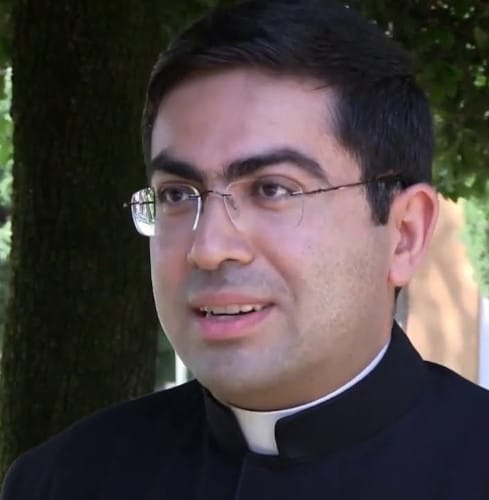
In this interview, Fr. Sameer Advani LC discusses the theology of religions
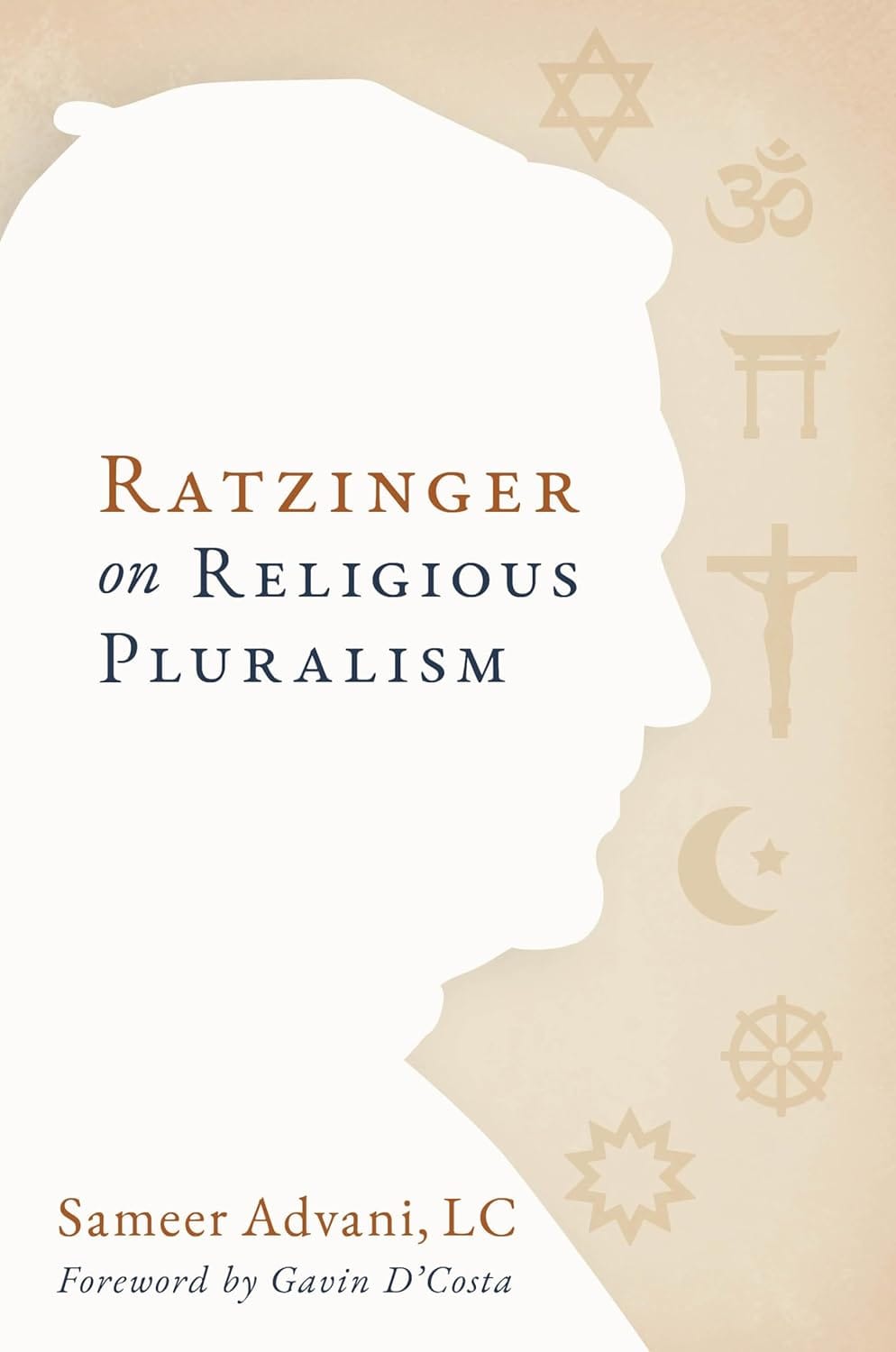
Fr. Sameer Advani, LC, is a Canadian priest of German and Indian background with degrees in theology, philosophy, and mathematics. He is professor of dogmatic theology at the Pontifical Atheneum Regina Apostolorum, where he is also director of the Christianity and Culture Program and research scholar in the Multiculturalism and Religion Project of the UNESCO Chair in Bioethics and Human Rights. He is the author of Ratzinger on Religious Pluralism.
- Lumen gentium and Nostra Aetate
by Second Vatican Council - Dominus Iesus, Declaration on the Unicity and Salvific Universality of Jesus Christ and the Church
by Congregation for the Doctrine of the Faith - Salvation Outside the Church: Tracing the History of the Catholic Response
by Francis Sullivan SJ - Christianity and World Religions: Disputed Questions in the Theology of Religions
by Gavin D'Costa - Vatican II: Catholic Doctrines on Jews and Muslims
by Gavin D'Costa
What is the theology of religions?
It is a new branch of theology that investigates the value that other religions may have in God’s providential plan for history.
For a long time, the field was dedicated to soteriological questions: How can non-Christians be saved? What is the role of Christ and the Church in their salvation? Do the other religions play any role in that salvation?
Recently, however, the field has focussed more on postmodern questions, such as the historical-cultural value of the other religions in relation to our understanding and expression of the truth.
In short then, the theology of religions aims to reconcile the universality of God’s salvific plan for all mankind with the particularism of Christ and the Church, and explores whether the religions have any role within that plan.
What prompted your own interest in the theology of religions?
The reasons were primarily personal. I grew up in a religiously mixed family. When my parents married, my mother was Catholic and my father was Hindu. He eventually converted to the faith, but it was a difficult and painful process. In addition, all this took place in Dubai in the United Arab Emirates, a Muslim country. Hence, before I joined the seminary, I probably had more Hindu and Muslim friends than I did Christian or Catholic ones!
Growing up, I was thus keenly aware that are very good people, even holy people, who belong to these other religions. But at the same time I knew that they lacked the fullness of faith in Christ.
And so, in a certain sense my search over the last thirty years has been to try and reconcile these two apparently irreconcilable aspects: on the one hand, the good, the true, the beautiful, the holy that exists in the other religions, and on the other, the fullness of Revelation and salvation in Jesus Christ.
Whereas religion, in the Catholic tradition, is the virtue whereby we render to God the worship due to him, the modern concept of religion is more sociological in nature and lumps together widely disparate and often heterogenous complex systems of religious belief, practice, and social organization. Moreover, the modern concept is often informed by Enlightenment assumptions about religion as a private matter that falls outside the public domain of reason. Is there a legitimate concept of religion?
Someone who could answer that question definitively would become very famous! There is a great amount of debate on the topic and hundreds of books about it.
It is fascinating to trace the history of the concept of religion. During the Enlightenment, because of both rationalism and for political reasons, the holistic, objective, and anthropological concept of religion that had dominated the Christian Middle Ages, and that saw Christianity alone as a ‘religion,’ was increasingly abandoned. Instead, beginning with Schleiermacher, emphasis began to be placed on the subjective side of the question, on religious experience, however vaguely and ambiguously that was defined.
There is, of course, something legitimate in this attempt to value the experiential aspect of religion. However, there have also been large downsides. Religion today is almost entirely relegated to the private and personal sphere, to the realm of sentiment and feeling, divorced from science and ethics, and stripped of any public role.
There have also been reactions to this one-sidedness: liberation theology, for example, was an attempt to reclaim religion’s position in the public sphere. Nevertheless, this effort was marred by its Marxist tendencies.
Another reaction has come in the form of postmodernism. According to several contemporary authors, religions are historical, cultural, comprehensive ways of life that structure man’s journey towards a particular vision of the ultimate good, happiness, or fulfilment. In my opinion, there is much value to this approach, in as much as it acknowledges the cultural and social aspect of religion and not just its interior, personal aspect. Anthropologically, it recognises that religions possess a certain vision of the ultimate good and that all of them aim, in one way or the other, and despite their differences, to structure man’s life towards that ultimate good. The danger in this attempt is historical-cultural relativism: the belief that these traditions are incommensurable and unable to enter into true dialogue and the search for a common truth.
The subjective and particular, in other words, both at the individual and community levels, needs to always be anchored in the objective and universal. Holding the two poles together in order to recognise the plurality that exists within the world of ‘religion’ is precisely the difficulty in coming up with a definition of term.
What is also clear is that ‘philosophy of religion,’ or understanding what ‘religion’ is, is a fascinating field in its own right, and absolutely key to developing a robust ‘theology of religions’ which examines their theological value in light of Christian faith.
There are major disagreements among the proponents of a theology of religions. What are the main theoretical divides between them? To put it another way, what are the main schools within the theology of religions?
Broadly speaking, there are three divisions within the theology of religion debate.
The first position is exclusivism. In general terms, it holds that Christ alone saves us and that there is no salvation outside the Church. For a long time, this was—and continues to be, when phrased in these very general terms—the position of the Catholic Church. It has often, however, also been identified with the exaggerated position of Karl Barth and his dialectic between faith and religion, and in those terms it is far more problematic. According to Barth, in fact, faith is a gift from God that completely cancels out religion, which is nothing more than idolatry and unbelief. Barth, in other words, draws a stark contrast between faith and religion: faith is God reaching out to man which alone is efficacious; religion is man’s entirely futile attempt to reach out to God. Even worse, however, is that for him religion is often also an obstinate refusal to accept God, the excuse man uses to avoid faith and shield himself from its call to conversion. In this vision, then, other religions have absolutely no theological value and must simply be replaced by Christian faith.
The second major school is inclusivism. It was proposed by Karl Rahner. He argues that Christ is present in a hidden, anonymous way in the hearts of all men and, as a result, in their systems or structures, especially in their religions. The non-baptised are therefore nothing other than ‘anonymous Christians’ and the different religions forms of an ‘anonymous Christianity.’ For Rahner, religions are also the ordinary ways of salvation, even if they are directed toward the fullness of truth and the explicit knowledge of Christ in the Church.
Finally, the third major school, which has gained in popularity since the nineties, is pluralism. It exists in various forms, but the two leading proponents have been John Hick and Paul Knitter.
Hick proposes that we move beyond both the ecclesiocentric, exclusivist vision of Christianity, and Rahner’s Christ-centred ‘anonymous Christianity,’ to God-centeredness. The presence of non-theistic ‘religions’ like certain forms of Hinduism and Buddhism led him to eventually adapt this terminology and speak about Reality-centeredness, but the basic idea was that man should focus on his journey towards God/the Absolute, no matter which of the many different paths toward Him It he chose. Of course, this position is very problematic from a Christian perspective because it implies a strong epistemological relativism. In the end, for Hick man is only ever capable of possessing an image or fleeting reflection of God: no definitive, normative revelation of God is possible within history.
The second form pluralism is the Kingdom-centeredness of Paul Knitter, which is perhaps even more popular today than Hick’s God-Reality centredness. For Knitter, rather than speaking about the Church, Christ, or even God, Christianity and the other religions need to focus on the establishment of the Kingdom. His conception of that Kingdom is, however, almost entirely immanentist and socialist, and largely taken from Marxist theologies of religion. The Kingdom consists of social justice, the alleviation of poverty, and care for the environment, he claims, and a real unity of religions can be attained as long as they focus on building the Kingdom along these three lines.
These three paradigms—exclusivism, Rahnerian inclusivism, and pluralism— have dominated the field over the last decades.
Scholars also speak of a fulfilment theory. That fits into the exclusivist model. Who are the main contributors to fulfilment theory?
Although I did not mention the fulfilment theory above, its major proponents have been Jean Daniélou, Henri de Lubac, and Hans Urs von Balthasar. In my recent book, I argue that Joseph Ratzinger has a unique take on the idea.
Moreover, the Second Vatican Council adopted the fulfilment theory by teaching that religions, or at least the positive elements in the religions, are preparations for the Gospel (praeparatio evangelica).
In my opinion, fulfilment theory is the best approach within the theology of religions debate. It recognises the good that exists in the other religions, but sees them as seeds of truth calling out for their fullness and perfection in Christ, and thus as dynamic, instead of static realities, whose value lies precisely in their temporary, preparatory character.
I did not include the fulfillment theory as one of the three main positions in the theology of religions debate today because, unfortunately, it only has a limited number of followers. The pluralist paradigm has dominated the field, both in academia and popular culture. Moreover, the dividing line between Rahnerian inclusivism and pluralism is sometimes also very fine. To a large extent, therefore, the theology of religions is currently divided between exclusivists and inclusivists-pluralists. Fulfilment theory, which attempts to mediate between these two positions—by recognizing what is legitimate in each of them while also rejecting their exaggerations—has fallen by the wayside.
As a result, I am also convinced that one of the main tasks for theology of religions today is to re-propose and better understand fulfilment theory.
In the Document on Human Fraternity for World Peace and Living Together, signed with the Gran-Iman of Al-Azhar, Pope Francis declares that “The pluralism and the diversity of religions, colour, sex, race and language are willed by God in His wisdom, through which He created human beings.” If God wants all men to be part of Christ’s Church, how can he want there to be a diversity of religions?
For obvious reasons, that document caused a great deal of debate and discussion among theologians. Pope Francis subsequently clarified that he was referring not to the positive but to the permissive will of God in the Abu Dhabi statement, and this helped address many of the concerns raised.
Seeing the religions as permitted rather than actively willed by God looks, however, at the other religions as wholes, as complete systems. And in that light, it is the only viable solution to the problem: because Catholic doctrine recognizes the presence of errors in addition to elements of truth in other religions. God cannot positively will that errors exist. As complete systems, the religions can only be the fruit of his permissive will.
That clarification also opens up another path toward interpreting Pope Francis’s phrase, one which is very helpful. The Second Vatican Council not only mentioned the errors contained in other religions, but also laid great emphasis on their positive elements. This was a truly revolutionary step: for the first time a Council spoke explicitly of truth, good, and holiness existing in the other religions. But this also means that we can ask whether, in a certain sense, God has actively willed, not the other religions in their entirety, but in their positive elements.
To complete the picture, however, we need to add that Vatican II also taught that these positive elements are a true preparation for the Gospel. They are meant to lead the followers of these religions, after a suitable purification from their errors, to the fullness of their own religion who is no one other than Christ. In that sense, and after making the necessary qualifications, we can perhaps talk about God wanting this plurality of paths towards Christ.
If we view history from this perspective we thus do not have a static plurality of religions. Rather, it is possible to see God’s plan for history as a converging unity toward Christ and the Church. Of course, this vision should not put into question the unique place that Israel plays in revelation history. And, above all, it cannot see the Church as simply one more religion among others, but as the point of arrival toward which the other religions are interiorly directed.
At the same time, the presence of positive elements in other religions is something to take very seriously. And they cannot be reduced to only the human, natural level. John Paul II made this clear in Redemptoris Missio 28 when he said: “The Spirit’s presence and activity affect not only the individuals but also society and history, peoples, cultures and religions. Indeed, the Spirit is at the origin of the noble ideals and undertakings which benefit humanity on its journey through history.”
In short, we cannot reduce religions to only their positive elements. They also contain negative elements and errors, and hence, it is highly problematic to claim that God wills them in their globality. But focusing on their positive elements can help make better sense of the Document on Human Fraternity for World Peace and Living Together.
1.
The first readings that you have selected are the Second Vatican Councils dogmatic constitution on the Church (Lumen gentium) and its declaration on the Church’s relation to non-Christian religions (Nostra aetate). The other books you have selected deal with the council’s teachings on this issue. Surely, however, the Church Fathers, theologians of the past, earlier councils and popes had addressed the theology of religions. Why start with documents from Vatican II?
The short answer is that we live in the era of Vatican II. To study what the Church says about any topic today, we thus have to use the Council as a reference point. In the question of religions, however, this is even more important because the issue was a major theme at Vatican II both in the dogmatic constitution Lumen Gentium and in the declaration Nostra Aetate. The latter, in fact, is the first ever magisterial document dedicated explicitly and solely to the theme.
Of course, for academic purposes it is important to go back to the Church Fathers. It is important to read St. Augustine, for example, who has much to say on the theme in the context of the paganism of the Roman Empire. And there is also the Council of Florence, the Church’s engagement with Islam, and a broad and long tradition on this topic.
In a certain sense, however, the Council and the commentaries on its documents, take that tradition into account and apply it to our current reality. In my opinion, non-specialists who want to learn about what the Church teaches about theology of religions today, should thus start with the Council.
"The great drawback of Nostra aetate is that it only speaks about the positive elements in the other religions. It ignores Lumen gentium’s teaching on their negative elements and even on the presence and action of the Evil One in them."
Are the teachings of Vatican II on non-Christian religions in continuity with the preceding tradition or a break with it, as some would allege?
That is a difficult question. In a certain sense, the Council was revolutionary and we need to try and appreciate the novelty included in its teaching. As I mentioned earlier, for example, Lumen gentium and Nostra aetate marked the first official magisterial recognition of the true, the good, and the holy contained in other religions, and this was a true novelty, an authentic development of doctrine.
Another first, which I also briefly referenced earlier, was the way the Council explicitly referred to these positive elements as a form of praeparatio evangelica. Interestingly, however, it did this by referencing Eusebius of Caesarea, who actually made the completely opposite argument: that while Israel and the Old Testament were a preparation for the Gospel, the other religions were not! From Eusebius onwards, in other words, the praeparatio evangelica had always been used to refer exclusively to Israel and the Old Testament. The Council also used the expression in this traditional sense in its other documents. However, without any clear explanation, the Council Fathers also chose to use praeparatio to refer to the positive elements in the other religions. As a result, there has been much subsequent discussion over whether the Council was drawing some type of analogy between Israel and the other religions and, if so, how far that analogy goes. That is the sort of question debated today.
Another novelty was the Council’s positive reformulation of the doctrine that there is no salvation outside the Church (extra ecclesiam nulla salus). The teaching goes back to Origen and St. Cyprian, and was then canonized dogmatically at the Council of Florence in 1432. It was, however, always interpreted in a negative and restrictive sense, as claiming that those outside the Church cannot be saved. And this, in turn, led to much theological reflection on the question of membership in the Church, right up until Pius XII’s 1943 encyclical Mystici corporis.
The Council did away with this way of framing the question. Instead, it taught that extra ecclesiam nulla salus should be understood in a positive sense: ‘Anyone who is saved is saved through the mediation of the Church.’ It did not explain how that mediation occurs or what the Church actually does to correspond with God’s plan for the salvation of the non-baptized. Providing that explanation was left to theologians, but the novel aspect of the Council was abandoning the approach that linked salvation with the question of membership, and the consequent problem of how to define ‘implicit faith’ and ‘unconscious membership.’
As you mentioned, the Church Fathers sometimes praise natural religions. For example, St. Justin say that they contain seeds of the word, semina verbi, a phrase the Council also uses to refer to non-Christian religions. However, at other times the Church Fathers warn not only that pagan religions generally contain idolatry, immoral practices, and deep error, but also that a demonic hand is behind such deviancy. Presumably the Church Fathers are correct on both scores: that natural religions harbour both good and bad characteristics. Does recent Church teaching endorse the position of Church Fathers or simply stress the positive aspects of non-Christian religions? To my knowledge, there are not any recent magisterial references to the demonic influence in non-Christian religions.
Lumen gentium 17 speaks explicitly about that. It teaches that by the proclamation of the Gospel, the Church “snatches” people away “from the slavery of error and of idols” and saves them from “the confusion of the devil.” So the idea is certainly very present in the Council, which nonetheless, as I explained above, also sought to balance out this negative aspect by speaking about the positive elements in the religions in Lumen Gentium 16.
Nostra aetate, however, is more problematic. The document actually began as a number of Lumen gentium and the original idea was to speak positively about the Church’s relation with the Jewish people in the wake of the holocaust. However, the bishops ministering in Muslim countries insisted that if the council were to address Judaism, it would also need to speak about Islam. And the bishops from Asia and Africa then insisted that, in that case, the Council would have to address other religions too. The addition of all this material made Lumen gentium too cumbersome. That material was separated off, therefore, into a new document:Nostra aetate.
The great drawback of Nostra aetate is that it only speaks about the positive elements in the other religions. It ignores Lumen gentium’s teaching on their negative elements and even on the presence and action of the Evil One in them. It simply stresses that the Church needs to dialogue with these religions, and praises them for the good they contain.
What happened after the Council, however, is that Nostra aetate became the reference point for theologians and even subsequent magisterial pronouncements when speaking about the world of religions. To a certain extent, this is understandable: it was, after all, the only document of the Council explicitly devoted to religions. As a result, the Council’s much more balanced overall teaching on religions has largely been ignored in post-conciliar theology which has tended to put a one-sided emphasis on Nostra aetate and its appreciation of the positive elements in other religions.
Was it not a mistake to treat Judaism, Islam, Hinduism and Buddhism in the same document? There is a big difference between Judaism and those other religions. Judaism is not on a par with them. It is born out of the one true God’s covenants with Abraham, Moses and David. Would it not have made more sense, therefore, to have issued two separate declarations?
That is one of Joseph Ratzinger’s criticisms of Nostra aetate: it committed the error of lumping all of these religions together. But its not just a question of Nostra aetate. As I mentioned above, the Council’s novel use of praeparatio evangelica to speak about the positive elements in the other religions, without however clearly explaining the term, also created a loose analogy between Israel and the other religions.
To put it another way, there are ambiguities in the Council’s documents on this theme. The Council Fathers certainly had no intention of denying Israel’s special role in the history of salvation and as a preparation for the Gospel. It never crossed their minds to question that uniqueness. Having said that, the Council documents are what they are. The have certain limitations and ambiguities. And the Council’s failure to explain its expanded use of praeparatio evangelica and its decision to address Judaism along with other religions in the same declaration (Nostra aetate), prompted some of the post-conciliar theological debates about the presence of supernatural elements within other religions.
"All those who are saved are saved through Christ and the Church, although we may not know exactly how that happens in the case of the unbaptized."
2.
For the second reading, you have recommended another magisterial document: the Congregation for the Doctrine of the Faith’s Declaration on the Salvific Universality of Jesus Christ and the Church (Dominus Iesus) [2000]. It teaches that “those solutions that propose a salvific action of God beyond the unique mediation of Christ would be contrary to Christian and Catholic faith”. Why was this declaration necessary and what does it add to the teachings of Vatican II?
This document was necessary because in the years after the Council proponents of the theology of religions had moved very strongly in the pluralist direction.
As early as 1971, for example, some commentaries claimed that the Council held all religions to be salvific. This was blatantly false. However, this interpretation gained strength, and some theologians eventually even began to teach: that Jesus Christ is simply one saviour among many; or that the salvation offered by Christ and the salvation offered by the Holy Spirit were distinct; or that the salvation offered by the Incarnate Logos, Jesus Christ, and the salvation offered by the Logos as such were different. These strange and dubious solutions all moved in a pluralist direction. Essentially, they denied that Jesus Christ truly is the one saviour of all humanity and that we participate necessarily in that that salvation through the Church. The Council, on the other hand, had proclaimed that all those who are saved are saved through Christ and the Church, even though we do not know exactly how this occurs in the case of the unbaptized.
Since these truths of the faith had been cast into so much doubt because of these theologies, in 2000 the Congregation for the Doctrine of the Faith published Dominus Jesus.
The document does not contain any new teaching. It simply reminds the faithful of the fundamental tenets of Christianity and the Catholic faith, and warns them to be aware of the new theories that put these teachings into doubt.
3.
Have you chosen Gavin D’Costa’s Christianity and World Religions because it lays out and explores some of the main disputed questions in the theology of religions?
Yes. Gavin D’Costa is one of the best contemporary authors in the field of theology of religions.
This book in particular gives an overall view of the of the state of the question today (status quaestionis). Instead of the three paradigms (exclusivism, inclusivism, and pluralism), D’Costa proposes seven models based on different understandings of how salvation can be attained.
This is an interesting alternative way of looking at the field, and a welcome complement to the traditional three-way division. But D’Costa also explains the strengths and limitations of exclusivism, inclusivism, and pluralism, and the book thus offers an advanced, serious, but not overly technical introduction to the theology of religions and its current debates.
D’Costa also discusses some of the less obvious disputed questions in the theology of religions. For example, he challenges the modern concept of religion and argues that the modern nation state has usurped the role that traditionally belonged to religion and set up its own questionable standards for admission to the public square. To what extent are religion and political thought inseparable from one another?
We touched on this topic briefly at the beginning of this interview. The relationship between religion and politics is one of the major questions being studied today and various authors have addressed it. Joseph Ratzinger, for instance, proposes that religion’s role is to provide the pre-moral foundations of the state. He has, however, been criticised for adopting an excessively liberal view of the state and its relation to religion. Indeed, some have argued that his theology really should point towards a more integral approach and a closer union between religion and politics.
Certainly, it is untenable to envisage a complete divorce between the two. Ultimately, that would entail a schizophrenia within the human person, who by nature is both religious and political. There cannot be a complete separation between the two. How they should be joined to one another and what that entails is too big a topic to be broached here.
4.
The next book, also by Gavin D’Costa, is a study of Vatican II’s teachings on Judaism and Islam. Have you recommended this book as a commentary on Nostra aetate?
The first part of the book is a very good commentary on Lumen gentium’s and Nostra Aetate’s treatment of the Church in relation to non-Christians and the question of their salvation. It analyses the relevant numbers of these texts in detail, and is easily the commentary on the Council on this theme that I would recommend.
The second part of the book addresses the particular cases of Judaism and Islam. Those chapters are also extremely interesting, particularly for their historical and theological scholarship. D’Costa’s current interest is, however, centred more on the Jewish question rather than Islam. He has proposed, for instance, that Hebrew Catholics, a small group of Catholics who are converts from Judaism but who wish to preserve some of Judaism’s cultural and liturgical forms, could offer a way to reconcile God’s never revoked covenant with Israel (Romans 12) with faith in Christ and the Church. As Pope Emeritus, Benedict XVI also questioned contemporary theological theories that hold that there are two covenantal lines of covenant. Several theologians claim that, in essence, God made one covenant with the Jews and another covenant with Christ. In that case, there would be two lines of salvation. Unsurprisingly Ratzinger rejected this view and talked instead of the Old Covenant’s fulfilment in the New.
D'Costa’s work on Judaism is similarly focused on trying to explain how the never revoked covenant is still operative. He believes that some aspects of the Old Covenant are still valid as long as they incorporated into the Church. This is an interesting complement to Ratzinger’s approach.
Besides dealing with Nostra aetate's discussion of the church's relation to Judaism, he also discusses its relation to Islam. A question that many people today ask is whether Muslims worship the same God as Christians.
We need to be careful about how we approach this topic.
Do Jews worship the same God as Christians? Of course.
Do Muslims worship the same God as Christians? This is something we need to think about very carefully, and the answer largely depends on how we evaluate Islam theologically.
For some, Islam is essentially a heresy or schism from the Catholic Church. If you hold that view, then yes, it would also be logical to say that Muslims worship the same God as Christians, even if their belief in him has also been transformed.
On the other hand, if you underline the major fundamental differences between the Catholic and Muslim vision of God—Islam’s strict non-trinitarian monotheism, for example —you will likely conclude that they do not worship the same God.
Personally, I would be very cautious about saying that we do worship the same God without the necessary qualifications.
5.
Fr Francis Sullivan’s Salvation Outside the Church aims to interpret correctly the controversial teaching that outside the Church there is no salvation (extra Ecclesiam nulla salus). Does he succeed?
I have selected Francis Sullivan’s book because it is the most accessible work on the subject in the English language.
It certainly succeeds in going through the history of the teaching and giving the reader an good grasp of its development within tradition.
There are, however, limits to the book. One problem is that Sullivan claims that in Lumen gentium the Church essentially adopted an attitude of salvation optimism, and that its positive interpretation of extra ecclesiam nulla salus implied a change from an earlier pessimism about the salvation of the unbaptized to holding that most people, including most unbelievers, are saved. This is factually wrong.
The magisterium is agnostic about the number of those saved. It is true that, prior to the Council, many saints and popes were very cautious and even pessimistic about the salvation of others, but this was never because of any official magisterial teaching. Hans Urs von Balthasar's famous but much debated work, Dare We Hope ‘That All Men be Saved’?, on the other hand, endorses a certain form of salvation optimism, as long as you understand that it refers to theological hope and not just a human form of misguided, sunny ‘optimism.’ Ratzinger also adopts a form of this Balthasarian hope that all can be saved. However, Sullivan’s claim that the Council moved from pessimism to optimism is an unjustified simplification. The Council simply did not enter into the numbers game and only stated that, under certain circumstances, non-Christians can be saved. How many is left up to God.
While Sullivan’s book is thus valuable for tracing the history of the debate on extra ecclesiam nulla salus, I would not endorse all the positions that it proposes.
"The Church is not purified from errors in her encounter with other religions in the same way that they are in their encounter with the Church. The Church also does not discover new truths of faith in this process, whereas the religions are called to do so."
What are the main conclusions of your study Ratzinger on Religious Pluralism?
In the book, I argue that Ratzinger grappled with the two extremes of exclusivism and pluralism, but especially with the latter because of its widespread popularity and more problematic character for Christian faith, and that he proposed a unique form of the fulfilment theory as a midway between the two positions.
With the Council, for instance, he insisted that the religions reach their fullness in Christ, and that the proclamation of the Gospel to them was thus not the imposition of an entirely foreign truth but something that the religions were internally waiting for.
At the same time, however, he also took the historical reality of the Church as the People of God seriously, and described Christianity at this level as the fruit of a series of encounters between different historical-cultural realities. The original synthesis was between Israel’s monotheistic faith, Greek philosophy, and the Roman state. This then grew over time through the encounter with other traditions, cultures, and religions. The key for Ratzinger was that this process needed to continue and, in fact, is continuing today through the work of missionaries and their dialogue with other religions. Through these encounters, the Church too, inasmuch as she is historically and culturally constituted, can be purified and enriched. She can be purified from false absolutizations of certain expressions of the faith or forms of understanding it. She can be enriched with new and complementary forms of understanding and expressing the faith.
Ratzinger’s vision was thus of a certain pluralism, or plurality, within the unity of the faith, and he thus spoke about mission as a double or mutual fulfilment, albeit an asymmetric one.
It is important to underline the asymmetric nature of this double fulfillment model. The Church is not purified from errors in her encounter with other religions in the same way that they are in their encounter with the Church. The Church also does not discover new truths of faith in this process, whereas the religions are called to do so.
Having said that, Ratzinger was convinced that the proclamation of the Gospel still involved a mutual enrichment: a purification and enrichment of both the ‘other’ and, to a lesser and different extent that was still real, of the Church in its historical-cultural reality. For him, the Church’s mission, therefore, was inherently dialogical, a process in which both sides were receivers and givers. And in his view, the Church had likely not given sufficient attention to his double aspect until very recently.
In short, Ratzinger did not replicate the exaggerations of the purely exclusivist or purely pluralist position. Rather, he took something from each: from exclusivism, the absolute necessity of Christ and the Church for salvation; from pluralism, an authentic appreciation of the value of other religions without losing sight of their limitations and errors.
I am convinced that this proposal of a double but asymmetric fulfilment in mission is of great value for the Church today.
Is there a text, article, or book in which Joseph Ratzinger sums up his theology of religions?
I would propose his celebrated collection of articles on the theme, Truth and Tolerance.
The first article in that book is from 1968 and contains Ratzinger’s phenomenology of religions. In it, he is critical of the Enlightenment’s idea that there is only one notion of religion. He argues instead that there are at least two very distinct camps in the field—monotheistic faith and mystical religion. We need to recognise the differences that exist between the world’s religions and then value each for what it proposes, he tells us, instead of simplistically reducing all religions to the same category.
The rest of the articles in the book are from the 1990s and 2000s. They were written as part of his defence of the Christian faith against the exaggerations of pluralism, but also outline his notion of religion as culture, of the Church as historical cultural people of God, and thus of the value of the encounter and dialogue between cultures and religions.
Finally, I would also recommend the discourse on mission Ratzinger gave as Pope Emeritus in the Urbanian University, Rome. It is a few pages long and is an excellent summary of his entire theology. One paragraph in particular summarises his whole approach to the topic.
“As Christians, we are convinced that, in silence, they [religions] are awaiting the encounter with Jesus Christ, the light that comes from him, which alone can lead them completely to their truth. And Christ awaits them. The encounter with him is not the intrusion of something foreign that destroys their own culture and their own history. It is, rather, an entrance into something greater toward which they are travelling. Therefore this encounter is always simultaneously a purification and a maturation. Moreover, the encounter is always reciprocal. Christ awaits their history, their wisdom, their vision of things.”
At the centre of this thought is the idea I spoke about before: of a double, mutual purification and enrichment in which all men and all religions are journeying towards their fulfilment in Christ.
Has this last discourse been published in a collection of his writings?
Yes, in What is Christianity?, a series of his writings as Pope Emeritus.

_-_Sacristy_-_Adoration_of_the_Magi_by_Bonifacio_de%27_Pitati.jpg)