
On the Friday after Corpus Christi, Catholics of the Latin Rite celebrate the solemnity of the Most Sacred Heart of Jesus. This devotion developed over the centuries, particularly after the apparitions to St. Margaret Mary Alacoque. It underlies various practices of piety, such as the Holy Hour of Eucharistic adoration on Thursdays or the custom of attending Mass and receiving Holy Communion on the first Friday of nine consecutive months. Pius XII defined it as “a worship of the love with which God, through Jesus, loved us, and at the same time, an exercise of our love by which we are related to God and to other men.” However, some Catholics and non-Catholics are perplexed by it and have difficulty in understanding it aright.
In this interview Timothy T. O’Donnell discusses the meaning of devotion to the Sacred of Jesus and recommends five papal encyclicals on it.
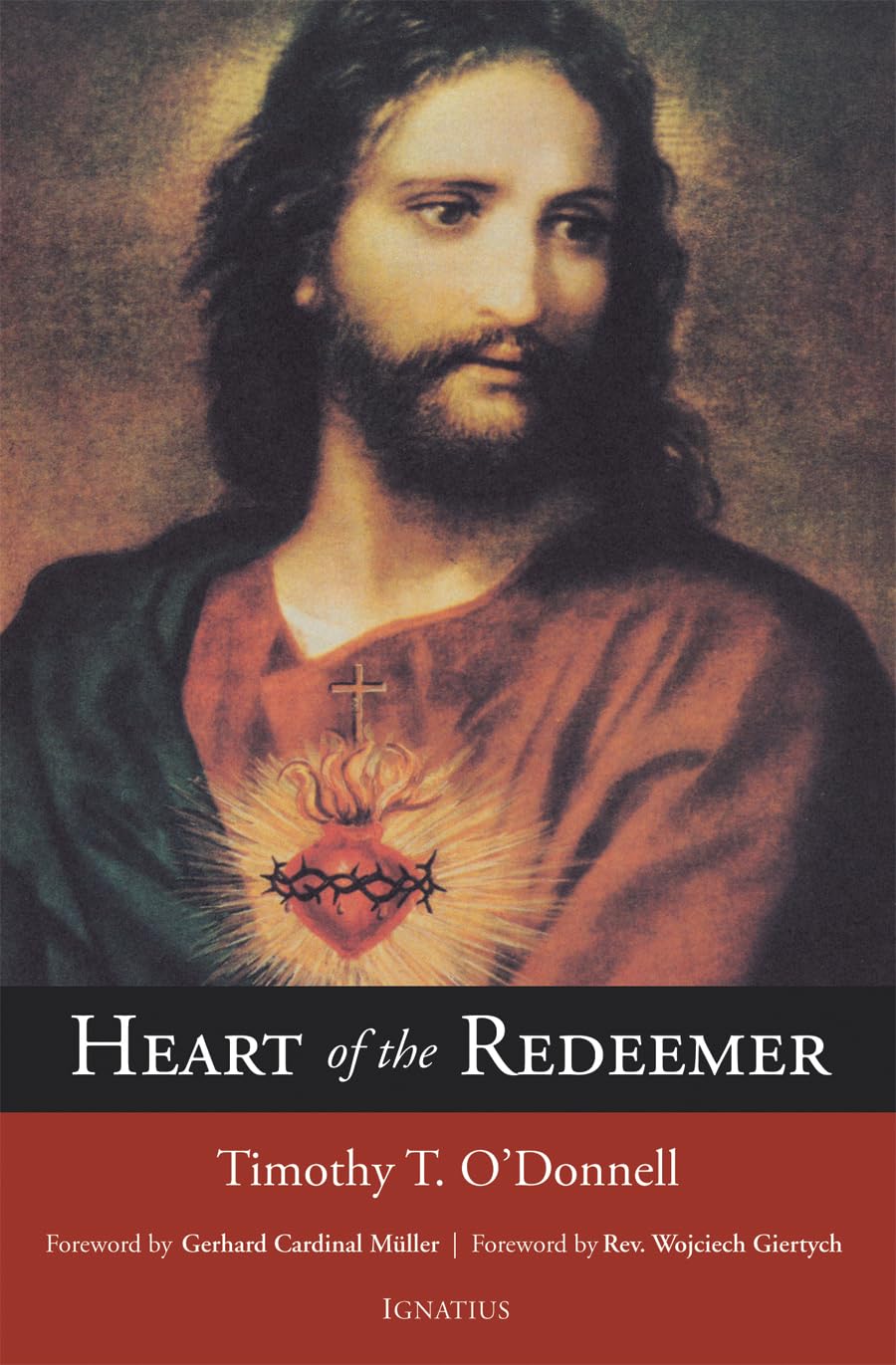
Timothy O’Donnell is President of Christendom College and professor of the departments of history and theology. His teaching and research focus on ascetical and mystical theology, Irish history, the Gospels, and apologetics. He has been a consultor to Pontifical Council for the Family under John Paul II, Benedict XVI, and Pope Francis. He was the recipient in 2003 of the The Christian Law Institute’s "Christ the King Award." In 2007, he was awarded the Distinguished Service Award from the Brent Society for outstanding contributions to Catholic education. He is the author of Heart of the Redeemer: An Apologia for the Contemporary and Perennial Value of the Devotion to the Sacred Heart of Jesus.

- Annum sacrum (print edition)
by Leo XIII - Quas Primas (print edition)
by Pius XI - Miserentissimus Redemptor
by Pius XI - Haurietis aquas (print edition)
by Pius XII - Dives in misericordia (print edition)
by John Paul II
What do we mean when we talk of a devotion, such as that to the Sacred Heart?
Whenever there is a question about the meaning or definition a term, St. Thomas is probably the best person to turn to. He defines devotion as a willingness to give oneself readily to whatever concerns the service of God. Basically, devotion is an orientation of the will. The devout person wants to love God, serve him, and be with him.
Devotion to the Sacred Heart of Jesus consists in giving back the love which he has shown us through his life, Passion, death, and Resurrection. It involves a special regard for the heart as the symbol of that love. Devotion to the Sacred Heart consists in responding to the love of the heart of Christ by offering him our heart and love in return.
Is devotion to the Sacred Heart of Jesus biblical?
Yes, it is very biblical. One of the big problems is that sometimes people do not take the time to probe more deeply into it. Several of our separated brethren, such as Luther, had a devotion to the heart of Christ.
Of course, some may be uncomfortable with the image of the heart in Catholic piety. However, the word ‘heart’ is so important. It is a universal word, common to all languages and cultures. It is also very common and important in Scripture. In fact, it is one of the requently used words in the Bible and even more important in Old Testament anthropology than than nephesh (spirit, soul). When God speaks to man, he speaks to the heart. In Semitic thought, ‘heart’ the entire interior life of a human being. It is the intellectual, emotional, and spiritual center of the human person, and of God too.
When God is preparing to punish the world because of its sinfulness and to speak to Noah, he is grieved to the heart (Genesis 6:6). As we move forward to the Psalms, ‘heart’ is used frequently, particularly in the messianic Psalms. Hugo Rahner made a great point about this. The references to the heart of the Messiah in the Psalms are part of the original message of Revelation. Many of these are quoted and thereby corroborated in the New Testament. “Insults have broken my heart, so that I am in despair. I looked for pity, but there was none; and for comforters, but I found none.” (Psalm 69:20). Another expression concerning the passion of the Lord is, “My heart is like wax, it is melted within my breast” (Psalm 22:14). These beautiful expressions reveal the heart of the Messiah.
Then, in the New Testament, ‘heart’ is used several times. In the beatitudes, Jesus says, “Blessed are the pure in heart, for they shall see God.” He even makes a reference to his own heart: “Come to me, all who labor and are heavy laden, and I will give you rest. Take my yoke upon you, and learn from me; for I am gentle and lowly in heart, and you will find rest for your souls” (Matthew 11:28-29). When he is walking to Emmaus with the two disciples, he reprimands them, saying, “O foolish men, and slow of heart to believe all that the prophets have spoken!” (Luke 24:25).
St. Paul speaks frequently of the heart. “God’s love has been poured into our hearts through the Holy Spirit who has been given to us.” (Romans 5:5).
Heart, therefore, is a focal word. It refers to the very core and depth of our being. You enter into the heart when you close the door to your room and examine your conscience. It is just you speaking, from the core of your person, to God.
In his letters, John tells us so beautifully that God is love. So, when we speak of the heart of the Lord Jesus, the God-man, we are referring to what is deepest in him and the very core of his being. What we find there is his incredible love for the Father and for sinful man.
The heart is such a large part of Revelation that any failure to understand what this word signifies is a real failure of the human spirit, because this is the way in which God has chosen to speak to us: heart to heart.
What would you say to Christians from other churches or ecclesial communities who find devotion to the Sacred Heart strange? You have already addressed some of the objections that a Protestant might have by pointing to its biblical roots. Orthodox Christians, on the other hand, might find it strange because it is a devotion that has developed after the patristic era, at least in its external forms.
True, but it has its roots in the Church Fathers. In the Eastern tradition, there is a definite sense of our Lords interiority. In the iconography, our Lord often makes a beautiful gesture towards his heart, the core of his being. In Greek, ‘heart’ (kardia) also has the same deep meaning as lev in Hebrew. Hence, the devotion is not a purely Western one. Oftentimes, it is represented with an exterior representation of the heart of our Lord, but not necessarily so. These beautiful gestures that speak of the interior, the core of our Lord, would be very significant.
For example, the Greek word splagchnizomai appears several times in the New Testament and only ever refers to Jesus. In English, it is often translated as ‘to be moved with compassion’ but it really refers to the deepest level of emotion, namely, the heart or the core of the person. For example, “a leper came to him beseeching him, and kneeling said to him, ‘If you will, you can make me clean.’ Moved with pity, he stretched out his hand” and healed him (Mark 1:40-41). When he sees the crowds like sheep without Shepherd, he is moved with compassion (Matthew 15:32; Mark 6:34). Any Christian of the Orthodox or reformed tradition can understand what is being communicated here. We all talk about someone being big-hearted, warm-hearted, or not putting one's heart into something.
It is also important to bear in mind the doctrinal richness of this devotion. Devotion to the Sacred Heart safeguards the central truth of the Incarnation. We can venerate Christ’s wounded physical heart with latria, with proper worship and adoration, because it is the heart of the God-man. Jesus is both fully God and fully human. As the Second Vatican Council said, “with a human heart he loved” (Gaudium et spes 22).
In Haurietis aquas, Pius XII, following Chalcedon, teaches that we can distinguish three loves in Jesus. First, there is the infinite, unfathomable, all-encompassing love that Jesus, the Word and second person of the Trinity, has in common with the Father and the Spirit. Second, there is the divine love of charity of the Holy Spirit, that was infused into the human soul of the Incarnate Word. It is the same grace that we receive through the sacraments and have as long as we are in a state of sanctifying grace. Jesus loves us with his human soul and so with this kind of divine love. In this way, Jesus is our brother. Third, he loves us with human love, sentiment, emotion, passion, and feeling.
This is one of the beauties of the Incarnation. God knows us so well that he needs to love us with human warmth and feeling. The Gospel, therefore, contains beautiful expressions of this. Jesus breaks down and weeps so sorrowfully when Lazarus, his friend, has died that the Jews comment upon how much he loved him (John 11:36). Similarly, when the rich young man seeks to be a disciple, “Jesus looking upon him loved him” (Mark 10:21). Before entering Jerusalem on Palm Sunday, he breaks down and weeps over the city. “O Jerusalem, Jerusalem, killing the prophets and stoning those who are sent to you! How often would I have gathered your children together as a hen gathers her brood under her wings, and you would not!” (Matthew23:37). One reason he weeps over Jerusalem is that he went up to Jerusalem every year with his family to celebrate the Passover, but knows all that is about to happen to him, the true lamb, that now enters it and proclaim salvation to his people. He is grieved to the heart.
All these expressions of deep emotion and feeling are so important and it is beautiful to reflect upon them.
The Gospel of John is very significant. John is the only one who mentions the piercing of the Lord's side. His heart was pierced, to ensure that he was dead. Blood and water gush out of his pierced side. John spends almost more time talking about this than he does the Resurrection.
“He who saw it has borne witness—his testimony is true, and he knows that he tells the truth—that you also may believe. For these things took place that the scripture might be fulfilled, ‘Not a bone of him shall be broken.’ And again another scripture says, ‘They shall look on him whom they have pierced.’ ”
The Fathers of the Church see the opening of his side as the birth of the Church. St. Augustine says that just as Adam fell asleep, his side was opened, and Eve, the mother of all the living, was fashioned, so does Christ, the new Adam, hang in the sleep of death and has his side opened. In the outpouring of the blood and water, the Church is born. The blood and water are the sources of its sacramental life. They symbolize the way in which the Church begets her children through the waters of baptism and, like every good mother, feeds her children with the Eucharist. Hence, the Church and its sacraments flow from the heart of Christ. Each sacrament is a gift from his heart and love to his bride, the Church.
You have mentioned the Fathers. If I recall correctly, Hugo Rahner, the brother of Karl, wrote a study on the patristic texts and the Sacred Heart of Jesus.
Yes, he did, in Heart of the Saviour, a book that gathered studies by various Jesuits. He states that the devotion is clearly grounded in Sacred Scripture and deeply embedded in the Fathers of the Church, even though it developed over the history of spirituality. Irenaeus, Tertullian, Augustine, and many of the Church Fathers speak of it, particularly in their commentaries on the Gospel of John. In the Eastern tradition, St. John Chrysostom, also speaks about Christ’s pierced side as the opening of the Holy of Holies. Jesus speaks of his body as the temple. Hence, when Jesus dies, the curtain of the sanctuary is torn from top to bottom—the event indicates a divine action—and the holy of Holies is laid bare.
With prayer and reflection, the Church Fathers and, later on, many great mystics contemplate the Lord's heart through that opening in the side. This becomes even more explicit as time moves on.
What are the main lines of the development of the modern devotion to the Sacred Heart?
The modern devotion goes back to St. Margaret Mary Alacoque in seventeenth-century France. She received the great commission to spread it.
During the Middle Ages, some Dominicans—Meister Eckhart, Tauler, and Suso—or Carthusians, such as John of Saxony, spoke explicitly of the heart of Jesus. Several spoke of the piercing of his side. They would also comment on how John drew the inspiration to write his Gospel from reclining on the bosom of Jesus at the Last Supper. St. Bernard of Clairvaux also spoke on numerous occasions of the heart of Jesus and the heart of Mary.
There had been apparitions of the heart of Jesus before St. Margaret Mary. St. Lutgarde of Aywières saw Jesus pointing to his heart. There were numerous crucifixes and images of the Passion with the heart. Moreover, St. Margaret Mary was a nun of the Order of the Visitation, whose founders, St Francis de Sales and St. Jane de Chantal, took the hearts of Jesus and Mary as the symbol of the community. So, there was a preparation for the apparitions to St. Margaret Mary.
However, when Our Lord appeared to St. Margaret Mary it did seem that he wished to reveal the love of his heart in a new, more profound way and was asking that this be promoted with a special feast. It was really St. Margaret Mary, therefore, who launched the devotion. She did so with the help of St. Claude La Colombière and other Jesuits.
There has been a triumphal march whereby the devotion has spread throughout the entire Church. It is hard to imagine entering a Catholic Church today and not finding somewhere a statue of Christ revealing his Sacred Heart.
When St. Margaret Mary was canonized, devotion to the Sacred Heart became universal within the Church. However, it is deeply embedded in Scripture, the Fathers, and the spiritual tradition of of the Church.
"There are many ways in which the devotion can be practiced."
Is devotion to the Sacred Heart of Jesus optional or obligatory?
Well, we should follow what the Church says. In her solemn magisterium, particularly the papal magisterium, the Church has promoted and advocated for this devotion in such a way that it would be unwise to not practice it or dismiss it as optional. Remember that devotion to the Sacred Heart consists in loving Jesus and venerating the incredible love he has shown his heavenly Father and us.
Not only is this devotion grounded in dogma, as Pius XII noted. Margaret Mary is a canonized saint. The Church celebrates the solemnity of the Sacred Heart. Everyone has to pray either the Divine Office or the Litanies to the Sacred Heart. So, no one should set this aside as an inferior devotion. It has been given a place in the Church.
There is an obligation to practice this devotion, but it should always be fulfilled joyfully. There are many ways in which the devotion can be lived out. The Divine Mercy Chaplet, for example, is an extension and further development of devotion of the Sacred Heart. St. Margaret Mary speaks a great deal not only of reparation, but also of mercy. St. Faustina builds upon that and speaks about the communication and divine mercy. Devotion to the Sacred Heart can be Scriptural or patristic. It can practiced with the custom of the nine first Fridays or a holy hour devotion, both of which stem from St. Margaret Mary. So, there are many ways in which the devotion can be practiced. Still, the devotion is so deeply embedded in Scripture, Tradition, Catholic doctrine, that, in her liturgy and official prayer, the Church has taught that everyone should be practicing it in some form or another.
According to the modern magisterium, this devotion has been revealed to our time because of the rise of hostile secularism, militant atheism, and, in the West, where God is simply ignored, of practical atheism. There has been a collapse of morality and our understanding of the human person. There has been a lack of orthodoxy. For these reasons, the popes have spoken very strongly about how this is a devotion for our time.
Do you have any advice for Catholics who might be put off by some of the external trappings or common manifestations of devotion to the Sacred Heart? Some of the prayers are somewhat sentimental and written in flowery, baroque language. Certain depictions of our Lord are somewhat effeminate. What advice would you give to Catholics who are turned off by some of these common external trappings?
The devotion does not depend upon a work of art. Still, this is a legitimate criticism. There are certain saccharine pictures of Jesus, in pink and baby blue. This is not a guy you are going to turn to in a crisis. However, that is not what the devotion is all about. It is about going to his heart, the manifestation of the core of his person. Nor is his heart just a symbol. The Incarnation is real. Along with his brutal scourging and the wounds in his hands and feet, the beating of Our Lord's heart has achieved our redemption.
We should not reduce the devotion to a set of pious practices or images. Still, if you google the Sacred Heart, I am sure you shall find an image that you like. The main thing is to thank Our Lord for the love that he has shown us and for allowing his heart to be pierced. On Calvary, his outspread arms are held up more by love than by the nails of the cross. In this loving, defenceless position, he allows his side and heart to be opened.
In her Dialogue, St. Catherine of Sienna asked Jesus why, after having gone through the Passion and death, he allowed his side and heart to be pierced. He replied that even his death was not enough to convince us of the depth of his love, and that is why he allowed it. This is echoed in St. Faustina, according to whom one of the things that hurts Jesus the most is that Christians do not really believe in his love for them.
An excellent survey of the devotion is your Heart of the Redeemer: An Apologia for the Contemporary and Perennial Value of the Devotion to the Sacred Heart of Jesus. What prompted you to write it?
I had an unreflective devotion to the heart of Jesus. When I was a young boy, I heard about the nine first Fridays and in seventh grade rode my bike to make them. Moreover, there was a beautiful statue of the Sacred Heart that moved me deeply. However, what really got me to write the book was a course on the devotion to the Sacred Heart that I took during graduate studies at the Angelicum, Rome.
During that class, the professor mentioned papal encyclicals on the Sacred Heart that I had never heard of. That semester, I resolved to read every one of them. Each of them had a sense of urgency about how this is the devotion for our time. As I read them, my eyes were opened to how it is "a summary of our whole religion". Our whole faith is contained within this particular devotion. Moreover, in Haurietis aquas, Pius XII made an impassioned plea to theologians to show the primary sources and lofty nature of this devotion. There were many devotional books on it. However, there were not any books with a theological expose of its foundations and the riches of this devotion. Educated Catholics, who knew about its grounding in Scripture and the patristic tradition, could penetrate it more deeply. In answer to Pius XII’s plea, I decided to write such a resource.
While I was in Rome, John Paul II issued Dives in misericordia and he gave many addresses on the Sacred Heart and its urgency. That also made writing the book seem timely and so I dedicated the book to him.
 Five Books for Catholics
Many spiritual authors, including some saints, have written about devotion to the Sacred Heart. Why have you chosen only papal documents as your recommended readings?
Well, because I found myself deeply moved by the papal encyclicals and because they are very approachable. Moreover, through them, you can learn about the history and spread of the devotion. They can also be used for spiritual reading. You can take one of them during a holy hour and read it in the presence of the Blessed Sacrament.
Moreover, reading papal encyclicals is important. When Pius XI issued his great encyclical on Christian marriage, it was placed at the back of every Catholic Church. All the faithful were invited to read it. We need to do something like this whenever the Holy See issues documents or encyclicals that touch deeply upon our spiritual life and focus on Jesus. They should not be the exclusive province of theologians. Whenever, I give a course or ascetical mystical theology, I recommend Haurietis aquas to my students because it is one of the most beautiful encyclicals ever written. It contains a beautiful reflection on the Old and New Testaments, the history of the devotion, and why the heart of Christ needs to be honored today.
1.
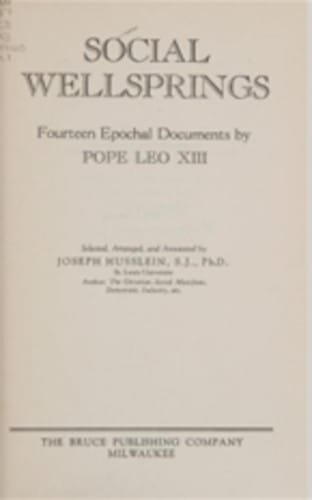
On 11 June 1899, Feast of the Sacred Heart, Leo XIII consecrated the world to the Sacred Heart, an act which he considered to be the greatest of his pontificate. He declared and explained his intention to do so in his encyclical Annum sacrum. This is the first book you have recommended. Is it the first major papal document on devotion to the Sacred Heart?
It is, in a certain sense but not in another. It is the first one addressed to the universal Church. It was sent to all Catholic bishops. However, previous popes had written documents on the Sacred Heart. Innocent XII, Pius VI, Pius VII, Pius IX had done so. Benedict XIII promulgated the Feast of the Sacred Heart.
Moreover, Leo XIII stated that consecrating the world to the Sacred Heart would benefit not just the Church, but all Christians, indeed, the entire human race. This was an important reminder that that all lay Catholics share in the royal priesthood of Christ. Through this act of consecration, we are making intercession not only for Holy Mother Church and our fellow Catholics, but for all who are baptized and have the name Christian. Through it, we hope to bear witness to those who do not know Christ.
This enormous act was meant to usher in the twentieth century. Many graces flowed from it.
Leo XIII was one of the greatest pontiffs in history. He really believed that devotion to the Sacred Heart would help guide us in the twentieth century and into modern times. That sentiment has been repeated in all the subsequent papal teachings. They all seem to go back to Leo XIII’s Annum sacrum, a founding document and a statement that this devotion has arrived.
So, just as Rerum Novarum was a seminal encyclical on socioeconomic matters and has been commemorated in a series of subsequent encyclicals, Annum sacrum initiates a series of papal encyclicals on devotion to the Sacred Heart.
Absolutely. Every pope picked up on it and issued a letter or exhortation on it.
"Until we get back as a Church to evangelizing, communicating the kingship of Christ, who reigns through his love, and promoting devotion to the Sacred Heart, we are not going to get anywhere at all."
2.
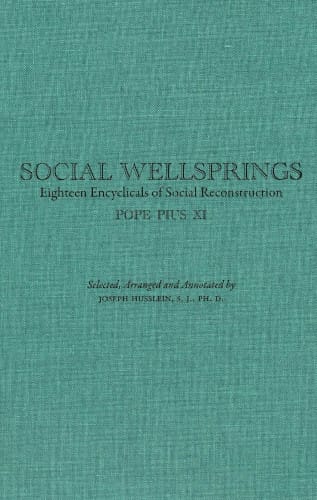
The next book you have recommended is Pius XI’s encyclical Quas primas. It is not on the Sacred Heart as such but the institution of the Feast of Christ the King. Nowadays most Catholics do not associate Christ the King with devotion to the Sacred Heart. How are the Kingship of Christ and devotion to the Sacred Heart connected to one another?
That is a great question and this is exactly why I want people to read it. In it, Pius XI links the kingship of Christ to the devotion of the Sacred Heart. They are inseparable. Christ reigns through his heart. His is a Kingdom of love and charity.
In Quas primas, Pius teaches that Christ is king in two senses. Christ, the Word, is the creator. “Though him all things have been made.” He is Lord of the Universe because he is its creator. He is also king through his sacrificial death and Resurrection. By redeeming mankind, he has the right of a king to claim creation and the hearts and souls of all humanity. However, he does that through love. He reigns through love. This is one of the reasons why Pius XI wanted to have a special act of consecration on the solemnity of Christ the King. Normally, we renew the solemn act of consecration, which is in the Manual of Indulgences, on the Feast of Christ the King. John Paul II, for example, encouraged that it be renewed on the Feast of Christ the King.
Pius XI was surveying the situation of the world after World War I. There was a real crisis of faith. Many in that generation had been slaughtered mercilessly in trench warfare. Then, there was the moral decadence of the roaring twenties. People were turning away from Christ, the Church, and the Gospel. Pius XI wanted to remind everybody of the sovereign kingship of Jesus Christ. We do not have anything to fear from Christ the King. His is a reign of love, a kingship that extends its sway through charity. The kingship of Christ and devotion to his Sacred Heart go hand in hand.
"When you abandon Christ and turn your back on him, the road to social chaos is short. This is what we are seeing right now. "
Some have pointed out that Leo XIII and Pius XI stress the kingship of Christ to give a Christological focus to the Church's social teaching. The real issue is not the state’s relation to the Church, but the relation of society, state, and culture to Christ, the King of all things.
Well, when you abandon Christ and turn your back on him, the road to social chaos is short. This is what we are seeing right now. That is why this encyclical, devotion to the Sacred Heart, and recognizing the kingship of Christ are so timely and important. Right now, we are witnessing an unprecedented social unraveling.
There is definitely, as Benedict XVI would say, a crisis of faith. Once the light of faith goes out, all other lights start to dim and we are left with a rationalism that becomes anti-reason. This leads to chaos and confusion. We no longer know who we.
As Vatican II taught, “When God is forgotten, the creature itself grows unintelligible” (Gaudium et spes 36).
Christ the King is Lord over creation. If we do not believe in God, we shall not accept Christ's reign as creator. We lose sight of who we are and end up with something like the current situation: gender ideology and rampant confusion. We no longer know what a marriage is. We no longer know what it is to be a man or a woman. We even have the Supreme Court Justices who cannot define what a woman is. This is a serious problem. Until we get back as a Church to evangelizing, communicating the kingship of Christ, who reigns through his love, and promoting devotion to the Sacred Heart, we are not going to get anywhere at all.
Pope Francis has hit upon this in a very important way. He said that the problem we are having right now is that the media and society are always presenting the Church and Catholicism as negative. No to homosexuality and gay marriage! No to abortion! No to contraception! Just no, no, no! However, what is fundamental is one’s yes to Jesus. Once you understand Jesus, his love, and his role as our creator and Redeemer, you say yes, accept him, and realize that these prohibitions are not negative at all. They are not a series of Nos but a yes to life, marriage, and family. So, we need to bring people back to Jesus and to recognize him, not as a sovereign king which is wagging his finger all the time, but as one who reigns through love. As disciples of the heart of Jesus, we want to communicate the Gospel in a loving way. We want to do the truth in love.
"Is not the sum of all religion (summa totius religionis) and therefore the pattern of more perfect life, contained in that most auspicious sign and in the form of piety that follows from it inasmuch as it more readily leads the minds of men to an intimate knowledge of Christ Our Lord, and more efficaciously moves their hearts to love Him more vehemently and to imitate Him more closely?"
Pius XI, Miserentissimus Redemptor
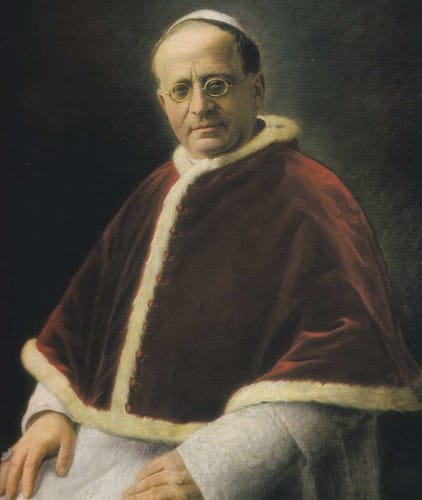
3.
Third is Pius XI’s 1928 encyclical, Miserentissimus Deus. Have you chosen it because, whereas Leo XIII’s Annum sacrum focusses on consecration to the Sacred Heart, this encyclical focusses on the other characteristic act of the devotion, reparation?
Yes. It is a beautiful, spiritual encyclical. It was issued on the cusp of the Great Depression and in response to so much neglect of the Christian faith.
The idea is that, if you really love someone and see that person being ignored, wronged, or blasphemed, you want to make up for that. This was important for St. Margaret Mary, during Jansenism and on the cusp of the French Revolution.
Pius XI realized that it was important for all Catholics, and indeed all Christians, to make reparation for the acts of blasphemy. The Russian Revolution had occurred and was trying to spread its hostile atheism around the globe. Churches were being destroyed.
Pius goes back to St. Paul, who says, “in my flesh I complete what is lacking in Christ’s afflictions” (Colossians 1:24). He teaches that what is lacking is the extension of Christ’s offering in time, Christ suffered once for all. He does not suffer any more. However, he continues to suffer in his mystical body. His members are suffering all the time. Through acts of reparation, we can earn grace for other people. We can make up for this lack of love that characterizes so much of modern secular society. So Miserentissimus Redemptor encourages us to console the Savior, particularly in his body.
In a beautiful passage, Pius points out that during the Passion, Christ took upon himself all the sins of the world, from Adam’s to the very last one at the end of time. In Gethsemane, an angel came and consoled him. In addition to the cup of his agony, there is the cup of consolation. What the angel brought were all the acts of consolation and reparation, from the beginning to the very end of time. It is important to reflect upon this when, say, we are praying the Stations of the Cross, the Litany to the Sacred Heart, or the Divine Mercy chaplet. These all gave consolation to Christ in Gethsemane. Parents are absolutely right to tell their children that they hurt Jesus whenever they sin and add one more burden to his cross. However, praying the rosary or receiving communion devoutly are sources of consolation, which he now receives joyfully in the glory of heaven.
This powerful encyclical is well worth reading, especially today, when there is such a decline in morality and widespread abortion. We need to make reparation for this.
As you mentioned, Pius XI decreed that the act of consecration to the Sacred Heart be made on the Feast of Christ the King, and the act of reparation said in Churches on the Feast of the Sacred Heart. This is still encouraged but I am not sure whether many parishes still practice it.
We do it here every year at Christendom College, on Christ the King. So do quite a few parishes. It is still in the Manual of Indulgences. John Paul II made the consecration when he visited Poland in 1999. Several bishops’s conferences have done it.
It is a great way to celebrate the Solemnity of Christ the King of the universe and the Solemnity of the Sacred Heart. Talk to your parish priest. I am sure they would be willing to do it, perhaps right after Mass.
4.
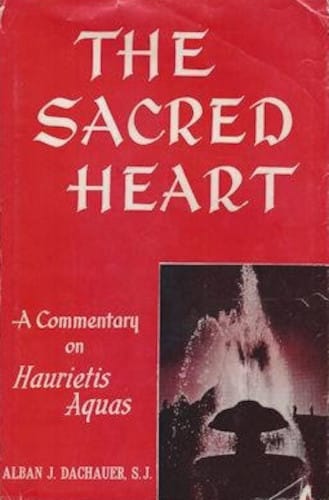
Fourth up is the most comprehensive of the encyclicals on devotion to the Sacred Heart, Pius XII’s Haurietis aquas (1956), issued to commemorate the centenary of the institution of the feast in the General Roman Calendar. How did this encyclical develop the papal teaching on the devotion?
In a certain sense, it is a summa on the devotion. It pulls all the previous teaching together, by quoting earlier popes and encyclicals.
Pius XII was aware of certain criticisms of the devotion. Moreover, he was a mystic. Towards the end of his life, he had an experience or apparition of our Lord, revealing the Sacred Heart. That is one of the things that inspired him to write this encyclical. He had the devotion throughout his life and spoke of it both in Summi pontificatus, his first encyclical, and Mediator Dei. In Haurietis aquas, however, he wanted to ground this devotion because, as Pius XI had said, it is the summary of the whole faith. Everything is contained in this devotion, dogmatically and liturgically. So, Pius XII wishes to show that it is not just based upon the private revelation of St. Margaret Mary.
He begins by recalling the teaching of earlier popes. Then he dedicates a section looking to the Old Testament and all the times where God’s love and mercy are conveyed in the law, prophets, and wisdom literature. Of course, he also surveys the New Testament. He then explains the development of the devotion during the Middle Ages and deals with St. Margaret Mary. Having laid out the theological foundations of the devotion, he exhorts theologians to probe and examine it. He states that this devotion is of supreme importance in the life of the Church.
This was his last encyclical. It a real sense, it was his legacy. Certain elements of it were picked up by the Second Vatican Council. For example, Lumen Gentium speak about how, according to the patristic tradition, the Church is born from the open, wounded side of Christ and comes forth from the heart of Jesus.
Paul VI takes up this theme as well in his apostolic letter Investigabiles divitias Christi, where he teaches that the way to fulfill the vision of the Second Vatican Council is to practice devotion to the heart of Jesus. He reiterates this is the devotion for our age.
Haurietis aquas is beautiful and I would encourage anyone to take it for spiritual reading. It lays out the deeper foundations of the devotion so that, when you read the Gospels, you see how the love of the heart of Christ is the key to everything that he does. Even when he decries the Pharisees as hypocrites, this is a cry from a heart that is wounded by their blindness and is reaching out to them. Even when he is on the cross and being mocked, the first thing to come out of his heart is, “Father, forgive them. They know what they do.” Love is all that he does in the Gospel. The apostles and Paul are seized by this and bring to this Good News that someone has died for us and has given us eternal life and freedom.
Has devotion to the Sacred Heart of Jesus dwindled in popularity and prominence since Vatican II or has it been repackaged with talk about Christ-centredness, in such a way that many are practicing it without maybe knowing?
It has definitely resurged. There was a dip after Vatican II because the constitution on Sacred Liturgy and the decree on ecumenism were misunderstood. As a result, devotion to the Sacred Heart was downplayed. The same happened with Marian devotion. It too was downplayed shortly after the Council, even though this was not at all what the Council intended. Rather, the Council taught that the popular devotions of the Christian people are to be encouraged, especially when they are ordered by the Holy See. Devotion to the Sacred Heart has been ordered by the Holy See.
There was a resurgence of Marian devotion with Paul VI and especially with John Paul II, whose motto was Totus tuus. Moreover, John Paul gave more talks on the Sacred Heart than any other pope, and not only on account of the length of his pontificate. In Dives in misericordia even in Redemptor hominis, he speaks about the heart of Jesus and the heart of Mary.
Right now there is an enormous explosion of devotion to Mary and the heart of her son, Jesus. The Divine Mercy chaplet is just another way of expressing devotion to the heart of Jesus. Both the red way and the white way flow from his heart, the center of his mercy, while he leads us to the heart of the Father. So, there is an incredible revival of the devotion, certainly in the Philippines, Africa, and Asia. It is a powerful means of communicating the love of Jesus. It is very attractive because people of any language understand that the heart represents the core of a person.
We can give our time or money, but our heart is something so precious that we guard and protect it. It is the last thing we give because it is what is deepest in us. This is the beauty of Our Lord in his Passion. At its deepest level, love is speechless. Once he has pronounced his seven last words, the very last thing that he gives is show us his heart. He allows his side to be opened and his heart to be pierced. He thereby gives us his heart. As we are dull, he comes to St. Lutgarde and St. Margaret Mary. He comes to St. Faustina and tells her, “I want to show them my heart again. I want them to remember how much I love them and what I have done for them.”
"St. Margaret Mary speaks a lot about the merciful love of Jesus as well, but her emphasis is more on reparation. St. Faustina also speaks of reparation but focused primarily upon the proclamation of mercy."
5.
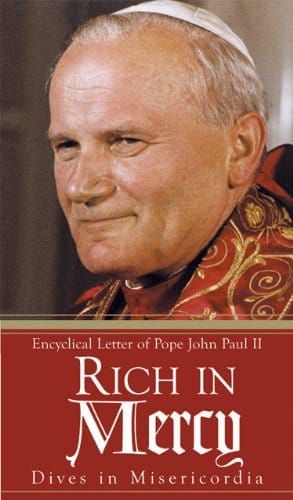
Finally, there is St. John Paul II’s 1980 encyclical, Dives in misericordia. It is the second of a trilogy of encyclicals that he dedicated to each of the three divine persons. It is not on the mercy of God the Father rather than the Sacred Heart as such. Have you selected this encyclical because it ties in with how devotion to Sacred Heart has focussed over the last few decades on divine mercy?
Yes. This encyclical communicates a new form of the devotion.
St. Margaret Mary speaks a lot about the merciful love of Jesus as well, but her emphasis is more on reparation. St. Faustina also speaks of reparation but focused primarily upon the proclamation of mercy. Of course, that involves the recognition of sin. Mercy can only be given when you recognise your sin. Sin is running riot in the world right now and the healing of mercy is needed.
Dives in misericordia does focus on the Father but also teaches that the mercy of the Father is found in a special way in Jesus Christ. We focus on it when we look at the heart of Jesus. The encyclical quotes Jesus’s words to Phillip several times: “Have I been with you so long, and yet you do not know me, Philip? He who has seen me has seen the Father” (John 14:8-9). By looking at Christ and coming to understand his love that is in his heart, we see the love of the Father’s heart. “No one comes to the Father, but by me” (John 14:6). We come through him by entering into the core of his person, his heart. That is also where we find the Holy Spirit as well.
This was the central part of John Paul II's tryptich of encyclicals on the Trinity. The merciful love of the Father and the Spirit is manifested in the wounded, broken heart of the God-man, Jesus.