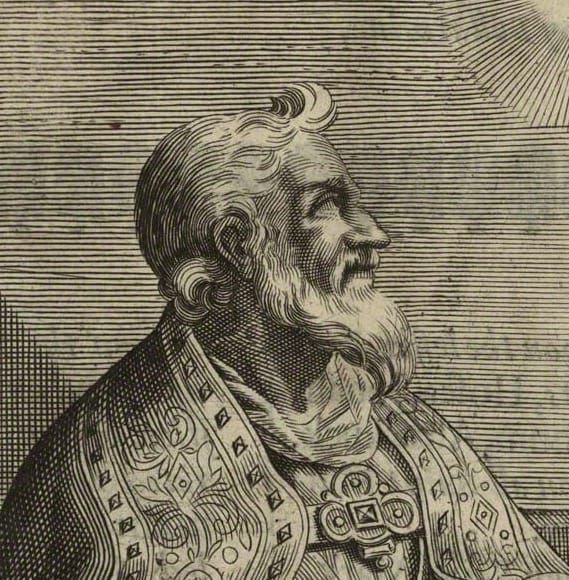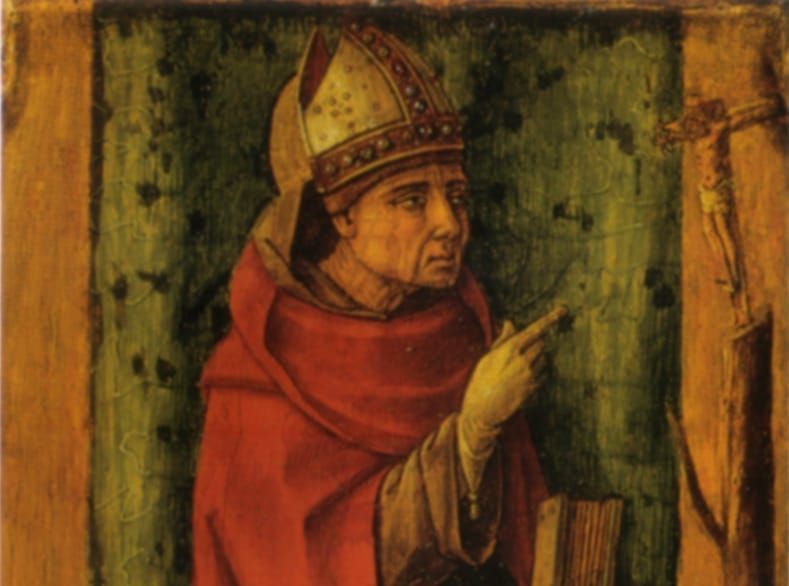


St. Gregory the Great (c. 540-604) was Bishop of Rome from 590-604. The son of St. Silvia and Gordianus, a Roman patrician, he was appointed urban prefect of Rome in 573 and entered monastic life the following year. Upon his father’s death, he converted the family’s Roman villa on the Caelian Hill into the Monastery of St. Andrew, where today there is still a monastery and the Church of St. Gregory on the Caelian Hill. At that same monastery he set the precedent for the Gregorian series of Masses: the practice of having thirty Masses offered for a deceased person. In 579, Pope Pelagius II made him a deacon and sent him as papal ambassador to the imperial court in Constantinople. In 590, a few years after his return to Rome, Gregory was elected Pope. One of his most important actions as Bishop of Rome was to appoint the prior of the Monastery of St. Andrew, Augustine of Canterbury, as the head of a mission to convert the English. Through his writings, he exerted an immense influence of spirituality and ministry in the Latin Church throughout the Middle Ages and was recognised as a Doctor of the Church.
In this interview, Dr. Thomas Humphries will explain his pick of the five best books by St. Gregory the Great.
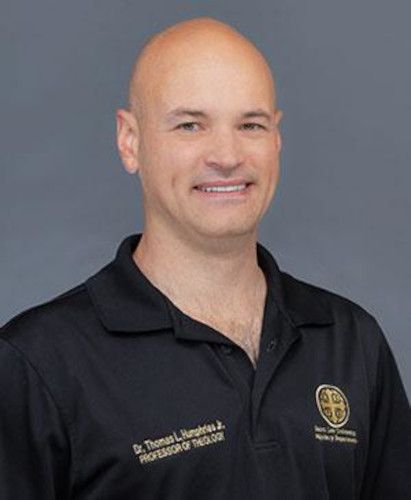
Dr. Thomas Humphries is Professor in the College of Arts and Science at Saint Leo University, Florida. A native of Arkansas and a life-long Roman Catholic, he holds a mandatum from the diocese of St. Petersburg and enjoys giving regular theological reflections outside of the classroom with student faith communities, parishes, and monasteries. He also volunteers with the local fire department as Chaplain and holds the rank of District Chief. He is a licensed Florida EMT and NREMT. He is the author of Ascetic Pneumatology from John Cassian to Gregory the Great (Oxford University Press) and Who is Chosen? (Wipf and Stock).
- Forty Gospel Homilies
by Gregory the Great - Moral Reflections on the Book of Job (6 vols.)
(vol. 1) (vol. 2) (vol. 3) (vol. 4) (vol. 5) (vol. 6)
by Gregory the Great - Homilies on the Book of the Prophet Ezekiel
by Gregory the Great - On the Song of Songs
by Gregory the Great - The Life of St. Benedict by Gregory the Great: Translation and Commentary
by Terence G. Kardong OSB
To kick off, what would you add to the preceding biographical sketch of St. Gregory the Great?
My goodness, you remembered many wonderful details. We need to interpret those details to be sure that we understand the meaning of the life of the saint.
Think of someone like Gregory donating his property to be a monk. That was a relatively common thing among wealthy men who were looking to retire. One of the tricks in the era was to donate the property to the church, call it a monastery, and then name yourself as the superior of the monastery. It was a way to play both ends. These people wanted to be a monk, holy, and pursue a life of virtue, but they did not want to start at the bottom of the ladder. Gregory does exactly the opposite. He says, “If I am going to donate this property and become a monk, then I need to live under obedience to someone else.” So, he does not name himself superior of his own community. He subjects himself to formation. What a wonderful lesson in humility. It is an example of how to truly embrace a life of holiness and admit that we are all children of God and in need of formation from the Church. Gregory did not know that he would earn the title ‘the Great’ by popular acclamation. But you see why he is “the Great” right there. There is his humility. Similarly, if we just want to take a lesson in like secular history, there is a lot going on that shows why Gregory is a fantastic leader and everybody was clamouring after him to be their leader. He knows that he needs to earn his spot and pay his dues. He needs to start and learn everything from the bottom up.
We see this over and over in Gregory's life. He is committed to the work that needs to be done. For this reason, he resists being made one of the seven deacons of Rome. That was not the same position as that of the deacon of a parish today. There was not necessarily any ordination. It is the position out of which the college of cardinals developed: the clergy of Rome, who conduct important Roman business worldwide. Gregory was reluctant to go to Constantinople. He essentially refused to be the Pope's designee there unless the Pope would also send some of his monks with him. He knew that he needed community, to be a part of that life of virtue and holiness. Gregory really stands out for his humility.
Gregory knows that in every letter of Scripture, he can find multiple layers of meaning.
Why is St. Gregory the Great worth reading today?
Some people are simply interested in historical figures. It is not just the time or the details that draws them to these figures, but their whole personality. Gregory was the second pope to earn the civil accolade of “the Great”. Think of Constantine the Great. What does it take for Western history to hail you with that title, magnus? A few generations earlier, St. Leo was the first pope to earn that title. Gregory is the second. If you are interested in historical figures and want to read someone who did many wonderful things, pick somebody who has that title. It might as well be Gregory.
In terms of specific things that are going on today. Gregory has an incredible call to the struggle of the present life. He lived at a time in history when things were changing. Historians debate when one era ends and the next begins. When did antiquity end? When did the mediaeval period begin? What is Byzantine? What is not? These are difficult questions but there is no doubt about that Gregory is at a cusp. He is on that edge. There is a lot of turbulence at the edge, but many profound things are also taking place. Gregory gives us incredible lessons on how to navigate all that turbulence. Maybe every generation feels like it is in turbulence and that it is at the dawn of a new age. We see the old generation go out and the new come in. Everyone faces this and it is how we feel today. Many things are going on whose consequences surpass anything we can understand. We can take solace in Gregory’s ability to acknowledge the struggle and to carry on. He admits to something that is difficult for us to hear, but which we need to hear. Despite the incredible goodness we find in this life, and in the face of incredible evil and atrocity, this life is not the one for which we are intended. Gregory reminds us—and sometimes he even scolds us—that we should not place all our hope in things that pass. We need to pay careful attention to the times, read the signs, and learn how to live in the world as a servant of the servants of God. We need to recognise that all of this is, ultimately, rooted in God and headed towards him. Sometimes, this life is wonderful. Sometimes, it is sometimes difficult. Regardless, it is not the life that we intend, want—and for Gregory at least—for which we hope.
Often, allegorical commentary is not understood at all or misunderstood.
In one way or another, each of St. Gregory’s works boils down to biblical commentary or, as befits a monk, a lectio divina. Modern readers may find it difficulty to follow his train of thought or appreciate his insistence on the allegorical sense of biblical passages. Do you have any tips for reading him?
I do! I am glad that you brought up the lectio divina, which has seen a renewal over the last thirty years. There is lots of literature out there. You can find YouTube videos on it and dozens of books on Amazon.
Often, allegorical commentary is not understood at all or misunderstood. At the opening of several of his commentaries, as in The Song of Songs or Moralia in Iob, or just when he is commenting on a particular text, Gregory is very clear that he is aware of questions of authorship and the text’s history. But this is not the important thing. What we are looking at in this text is the life of one who was guided by the Holy Spirit. We are looking at a holy man or woman who lived in such a way as to be perfectly permeable to God's action. We read Scripture, Gregory says, not simply to learn historical details. They are important but constitute the first level. The real reason we read Scripture is to encounter the Word of God, the second person of the Trinity: to encounter Christ in the words on the page. The real reason we want to read an inspired text, which tells us about other inspired humans, is to come into contact with the Holy Spirit and become holy, inspired people
You can think of Ezekiel as just a book in which one of the prophets wrote down his thoughts. Gregory pushes back against this. You are reading Ezekiel's thoughts, but they are important because they are God's thoughts. It is God who has worked in Ezekiel's life to allow him to see this truth. You want to learn not just how Ezekiel felt or what he said, but to become a prophet. You read the prophets to become a prophet yourself. It is the same as participating in the sacraments. We do not go to the Eucharist simply to write a beautiful philosophical exposition on how God can be present. That is important work. But we go to the Eucharist to be nourished by Christ. When we open Scripture, we want to encounter not just the text, but the Word. Pope Benedict XVI summarised this very well. He said that Christians are not a people of the book. We are a people of the Word, the second person of the Trinity, the Son of God, the Word who became flesh.
Now, Gregory knows that in every letter of Scripture, he can find multiple layers of meaning. We need to be open, with our memory and mind, to see Gregory make more than one interpretation of an event. God was working in Job’s life. His action does not mean just one thing.
Gregory is challenged by his fellow monks to interpret the Book of Job. It is a very difficult book about suffering and pain. Job seems to be a righteous man, but one whom God leaves to be tempted by the devil. What is going on? The monks know that Gregory is skilled at biblical interpretation and ask him to provide one. He gives not one but three interpretations of every verse. He tells them what it means in the historical or literal sense; then in an allegorical sense; then in a moral sense. There is a lot going on here.
For example, Job has seven sons and three daughters. In the literal or historical sense, he has ten children: a big family. Gregory reflects on what it means to have a big family and Job’s status.
Then there is the allegorical sense. Take the seven sons. How do you get 7? By adding 4 and 3, an even and an odd number, which is indicative of a certain tension. That makes us think about 4 × 3=12. The reason that God has Job and his wife have seven sons is to be a type of the twelve tribes of Israel, the twelve apostles, and the Church. Why do they have three daughters? Because there are three ranks or orders in the Church: the preachers (clergy), the celibates (nuns and monks), and the married. So, Job’s family is a complete depiction of the Church. It points to the Church and tells us something about its structure.
Then there is the moral meaning. There are seven virtues: the four cardinal and the three theological virtues. Why are there three daughters? God wants to highlight faith, hope, and love as particularly distinct. Then the seven sons refer to the gifts of the Spirit and the ten children to his fruits.
So Job’s life family can have multiple meanings. If you would like to have one thesis and argue tooth and nail that your interpretation is correct and my interpretation is wrong, then you are not doing what Gregory is doing. You have closed yourself to the multiple layers of meaning in Scripture.
One other point. Sometimes these interpretations strike us as awkward. Could not the passage mean anything? What are the limits on a moral or allegorical interpretation, or the historical interpretation for that matter? The limits are the truth and inspiration we have as we pray, reading Scripture divinely or for the divine (lectio divina). Here we can think of how our own lives have meaning.
My name is Thomas Humphries Jr. By meeting me, you already know that there is a Thomas Humphrey Sr. My very existence or presence signifies something about other humans. You know about my mother, even though you do not know her name yet. In seeing any child, you know something about that child's parents and history. It is not just the words that I speak, but my very presence, that tells you that there is a man and a woman who loved each other and, decades ago, raised a child. In other words, at a regular level our lives have multiple layers of meaning. The lives of the holy men and women recounted in Scripture have multiple layers of meaning too.
1.
Why is St. Gregory’s collection of Forty Homilies on the Gospel your first recommended book? This is not his best-known work.
I thought a lot about which book I would put first. There is an issue of practicality. If you are Catholic, you may want to read a commentary on Scripture, but there are a zillion different things out there. This is confusing and frustrating.
Moreover, often think, “Well, that was a smart interpretation, but is it right? Is it going to lead me to a virtuous life and draw me closer to God?” People want to study the Scriptures and, for Catholics, they do not come to us simply as a bible that sits on the shelf, that we open, and then read as an object of study. They come to us in the liturgy. The lectionary makes Scripture come alive. That was certainly my experience. Long before I opened a Bible and learned to study it, I was hearing the Scriptures proclaimed at Mass and preached, somewhat like these forty homilies on the Gospel.
This is a collection of some of Gregory's best homilies. They are organised according to the gospel that was that was prescribed in the lectionary. The lectionary changes, but many of these passages are still the same. The reading for Christmas is still the same. The reading for the Ascension is still the same. The passages that we use to celebrate the Virgin, martyrs, saints, or doctors do not change. So, you can pick up the Gospel Homilies and work through the liturgical year. Read Gregory's homily on Pentecost to prepare for Pentecost or right after Pentecost. This is the practical value of Forty Gospel Homilies. There are fifty-two weeks in a year. You can read one a week and make your way through the liturgical year. It will help you engage Scripture in a truly Catholic and liturgical way.
Those homilies are profound. Take Gregory's interpretation of Pentecost and the tongues of flame. Why does the Spirit sometimes appear as a dove and sometimes as a tongue of fire. Here is a problem that we need to think about. Why does God choose to manifest himself in different ways? The fire comes because it is a consuming fire, just as in our prayer and virtue we should be totally consumed with God. The Spirit comes as a tongue because it is by a tongue that one speaks the Word. You can never separate the Son from the Spirit. You get this this back and forth in which Gregory does profound theology, clarifying the Trinity, the relationship between the Word and the Spirit, and between Pentecost and what it might mean for me. How could I learn to speak with a tongue of fire, with an anointed tongue, with the Holy Spirit within me? As I said, the homilies are practical, beautiful, and there is always something surprising to see in Gregory’s interpretation.
2.
Next up is St. Gregory's most ambitious work, his Commentary on the Book of Job (Expositio in Job). It brings together a series of lectures he gave, under the encouragement of St. Leander of Seville, to the monastic community with which he resided during his stay at Constantinople. It has become known as Moral Reflections on Job (Moralia in Iob) because in the later books he passes over the literal sense and focuses on the moral sense of the biblical text. Job is a type of Christ and the Church. Morally, his experience represents the spiritual journey of every Christian. Is this book. Gregory's Summa theologiae?
It could rightly be compared to a great mediaeval summary or synthesis of theology. In it, Gregory gets to the heights of his ability. He is at his best in many passages of the Moralia. But, on the flip side, it is not a summa. That, frankly, makes it annoying for some people. It is not a work of systematic theology. You cannot pick up one of Gregory's works and find a treatise on Christology. If you want to know what he thinks about grace or original sin you will not find a quick, five-page exposition. He is not going to tell you what he thinks, what other people think, and why they are wrong. You get that in many of the summae but not in Gregory, especially not in the Moralia.
There are two ways to read a text like the Moralia. One, you are committed to seeing what is there and spend twenty minutes a day reading it. This is going to be fun and entertaining. Some days it is going to be uplifting. Some days you are going to chuckle. That is a great way of reading it. The other way is to read it by the index. It is available online in older translations and you can use your computer to search the text. There are great indices available in the modern translations.
The other day, I was thinking about the famous passage in which Jacob wrestles with a stranger at Jabbok (Genesis 32). No one knows what it means. The Hebrew text calls the stranger a man. Later Hosea tells us that it was an angel, and at the end of the struggle, Jacob says that it is God: “I have seen God face to face.” So, is it a man, an Angel, or God himself? Well, in the exchange, Jacob's name has been changed to Israel. This is the meaning of all Judaism. What is going on in this struggle with God? Well, I wanted to know what Gregory thought about this passage, but he does not have a commentary on Genesis. So, I looked at the index of the Moralia for Jacob. It turns out that there are three or four passages where Gregory is commenting on Job and then says, “This is like Jacob.” Then, he tells you what Jacob means. So, you could either read the Moralia from left to right, as we normally do. But then you are in for three dozen books in multiple volumes, if you want to get through the whole Moralia. Or, you can read it from right to left. You can flip to the back and say, “Today I would like to know something about the virtue of hope. Where does Gregory discuss hope?” You shall find a dozen passages where Gregory discusses hope can pull out all these sections for meditation. From right to left or left to right? Both are great ways to read the Moralia. It will only come across as asystematic summa if you read it right to left: if you use that index in the back of the book to find the pages to read.
This is how we academics figure things out. When I find a good passage on hope, I open a file on my computer that is called “Gregory on Hope” or “Gregory on virtue” and I note that Moralia 117, 9 talks about hope and type out the quote. Months, sometimes years later, I need to reflect on hope, go back, and I already have three pages of excerpts. I make my own florilegia.
3.
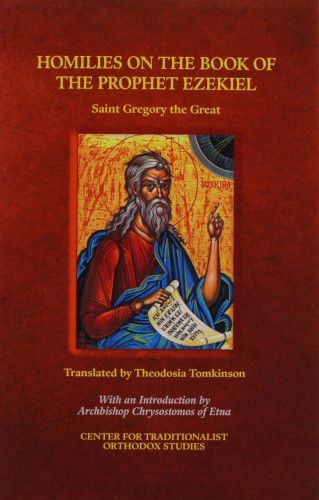
St. Gregory’s Homilies on Ezekiel, delivered to a group of monks and clerics in 593, do not constitute a complete commentary on the book. They unpack the allegorical sense of the first four chapters and chapter 40. What is the main takeaway from these homilies?
In the Moralia, the monks were pushing Gregory on all sides to tell them how to read this book. That goes well. Something similar is going on in the Homilies on Ezekiel, but Gregory admits that he is in a hurry. There is so much to say and the text is very difficult. So, he concentrates on the allegorical meaning of these visions.
When you read the Homilies on Ezekiel, you learn to see the Father, the Son, and the Spirit everywhere
They are meta, a word that many of my students use. The prophet Ezekiel’s visions are already allegorical. They are not like the story of Job. Ezekiel has a vision in which he is walking up a stream and finds a building, which turns out to be a temple. What do we make of that? How do we interpret a dream or a vision? There already is an interpretation of an interpretation. So, things get very deep very quickly. But what you learn in these homilies is the sense that—for Gregory and Catholicism—a prophet is not a prophet because he knows who is going to win next month’s football game, or can take advantage when it comes to betting on the horses, but because he sees God's truth in the present, when no one else can. The prophet looks around and sees God's actions in our lives right now. Usually, he has to tell us that we are not getting things right and need to be better people. “God is among us. Let's try this again. We have been unfaithful to God, but he is faithful to us.”
However, for Gregory, Ezekiel is not just seeing God in the optic of the Old Testament, but the Trinity itself. When you read the Homilies on Ezekiel, you learn to see the Father, the Son, and the Spirit everywhere, even in those crazy visions. You begin to see God's image everywhere and often. For Gregory, that happens through the Church, the mediator of God's grace on earth.
For Gregory, Ezekiel’s vision of a temple with its inner and outer gates, inner and outer court, and three doors, is a type of the Church. There are three main doors to the Church: faith, hope, and love. We enter the door of faith through baptism. Moreover, there is an eastern, northern, and southern door. The eastern door faces the sun. That is the door of faith, by which we come into the Church. We go out by the north door, towards the cold winds. We Southerners like to think of the north as cold and barren, and the South as full of warm sun. So, you go out by the northern door when you sin, but you can come back in through the southern door, the door of the Holy Spirit, hope, or the door to the sacrament of reconciliation of Confession of Penance. So, you come in through faith and baptism. Maybe you leave, by that northern door but come back through the southern door of hope and love. You can come in and out freely. We go out and we bring our love and God's love to everyone else. We love God and love neighbour and then we return in love to the Church and. We are in that cycle. The lesson you take away is that if, like a prophet, you become holy, commit yourself a life of ascetic endeavour, and of being open to God's grace, then everywhere you look, you are going to recognise God’s action in my life and in that of others. You too can become a prophet: look at the current situation and help other people see God in our lives. There is little else to being a Christian than learning to do that.
4.
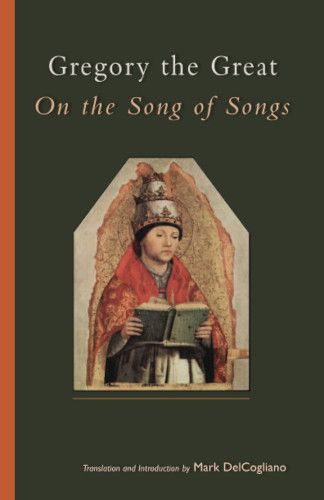
The homilies on the first eight verses of the Song of Songs are the extent extant part of Gregory's commentary on this Old Testament book. Like earlier Church Fathers, he believes that this divinely inspired love poem refers to the union between Christ and his Church, both in its entirety and in each of its holy members. What can we learn from these homilies?
If you like critical scholarship on who wrote what, how people make arguments, and the various manuscript traditions, Gregory's commentary on the Song of Songs is a great place to go. The debate over the manuscript tradition is fairly wild. This is where you discover if you are a good historian or a linguist. This is where you can exercise those skills. You can pick up virtually any introduction to Gregory's commentary on the Song, find meaningful arguments, and have some fun with that.
However, if you're not looking for the vicissitudes of historical scholarship, then you can just pick up the translation of the exposition on the Song of Songs for profound and brief insights. This is a work that you could read in one sitting. It is the fountainhead of many later commentaries. There is a huge mediaeval tradition of commenting on the Song, this book of up to six different poems about a wedding. In Gregory's commentary, you shall already see how the bride and the bridegroom mean so many different things.
It is obvious that Christ is the groom, and Church is the bride. This is the ecclesiological reading of the Song of Songs. But in the moral sense, I am the bride, the one with whom God wants to have an intimate relationship. So, I need to read the story that way.
Ironically, reading the work of a celibate monk, priest, bishop, and pope who lived 1500 years ago gives me insight into what my love for my wife is supposed to mean. It helps me be a better married man today.
Beyond that, many of us Catholics are married. We are thinking constantly about the meaning of our marriage. We know marriage is a sacrament and it can only be a sacrament by making God's grace present and being a sign of his love in the world. The way that I love my wife is supposed to be a sign to everyone else of the way in which God loves the Church and each individual. That is a tall order. It is difficult to know how to do that, especially when the mystery is staring me right in the face. Ironically, reading the work of a celibate monk, priest, bishop, and pope who lived 1500 years ago gives me insight into what my love for my wife is supposed to mean. It helps me be a better married man today. My wife is an artist and she made me an icon based on Gregory’s commentary on the Song of Song. This is a wonderful text for married or engaged couples to read. It teaches us how spousal love cannot be separated from God's love for his chosen people, the Church, and how we are supposed to be witnesses to the Church in our daily lives.
5.
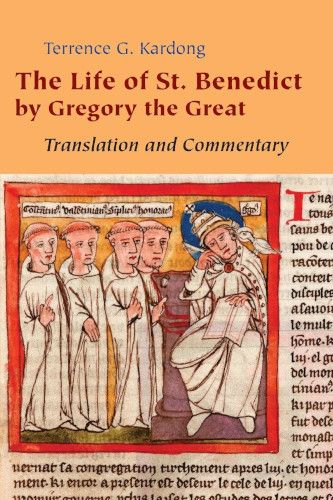
Gregory’s Life of St. Benedict is the second of his four books of Dialogues. In these dialogues, he relates the virtues and miracles of some 200 native saints to encourage the faithful of Italy to trust in God and pursue holiness. Have you chosen Book Two of the Dialoguesfor Gregory's life of St. Benedict?
Well, I have always been attached to a Benedictine institution in one way or another. I come from Subiaco in Arkansas and I teach at a Benedictine Catholic school, Saint Leo, with the monks at the abbey and the sisters of Holy Name Monastery. So, people are always asking about the life of Benedict, even more than they ask about his profound rule.
Most of the stories about Benedict and Scholastica are found in Gregory's second dialogue. which is often published separately as The Life of Benedict.
Here, we see a totally different side of Gregory. We also learn things about Benedict that are not in the Rule. It is one of those texts that helps us see both figures—Benedict and Gregory— from a different perspective. What kind of man could write a rule that that has been fruitful, useful, and is still in practise 1500 years later. If you want to know more about him, but in the Rule he tells you little about himself. So, if we are curious and want to know the man. Gregory gives us that information.
Benedict was not always well liked by the monks. Some are jealous or think that he is too harsh. They do not actually want to be monks, now that that they are following his leadership, and they are always trying to poison his loaf of bread or chalice. Gregory tells us these stories and how Benedict is a miracle-worker. He blesses the chalice, and it shatters, and the poison seeps out. Or he knows that the loaf of bread is poisoned and he talks a crow that comes to get food from him into taking the loaf of bread away, so that nobody can be harmed by it. All these stories show up in the iconography of Benedict in monasteries. If you enter a Benedicine office or church, on the wall you shall see pictures with references to the chalice, the birds, the snakes, and all the stories that are found in Gregory’s Life of Benedict
If we only read Gregory’s commentaries on Scripture, we might think that biblical commentary is all there is to Gregory. We would fail to see how he wants to prove that God is still acting in our lives. He notes that people are coming to him and complaining that God no longer operates in their lives in the way that he did in their ancestors. They are worried that they have somehow lost contact with God. Gregory writes the Dialogues as a response. He says, “No, God is alive! I need to tell you about this holy man or holy woman.” Sometimes the stories about the miracles strike us as fanciful. Fine. It is always difficult to believe that that a miracle has happened. But generally we realise that we never have thought about things that way. There are all these miracles going on. Great, wonderful, profound things are happening in our community. If they are not happening in my life, I need to take a step back and see it in someone else's. Gregory helps us see this, not just in Benedict, but in the hundreds of other saints and miracles he recounts in the Dialogues.