
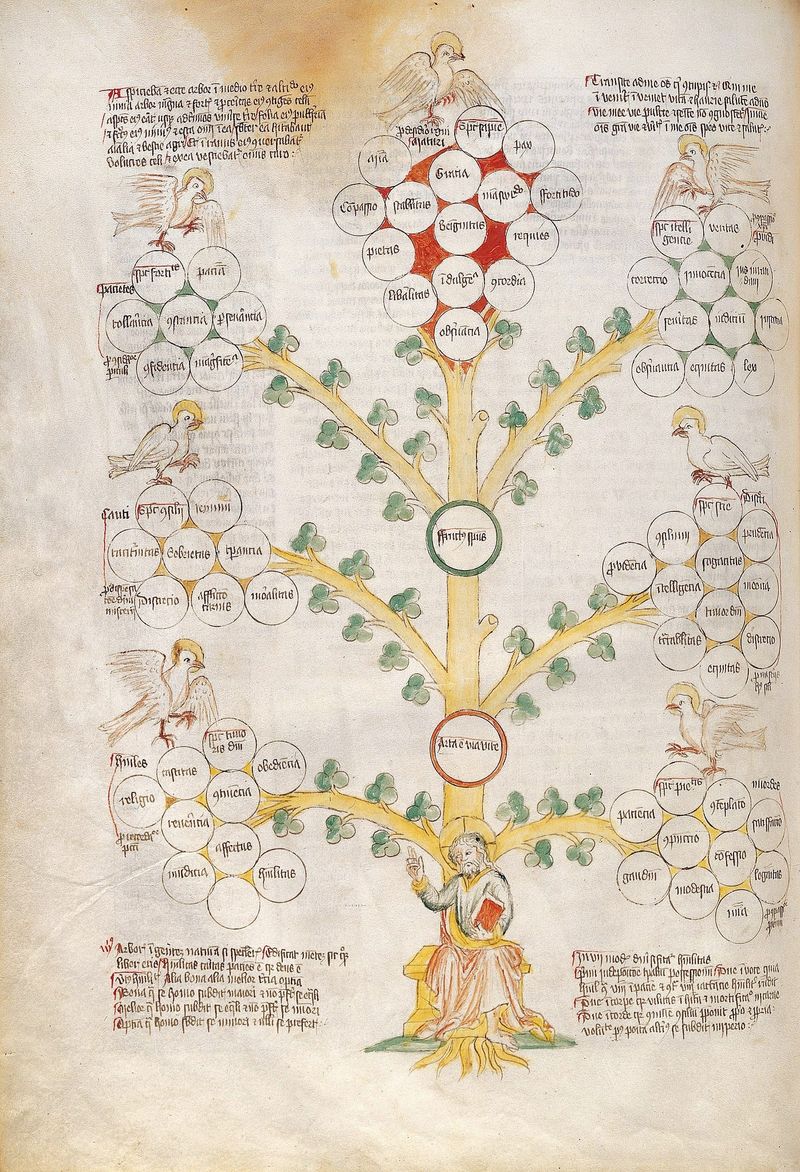
Christians “walk not according to the flesh but according to the Spirit” (Romans 8:4). Early on, the Church Fathers teach that the sevenfold spirit bestowed upon the Messiah, as prophesied in Isaiah (11:2), now belongs to the baptised. Twelfth and thirteenth century theologians, above all St. Thomas Aquinas, systematise these patristic teachings. In the summation of the Catechism of the Catholic Church, “The moral life of Christians is sustained by the gifts of the Holy Spirit. These are permanent dispositions which make man docile in following the promptings of the Holy Spirit.” (n. 1830). “The seven gifts of the Holy Spirit are wisdom, understanding, counsel, fortitude, knowledge, piety, and fear of the Lord. They belong in their fullness to Christ, Son of David (Isaiah 11:1-2). They complete and perfect the virtues of those who receive them. They make the faithful docile in readily obeying divine inspirations.” (n. 1831).
In this interview, Dr. John Meinert discusses the gifts and five recommended books on them.
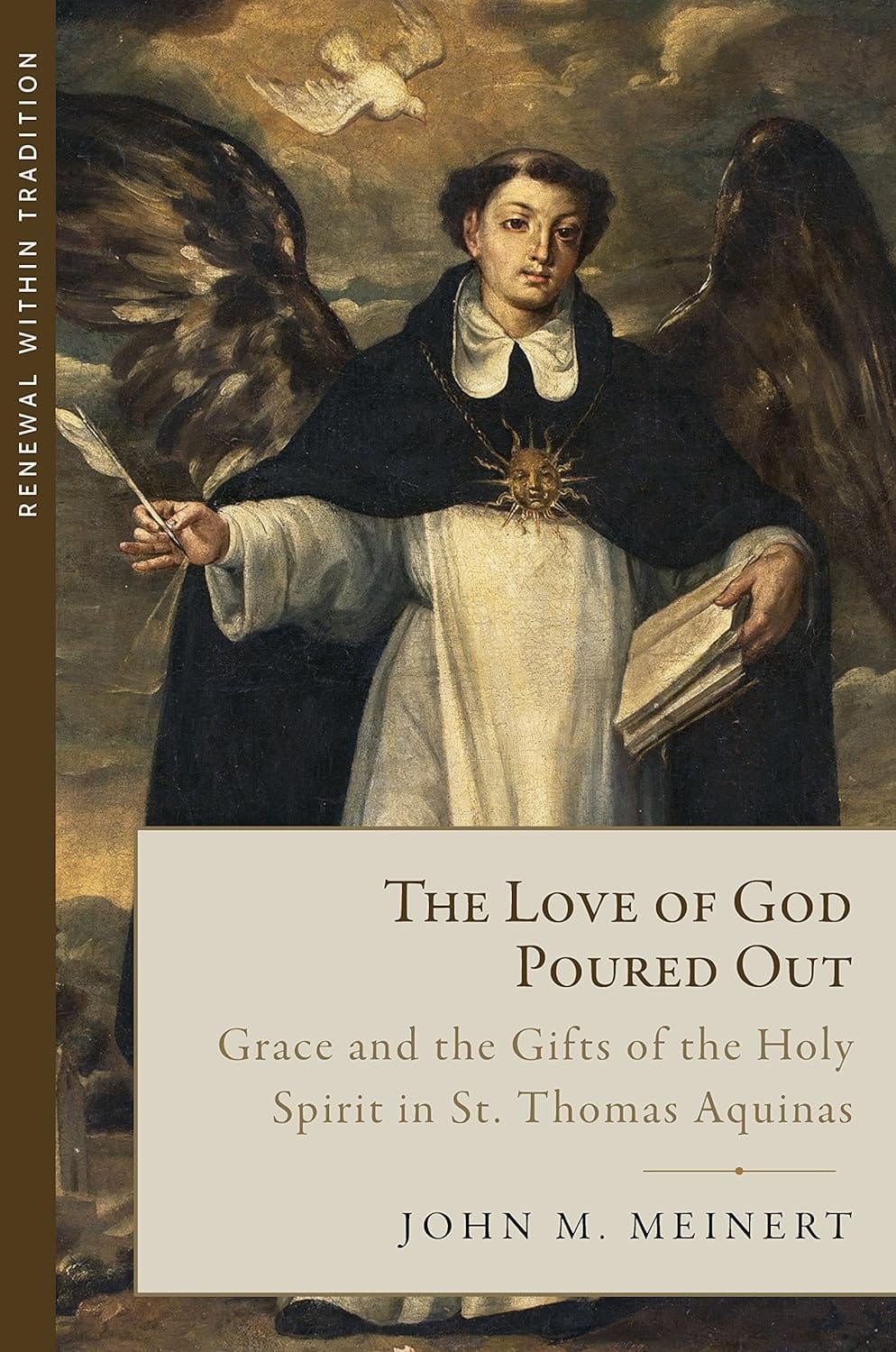
John Meinert is Associate Professor of Theology at Benedictine College, where he teaches on Christian moral life, bioethics, Catholic social thought, and Spiritual Theology. His research has appeared in Nova et Vetera, Angelicum, New Blackfriars, The Journal of Moral Theology, The Thomist, The European Journal for the Study of Thomas Aquinas, and Augustinian Studies. He is the author of The Love of God Poured Out: Grace and the Gifts of the Holy Spirit in St. Thomas Aquinas (Emaus Academic) and Peace in the Thought of Thomas Aquinas: Philosophy, Theology, and Ethics (CUA Press).

- I Believe in the Holy Spirit
by Yves Congar OP - The Sanctifier
by Archbishop Luis Martínez - Summa theologiae (IaIIae, qq. 68-70)
by St. Thomas Aquinas - Catecheses on the Gifts of the Holy Spirit
by Pope Francis - In the School of the Holy Spirit
by Fr. Jacques Philippe
Where does Sacred Scripture teach us about the nature and numbers of the gifts of the Holy Spirit?
Originally, the name and number of the Gifts of the Holy Spirit are drawn from the prophet Isaiah, specifically chapter 11. Therein, Isaiah prophesies that the future Messiah will have the characteristic virtues of a king. The Septuagint, the Greek translation of the Old Testament, adds piety to this description of the Messianic king, a person on whom the spirit rests in its fullness.
In the Old Testament, the Spirit is the personification of God's action with us and for us. To say that the Spirit will rest on this king is to say that the fullness of God's action with us and for us shall be with and in this person. It will be manifested in his possessing the characteristics of an excellent king. He shall act with righteousness, understanding, wisdom, and fear of the Lord. Ultimately, that will bring peace to the people.
The Spirit appears throughout the New Testament. He comes down upon the expected Messiah, Jesus Christ. The Gospels present this in different ways.
In the Gospel of John, Christ remains in us through this Spirit. The Spirit is God. He is Christ with us.
In Luke, the Spirit is God's agent, who accomplishes his providential plan. He brings about Christ’s conception and comes to rest on him at his baptism.
According to Paul, we share in the Spirit through baptism. Christian life is life in the Spirit and Christ. We have been recreated and revivified through him. Through the Spirit, God acts within us and makes us a new creation.
There are not many explicit references to Isaiah 11 or the list of seven gifts in the New Testament. However, the number seven is very important. It connotes the fullness of God's activity and presence: the full accomplishment of his plan in history. In the New Testament, there are no indications that the Spirit which rests upon the Messianic king has seven discrete characteristics (or the six of the Hebrew Bible). The New Testament indicates repeatedly that the fullness of the Spirit rests on Christ.
If there are not seven or six discrete gifts, how normative is Isaiah 11 regarding the number of the gifts?
The gifts have an interesting place within the Christian tradition, but a Christian spirituality does not need to make any reference to discrete gifts of the Holy Spirit. In Isaiah and the New Testament, the number seven is largely symbolic of the fullness of the Spirit’s presence and action.
Still, there is a value to this list of seven discrete gifts. One part of the spiritual tradition has focussed on it, especially from Aquinas on.
However, another part of the spiritual tradition does not believe that there are just seven discrete gifts. In some ways, Aquinas tips his hat to this position too. He says that it is fitting that there be seven gifts. Hence, the list of seven is not necessarily definitive. Rather, it connotes that we have been given a share in the life of the risen Christ and so in his Spirit.
On the other hand, I think there is value to the list of seven discrete gifts. They help us name and identify the action of the Spirit in our lives. That is not to say that these seven are the only ways in which the Spirit acts or love drives us deeper into the life of the risen Christ.
You have pointed to a difference between various spiritualities or traditions. The Latin Church Fathers, particularly St. Augustine, are more systematic and detailed in their exposition of the gifts than the Greek Fathers. Consequently, the Western tradition of Catholic spirituality stresses the gifts more. Is the doctrine of the gifts as prevalent in the spirituality of the Eastern Churches or conceptualised in a different manner?
I cannot speak of the Eastern traditions after Pseudo-Dionysus. The early Greek Fathers focus more on how the number seven symbolises the fullness of the Spirit. They are less concerned with the seven as a system.
The early Greeks, such as Irenaeus and Origen, have a very flexible and less systematic conception of the gifts of the Spirit. Often, they even call the charisms the gift of the Spirit. Origen talks about how the one Spirit influences us but has many different effects that we can either cooperate with or not.
Ambrose, Augustine, and Aquinas have more of a systematising impulse. They tend to think of the gifts in terms of growth or parallel numerologies. Ambrose concerned about how we ascend from fear of the Lord to wisdom. Augustine thinks of the seven as a system that is related to the Our Father or the beatitudes.
"St. Thomas gives the best articulation and simplest explanation of how the gifts differ from the virtues and how they provide something that the virtues do not."
Gift is an analogical term. It is said of a range of realities that have a common characteristic, albeit in different regards. Gift is a name that is proper, not to the Father or the Son, but to the Holy Spirit. This is because he proceeds from them in the manner of love, which has the character of the first gift. Grace and the infused virtues are also gifts. Then there are the gifts of the Holy Spirit as such. How do the gifts differ from grace and the infused virtues, theological and moral?
The Greek Fathers have a sense of how the Spirit has been poured into our hearts and drives both us and the union of the Church. They are less inclined to think of how the gift, in the broad sense, is the life of God dwelling within me and how it is appropriated to the Holy Spirit and distinct from the other gifts of the Spirit.
It is not until around 1235, with Philip the Chancellor, that theologians make a clear distinction between gifts and virtues. Prior to that, theologians wished to acknowledge that the virtues are also gifts. In a sense, they are given to us by God. However, are all gifts virtues? Phillip the Chancellor is the first to recognise that all this talk of gifts is ambiguous and makes a case for distinguishing the gifts from the virtues. This was the first time that theologians were really trying to work out in what sense the giftedness of supernatural life in its entirety differs from the gifts of the Holy Spirit in the technical sense. Many of the Parisian masters, including Aquinas, followed Phillip in distinguishing the gifts from the virtues. Much of the Franciscan tradition continued to reject such a distinction. Indeed, many sixteenth-century theologians—such as John of the Cross, Teresa of Ávila, Francis de Sales—continued to reject it or simply did not consider the gifts (in the specific sense) to be central to the spiritual life.
St. Thomas gives the best articulation and simplest explanation of how the gifts differ from the virtues and how they provide something that the virtues do not. Virtually all subsequent spiritual writers, particularly those belonging to the Thomistic tradition, distinguish the two. All who do so— such Denis the Carthusian, the author of a fifteenth-century treatise on the gifts—are dependent on Aquinas.
According to St. Thomas, the gifts differ specifically from the virtues because they habitually dispose us to receive the inspiration/motion of the Holy Spirit. Central for him is not only Isaiah 11:2, but also Romans 8:14, “All those who are led by the Spirit of God are sons of God.” Those who are sons of God, are led by God’s Spirit and are habitually disposed to receive and follow these motions in our lives (the motions of love). The virtues on the other hand, dispose us to follow the rule of reason; they are not disposed to a motion or rule from without. The gifts are thus necessary for Aquinas not only because the motion from God is always necessary in our lives, but also because we truly act and receive this motion as free creatures. We are not puppets or inanimate instruments and so you need a habit/disposition to be moved directly by God; the gifts enable this motion of God to be connatural and perfect every one of our actions. I think Aquinas is right about this, we do need to draw a distinction between the gifts and the virtues (even though large parts of the spiritual tradition do not) and foreground the gifts in the spiritual life.
"The gifts of the Holy Spirit render us habitually disposed to God's influence in our own lives."
Many refer to charisms as gifts. How do the gifts of the Holy Spirit differ from charisms?
My answer to this question is indebted largely to Aquinas. It is mainly he who, in the thirteenth century, articulated the difference between the gifts and the charisms. Going back to the last question and the distinction between the gifts and the virtues helps clarify the charisms.
For St. Thomas, we need to follow the language of Scripture to understand the difference between the gifts and the virtues. In Scripture, the gifts correspond to inspirations, which come from outside. Through them, God moves us, inspires us, and causes us to act in certain ways. The gifts, therefore, are there to make the Christian structurally and habitually disposed to God’s influence.
Prior to Philip the Chancellor, there was a great deal of ambiguity in what was called a gift of the Holy Spirit. Often, charisms were called gifts of the Holy Spirit too. They are gifts in the broad sense of the term. Aquinas, however, distinguishes the charisms from the gifts of the Holy Spirit. For the most part, the subsequent spiritual tradition follows him. The charisms are given solely for the building up of the body of Christ (1 Corinthians 12-13). The gifts of the Holy Spirit render us habitually disposed to God's influence in our own lives. They are habits or perpetual dispositions. The charisms, on the other hand, are transient motions from the same Spirit: gifts without habits and for a different purpose. Through a charism, the Spirit builds up the Church in multiple ways, but that does not necessarily sanctify the bearer of the charism. Just because God has given someone a charism of prophecy or healing does not mean that this person is holier. It just means that God has chosen to use that person in this way for the building up of others. The gifts, on the other hand, are a structural part of holiness: that we deeply desire to follow God's lead in our lives. That is what it means to be a Christian.
 Five Books for Catholics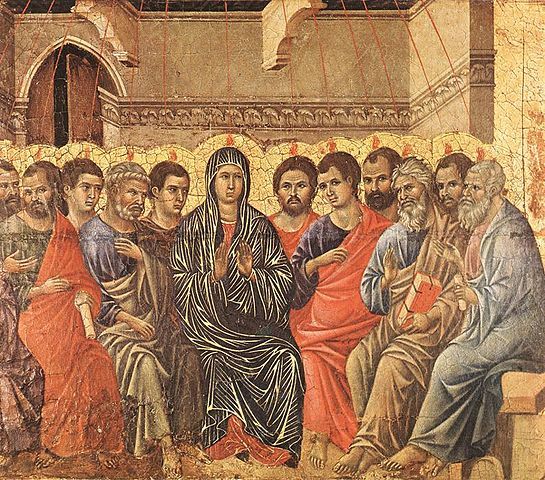
Read more about the charisms of the Holy Spirit
The Catechism of the Catholic Church (n. 1381) lists the seven gifts but does not explain them. Briefly, what is nature and role of each one?
It is important to understand what the root of the seven gifts is. Here, Thomistic spiritual theology is an explanation of what we find in Scripture.
As you mentioned earlier, Trinitarian theology sees the Holy Spirit as gift itself: the gift of the love between the Father and the Son. It is no surprise, therefore, that our first living contact with the Trinity is always through the gift of the Spirit. It is through the Spirit of the Son and the Father that we live their life. However, he is not just a gift in a generic sense. He is the gift of love. We participate most deeply and intrinsically in God's life by love. Love is a union. It is the virtue by which we possess God and are possessed by God. For this reason, love is the root and cause of our entire spiritual life: our possession of the Holy Spirit and God's possession of us. It is also the root of the gifts. We are disposed to be influenced by God because we are in union with him, our deepest desire and our greatest friend.
As a result, we know, understand, or fear certain things, and so on, in line with that relationship. We should think about the discrete seven gifts as ways in which we are disposed to be moved by love in our lives: in other words, to be moved by the Holy Spirit.
Take the gift understanding. Through it, God moves us grasp more deeply that which know by faith. This deeper grasp comes from our love of God. We want to know more about him, our friend, guest, and most intimate possession, because we love him. Love drives us to know him more deeply.
Aquinas thinks about the gift of knowledge by considering the implications that knowing God has in one’s life. Love does not merely drive us to know more about God, but also to act upon such knowledge: to act like this is the deepest and most important relationship in my life. Knowledge, therefore, enables us to judge how that deeper understanding of the faith should affect our life.
Fear of the Lord is a fear of offending God and is born out of love. It is not a fear of being punished by God. Rather, if you really love God above all things, then the greatest evil will be the loss of the greatest good. What you fear most is to lose God by offending him, your friend.
Love drives us to think about God and everything else in light of him. Our dominating union with God colours the way we see the rest of the world. We see how everything comes from God, reflects him, and tends toward him. Wisdom, therefore, consists in seeing all things in the light of our relationship with God.
Counsel consists in love helping us make decisions: in being open to the motions of love in even the most practical details of our lives. Take discernment. Counsel is an intrinsic part of discernment. In the most concrete situations, we should be open to love and follow it wherever it leads. In this way, we are following the motion of the Spirit that leads us to a deeper love in our actions.
Love also gives birth to justice. Out of love for God, we want to give him all that we owe him. That is the gift of piety.
Love makes us confident that the difficulties we face in this life are surmountable. What we think of as difficulties, success, or failure completely changes. The real failure is to break this relationship with God. Love, therefore, gives us the confidence that neither principalities nor powers can take away this treasure. It gives us confidence and freedom in our actions.
These are the standard seven gifts. This helps us think about the different ways in which the Spirit permeates our life and we are habitually open to the movements of love. Aquinas says that the gifts perfect us for all actions and virtues. They are there because it is in the very structure of Christian life to be open to the demands that love himself makes on us.
In a certain sense, the list of seven is ad hoc. It indicates the dominant ways in which the Spirit moves us, but these are not the only ways. They do not just symbolise the fullness of the Spirit that has been given us. They help us to begin articulating the ways in which love impacts all that we do.
"The saints are the place to go for the most concrete manifestation of how the gifts are supposed to work"
You have already mentioned the systematising traits of the Latin Church doctors. St. Augustine relates each of the gifts to one of the beatitudes. St. Thomas Aquinas hands on this teaching and in turn relates each of the gifts to one of the seven fundamental virtues, the three theological and the four cardinal virtues. Could you briefly explain how St. Augustine and St. Thomas map the gifts onto the beatitudes and the fundamental virtues?
There is an interesting systematising impulse in the Latin mind, which believes that the different groups of seven should cohere with one another.
Following Augustine, Aquinas does not believe that these overlaps are simply ad hoc, but that God's wisdom is discernible in them, and this influences the subsequent tradition. In his view, we can map the seven gifts of the Holy Spirit onto the powers of the soul, the beatitudes, and the petitions of the Our Father.
In his first take on the gifts—the Prima Secundae of the Summa theologiae—he is more intent upon showing that there is a gift in every power of the soul: that every power of the soul is habitually disposed to be moved by God and open to the demands of love. He argues that some gifts inhere in the intellect, some in the will, some in the irascible appetite, and one in the concupiscible appetite. In the Secunda Secundae, however, he maps out how the gifts are related to the virtues. He moves the gift of fear of the Lord from the concupiscible appetite to hope because he believes that it an effect of hope. He is no longer as concerned as he was in the Prima Secundae to ensure that a gift inheres in every power of the soul. He is more concerned with what matches what. I read the Secunda Secundae through the Prima Secundae. Hence, his overriding intention is not to establish a particular systematisation but to show that the Spirit animates our entire life and that we are habitually disposed to follow his motions. This is what he is getting at when he links the gifts of the Holy Spirit to the fruits or the beatitudes. The gifts give rise to the fruits and the beatitudes. The beatitudes are perfect actions and are inspired by the gifts. Through the gifts, we are responsive to God’s movements and act in the way described in the beatitudes. We hunger and thirst for righteousness. We become meek and peacemakers. We mourn for our sins, and so on. In a sense, the beatitudes are the ultimate fruit of the Spirit: full conformity to Christ. The beatitudes are a portrait of Christ and the Spirit is always the Spirit of Christ, whereas the fruits represent the full maturing of Christian life. The fruits are signs of the maturity of Christian life, though once again Thomas calls the enumeration from Galatians a fitting one, because the Spirit can produce other fruits.
For those who can read French you have recommended the entry on the gifts (« Dons du Esprit Saint ») from the magnificent Dictionnaire de spiritualité, ascétique et mystique. That long article concludes by considering how some of the saints have lived under the gifts. Is it best to look to the saints for concrete guidance on how to live according to the gifts?
Absolutely. In the mid-twentieth century, the Dominican Ambroise Gardeil wrote a book The Gifts of the Holy Spirit in the Dominican Saints. It is a nice practical book on the theology behind this. The saints are the place to go for the most concrete manifestation of how the gifts are supposed to work. We need to look at the people who have cooperated with God most deeply: the saints. Aquinas even uses this as a principle of biblical interpretation. The same Spirit inspires Scripture and the lives of the saints. The Spirit cannot contradict himself. Hence, we can use the lives of the saints to interpret Scripture.
To interpret the movements of the Spirit in our own life, we should look at how he has worked in Scripture and the saints. The saints are those who are consumed completely by love for God. They let his love penetrate all their actions and in them we can see the action of the Spirit at its most intense. That does not mean that every action or position of a saint is inspired by the Spirit. This is an important caveat because every saint is also a sinner and a person of their time. Theologically, though, it makes total sense to look at them to see how the Spirit generally works.
What prompted your own research into the gifts?
The need for a dissertation I took a course on the moral theology of Aquinas with Bill Mattison. We were reading sections of the Summa. Besides simply admiring Aquinas’s writings in the course, I needed to write a paper.The gifts of the Holy Spirit captured my attention. I noticed that, for Aquinas, they were structural to our spiritual life and the Spirit is not just some addendum but the driving and totalizing force. At this point, I had also read Servais Pinckaers, who was leading a renewal in Dominican spiritual theology and virtue ethics. He insisted that the gifts of the Holy Spirit are not just a happy addendum to Aquinas's otherwise Aristotelian ethics but the very key to it. So, I took that idea and ran with it.
My position at the time was that much of what Aquinas had written about grace had been put to one side and the gifts of the Holy Spirit to the other. This happens with what he has written on many theological topics. Generally, scholars tend to silo topics off from one another, especially after the Council of Trent, with the theological schools and the increasing standardisation in spiritual writings. For example, during the huge sixteenth-century debates about grace, very few of the primary interlocutors ever mention the gifts, even though the gifts, if they are structural, should have serious implications for any understand of how God acts in our lives. The gifts are the habitual dispositions to be moved by God. Vice versa, a systematic reflection on grace—the way God acts in our lives—should relate to the gifts. However, the scholars who had treated the gifts did not put sufficient emphasis on the place within the life of grace, and vice versa. I sought to show how Aquinas brings the two together. That is how I ended up with the topic.
1.
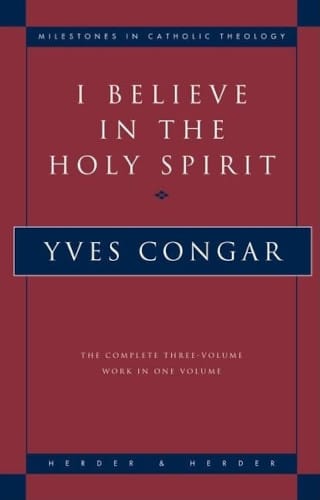
The first book is Yves Congar’s I Believe in the Holy Spirit. Congar’s comprehensive study on the Holy Spirit is a classic of modern Catholic theology. The gifts are just one of the many issues Congar treats in this vast work. Why have you chosen this book?
For in the first book, I was looking for something that gives a broader perspective and does not just treat the gifts, but which the traces the line that goes from Trinitarian theology, to ecclesiology, moral theology, and spirituality. There is some deep unity between these. This unity enables us to see how the very love of God has been poured into our hearts. At the same time, this love of God also is what makes the Church.. The Church’s unity, holiness, catholicity, and apostolicity come from the Spirit.
Congar’s book is probably the best-known and most comprehensive twentieth-century work on the Holy Spirit and has inspired so much later research. It is also accessible. It is not written in the dense style of the Thomistic commentatorial tradition. It has a great sense of the biblical and historical elements, as well as the centrality of the Spirit in systematic theology. It also treats many subjects that are ancillary to the gifts, such as the charisms and ecumenical theology. It is so long, but it is a good place to start for getting a complete vision of the Spirit.
2.
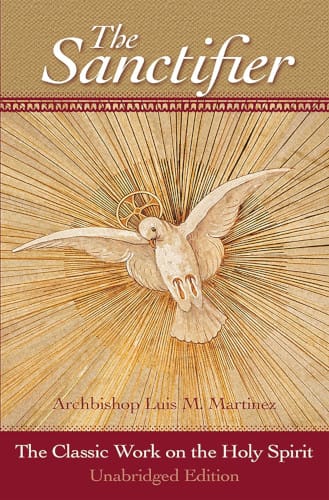
The second book is The Sanctifier (orig. El Espíritu Santo) by Luis María Martínez (1881-1956), who was archbishop of Mexico. Part Two is on the gifts of the Holy Spirit. What makes this a good guide to the gifts of the Spirit?
There are many books that I could have picked for the second: one that that is a good indicator of how, by the middle of the twentieth-century, spirituality had become centered around the gifts.
In the sixteenth-century, the gifts of the Holy Spirit were not so central that spiritual authors had to write about them. In St. John of the Cross, they are ancillary. Francis de Sales denies that there is any real distinction between them and the virtue of charity.
However, two sixteenth-century figures followed Aquinas and set Catholic spiritual theology on a trajectory where the gifts became central to it: John of St. Thomas OP (1589-1644) and Louis Lallemant SJ (1578-1635). It is mainly through the former’s commentary on the gifts that they became central in spiritual theology. I considered including his commentary, but it is a difficult read. Lallemant also writes about the gifts but is less influential than John of Saint Thomas. Thanks to these two figures, from the mid-eighteenth century on, every spiritual school and writer tends to write about gifts.
I was looking, therefore, for a good example of spirituality from the mid to early twentieth century. Martinez’s book is particularly beautiful. He was not just a scholar and an archbishop. He was also a poet and so he writes beautifully. The book thus has much to recommend it. He writes well about the Spirit’s action in our lives and how he brings us to the Father and the Son, our possession of him and his possession of us, the Spirit as gift, and the gifts and fruits. Second, the book is very practical. Third, it is influenced by Aquinas and deals with the Spirit, then the gifts, beatitudes, fruits and so is a good example of standard spiritual theology incorporating the gifts, beatitudes, and fruits.
3.
Next up is a text we have already talked about quite a bit: St. Thomas Aquinas’s classic treatment of the gifts in Summa theologiae IaIIae, qq. 68-70. What are the main points of his treatment of them and how does he consolidate the Church's teachings on the gifts?
St. Thomas is not the only thirteenth-century theologian to defend the real distinction between the gifts and the virtues. He depends on his predecessors. However, he is among the first Latin theologians for whom this is an important distinction and who thinks seriously about the nature of the gifts of the Holy Spirit and their precise role in the spiritual life.
All subsequent writing on the gifts is dependent on Aquinas . Hence,it is important, therefore, to read his treatment of the gifts, the beatitudes, and the fruits. The Prima Secundae in particular captures his main concerns.
He starts out by distinguishing the gifts from the virtues. The action of the Spirit comes from without, whereas virtue comes from within. The gifts are dispositions to be moved by God and the virtues are dispositions to be moved when we will.
Why though are the gifts necessary? Thomas argues that they are necessary whenever our own reason and virtues are insufficient. This has given rise to debates about when the gifts are operative and when they are not. Such debates are more technical. Aquinas’s point is that our virtues are always insufficient. We possess the theological virtues imperfectly and so we always need to be moved by God to a deeper love of him.
Third, he teaches that they are habits because God does not move us as he would a hammer. We are not tools, like a hammer, but rational creatures. God needs to move us in such a way that we move ourselves as well, through love. We need habits. The gifts need to be part of our rationality and freedom. We need to react to God’s motion with freedom. Hence, much of the doctrine on seven gifts is about the effects of love. Love moves us to act with judgment, wisdom, and fear of the Lord. It makes these a second nature. That is why the gifts are habits.
Thomas then argues that the gifts are enumerated suitably. It is fitting that there are seven because all our powers need to be moved by God.
Furthermore, they are connected with charity. By this, he means that they are causally dependent on charity. The gifts are connected in charity because the Holy Spirit dwells in us by love. The gifts, therefore, open us to the motions of the indwelling God and even perdure in heaven.
Moreover, Isaiah lists them according to their dignity. Here there are several interesting theological questions. For example, are the virtues are more excellent than the gifts? This question only arises if you take them to be different. Aquinas argues that the gifts are more excellent than some of the virtues. A gift is more excellent than the virtue it supplements. However, as the gifts supplement all the virtues, there is a sense in which they are better than all the virtues. On the other hand, love causes the gifts.. In this sense, the theological virtues are greater than the gifts. There are various puzzles here that I try to work out in my book (with what quality I cannot say). Nevertheless, this section of the Summa theologiae is ground-zero for the treatment of the gifts in all subsequent spiritual theology.
4.
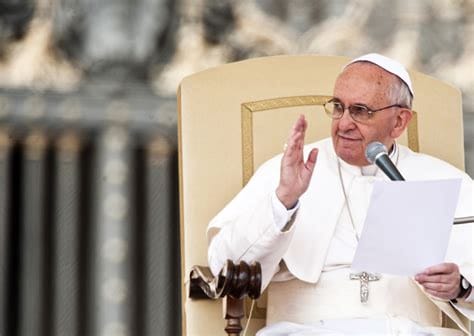
What are the salient points of the next entry, the cycle of catechesis that Pope Francis gave on the gifts of the Holy Spirit between 9 April and 11 June 2014?
I have included it partly because the magisterium has long maintained a studied neutrality vis-à-vis the more particular debates concerning the gifts.
The Council of Trent deliberately did not rule out the alternative position: that there is no real distinction between the gifts and the virtues in the spiritual life. As a result, after Trent, certain Carmelites, Francis de Sales, Schram, and others either do not write about the gifts or do not consider them to be distinct from the virtues.
The magisterium’s neutrality has resulted very little authoritative teaching on the gifts of the Holy Spirit.
Following Leo XIII’s revival of Thomism and his encyclical Divinum illud munus, there has been a resurgence of interest in the gifts of the Holy Spirit. In that encyclical, however, Leo only mentions them obliquely. He cites a passage from the Tertia Pars of the Summa theologiae, but it is on how the remission of all sins is given by the Holy Ghost, the gift of the Father and Son. This is a matter on which all theological schools would agree. Similarly, John Paul II’s encyclical on the Holy Spirit only mentions the gifts with a quote from St. Bonaventure but does not go through them.
Pope Francis’s cycle of catechesis is one of the first times the magisterium, albeit at a low level, has spoken about the gifts specifically and in a more extended fashion. That is why I have included it.
Other than that, there is the Catechism of the Catholic Church. It is not surprising that the gifts appear in the section that is written partly by a Dominican. Moreover, the Catechism is of higher magisterial weight than the Pope’s Wednesday general audiences. However, the Catechism does not provide much detail on the gifts. It simply states that the moral life of Christians is sustained by the seven gifts of the Holy Spirit, that they complete the virtues, and that they give rise to the fruits of the Spirit. However, I have included Pope Francis’s cycle of catecheses for those who want to read a magisterial teaching with a little more meat.
5.
Have you selected Fr. Jacques Philippe’s In the School of the Holy Spirit as a more practical guide to living under the Spirit and his gifts?
Exactly. Fr. Philippe starts the book with a quote from St. Faustina that captures the insights of St. Thomas:
“My Jesus, it is truly easy to become holy; it just takes a little good will! And if He finds this minimum of good will in a soul, He quickly gives Himself to her. And nothing can stop Him, neither our faults nor our falls, absolutely nothing. Jesus hurries to help that soul; and if the soul is faithful to this grace from God, she can in a short time reach the highest level of holiness that a created being can attain here below. God is very generous and does not refuse His grace to anyone. He gives even more than we ask for. The shortest road is faithfulness to the inspirations of the Holy Spirit.”
Working out the propositions of faith is not necessarily central to our moral lives as Christians. Nor is making acts of hope, temperance, and fortitude. All these things are important. However, they are important in as much as, in them, God is moving and inspiring us. They are important insofar as love is the beating heart behind them all. Loving God and being united to him involves a connatural knowledge, wisdom, and understanding of him. Being faithful to that love is the heart of Thomistic ethics.
Fr. Philippe’s book is very good book on how we can put this into practice. We can talk about all these things in the abstract. We can acknowledge that God moves us and that we should be open to what God wants. Nevertheless, how do we recognize his inspirations and how do we follow them? How can we see these operative graces? Philippe's book is a very practical take on all this. That is why I have selected it.