One of the most celebrated passages in St. Paul’s epistles regards the regulation of the various charisms and manifestations of the Spirit that characterise the church of Corinth (1Cor 12). He insists that they exist to build up Christ’s body, the Church, and should be exercised to this end alone. The charisms he lists include faith, the utterance of wisdom, the utterance of knowledge, the gift of healing, the working of miracles, prophecy, the discernment of spirits, speaking in tongues, the interpretation of tongues. In the subsequent centuries, many of these manifestations of the Spirit have become less common, if not rare. However, during the twentieth century they have become a central feature of some Christian communities, first in Protestant Pentecostalism, and since the 1960s, in the Catholic Charismatic Renewal Movement.
Thanks to the Charismatic Renewal, many Catholics have converted and grown in their practice of the faith. Pope Paul VI and his successors have recognised its authenticity, while also taking measures and issuing guidelines to safeguard the Catholic identity of charismatic communities.
In this interview, Dr. Alan Schreck explains the Catholic Charismatic Renewal.
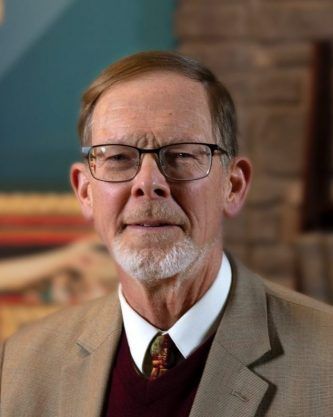
Dr. Alan Schreck has been a professor of theology at Franciscan University of Steubenville since 1978. He specializes in Church history and renewal, St. Francis of Assisi, Catholic doctrine and apologetics, pneumatology, ecclesiology, the teachings of the Second Vatican Council and of Pope St. John Paul II. He has authored numerous books, including several on the Holy Spirit and the Catholic charismatic renewal movement: Your Life in the Holy Spirit (Word Among Us Press); The Gift: Discovering the Holy Spirit in Catholic Tradition (Paraclete Press); A Mighty Current of Grace: The Story of the Catholic Charismatic Renewal.
- A Mighty Current of Grace: The Story of the Catholic Charismatic Renewal
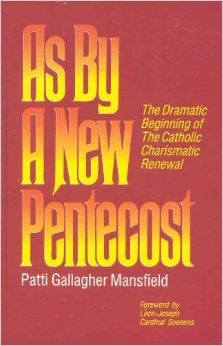
by Alan Schrek - As by a New Pentecost: The Dramatic Beginning of the Catholic Charismatic Renewal
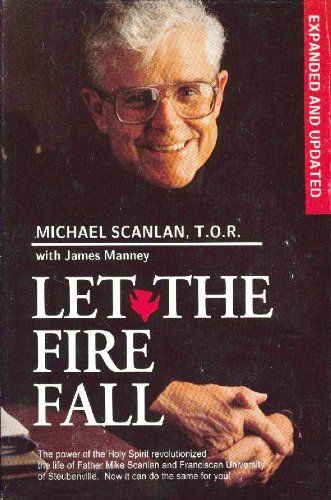
by Patti Gallagher Mansfield - Let the Fire Fall
by Michael Scanlon T.O.R. and James Manney - Baptism in the Holy Spirit
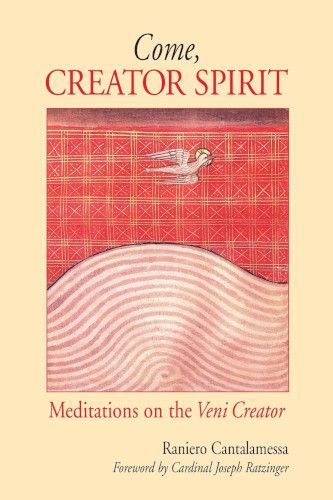
by International Catholic Charismatic Renewal Services: Doctrinal Commission - Come, Creator Spirit: Meditations on the Veni Creator
by Raniero Cantalamessa OFM Cap
Most Catholics know about the Catholic Charismatic Renewal but do not have an exact idea of what it is. How would you define it?
Pope Francis calls it a mighty current of grace.
In the 1960s in the Catholic Church, many Catholics began to experience, first of all, a tremendous outpouring of grace. Often, it led them into a more personal relationship with Christ. What was called baptism in the Holy Spirit is not a sacrament, but an outpouring of the grace of the Holy Spirit, which led people into a real experiential relationship with God in Jesus Christ, through the power of the Spirit. That is really what is at the heart of it.
Along with that, there was an experience of the various charisms that were listed by St Paul 1 Corinthians 12, Romans, and Ephesians. These seemed to be things of the past or just for the saints. They became alive and active among those who experienced this grace of baptism in the Spirit. The Catholic Charismatic Renewal is basically an outpouring of the grace of the Holy Spirit that leads people into a deep personal relationship with Jesus and the Father. Along with that, a life in the Spirit includes these charisms that are meant, as St. Paul says, for building up the Church. Charismatic groups emerged in which people exercised these charisms, according to the guidelines of the Church and the discernment of pastors, to build the Church according to these gifts of the Holy Spirit.
The Catholic Charismatic Renewal movement has critics within the Church. Some criticise it for fomenting a spirituality centred, not on the Eucharist and the liturgy, but on subjective, emotive experience. Others rule it out on account of cessationism, the theological doctrine that the extraordinary spiritual gifts mentioned in the New Testament were granted only during the apostolic age. What is your reply to these criticisms?
Good questions.
First, regarding cessationism. I am a Church historian. Throughout the history of the Church, there have been charismatic movements in which people have powerful experiences of the grace of the Spirit in their lives and the exercise of the charisms.
I teach at Franciscan University. In his biography of St Francis of Assisi, St Bonaventure talks about his graces of prophecy, healing, and deep experiential prayer. Many of these carried a powerful preaching and of the Word and proclamation of the Gospel. So, to the cessationist, I would say that there has never been a period of the Church in which there have not been some manifestations of the charisms and the power of the Spirit for our deeper conversion. This occurs especially in the lives of the saints. But it is not limited to them. The cessationist argument is not based on a careful study of the many powerful spiritual movements. These are not identical to the present day Catholic charismatic renewal, but they were marked by the same powerful, deep relationship with God; conversion experiences; and the manifestation of many of the charisms that St Paul lists.
Then there is the idea that the Catholic charismatic renewal is not centred so much on the Eucharist, the Sacraments, and the liturgical life of the Church. All I can do is point to those who have been involved in the Catholic charismatic renewal. There are always excesses in any spiritual renewal movement. There have been some abuses and extremes. Generally, these have been corrected. However, the vast majority of those who have entered into this baptism of the Spirit and the charismatic renewal in the Catholic Church have deepened their devotion to the Lord in the Eucharist and the liturgical life of the Church. People will testify to how these things had become just rituals for them. Now, they really see them for what they are: powerful channels of grace. For fifty plus years, the vast majority of people that I have met and write about will say, “I have become more appreciative of the traditions of the Catholic Church.” It is very hard to find groups of charismatics who have split from the Catholic Church.
As to the charge of emotionalism. Well, yes, people experience this as something that touches their emotional lives. My response is that we are body, soul, and spirit. The emotions are part of our makeup. When I went to the University of Notre Dame as an undergrad, there were 50,000 people in the stadium shouting and being very emotional about football. Well, when we had early charismatic conferences at the Notre Dame Stadium, we thought that it was wonderful to have people there worshipping and praising God, not only with their minds, but with their hearts and emotions too. To me, this movement is very holistic. It is not separated from the intellect or from the will. It is part of our being that giving glory to God will involve the emotions.
Obviously, emotionalism—where the mind, intellect and will are neglected—is an abuse. However, there is a healthy experience of God. Again, we see it in the lives of many of the saints. Those would be my responses
You endorse continuationism rather than cessationism. However, There are many Catholics who accept the Catholic Charismatic Renewal movement but are just not attracted to it. It is not their cup of tea. Is the Catholic Charismatic Renewal a spirituality that is suited to some but not to others? Is there a clearcut distinction between ordinary and extraordinary manifestations of the Spirit?
The Catholic Charismatic Renewal does exhibit a particular spirituality. It is not necessary for people to belong to this movement to be open to the Holy Spirit. The Holy Spirit is given at baptism and confirmation. It would be incorrect to say that, to live a full life in the Spirit, everyone must identify with this spirituality or movement. On the other hand, the title we use is Catholic Charismatic Renewal. This movement is a testimony for the whole Church that the gifts of the Holy Spirit listed by St Paul are not just for the early Church or for the saints. As St Paul says in 1 Corinthians 12, each has been given a manifestation of the Spirit—a charism—for the common good. So, there is an element that is for the whole Church. Every Christian, every Catholic, is given spiritual gifts because the Church is spiritual by nature. It is charismatic by nature, just as it is sacramental, Marian, and pro-life. The Second Vatican Council and the succeeding popes have emphasised that charisms are not just for a movement. There are gifts of God that are given for the building up of the Church.
"Every Catholic does have particular gifts of the Spirit that are for the building up of the Church, as St. Paul taught."
Sometimes, people make a distinction between extraordinary and ordinary charisms. There is a certain validity to this. Some gifts, such as healing or prophecy, are ones that not everyone will have. Other gifts are more ordinary. I would argue that praying in the Spirit, praying in tongues, is not limited to a few. In the experience of the Catholic Charismatic Renewal, it is common for this gift to be given to those who want to yield to it. Most people in the renewal have received this gift of prayer. As St Paul warns, we should earnestly desire the higher gifts. However, every charism is important for the building up of the body of Christ.
Grace builds upon nature. Sometimes, the Holy Spirit anoints a person’s natural gifts and they become truly spiritual ministries, such as a gift of service or administration. There is a wide variety of charisms.
The message of the Catholic Charismatic Renewal movement is that you do not need to share its spirituality or identify with it, but every Catholic does have particular gifts of the Spirit that are for the building up of the Church, as St. Paul taught. Part of God’s purpose in the movement is to make us more aware of the universality of charisms. This was basically what St. John Paul II taught in his homily on Pentecost, 1998. He had a meeting with all the ecclesial movements in the world. He invited them to celebrate Pentecost in Rome and (paraphrasing) he said, “Open yourselves to the gifts of the Holy Spirit. All of these are given for the Church. This gathering of all these different movements in the Church is a sign of the powerful outpouring of the Holy Spirit.” So, no, you do not have to be part of the Catholic Charismatic Renewal, but the message of the movement is to be open to the working of the Holy Spirit in one’s life: to be open and recognise the charisms that each one is given for the building up of the Church.
1.
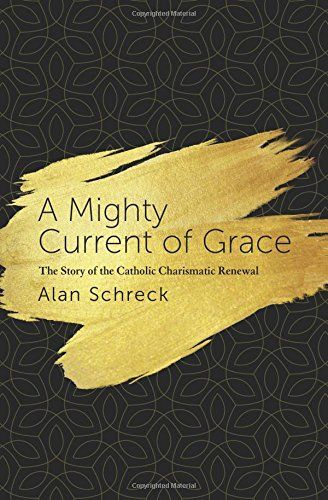
For the first book on your list, you have picked a history of the Catholic Charismatic Renewal movement: your own A Mighty Current of Grace. Can you tell us something about this book?
This was a book that was written just before the fiftieth anniversary, the Golden Jubilee, of the Catholic Charismatic Renewal. It was published in 2017.
I was asked to write this book by Word Among Us Press. It was to be of an overview of the history of the Charismatic Renewal. I focus on the origins of the renewal in the United States, but acknowledge that it is a worldwide movement. It would be a vast, monumental work to trace the history of this grace of renewal in the whole world. It has involved over 120 million Catholics. That is about 12% of the world’s Catholic population. Some estimates are even higher.
I begin with its emergence in the Catholic Church and give some background on the broader Pentecostal movement. I also look at some of the major themes that have arisen. There is baptism in the Spirit and the emergence and growth of social manifestations of the Charismatic Renewal. Prayer groups and charismatic communities emerged very early.
I address the Church’s discernment of the renewal, especially how the different popes, beginning with St. Paul VI, up to Pope Francis, have given pastoral guidance, but mainly encouragement and blessing, to the movement.
I also talk about the different international groups that have emerged: networks of covenant communities, international service organisations. Most recently, Pope Francis has established an international group called Charis. He wants this to be an international organisation of service to the movement. So, my history gives this overview from the beginnings in 1967 up to the present.
2.
For your second book, you turn to the origins of the Catholic charismatic renewal movement, and you've picked Patti Gallagher Mansfield’s As By A New Pentecost: The Dramatic Beginning of the Catholic Charismatic Renewal. Could you explain this book and why you've picked it?
This book is primarily the testimonies of those who attended this retreat at Duquesne University in 1967, which most regard as the first major birth of the Catholic Charismatic. Renewal, and experienced this powerful outpouring of the Spirit.
It also contains the testimonies of many people from the very beginning of the renewal. That would include some of its leaders, such as Card. Léon-Joseph Suenens. He has been seen as the godfather of the renewal. He spoke about charisms at the Second Vatican Council. When the movement emerged, he was very supportive and active in promoting it within the Church. There is also the testimony of Fr Edward D. O’Connor, who was at Notre Dame and wrote an early history of the renewal.
So, this is a powerful book for understanding the origins of the movement and the testimony of its early leaders, especially in the United States, but also internationally, such as Card. Suenens.
"There has never been a period of the Church in which there have not been some manifestations of the charisms and the power of the Spirit for our deeper conversion. This occurs especially in the lives of the saints. But it is not limited to them. "
3.
For your third book, you look at testimonies regarding the development of the Catholic charismatic renewal in the United States. You have picked Let the Fire Fall by Fr. Michael Scanlan, who was the President of Franciscan University, where you teach.
Now deceased, he was president from 1974 until 2000. I chose this book because, at heart, this is a movement of grace that is very personal. It touches the lives of individuals in a different way.
Fr. Scanlan’s book talks about his own spiritual journey from being a Harvard Law School graduate and a lawyer in the Air Force to becoming, through the grace of the Holy Spirit, a Franciscan priest, rector of a Franciscan seminary, and eventually, in 1974, president of a struggling and almost bankrupt Catholic college. Through the grace of God in his life, he was able to bring, over the course of many years, spiritual leadership and revive this small, struggling college to become a major Catholic University.
Also, he was involved in the national leadership of Charismatic Renewal. The book talks about his service on the National Service Committee for many years and in a ministry that was called FIRE. It was a group of leaders in renewal who were preaching faith, intercession, repentance, and evangelization. Fr Mike was part of this with Ralph Martin and others. They went around the country and the world talking about this grace of the Holy Spirit. It is really a remarkable testimony. He became very well-known and made a real impact on Catholic higher education through his vision of being faithful to the Church and yet spiritually dynamic. His legacy is a good example of the way the grace of the Catholic Charismatic Renewal has been transformative in many persons, in institutions, in the Church, our country, and across the world.
4.
Your fourth book looks at what you take to be the essence of the Catholic charismatic renewal movement, namely, baptism in the Holy Spirit. You have picked The International Catholic Charismatic Renewal Services’ study, prepared by its doctrinal commission, Baptism in the Holy Spirit. Why is this a good guide to the subject?
There have been many books, both popular and scholarly, written about this. Why are these Catholics talking about being baptised in the Holy Spirit? It is central to what this movement is about. When we gathered in Rome in 2017 for the 50th anniversary, Pope Francis’s commission was (paraphrasing), “Spread Baptism in the Holy Spirit. This is a particular grace for the whole Church. Tell people about it. Try to explain it.” Obviously, though, there is a question. What do you we mean by baptism of the Spirit and how does it differ from sacramental baptism?
"What was called baptism in the Holy Spirit is not a sacrament, but an outpouring of the grace of the Holy Spirit, which led people into a real experiential relationship with God in Jesus Christ, through the power of the Spirit."
The former Pontifical Council of the Laity called for a theological meeting in Rome on it in 2008. I had the privilege of attending. Many leaders of the renewal from throughout the world gathered for a weekend to have a symposium on this topic.
This book is basically the fruit of that symposium. It was produced by the doctrinal commission of International Catholic Charismatic Renewal Services, which co-sponsored this conference. Even though it is not an official Church document, it does give the most comprehensive and clear exposition of what we, in the Catholic Charismatic Renewal, mean by baptism in the Spirit. There are many books about this. This is the most official statement.
5.
For your fifth book you have chosen a book on the spirituality of the Catholic charismatic renewal: Come Creator Spirit! by Card. Raniero Cantalamessa, the preacher to the papal household. What makes this a good summary of the Catholic charismatic renewal's spirituality?
This movement is very Christ-centred. Ultimately, the work of the Holy Spirit is to lead us to Jesus and, through him, to the Father. I must include Fr Cantalamessa—now Card. Canatalamessa—in a list of the top five books because he has been one of the major spokespersons for the renewal and one of its greatest theologians.
This book is not about the Catholic Charismatic Renewal as such. It is a commentary on the prayer, Veni creator Spiritus (Come, Holy Spirit), written by Rabanus Maurus in the Middle Ages. Fr. Cantalamessa takes this beautiful hymn to the Holy Spirit and unpacks it line by line, verse by verse. He shows that all the different dimensions of the work of the Holy Spirit in the Church and in Christian life. This book is historical, theological, and pastoral. It is a beautiful amalgamation that brings together Scripture, doctrine, and the implications of the Holy Spirit's work in our lives and in the Church.
He has other publications with his talks and sermons on charismatic renewal. However, this book is probably his most profound work on what is really its essence, the Holy Spirit himself. We cannot have a top five books without mentioning a work of this great proponent of the charismatic renewal and preacher of the Papal household under the last three Popes.