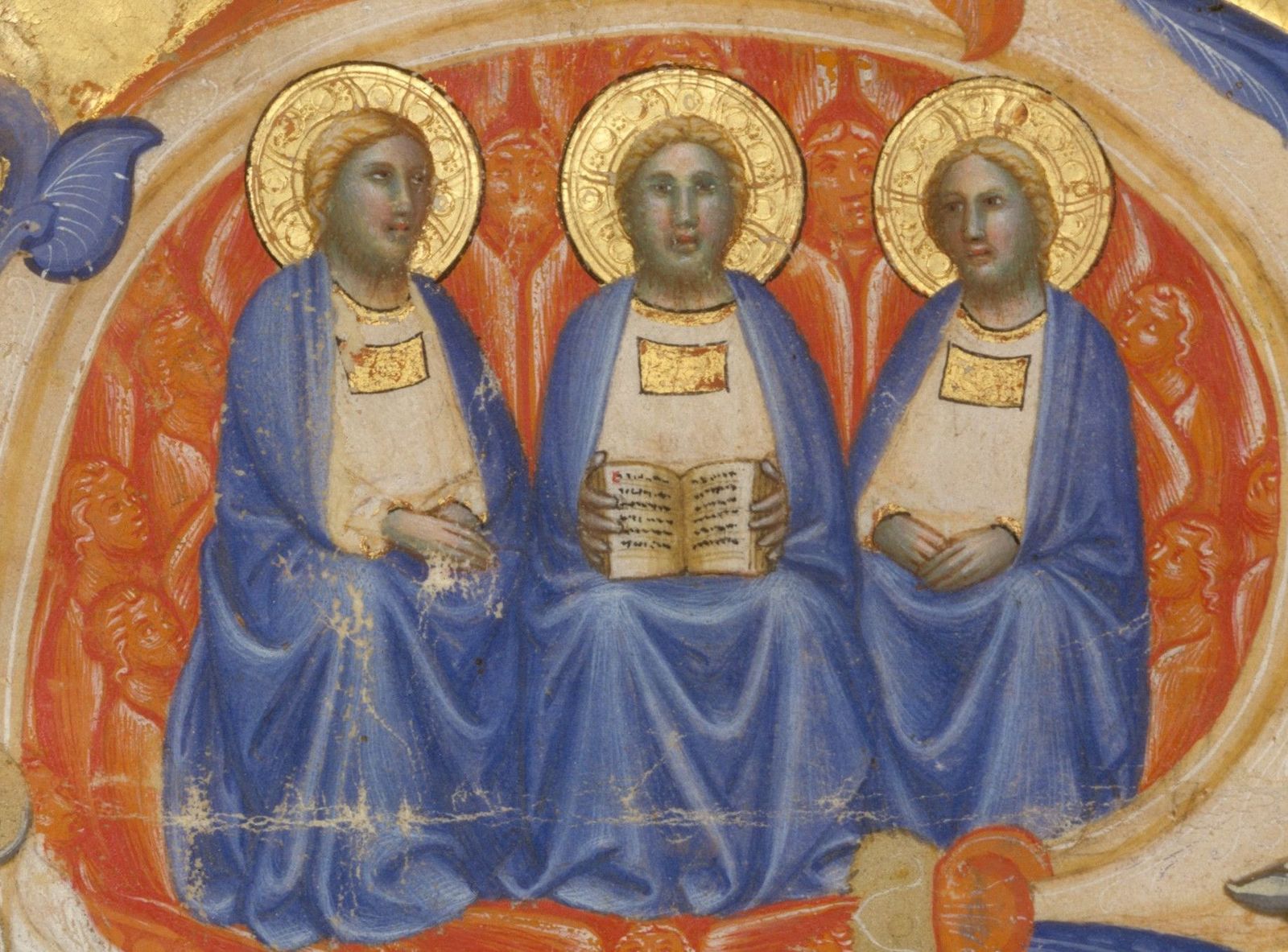
“The mystery of the Most Holy Trinity is the central mystery of the Christian faith and life. It is the mystery of God in himself. It is therefore the source of all the other mysteries of faith, the light that enlightens them.” (Catechism of the Catholic Church 234). Over the last hundred years, Christian theologians of all confessions have insisted upon this point and undertaken what some call a renewal or retrieval of Trinitarian theology. At the same time, as St. Augustine warns at the beginning of his great work on the Trinity, “There is no subject where a mistake is more dangerous, or the search more laborious, or discovery more advantageous than the unity of the Trinity: of the Father, the Son and the Holy Spirit.” If we take St. Augustine’s warning seriously, perhaps it we should listen first, not to modern theologians, but to the Fathers and Doctors of the Church. This has been the tack of one of the main Catholic contributors to recent Trinitarian theology: the Dominican Fr. Gilles Emery. In this interview, he discusses his acclaimed studies on the Trinitarian theology of St. Thomas Aquinas.
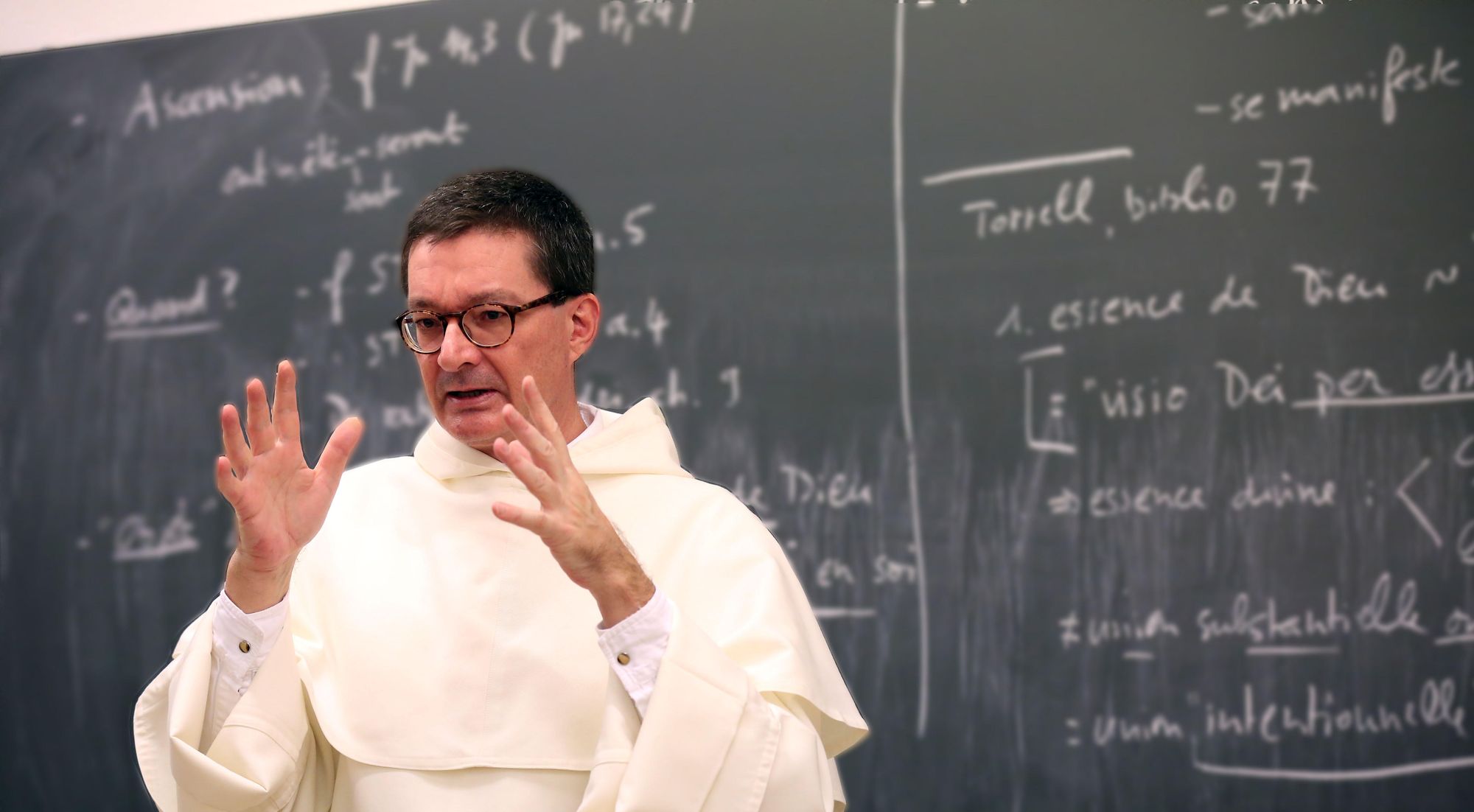
Fr. Gilles Emery, a member of the Order of Preachers, is professor emeritus of the University of Fribourg, Switzerland, where he taught dogmatic theology from 1995 to 2021. A member of the International Theological Commission from 2004-2014, he is chief editor of the journal "Nova et Vetera," and a member of the Pontifical Academy of Saint Thomas Aquinas. He has published several acclaimed books, in French and English, on the theology of Thomas Aquinas, Trinitarian theology, and the theology of creation.
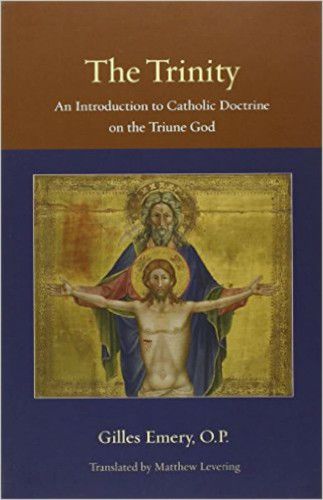
- The Trinity: An Introduction to Catholic Doctrine on the Triune God
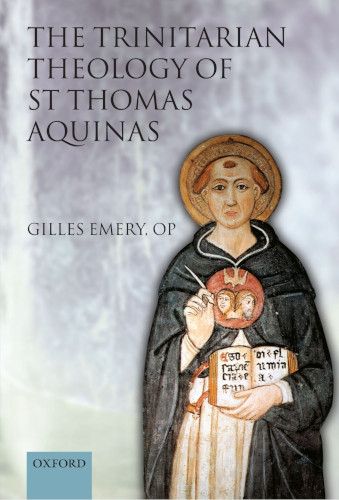
by Gilles Emery OP - The Trinitarian Theology of St. Thomas Aquinas
by Gilles Emery OP - The Oxford Handbook of the Trinity
edited by Gilles Emery OP and Matthew Levering - Trinity, Church, and the Human Person: Thomistic Essays
by Gilles Emery OP - Trinity in Aquinas
by Gilles Emery OP
From your PhD dissertation on, your research has focussed on the Trinitarian theology of St. Thomas? What prompted you to focus on the Trinity, and why have you chosen St. Thomas as your guide?
Since my early years, when I was 17 or 18, I have always been interested, if not fascinated, by the two central mysteries of the Christian faith: the Trinity and the Incarnation. So, when I began studying theology, I had a special interest in dogmatic theology.
My first love was not for St. Thomas, I must confess. I was more interested in Barth and in twentieth-century German theology in general. Little by little, under the influence of Fr Jean-Pierre Torrell, I moved over to Aquinas. I discovered that, in Aquinas, I could find answers to the questions raised by modern theologians. Moreover, I found that his answers were better than the theories elaborated during the past century or that, in dialogue with contemporary and modern theologians, Aquinas offered a great path for a deeper understanding of theology in general and the central mysteries of the Christian faith: the Trinity and the Incarnation.
After I was ordained a priest and did some ministry in Geneva, Switzerland, I came back to Fribourg for a PhD. I decided to study the relationship between the Trinity and creation in Aquinas. This was the natural continuation of what I had done before. To tell the truth, I have been working at my PhD since then. It was completed by 1994 but it will never end. For me, it is still unfinished and I still find new things every time that I study Aquinas.
The Trinity is the source, centre, and end of our life. The Trinity as the God that created us, loves us, and brings us to beatitude, is worthy of meditation, prayer, and study. As long as my superiors give me some time to do that, I would like to go on studying it.
Aquinas’s theology is still in living contact with the theology or doctrine of the Church Fathers. In a sense, he is still one of them.
Over the last hundred years, major theologians of all confessions have championed a retrieval and renewal of Trinitarian theology. In the Catholic tradition, Karl Rahner and Hans Urs von Balthasar are often considered the main contributors to contemporary Trinitarian theology. Why did you find St Thomas more convincing than them?
You mentioned Rahner and Balthasar. I would add Karl Barth. He had much influence in rediscovering the Trinity. On the one hand, Karl Rahner wrote his works, knowing what Barth had done before him. On the other hand, Balthasar developed Barth’s thought. Both are indebted to him.
What did I find in Aquinas? First, Aquinas’s thought about the mystery of the Trinity is in direct continuation with the Church Fathers. This is not so visible in my publications, but in in the courses I give at the theological faculty in Fribourg, I always begin with a semester-long exploration of the Trinity in the Bible and the Church Fathers. Aquinas’s theology is still in living contact with the theology or doctrine of the Church Fathers. In a sense, he is still one of them. He thinks with them. He relies on them: not just Augustine, but many others too. He has the huge advantage of being consistent with the patristic reading of the Bible. The retrieval of the patristic reading of the Bible could find in Aquinas a helpful bridge. He retrieved it. With his help, we can too.
Second, Aquinas is especially good at making connections between the mysteries of the faith: between the Trinity, Christ, the sending of the Holy Spirit, the apostolic Church, preaching, sacraments, moral life, and so on. He helps us see the coherence and consistency of theology, always in the light of the Trinity, and without contradiction. His contribution in this regard is unique. If it is not unique, it is of the highest value, at least. I did not really find this in contemporary writings. As every theologian knows, Rahner reproached the Augustinian and Thomistic traditions for having brought the Trinity into splendid isolation. This may be true of some of the textbooks written in the late nineteenth or early twentieth century. It is not true of Aquinas.
Third, there is the rational consistency of Aquinas’s thought. The requirements for doing theology are very high for him. He never sets out to prove the Trinity. He is very clear and explicit about that. On the one hand, he wants to show how the Trinity illuminates the entire Christian faith and life. On the other hand, he wants to show that faith in the Trinity is not contrary to reason but both plausible to natural reason yet above natural reason. The mystery of the Trinity is coherent, consistent, and plausible within the light of human reason. On this basis, we can appreciate how the Christian faith is intelligible. It is not superstition, but has rational grounds. If there are objections to faith in the Trinity, we, as theologians or Christians, can show that these objections are either wrong or do not have the force of necessary arguments. This makes us free to believe, not just with our affectivity and our emotions, but with our entire person: emotions, affectivity, and reason too. This is particularly important these days. There is a strong tendency toward fideism, especially among young students. We have to form a new generation, not to become rationalists, but to attain a detailed and fully developed understanding of Christian doctrine. Such an understanding has foundations and grounds in rational thinking, even if it depends entirely on Revelation.
When we make the sign of the cross, we begin by referring to the one divine essence and then invoke each of the three divine persons in the order in which they stand to one another. First we say, “In the name of...," and then, "....the Father, the Son and the Holy Spirit.” Similarly, St. Augustine and St Thomas, the two main influences on. Catholic theology begin by examining the mystery of the divine essence, and then the Trinity of persons. However, within modern theology it is common to charge them with essentialism. According to this charge, discourse on the Trinity should not begin, as they do, with the divine essence, but with the three divine persons. Some critics, as you mentioned, even blame the purported essentialism of Augustine and Thomas for making the doctrine of the Trinity irrelevant in practice. You have addressed criticisms such as these in your writings. Briefly, could you explain why the order in which St Thomas explains the Trinity is appropriate?
Your question has a long history. It began at least with Théodore de Regnon SJ in the late nineteenth century. Then, it was taken up by Orthodox theologians and ended up in Protestant and Catholic theology.
It is not fair to Augustine. If one looks closely at Augustine’s De Trinitate, his intention is not to show that the one God is three persons, but that the three persons are one God. So, he does not begin with the essence. In my reading of Augustine, this is simply wrong and reads him through the lens of modern accounts of the Trinitity. Both Augustine and Aquinas have been read through the lens of modern German philosophy: the philosophy of absolute spirit or absolute mind, which is very monistic. Using the powerful lens of German thought led to a big misunderstanding and has influenced us all.
In Aquinas, there is not one way to set out the mystery of the Trinity, but several. Each time he writes on the Trinity, he adopts a different plan, outline, or structure. Let us stick to the Summa theologiae. In the eyes of his critics, that is where the problem lies.
For Aquinas, the divine persons are at the centre. When he speaks of God, he speaks of the three divine persons. The persons are the essence because God is one. So, to grasp the Father, the Son, and the Holy Spirit as divine persons, we need to grasp them as divine, which includes the essence. In the Summa theologiae, the essence is treated first and then integrated into our understanding of the person. This way of thought goes back to the Cappadocian Fathers. First, as St. Basil of Caesarea clearly explained, there are two aspects in our understanding of the Trinity: not in the Trinity itself, which is simple, but in our grasp or access to the Trinity, which is not. To exclude or refute the heresy of Eunomius of Czyicus, Basil had to distinguish between what is common to the three persons and what is proper to each person. Being the Father, Son, and Holy Spirit is proper to each of them. Being God, being infinite, is common to the three: it is the essence. So, we think of each divine person by what St Basil called the combination of these two aspects: the common and the proper. Aquinas builds on that by explaining that, in our understanding, what is common comes first. To understand that the Father or the Son is a divine person, first we have to grasp them as divine. It is the divine essence, common to all three persons, that accounts for the divinity of each. The method of Aquinas makes sense because he first expounds what is common to all three divine persons—the divine essence—and then he specifies what is proper to each. This may not be the way we come to knowledge of the divine persons through the liturgy or our own experience. However, it is the way that the theological exposition has to follow, to be consistent with the patristic sources: an exposition in which each steps prepares the step that follows. So, for me, the charge of essentialism in Aquinas is pointless.
I would also add that this allows the theologian to make a differentiated use of philosophy within theology. In the study of the divine essence, theology can make use of metaphysics with necessary arguments. God is one; God is good; God is wise. Of course, for this we have the Bible. However, the teaching of the Bible can be supported by rational arguments that have force of necessity for a human mind that is thinking aright. In the case of the distinction of the persons and what is proper to each of them, there are no such necessary arguments. The method of using philosophical arguments is different. Aquinas accounts for both in the Summa. He accounts for how the three persons are divine and are at the centre. He accounts for the proper, differentiated use of philosophy within the study of the mystery of the Trinity.
Our first access to the Trinity is through the liturgy.
1.
Several of your books have been translated into English. Perhaps the most accessible one for non-specialists is The Trinity: An Introduction to the Catholic Doctrine on the Triune God. What do you take to be most distinctive of your introduction on the Trinity. What sets it apart from other textbooks on the subject?
Well, I begin with a chapter on liturgy and the Bible. I begin with the liturgy because it comes first for most Christians, if not all. Our first access to the Trinity is through the liturgy. I would give priority to it in the order of discovery, and not just there. The liturgy is the beginning and the end of our Christian lives. It is the natural place to discover, celebrate, and live with the Trinity. So, I begin with liturgy, especially through the doxologies.
Then, I move on to the Bible: the Old and New Testament. If I had to rewrite this book, I would develop the section on the New Testament. There is much more to say, but this book had to be short. It is a textbook. The genre requires short chapters.
Then, I look at the Church Fathers, the development of the doctrine of the Trinity during the first centuries, up until Constantinople I and Gregory of Nyssa in the east and Augustine in the west. Then there is a speculative part. It deals with St Thomas and contemporary questions.
This is close to what I taught in my courses for students during the first years of the first cycle theology degree.
Is this book very different from other introductions? This book sold much better than other books of mine because the audience is broader. It is not just meant for specialists, but for a much larger audience, and it has been translated into several languages.
The difference is that I give more weight to the foundations of Trinitarian theology, namely liturgy and the Church Fathers. I do not begin with contemporary problems: the question of the immanent and economic Trinity, or whether the mystery of the Trinity is revealed only in the Cross of Jesus Christ, and so on. No, I begin with the basic foundations: liturgy, Bible, Church Fathers. Perhaps, I should have developed a section on contemporary discussions of Trinitarian theology at the end. However, this book is meant to be short and to give an introduction. So, I had to make choices and limit myself to what I thought was a priority: liturgy, Bible, and tradition. Nevertheless, I wrote the chapters on liturgy, Bible, tradition, and Aquinas with contemporary questions in the background. Every line I wrote tried to answer contemporary questions, even when I did not mention them explicitly.
2.
Second is your monograph The Trinitarian Theology of St. Thomas Aquinas. At the beginning, you specify that it is not a running commentary, article by article, on the first forty-three questions of the Summa theologiae, but an introduction to them that may help us read them. What advice would you give to someone who sets about reading this part of the Summa theologiae?
I wrote this book after some years of teaching theology and the treatise on the Trinity. Here in Fribourg—at least when I was teaching—there were four major treatises: the Triune God, Christ, Church, and the sacraments. Everything began with the Triune God. It was the main course in the first cycle and second cycle. However, I realised that it was very difficult for the students to have direct access to Aquinas. When I taught, my goal was to have the students access the sources directly. I had them read Tertullian,Basil of Caesarea’s Treatise on the Holy Spirit, Athanasius, Augustine, or Irenaeus of Lyons directly: in the original Greek or Latin, if possible, or in translation. We have good translations in French with Sources chrétiennes. My goal has always been to send the students directly to the sources themselves and not to textbooks. Ironically, I have written textbooks during my professional career. However, I think that students and even theologians should read the sources directly, not through ftextbooks or secondary literature.
My intention was to enable the students to read Aquinas for themselves, and to read Augustine, Irenaeus, Athanasius, Gregory of Alexandria, Cyril of Alexandria, and others as well. But I realised that it was difficult for them. I taught in French and in French there is a very good commentary by Fr Hyacinthe Dondaine in the Revue des jeunes edition of the Summa. He taught at Le Saulchoir and then he was a member of the Leonine Commission. His notes and commentaries are excellent. There is nothing to add to them. His commentary is perfect. But it is very complex. It goes article by article, question by question, and the tudents could not see the big picture. They got lost in the details and could not see the difference between what really matters—what is of first importance—and what are secondary explanations. The latter are important and do matter, but they have to be ordered to the central questions. What they needed was a map with some explanations to go through Aquinas’s questions on the Trinity in the Summa. There were good commentaries in French, but no real map that explained, “Why does Aquinas ask this question? Where does it come from? Why is it treated there and not there? What is the question behind Aquinas’s question? What is the structure? Why does it matter for Christian life?” Aquinas answered these questions, but in the rest of the Summa theologiae. You cannot expect a student to read the entire work. They have too much work to do.
I come back to the question of the students. Why, for instance, does this question on Christ as image or the divine missions, matter for us, for Christian life, for preaching, for understanding our faith, and for living it? I tried to explain why Aquinas asks these questions and why he put them in this order. I tried to explain the relevance of his teaching on the Trinity, first for understanding the Christian mystery and for Christian life itself. This was my objective. It was only later that I learned that it is called ressourcement Thomism. What I wanted to do is to meet the expectations of of students who wanted to learn more about the Trinity with Aquinas, but who find Aquinas too difficult or dry. Aquinas is not dry, but he goes to the point. Reading Aquinas presupposes a life of prayer, community life in the Church, the reading of the Bible, and so on. The Summa is like the skeleton that helps us read the Bible, preach, and so on. Sometimes, you have to put some flesh into the reading of the Summa and Aquinas’s biblical commentaries offer this flesh.
As you know, St Thomas usually taught scripture in the morning. His main courses were not the Summa but his biblical lectures. We have, for instance, his commentaries on St Paul, St Matthew, and St. John. The Summa and what we call his systematic works are intended to help students and teachers read, understand, and teach the Bible. They are a tool for theological exegesis of the Bible. My intention was to help students read the Bible with Aquinas. I did what I could in this book, but there is much to be done. Since then, I have been working much more on the biblical commentaries of Aquinas. Today, I realise better than before how important these commentaries are for Aquinas’s theology, even for his treatise on Trinitarian theology. His biblical commentaries help us understand the Summa and the Summa helps us understand his biblical commentaries. Of course, without the Summa, it is difficult to read his biblical commentaries with the utmost profit. He does not go into all explanations every time. To do theology, it is very helpful to have the Summa in one hand, and his biblical commentaries in the other. That is what I do now.
3.
With Matthew Levering you have co-edited two collaborative volumes: The Oxford Handbook of the Trinity and Aristotle in Aquinas’s Theology. The first brings together over forty specialists and presents a synopsis of current scholarship. Besides writing the introduction, you and Prof. Levering close the volume with a chapter on the prospects for Trinitarian theology. What, in your view, is the main task or challenge for Trintiarian theology today?
The main task is pretty much what I said before about teaching theology. The main task of Trinitarian theology is to show why and how the Trinity is really at the centre of Christian life and faith and that it does matter for everything that has to do with the Christian faith and life, every aspect of our Christian life. This is the first mission of Trinitarian theology.
The second goal is to give an account of the monotheistic nature of Trinitarian faith, especially today with of the Muslim faith in Europe. I am a European. I write about where I live and where I live, it is very important to show that our Christian faith is monotheistic. This has to be done with the Church Fathers, with help of philosophy. It really matters.
Pope Leo XIII said beautifully that the Trinity is the substance of the New Testament
A third challenge is to show that the Trinity is not a chapter of theology. It is not just a discipline among so many others in dogmatic theology or in theology tout court. The Trinity has to be at the centre. Aquinas goes on repeating that the Christian faith consists chiefly in believing in the Trinity and in the Cross of Christ, which presupposed of course his Incarnation, Resurrection, and exaltation. Before teaching Catholic ethics, which is important, it is crucial to explain why ethics matters. It matters because our vacation by grace is to have access to the vision of the Holy Trinity through Christ. So, preaching Christ and the Trinity are the prerequisite and the foundation. It is on this that the Church will be able to develop its teaching and preaching about ethics: not just about sexual ethics, but also social ethics, and so on. We have to rediscover the unity of the Christian faith and the Gospel. The unity of the gospel is found in Trinitarian faith itself. In my introductory book on the Trinity, I quote Pope Leo XIII who said beautifully that the Trinity is the substance of the New Testament. This has to be taken seriously. To live with Jesus and in Jesus, and to live what the Christian faith proposes, first we have to contemplate the substance of the New Testament, its very centre, which is the foundation of everything.
4.
5.
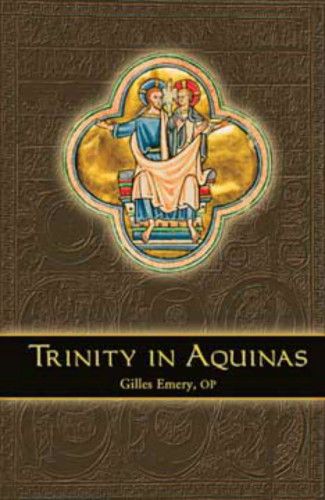
Two collections of your articles have been published in English: Trinity, Church, and the Human Person: Thomistic Essays and Trinity in Aquinas. In these volumes you draw on St. Thomas to address many of the current disputed questions within Trinitarian theology. Is there any essay or issue that you would single out?
Perhaps two. I was very interested in Aquinas’s teaching on the Trinity in the Summa contra Gentiles. It is a completely different treatment. For instance, it does not start with the divine essence but is centred on the processions. This is because, for Aquinas, the structure of a work depends upon its aim. Here we can see Aquinas at work with the Church Fathers, with ancient heresies, with the teaching of the councils. In the Summa contra Gentiles it is very clear where the speculative moment takes place. First, we have Scripture as the central witness of the faith. Then, we have the discussion of Scripture between heterodox currents and the Church Fathers, then the answer of the Church in Nicaea and Constantinople I. Then, speculative theology intervenes, in a later phase, to answer the questions about faith in the Trinity raised by the heresies or human reason. This essay on the Trinity in the Summa contra Gentiles helped me, and may help others, to understand the articulation between Scripture, Church Fathers, and speculative theology in dealing with the Trinity: to understand where the speculative moment takes place and why.
The other essay is the one on essentialism and personalism. I was very upset by a few articles that were still reproachng Aquinas for being an essentialist. This is simply not fair and it misses the point.
I owe much to Matthew Levering and to his friendship. It is because of him that I began writing in English. The first collection of essays was translated by several people. He translated The Trinity: An Introduction to Catholic Doctrine, and then I retranslated it. This is very difficult for French-speakers. English-speakers do not realise how complex English syntax is. The vocabulary is not the problem. It can be learned, but the syntax is extremely difficult. So, when I had the correct syntax done by Matthew Levering, I could refine the translation.
Matthew encouraged me to write in English. I am currently writing an article for him. I will have the next collection of essays published in English within two years. I am working on it with confréres. I am a French-speaker but the diffusion of books in English is better than that of books in French. This is a pity, but English is important if you want your little works to be read. However, writing an article in English takes me three times longer than writing the same article in French. Matthew Levering is the one who encouraged me on this path and I owe much to him.