
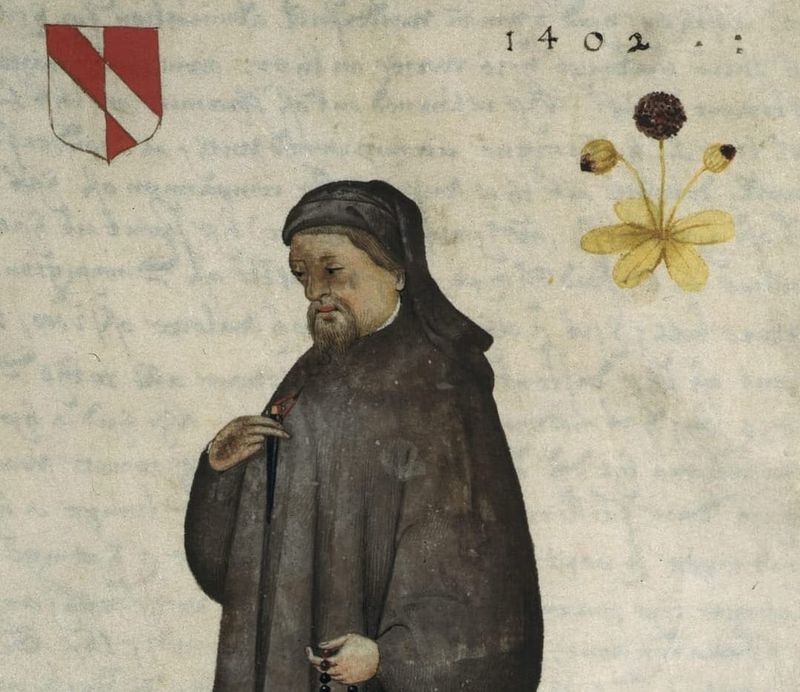
Geoffrey Chaucer (c. 1340s–1400) is the considered “the father of English poetry.” The son of a wine merchant, he served as a page, courtier, diplomat, and civil servant. In 1360, he was captured during the Reims campaign of the Hundred Years War but soon released when Edward III paid his ransom. His contemporary, the poet Thomas Hoccleve, hailed his as "the firste fyndere of our fair langage." Similarly, the poet monk, John Lydgate, who completed some of the unfinished Canterbury Tales, called him the “lodesterre…off our language.” He was the first writer to be interred at Poets’ Corner in Westminster Abbey. He translated Boethius’s Consolation of Philosophy and the Romance of the Rose, and wrote a treatise on astronomy. However, his towering achievement was as a poet and the author of the Parlement of Foules, The Legend of Good Women, Troilus and Criseyde, and The Canterbury Tales.
In this interview, Megan E. Murton discusses Chaucer and his works.
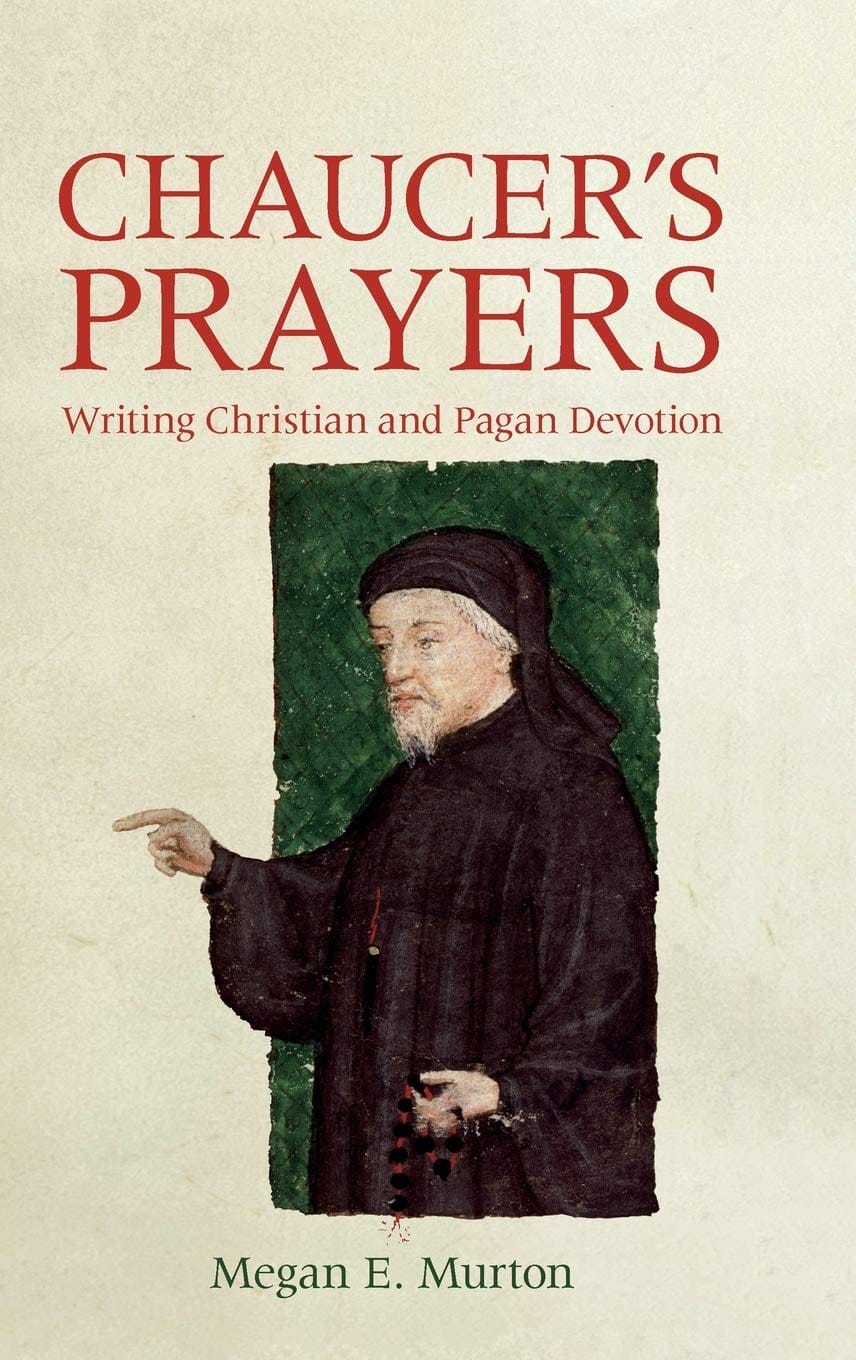
Megan E. Murton has been an Assistant Professor of English at The Catholic University of America since 2015. She is a medievalist and specializes in the works of Geoffrey Chaucer, with a particular interest in his religious writings and his response to Classical literature and philosophy. She is the author of Chaucer's Prayers: Writing Christian and Pagan Devotion and is currently working on a book that re-evaluates the profound influence of Boethius's Consolation of Philosophy on Chaucer.

- Troilus and Criseyde
by St. Gregory Nazianzus - The Canterbury Tales
by Geoffrey Chaucer - Oxford Guides to Chaucer: The Canterbury Tales
by Helen Cooper - Feminizing Chaucer
by Jill Mann - Consolation of Philosophy
by Boethius
Which events in Chaucer’s life are important to understanding his writings?
The most important events are really his reading of certain books. Others take a more strongly biographical approach to Chaucer, but what I love so much about his writings is the richness of his imaginative life and his complex response to the literary heritage that he was exposed to.
I would say that the most decisive book for Chaucer was Boethius's Consolation of Philosophy. More than any other single book that he read, it helps us unlock a lot of his interests and preoccupations. He seems to first read it sometime in the 1370s. This was an important moment for him creatively and intellectually.
Also important was his reading of Dante, probably in the 1370s, when he was in Italy on the king's business. At the time, he was one of the very few English-speakers who had read Dante. As the son of a London wine-merchant, he had probably gained some proficiency in Italian during his childhood. Dante had an enormous creative impact on him as well.
There were other books that were important to him. He read French poetry continuously, and all these influences trickle into his works. These encounters with other writers, especially with other poets, are the most important events from his life when it comes to appreciating his poetry.
"He takes an existing story in a radically new direction while at the same time following the source pretty closely."
You mentioned the importance of his reading of Dante. He was influenced by the rise of literature in the vernacular, and especially by the Italian models, such as Boccaccio. Wherein lies his originality, when compared to them?
Great question. I always get into this with my students when teaching Chaucer because they are used to the post-Romantic idea of originality, where the author is supposed to dream everything up. That is not the medieval notion of originality. Back then, whatever a single person might come up with in their head would have been regarded as idiosyncratic and uninteresting. What people were looking for in poets was a creative response to what was already out there: an intervention that engaged a tradition profoundly, thoughtfully, put a new spin on it or took a new angle on something familiar.
Take Chaucer’s relationship with Boccaccio, for instance. Boccaccio wrote Il Filostrato, a love story that forms the basis for Troilus and Criseyde. Chaucer took that work, fully absorbed it, and in his Troilus and Criseyde replicated many specific plot events and even some lines of dialogue. It is a very close rendition of the Boccaccio. At the same time, it is a complete transformation of it. Chaucer makes seemingly small changes that have profound knock-on effects.
For instance, in Boccaccio's version, Troilus (or Troiolo in Italian) has loved other women before and this is just his latest fling. In the English version, Troilus has never loved anyone. This is his first love and he brings an innocence and freshness to the relationship. This is a small change in one sense, but it also changes everything.
That is one example of how Chaucer can be original. He takes an existing story in a radically new direction while at the same time following the source pretty closely. In Troius and Criseyde specifically, his originality lies in taking Il Filostrato and making it both more courtly—more invested in the courtly love tradition and its ideals—and a lot more philosophical.
He infuses a lot of Boethius into his rendition of the poem. He makes Troilus something of a philosopher-lover, as opposed to the straightforward and even slightly cynical approach to love that the character has in in Boccaccio. He weaves together multiple sources and puts a new spin on an existing story. That is what Chaucer's originality looks like.
I have mentioned just one example, but the same pattern occurs over and over again in his works. Chaucer does not change the basics of the plot, but makes other changes around it that give the story a completely different significance.
That's what we call a remake today in cinema.
Exactly, it is like a remake.
"What Chaucer does even more effectively than the other English poets of his day is to draw into the English language the spheres that were typically covered by French and Latin."
We have compared Chaucer to European poets who were beginning to write in the vernacular. How does he differ from other English poets of the period, such as William Langland or the Pearl Poet?
The fact that Chaucer writes in English is an important part of what he is doing.
I always start by telling students that England was a trilingual culture at the time. There was English, the lowbrow language. It was the one people would use to order their ale in the pub. There was French, the highbrow courtly language. It was the language of sophisticated culture. Chaucer moved in those circles, even though he was not an aristocrat. Third, there was Latin, the language of the Church and the university. It was the language of erudition, intellectual ambition, complex philosophical and theological concepts. All three of these languages are in play in Chaucer.
However, what Chaucer does even more effectively than the other English poets of his day is to draw into the English language the spheres that were typically covered by French and Latin.
He creates a courtly register in English and shows that this common, lowbrow language can do the same sorts of things as courtly French literature. It can talk about refined sentiments and feelings. It can delve deep into the psychology of love. Chaucer showed that it could do all this in Troilus and Criseyde.
He also showed that it can take over the discursive domain of Latin. It can deal with complicated ideas. In his day, people did not look to English to do that kind of thinking.
He goes beyond his contemporaries and conquers the territory of the other two languages for English.
That is not to diminish Langland’s achievements. He was not very interested in the courtly sphere, but he was definitely interested in the Church and in reimagining what it can be and do. He is more of a blend of English and Latin.
The author of Gawain, the Pearl Poet, is the one from the period who gives Chaucer a run for his money in combining all three languages. However, he is less exciting than Chaucer because he is less in touch with the continental tradition. He did not leave England and led a more isolated kind of life. He was never able to pull on the main currents of poetic creativity in Europe as Chaucer did.
So, I do believe that Chaucer stands out. This is an old-fashioned position. Nowadays, it is not the thing to claim that Chaucer is unique and special. It is possible to push that claim too far and make it sound as if he single-handedly invented English literature. That is definitely not what I am saying. However, there is something special about how he enfolds many different areas of expression, thought, and poetic creativity into the English language, which people at a time did not consider up to the task.
"Shakespeare and Chaucer are also similar in their attention to the psychology of their characters. "
Some of Chaucer’s near contemporaries share this assessment of him. The poet Thomas Hoccleve called his as "the firste fyndere of our fair langage"; John Lydgate, called him the “lodesterre…off our language.”
However, from what I recall from studying Chaucer at school, he is comparable to Shakespeare for his capacity to write vivid characters and explore psychology. He is up there with the greatest authors for his deep probing of human psychology and rich range of characters, whose moral ambiguity he insinuates. Like Shakespeare, he is a great dramatist.
I love the comparison with Shakespeare. That is exactly right.
Shakespeare gets a lot of credit for enlarging the English language and its expressive, intellectual range. However, Chaucer probably deserves more credit, if only for the number of words that he imported into it.
Shakespeare and Chaucer are also similar in their attention to the psychology of their characters. However, they write in different modes. Chaucer never writes drama, whereas Shakespeare, apart from a few examples from his early career, almost never writes narrative. Though they do not write in the same genres, they achieve similar levels of complexity in their portrayal of human interaction and motivation.
What led you to specialise in Chaucer?
As is so often the case, it was a class I took.
During my freshman year in college, I took a medieval literature class to fulfil my general education requirements and just loved it.
We did not read a word of Chaucer, but that class introduced me to the courtly tradition in French and I ended up becoming a French major and taking more medieval courses in the French department.
In my junior year, I thought I should branch out and try Chaucer. There was a graduate level class in Chaucer that I was allowed to take. It carried me away.
My background in French was helpful because Chaucer in steeped in French traditions. As a result, a lot of things in his writings were easy for me to understand and take on board. It was exciting to bring all the things that interested me about medieval literature and see them play out in my own language. It was also especially exciting to see my own language kind of growing and changing in Chaucer's hands.
In addition to being a French major, I was a linguistics major. My interest in language is part of what drew me to Chaucer in the first place.
From that class onwards, Chaucer was where I wanted to be. So, I switched to English for my graduate training.
Now, I get to teach Chaucer almost every semester, which is wonderful.
"Whenever we encounter a prayer in one of Chaucer's poems, we should approach it as a script for us to perform rather than just some words on the page for us to read."
You have explored Chaucer’s credentials as a Christian writer in Chaucer’s Prayers: Writing Christian and Pagan Devotion. What is the main argument of your book?
The main argument is that whenever we encounter a prayer in one of Chaucer's poems, we should approach it as a script for us to perform rather than just some words on the page for us to read.
In Chaucer's culture, prayer was very much a scripted and written activity. The idea of praying extemporaneously and self-expressively was unknown in his world.
It follows, therefore, that the written prayers in his works are not just text in the ordinary sense of the term. They are something you are supposed to perform, in a way that does not imply being fake. You are supposed to inhabit it and make it your own as you recite it.
Moreover, poetry was always read aloud in Chaucer's world. It was still idiosyncratic to read silently in one’s head, without making any noise. People were used to vocalizing when they read. Once we combine the cultural practice of scripted prayer with that of reading out loud, we can easily see that whoever read a poem out loud, whether alone or in a group, and came upon a prayer, would make that a powerful and distinctive moment in the reading. The reader would perform and inhabit that prayer.
We need to think seriously about what that looks like across Chaucer's corpus.
There are some places where the prayers are Christian. Given the Christian identity of Chaucer's immediate audience, those prayers were readily available for them to inhabit and use for their own personal devotion. It is very likely that this is what they did when reading Chaucer. This is not something modern readers have really considered.
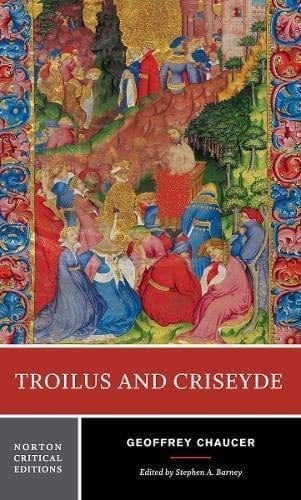
Then there are many prayers, in works such as Troilus and Criseyde, that have a pagan setting and are directed to pagan deities. It is very interesting to consider the imaginative demands that those must have placed on the audience. I am not suggesting that Chaucer wanted people to pray to Mars or to Venus. Rather, he was asking people to imagine their way into pagan religious practice and to see what it felt like to pray in that way. His pagan prayers do set up a certain relationship to the pagan deity that is different in interesting ways from the kind of relationship we see in his Christian prayers. He is interested in exploring the differences in these religions and inviting his readers to imagine their way into it.
The prayers do different things, depending on whether they are Christian or pagan. The common thread is that, within a poem, a prayer is a space that you step into. It is not just a set of words like any other. I am interested in what Chaucer does with that invitation.
"Troilus worships a God called love; Christians also call God love."
1.
You have recommended two of Chaucer’s works: Troilus and Criseyde and The Canterbury Tales. Which edition of Chaucer’s works do you recommend?
The Norton Chaucer. This is a new edition of the complete works. It contains other works that I did not consider important enough to include in the top five. However, interested readers will be glad to find them there.
This edition is much slimmer and more portable than the older edition of his complete works, The Riverside Chaucer. The latter is very scholarly. Almost half of it is taken up with explanatory and textual notes, so it has a lot more than most people need. The Norton Chaucer, on the other hand, has what the reader needs: very good glosses and explanations of the Middle English.
With a decent edition, any modern English-speaker with a bit of patience can figure out Middle English easily enough.
As you mentioned, some might find middle English too daunting and prefer to reader Chaucer in a modern English translation. Which translations do you recommend?
The one I like is available for free online: the Harvard Chaucer website. It has an interlinear translation. You can read the Middle English and the modern English translation alongside one another, line by line.
This is the best soft entry into reading Middle English. If you can go along with the interlinear version, you may eventually find that you can outgrow it.
So far, unfortunately, it only has the Canterbury Tales.
Some critics consider Troilus and Criseyde Chaucer’s finest poem. Do you agree?
I do. It is a masterful achievement, with so much going on at different levels.
There is the stanza form, Rime Royal, that Chaucer invented for this poem. It gives the work a beautiful structure—it is measured out into stanzas, much like tiny chapters— and very stately, glorious pace.
What I really love about the work is its searching exploration of what it means to love someone.
Troilus, the hero, is philosophically and theologically inclined. When he falls in love for the first time, he does not just think about how to achieve his desire, but also about what it means, and what love is ontologically.
The first question he asks is, “What am I feeling? What is this exactly?” He is interested in sounding the depths of this experience and does this in very powerful ways, that draw on Boethius's Consolation of Philosophy. As a result, he ends up linking his passionate love for Criseyde to the love that orders the cosmos. Though a pagan, he has a conception of a cosmic love that governs all things and is the source of the world’s harmony and order. This takes place in the first three books.
The last two books show this love falling apart, which makes things even more interesting. Chaucer knew that it had to end that way as he took the plot up from somebody else and could not change it. Changing it would be liking writing a Romeo and Juliet where the two do not die at the end. The story has to end in heartbreak, betrayal, and loss. Nevertheless, Chaucer chose to idealize Troilus’s love so much across the first three books and make it a source of philosophical meaning and theological insight for the character. This is a surprising creative choice for a book that must end with Troilus being abandoned and left to die alone and sad.
I think it makes for an interesting exploration of the tension between all that love can be and mean to us—a powerful and even transcendent experience—and the inevitability of human frailty, failure, loss, and mutability in this world.
He investigates the power, reach, and scope of love, but keeps that in tension with the real mutability, unreliability, and contingency of this world. The poem approaches love as a powerful exploration of these two things: everything we aspire to as human beings, but also all that prevents us from fully realizing what we can imagine.
He explores love not just romantically, but philosophically and theologically too.
Chaucer was a late medieval author who gives a Christian twist to a tale from pagan antiquity, much as Dante does with Virgil in the Divine Comedy. This is something we associate with the Renaissance. Why were late medieval authors looking to pagan myths and literature to deal with Christian themes?
This is such a complicated topic, especially if we talk about the Renaissance.
When exactly did the Renaissance begin? Italianists regard Dante and Boccaccio as Renaissance writers. They were older than Chaucer, who uses them as sources for his work.
It is hard to set clear boundaries for the Renaissance. It came earlier to some places that it did to others. However, if Chaucer did have some contact with the intellectual ferment of Italy, despite being in England and far away from it, then in a sense he is an anachronistically Renaissance writer. That is one way of thinking about it.
Nevertheless, Chaucer approaches pagan Antiquity differently from the way Dante and Boccaccio did. He is very interested in getting inside pagan religious experience in a way that other authors of the period are not. Unlike Chaucer, his sources do not explore what would it feel like to pray as a pagan. When he imagines pagan devotion and invites us into that experience, he is emphasizing its similarity with Christian devotion rather than its difference.
This is particularly with Troilus, less so in The Knight's Tale. The latter is another pagan story. However, in it Chaucer draws a sharper line between pagan and Christian prayer and identifies their differences. Pagan prayer is a negotiation, a wheedling, and a play for control. To me, those are the themes brought out by the prayers of the Knight's Tale. Troilus, on the other hand, stresses the similarities between the pagan religion of love and certain aspects of Christianity.
My chapter on Troilus in my book is entitled “From the God of Love to the Love of God”. That pretty much sums up what is going on in Troilus. Troilus worships a God called love; Christians also call God love. Chaucer is interested how big this overlap may be in that particular case, whereas other Renaissance writers who revisit the pagan past approaching it much more intellectually and less devotionally.
"Are we a community of pilgrims travelling towards God together or are we at each other's throats, competing against each other?"
2.
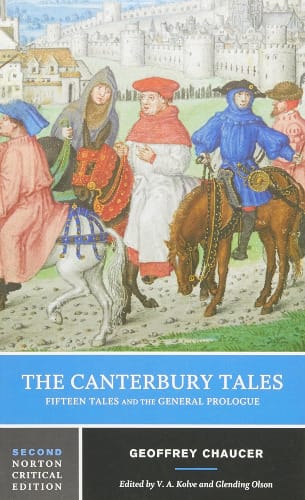
Due to the variety of its characters and tales, The Canterbury Tales is vast in scope and cannot be easily summarised. Let us focus, therefore, on just one aspect. In what sense is it a work of Catholic literature or about the state of the Church?
Catholic is perhaps a better word than Christian in this context. ‘Catholic’ means universal and The Canterbury Tales is catholic with a small C because it is a literary summa of sorts. Chaucer is trying to enfold in a single work every single genre that is available to him and making them all talk to one another.
Besides being catholic in a small C sense of ‘universal’, it is also Catholic in the Christian sense. It is framed as a pilgrimage.
One of the most interesting things about it is that it has two narrative frames. Not only is it framed as a joint pilgrimage of the characters to Canterbury, telling stories on the way, it is also framed as a storytelling competition. They are not just telling stories to entertain themselves. They are also competing to see who can tell the best one and win a prize at the end.
There is a redundancy here. It would have been enough to frame it in just one of these two ways. However, by using both, Chaucer gives it two narrative frames and gives us two different ways of looking at what is going on. If we keep the two frames in mind, especially during the brief passages where the pilgrims are interacting with one another in between each tale, we will notice that there is tension between them. Are we a community of pilgrims travelling towards God together or are we at each other's throats, competing against each other? Each impulse is present in the work.
Chaucer obviously wants reform in the Church. He criticises some of the clerics for away. But sometimes he presents virtuous figures, holy figures he has a very balanced view of the church he's trying to provoke reform to the country details, I think.
Like so many during the Middle Ages, he is really bothered by corruption in the Church. This was a constant theme and goes back centuries before Chaucer and runs right through the Reformation. However, Chaucer is not after reform in the sense of Reformation and is not a proto-Protestant. Everyone was mad about corruption. Langland too was very upset about all this. I do not know whether Chaucer expects concrete results to come from his critique of various Church officials, but he was participating in a long tradition of holding the Church to its own standards and pointing out when it was falling woefully short of them. He reinforces that high expectation of clerics with idealized figures such as the Parson, who really is leading the life of a priest and living up to the high standards of that vocation.
Is there a general structure to the work and the sequence of the tales?
The Tales, as we have it, exists in ten fragments. Each fragment is a set of tales or sometimes just a single tale. Fragment One is the longest, with the general prologue, four tales, and passages in between to link them.
Putting the ten fragments together is a tricky but not impossible problem for editors. We have a pretty good idea as to the order and there are only a few open questions about whether this should go here or there. The editors have stitched the fragments together into a reasonably coherent order. The problems with editing The Canterbury Tales are nothing like those of editing Langland, which is a total nightmare.
However, we do need to remember that The Canterbury Tales never reached its final shape. There are not as many tales as there should be. The Canterbury Tales is finished but not complete. It is finished because it has an ending, which Chaucer definitely wrote.
Fragments Nine and Ten are two of the most reliable pieces. They always go together in the manuscripts, and are only considered separate fragments because there is no transition passage between them. So, that final sequence is definitely in place. The work also has a very polished beginning. It is only bits in the middle that are missing. This makes it a very interesting work. We can see where Chaucer was still figuring out how to place certain tales in relationship to each other.
Do you have a favourite among the Canterbury Tales?
Definitely. I try to conceal this when I teach it, but I love The Franklin's Tale. It is a beautiful tale. Like Troilus and Criseyde, The Knight's Tale, it is a romance. Like them, it is very idealistic about human behavior, without losing contact with reality.
The Franklin's Tale views mutual generosity as the thing that solves the world’s problems. There is an apparently intractable problem, but everything works out well beautifully because every character chooses to be kind and generous and to renounce what is owed to them. As a result, everyone ends up free of their constraints and happy. That is the idealistic part of the story.
However, the tale also takes seriously the cost of this outcome. There is a beautiful passage on patience at the beginning of the tale. It emphasises that generosity toward another person requires a lot of patience and even suffering. Ultimately, that is the only way that people can get along. This is a very realistic but also an inspiring message.
The story also has a gripping plot. How are the characters ever going to get themselves out of the mess they have gotten themselves into? The tale makes its abstract ideals about patience and self -giving concrete with a compelling story.
3.
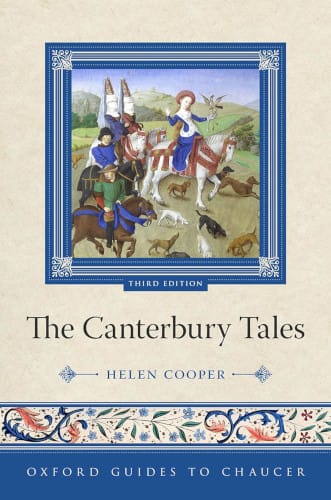
Not only is The Canterbury Tales vast in scope, but the literature on The Canterbury Tales is vast. What makes Helen Cooper’s monograph a good guide?
Helen Cooper's Oxford Guide to Chaucer is a fantastic book. The new edition has just come out and brings up to date her previous guide to The Canterbury Tales, which was published in the 90s.
What I love about Cooper's book—and I should admit I was her doctoral student—is that she walks the modern reader through The Canterbury Tales and each of the different genres that it contains.
One of the things that makes The Canterbury Tales weird is that it is a collection of very different stories. There were plenty of story-collections in the Middle Ages, but Chaucer wrote one in which each tale is a different genre. That was bizarre for the time. It was very common to have a collection of fables or lives of the saints. Those were collections of the same type of story. Writing a collection with every type of story under the sun was a very interesting and original move.
Cooper helps us appreciate the variety of The Canterbury Tales by explaining to the reader: what type of story each one is; what we expect should from that type of story in comparison to what we get in Chaucer's rendition of it; how it talks to the other stories. Cooper breaks all this down in a clear, accessible, thoughtful, and insightful way.
It is not a guidebook that just gives you a few facts. It pursues a certain interpretation of the work. According to Cooper's interpretation, this variety of genres is the whole point of the work. Chaucer is interested in storytelling itself. Consequently, he is able to open up metaliterary questions, such as “Why do we tell stories? What kinds of stories do we tell? Why does it matter to tell this kind of story versus another kind of story?”
"Chaucer uses female characters to open up the biggest, deepest questions."
4.
You have recommended one other book from among the vast secondary literature on Chaucer: Jill Mann’s Feminizing Chaucer. Why have you chosen this work in particular?
I did not choose it because of any particular wish to identify with or promote feminist criticism. There are many scholarly perspectives but I have no agenda or desire to promote that one over others.
I chose it because, as Jill Mann shows, thinking about women in Chaucer's works is not a feminist topic but an essential one. Chaucer uses female characters to open up the biggest, deepest questions, such as the ones I have already mentioned. What is love? What is time and change? What does it mean to long for something stable and transcendent, while live in a world that is contingent and messy?
In a very systematic way, Mann shows how female characters are essential to Chaucer's thinking about God and his relationship with humanity. Chaucer often explore this through a female character and her relation to the men in her life. This is key to his imaginative vision and the questions that interest him most.
I particularly like how her study has something that other feminist studies do not: a theological perspective. The issues that Chaucer opens up through his female characters are theological ones. Mann is very well informed and thoughtful about how Chaucer broaches those issues and how he resists easy answers to some of these really tough questions: those concerning God's agency in the world and why things happen the way they do, often in a seemingly unfair manner.
5.
Chaucer translated Boethius's Consolation of Philosophy. You have recommended it because, as you pointed out, it is central to his own works. How does reading the Consolation of Philosophy help us understand Chaucer and his works?
Boethius wrote it when he had lost everything and was in despair. He describes an imaginative vision of philosophy coming to him and consoling him amid his suffering. In one sense, his book is about how philosophy can console one. At the same time, Boethius is consoling philosophy too. When she first appears to him, she is dressed in tattered rags and complains that nobody, unlike their Greek and Roman forebears, appreciates her anymore.
Boethius, therefore, uses this conversation between himself and philosophy as a way of rehabilitating philosophy. He uses it as a vehicle to express his understanding of the Platonic and the Aristotelian approaches to philosophy and to synthesize them as best he can. He is not just consoling himself. He is also articulating a vision of what philosophy is. He is trying to unify it and restore it to some of the former glory that, lately, it has lost.
Chaucer learned a lot from this work and its distillation of key ideas from the Greco-Roman tradition. He was also taken by its exploration of the very between transcendence and life in the world.
Philosophy calls Boethius to transcend his situation. She says that it does not matter that he is in prison as long as he still has his mind, because his mind is all he needs to have access to God. She further shows him that everything he has suffered is not really that important. She prepares the way for him to elevate his mind to the contemplation of God. That is her agenda for him.
She gets to this point in Book Three, which like Book Three of Troilus and Criseyde, is the midpoint of the work. But then Boethius asks her about all the injustice in the world. He brings her back down to earth and insists on revisiting the initial problem: his unjust imprisonment and how a providential God could allow such a thing. They dig into that question for all of Book Four.
When she thinks that she has finished with that, at the beginning of Book Five, he challenges her with the problem of chance. What about all that seems random? Once again, she has to come back down to earth and delve into this problem.
The Consolation of Philosophy is very interesting for how it shows that our impulse towards the transcendent is in tension and a back-and-forth with our experience as limited human beings. It considers the problem of how to join these two things together.
This is a fundamental question that animates Chaucer’s his whole poetic work. Boethius led him towards it.
Why have you recommended Joel H. Relihan’s translation of Consolation of Philosophy?
Because it brings out the very point that I have just made. According to the common reading of Boethius, philosophy, on high, preaches to the prisoner down here and is simply telling him all these truths that he needs to internalize. If he can just take on board what she is teaching him, he will no longer mind being in prison.
However, Joel Relihan points out that the prisoner pushes back and keeps raising questions. He resists the transcendence of his circumstances and wants to see divine purpose and governance here on earth. By bringing this out, Relihan makes the Consolation a much more interesting book and helps us see why Chaucer might have found it so inspiring.