The first document issued by the Second Vatican Council was its Constitution on the Sacred Liturgy. This was emblematic of how the liturgy is “the summit toward which the action of the Church is directed and at the same time the font from which all her power flows” (Sacrosanctum Concilium 10).
It was also emblematic of one of the main developments within modern theology: its championing of the liturgy, after a period of relative neglect, as one of its primary objects of study and sources of reflection.
Such theological reflection on the liturgy requires and has been made possible by detailed historical research on the Church’s worship. Nor can historical research do justice to the liturgy without the proper theological understanding of it. Consequently, a growing number of scholars are combining both liturgical history and theology.
In this interview, Fr. Uwe Michael Lang discusses liturgical history and theology, how it can help us deepen our appreciation of the liturgy and participation in it, and some of the best books in this area.
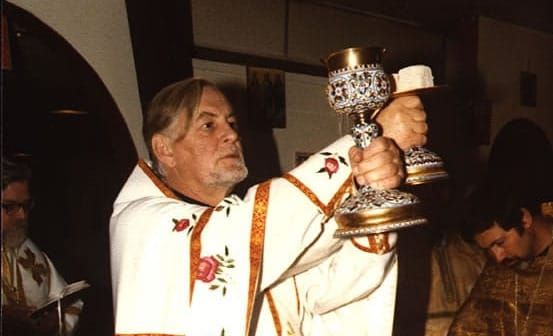
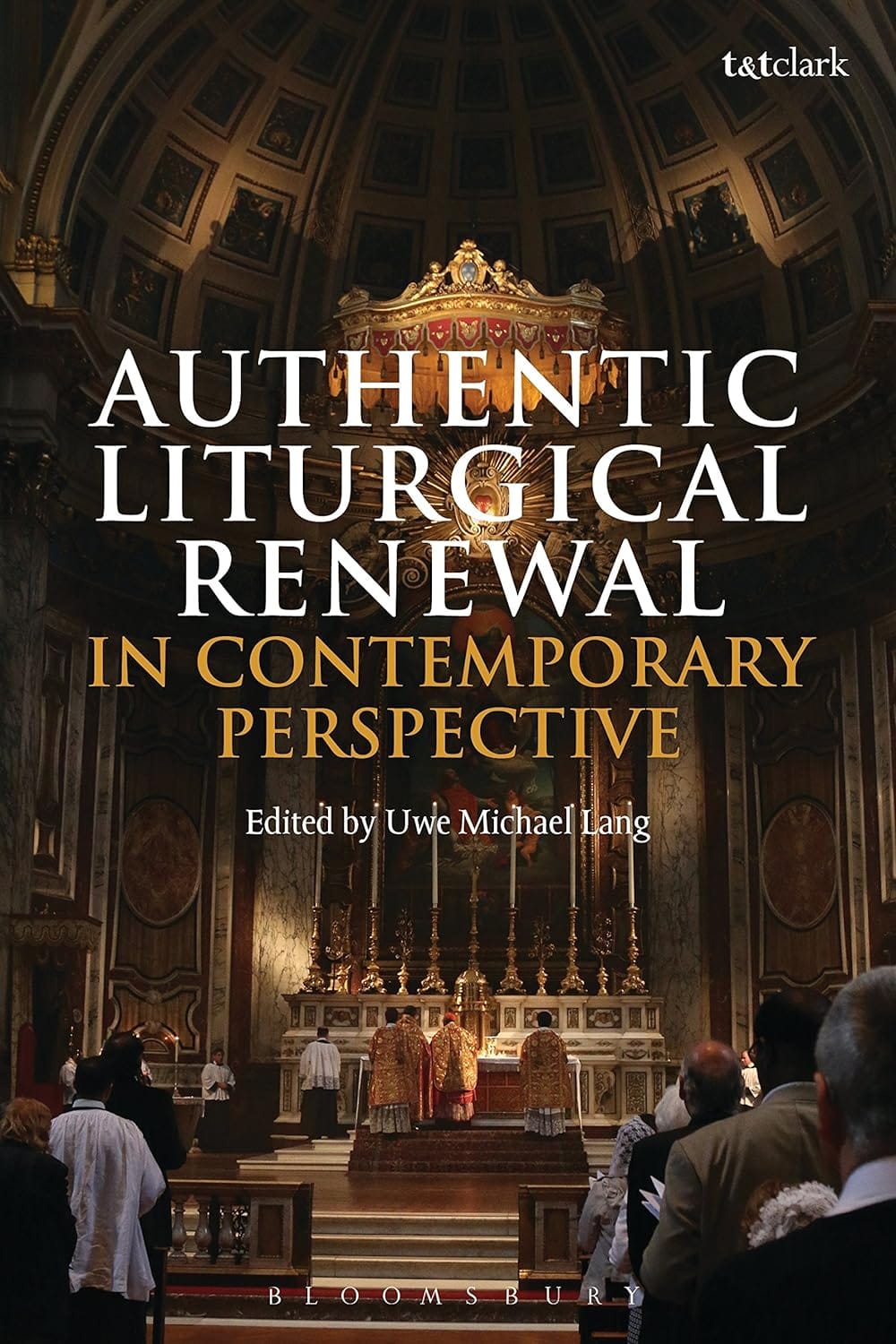
Fr Uwe Michael Lang, a native of Nuremberg, Germany, is a priest of the Oratory of St Philip Neri in London. He holds a doctorate in theology from the University of Oxford and teaches Church History at Mater Ecclesiae College, St Mary’s University, Twickenham, and at Allen Hall Seminary, London. He is an Associate Staff Member at the Maryvale Institute, Birmingham. He is the Editor of Antiphon: A Journal for Liturgical Renewal. From 2008 to 2012 he was a staff member of Congregation for Divine Worship and the Discipline of the Sacraments, and from 2008 to 2013 he was a Consultor to the Office for the Liturgical Celebrations of the Supreme Pontiff. His current research is in liturgical studies, with a strong historical emphasis. He is the author of Turning Towards the Lord: Orientation in Liturgical Prayer (Ignatius Press), The Voice of the Church at Prayer: Reflections on Liturgy and Language (Ignatius Press), Signs of the Holy One: Liturgy, Ritual and the Expression of the Sacred (Ignatius Press), and The Roman Mass: From Early Christian Origins to Tridentine Reform (Cambridge: Cambridge University Press, 2022). He is the editor of Authentic Liturgical Renewal in Contemporary Perspective (Bloomsbury T&T Clark) and The Fullness of Divine Worship: The Sacred Liturgy and Its Renewal (The Catholic University of America Press).
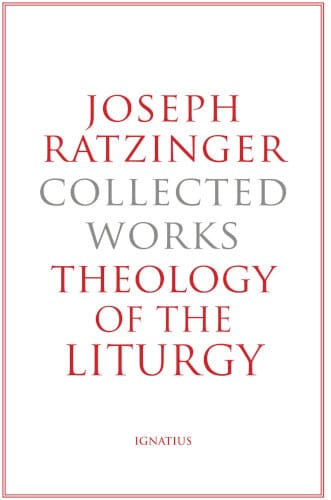
- Theology of the Liturgy: The Sacramental Foundation of Christian Existence (Collected Works, vol. 11)
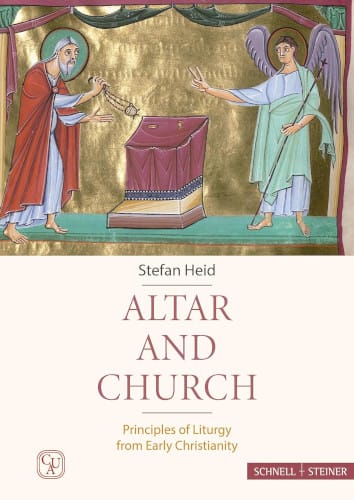
by Joseph Ratzinger - Altar and Church: Principles of Liturgy from Early Christianity
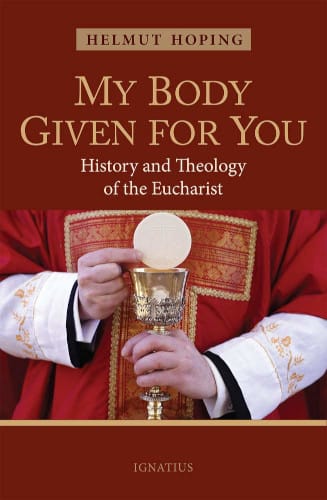
by Mons. Stefan Heid - My Body Given for You: History and Theology of the Eucharist
by Helmut Hoping - The Roman Mass: From Early Christian Origins to Tridentine Reform
by Fr. Uwe Michael Lang - Do this in Remembrance of Me: The Eucharist from the Early Church to the Present Day
by Bryan D. Spinks
There are various definitions of the liturgy. How would you define the liturgy?
My favourite definition of the liturgy comes from the seventh paragraph of Sacrosanctum Concilium. There, Vatican II's Constitution on the Sacred Liturgy says that the liturgy is the exercise of the priesthood of Jesus Christ. Christ is acting as the head of his mystical body, the Church, and as the mystical body itself. He acts through the ordained priest and through the communion of the baptized. As St. Augustine was wont to say, totus Christus, the whole Christ is acting. Both body and head are acting; ordained priesthood and the whole the body of the faithful.
This is an ancient principle. It goes back to St. Thomas Aquinas. It is elaborated upon in Pius XII’s encyclical Mediator Dei and then stated very clearly in Sacrosanctum Concilium.
The liturgy is Jesus Christ exercising his priesthood and acting in the worship of the Church, his body. It is Christ mediating between God and humanity, and, above all, offering the sacrifice of his body and blood for the salvation of the world.
"Joseph Ratzinger...formulated a crucial principle for understanding the liturgy of the Church, especially the liturgy of the Eucharist. He said that the Last Supper establishes the content of the Eucharist but not the form, which had to develop in the Church with the guidance of the Holy Spirit and the assistance of God's grace."
You have selected five books on liturgical history and theology. What do you mean by liturgical history and theology?
Well, the liturgy of the Church was shaped in the history of the Church.
Of course, there are the foundational events, such as the institution of the Eucharist at the Last Supper. However, the actual form of the church's worship had not yet been established.
Joseph Ratzinger, Pope Benedict XVI, formulated a crucial principle for understanding the liturgy of the Church, especially the liturgy of the Eucharist. He said that the Last Supper establishes the content of the Eucharist but not the form, which had to develop in the Church with the guidance of the Holy Spirit and the assistance of God's grace.
Having some sense of that historical development is important for understanding, for example, the structure of the Mass. Why do we have the introit, then the Kyrie, followed on feast days by the Gloria? All this developed historically. Knowing that history is very useful for entering deeper into the liturgy.
Of course, it is not all about history. Liturgy is the presence of Jesus Christ among us, drawing us into the worship of his Heavenly Father in the Holy Spirit. Understanding the theological and spiritual side of liturgy is what truly helps us to partake fully, consciously, and actively in it.
When you speak of liturgical theology, are you construing it in the same way as Alexander Schmemann, Aidan Kavanaugh, and David Fagerberg: as prima theologia?
I appreciate this approach because it takes the liturgy seriously as one of the sources of theological reflection. That is important.
Liturgy does not feature in the formulation of the sources of theological reflection (De locis theologicis) by the sixteenth-century theologian and canonist, Melchior Cano OP. That was certainly a lacuna that needed to be filled. The worship of the Church is one of the first witnesses to the faith and shapes its practice in our daily lives.
I have reservations about treating the liturgy as theologia prima because sometimes this seems to be done at the expense of systematic or dogmatic theology. Such an approach underestimates how systematic intellectual reflection also shapes the liturgy and has an impact on how we worship.
For example, the worship of the Blessed Sacrament of the altar and the Feast of Corpus Christi certainly came from the devotional life of the people of God, but also from the theological reflection of the Middle Ages, which found its most brilliant expression in St. Thomas Aquinas.
"In the liturgy, we have a more privileged access to the practice of the Church as a whole."
Any area of Catholic theology needs to be historical to some extent. Revelation comes down to us not just through Scripture but through Tradition too. Historical research and inquiry are needed to determine what the apostolic tradition is: what the Church has believed and lived always and everywhere. What, if anything, makes liturgical theology’s recourse to historical research any different from that of the other areas of theology?
That is a good question and opens quite a wide perspective.
According to Vatican II, the liturgy is the source and summit (fons et culmen) of the Church's activities. Of course, a lot goes on in between and the Church's life can never be reduced to the liturgy. Nevertheless, the liturgy is at the heart of what we do as communion of the faithful. According to the great vision of the book of Revelation, it leads us into the eternal worship of God. Hence, it is a privileged source of the apostolic tradition and a prime witness to the faith of the Church, including the faith of the wider people of God. When we look at specific theologians from the tradition, we need to be aware that some of them may have developed in their own thought advanced speculative ideas that do not necessarily reflect the faith and practice of the Church. In the liturgy, we have a more privileged access to the practice of the Church as a whole. Hence, it is an important source of apostolic tradition.
"The medieval period is also very important for liturgical development...The rites were fully developed. That is when both the Roman Rite in the West and the Eastern traditions took on the form in which they are still celebrated."
Several of the books you have recommended focus on the early Church. Did the liturgy decline during the Middle-Ages, only to be restored to its pristine condition with the reforms subsequent to the Second Vatican Council?
No, definitely not. The Early Church is perhaps the most interesting period for liturgical scholars because so much happened. That is when the liturgical rites were formed.
They developed especially after the peace of the Church which was introduced by the Emperor Constantine. There was a flood of cultural and artistic development. So, many scholars focus on that exciting period. Nevertheless, there was no decline or stagnation in the subsequent centuries.
In fact, the medieval period is also very important for liturgical development. From it, we get a much fuller picture. The rites were fully developed. That is when both the Roman Rite in the West and the Eastern traditions took on the form in which they are still celebrated. So, I try to argue against these narratives of decline.
"What I would draw attention to is the continuity and remarkable stability of the liturgy."
In certain parts of the English-speaking world, there is a heated debate for and against the Novus Ordo Mass of St. Paul VI. Both proponents of the Traditional Latin Mass and the Novus Ordo Mass cite the history of the liturgy in support of their favoured rite. Can historical research help settle mutual misunderstandings or correct spurious narratives?
I agree. Historical research may bring some calm to that debate or controversy. It can take a bit of the heat out of it and shed more light on it.
In my own work, I strive to show both the elements of change or transformation and those of continuity or stability.
One certainly needs to acknowledge that the liturgy has changed over the course of the centuries. We are talking about a very long trajectory of at least 1500 years, if not quite 2000 years. Moreover, the Church spreads throughout the world, to many different regions and countries, each with its own cultural, linguistic, intellectual, and artistic traditions, along with sociological and political factors. All these come in and shape the public worship of the church. So, in a sense, changes are to be expected over such a long trajectory.
What I would draw attention to is the continuity and remarkable stability of the liturgy in that trajectory.
Take, for example, the basic structure of the Mass in the Western tradition, in the Roman Rite. The order of Mass was remarkably stable over a very long period. I find that more remarkable than the transformations that you would expect to find.
Some degree of historical awareness is helpful in just in conducting these discussions in a calm and more detached way.
The books you have selected focus primarily on the Eucharist. This is the understandable since it is the centre of the liturgy and the most important sacrament. However, what about the other sacraments and liturgical celebrations?
Absolutely. To some extent, that reflects my own interests. My own work focuses on the Eucharist.
It would be worthwhile to delve also into the history of the Divine Office, the Liturgy of the Hours. There is some excellent work on that, such as that of Fr. Robert Taft SJ, though it is mainly on the Eastern, especially the Byzantine tradition.
My recommendations reflect my own interests. That said, the Eucharist is the most important act of worship of the Church. The other sacraments are ordered towards it in one way or another. Hence, it is useful to start from the centre when it comes to the other sacraments.
Encouragingly, there have been excellent publications in sacramental theology in recent years, but that would be a topic for another session.
You started out as a scholar of late Patristic Christology. Why did you shift your studies to the liturgy?
My doctoral work was on the controversies of the Christology after the Council of Chalcedon. There was not that much research on it, so I did not have to plough through masses of secondary literature but could go directly to the primary sources. I found that useful, but it is a very technical debate that at times can appear somewhat sterile.
The liturgy has always been one of my personal interests. Hence, I shifted towards it, usually with a historical emphasis. In that regard, I have made good use of my historical training.
The liturgy is an essential and central part of the life of each Christian. Few, however, read about the history and theology of the liturgy. In your experience, does reading about them change one’s way of worship.
I think it does. It helps you enter into the spirit and celebration of the liturgy more consciously and to develop a liturgical spirituality.
1.
Which of the books you have selected is best suited to the general reader?
I highly recommend Theology of the Liturgy by Joseph Ratzinger, Benedict XVI. It is a collection of his writings on the liturgy. It is the only volume of the collected works of Joseph Ratzinger that has appeared in English so far, although the original German series is almost complete.
This is the volume Pope Benedict wanted to be published as the first volume in the series, even though it is 11 in the plan of publication. It contains his book The Spirit of the Liturgy, a crucial work that really changed the way Catholic scholars and Catholics in a wider sense have regarded the liturgy. It outlines the biblical foundation of the Church’s worship, helps one appreciate the historical character of the liturgy and, above all, enter into the adoration which is at the heart of the liturgy.
In the first chapter, Pope Benedict explains very clearly what the liturgy is all about. In a nutshell, it is about the adoration of God. Throughout history, the Church has made a great effort to lead people to that adoration of God by means of its worship.
This volume of the Collected Works of Joseph Ratzinger contains not only his best-known book on the liturgy, The Spirit of the Liturgy, but various other essays. Do you have any favourites?
I like the essays on sacred music very much. Benedict was a great lover of Church music. His brother was a highly accomplished musician, director for many years of one of the most famous German boys’ choirs, the Regensburger Domspatzen. So, music always played a great role in Benedict's life and liturgical thought.
He wrote some insightful essays about the importance of music as a manifestation of the beauty of the liturgy, which in turn reflects something of God’s beauty. He goes into why the Church has always considered music such an important, integral part of the liturgy. That is certainly one great contribution.
I also like the essays that were originally published in The Feast of Faith. They are foundational for understanding the Eucharist and how it developed from the Last Supper.
These very important contributions are some of the shorter chapters that are included in Theology of the Liturgy.
What was Joseph Ratzinger’s main contribution to liturgical theology?
The theological work of Joseph Ratzinger does not have the same systematic character as that of other major twentieth-century theologians, partly because he became Archbishop of Munich and then Prefect of the Congregation for the Doctrine of the Faith. His ministry in the Church, which he often considered a true burden, prevented him from developing a systematic approach to theology, the theology of the liturgy included. In that sense, he was somewhat like the Church Fathers. St. Augustine is a good example. He led a very busy life as a bishop but would often write for a particular occasion or to settle a certain question that came up in his ministry. This was really an advantage for Joseph Ratzinger. He had to respond to questions of the day that came up in his ministry.
One important contribution was the one I already mentioned about the Last Supper and the Eucharist.
It is sometimes thought or said that the Mass is a reenactment or reproduction of the Last Supper. Pope Benedict was emphatic that it is not because the Last Supper establishes the content of the Eucharist, as it were, but not the form.
The command, “Do this in memory of me!” does not refer to the Passover meal or a sacred Jewish meal that was held on the eve of Christ's death on the cross. Rather it refers to the consecration of the bread and wine that transforms them into the body and blood of Christ. Subsequently, the liturgical shape or form developed with the assistance of the Holy Spirit in the history and life of the Church. That is an important principle. It also helps us to view critically attempts to bypass the history of Catholic witness and life and return to the worship of the Early Church and the first Christians. In some sense, the apostolic age always remains a norm and an ideal to which we must aspire. However, that does not mean that we can simply ignore everything that happened in between. Pope Benedict formulated principles that help us to make sense of this.
" Early Christian worship was conceived as a sacrificial action and celebrated at an altar, whatever the particular conditions were."
2.
The second book, Fr. Stefan Heid’s Altar and Church, looks at how the Early Church conceived and treated the altar. The subtitle is Principles of Liturgy in the Early Church. Which principles and lessons does this book draw from the liturgical practices of the Early Church?
There are quite a few distorted ideas around about worship of the Early Church. Some are romantic ideas of Christians gathering in secret in the catacombs out of fear of persecution. Many of these ideas are, well, inexact. Some are outright mistaken.
Mons. Stefan Heid’s book is a wonderful inquiry into this early period. He uses both literary and archaeological sources. It is richly illustrated on account of the extensive archaeological evidence it uses.
He shows that the worship of the Early Church did not have the domestic, homely character which we sometimes attribute to it.
It is true that the earliest Christians met in houses for their gatherings and even for their worship. However, they met wherever they could, whether it be in shops or apartments of various sizes. If a member of the community was wealthy, they might have met in a stately country villa. No matter where they met, their worship was never an informal, homely get-together. It was truly a moment of worship.
Moreover, the ancient world had a much clearer idea of what worship and sacrifice meant than most people do today. In the ancient world, a sacrifice was of an animal or the produce of the land in a temple or at a sacred precinct. Christianity transformed that radically, but worked with the cultural and religious context that was there.
The worship of Christ was considered a spiritual sacrifice but still a formal act of worship which involved a priestly role. Stefan Heid shows this convincingly, especially when it comes to the question of the altar.
The sources from the first three centuries do not usually speak of altars in the technical sense. They do not use the same term as classical pagan traditions. However, Paul is clearly referring to an altar when he speaks of “the table of the Lord” (1 Corinthians 10:21). St Ignatius of Antioch speaks of an altar, very strongly when he emphasizes the unity of the local church, where there is one bishop, one Eucharist, one altar, one chalice, and so on.
Often, scholars take this talk a metaphor and suppose that an actual altar was not involved because there were no monumental churches and certainly there were not any stone altars.
However, Stefan Heid shows that an altar could be any material object on which sacrifice was offered. It did not need to be made of stone. It could be made of wood or metal. It could be square, a tripod, or portable. There were movable altars but even they were considered actual places of sacrifice. Early Christian worship was conceived as a sacrificial action and celebrated at an altar, whatever the particular conditions were. It may not have taken place in the architecture of a monumental church or on stone altars. Nevertheless, the rite, the liturgical action, conferred sacrality on the place and object, even if only temporarily and for the span of the celebration.
One implication of this, if I have understood correctly, is that the early Church does not conceive the Mass merely as a commemoration of the Lord's meal but as a sacrifice.
It is both a sacrifice and a meal. The two always belong together. The sacrifice always includes some sort of participation in meal participation.
In the Jewish and classical world, you offered something to God or the deity through the priest but then you consume some of the sacrifice in the form of a sacred meal. The sacred meal is a participation in the sacrifice.
By the time of Jesus, the Passover meal was celebrated in the home, but the actual Passover lamb was sacrificed in the temple and then eaten at home. Both the sacrifice and the sacred meal belong together. Similarly, the sacrifice of the Eucharistic was instituted during the meal of the Last Supper.
3.
Third is Helmut Hoping’s My Body Given For You. It is “a history and a theology of the Eucharist.” Why have you chosen this book?
Helmut Hoping's book is a wonderful overview of both the history and the theology of the Eucharist. He traces the development of the Eucharistic liturgy in the Early Church and focuses on the Western tradition. He tells the story of the Roman Rite up to the present day. However, he keeps theology of the Eucharist in mind. He is both a dogmatic and a liturgical theologian. This is a very unusual but fruitful combination. He tells the story of the theology of the Eucharist in the Early Church; the major contributions of St. Ambrose and St. John Chrysostom; the great controversies about the Eucharist during the Middle Ages that then led to a deepening of Eucharistic devotion and faith. He also covers the Protestant Reformation and contemporary developments in Eucharistic theology.
"The Order of Mass of the post-conciliar Missal is essentially the same as that of the preceding Roman tradition."
4.
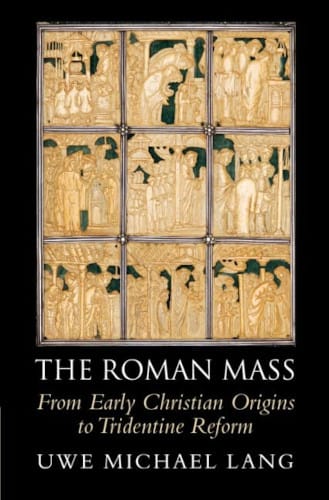
Fourth, there is your own history of The Roman Mass: From Early Christian Origins to Tridentine Reform. You survey the structure and ritual shape of the Roman Mass from its formative period in late antiquity to its standardisation after Trent. Moreover, you focus less on systematic theology than Hoping and more on the social and cultural contexts that influenced the Rite of the Mass. What are your main findings and contributions?
Well, I hope you didn't mind that I was blowing my own trumpet in recommending my book.
My intention was really to write a history of the Order of Mass, the stable core of the rite. Hence, I had in mind a more complicated title for the book, something like The Order of Mass: The Basic Structure of the Mass in the Roman Tradition. However, the publisher told me that the title needed to be snappy for the search engines. Nevertheless, I focus on the basic structure of the Mass and its ritual: what developed into the Order of Mass.
Moreover, I tried to show that in the Roman tradition there was a remarkable stability and continuity in this basic structure, once this had been established. The great documents of the Papal Mass from around 700 basically show us the structure. That pattern of the rite has continued essentially to this day.
We can even go further back to the mid-second century and St. Justin Martyr’s description of the Mass. It already describes the essential parts of the Mass. However, from around 700 we have a detailed description of the rite, which, in its essentials, has perdured until today.
Your book ends shortly after the Council of Trent, with the standardization of the Roman Rite. You do not broach the Novus Ordo Mass. Is this because, like Mons. Klaus Gamber—much appreciated by Benedict XVI—you consider it a distinct rite?
I wanted to conclude with the Tridentine Missal of 1570, partly because the book was already quite long, and partly because that seemed a fitting point to stop.
There was very little liturgical development over the next 300 years. It was a period of extraordinary stability for the rite. There were certain developments that one can study. Compared to previous centuries, however, very little occurred.
During the twentieth century, things became quite complicated. The twentieth-century liturgical reforms would require another book of the same size. Perhaps, I shall write one at some point, but not right now. When the dust has settled a bit and we have greater clarity about the future of the liturgy, the time would be right to look at that period.
Regarding your question, yes, I do believe that the Order of Mass of the post-conciliar Missal is essentially the same as that of the preceding Roman tradition. It is not, as Klaus Gamber and others have argued, a different rite. The basic structure and pattern is the same.
5.
Finally, there is the history and theology of the Eucharist, Do This in Remembrance of Me, by the Anglican Bryan D. Spinks. Have you chosen this because its breadth and ecumenical sweep?
Yes, I have. Whereas my work focuses very much on the West and the Roman tradition, as does Helmut Hoping’s book, Bryan Spinks is especially good at introducing the Eastern Christian traditions— Byzantine, Coptic, Armenian, and so on—and gives a very instructive overview of their richness.
He also covers the Protestant traditions—Lutheran, Calvinist, Anglican worship— as well as more recent developments.
It is important to get this wider picture.