“Salvation is from the Jews” (John 4:22). This is because Jesus was born to the chosen people and fulfils the covenants that God made with Adam, Noah, Abraham, Moses and David.
From the outset, however, Christians have wondered about the Church’s relation to Israel and the status of Jewish people under the New Testament. Do those Jews who do not believe in Jesus form part of the Church or has the Church replaced or supplanted the chosen people?
Unfortunately, there have always been some Christians who have strayed from the Gospel, blamed the Jewish people collectively for Christ’s death, and even made that charge or some other the pretext for nurturing hatred, hostility, and abuse toward its members.
Hoping to disqualify such an unchristian mindset once and for all, the Second Vatican Council issued a declaration, Nostra Aetate, in which it condemned antisemitism and recalled St. Paul’s teaching that God’s gifts and call to the chosen people are irrevocable (Romans 11:29).
In this interview, Prof. Gavin D’Costa talks about his own work and some other books on Catholic teaching and current theological reflection on the Jewish people’s relation to the Church.
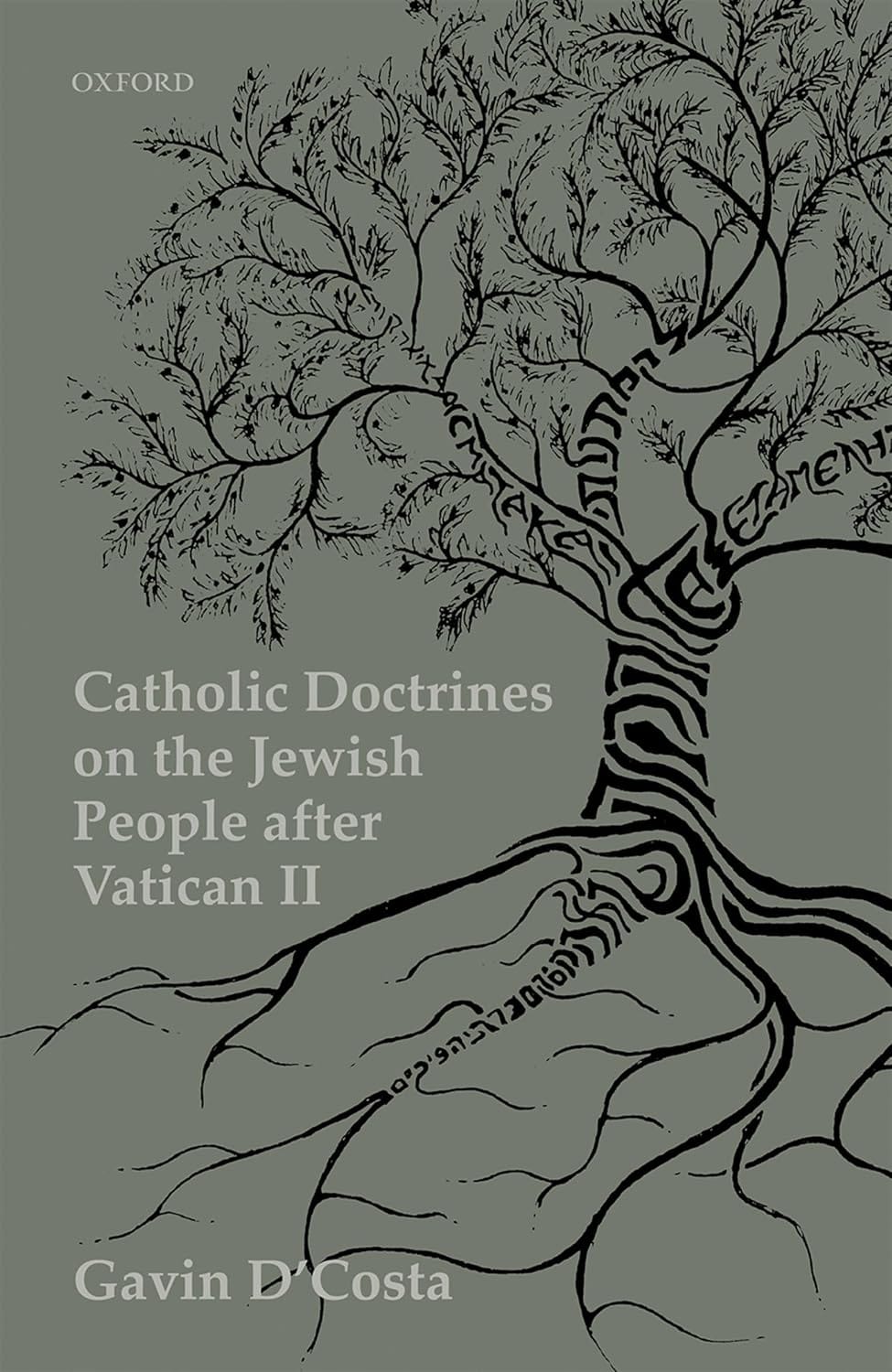
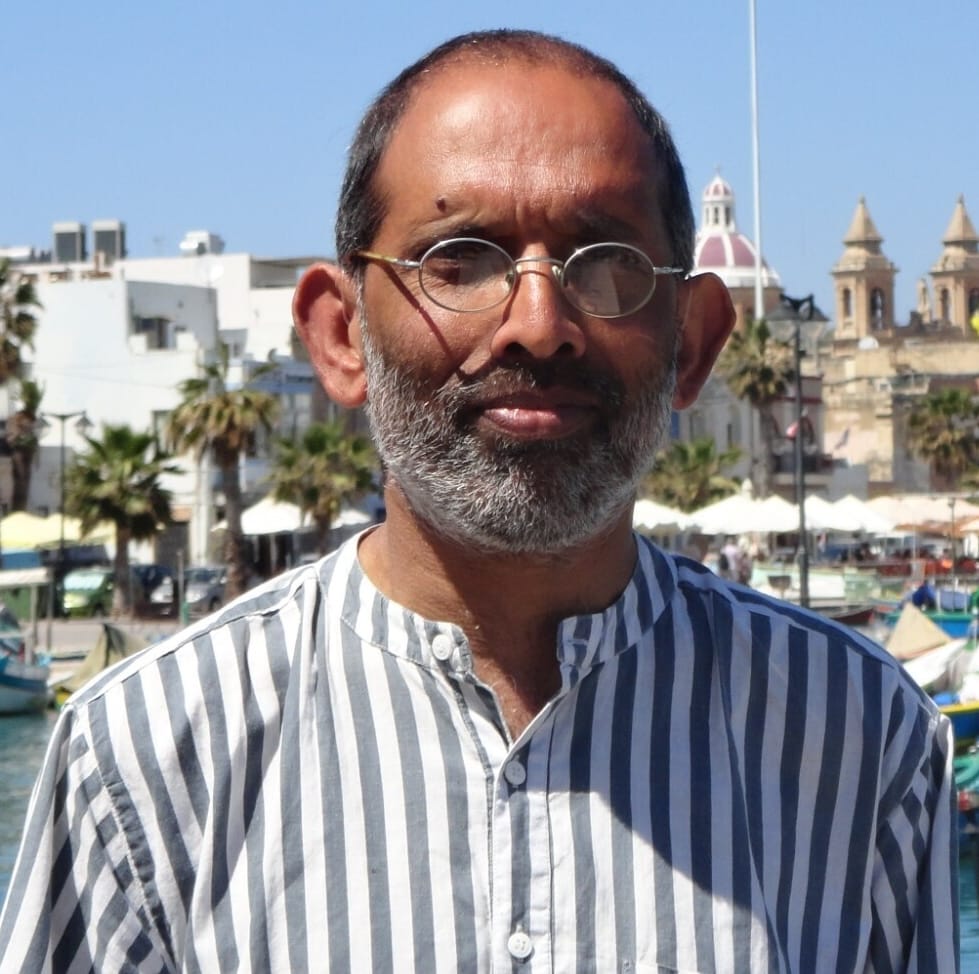
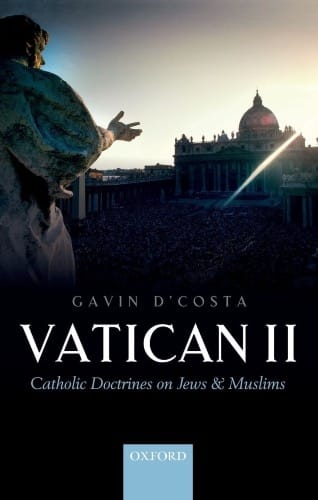
Gavin D’Costa is Professor at the Pontifical University of St. Thomas Aquinas, Rome; and Emeritus Professor of Catholic Theology at the University of Bristol, UK. He is author of eight monographs, most recently: Vatican II: Catholic Doctrines on Jews and Muslims, (OUP, 2014) and Catholic Doctrines on Jews after the Second Vatican Council (OUP, 2019). He has edited, with Faydra Shapiro:Contemporary Catholic Approaches to the People, Land, and State of Israel (Catholic University Press of America, 2022). His work has been translated into seven languages. He is an advisor to the Roman Catholic Bishops in England and Wales on matters related to other religions and has worked with the World Council of Churches and the Pontifical Council for Interreligious Dialogue.
Five Books for Catholics may receive a commission from qualifyng purchases made using the affliate links in this post.
Jesus has fulfilled the law of Moses and established the New Covenant. Some have claimed therefore that the Old Covenant has been abrogated and replaced by the New: the people of Israel replaced by the Church. What are the main theories on the current Judaism’s relation to the Church? Since Vatican II, the main theories within the Catholic orbit hold that Judaism has not been replaced but, as the Letter to the Romans teaches, continues to have a role in God's plan and will. They also hold, it needs to be said, that Judaism will find its fulfilment in Jesus Christ, the telos and meaning of its whole destiny.
This contrasts with an earlier tradition, which tended to see Judaism as null and void: as superseded.
There is controversy surrounding both points of the modern view. However, the basic theory is that God’s covenant with the Jews retains its validity and meaning. As a result, even though its fulfilment is to be found in Christ and the Church, we can learn from the Jewish people in their relationship to the living God, the same God we worship.
“The council declared publicly that anti-Semitism is at all times incompatible with the Catholic faith."
Does that encompass the whole of the Church's teaching on the relation of the Jewish people to the Church? No, but those are the main bullet points. Since 1964-65, there has been a remarkable level of unfolding Lumen gentium14-16 and Nostra aetate 4.
Those two documents established that, first of all, Jesus, the Blessed Virgin Mary, the apostles and disciples were practicing Jews. That goes without saying. They went to the temple. They prayed. They expressed the faith of Israel. Their Bible was what we call the Old Testament. In establishing that, Nostra aetate 4, opened up an avenue for the Church to rediscover its Jewish roots: that the Gentiles are grafted onto the Jewish people. There is not a Church of Gentiles, with the Jews on the other side of the street (though, with Rabbinic Judaism, there is a sense in which they are). Rather, the Jews are within the heart of the Church. The opening line of Nostra Aetate 4, recalls “the bond that spiritually ties the people of the New Covenant to Abraham's stock.”
This has all sorts of implications for our own prayer life, understanding of the New Testament, liturgy, and eventually our understanding of the Jewish people. However, it is also an internal matter.
The second thing that Nostra Aetate established is that the Church officially condemns anti-Semitism as incompatible with its own nature and own Jewish roots. The council declared publicly that anti-Semitism is at all times incompatible with the Catholic faith.
Of course, defining anti-Semitism is a somewhat complicated matter. Some follow the IHRA definition, which views criticism of the state of Israel's justification to exist as antisemitic. Many institutions in the West have adopted this definition of antisemitism but it is a controversial one because some Jews and many others believe that Israel is a “colonialist enterprise.” So, condemning antisemitism does not clarify some of the questions on the radar.
Third, the council taught that, “God holds the Jews most dear for the sake of their Fathers; he does not repent of the gifts he makes or of the calls he issues” (Nostra aetate 4). God’s gifts and promises are irrevocable (Romans 11). He does not go back on what he promises. He is faithful, regardless of the people.
This particular theme becomes central to the Church’s understanding of the Jewish people especially with St. John Paul II’s 1980 meeting with representatives of the Jewish community in West Germany. He identifies his audience, contemporary rabbinic Judaism, with the people who have inherited the covenant promises. He identifies them with the biblical Judaism described in the council’s documents.
From 1980 onwards Catholic teaching on the Jewish people goes into fast forward. The question becomes, “If this covenant is valid, are there two ways to God.” On the one hand, every document of the Holy See makes it absolutely clear that Jesus Christ is the only way to salvation. On the other hand, it speaks of the legitimate covenant into which the Jewish people have entered.
The most recent document on the matter was issued by the Commission for Religious Relations with Jews to commemorate the fiftieth anniversary of Nostra aetate: “The Gifts and Calling of God are Irrevocable” (2015). Though it does not have magisterial authority, it comes up with a very interesting statement (n. 36): “That the Jews are participants in God’s salvation is theologically unquestionable, but how that can be possible without confessing Christ explicitly, is and remains an unfathomable divine mystery.” It is referring to the same mystery as Paul in Romans 9-11.
We may be able to interpret this remarkable statement using the Church’s teaching on implicit faith, which goes back to Thomas Aquinas and the Fathers. In their true worship, the Jewish people is always teleologically oriented toward Christ.
Of course, Jews find this offensive. As one friend put it, “So now you accept us because you think we are anonymous Christians.”
“No,” I replied, “Each human’s goal is to be, collectively and individually, united with the Triune God.” Anonymousness is not what the Catholic Church is about. When we Catholics talk of “God” and “grace” we are talking about Christ and the Holy Spirit: the Triune God.
Some more radical theologians argue that we need to step back and recognise Judaism's own autonomous path towards God: that there should be no witness or mission to the Jewish people because they are already in a relationship with the living, true God. It is difficult to hold this minority position, even though some push it strongly, because it does not have any biblical or theological foundation. Mission and witness are the Church’s whole raison d’être. The crucial question is how one conducts that mission and bears witness. It will be peculiar and particular to each religious group.
There are many other interesting elements here, such as issue of the interpretation of Scripture. The 2015 document makes an interesting point. While Jews and Christians share the Hebrew Bible, each reads it through a further interpretative layer. We read it through Christological and ecclesiological spectacles as the Old Testament. The New Testament interprets the Old, according to Augustine’s favourite and famous adage. Something analogous occurs within Judaism itself. It relies not only on the Bible but also on the oral tradition. There is the written Torah and the oral Torah. The latter is the development of the rabbinic tradition and constitutes a further interpretative layer. add-on.
This leads to a fascinating question. If we both drink from the same water, the Old Testament, might we learn about God and his through Jewish exegesis? Rabbinic exegesis is incredibly sophisticated in its attention to the words, their grammar, and symbolism. This is not to say that the Jewish tradition has the status of an unfolding Revelation. However, it may shed lend on the Revelation it regards. Hopefully we can learn a lot by reading the Bible together and seeing how it is deployed in each of our traditions.
Two more very important elements have come out.
The other issue for many Jews is the question of the land. If God’s gifts, covenant, and promises are irrevocable, it is clear from the Old Testament that the land is one of those gifts. What then do Catholics have to say about the particular significance of the land in God's unfolding revelation. This is a very interesting issue for obvious political reasons, but also for Jewish self-definition.
There, it points out that, while at the historical critical level God certainly promises the land, there are complexities in interpreting it. Where are the boundaries of that land? Under which conditions is it given? What should we make of the murder or destruction of the local inhabitants when Israel arrives?
Then the document shows that there two ways of reading the New Testament teachings on the land promised. One is that the promise is fulfilled in Christ: the land is no longer to be understood literally. A second reading holds that the land is still important and has a role for the return of Jesus. Israel is given the land so that the nations will come to worship the Jewish God. The document leaves the question open. If we take this emerging and developing teaching seriously, we Catholics need to answer this question.
First, this is one of the questions that Jews ask about most often. Second, it is a difficult, explosive question and we should always follow where Revelation leads. Third, it has an ecumenical dimension because large Protestant traditions, especially in the United States, are connected with this question.
Is Christian Zionism the movement within American Protestantism to which you are referring? Yes. There are different forms of Chrisitan Zionism. The most uncomfortable form, of which Catholics are very suspicious and critical, sees in effect a one-to-one match between contemporary Israel and strands of biblical Revelation. Therefore, it lends unconditional and uncritical support to the State of Israel in the belief that this serves God’s plan for bringing in the end of the world.
However, other forms of Christian Zionism are much closer to what a certain Catholic Zionism could look like.
Putting that aside, the nature of the covenant is the other issue that is very important for Jews and Catholics.
Do Jews who become Catholic simply bid farewell to their religious and ethnic culture? Until the twentieth century, the answer was pretty much that they should push their religious and ethnic background to the side and become gentilised. However, Jesus, Mary, and his disciples follow Jewish rituals and prayers. We still use Jewish liturgical texts: the Psalms and the books of the Old Testament. So, what role is there for Jewish self-identity in the Catholic Church?
The 2015 document, a landmark reflection on Nostra Aetate and how far we have come, speaks of how the distinction between the Church of the Gentiles and the Church of the Circumcision is both a qualitative and quantitative definition of the Church: quantitatively, this is not a big deal, but qualitatively it describes the nature of the Church.
This is quite a remarkable point. Fifty years from now, certain shifts that allow us to see the significance of this more clearly.
Another very significant question is the Jewish nature of the Catholic Church.
Hopefully, this does not derail much of the good relationships that have been built up. Jews who convert to Catholicism, even if they were secular rather than religious Jews, are considered apostates and so do not have the right to return to Israel, under the state’s current laws.
This is quite a controversial point. Certain Jews who have been honoured at Yad Vashem and were very important in the struggle against the Holocaust, were Jews who became Catholics. A famous one is Oswald Rufeisen. A Jew himself, after helping many Jews escape the Nazis in Europe, he became Brother Daniel, a Carmelite priest. When he applied for Israeli citizenship, he was refused. He took his case to the Supreme Court of Israel, which ruled that he was an apostate and technically had lost his rights as a Jew. Potentially, this was quite scandalous. It is okay to be a Jewish Buddhist, atheist, or Marxist and claim the right to return to Israel. So, this ruling of the Supreme Court is an important issue both politically and for the Church in Israel, which has Jewish Catholics.
“Christ, the Church, and its liturgy subsume all that is good and true in Israel, transforming it in Christ. That transformation though is not an erasure of what is good and true in Israel."
You mentioned how there is a small community of Jewish Catholics who continue to celebrate certain Jewish rites. However, the Mass and the Paschal mystery are the fulfilment of the Passover celebration. To what extent are the Jewish rituals of the Old Covenant subsumed within the sacraments and liturgy of the Church? Both are true. This is a brilliant question. It goes back to the heart of the controversy in Acts 15.
Some of the disciples claimed that a Gentile who came to follow Jesus needed to undergo circumcision, enter the Jewish community, and observe kosher laws. The Gentiles objected that they could follow Christ without doing all that. So, a controversy arose.
There was a meeting between the groups advocating each position. It came up with a very important solution. First, the Jews who were following Jesus could keep all these rules and laws on the condition that there was table fellowship: in Christ, everyone comes together to eat the special, blessed meal of celebration. Second, the Church imposed on the Gentiles minimal laws about refraining from idolatry and only eating meat that had undergone proper ritual cleaning. This was very important because the Levitical law required that any Gentile living in Israel must undertake these commitments.
This begins to answer to your question. Yes, Christ, the Church, and its liturgy subsume all that is good and true in Israel, transforming it in Christ. That transformation though is not an erasure of what is good and true in Israel.
A teaching emerges at the Council of Florence and later: Jewish rituals are permissible provided that those performing them do not see them as in any way necessary for salvation. They cannot deny the sole efficacy of Christ. They cannot set up themselves up as a separate group that does not share table fellowship.
In one sense, you are right to say that all Gentile Catholics are required to do with regard to their Jewish heritage is acknowledge, as the popes have taught, that we are spiritual Semites. However, as a Gentile Catholic, I can understand my liturgical texts and my prayers more deeply by attending to that heritage.
The question is whether Jews are called to live in the same way when they become Catholics. The answer to that goes back to the Church of the Circumcision and the Church of the Gentiles.
Some feel that maintaining Jewish rituals is a denial of the transformation that Christ brings. I don't think that it is. To draw a slight ethnic analogy, I am an Indian who became Catholic at birth. My experience of Catholicism was a very Latin, Western European one. I love it and am grateful for it. I visited India for the first time when I was about 15 and was struck that, until then, I had never encountered a Catholic liturgy that reflected my Indian background and traditions. So, the issue of Jewish Catholics is also one of enculturation to some extent, with one difference. In his wonderful encyclical Faith and Reason, John Paul II makes it clear that, while we must accept the patrimony of the Church as providential, this does not close the door to other cultures and traditions. This is true about me as an Indian. However, it is not true about Jews, who are the root of the Church itself.
Over the centuries, some Christians and even bishops have been guilty of animosity towards Jews. Has the official teaching of the Church ever condoned such anti-Semitism? We need to be very clear about what counts as official teaching.
Various councils took discriminatory action against Jews. They decreed that Jews should reside in a particular part of town, wear identification, and not walk the streets during Easter.
Importantly, as the context shows, some of these actions were not straightforwardly discriminatory but meant to protect the Jewish community from attacks. For example, the main attacks on Jewish communities occurred at Easter.
The canons of the councils are not always doctrinal teachings and have a complex history.
Has the Church formally sanctioned discriminatory behaviour towards Jews? At the level of individual bishops and countries, yes. At the level of its universal teaching, no. In fact, the popes have one of the best records of protecting Jews from virulent anti-Semitic attacks by Catholics. I am not claiming that they have a clean sheet or that we should be proud. However, they do have a clean sheet at the level of their official universal magisterium.
It is important to establish this point. Some young Catholics, feel that Vatican II’s teaching on the Jews overturns tradition. It does not, even though it certainly overturns some elements that have existed in the Catholic Church. Formally, however, it does not overturn or question any magisterial teaching. In a sense, it simply goes back to Scripture.
So, it overturns bad theological opinions or theories, but not the Church's actual teaching. Yes, and does so in several other fields, such as the questions of religious freedom, usury, or the death penalty. As Newman points out, there can be an evolution in Church doctrine provided the basic core principles are kept intact in that development. We need to constantly keep an eye on the tradition and return to Scripture to make sure such developments are organic and rooted in the soundest theology.
Despite the horrors of the Holocaust, anti-Semitism is still around, even among some Christians. Is there anything the Church can do to inoculate the faithful against both old and new strands of antisemitism? This mention of inoculation reminds me of how we were given injections for the various strands of COVID.
To be frank, antisemitism in very active in some parts of our bodyas a Catholic Church. In Poland for example—and I say this with great respect and love for the Polish people—there is a resurgence of Catholic antisemitism out of a fear that the country and its tradition is being changed and liberalized.
In my biased view as an educationalist, I believe that we need educate Catholics at all levels, especially the clergy, to inoculate them against antisemitism.
Educating the clergy is important because most people encounter Scripture through hearing it exposed at church. In my experience of traveling around the world, you get antisemitism from the pulpit a lot, without it being intentional. The priest is simply working with old biblical scholarship. For example, it is very interesting to listen to sermons dealing with the Pharisees, who are mentioned very often in the Gospels. Some priests are stuck in a time warp and depict all Pharisees as the ones who oppose Jesus and his new teaching.
To inoculate seminarians, deacons, religious or anyone who has a teaching role, we need to make sure that the formal teachings of the Catholic Church and their biblical foundations are communicated to them during their training and that they see this as an instance of the Church, not going soft, but grappling with its background.
The second important thing, and it is taking place for example in the Pontifical University of St. Thomas in Rome, is to have some Jewish teachers for the seminarians.
Many of my students in Rome are from the Middle East, Africa, or Eastern Europe, and have never met a Jew. Demographically, this is not surprising. It is wonderful therefore to have a Jewish teacher come in and teach about Jewish Scripture or, as happened recently, the Jewish tradition’s views on Jesus. The students can meet and converse with actual Jews who have a profound faith and a deep knowledge of Christianity.
A third and final thing is friendship. It is very difficult to be prejudicial against a group if you meet some of its members and they do not conform to your prejudices.
As a student, I used to hitchhike in the UK. Often, a lorry driver would give me a ride. Sometimes, he would start complaining about the Indians living in such-a-such an area. Eventually, if the climate was right, I would mention that I am Indian. He would reply, “Yeah, but not you.” The point is that meeting and talking to me helped break down the stereotype. A word of warning. Sometimes, meeting members of a certain group can enhance the stereotype and build up new walls. I am not being rosy-eyed. This is a complicated matter. However, contact is very important for creating sensibility in this area.
Your research has focused on the theology of religions. However, much of your recent work has focused on Judaism rather than non-revealed religions. Is this by happenstance or a response to specific debates? My doctoral work was on a Hindu philosopher, indeed Hinduism and Christianity. So, my first books engaged with Catholics and Hindus. The theology of religions was very important to me. I was a specialist, not in Hinduism, but in the theological reflection on Hinduism.This interest goes back to my Indian roots.
The seed of my interest in Judaism was planted some forty-five years ago when I was in Israel for a course at Yad Vashem, the Museum of the Holocaust. I was the only Catholic in a group of twenty-three Jews. As I got to know them, and particularly after the tutor began a open meeting for them to talk to me about Catholic theology, I became aware that they felt Catholicism was the main oppressor of their people and had very deep anger toward Catholics. However, things changed when they met me, the first Catholic with whom they had talked about these things. This alerted me to the issue.
Upon returning to the UK, I went to the Jewish Christian Forum but was disappointed. It was full of liberal Christians who seemed to water down their faith to accommodate Judaism. To be nice to Jews, they denigrated some of our beliefs about Jesus Christ. The entrenched liberalism from both Jews and Christians put me off back then. Things have changed since then.
I came to Judaism again was when I was writing a book on Vatican II’s teachings on other religions. Suddenly, I realised something I had never noticed. On the one hand, there was the the internal dimension. On the other, here is another religious tradition where Revelation exists.
My 2014 book was about Vatican II’s teaching Jews and Muslims. I uncovered so much in my research that I decided to write a second volume on the Jewish people in the teachings of the Church since Vatican II. This coincided with meetings with more Jews who were interested in conversations, not with liberal Christians, but with orthodox Catholics, so as to discuss some of these issues properly. It was a grace to meet several Jewish people who were not just great conversational partners but also knew about Catholicism. As a result, I began to learn more about Judaism.
Then I began to teach at the Angelicum. It had partnerships with Jewish groups, which I have been developing.
I thank God for this late but providential calling and for the friendships it has bought. I thank the Angelicum for supporting this as a sort of flagship project: for engaging with these questions seriously from a traditional, orthodox, and even a Thomistic perspective.
I shall probably end my career in this track because there are still quite a few things that I wish to think about and time is moving on.
Looking back, this is strange. I never thought I would end up where I am. When I first broached the issue, I was very disappointed by the liberal theological culture that surrounded it. Things have changed since then.
I shall keep working on the theology of religions and touch on Islam, partly because of my 2014 book and because, living in London, Rome, Jews and Muslims are the two religious groups that occupy the screen much of the time. It is important for the Church to think through its very complicated response to them, doctrinally, socially, and politically.
1.
The first book is the one you have just mentioned, your study of Vatican II's teachings on Jews and Muslims. You have already touched upon what Nostra aetate and Lumen gentium taught on the subject. Is there anything more to add about Vatican II's teaching?
This post is for paying subscribers only
Sign up now and upgrade your account to read the post and get access to the full library of posts for paying subscribers only.