
“All who die in God's grace and friendship, but still imperfectly purified, are indeed assured of their eternal salvation; but after death they undergo purification, so as to achieve the holiness necessary to enter the joy of heaven. The Church gives the name Purgatory to this final purification of the elect, which is entirely different from the punishment of the damned. The Church formulated her doctrine of faith on Purgatory especially at the Councils of Florence and Trent. The tradition of the Church, by reference to certain texts of Scripture, speaks of a cleansing fire. This teaching is also based on the practice of prayer for the dead, already mentioned in Sacred Scripture: ‘Therefore Judas Maccabeus made atonement for the dead, that they might be delivered from their sin’ (2 Macc 12:46) From the beginning the Church has honored the memory of the dead and offered prayers in suffrage for them, above all the Eucharistic sacrifice, so that, thus purified, they may attain the beatific vision of God. The Church also commends almsgiving, indulgences, and works of penance undertaken on behalf of the dead.” Catechism of the Catholic Church 1030-32.
In this interview, Fr. Luke Wilgenbusch selects and discusses some of the best books on purgatory and prayer for the deceased.
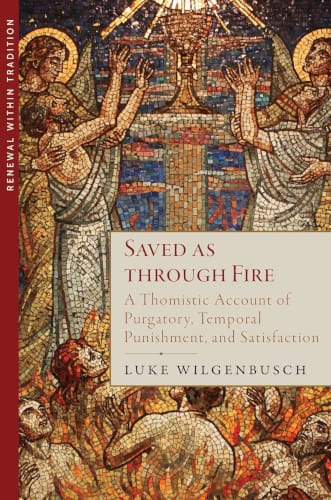
Fr. Luke Wilgenbusch (STL, Pontifical University of Saint Thomas Aquinas) is a priest of the Diocese of Nashville, where he currently serves as director of vocations. He is the author of Saved as through Fire: A Thomistic Account of Purgatory, Temporal Punishment, and Satisfaction (Emmaus Academic).
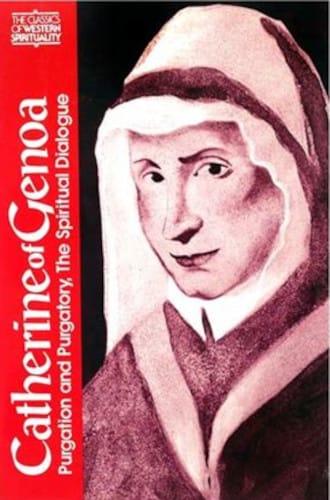
- Purgation and Purgatory
by St. Catherine of Genoa - Life Everlasting and the Immensity of the Soul
by Reginald Garrigou-Lagrange OP - On Purgatory: The Members of the Church Suffering
by St. Robert Bellarmine - The Divine Comedy
by Dante Alighieri - Saved in Hope (Spe salvi)
by Benedict XVI
...see also... - Manual of Indulgences
by Apostolic Penitentiary
What is purgatory?
Purgatory is a teaching of the Church. Souls after death who die in a state of grace and have received their particular judgment from the Lord, but are not yet perfectly prepared for heaven, pass through an experience, known as Purgatory, to purify them and to prepare them for their entrance into heaven.
Where does Scripture allude to purgatory?
Like the word, “Trinity”, “purgatory” does not appear in Scripture, even though both those teachings come from Scripture.
One of the best citations on purgatory comes from the Old Testament, and one from the New Testament.
2 Maccabees tells of the fighters who kept amulets on their persons. This was against God's command, and so they died and lost the battle. When Judas Maccabeus and his men discover these amulets, Judas “made atonement for the dead, that they might be delivered from their sin.” Here Scripture teaches that it is good and holy to pray for the dead: that there are souls who could benefit from our prayers. Such souls are in a state of need but have not been totally abandoned by God or deprived of the opportunity to receive his mercy. There is already some awareness that there is an intermediate state.
The principal New Testament passage is 1 Corinthians 3:12-15: “Now if any one builds on the foundation with gold, silver, precious stones, wood, hay, stubble— 13 each man’s work will become manifest; for the Day will disclose it, because it will be revealed with fire, and the fire will test what sort of work each one has done. If the work which any man has built on the foundation survives, he will receive a reward. If any man’s work is burned up, he will suffer loss, though he himself will be saved, but only as through fire.”
Here there is a recognition that some kind of purification is taking place even though the fundamental relation with the Lord remains intact. The Church sees this as a teaching on purgatory.
The Church’s teaching on purgatory is based not just on Scripture but on Tradition too, primarily the lex orandi. Which aspects of the Tradition manifest the Church’s belief in purgatory and the efficacy of prayer for the deceased?
From time immemorial, it has been the practice of the Church to pray for the dead. As I noted in connection with 2 Maccabees, two fundamental beliefs are contained in that practice. One is that there are souls that can benefit from prayer. This means that they are in friendship with God but imperfectly. Two, our prayers are efficacious in remedying that. That has been the spiritual instinct of the faithful.
We have received these beliefs from our Jewish tradition. However, it was also the practice of the church from the very outset: to offer Mass for the dead. Of course, other kinds of prayer for the dead are very valuable too. That is also a part of our faith. However, the focus from the from the early church and up to our day has been on offering Mass for the dead.
"Of course, Christ has made satisfaction for our sins. However, as Christians, we participate in offering satisfaction along with Christ."
Has the Church defined the existence of purgatory dogmatically?
Yes, it has been defined dogmatically at the Council of Florence. That council, which was held in conversation with the Orthodox, also taught about the efficacy of our prayers and offering masses for the souls in purgatory.
The Council of Trent addressed purgatory within the broader context of the Protestant Reformation. It solidified the teaching and emphasised even more the associated doctrine about satisfaction. Of course, Christ has made satisfaction for our sins. However, as Christians, we participate in offering satisfaction along with Christ.
You have mentioned the Council of Florence and how it sought to heal the schism between the Catholic and the Eastern churches. Do Orthodox churches believe in purgatory?
Is is unfair to generalize too much, but in general the Orthodox view of purgatory is somewhat similar to that of modern Protestant denominations that are interested in purgatory. Essentially, they believe that there is an intermediate middle state but tend to deny that it has any retributive purpose. In their view, purgatory consists of the subjective transformation of the soul. They do not put any stock in the idea that the soul suffers to make reparation to divine justice. While they do believe in purgatory, they do not call it that.
The Protestant Reformers contested the doctrine of purgatory, most famously Martin Luther, with his invectives against indulgences. What are the main Protestant objections to purgatory?
The principal Protestant objection—again, I am painting in broad strokes—is to the idea that it is necessary to suffer to make reparation to divine justice. For Protestants, Christ has done that completely, and so it is offensive to the Cross of Christ to claim that we have some responsibility or capability to make reparation for our sins. Really, what they reject is the Catholic doctrine of participation. Yes, Christ has made reparation and satisfaction perfectly and completely. However, we are other Christs. As Saint Paul says, “It is no longer I who live, but Christ lives in me.” We take on the life of Christ. We take up our cross along with him. That idea goes very much against the theology of Protestant churches in general.
"From the beginning, the faithful have instinctively prayed for the dead. There is something beautiful and holy in that, and it remains relatively strong."
Even Catholics who do not practice their faith that much will approach a priest and ask him to offer masses for their deceased loved ones. That gives the impression that in practice many of the faithful do not have any problem getting their heads around the doctrine of purgatory. Is that the case, or do they struggle to accept or make sense of purgatory?
Yes, that is interesting. Maybe, they struggle more today on a conceptual level or doctrinal level. For some reason, some ask whether the Church still teaches that purgatory exists. Obviously, they misunderstand the nature of Church teaching in general: as if it might change on something like that. So, there is a lot of confusion in the minds of many Catholics.
On the other hand, from the beginning, the faithful have instinctively prayed for the dead. There is something beautiful and holy in that, and it remains relatively strong. We should tap into that to talk about purgatory: their natural and very spiritual insight that we should pray for the dead and offer Masses for them.
"Essentially, an indulgence is a gift the Church draws from a treasury of satisfaction that Christ and the saints have left it."
Luther did not put an end to indulgences. The Church continues to draw on her treasury and grant indulgences to those who fulfil the necessary conditions. “An indulgence is obtained through the Church who, by virtue of the power of binding and loosing granted her by Christ Jesus, intervenes in favor of individual Christians and opens for them the treasury of the merits of Christ and the saints to obtain from the Father of mercies the remission of the temporal punishments due for their sins.” (Catechism of the Catholic Church 1478). What is an indulgence?
That is a great question. Essentially, an indulgence is a gift the Church draws from a treasury of satisfaction that Christ and the saints have left it. Christ has satisfied perfectly for our sins. However, according to the principle of participation, each Christian has a certain responsibility to participate in making reparation for their own sins. Some souls have been so conformed to Christ during their life that they have fulfilled that responsibility. Like Christ, they gave their life in an extraordinary way. The martyrs are the earliest and most obvious examples of this. They gave up their life in union with Christ. They made superabundant satisfaction. However, there are also saints whose suffering was mystical: victim souls. This is not to say that God delights in the suffering itself. Rather, he draws the soul into a unique and profound relationship with Christ, where one participates with him in making reparation for the sins of the world. It follows that whatever has been given on behalf of the whole body is to be distributed to the members of that body, according to the judgment of those who govern that body. In bestowing a gift to the whole church, it is ultimately the Holy Father's decision on how to apply it to the benefit of the faithful. So, an indulgence is essentially a gift of satisfaction and reparation for one’s sins, drawn from this treasury left to us by Christ and the saints, which is bestowed under the authority of the Church whenever the faithful perform a certain work.
Do Catholics need to take the temporal punishment of sin more seriously and make a greater effort to offer satisfaction for the temporal punishment of their sins and those of others?
Absolutely. Of course, we need to see these things in their proper relation to one another. It would be disordered to be very concerned about temporal punishment but not about being in a state of grace. Grace and charity are the first priority. However, charity, reparation, and satisfaction are not distinct concerns. If you love God, you will be concerned about divine justice. The way in which sin offends God's justice will grieve you. Love is still primary, but the more you love God, the more you will be concerned about temporal punishment and want to make satisfaction.
By and large, we live in an age of great comfort. Recently, we have not emphasized penance as much in the life of the Church, maybe out of a concern to ensure the right order of priorities. However, we should be talking more about penance.
Satisfaction is one of the four acts which constitute the sacrament of Penance. The sacrament consists not just of confession and absolution, but also of contrition and satisfaction.
That is correct. We should take that more seriously as well and see it as an integral part of repentance.
You have published Saved As Through Fire: A Thomistic Account of Purgatory, Temporal Punishment, and Satisfaction. What drew you to the theme?
The book was the fruit of my ecclesiastical graduate degree in theology (sacrae theologiae licentiatus). As with any normal higher education degree, you need to write a thesis. The topic I set out to understand was what we mean by temporal punishment.
I struggled with that topic in introductory classes. The question first came to me when studying baptism. In baptism, the soul is cleansed of all temporal punishment. Someone who died right after being baptized would go directly to heaven. Nothing impedes that person’s entrance into beatitude at that point.
Nevertheless, whenever we talk about temporal punishment, often we refer to the interior consequences of sin. For example, if you eat a lot, you will be more inclined to gluttony. Baptism does not automatically remove that inclination. That kind of temporal punishment is different from the one that is remitted at baptism.
Therefore, I wanted to understand temporal punishment. Purgatory is the subject that is most closely connected with it. If you do not complete your temporal punishment in this life, you do so in purgatory. That question led me to the subject of purgatory.
When I finished the thesis, my director told me that I had unpacked some very important concepts and that I should expand it into a book. The timing was providential. I finished it during COVID and had a couple of months before my assignment would begin. As a result, I had the opportunity to write a couple more chapters and expand it into a book.
Among the concepts you cover in the book are the debt of guilt (reatus culpae), the debt of punishment (reatus poenae), and temporal punishment, and satisfaction. How would you explain them?
Temporal punishment is a fairly broad concept and is spoken of in different ways. In the broadest sense, it refers to the consequence of sin apart from the eternal punishment that consists of the loss of the beatific vision, heaven, and God’s presence. Since the concept of temporal punishment is so broad, it is helpful to break it down into different categories.
First, there is guilt (reatus culpae). This is not the feeling of guilt but the damage sin wreaks upon my friendship with God. With mortal sin, there is a grave break in my relationship with God.
There can also be deviations or breakdowns in the perfection of that relationship. This is what occurs in venial sin.
To restore or to heal guilt—the reatus culpae—we need to rectify our relationship with God. We do so through contrition, reordering our life perfectly to God, and through charity, which unites us with him.
There are other consequences of sin. Some are interior. As I was saying, those who eat too much will struggle with gluttony. Such consequences are different from the reatus poenae. This is a very common concept among theologians throughout the history of the Church. Essentially, it is the idea that, by sinning one acts against the order of divine justice. As humans, we are subject to different orders of justice. At the broadest level, there is divine justice and the order of creation. There is civil society. By sinning against an order of justice, we owe reparation to that justice. It is necessary to deny one’s will after using it to exert oneself over that order of justice. Whenever you are unwilling to do that personally and make reparation, the authority within that order of justice has the responsibility to inflict some punishment. Obviously, it is best if the punishment is voluntary or what we call satisfaction.
We tend to dislike the term ‘punishment’. However, punishment is very common in life. Parents punish their children. The state punishes criminals. Likewise, God asks for reparation to divine justice. It is part of his justice to require this. It is a beautiful and holy thing.
So, satisfaction is the way we voluntarily recognize our own reatus poenae and make reparation to heal it.
1.
Who was St. Catherine of Genoa (1447-1510)?
St. Catherine of Genoa was a fifteenth-century mystic who is known for her treatise on purgatory. It is very short and can be read in about fifteen minutes. However, it made a great contribution to the Church's spiritual understanding of purgatory. She emphasizes the themes of love, conversion, and the joy of the saints.
Some will find St. Catherine’s accounts of purgatory impressive and convincing. Others will find them less convincing and put less stock by her mystical experiences. Why have you chosen it as an entry point and do you have any advice for those who do not find St. Catherine’s accounts helpful?
Much has been written on purgatory from the spiritual, mystical perspective. There are many devotionals. Many talk about it from this mystical, spiritual perspective. However, not much has been written on the theology of purgatory. That is why I thought my book was worth writing.
St. Catherine of Genoa is a good entry point for many who are interested in purgatory. It is spiritual in tone but contains the theology too.
I put it first because, apart from the sparse dogmatic formulas, it has been one of the most influential texts on purgatory.
In his book, Garrigou-Lagrange talks about the “rust of sin.” Why did he choose this expression? Well, it comes from St. Catherine of Genoa. Her work provides the background for late more doctrinal ones.
It is also helpful. As much as serious theological thought and writing are important, something is missing if it does not have any impact on our spiritual lives. St. Catherine is important because she stays rooted in the spiritual life.
2.
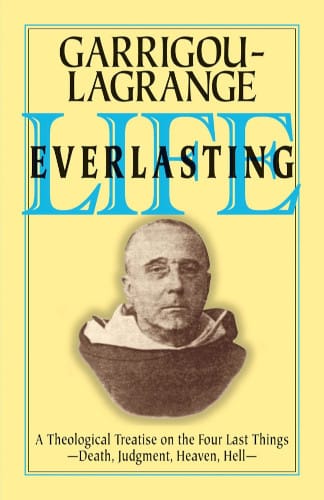
What makes Reginald Garrigou-Lagrange’s Life Everlasting a good book on purgatory?
This is a great book on purgatory. I am greatly influenced by St. Thomas Aquinas. However, the challenge with Aquinas is that he did not get around to treating purgatory in his later works. His teaching on purgatory is drawn mainly from his earliest writings, such as the Commentary on the Sentences of Peter Lombard. We wonder how he might have developed that teaching over time. Moreover, his treatment of it is not accessible to most people. So, if you are a Thomist and looking for an accessible source today, Garrigou-Lagrange’s book is the best place to go.
It is not just about purgatory. He also talks of the nature of the soul. This is very helpful. What I also like about his theology is that, though is he is very rigorous, as with Catherine of Genoa, he always maintains a connection to the spiritual life. To me, it is the best book out there on the last things.
What does Garrigou-Lagrange mean by purgatory before death?
This is quite a common concept. We hear of it when people talk about doing their purgatory in this life.
Our common conception is that purgatory is the default state we must go through. Actually, the opposite is true. Purgatory is there in case we do not make satisfaction for our sins during this life. We are supposed to take the opportunities that God gives us in this life to make satisfaction for our sins— by doing penance, offering acts of reparation, and availing ourselves of indulgences—and experience purgatory during this life. Purgatory is about finishing our life, by making reparation for our sins, before we enter into the next one.
3.
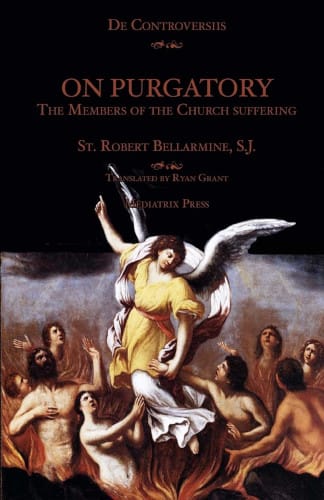
Next is the sixth of St. Robert Bellarmine’s Disputationes de Controversiis Christianae Fidei. It is on purgatory, namely, the Church suffering. Have you chosen it on account of its author, a doctor of the Church, its detail, or its focus on Protestant objections to purgatory and the Catholic practices of intercession for the faithful departed?
For all those motives. Other works—not all of which have been translated—are more accessible, but Bellarmine is someone who you need to go to.
Purgatory certainly gained greater prominence following Trent on account of the controversies with Protestants. Bellarmine is a wonderful writer and very systematic. In the De controversiis, he goes through all the Scriptural, patristic, and conciliar references to a teaching. He also presents the argument from reason in support of it. So, he is very thorough.
If you were wondering where Scripture speaks of purgatory and wanted a classic treatment of the subject rather than some article published online, St. Robert Bellarmine is the one to go to.
In my own work, I do not agree with every point he makes, but as one of my professors said, he is on the side of the angels. His treatment of purgatory is a great work.
4.
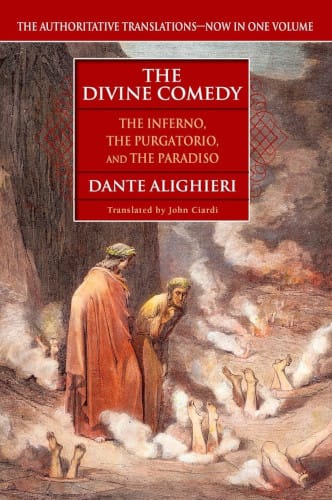
Fourth is Dante’s Divine Comedy. Presumably, you are recommending the second book of the trilogy, Purgatory. Why do we need to read a poet’s depiction rather than just the Church’s authoritative teachings purgatory?
There is not much theological writing on purgatory. There are some conciliar and papal documents, but they provide little explanation of purgatory. Admittedly, Purgatory, the second part of the Divine Comedy, is not theological work. However, it can help us think about how purgatory fits into the life of a Christian.
Dante was deeply Catholic and was trying to unpack the doctrine of purgatory and its implications for real life.
One of the most interesting ideas is one that is generally associated with the Inferno: that one suffers a particular punishment that matches the sin committed (contrapassum). This is a striking idea.
As I noted with the spiritual writing of St. Catherine, theology should influence all aspects of human life, including poetry and culture. Reading Dante's Divine Comedy helps us think about how the last things impact our whole lives.
5.
The fifth book is Benedict XVI’s encyclical Spe salvi. Its various reflections on purgatory are set within a broader reflection on Christian hope. Have you selected it because hope is the motivation underlying the Christian outlook on purgatory, the expiation of the temporal punishment for our sins, and prayer for the deceased?
That is an important factor. The principal reason I chose it is that this is the most substantial recent magisterial teaching on the topic.
In one section, Benedict XVI makes some cautious speculative conjectures. He notes how some theologians—he is actually referring to his own Eschatology—believe that the fire of purgatory might be Christ himself and his love. However, as a good theologian, he is very cautious about putting his own speculations into an encyclical.
Spe salvi is a beautiful document, and hope is one of the predominant themes that surrounds purgatory. This goes back to Catherine of Genoa too. Those in purgatory know where they are going and even experience joy amid their suffering.
We've spoken about indulgences. Many Catholics may not be aware that there is a a Manual of Indulgences (Enchiridion Indulgentiarum) issued by the Apostolic Penitentiary with the Pope’s authority. It lists all the various indulgences which the Church currently grants. Would you recommend that the faithful reads it or that each parish have a copy for the faithful to consult?
I would certainly recommend that you know it. At the beginning, Paul VI’s Apostolic Constitution Indulgentiarum doctrina is included. This is a very clear and helpful document on temporal punishment and satisfaction.
People will be surprised at how many indulgences there are and how relatively easy they are to obtain. The Manual of Indulgences is worth reading so that we are aware of these indulgences and maybe even choose some to obtain regularly.