Over the centuries, one of the main challenges in evangelizing countries in the Far East, such as China, has been bridging the cultural gap that exists between their culture and the cultures in which Revelation was communicated and the Church’s Tradition articulated. Moreover, those evangelizing have disagreed over how to approach this, most famously during the Chinese Rites controversy. Similar debates and difficulties exist today. At the same time, these efforts to evangelize have often resulted in great success and notable examples of the inculturation of the Gospel.
In this interview, Joshua R. Brown discusses the inculturation of the Gospel in China and some of the best books on the subject.
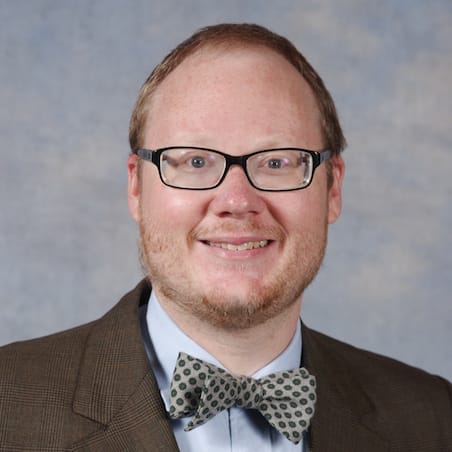
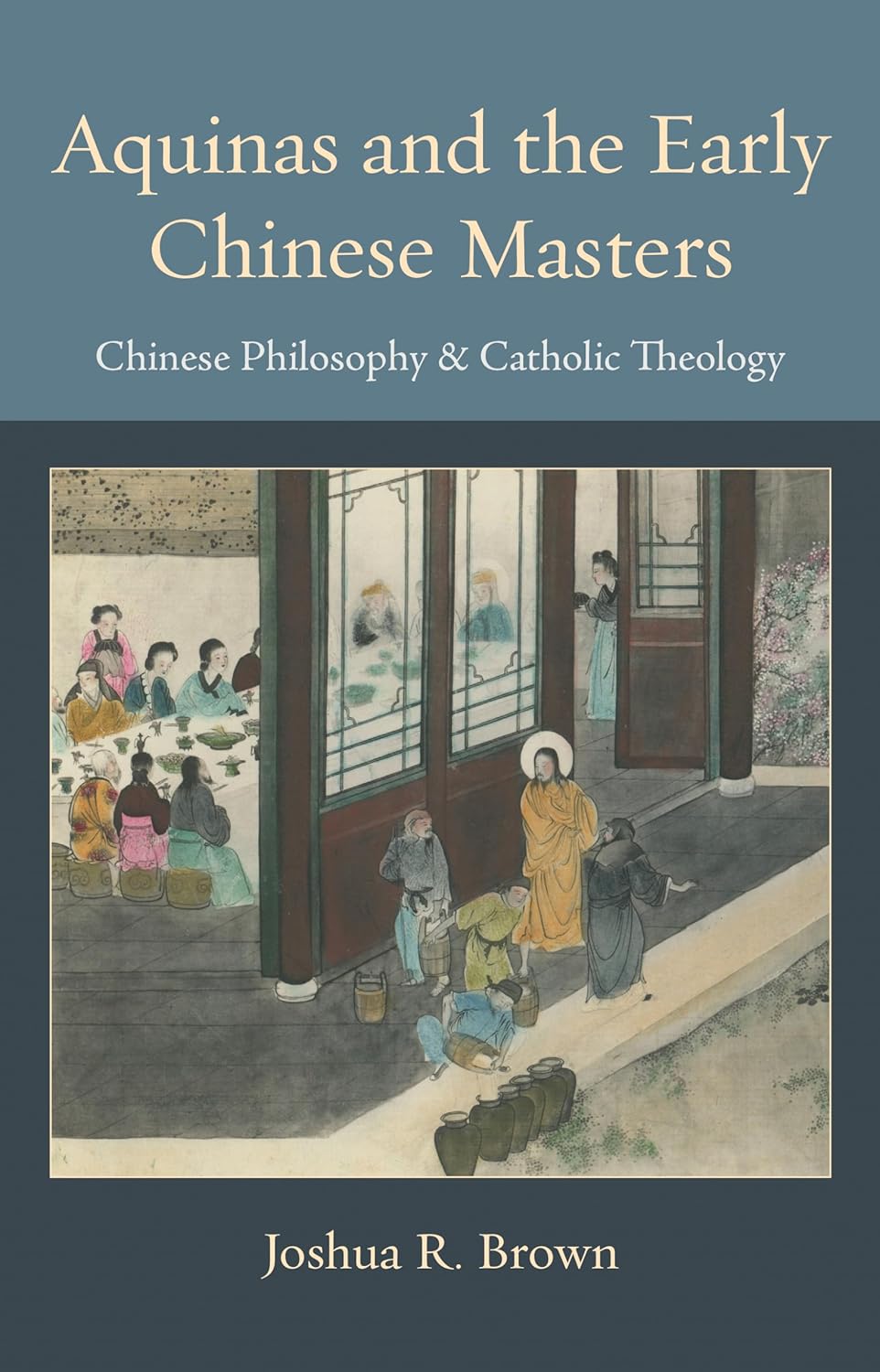
Joshua R. Brown is associate professor in the department of theology at Mount St. Mary’s University. He is the co-author of Transcendence and Non-Naturalism in Early Chinese Thought (Bloomsbury), and author of Balthasar in Light of Early Confucianism (UND Press), and Aquinas and the Early Chinese Masters: Chinese Philosophy and Catholic Theology (CUA Press)
- The True Meaning of the Lord of Heaven
by Matteo Ricci SJ - Yang Tingyun, Confucian and Christian in Late Ming China: His Life and Thought
by Nicholas Standaert - Ways of Confucius and of Christ: From Prime Minister of China to Benedictine Monk
by Dom Pierre-Célestin Lu - Beyond East and West
by John C.H. Wu - Material Objects in Confucian and Aristotelian Metaphysics: The Inevitability of Hylomorphism
by James Dominic Rooney OP
What do you mean by Chinese Catholicism? You are not referring to the current social situation of the Church in China. Instead, you appear to be referring to the integration of the valid, compatible elements of classical Chinese thought and culture into the evangelization and spirituality of Chinese Catholics.
Typically, Chinese Catholicism refers to the Catholic tradition as lived and experienced in mainland China and the Chinese diaspora (places such as Taiwan and Singapore).
Though I am interested in those conversations, they are not my primary focus as a researcher and writer. I am more interested in the project of Chinese Catholic theology. Part of that project consists in negotiating how Chinese cultural concepts, ideas, philosophy, and commitments can be used to understand and articulate the Catholic faith.
By Chinese Catholicism, I mean articulating the Catholic tradition in a way that is inviting to Chinese culture. I am not referring to on the ground political or social experience of Chinese Catholics.
What are the distinctive traits of Chinese Catholicism?
Like every other tradition, it has its own distinctive problems. Chinese culture—the traditions that have shaped the Chinese consciousness or spirit—is one of its concerns. That culture continues to be important for Chinese identity. So, many Chinese Catholics want to embrace the fullness of the Catholic Church while paying homage to their culture and being good Chinese.
Seeing how those things can fit together is a key problem within the Chinese Catholic theological tradition.
What prompted your own interest in Chinese Catholicism?
I was raised neither Chinese nor Catholic but Southern Baptist in a rural area of North Carolina and in a very anti-Catholic Protestant denomination. Through the vicissitudes of fate or the God’s providence, I met my wife and became a Catholic myself.
My wife is Malaysian Chinese. When we were starting a family, I realized that I did not really know how to live out my life as a Catholic in a Chinese family. We celebrate Chinese holidays and adopt some Chinese language. I wanted to pass something of note on to my children and support them in that part of their background. The way I resolved this challenge was to work it into my doctoral studies in theology. I began an in-depth reading of early Confucian and Taoist philosophy and fell in love with it.
Over time, I have come to love the Chinese intellectual world more and the Chinese language as a vehicle for thinking not only about the principles and the commitments that animate the Chinese world, but also about the great mysteries of God and the Church.
Practical necessity led me to become aware of the great beauty of the Chinese Catholic tradition and to where I am today.
You have recently published a comparative study of St. Thomas Aquinas and the early Chinese masters. Who are the early Chinese masters and how similar is their thought to the theology of St. Thomas?
In my book, I pose a heuristic question: a question that helps us probe a certain matter. In this case, the question is “What would St. Thomas have made of early Chinese philosophy had he read it? What would he have endorsed and what would he have found lacking?”
I deal mainly with three masters: the Confucians Mengzi (or Mencius), Xunzi, and the master of another school in early China, Mozi.
There were many other masters. One is Confucius himself, although scholars debate how much access we have to his actual writings. Other important figures are the early Confucian master, Zengzi, and the two main Daoist masters, Laozi, author of the Daodejing, and Zhuangzi. This is the book’s general cast of characters, with the three stars being Mengzi, Xunzi, and Mozi.
If Aquinas had have read all the texts of early China, he would probably have thought that the Confucianism and the Mohism were the clearest analogues to Catholic wisdom or, if you prefer, to Aristotelian wisdom. Confucianism clearly develops an ethics that is similar to that of Aristotle. It too stresses that we are social animals or relational selves. We are ordered toward life in community. That is where we attain our own flourishing. Moreover, we need to develop moral virtues to become who we are. In Chinese, the task or dao of being human (ren dao) consists in finding one’s proper role in the cosmos. Human virtue consists in fulfilling that role or place in the cosmos.
Aquinas would find much to agree with there.
Moreover, both Confucians and the Mohists have a deep devotion—deep space, I should say—for the concept of heaven or Tian. My book has a couple of chapters on this. Tian was the term normally used to designate the high god of the Zhou dynasty, the dynasty in power when most early Chinese philosophy was written. There is not a strong tradition of viewing Tian as the creator of the world, but there is a strong tradition of viewing Tian as the providential governor of the world and a moral deity who desires goodness and virtue, especially from rulers. Aquinas would deeply appreciate this view that a providential wisdom guides the cosmos
He would also esteem the way in which Confucianism and Mohism are concerned with the ways in which we ought to love and care for others. Mozi proposes universal love and the impartial care for others as a solution to the world's ills. He believes that the particular love of one’s family can get in the way of that. Aquinas could appreciate how that approximates the Christian virtue of charity but would also critique it. He would be more Confucian. However, he would appreciate this debate and this idea that caring for others leads to an imitation of Tian, a participation in heaven, and the flourishing of society.
There may be an erosion of traditional ethics in China, just as there is secularization in the West? Going forward, appealing to early Chinese philosophy or traditional values may not be a sure bridge for evangelization in China. Perhaps the main challenge will be materialist atheism, as it is in the West. Is that on the cards?
That is a tremendous question. There are various ways of looking at it.
On the one hand, Archbishop Stanislaus Luo Guang (or Lo Kuang), who was originally from China but was a bishop in Taiwan for a long time, articulates this concern very well. In mainland China, atheistic materialism has overwhelmed traditional conceptions of the human person and moral flourishing, whereas consumerist materialism has prevailed in places like Taiwan and Singapore. Hence, both wings of modernity have influenced China in certain regards. They have had a powerful impact on societies shaped in the Confucian matrix. Hence, simply retrieving traditional Chinese philosophy is not the only step that needs to be taken in evangelization. It was never that simple and it certainly is not that simple now. Engaging the successes and the foibles of modernity is essential to evangelization, not just in the secularized West but also in East Asia or Africa.
On the other hand, Archbishop Stanislaus Luo Guang was also of the view that there remains a fundamental disposition in the Chinese and that their tradition cannot really be eclipsed.
The Communist Party of China tried very hard to eclipse it during the Cultural Revolution, when it attempted to stomp out the Four Olds, which included significant aspects of Confucianism and the Chinese philosophical tradition. Forty years later, the Communist Party of China was supporting Confucius Institutes throughout the world. It realized that it was necessary to reembrace the classical principles to some degree and could not eradicate them completely. That is a good indication of how Chinese culture has stubbornly resisted an utter conversion to materialism. China is both traditionalist and modern.
The evangelization of China needs to work both angles. It has to deal with the problems of modernity. However, to provide a compelling account of the faith, it also needs to articulate the faith in the light of the classical Chinese philosophical traditions.
The first four books that you have selected are writings by or on eminent figures of the Catholic Church. To some extent, they trace the trajectory of the Church in China. Is there available in English a good history of the Church in China?
Available is the key word. Ignatius Press have published a translation of Fr Jean-Pierre Charbonnier’s Christians in China: A.D. 600-2000. This is my favourite single-volume history of the Church in China.
You also have other shorter volumes, such as the Protestant historian Daniel H. Bay’s very accessible A New History of Christianity in China.
These are the two main books that stick out.
Currently, the freedoms of the Catholic Church in China are being suppressed in various ways by the state. Is there any definite position within early Chinese thought on the limits of legitimate state power or religious liberty?
Religious liberty is a fascinating question. When Catholicism found its footing in China, early on it faced a crisis. The head of the Bureau of Rites want to extirpate the Church from China and was nearly successful. Part of his rationale was that Catholicism was subversive of the good morals of the Chinese tradition and even belonged to subversive political groups. A famous group with Daoist leanings, the White Lotus Society, had posed a political challenge to the Ming dynasty. Catholics were painted with the same brush.
In responding to this argument, the Catholic Church did not dispute the state’s right or obligation to suppress dangerous seditious elements. At that time, the Church did not have a very robust concept of religious liberty. Rather, much like early Christian apologists, it argued that Christianity was neither seditious nor contrary to sound morals. Instead, Matteo Ricci and others argued that the Catholic tradition aligns robustly with many of the fundamental moral convictions of Chinese Confucianism.
It was accepted that things religious do touch on the public or common good, and so fall under the state in some way. There was the question, especially later on, of how the state exercises authority properly. There was also the question of how Catholicism helps rather than harms the state. Later on, the conversation expanded to how the state should respect religious freedom, but that is a different question with a messy history.
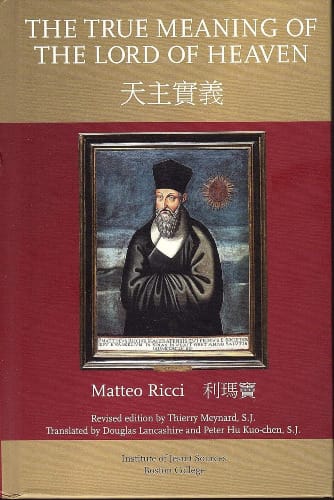
1.
he first book is Matteo Ricci’s The True Meaning of the Lord of Heaven. In it, the important Jesuit missionary engages Taoism, Confucianism, and Buddhism in a dialogue on the existence and nature of God, creation, human nature, and virtue. This dialogue is largely philosophical in character and meant to make his interlocutors more disposed to listen to the Good News. Have you chosen this work as an early example and eminent model of Chinese Catholicism?
One reason for choosing The True Meaning of the Lord of Heavenis that it has been translated into English. Very few of the early texts of Chinese Catholic life have been translated into English.
Moreover, this work was of tremendous importance for later Chinese Catholic history.
Matteo Ricci's work was not perfect but set the table in several important regards.
Is it a work of Chinese Catholicism? Well, yes and no. On the one hand, it takes a broadly Thomistic or scholastic account of natural theology. It translates Aristotelian, scholastic principles into terms that the Chinese could understand and even translates the arguments themselves. On the other hand, it is one of the first major texts to engage the Chinese tradition deeply, at least in certain moments. Granted, sometimes Fr. Ricci was not exactly right about what those traditions were. That is understandable. He was one of the first Westerners to encounter Chinese philosophy, but it took several hundred years of scholarship for Western interpreters to gain a real competency in that literature. So, one might quibble with his reading of the Neo-Confucians or Mengzi. However, he the first to make a serious attempt at engaging them.
Fr. Ricci’s work is exemplary in many regards. He realised that the Chinese traditions are not simply some pagan foolishness that must be dispensed with but need to be wrestled with. Even when he disagrees with them—as he does with Daoism and Buddhism—he tries to engage with them as best he can and does not resort to fallacious dismissals of them. Through this robust engagement with them, he explains how the Catholic faith elevates and perfects all that is good in the Chinese traditions. His example has been imitated in later Chinese Catholic theology and practice.
"The Chinese Rites controversy was meant to solve a problem for the whole of China, but that mission-field was more complicated and could not be covered with a one-size-fits-all solution."
Ricci’s policy of evangelization allowed for the accommodation of certain traditional Chinese customs. These included the practice of referring to God as “Heaven”, seasonal rites of veneration of Confucius, and ancestor worship. The missionaries from other orders objected and the matter was brought to the attention of Rome. Clement XI condemned Ricci’s policy in a couple of bulls, mainly Ex die illa (1715). As a result, the Chinese authorities put restrictions on the Church and the evangelization of the country suffered a major setback. Did Ricci’s tactics go to far, to the point of accommodating syncretism, or did Clement XI misunderstand him and overreact?
That is a wonderful question, one that experts still debate.
The Chinese Rites controversy arose out of a tremendous debate over the appropriateness of public rites to Confucius, the veneration of ancestors, and using certain names for God. On one side were the Jesuits. On the other, the Dominicans, Franciscans, and the Paris Foreign Mission Society. In some cases, there were even division among the Jesuit camp.
It was not easy to adjudicate this debate. In 1939, Pius XII directed the Congregation of the Holy Office to issue a relaxation of the condemnations and allow for the resumption of these cultural practices (Plane compertum est). Essentially, he reversed the decisions of Clement XI.
Today, Catholics in China prefer to refer to God as Tianzhu. This is the term suggested by the Church. Philosophical writers and things will also use the term Tian; another term used is Shangdi, which means ‘the Emperor on high’. These are seen as legitimate and similar in meaning to the Greek term Christians adopted to refer to God (theos) or the Roman one (Deus).
It is not clear that too strong an argument was made against Ricci. There was more good to Ricci’s approach and it was more useful for the life of the faith than his opponents saw. He did not see the controversy play out because he passed away early on in the China mission. Nevertheless, it was certainly his approach that was at the heart of the Chinese Rites controversy. He and the Jesuits were targeting urbane, educated Confucian scholars, whereas the Dominicans and the Franciscans were generally ministering in very rural areas. Each group, therefore, had a different experience of how the Chinese Rites or the appeal to heaven impacted the faithful. The Dominicans and Franciscans had more reason to be worried that the people to whom they were ministering would fall into superstition, whereas the laity to whom the Jesuits were ministering had a far more sophisticated, non-superstitious way of engaging in these practices. The Chinese Rites controversy was meant to solve a problem for the whole of China, but that mission-field was more complicated and could not be covered with a one-size-fits-all solution.
In some ways, the concerns of the Dominicans and Franciscans were utterly legitimate. They saw how superstition was played out in rural areas of China, where Catholics often thought that priests were performing sorcery in converting the host of bread into the Body of Christ rather than celebrating a sacrament. At the same time, the accommodationist approach of Ricci and the Jesuits was very useful and helpful. However, it needed to be complemented with the clear teaching and what the Church holds and believes. Otherwise, superstition and syncretism could arise, even if that was not the intention.
2.
The next book is a study of the life and thought of Yang Tingyun. He was a Confucian who was brought into the Church by Matteo Ricci. With Xu Guangqi and Li Zhizao, he is considered one of the Three Pillars of Chinese Catholicism: the three converts who contributed most to the evangelization of Ming China. What were Yang Tingyun’s contributions?
The three pillars were in part financial contributors. Each was a successful bureaucrat. In the US bureaucrat has a negative connotation, but not in China. They were part of the official mechanism of governance. In fact, Xu Guangqi was Grand Secretary and the first Catholic to rise that level. This was a very important role in the Chinese government.
They were passed the highest levels of state examination—the equivalent of a PhD—and had successful careers in governance. They were respected intellectualists and had financial resources.
Xu Guangqi, for example, donated a plot of land to the Jesuits in Shanghai. Today, it called a Xu Jiahui (the Xu family compound). It became the foundation for various institutions of Jesuit life in Shanghai.
Yang Tingyun had a similar story. He was from Hangzhou. Among other things, he eased the pathway for the Jesuit missionaries to other literati and other possible converts.
During the initial suppression of the Jesuits, he hid Jesuits in his home and trained them in Chinese philosophy. This made them better prepared to minister afterwards.
He helped establish churches in China. In my view, however, his most interesting contributions are his intellectual ones. He had been trained in the classical Confucian traditions, a requisite to entering the bureaucracy. He was also a practitioner and teacher of Chan Buddhism (Zen Buddhism as it's called in Japan). Hence, he was deeply philosophical and interested in the ultimate questions.
After his conversion to Catholicism, he turned these talents to becoming the early Chinese Catholic convert who best defends and articulates the beauty of the Catholic faith. He wrote several books of apologetics. These explain how Catholicism is not a danger but a boon to the Chinese society. He also clarifies Catholic teaching on several important areas, especially in comparison with Buddhism, which he had come to reject hand and foot.
In the process, he developed formulas that later Chinese Catholics used. He is an exemplary embodiment of the spirit of Chinese Catholicism.
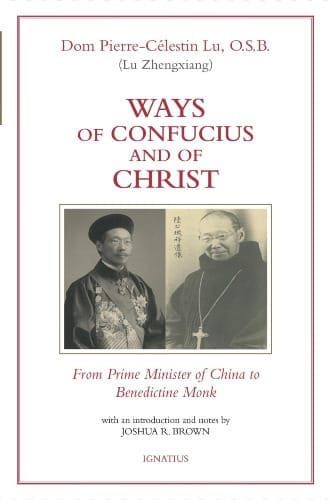
3.
Dom Pierre-Celestin Lou Tseng-Tsiang (1871-1949) (Lu Zhengxiang) was a Chinese diplomat who twice served as Premier of the Republic of China and led the country’s peace delegation to the Paris Peace Conference of 1919. He converted to Catholicism and, after the death of his wife, became a Benedictine monk and priest. In Ways of Confucius and of Christ, he argues that his Confucian background led him towards Christianity and the Catholic faith “for the simple reason that the natural order leads directly to the supernatural order, and prepares for the reception of the divine graces.” Have you selected this book because it illustrates this thesis or also because it illustrates that even the highest public figures in China have been drawn to the faith?
The latest edition comes from Ignatius Press. I had a hand in getting the book reprinted.
I fell in love with Lu Zhengxian’s story a couple of years ago. It makes me cry whenever I read it. This is a story everyone should know.
Moreover, Lu Zhengxiang embodies very important aspects of Chinese Catholicism.
He does not get into the nitty-gritty of the Chinese masters. Those interested in Chinese philosophy can consult my book or Ricci’s. Rather Lu represents a synthesis between Chinese traditions and Catholicism.
He was not deeply educated, but he did learn the classic texts of China. From them, he took his fundamental approach to life, mixed with his Protestant upbringing (he was part of the London Missionary Society in Shanghai). He embodies the formation in the Confucian tradition of virtue, of love for the ancients, of loyalty, of love for one’s country, and of devoting oneself to self-cultivation. He finds all these perfected in the Catholic tradition. The beauty of Confucian tradition leads him to appreciate the beauty of the Catholic faith. This illustrates how the natural order leads us into the supernatural order.
Lu Zhengxiang lived when the Qing dynasty was in decline and the Republic of China rising. There was a greater acceptance that embracing Western ideas was necessary for China to flourish. From the 1830s until 1911, China was at the mercy of Western imperial powers: Great Britain, U.S., France, Russia, and Germany. It was greatly weakened and many Chinese looked to the West for a solution.
Some believed that secular philosophy offered the key. That is how Marxism became so important to China.
Many, however, looked to Christianity in the belief that it was the DNA of the West and that which made good, noble, competent, and flourishing. This was the stance of several Chinese statesmen, such as Sun Yat-sen, the founder of the Republic of China, or Chiang Kaishek, who became president of the Republic of China in the 1920s. They all understood that the Christian tradition was a powerful intellectual resource which could help China flourish politically and otherwise. It was not that Lu Zhengxiang instrumentalized Christianity to make China better. He simply thought in the manner of a good Confucian: social and political flourishing are connected with moral and religious flourishing. Knowing and loving God leads and overflows into political flourishing.
"He found in the classical Chinese traditions a preparation for discipleship."
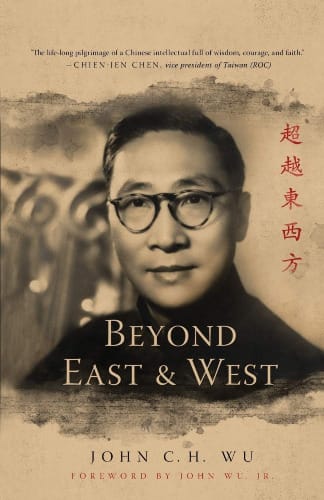
4.
John Ching Hsiung Wu (Wu Jingxiong), a Chinese jurist, was the principal drafter of the constitution of the Republic of China and a convert to Catholicism. What does his autobiography reveal about Chinese Catholicism?
One chapter, not the whole book, is on the relationship between Confucianism, Daoism, and Buddhism, and how they prepared his heart to become Catholic.
Much like Lu, he found in the classical Chinese traditions a preparation for discipleship. Indeed, many Chinese Catholics perceive quite rightly that a formation in classical Chinese thought tills the garden of the soul for the seeds of the Word. It prepares the ground and prevents them from becoming the bad soil of which the Lord speaks in the parable of the sower.
More broadly, Wu dealt with classically Chinese problems such as the political situation of the country, his frustrations with this situation, and his drive to become a modern person.
He was educated in the University of Michigan law school and connected with Oliver Wendell Holmes, later a US Supreme Court justice. He became infatuated with the idea and even the idol of the law. Just as Nietzsche's Übermensch utilizes jurisprudence to rise above the shackles of previous ages, so is Wu infatuated with modernity. He was also drawn to things like concubinage and desired to have a concubine in addition to his wife.
Then he was suddenly overcome by God's grace and encountered the beauty of the faith. This helped him rediscover the virtues that the Chinese tradition had taught him. He finally become that virtuous man through Catholicism.
His is the story of a thoroughly modern Chinese Catholic. The Chinese traditions shaped him in important ways. However, he also exhibits the ways in which Chinese Catholics engage the modern world and the Church shepherds souls who are in a position such as his.
"The key virtue in Confucianism is ren 仁. This word is an intentional play on the term for human being: ren 人. Hence, to be a human is to live a moral life."
5.
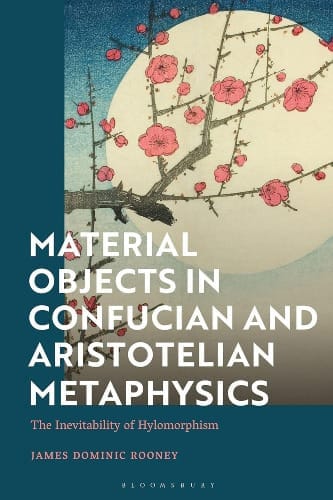
The last book is technical philosophical essay. In Material Objects in Confucian and Aristotelian Metaphysics, Fr. James Dominic Rooney argues that the twelfth century Neo-Confucian philosopher Zhu Xi reached independently the same conclusions as Aristotle and St. Thomas Aquinas that material substances are not made out of matter alone (hylē), but also have a real essence: an inherent form (morphē) that is irreducible to matter (hylemorphism). Does early Chinese philosophy approximate the Christian conception of nature and morality because it has such a metaphysical underpinnings?
Fr. Rooney’s book is not for the faint of heart but for those who are interested in philosophy and, more specifically, analytical philosophy.
I love the spirit in which Fr. Rooney writes it. It is a good model for how to approach this kind comparative study.
Zhu Xi (1130-1200) came after the classical tradition and embodies a different style of thought. The question, though, is whether early Chinese traditions have a metaphysical foundation.
On the one hand, we could say there were several Chinese traditions around and they did not always agree on metaphysical questions.
In Shengming Zhexue (The Philosophy of Life), Archbishop Stanislaus Luo Guang argues that Confucian metaphysics is based on principles that are not the same as those of Catholic metaphysics but nonetheless appreciably similar in important respects. He also claims that Confucian moral teaching is an extension of these principles. The entire cosmos is ordered around the perpetuation of life and human existence is a participation in this perpetual cycle of the giving of life. Hence, the Confucian ethical principle of benevolence, kindness, to be charity follow from our way of being in the world.
To be more concrete, the key virtue in Confucianism is ren 仁. This word is an intentional play on the term for human being: ren 人. Hence, to be a human is to live a moral life. The moral virtue of ren is the way we enact the identity we have within the cosmos. So too, for Catholicism, morality is very tied to our nature and our relationship to God, the ultimate reality that guards and guides all things. This is one similarity between the two.
So, their metaphysical underpinnings are both similar and different, and the details need to be worked out.
Could you give a brief explanation of another book that did not make your list because it has not been translated into English yet?
The book is the one I just mentioned: Archbishop Stanislaus Luo Guang’s Shengming Zhexue (The Philosophy of Life). As bishop of Tainan, he attended Vatican II and served on the commission on missions. He was also a philosophy professor and theological writer.
The Philosophy of Life is his magnum opus. More than synthesizing Thomism and Confucianism in the book alone, he himself as a thinker is a synthesis of these two traditions. He reflects on the world through the lens of Thomistic, scholastic theology and that of ancient and medieval Confucian philosophy. He brings both ways of thinking to bear on the question of existence or life itself. In the process, he arrives at what is in my opinion a perfectly orthodox and crystal-clear Catholic account of creation, the call to moral virtue, and the transcendent supernatural end of the human person.
This book is the best example of how Chinese Catholic theology should be done. I hope to have it translated within the next few years.