Fatherhood is one of the most fundamental human and social roles. However, many point to a crisis of fatherhood across the West. It is not simply that many fathers neglecting their vocation and responsibilities. More concerningly, there is a widespread confusion about what it means to be a male and a father.
To overcome this crisis we need to turn to Christ and his Church for grace and guidance. As the Church teaches, “In revealing and in reliving on earth the very fatherhood of God (Ephesians 3:15), a man is called upon to ensure the harmonious and united development of all the members of the family: he will perform this task by exercising generous responsibility for the life conceived under the heart of the mother, by a more solicitous commitment to education, a task he shares with his wife, by work which is never a cause of division in the family but promotes its unity and stability, and by means of the witness he gives of an adult Christian life which effectively introduces the children into the living experience of Christ and the Church.” Familiaris consortio 25.
In this interview, Deacon David Delaney discusses the Christian conception of fatherhood and recommends five books on it.
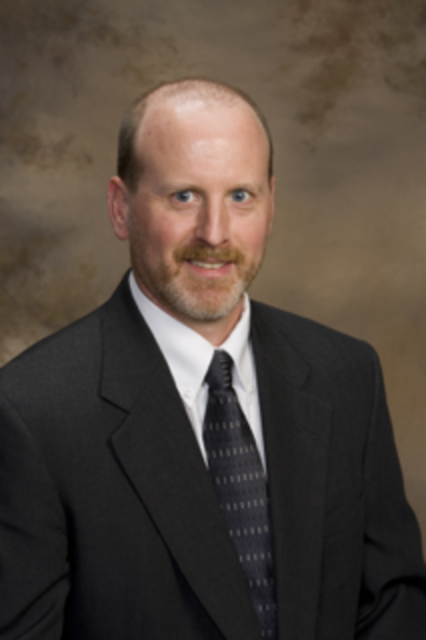
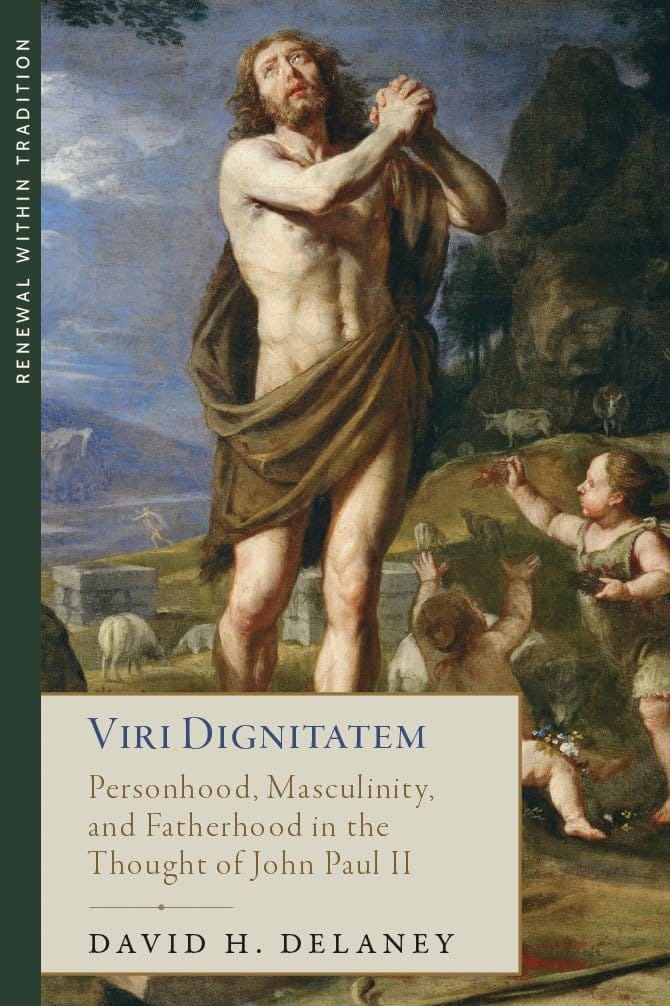
Deacon David Delaney is the founder of the Mother of the Americas Institute, its current Director, and a Senior Fellow. He is also Chairman and President of the Board of Directors. Deacon Delaney previously served as founding academic dean for two separate institutions of higher education dedicated to theological formation. He has his doctorate in systematic theology from The Catholic University of America in Washington, DC. His research interests are in the areas of the Trinity, Christology, ecclesiology, liturgy and the Sacraments, mission, and the new evangelization, all considered from the perspective of an adequate anthropology. He is the author of Viri Dignitatem: Personhood, Masculinity and Fatherhood in the Thought of John Paul II and The Great Mystery: Formation for Flourishing Marriages.
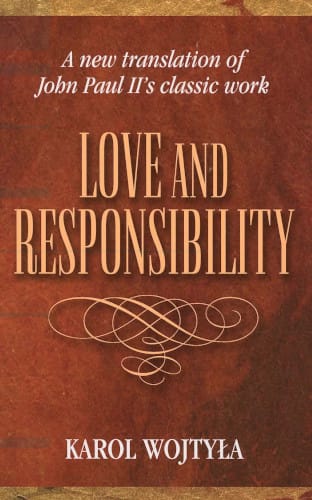
- Love and Responsibility
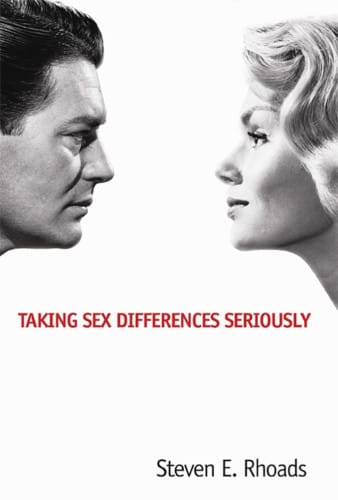
by Karol Wojtyła - Taking Sex Differences Seriously
by Steven E. Rhoads - The Great Mystery: Formation for Flourishing Marriages
by David H. Delaney - Jesus the Bridegroom: The Greatest Love Story Ever Told
by Brant Pitre - Supernatural Fatherhood Through Priestly Celibacy: Fulfillment in Masculinity, A Thomistic Study
by Carter Griffin
Fatherhood is both a biological and a moral category. The latter is rooted in the former and consists in being a good father: discharging well the responsibilities incumbent upon a father. Presumably the books you have selected deal primarily with fatherhood in the moral sense. How would you define fatherhood?
Ultimately, we need to go back to the Trinity to understand the human condition and what it means to be created. Fatherhood is understood in terms of God's fatherhood. That is how many of the spiritual masters discussed it.
Fatherhood has many different manifestations. Ultimately, however, it is rooted in the order of love.
Fatherhood begins with the love of initiation: a love that offers itself first. Then, the father ought to await the response patiently.
It also begins with masculinity. Masculinity is one of two complementary ways of being a human person. As St. John Paul II points out, we can only be a human person as either male or female. A human person is made in a certain sense to pour itself out.
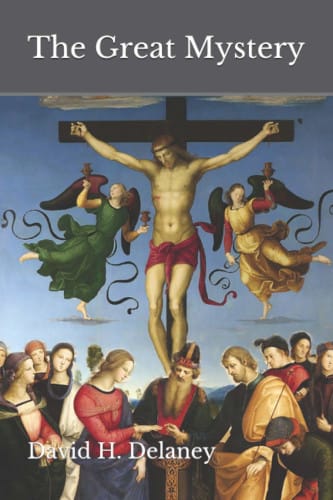
In my book, The Great Mystery, I use two of Raphael’s pictures: the Crucifixion and the Marriage of Mary and Joseph. In the former, the angels catch the precious blood that comes out of Jesus's side. This outpouring is a good manifestation and analogy for human personhood, which reaches fulfilment through an outpouring of self. Fatherhood is the fulfillment of masculinity and consists in pouring oneself out to give whatever the other might not have and bring that unactualized good to fulfilment in the other person. It is a structure of love that is ordered to bringing about the good of the other.
As you have already mentioned, fatherhood is an analogical concept, whose source and exemplar is the first person of the Trinity. Is consolidating their relation to God the Father though the liturgy, sacraments, and prayer the first thing men need to do to cultivate fatherhood?
Within the natural order, it is certainly possible to cultivate fatherhood without reference to the supernatural order. However, in the fallen world one cannot do that adequately or effectively. Fatherhood, whether it be in the natural order, by procreating children and bringing to birth or nurturing an unactualized good within another person, or the supernatural order which gives this work redemptive value, it can only be accomplished adequately with reference to the Father, the first person of the Trinity, and fructifying that through the liturgy.
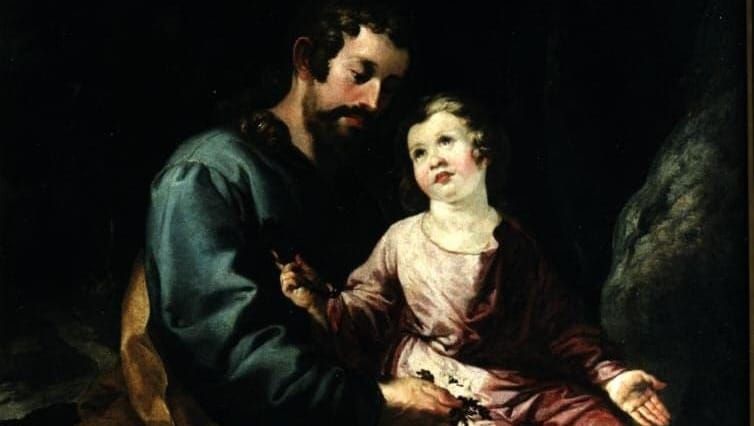
Another model of fatherhood's that the Church proposes is St. Joseph. Just as the Holy Family is the model for all Christian families, so is St. Joseph a model for all fathers. Have you addressed this model of fatherhood in your work?
I have. St. John Paul II wrote a play called The Radiation of Fatherhood. It is a beautiful meditation on the difficulties of fatherhood within the fallen order. This meditation prefigures his later work in which he presents St. Joseph as the perfect manifestation and radiation of God's fatherhood: of the Father of the Word of God. This is what we are called to do as men, regardless of our state of life. We are called to irradiate the fatherhood of God. Within the fallen order this means that we need to be attentive to the spiritual life die continually to ourselves, just as we did in baptism. We need to crush the impetus to turn in on ourselves. We need to be oriented to others. Our primary reference point should not be our own good but the good of the other. This frees us from ourselves.
St. John Paul II’s Redemptoris custos (Guardian of the Redeemer) is a beautiful meditation on how St Joseph does this perfectly. That is a central theme in my book.
"The crisis of fatherhood has always existed on an individual level. However, it has spread to us corporately."
Is there, as some claim, a crisis of fatherhood in the West?
There is. This has not gone unnoticed. However, we have not really been able to do much about it, primarily because we have not recognized sufficiently, whether individually or collectively, the need to be in the world without being of the world.
The crisis of fatherhood has always existed on an individual level. However, it has spread to us corporately. Many men do not understand adequately what it means to be a male. This is part and parcel of a broader problem because women are also confused about what it means to be a female.
Nevertheless, this is a great opportunity to understand better and articulate more deeply the nature of personhood, the difference between the sexes, masculinity and femininity. That needs to be at the root of the solution.
There are certainly practical steps that we can take. Men, need to continue to offer themselves fearlessly. The difficulty in radiating God's fatherhood is that we need to pour ourselves out. In this world, that means that we might experience what seems like loss alongside love. However, Christ’s cross shows that with authentic love there is no loss but only gain.
There has been a trend to level all differentiation between the sexes and wash away authentic masculinity. Clearly, there have been excesses and a fallen imposition of masculine gifts that have done damage to women and society. That does not mean that we can disown our obligations.
Jesus Christ is the perfect representation of authentic masculinity. He is the bridegroom who continually offers himself to the bride. His bride ends up putting him to death but he continues to pour himself out for her. This fearlessness and willingness to offer oneself continually to one's wife and children, regardless of whether they accept and respond to this love, is what fatherhood means.
We cannot become shrinking violets. However, neither should we respond with machismo: my way or the highway. That caricature of masculinity has enabled and is used to justify this levelling of the differences between the sexes.
So, there is a crisis of fatherhood and it is getting worse. However, this is also an opportunity for a greater clarification and embrace of authentic fatherhood.
 Five Books for Catholics
Could you elaborate on the causes of the crisis of fatherhood in the West?
Ultimately, it is Adam and Eve. Moreover, as with Adam and Eve, the contemporary crisis begins with an attack on a woman and the husband’s failure to protect her.
It began with the dissatisfaction of women and with narratives that were partly true, partly not. Throughout the twentieth century, women desired to play a greater part in public life and overcome the masculine oppression that did exist. However, the inadequate response to that leant into the caricature of masculine oppression and sought to diminish every difference between the sexes.
Most people recognize that wives and mothers have generally had a dominant role in family. However, to win opportunities for women to be more engaged outside of the home, whatever restricted women from doing this was attacked.
The 1930 Lambeth Conference was a seminal event in this regard and allowed a change in mindset. It led to the disconnection of procreation from married life. The meaning of sex became open to new definitions and became increasingly self-referential. This manifestation of our new will-to-power began to turn our relationships against one another.
In the United States, the excesses of the 1920s laid the foundation for the sexual revolution of the 1960s. It was quelled by the Great Depression and World War II but after the war it came back with a vengeance. The moral decadence promoted by the sexual revolution is now accepted as the norm in the dominant organs of academia and public life. As a result, there has been a fragmentation of the connection between masculinity and femininity; between marriage and family life. We are utterly lost and no longer know what it means to be a human person, or male and female.
The crisis of fatherhood is nothing other than a symptom of a much more fundamental problem.
St John Paul II claimed that the crisis of the twentieth century was that of the human person. We continue to experience this crisis of human personhood. At its root, the crisis is now about it means to be a male and a female person.
"Jesus Christ is the perfect representation of authentic masculinity. He is the bridegroom who continually offers himself to the bride."
Reading the right books can be helpful, even necessary. However, is that enough to help men learn about fatherhood?
It is a start. We need to know the truth to identify the good to be pursued. If you do not know the good, you are grasping in the dark. So, reading books is essential, but never sufficient.
We must transform ourselves in Christ. To do so we need to say no to ourselves and put into practice that which is true and ordered to the good.
In an address to the 2000 Jubilee of catechists and religion teachers, Joseph Ratzinger remarked that the Church has made a lot of progress since the sixties and seventies in intellectual formation, but not paid sufficient attention to the formation of the will. That is still the case 24 years later.
I have taught in formation, including in a seminary for some twenty years. Most of what we call human and spiritual formation tends to be intellectual formation on those topics. In my view, we still have not figured out what the practical formation needs to be and how it should take place.
The Great Mystery marriage program tries to take such an integral approach to formation. I belong to the Personal Ordinariate of the Chair of St. Peter and, as director of diaconate formation, am working with the Josephinum to develop a more integral and practical approach to the formation of deacons.
Obviously, pastoral formation has been much more practical. However, the human and spiritual formation has not. Each man needs to recognize that he has to be his own formator if he wants to be a good man. It is not just something you can learn about. You need to change yourself. Nevertheless, you need to begin by learning about it.
This the classical theme of the formation of the moral virtues.
Yes, exactly. In the West or the United States at least, we have lost this idea because we live in a consumer-oriented economy where you need to get people to consume things they may not need. It sells to set concupiscence against the human condition. Such a society builds vice. As a result, virtue is either forgotten, seen as an unreachable idea or, for most, is lampooned as something completely contrary to human good and so is rejected.
Working practically on building virtue is a necessity and begins with overcoming vice.
I have a ten-point program as part of my formation program. The very first point consists in drawing up an inventory of one’s vices to overcome and identifying the opposing virtues to build up. We cannot begin to be authentic men and fathers without doing so.
Could you explain the work of the Mother of the Americas Institute?
The Mother of the Americas Institute is an apostolate that was formed around the issue of formation. There are many different apostolates that do a lot of good work. Rightly, they adopt many of the means and strategies that have helped society become more efficient, productive, and reach more people. These are all good. However, we need to step back and look at the way in which we are conducting evangelization, catechesis, and ministry. Society’s approach to communication and organization are based on an industrial model and mindset. That industrial model has a corrupt view of human nature and the human person. We see this in business, which uses the term ‘human resources’ and thinks of the person as raw material to grind up and extrude into the different shapes that we want. We fall into this mindset when we look at things primarily in terms of outcomes. If outcomes become the end, then the human person becomes a means. We need to take a new look at what we are doing. We need to improve the fruitfulness of our endeavours by starting with an adequate anthropology, and then looking at what we are doing and how we are doing it. Apostolic endeavours are primarily about the formation of the human person, or at least they ought to be.
Hence, The Mother of the Americas Institute starts from the foundation of what it means to be a person. The person is made for relationships and needs to be able to live those relationships truthfully and fruitfully. So, we look at the potencies God has placed within the human person and how, instead of imposing outcomes, we can best bring them to actualization. We try to be better midwives, as Socrates would say, and bring to fulfilment that which is already within us.
We are just beginning and are working on rolling out two products.
One is already available: Made for Communion. It is a free, self-paced video based course and is on our website (mainstitute.org). It begins by looking at how everything in creation, Redemption, and human fulfilment can be understood from the perspective of the interior life of the Trinity. It shows how this is manifested in the liturgy, sacraments, moral life, and social teaching of the Church, and will be brought to fulfilment at the end of time.
The second product is The Great Mystery marriage formation program. It consists of intellectual formation that brings together all of this knowledge about what it means to be human and its implication for marriage. Then, it turns to the practical implementation of these lessons.
Eventually, we would like to take the insights and lessons learned from building these programs and help other apostolates to look at what they are doing and pursue it more fruitfully.
1.
The first book you have chosen is Karol Wojtyła’s Love and Responsibility. It is not about fatherhood and motherhood, but a broader argument: how human sexuality finds its fulfilment in marriage. Is accepting this broader argument crucial to understanding the nature of fatherhood?
It is. Masculinity and fatherhood are not self-standing entities. The Early Church became aware of this in the controversies on the Trinity. As the early Church Fathers pointed out, there is no Father without the Son, and vice versa. Fatherhood and Sonship are relations of opposition. The divine persons are the archetype of human persons and creation. Similarly, masculinity has no meaning except in the face of femininity and motherhood.
If we do not understand masculinity and femininity from this perspective, we are likely to fall into an individualistic mindset. We will try to be a Lone Ranger or superhero who is out on his own to fix all the world's problems and all his family's. However, these problems are not individual issues, but relational ones.
Love and Responsibility shows, from a practical perspective, the phenomena at the root of a marriage and family life and how these need to bear fruit in love. It is an effective tutorial.
Of all John Paul II's writings, it is one that is easiest to approach for the average Catholic. Books like Person and Act or Man and Woman He Created Them are like the Summa theologiae: you need much background knowledge to read them fruitfully. Love and Responsibility is more like the Summa contra Gentiles. It is written in a more narrative manner and does more to draw out the basic ideas. It is even more practical and describes phenomena of human experience, how they can be lived out, or are experienced both rightly and wrongly.
Your Viri dignitatem is a study of St. John Paul II’s thought on masculinity and fatherhood? Is there one place in particular where he condenses his thought on the matter?
Other than Redemptoris custos on St. Joseph, there is not.
Both those who love St. John Paul II and those who hate him agree that he appeared to ignore the subject of men and fatherhood. He did in one sense. He did not write a work on it, as he did with women and in motherhood. That said, Familiaris consortio provides a more even treatment between men and women in family life.
It takes a comprehensive survey of his work and foundational thinking to see how all this fits together. Every time he talks to women about motherhood, he is talking at the same time to men about masculinity and fatherhood.
"Fatherhood is the fulfilment of the male human person."
What are your main findings in Viri dignitatem?
There are many, but one of the most essential ones is that we men can only find our fulfilment if we conform ourselves to our masculine identity, which means to be fathers. Fatherhood is the fulfilment of the male human person. It consists in loving in the way that Christ, the Son, revealed: to pour oneself out to the other and not to be self-referential in the choices one makes in any situation. Rather than saying, “What do I get out of this?”, one should ask, “What is the common good? How is it that I can help the other who has been given to me in this instance to achieve his integral good.”
One of the biggest problems is finding men who are willing to do this in a loving, gentle, masculine way, not in an oppressive way that feeds into the machismo caricature. It is becoming harder to find such men because the more you get hit over the head with anti-masculine messaging, the harder it is to do the right thing.
Understanding more deeply the human person and masculinity in the light of femininity and motherhood are essential for implementing this.
2.
In Taking Sex Differences Seriously, Steven E. Rhoads takes issue with the view, currently widespread, that the differences between the typical behaviour patterns of men and women are social constructs. Rhoads argues instead that the differences are deeply rooted in our biology. Have you recommended this book as an antidote to gender theory?
Yes. Rhoads is a public policy professor and draws on sociological studies. The differences between man and woman are manifested clearly in biology, but their roots are much deeper in the human person.
This is a very controverted issue. There are those who are referred affectionately to as Thomists of the strict observance who follow the solution of St. Thomas and treat human personhood as a mode of substance. We can still hold to that, but the difference of the sexes—masculinity and femininity— does not arise merely out of biology. They manifest something even deeper. In God it is the persons who possess the nature. So too, in the Incarnation. It is the divine person of the Son who possesses the human nature which he has taken. However for St. Thomas, there is no human personhood that is distinct or separable from his human nature. This does not seem adequate to meet today’s crisis of the human person. St. John Paul II never articulates the underlying metaphysics of sexual difference. However, if we take more seriously the analogy between the divine persons and human persons, while human persons are not relations of opposition, it does make sense to think of human persons under the category of relation. This in turn makes more sense of masculinity and femininity: of how masculinity is ordered to a giving of love. Indeed, John Paul II’s entire project is about how choices constitute the person. Germain Grisez is the only other author I know who says the same thing (though there are probably more).
If we use this as our underlying model of human nature and personhood, sex differences makes more sense. Persons as male and female are not just a bunch of phenomena or irresolvable aporias at the level of biology.
Rhoads’s book can help us see how to live as men, husbands and fathers, if we take the empirical evidence that he offers and put that into a more authentic model of the human personhood.
3.
The next book is an explanation of the doctrine imparted in The Great Mystery marriage preparation program. What sets this program apart from others?
Well, two things. My associate director likes to put it this way: we put theology into practice for improving our relationship with God and one another. Ultimately, there is the problem of the cleaving between theory and practice, where for the most part the theoretical is taken to be unreal, and the practical is all that there is. However, truth and action, or truth and love, cannot be separated from one another. Without truth, there is no love. As St. James taught (James 2:19-20), faith without works of love is demonic. “Even the demons believe and shudder.” However, if your actions do not arise from the truth, then they are not acts of love, no matter how you feel. Such actions are usually too self-referential.
This book, therefore, aims to put theology into practice. It lays out the theological foundation of masculinity and femininity and what that means for marriage and what means marriage means in the greater scheme of things. Marriage is not just as a natural institution, but, through the great mystery, a supernational one. Analogously, the relation between the husband and bride and becomes the same as that between Christ and the Church, his bride. What, though, does that mean in practice?
Before I embarked upon this endeavour, I surveyed about twenty different programs. What I saw for the most part, though, is that they were either very good theologically or they were very practical without any reference to the theological truths. But most programs had only had six or seven sessions right before the marriage. The Great Mystery tries to do both, using a practical approach. It is not a marriage preparation program. It is a marriage formation program.
About seventy couples have taken Great Mystery. We are currently developing a facilitator formation program so that we can expand the number of facilitators. At present, we can only take on people who will commit to a year of formation. It is not just about reading and understanding the content. It is about putting into practice the various aspects of marriage.
"Of course, both men and women need to be transformed in Christ. However, being a husband is the vocation to which most adult men are called; fatherhood, that of every man."
4.
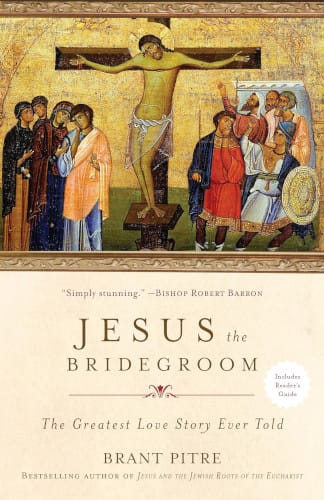
The title of The Great Mystery marriage formation program is taken from Ephesians 5, where Paul describes Christ’s relation to the Church, his bride, as a great mystery and the foundation of Christian marriage. Brant Pitre’s Jesus the Bridegroom is a book on soteriology and shows how Paul, rooted as he is in Judaism, sees Christ’s redemptive work in terms of marital love. Are you recommending this book as an aid to help men unpack Paul’s teaching and make Christ the model of their love for wife and family?
Exactly. St. John Paul II points out that it is an analogy: there is a similarity but also an infinite difference between the two. The big difference is that Jesus is God, but a husband is not. Hence, Jesus is the example par excellence of what a husband must be and must do. Selflessly, he offers himself continually and waits for his self-offering to be received. Brant Pitre’s book provides a profound theological understanding of the model of a man’s transformation.
Of course, both men and women need to be transformed in Christ. However, being a husband is the vocation to which most adult men are called; fatherhood, that of every man. We need to understand more deeply, personally, and practically, therefore, the way that Jesus, by giving himself up for the Church, lived out what it means to be a man, a husband and a father.
5.
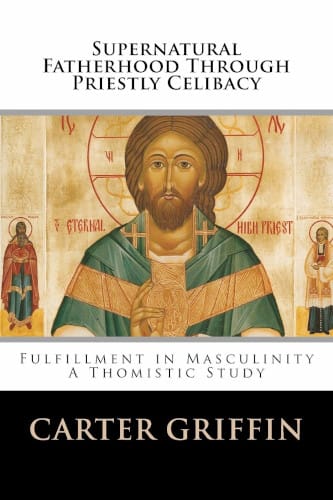
The final book considers a fatherhood that is not rooted in siring children biologically: the spiritual fatherhood of priests. This book will obviously be of interest to ordained ministers, seminarians, and those who are discerning a call to the priesthood. Have you recommended it just for them or also for those who are called to marriage?
Yes, for both. Fr. Griffin’s book is masterful and I really recommend it. It is for priests or men who are called to the religious life. However, all men are called to chaste love.
This book explores this with much more depth than I did in Viri Dignitatem. Moreover, there is a relationship between God's fatherhood and the fatherhood to which every man is called. Keeping that in view is one of the big challenges, albeit in different ways, for priests and husbands. However, when you have a family, it is easy to miss the big picture amid the immediacy of the bodily needs of your family What are we trying to do? We are not just trying to get our children, a good education and good jobs. Not only does our society no longer not help us form our children but works against this and deforms them. This book can help us understand that fatherhood consists in giving to others and I strongly recommend it for all men, regardless of their vocation.
For St. Thomas, how does priestly celibacy, or celibacy in general, fulfil masculinity?
In a nutshell, fatherhood is the one vocation for all men. Celibacy is the expression of spiritual fatherhood without a natural wife and family. It is one of the manifold ways of carrying out the Christian vocation. It is a particular instantiation of the male human person’s vocation to holiness and sainthood.