The Protestant Reformation rejected central Catholic beliefs and practices regarding the nature of Revelation, justification, and the sacraments. The general contention was, and continues to be, that such beliefs and practices have no foundation in biblical Revelation and are even contrary to it. The Catholic Church has addressed these issues authoritatively and definitively, most notably in the Council of Trent and the Second Vatican Council. Nevertheless, many must address Protestant objections to the Catholic faith at a personal level: whenever they are raised by a friend, relative, colleague, missionary, or group. Oftentimes, they may not be sure how to answer them. Some might even begin to suspect that the objections are sound. At the same time, some Protestants are questioning the validity of the same objections and wondering whether they should become Catholics.
Those grappling with these issues will often feel the need to study the biblical, theological, and historical grounds for the contested Catholic teachings. Catholic apologetics gathers the evidence and outlines the arguments systematically.
In this interview, Trent Horn selects and discusses five books of apologetics that can help those grappling with Protestant objections to the Catholic faith.
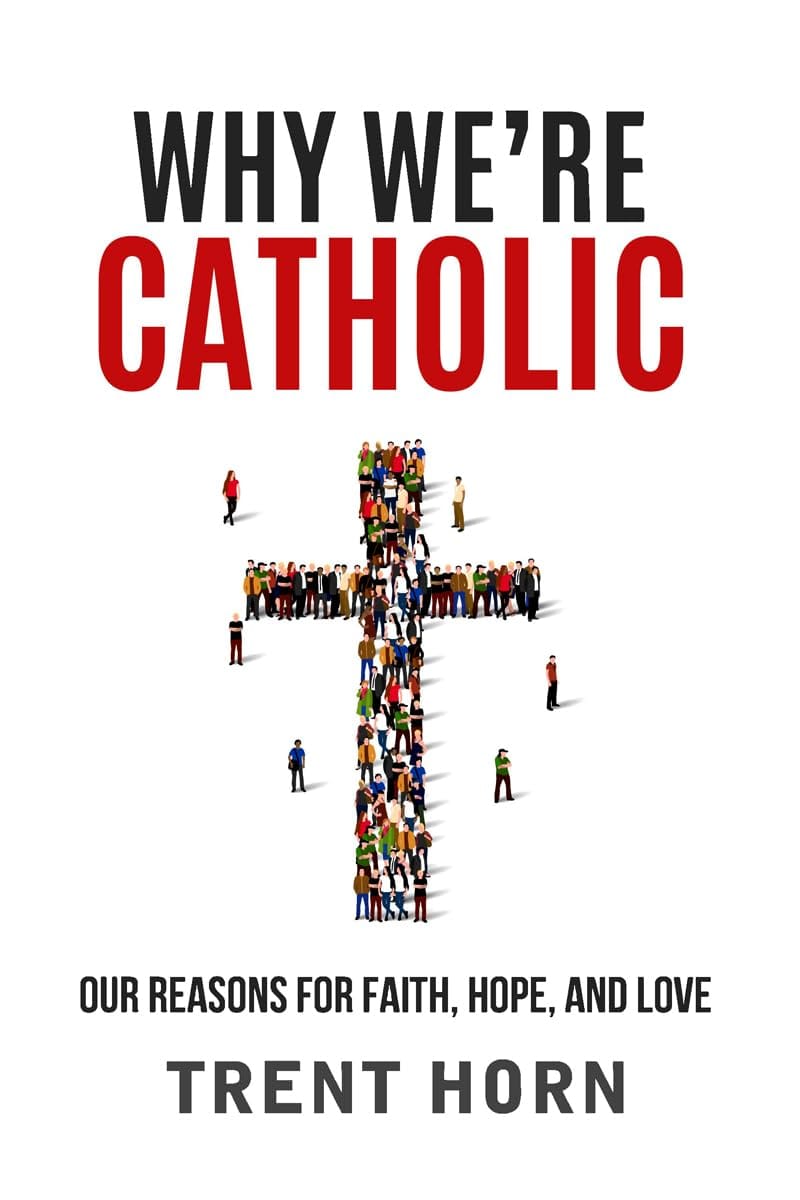
Trent Horn is a staff apologist and speaker for Catholics Answers, and adjunct professor of apologetics at Holy Apostles College. He specializes in teaching Catholics to graciously and persuasively engage those who disagree with them. He can be heard on the radio program Catholic Answers Live and on his own podcast, The Counsel of Trent. He has written for The National Catholic Bioethics Quarterly, and is the author of nine books, including Answering Atheism, The Case for Catholicism, and Why We’re Catholic: Our Reasons for Faith, Hope, and Love.

- Catechism of the Catholic Church
by John Paul II - The Case for Catholicism: Answers to Classic and Contemporary Protestant Objections
by Trent Horn - The Apostolic Fathers
- Teaching with Authority: How to Cut Through Doctrinal Confusion & Understand What the Church Really Says
by Jimmy Akin - Pope Peter: Defending the Church's Most Distinctive Doctrine in a Time of Crisis
by Joe Heschmeyer
What is apologetics?
Apologetics comes from the Greek word apologia which means to give a defence of something, typically in a court of law. When we refer to the faith, apologetics is the branch of theology that is dedicated to giving a rational defence of the Catholic faith.
Theology is a science and if apologetics is a subfield of theology, presumably it too is a science and relies exclusively on rigorous argumentation. To some extent, however, it is also an application of the art of rhetoric, where one selects the reasons most likely to persuade the addressee. Is it a bit of both: science and rhetoric?
It depends on the focus of the one engaged in apologetics. Some publish peer-reviewed journals or academic books on apologetics. They are focused primarily on answering objections, mounting forth evidences for the faith, putting forward arguments, compiling the evidence. They are focused more on the accumulation of knowledge.
However, many who engage in apologetics, especially lay people, are talking to friends and family. Rhetoric is a very important part of this.
In this regard, apologetics is similar to evangelism. In evangelism it is not just what you say, but how you say it. Similarly, in apologetics you need to appeal to people's sense of ethos, pathos, and logos: authority, emotion, and logical argumentation.
 Five Books for Catholics
Where does apologetics fit into the broader sweep of evangelization and catechesis?
Apologetics is certainly not identical to evangelism or catechesis. Evangelism is sharing the Good News of salvation through Jesus Christ and his Church. Catechesis is the greater instruction of those who have been evangelized. Literally, "catechesi"s means to sound down: to build a foundation for the person who has accepted the Good News about faith in Jesus Christ and his Church. In some cases, you can catechize without apologetics by simply presenting the Church’s teaching. In other cases, people will have objections. It may be an objection to the Gospel. It may be a question about some Church teaching that does not make sense to them or about which they have heard opposing arguments from non-Catholics. Here, apologetics complements what we do in evangelization and catechesis.
"The most fundamental issue dividing Catholics and Protestants is the doctrine of sola Scriptura."
Particularly since Vatican II, the Catholic Church has encouraged ecumenical dialogue. Some, therefore, may suspect that making the case for the Catholic faith to convert Protestants rather than to defend one’s own faith is triumphalist, runs contrary to the spirit of ecumenism, and no longer has a place in the Church. Do you agree?
No, I strongly disagree with that. The council never condemned apologetics, namely, providing reasons for the Catholic faith, whether to reassure Catholics in their faith or to encourage a non-Catholic to fully embrace the faith of the Church.
Pope Francis and Pope Benedict XVI have condemned proselytism: the use of manipulative, coercive, or dishonest tactics in evangelization to encourage people to become Catholic.
Apologetics can be carried out in a triumphal and obnoxious way. However, it can also be carried out in the spirit of ecumenism.
For example, Catholics and Lutherans have made great strides since the Reformation and the Second Vatican Council to find common ground on the doctrine of justification by faith. Even Pope Benedict XVI claimed that the formula, “by faith alone,” can be valid if faith is not divorced from charity, as Paul says in Galatians 5:6. That is an example of ecumenism. Ecumenism brings Catholics and a non-Catholic party closer together, but never fully together. Apologetics helps bridge that final gap between the two.
Obviously, one should make the case for the Catholic faith not just with conviction, but also with modesty, charity, and a spirit of prayer, without being pushy, overbearing, or arrogant. However, St. Peter tells us to give a reason for the hope that is in us to those who ask (1 Peter 3:15). Should we only ever defend the Catholic faith to those who ask or sometimes take the initiative?
Well, we certainly should take the initiative, but we do not have to start off with an argument. What we can do when engaging a non-Catholic is just ask them questions. “What do you think about God? Who do you think Jesus Christ is? What do you think of the Catholic Church? Do you believe that the Catholic Church contradicts the Bible? Why do you think that?”
In asking these questions, we are not being antagonistic. We are taking the initiative without either proselytizing or browbeating. We are just asking questions and prompting the other person to rethink their worldview.
Traditionally, Catholic theologians have distinguished between three stages of apologetics, depending on whether one is addressing atheists, non-Christian religions, or separated Christian brethren: demonstrating the truth of religion (demonstratio religiosa), the truth of Christianity (demonstratio christiana), and the truth of Catholicism (demonstratio catholica). Addressing Protestant objections falls within this last stage. Nevertheless, there are doctrinal differences between each of the main Protestant denominations. An Anglican does not share all the Presbyterian’s objections to Catholicism, and vice versa. Moreover, we know what the main objections regard the nature of Revelation, justification, and the sacraments. For Protestants Revelation is transmitted through Scripture alone (sola Scriptura), we are justified by responding to grace through faith alone (sola fide), and the only priestly mediation between God and man is that exercised by Christ alone (solus Christus). Is this an accurate summary of the main issues or is one of these issues more fundamental than the others?
That is an accurate summary.
The most fundamental issue dividing Catholics and Protestants is the doctrine of sola Scriptura.
On the doctrine of sola fide, we have gained a lot of ground in reaching a common understanding of justification by faith. The Catechism is very clear that man can do nothing to merit initial salvation (n. 2010). When we first receive salvation, it is by grace alone and not merited by any work we have done. It is not even by faith. An infant who is baptized does not have their own faith, even though their parents do have faith when they seek baptism for their child. Rather, there is nothing that merits initial salvation. We can agree with Protestants, therefore, when they say that we are saved by grace alone.
However, that does not mean human beings do not cooperate with God to remain united with him until our final salvation.
While it is important to look at this, sola Scriptura is the fundamental dividing point. Protestants will create a litmus test. They hold that a doctrine is not obligatory and maybe even impermissible unless is not found explicitly in Scripture. However, that is not what Scripture teaches. Using sola Scriptura as a means of discerning doctrine leaves one with an incredibly truncated faith, with essential elements missing, and leads to contradictory articulations of the faith among the various Protestant denominations.
How did you become involved in apologetics?
I became involved in apologetics as a convert in high school. I came to Christianity and then investigated different churches. So, I had to answer the objections for myself during high school.
Then I volunteered for a youth group and did apologetics in it to help others in their faith. Apologetics was a hobby that I really enjoyed. Moreover, I did a lot of work in the pro-life movement. Then, in 2012, I was invited to join Catholic Answers.
Three of your five recommended books are fairly recent publications from Catholic Answers. However, there is a centuries long tradition of Catholic literature that addresses Protestant objections. There are even doctors of the Church, such as St. Francis de Sales and St. Robert Bellarmine, who wrote notable works. Which books stand out as classics on the subject that are still worth studying but also accessible to modern readers?
Certainly, there are many. For example, the Sheed and Ward Catholic Evidence Training Outlines are very helpful. If you go back even further, ironically Henry VIII's Defence of the Seven Sacraments can be very helpful.
As you said earlier, some Protestants are much closer to Catholics in their theology and will have some important insights.
However, going back, St. Francis de Sales’s The Catholic Controversy is certainly a classic. Another is St. John Henry Newman’s An Essay on the Development of Doctrine. It is an invaluable resource.
While these classic works are very important, I would recommend studying them after building a foundation with more contemporary works, such as the five books I have selected here (though there is one classic work in the list). The newer works respond to the newest challenges, whereas sometimes it can be difficult to parse the precise argument of the older works—such as those by Newman, Francis de Sales, or Bellarmine—if you are not familiar with the historical context. For a new reader of apologetics, it can be interesting to read them. For sure. However, it can be difficult to form a coherent response to Protestantism from these works. It is better to build a foundation with more contemporary works and then enrich the foundation by going to the classic works later.
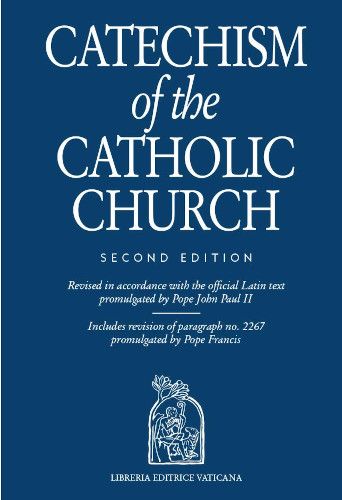
1.
Top of your booklist is the Catechism of the Catholic Church. Have you recommended it because knowing the Catholic faith is the prerequisite for defending it against Protestant objections?
Yes, that is why it is interesting and the number one book I recommend to those who want to engage in apologetics and the defence of the faith.
Eighty percent of the apologetics work that I do with Protestants is not about answering objections. It consists of clearing up the misconceptions people have about Catholicism.
If you study the Catechism, you will have a firm understanding of what the Church does and does not teach.
You will be able to say, “Well, no. Catholics do not believe that we are justified by works and need to do a good work to be saved. The Catechism is very clear about this. We receive salvation by grace alone. The only work we must do after receiving salvation by grace alone is to not die in a state of mortal sin: to not abandon God. If we do abandon him, we need return to God and seek reconciliation with him in the Church.”
The Catechism also contains many paragraphs in small print that provide historical analyses or even apologetic treatments of a subject. It contains a fair amount of apologetic literature that answer the objections that are often brought up against various Catholic doctrines.
If you want to engage in Catholic apologetics, you must know the faith well.
Tied with the Catechism is the New Testament. You need to know the New Testament well. The ability to quote Scripture is invaluable for apologetics. If you just spend a year studying the New Testament and the Catechism, you will be doing quite well.
In one way or another, each of the books that you have selected goes through some of the arguments and evidence against Protestant objections to the Catholic faith. However, many stress the importance of the via pulchritudinis for apologetics: the power that beauty has to speak to the heart and convey the truth of the faith. Most notably, there is the beauty of the saints. There is also the beauty of the great works of Catholic culture. It is possible that some will be drawn to the Church by the beauty of a Gothic cathedral, St. Peter’s Basilica, or literary works such as the Divine Comedy or the poems of St. John of the Cross. Should we not be equally concerned with familiarising our Protestant brethren with the great Catholic artistic tradition?
I think it's something wonderful that does appeal to people.
As St. Thomas Aquinas and other scholastic philosophers noted in their discussion of the so-called transcendentals, goodness and being are convertible. When we say that something is good, we are looking at it from the perspective of value. However, we can also look at it from a metaphysical perspective: whether it possesses being or not.
Some scholastic philosophers, though not all, also considered beauty to be a transcendental. Hence, when we talk about something being beautiful, this is another way of talking about it being good or true. Truth, goodness, and being are all convertible with one another. So, noticing that something is beautiful is another way of seeing that it is true and good.
I firmly hold to this tradition. My only word of caution is that we should not over-rely on this because there are many elements of beauty in non-Catholic traditions. There are beautiful Protestant hymns, churches, artworks, or works of literature, such as Pilgrim's Progress. Catholics do not have a monopoly on any of these but recognize what is true and good in other religions. Whenever Protestants affirm the Trinity and the deity of Christ, we say, “Amen to that!” There are beautiful and true ways in which they do that within their own tradition.
So, sharing the Church’s artistic patrimony is helpful for pre-evangelization and attracting people to the faith. However, we need to give distinct reasons for why Catholicism is the fullness of God's revelation.
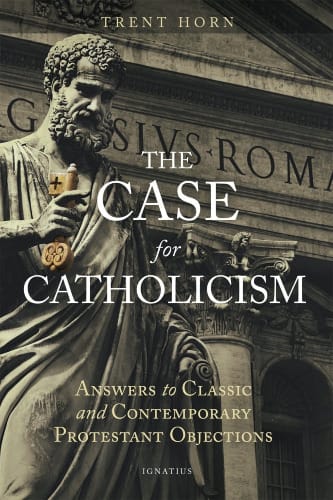
2.
Next is your own The Case for Catholicism. In it you identify and address the main Protestant objections, both classic and contemporary. What distinguishes your book from others that cover the same ground?
Yes, I was concerned about being a little self-serving in including my own book. However, other people or reviews from non-Catholics and even non-Christians have said that my 2017 book, The Case for Catholicism, is the most in-depth single volume defence of Catholicism around today.
I wrote it because there were many books from Catholic apologists on a particular doctrine or dogma—Marian doctrines, sola Scriptura, Catholic teaching on the Eucharist—but there was not any that comprehensively addressed the major points of contention. The closest was probably Karl Keating's Catholicism and Fundamentalism, which was published in 1988 by Ignatius Press. It is a good book, but since its publication, Protestant apologists have responded with their own critiques of it, developed other arguments, and advanced the debate. It was important, therefore, to respond to the advances that they had made. Karl even told me once that people had asked him to write a second edition of Catholicism and Fundamentalism but he believed there was not any a need to do so because my book addressed the newer objections.
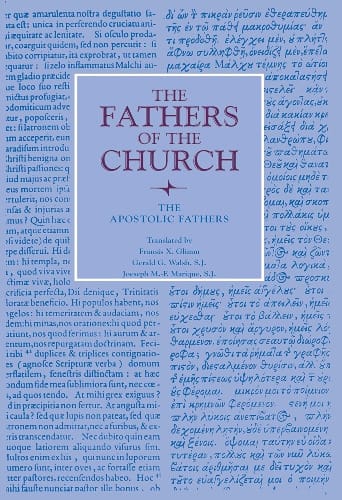
3.
Third are the writings of the Apostolic Fathers. What makes the writings of the first generation of Church Fathers, the ones who had contact with the apostles or their immediate disciples, more effective for addressing Protestant objections than later patristic writings, such as those of Origen or St. Augustine?
I chose the Apostolic Fathers rather than the Church Fathers because it is a manageable read. Depending on who you ask, the age of the Church Fathers goes all the way up to the seventh and eighth century, with St. John Damascene. I do not know anybody who could read all of the works of the Fathers in their own lifetime, unless they were dedicated to patristics for thirty or forty years. Reading them all is a monumental task. There are millions and millions of words. However, the apostolic fathers are those who wrote before the Council of Nicaea. Their writings make up a manageable amount of documents: a single volume that can be read. So that is something a person can read.
Their writings are helpful because many Protestants want to recover the ancient Church.
Whenever Protestants disagree on what the Bible means, they might ask, “What did the first Christians believed? What was the trajectory of their theological doctrines? Was it closer to Catholicism or to Protestantism?” Many Protestants believe that the Church was tainted by pagan converts after the Council of Nicaea, something which is not true. However, showing distinctly Catholic doctrines—such as Christ’s real presence in the Eucharist, Marian devotion, baptism’s regenerative effect, the possibility of losing salvation, the episcopacy, the sacerdotal priesthood—were all tested prior to the Council of Nicaea, can be very impactful for a Protestant. It shows the historical roots of the Catholic faith and the lack of historical roots for similar Protestant denominations.
There are many translations of the Apostolic Fathers, but reading any is helpful, especially the works of St. Ignatius of Antioch, St. Irenaeus, or St. Cyprian.
 Five Books for Catholics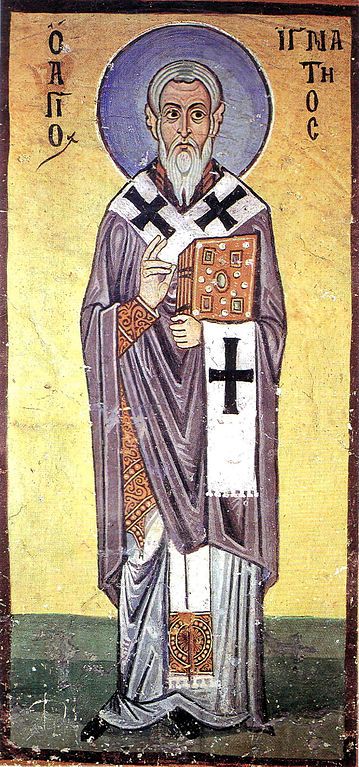
Do any of the apostolic fathers make a particular impression on Protestants, let's say St. Ignatius as opposed to St. Clement of Rome or the Pastor of Hermas?
It depends on what they talk about.
St. Ignatius of Antioch leaves a real impression with his mention of the early stages of the episcopacy and the need for a church to have bishops, priests, and deacons, as well as the reliance on that rather than something like sola Scriptura.
Similarly, St. Irenaeus' discussion of tradition in Against Heresies (III, 3, 3) and his list of apostolic succession also makes a big impact.
So do St. Cyprian's discussions of the role of the Church, the way the papacy provides unity in the Church, the priesthood, confession, and purgatory.
So does what the Fathers do not say. They never articulate distinctly Protestant doctrines, such as sola Scriptura.
4.
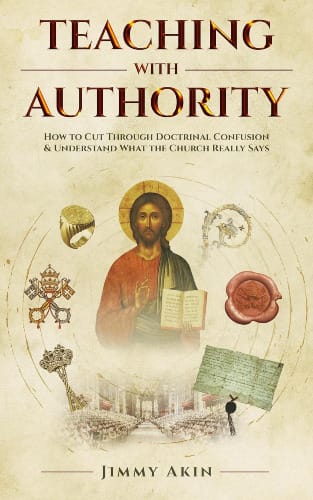
The next book is by your colleague, Jimmy Akin. His Teaching with Authority is a guide to interpreting magisterial teachings, identifying each one’s degree of authority, and understanding how the Church’s doctrine develops organically. Are you recommending it for much the same reason as you selected the Catechism? To address Protestant objections, Catholics need to know their own faith properly, part of which consists of distinguishing what the Church actually teaches from what they think it teaches.
Yes, it can be a helpful prelude or introduction before tackling St. John Henry Newman’s An Essay on the Development of Doctrine.
Of course, the Church knew about doctrinal development and practiced it long before Newman. However, he articulated the notion more explicitly. In the century since, both theologians and the magisterium have done more to clarify how doctrines acquire authority or may decrease in authority over time. This is helpful when defending the Church’s teaching because a Protestant may object that the Catholic Church contradicts itself, teaching one thing in the Middle Ages and now another.
Jimmy Akin's book does a good job of showing that not all magisterial statements from the past were the official teaching of the Church or defined infallibly. If a teaching has not been defined infallibly, the Church can recognize over time that it is not an essential part of the doctrine of the faith and may be relegated, for example, to the status of a theological opinion.
So, Jimmy Akin's book is very helpful for understanding what Church documents say or do not say, and how they develop over time. It helps you make sure that you are presenting the actual Catholic faith and not someone else’s caricature of it.
"What unites all Protestants is a rejection of the doctrine of the papacy and the unique authority of the successor of St. Peter, the Bishop of Rome."
5.
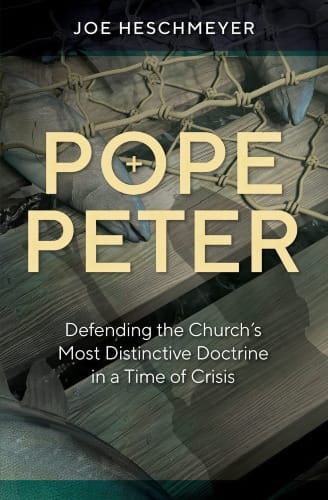
The final book also comes from one of your colleagues at Catholic Answers. Joe Heschmeyer’s Pope Peter addresses the Catholic doctrine of the papacy. Besides tracing it back to Scripture, he also argues that the doctrine is correct, notwithstanding the failings or lack of doctrinal clarity and consistency of individual popes. What makes this a good book on the most distinctive Catholic doctrine?
I really appreciate having Joe as a colleague. He is a very bright, well-informed, charitable, and has written a very good book on the papacy.
Of all Catholic doctrines, this is the most distinctive. Protestants, for example, disagree amongst themselves about whether baptism regenerates or there is apostolic succession. They disagree about the nature of the Eucharist. They even disagree with Martin Luther and many of the other Reformers, who believed in the perpetual virginity of Mary. However, what unites all Protestants is a rejection of the doctrine of the papacy and the unique authority of the successor of St. Peter, the Bishop of Rome. Defending that doctrine, therefore, becomes incredibly important when defending the Catholic faith. It also comes up in our discussions with the Eastern Orthodox.
There are many books on this subject. An older one is Upon This Rock by Steve Ray. It too is a good book on the papacy. However, I would recommend two books on the papacy.
One is Joe Heschmeyer's. It is a very good biblical defence of the papacy. It shows how the papacy is rooted in Scripture and not some later development: that it comes from the early deposit of the faith.
However, there are also many objections to the historical development of the papacy: allegations of impropriety and doctrinal contradiction. A good book on that issue is Erick Ybarra’s The Papacy: Revisiting the Debate Between Catholics and Orthodox. It deserves an honorary mention and to be tied at number five with Joe Heschmeyer's book, which is one of the best recent biblical defences of the papacy, something sorely needed in the Church.
The book you've just mentioned by Erick Ybarra is directed towards Orthodox rather than Protestants. The Orthodox do accept the Bishop of Rome’s primacy of honour but not his primacy of jurisdiction. Have you had any experience in apologetics with Orthodox brethren?
Yes, I have. Moreover, I have noticed something that other Orthodox have also pointed out: that some Orthodox simply borrow Protestant criticisms of the papacy in their apologetics, such as those of the nineteenth-century Anglican George Salmon. As a result, engaging the criticisms of the Orthodox is often similar to engaging those of Protestants.
The Orthodox will allege that some popes—such as Liberius, Honorius, and Vigilius—were heretics. Others, as do some Protestants, argue that all bishops had equal authority or that the Bishop of Rome was first among equals but did not have any primacy, papal supremacy, or infallibility.
So, many of the Orthodox and Protestant objections are intertwined. By engaging many of the intricate Protestant objections to the historical development of the papacy, you end up responding to many of the Orthodox arguments against the papacy.