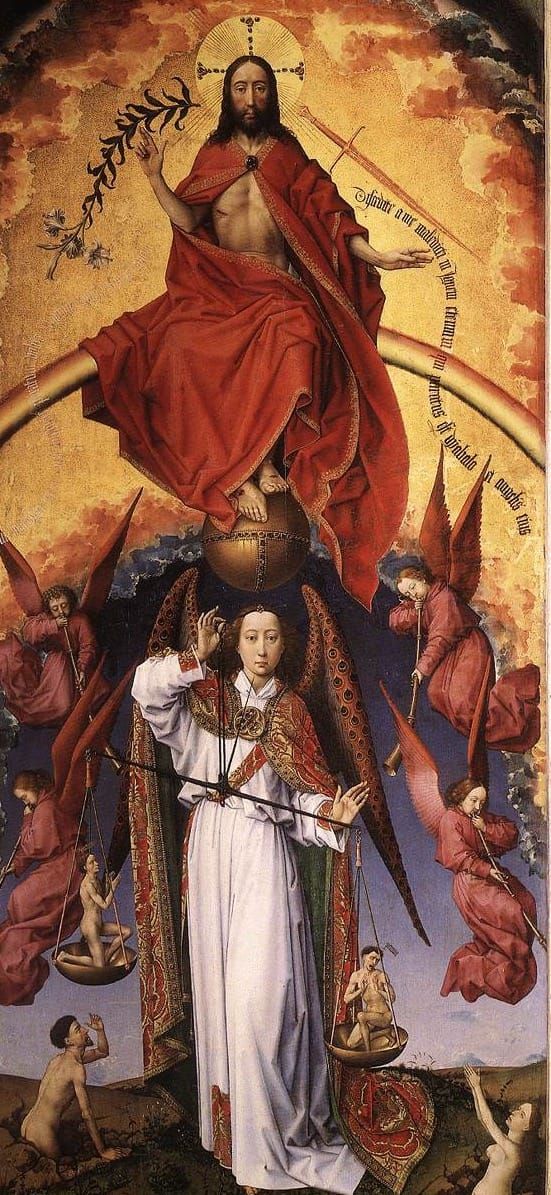

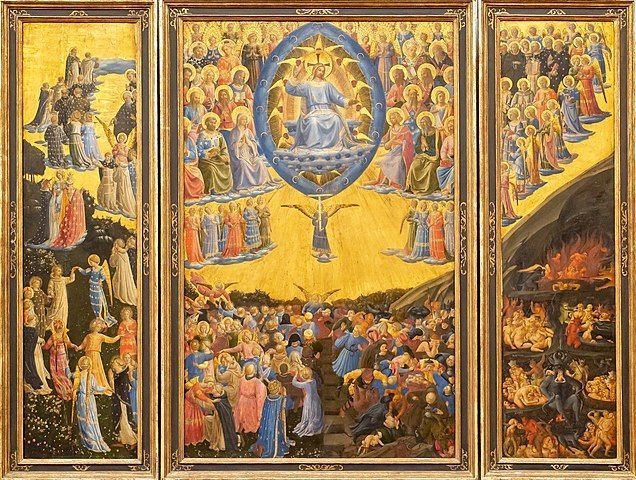
Throughout the Gospels, Jesus teaches that after our death we shall be welcomed into heaven or destined to hell; resurrected and judged at the end of time. Over the centuries the popes and councils have clarified these teachings on the last things (eschata in Greek, novissima in Latin) in a series of dogmatic declarations. Modern theologians refer to this area of Christian doctrine as eschatology.
Increasingly, eschatology has come "to dominate the entire theological landscape" (Joseph Ratzinger) and constitute its "storm-zone" (Hans Urs von Balthasar). Far more importantly, Christ urges us to have our gaze fixed on the last things and ready ourselves for eternal life. It is crucial that we understand his teaching on the last things. To help us do so, Prof. Michael Root explains his pick of the five best books on eschatology.
Michael Root is Professor Emeritus of the School of Theology and Religious Studies at Catholic University of America. He served on the drafting team for the Catholic-Lutheran Joint Declaration on the Doctrine of Justification, and on the Catholic-Lutheran dialogue both nationally and internationally, the international Lutheran-Anglican dialogue, and the US Lutheran-Methodist dialogue. He was a staff consultant to the 1993 World Conference on Faith and Order (Spain) and the 1998 Lambeth Conference (England). He has been the executive director of the Center for Catholic and Evangelical Theology.
He is the author (with Gabriel Fackre) of Affirmations and Admonitions (1998) and editor of Justification by Faith (with Karl Lehmann and William Rusch, 1997), Baptism and the Unity of the Church (with Risto Saarinen, 1998), and, with James Buckley, Sharper than a Two-Edged Sword: Preaching, Teaching and Living the Bible (2008), The Morally Divided Body: Ethical Disagreement and the Divided Church (2012), and Christian Theology and Islam (2013). In addition, he is the author of many scholarly articles and an associate editor of the journal Pro Ecclesia.
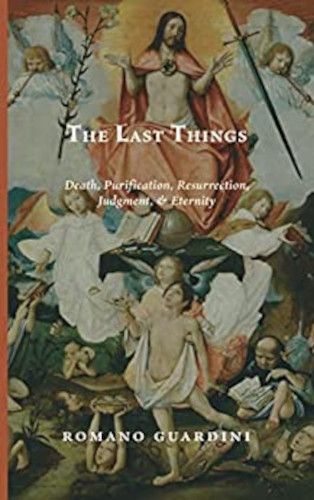
- The Last Things (also available for Kindle)
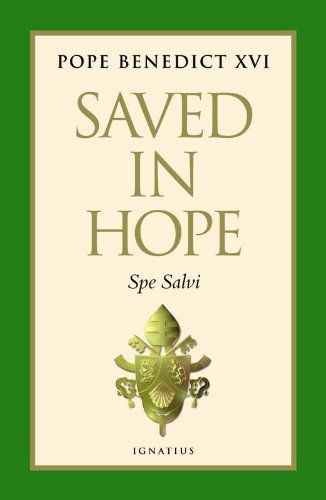
by Romano Guardini - Saved in Hope (Spe salvi) (also available for Kindle)
by Benedict XVI - The City of God Against the Pagans (also available for Kindle)
by St. Augustine - The Divine Comedy
by Dante Alighieri - The Great Divorce (also available for Kindle)
by C.S. Lewis
In layman’s terms, what is eschatology? What are the last things that Jesus and the apostolic tradition distinguish?
Eschatology is the theological study of the last things, of our final destiny, be that heaven or hell. ‘Eschata’ is simply Greek for ‘last things’ Eschatology as an area of theology has come to include all the events included in the New Testament picture of the End: the return of Christ, the universal resurrection, judgment, heaven, hell. Also, it is usual to include our own individual fate at and after death: the nature of death itself, the situation of the soul between death and resurrection, purgation.
These matters are central to the preaching of Jesus and to the entire New Testament. The individual topics are closely connected in the Bible; the theologians divides them up for the sake of discussion, but we need to remember what ties them all together—the final triumph of God’s will in Christ.
What drew you to make eschatology one of your areas of research?
When I first became interested in theology as an undergraduate in the early 1970s, a lot of attention was being given to a new “theology of hope” in Protestant theology. I did my undergraduate thesis in this area. I was drawn back to the topic by accident. I had become deeply involved in Catholic-Lutheran dialogue and the American dialogue took up eschatology as its topic from 2005 to 2010. I found the issues involved fascinating and taught classes in the area regularly when I joined the faculty at the Catholic University of America.
Are there any major differences between Catholic doctrine on the last things and that of the main Protestant ecclesial communities?
The doctrinal differences are relatively few, related to the invocation of the saints, purgatory, and prayers for the dead. These differences point to some real differences in piety, though. For the Catholic, the dead are with us. We ask the saints to pray for us and we pray for our loved ones who have died. For almost all Protestants, the saints and the dead are simply gone.
The individual topics are closely connected in the Bible; the theologians divides them up for the sake of discussion, but we need to remember what ties them all together—the final triumph of God’s will in Christ.
One of the main debates on eschatology among Catholic theologians in recent years surrounds Hans Urs von Balthasar’s book Dare We Hope That All Men Be Saved. What are your thoughts on the matter?
Balthasar argued that, since neither Scripture nor the Church has ever authoritatively taught any particular person is eternally lost, we should hope that ultimately all humanity will be redeemed. His argument has been widely influential. He is correct about formal Church teaching, but it does seem to me both Scripture and tradition have assumed that some are finally lost, for example, Judas. Unfortunately, Balthasar’s argument has had the effect, I think, of reinforcing our natural tendency not to take seriously the effects of our present decisions on our eternal fate. When Paul says “take heed lest ye fall” (1 Corinthians 10:12), he means it.
The tendency in contemporary American culture to make religion therapeutic, a matter of helping us get through the day and find meaning, also tends to undercut the importance of the last things.
At present, do the last things feature as prominently as they should in Catholic preaching, catechesis, and spirituality?
I think there is still a tendency to focus practical preaching, catechesis, and piety solely on the survival of the soul and what happens when we die. For the New Testament, the focus is more universal—the return of Christ, judgment, the transformation of all things. That universal future can seem distant, however, and not directly relevant to daily life in the present. The tendency in contemporary American culture to make religion therapeutic, a matter of helping us get through the day and find meaning, also tends to undercut the importance of the last things. We need to find a way of seeing the present as always oriented toward the end that has already come in Christ, that is present in the sacraments. After all, “here we have no lasting city, but we seek the city which is to come” (Heb 13:14). Shaping our life toward that end is no easy matter, though. The opportunities for preaching and catechesis are there, in the feasts of All Saints and All Souls, and in the mass readings for the last Sundays before Advent and the feast of Christ the King. We need to make use of them.
1.
You have settled on a little treatise for your first recommended reading. Is this your way of saying that Catholics wishing to read about eschatology should begin by acquiring a working knowledge of the Church’s teaching on the last things? In that case, why should we read the treatise of a German theologian? Does not Jesus teach us all we need to know in the Gospel and in an infinitely more authoritatively manner? Moreover, out of the many treatises on the subject, why have you selected Romano Guardini’s?
I recommended this book first for just the reason you name—one needs a good overview of the comprehensive Catholic teaching on last things to get a framework of thinking about the details. The Guardini book does an excellent job in providing such a framework from a broadly traditional perspective, but with attention to modern life. All the central topics are taken up in a brief scope. For the reader not interested in a technical treatise, I can’t think of a better place to start.
Guardini has thought through the technical philosophical and theological issues, but they remain in the background. He was a master of combining careful theology and a spirit of devotion. One doesn’t just get the information; one gets some guidance on how to appropriate the information into one’s Christian life.
Guardini wrote this book in Germany in the late 1930s, but it doesn’t show its age or origin, despite the turbulence of the time (Guardini was fired from his teaching position by the Nazi administration at about the time he wrote this book). Guardini was born in Italy, but his parents moved to Germany while he was an infant and he grew up fully bilingual in Italian and German. Some of his writings now seem dated, but not this one.
2.
Your second recommended reading is Benedict XVI’s encyclical on Christian hope, Saved in Hope (Spe salvi). Eschatology was a major theme in his theological reflection, and as a university professor he wrote a textbook on the subject. Curiously, his 2007 encyclical never uses the term, even though it clearly regards the object of our hope. Why have you chosen it?
I chose it in some ways as a balance to Guardini. While Guardini deals with the doctrine, Benedict is concerned with the Christian virtue which most closely relates to what the doctrine presents, hope. The last things are not objects of curiosity; they are the focus of our hope, what we long for.
I hadn’t noticed, to tell you the truth, that Benedict never uses the term ‘eschatology’ in this text, but he does discuss some of the details of our future in God. And, more than Guardini, he relates that future more thoroughly to our present situation and culture. He is not afraid to identify tendencies in the modern world that are at odds with Christian hope. In the process, he does explore doctrinal matters, especially on purgatory (sections 46–47), elaborating on his own theology of last things.
I recommend Guardini and Benedict as a kind of matched pair, both rooted in the faith of the Church, one book focused on stating the faith, the other on applying it to the Christian life today. That they fit well together is no accident; Guardini was one of Benedict’s teachers in seminary.
3.
For your third pick you go back to the Church Fathers. There are many patristic writings on the last things. Why have you settled on the closing three books (20-22) of St. Augustine’s The City of God?
After Scripture itself, Augustine is the dominant influence on Western eschatology, and these last books of The City of God are where he lays out his picture of the end of all things. As on so many topics, Augustine is the giant who cannot be ignored. He shaped the tone and concerns of eschatology well into the modern period.
That said, this reading is sure to strike the modern readers as strange. On some topics, he says little. For example, he has little to say about the soul between death and resurrection. On other topics, he can seem obsessive. For example, he is convinced that when Jesus says “not a hair of your head will be lost” (Luke 21:18), that means we will receive back in the resurrection all the hair we ever had.
After Scripture itself, Augustine is the dominant influence on Western eschatology,
The strangeness of Augustine can serve a useful purpose, however, in making us reflect on how we approach the last things. For him, resurrection and life with God in a new heaven and a new earth are the great hope that moves the Christian. Through all the details, his central concern shines through: in the end, creation will be fulfilled, not dissolved, and “God will be all in all” (1 Corinthians 15:28). We may not today want to say just what he says on many points, but the focus, intelligence, and faith that drives him are illuminating and inspiring.
4.
From Augustine’s The City of God, you pass to the literary masterpiece of medieval Europe, Dante’s Divine Comedy. Obviously, Dante is primarily a poet, not a theologian. Have you recommended it precisely because, much like Michelangelo’s fresco of the Last Judgment or the portico façade of the Cathedral of Orvieto, it can impress the great truths about the afterlife more vividly upon our heart and imagination?
Imagination is a necessary but dangerous tool when we think about last things. Paul refers to “what no eye has seen, nor ear heard, not the heart of man conceived, what God has prepared for those who love him” (1 Corinthians 2:9), but if our hope is to be lively, we have to form some picture, some image, of what we hope for. No one has surpassed Dante’s vivid tour of hell, purgatory, and heaven in this regard.
You are right, of course: Dante is a poet, not a theologian. He had read a good deal of theology on the last things and certainly seeks to be orthodox, but at some points he invents things for poetic effect. For example, the Church has never taught there is a pre-purgatory where some wait to enter purgatory proper and the idea that after purgatory we will lose all memory that we had sinned creates all sorts of problems. Here is where we have to remember the dangerous side of imagination and not take Dante as theology.
As a poetic imagining of heaven, hell, and purgatory, however, the Divine Comedy is splendid and suffused with Christian hope. I must admit, the seemingly endless depictions of the fate of various medieval Italians who are now long forgotten become tedious and I get tired of checking the notes for explanations of who they are. The opening and closing cantos of each of the sections on hell, purgatory, and heaven, however, are simply splendid, especially the vision of heaven and of God at the end of the Paradiso. Imagination, poetry, and devotion here merge.
Is there a particular English translation of the Divine Comedy that you would recommend?
I first read the translation by John Ciardi, which remains the version I go back to. The translation by Anthony Esolen reads very well. I know that many swear by the translation by Jean and Robert Hollander.
How could God deny blessedness to anyone? Lewis makes imaginatively understandable the possibility that some may simply prefer a life apart from God.

5.
Your fifth recommended book is another work of fiction, indeed one inspired in part by Dante’s Divine Comedy: C.S. Lewis’s The Great Divorce. Some residents of a grey town, a metaphor for Hell and Purgatory, are waiting to take a bus on a daytrip to a place that turns out to be Heaven. What new insights on the last things does the author of The Screwtape Letters bring to the table?
The great strength of the book is addressing a question that bothers many people: How could God deny blessedness to anyone? Lewis makes imaginatively understandable the possibility that some may simply prefer a life apart from God. They have committed themselves to their sins—their pettiness, their self-absorption—in a way that makes hell in an odd way more psychologically comfortable than heaven. Even when they are given a taste of heaven on their daytrip, they would rather go back to what is a sort of hell-in-formation. God respects their choice; grace is not forced upon them.
Like Dante’s Comedy, this is work of imagination, a kind of thought-experiment. Lewis gave it the subtitle A Dream. He isn’t making a theological proposal about conversion after death, an idea rejected by the Church, but helping us understand why there is a hell.
Currently, discourse on Christian doctrine uses eschatology to refer not just to the last things, but to the history leading up to the End. What does the Church teach about the events at the end of history?
Unlike some Christian groups, the Church has been reluctant to try to decipher obscure biblical passages about when the End will come. Some clear biblical teachings are affirmed: that Israel will come to recognize its Messiah (Romans 11), that a figure of unique evil will appear, referred to in 1 John as the Antichrist (1 John 2:18; 4:3; see also 2 Thessalonians 2:9–12). But trying to deduce when the End will come has been a marginal activity in the Catholic tradition. We should be prepared for our Lord’s return at any moment. Trying to figure out whether that will occur tomorrow or in ten-thousand years is beside the point.
Could you say a little about the book you are writing on eschatology?
I hope to complete a general introduction to Catholic eschatology, the sort of book that might be used as a textbook for classes, but also useful for the general reader. There is a great richness in the Catholic tradition of thought about our final destiny in God and I hope to open that up for a wider audience.