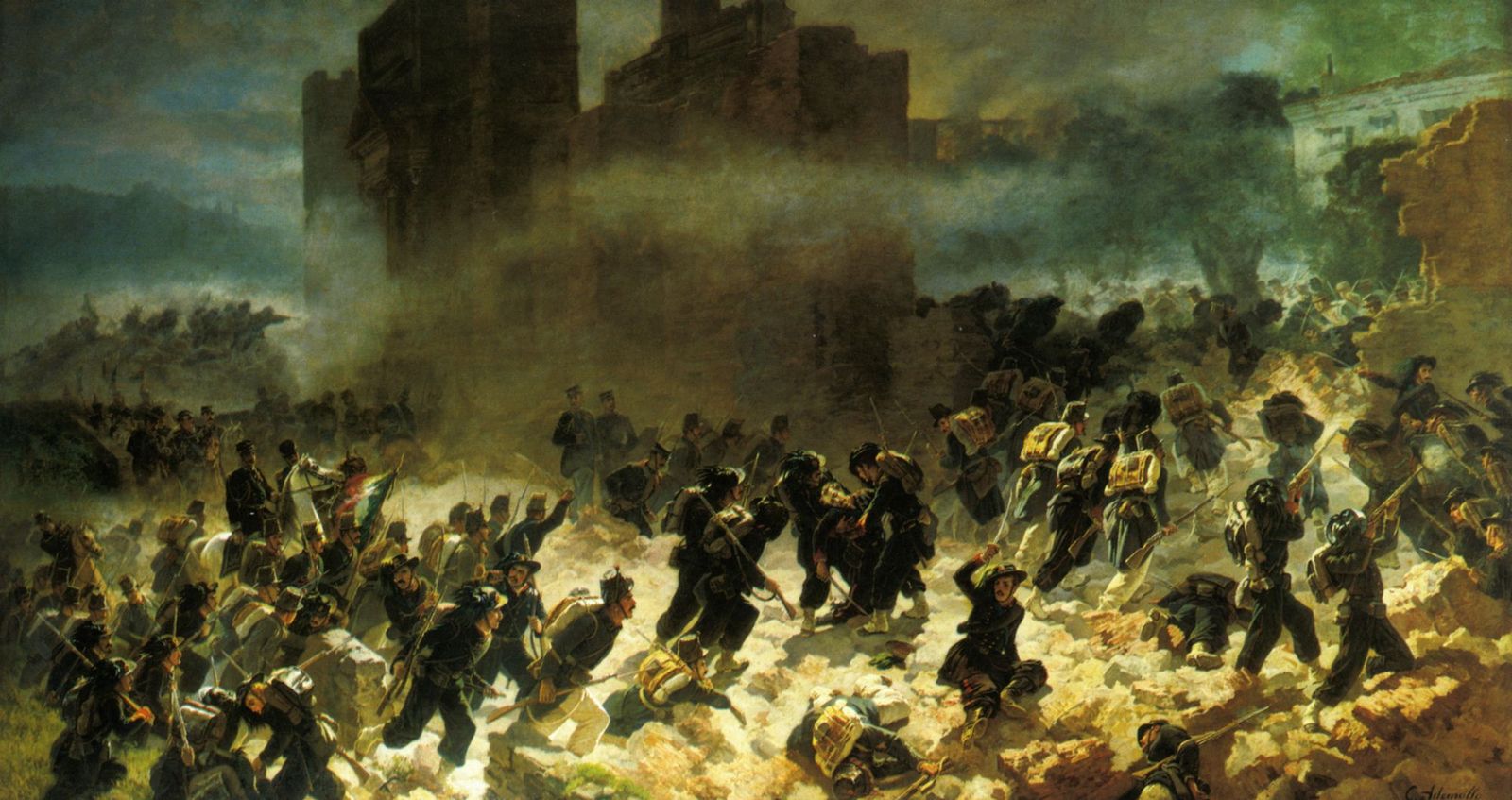
The French Revolution ushered in the implementation of a new political philosophy, liberalism, that had been developing for several centuries, particularly during the Enlightenment. The Gospel and the Catholic Church were out as the foundation of the social order; reason, sealed off from Revelation and classical realism, was in. Churches and organised religion would be treated as private associations. Government would purportedly maximize and safeguard the individual’s freedom of conscience and choice. In short, liberalism and Catholicism stood in opposition and were on a collision course. On the one hand, liberal governments and movements in Europe and Latin America set about dismantling the remnants of Christendom, not only removing the Church’s privileges but often suppressing its legitimate freedoms and institutions as well. On the other hand, Catholic political thinkers disagreed about how the Church should respond to these radical social transformations, while the Popes tended to favour monarchies over republics. Studying the nineteenth-century conflict between Catholicism and liberalism is important for understanding the historical background of modern Catholic social teaching and some ongoing debates. In this interview, Dr. Darrick Taylor discusses his pick of the five best books on this area of Church history.
Darrick Taylor teaches Humanities at Santa Fe College in Gainesville, Florida. He earned his PhD in British History from the University of Kansas. He also produces a podcast, Controversies in Church History, which dives into important and sensitive issues in the history of the Catholic Church.

- The Church in the Age of Liberalism
edited by Hubert Jedin and John Dolan - Liberalism and Tradition: Aspects of Catholic Thought in Nineteenth Century France
by Bernard M. Reardon - Culture Wars: Secular-Catholic Conflict in Nineteenth Century Europe
edited by Christopher Clark and Wolfram Keiser - The War Against Catholicism: the Anti-Catholic Imagination in Nineteenth Century Germany
by Michael Gross - The Great Crisis in Catholic American History: 1895-1900
by Thomas T. McAvoy
...and two extra recommendations... - The Religious History of Modern France
by Adrien Dansette - Nineteenth-Century Europe
by Michael Rapport
What would you add to the preceding introductory synopsis of the nineteenth-century conflict between Church and liberalism.
Another thing to note is the industrial revolution. That really alters the social order. It was what emancipates the middle classes. Liberalism, especially in continental Europe, was the revolutionary creed of the middle classes. It was the class that would overthrow the dominance of the Church in education and political life, as it threw off monarchy and aristocracy in politics.
A second thing about liberalism in the nineteenth century is that there is a difference between anglophone, Lockean liberalism, and continental liberalism. I say that because I am an American. If you grow up in America, you are likely to have a more irenic view of liberalism. In Europe, it was much more aggressive and hostile to the Church. It was hostile to the Church in the Anglophone world as well, but it was an existential threat for the Church in nineteenth-century Europe. Most Catholics do not know about that.
"Liberalism, especially in continental Europe, was the revolutionary creed of the middle classes. It was the class that would overthrow the dominance of the Church in education and political life, as it threw off monarchy and aristocracy in politics."
There are many definitions of liberalism. Some focus on the original impetus for the development of liberalism; others on its underlying ontology; still others on the political or economic institutions it advocates. What definition do you employ and why? Is this the Church’s working definition of liberalism?
At this point, my definition is probably closer to that of Marx, even though I am not a materialist. I see real liberalism as a revolutionary ideology. I studied a lot of Locke when I was in graduate school, but I do not see him as a full-blown liberal. Individualism is the big part of liberalism for a lot of people in the anglophone world, but to me liberalism is the ideology of this ascendant middle-class that desires to transform society according to its own self-interests. The Church tends to see liberalism as a movement that wants to emancipate society from any supernatural or perceived supernatural authority. That is its definition. There is no one definition of it, even among scholars of the Church. Liberalism is so varied, particularly when it comes to the question, “What is liberalism for?” That is where things break down. There are several liberalisms. The main thing that they want is emancipation from the Church's authority, from any supernatural authority. That is the best definition of it, I think.
The Church lent more support the Christian Democratic movement following World War II. Some also took the fall of the Eastern bloc in Europe in 1989 as a confirmation of the superiority of liberal democracies and of their compatibility with Catholicism. Over the last decade, a growing number of Catholic scholars have challenged this view and defended alternative readings of the Church’s social teaching. Are the current debates in Catholic political thought a repeat or continuation of nineteenth-century disputations?
They are definitely related. Some of these arguments go back to the 1830s and the Abbé de Lamennais. He is the most important figure within the Church’s internal debate on what it should do. He was the first to advocate that the Church needed to give up its privileges and its attempt to monopolise education and the like, to go along with a separation of Church and state, so that it can influence the society; to get on board with democracy. That is what ‘Catholic liberalism’—I believe he coined the phrase—meant in the nineteenth century. It was a Catholic version of liberalism. There is definitely a continuity between it and contemporary debates. Obviously, there are also differences. There has been the Cold War or the ascendancy of the United States. But this is a longstanding debate. It has been going on for a while. It would help people a lot to know its background.
What level of coercion, if any, is licit in modern society? If the Catholic Church holds the true faith and the true religion, does that give it any rights over society? That is the debate and it has never been cleared up.
Regarding the interpretation of Vatican II, Pope Benedict XVI distinguished between a hermeneutics of discontinuity and rupture and, on the other hand, a hermeneutics of renewal in the continuity of the Church. That is not always easy. To some, the continuity between Vatican II and the social magisterium of the nineteenth-century popes (Mirari vos, Quanta cura, the Syllabus, Immortale Dei) is not so apparent. This is too vast and complex a question to broach satisfactorily here. Nevertheless, do you have some general thoughts on the matter?
That is a difficult question. The most apparent discrepancy with the nineteenth-century papal magisterium arises with Dignitatis Humanae. I am not a theologian and I do not know how you reconcile the two. They look for all the world as if they do conflict. There is both continuity and an apparent break. That is the problem. But there is continuity in that the Church’s is concerned about how to influence society. But how do you do that. Again, I go back to Lamennais. Early on, he was one of the great ultra-Montanists. He wanted society to submit to the Pope. He just thought that if you promoted this through non-coercive means alone, then it would happen almost automatically. In a weird way, this is the same debate that is going on now. What level of coercion, if any, is licit in modern society? If the Catholic Church holds the true faith and the true religion, does that give it any rights over society? That is the debate and it has never been cleared up. That is my take. I did an episode on Dignitatis humanae on my podcast. I think you can reconcile it with the Church’s previous teaching. However, the Church needs to do a lot of work to make that clear for people. It is not at all clear if you look at the documents.
1.
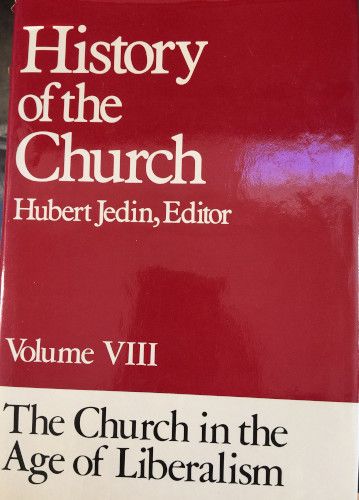
The first book on your list is volume eight of The History of the Church that was edited by Hubert Jedin, author the definitive history of the Council of Trent. This volume—written by Roger Aubert, Johannes Beckmann, Patrick J. Corish, and Rudolf Lill—is entitled The Church in the Age of Liberalism. It focuses on the period between 1830 and 1870. Is this crucial period of the nineteenth-century Church’s engagement with liberalism? What makes this study a good overview of the period and the issue?
This series is magnificent and gives a great overview. Though long, it is very detailed, comprehensive, and a reference book in some ways. The one thing that it does not cover that well is Latin America.
This volume is called The Church and the Age of Liberalism because that is when liberalism becomes full-blown and dominant on the European stage. In the 1830s Lamennais makes his bid to convince the popes, such as Gregory XVI, to embrace religious liberty and similar prinicples (Mirari vos is a condemnation of that idea). The period ends with the First Vatican Council.
Two things put an end to Lamennais’s attempt. One is the Vatican Council. It reasserts the Church's authority in strong ways. Second, the issue becomes moot because liberal governments triumph. The Risorgimento gobbles up the papal states. The anti-clerical Third Republic comes to power in France in the 1870s. These events blunt the thrust of Catholic liberalism and establish the dominance of the modern state.
I cannot recommend this book enough. It is great on the background of both the cultural, intellectual ideas and the social movements. It talks about the revival of Catholicism in France, Germany, and elsewhere, in the mid-nineteenth century. It still is the best overview of that period.
2.
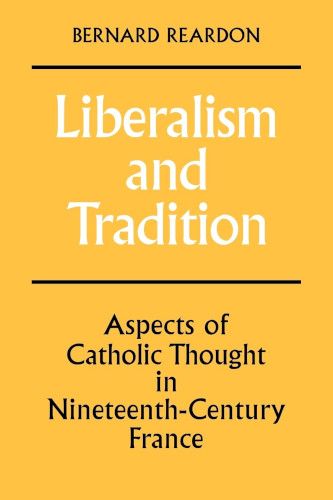
The second book on your list, Bernard M. Reardon’s Liberalism and Tradition, focuses on Catholic Thought in Nineteenth-Century France, from Joseph de Maistre to Maurice Blondel and Alfred Loisy. Why are the different currents of nineteenth-century French religious thought so important and what light does Reardon shed on those debates?
That is a great question. It is important because—and again this is something that people of my generation or younger do not appreciate—up until the 1960s, when it collapsed, any sort of intellectual influence in the French church tended to pass into the Universal Church. France was so influential that, in some ways, it was the epicentre of the Latin Church. In the nineteenth century, these currents of thought affected everything. Go back to Lamennais. It is hard to overstate his influence.
Reardon’s book is great because it takes a deep dive, chronologically, from the beginning of the century, into the French thinkers, such as de Maistre and de Bonald, who were working in the aftermath of the French Revolution and during the restoration period, and who influenced Lamennais. There are multiple streams of what we call Catholic liberal thought, such as ontologism, and traditionalism. Traditionalism is a form of fideism. It holds that the only knowledge you can have about religion comes through tradition. As a result, it denies the role of reason. Reardon traces these currents up to the end of the nineteenth century, when you have this turn within Catholic liberalism, with people like Blondel, as it tries, especially in France, to oppose the positivism of Comte. That sort of feeds into the modernist period. Reardon’s book is well done, especially on those who influenced Lamennais. I highly recommend this book.
3.
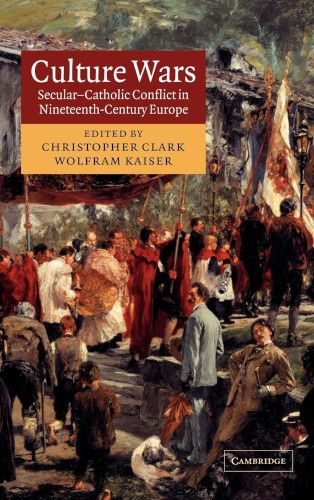
Your third entry is a collection of essays edited by Christopher Clark and Wolfram Kaiser: Culture Wars: Secular-Catholic Conflict in Nineteenth Century Europe. As the title of the introductory essay suggests, there was not just the Kulturkampf of Bismark’s German Reich but a series of culture wars going on in nineteenth-century Europe. What would you have to say on this on these culture wars in general?
In general, just how widespread they were. You mentioned the Kulturkampf. Most people know about that, but I was not aware of the violence. There was a violent conflict between these emergent liberal states and the Church, in Spain, for example. That is where the term ‘liberal’ comes from. The liberales were a group of people who wanted to emancipate and get the Church out of politics, reduce its privileges, and so forth. That flares up throughout the nineteenth century: in Belgium, the Netherlands, in England, everywhere you can think of in Europe. In England, with the reestablishment of the Catholic hierarchy in the 1850s and the reaction to the First Vatican Council, anti-Catholicism flares up again.
This, though not a Catholic book, is a good scholarly introduction to the subject. Secular scholars are taking more notice recently of just how powerful the secular-Catholic conflict in nineteenth-century Europe really was. It was the real impetus for a lot of things, not just the Kulturkampf, but educational reform too. These were existential battles. Liberalism tends to treat formal education as a panacea. Part of the liberal’s drive to nationalise education was to create modern secular nation states, but it was aimed at getting education out of the control of the Church. Both knew that you are conditioning the next generation of people. So, if you have control of education, you can do that. That is why there are big battles over education for decades on end, until it begins to be secularised in the 1870s. If you are not aware of that history, this book is a good introduction.
4.
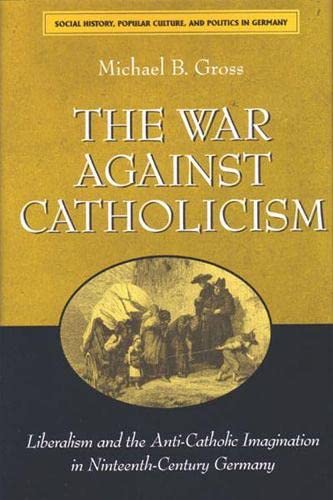
Whereas the preceding book surveyed culture wars across nineteenth-century Europe, Michael Gross’s The War Against Catholicism focuses on “the Anti-Catholic Imagination in Nineteenth Century Germany”. Culture war (Kulturkampf) was a term coined in 1873 by the physician and left-liberal politician Rudolf Vichrow. He coined it to describe the legislation introduced to break the social and political influence of Catholicism in Germany, a campaign to which he attributed “the character of a great struggle in the interest of humanity.” Gross argues that the Kulturkampf was the culmination of anti-Catholicism in nineteenth-century Germany. Why were liberals so hostile to the Church and is the Kulturkampf in Germany emblematic in some way?
It is, but it is not unique. As I mentioned with regard to the previous book, similar things were going on elsewhere. It is emblematic because it is a mixture of this liberal, secularising, anti-clerical movement and nationalism. This is something that, in general, I was not aware of. Nineteenth-century liberalism is nationalistic.
Today’s liberalism is all about cosmopolitanism, internationalism, globalism, whatever you want to call it. Nineteenth-century liberalism was not. You have these nationalists who hate the Church because it is a big international body. It is like the United Nations, in modern terms. But the social upheavals following the industrial revolution and the Catholic revival in Germany also dredge up older, more firmly Protestant, anti-Catholic prejudices. Prejudices against monasticism, tropes about women being kidnapped and taken to convents, pass into popular culture. That is one of the things that that this book talks about. This is the first time you have mass media, such as cheap newspapers, that influence the public. All this feeds into an anxiety about nation-building in Germany. Perhaps we imagine that, when the German Empire or Reich was unified in 1871, it was a big totalitarian authority. It was not. It was a federal government. It comprised all these different entities such as Bavaria, a kingdom until the year before, each with its own laws. The nationalists were worried about unity. One of the things that really frightened them about the Catholic Church was that it seemed to be, as they saw it, an international body, controlingfrom afar all its brainless adherents. They were afraid of that because they were worried that Catholics would vote en bloc in the parliament. They are worried about subversion.
The Church, of course, was frightened of liberalism. Why? As with the Risorgimento, these states, were undertaking a violent conquest of the Church. The Church was terrified of these governments and, naturally, was opposed to them. In that sense, the Kulturkampf is emblematic. This was the conflict: the nation almost comes to replace the Church as that which can rightfully claim the highest level of loyalty for these nineteenth-century liberal nationalists. In that sense, it was an irrepressible conflict.
5.
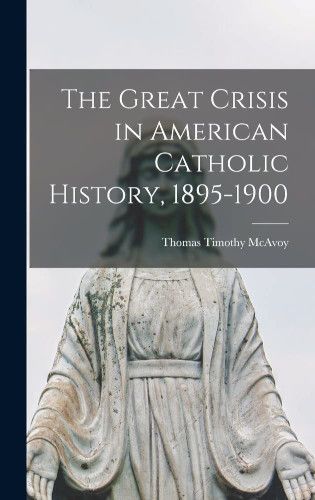
For your fifth pick, The Great Crisis in Catholic American History, 1895-1900, we cross the Atlantic from Europe to the United States. What is the crisis that Thomas T. McAvoy studies in this book and is it relevant to the Catholics today?
Yes, this book is important because it is the only scholarly treatment of the Americanist crisis. A lot of contemporary theologians tend to pooh-pooh Americanism and say, “There was no such thing, just an overreaction.” That is true, if you mean that nobody was issuing an Americanist manifesto and challenging the Church. But there was a tendency in the nineteenth century—and at other times in American Catholic history— to take the United States as the ideal state for the Church. This is particularly interesting because it shows the connections between what was going on in the continent and what was going on in the United States. At the centre of this is John Ireland, the bishop of St Paul in Minnesota. He was educated in French seminaries by students and followers of Lamennais. Once again, Lamennais has a direct influence.
When you hear the term ‘Catholic liberalism’, you might be tempted to associate it with today’s liberal Catholicism, which, to be frank, is mostly about sexual morality. There is none of that in the nineteenth-century. Rather, the general idea was that the Church needs to adapt to modern times and accept democracy, religious pluralism, and such like. Ireland was a tireless advocate of this idea. McAvoy shows these connections and how the dispute unfolded. He is still the only one who has written on this. What is fascinating about the story is that this American version of adapting to modern society makes its way back to France. Fr Isaac Hecker was the founder of the Paulists, a religious order from the United States. He started a Catholic newspaper, as way of adapting to modern society. His biography gets translated into French and into the middle of these conflicts in France. That is what sets everything off. It gets back to Leo XIII that you have these fights in the United States between the bishops who sympathetic to Ireland and those who were not. The latter urged Leo XIII to say something about this. Testem benevolentiae, the encyclical he issues on this matter, does not condemn anybody by name or issue any anathemas. However, Leo knows about these dangerous tendencies, and those tendencies were clearly there. There is not any formal heresy, but this tendency is a part of the wider story, and faithful American Catholics realise that it is still here. McAvoy’s is the best overview of it in a single book.
Can you tell us about your podcast Controversies in Church History?
I started it several years ago. A priest I knew recommended that I give some talks at my parish. I started doing that and had a decent following. Then, the pandemic shut everything down and killed that killed off. So, I started doing it as a podcast. The podcast takes a deeper dive into subjects. For example, I did seven or eight episodes on Catholic liberalism. I look at the scholarly literature first, simplify it for the audience, and give an introduction to these subjects. It goes a little deeper than you might get elsewhere. I try to deal with controversial matter in a very detached, peaceful way, being positive about the truth, but without sugar-coating things or ignoring any of the Church’s wrongdoings. Leo XIII said that we have nothing to fear from the truth. But the podcast is definitely on board with the Church.
You studied British history for your PhD. Did you move into church history afterwards? And which areas of Church history interests you most?
I did not. I just did this for the podcast
The history of the ancient Church history interests me the most. For example, I find the iconoclast controversy interesting because I have a lot of Eastern Catholic friends and I am interested in the division between the Orthodox and the Catholic Church. However, I am mainly interested in defending the Church and its record in a comprehensive way. But I have not delved into Church history professionally.
You studied you did not study church history for your PhD. You studied British history.
Just British history. I studied the Restoration period in seventeenth-century English media: pamphlets, newspapers, and things like that. That was my background. I did intellectual history too: political and religious thought. I suffered through reading more John Locke that I ever wanted to, but Locke is another specialty of mine.
6.
One of the supplementary readings that you recommend—Adrien Dansette’sThe Religious History of Modern France—covers much the same terrain as Bernard M. Reardon’s Liberalism and Tradition and charts the French Church’s largely unsuccessful attempts at restoration in the wake of the Revolution. What are the main takeaways from his study.
The main takeaway I got from his study—more so than the volume by Aubert—was just how bad a way the French church was in, even at the Restoration. Went I researched Lamennais, the figure I was interested in, I did not realise how bad the situation of the French church was. You could almost say he saved it. It really could have died. It is fascinating to even think that. It had been shuttered for several years. Its property had been taken. It had not been ordaining anybody for decades. There was a shortage of priests. His intervention, his great book, Essay on Indifferentism in the Matter of Religion, electrified people.
It also gives you gritty detail. He relates that, in the 1790s, a civil servant in the French government attended Mass every day, but when he went, he would hide behind one of the pillars in the church, to make sure that nobody saw him. People do not understand that the Church has been at death’s door in many times in history. Even the papacy. There were people in 1799, when Pius VI died and when Napoleon was conquering Italy, who thought that there might not be another pope elected. It was that bad. The situation was that existential for the Church in the 19th century. Again, France is the epicentre. Dansette’s book on this period is great.
7.
Finally, why have you recommended Michael Rapport’s Nineteenth Century Europe for a general history of the period?
Just because it is hard to find a good general history. This is the only one that treats it chronologically. Because the period is so complicated, most general histories are not chronological, but break it into social categories. There is a reason for that. The nineteenth century is so complicated because of all these revolutions, social and intellectual changes
Rapport is a good writer and a more accessible than some of the other general introductions. There are good ones, but you have to dip into them. Some other academic works are too dry. Rapport’s book is better.