
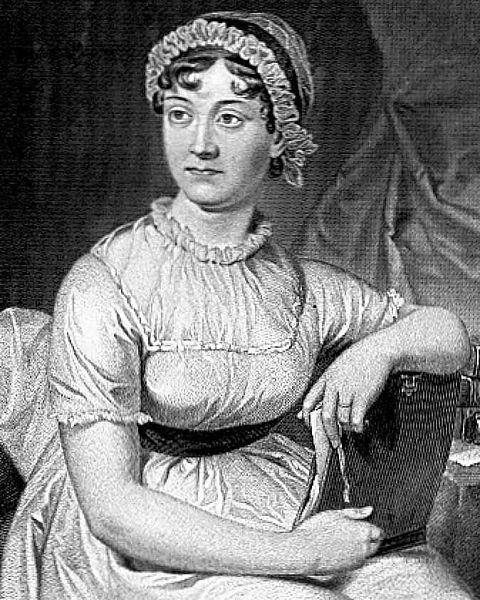
Dwight Lindley has picked some books to help the Catholic reader get the most out of Jane Austen (1775-1817), one of the finest and best-loved novelists in the English language. You can find the second part of this interview here.
Dwight Lindley is the Barbara Longway Briggs Chair in English Literature at Hillsdale College. He has published essays and articles on Jane Austen, George Eliot, John Henry Newman, Gerard Manley Hopkins, Virginia Woolf, and others. He lives in southern Michigan with his wife Emily and their nine children.

- Pride and Prejudice
by Jane Austen - Emma
by Jane Austen - Sense and Sensibility
by Jane Austen - Jane Austen: The Critical Heritage
by B.C. Southam - Jane Austen: A Life
by Claire Tomalin
What got you interested in your own area of specialisation and led you came to publish research on Jane Austen?
I got into literature proper because I've always loved stories, but I also wanted a discipline where I could talk about everything. This is one of the things that initially attracted me to novels and poetry. I could talk about philosophy, psychology, theology, history: everything that comes into human life.
As to this period and Jane Austen in particular, I have what Americans call Anglophilia. I have always liked British literature, especially nineteenth-century literature. I had that interest already in college. In graduate school, I began studying Jane Austen in particular. I was drawn to her from high school on. I had read some of her novels and then I read some more in college. It was not really until I was in Graduate School that I began to really think more deeply about her. Why was I drawn to her? In part, it is her strange combination of clarity and simplicity with depth. This is something that is unusual and special in her. Her stories and her language are like clear, deep water. She has this sparkling intelligence that is hard to describe. My experience of reading her and reading what other people have written about her is that she is smarter than the people who write about her. She has an insight and a wit and a wisdom that cannot be caught easily and yet it is present everywhere in her writing. So, I am really impressed with her and I have always enjoyed that intelligence of hers. Finally, I was really drawn to her wisdom about everyday, practical life, and what I would call the drama of understanding and self-knowledge that she presents. This is something that I enjoyed in her from the start. Famously, there are all these dramas about love. But they are always about the way that people in love misunderstand others and misunderstand themselves. They are about the way that they gradually emerge out of that into the truth. That is something that everyone enjoys in Jane Austen, but it is very hard to speak about it as intelligently as she does.
I began to appreciate that more explicitly and concretely after I read more philosophy. She is actually a very philosophically rich novelist. But I did not really start to see that until I had got more experienced myself. Particularly, John Henry Newman and Alasdair MacIntyre helped me to understand some of what was going on in Jane Austen. So I shall bring some of that up as we are going through specific books.
You mentioned Alasdair MacIntyre, and sometimes we think of Jane Austen as a moralist. In fact, McIntyre mentions her in that vein in Chapter 14 of After Virtue. However, Austen grew up in the faith. Her father was an Anglican priest and two of her brothers were ordained. She was a practicing Christian. She wrote prayers, and her last recorded words, uttered when she was on her deathbed, were, “God grant me patience. Pray for me! Oh, pray for me!” However, she did not wear her faith on her sleeve. So, while it is easy to see her writing about the virtues, much as Aristotle does, is Christianity prominent in her novels? Or is it secondary?
That is a good question, and it is something that people have spilled a lot of ink on. There is a palpable Christian and moral framework that undergirds her novels and imagination. There are obviously some Christian social details. All these clergymen. But her novels are not what we have come to think of as Christian dramas in a straightforward sense. What to make of that?
"She is very sure of her faith, so much so that she does not need to talk about it. It is just there."
One, she comes from a time before Christianity had been challenged in her culture. She lived from the late eighteenth to the early nineteenth century and died in 1817. Over the rest of that century, there was German higher criticism of the Bible, early Christian faith, dogma, and the formation of creeds. This criticism of organised religion and its texts really destabilised the faith of many intellectuals throughout the century. For later novelists from the nineteenth century, such as George Eliot, religious faith is a much more self-consciously held thing. It is something that you always have to talk and think about, and work through your doubts. For Jane Austen there is no such destabilisation. She is very sure of her faith, so much so that she does not need to talk about it. It is just there. She lives before this epoch of modern doubt in the nineteenth and twentieth centuries that we came to take for granted. You never have a Graham Greene novel or others like it, without a drama of doubt and faith.
So, it is not a Christian novel like that, but her novels take a certain kind of Christian faith for granted and presume upon it.
Everyone around her said her faith was very deep when she died. Her brother and her nephew, who wrote about her, talked about her deep faith. There was also her subtlety and modesty about it. She was not heavy-handed about it and she really did not feel attacked in her faith. She was just not very self-conscious about it.
It was the air she breathed.
Yes, I would say that was true. We can make various objections to the kind of faith that she had, which had its limitations. Cardinal Newman, when he looked back at the faith of her novels, found it somewhat frigid. He has a funny remark about the Jane Austen clergyman who is cold and stiff. He wanted something like the grandness of Catholicism. I think he said this while still an Anglican, because he had very self-consciously made an older, more Catholic vision his own under the strain and stress of that mid-century period, where everything was up in the air, and you really had to find it more for yourself and make it your own. Later nineteenth-century romantic writers look back and say, “That is not enough!” But her faith is there.
I brought it up because perhaps it is an aspect of her novels that we overlook. More recently she is presented as a Georgian Regency writer of rom-coms, but there was more to it than that.
Yes, that's right. One of the peculiarities of Austen is that you can really spend a lot of time with her and not think about religion because it is under the surface. This has been an advantage and a disadvantage to her. It has really widened her readership—and her viewership in the age of adaptations and miniseries—but it has also facilitated misunderstandings. I tend to think it is an advantage in general because, frankly, so many novels that wear religion on their sleeve end up being heavy-handed. So, let us take her as she is. We can look at religious questions, frameworks, and foundations, as they are helpful and useful. But let’s not expect her to be a twentieth-century novelist, or a Romantic, or certainly not a Catholic novelist, although, anyways, she is more comfortable with certain Catholic ideas than many other novelists of her time. The Anglicanism of the late of the eighteenth century, that she was familiar with, was very comfortable with hierarchy. Hierarchy within the Church and within the community was just presumed. There is also a presumption of liturgical order and a broadly sacramental understanding of the Church.
Part of what is so interesting about Pride and Prejudice is that it has this really clear depiction of the way that we try to understand the world by judging the character of others and by narrating the world that we live in.
1.
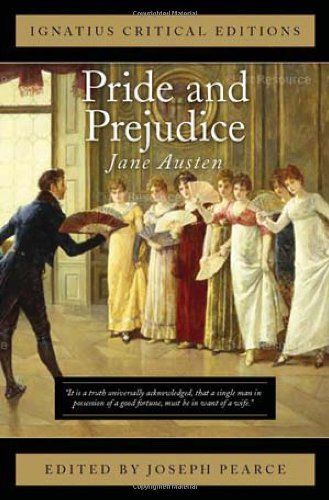
Let's go to the first of the five books that you have shortlisted, Pride and Prejudice (1813). Have you put this at the top of your list precisely because it is her most famous novel?
Yes, it is an easy choice. I think it is the greatest Austen novel. There are those who would dispute this, but I think it is an easy argument to make. It is the most popular and best known one. The cinematic renditions of Pride and Prejudice are also some of the best. It may be the funniest of her novels. This is another thing that attracted to me to Austen and which I still enjoy and love. This is part of what's fun about teaching her.
Is there anything about the novel you would like to stress?
The thing that sticks out most in Pride and Prejudice and which really illuminates Jane Austen's contribution in general is the centrality of character-reading. Right there, at the start of Pride and Prejudice, you have two young adults coming into contact with one another: Elizabeth Bennett and Mr. Darcy. She is trying to read his character. Bingley, even notices this at one point and asks whether she is a studier of character, to which she replies, “Yes.”
This is a characteristic practice of the time, where you are trying to judge the kind of person you're dealing with. In Pride and Prejudice, you are trying to get a sense of “Who are you, the person that I'm dealing with? What is the story that you inhabit?” It is a very literary way of thinking about everyday moral life that is being dramatized.
Lizzie Bennett is basically writing a novel inside of the novel, Pride and Prejudice. The drama comes from her misunderstandings or misjudgements of the people around her. She essentially imagines the wrong story for herself, for Darcy, and for this other young man, Mr Wickham, who is an army officer at the beginning of the novel.
It is through those misjudgements that she is moved towards a sort of climax of the book, where her narrative, which is problematic, collides with reality and falls apart. When that happens, she realises that she herself is the reason she has misunderstood: that her misunderstandings have to do with her own moral weaknesses. So, part of what is so interesting about Pride and Prejudice is that it has this really clear depiction of the way that we try to understand the world by judging the character of others and by narrating the world that we live in. Then, we have to deal with the challenges to that narrative, which occur inevitably when it collides with real life.
Austen has a great deal of insight into the into the way that our own personal moral life plays into that. Essentially, what she sees is that if I have problems in my own character— pride, for example, or vanity, or envy, and so forth—those things will occlude my vision. They will block me from seeing certain kinds of things, and they will cause misunderstandings and misjudgements. I could end up creating the wrong kind of story for my life, misunderstanding my relationship to other people, and misunderstanding the truth, because of problems in my own heart and my own character.
So, when Elizabeth Bennett experiences this kind of narrative collapse, it causes her to reform her sense of everything, including herself. Famously, she says, “ Till this moment, I never knew myself.”
This is one of those things that Alasdair MacIntyre actually really appreciates about her, and it is very Aristotelian: that your character determines the kind of life you live, and that prudence, the virtue of practical reasoning, works in the world by judging the character of others. That is how we make decisions all the time in life. This is something that is very alive in Aristotle’s Nicomachean Ethics. MacIntyre thinks of it in a narrative way in After Virtue: that we tend to make judgments about others and their character by putting them into stories that we then try out against reality as we experience it. That is a certain kind of narrative Aristotelianism. I think that he learned a lot of that from Jane Austen, who dramatises it over and over again in her novels, perhaps most clearly in Pride and Prejudice.
You mentioned that you liked some of the adaptations of Pride and Prejudice for the small screen or the big screen. What is your favourite one?
Easily the BBC one with Colin Firth. That one is easily superior. I do not think much of the later one with Keira Knightley. There are earlier ones than that that have actually more of Jane Austen’s dialogue in them, but they are a little bit stale.
2.
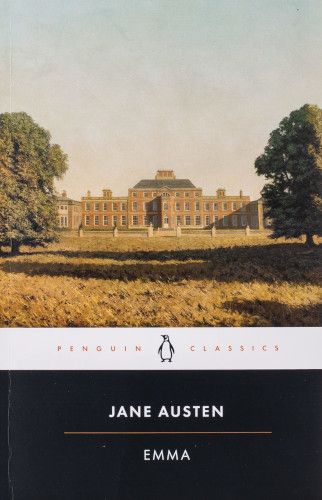
The second novel you recommend is perhaps her second most famous one, Emma (1816), which begins with the words, “Emma Woodhouse, handsome, clever, and rich, with a comfortable home and a happy disposition... had lived nearly twenty-one years in the world with very little to distress or vex her." Where does the novel go from there?
Well, it goes into all of the ways in which Miss Woodhouse thinks that she understands everyone around her, her own life and the meaning of her life. She thinks she understands all of those things. Yet, over and over again, she misunderstands all of the above, and really compounds all of her misunderstandings in the plot.
Elizabeth Bennett misunderstands the story that she is living in and mis-narrates it, but Emma does so on a grander scale and for much longer. You are about halfway through the novel when Elizabeth Bennett gets her comeuppance and rights her course, whereas Emma does not really start to do that until two-thirds of the way through the novel.
This is maybe Austen’s second greatest novel, and some people think it is the first. Her misunderstanding of herself and others around her is more complex, and the resolution of that problem in the story is also more complex. There are some special insights that come out.
In the last third of the novel, Emma starts to realise what the problem is. She starts to realise that there are specific characters around her—such as the young man named Frank Churchill and one of her good friends, a young woman named Harriet—whom she has systematically misunderstood the entire time.
All these pieces begin to come into place, and, ultimately, Emma realises that her best friend, Harriet, is going after a man Knightley, whom Emma feels is she is unworthy of.
Through this sort of romantic competition, Emma actually realises that she herself loves this man, and her marriage to Knightley ends up becoming the romantic denouement.
The interesting thing here is that her realisation is complex. It comes from the convergence of a number of different factors in her mind and in her experience. What I think is unique is how Emma understands the way our realisations of the truth tend to happen by convergent factors.
This is something that I really understood better after reading John Henry Newman. He speaks in a few different works about the phenomenon of what he calls convergent probabilities. What he means by that is we have all these things that we think about the world and the way that things are heading, including judgments about other people's character.
You think, “So and so is likely to do this. This is the kind of person he is. Here is what I think is going to happen.” You make all of these judgments and these are all things that you think are probable. They are probabilities that are moving forward in your life and you see them happening. What happens with Emma—and this is something that Newman describes very well—is that a bunch of other considerations, factors, realities converge on you and show you that, actually, what is really going on is likely to be very different from what you have thought. These different probabilities converge on your understanding and force you to reassess. This is what happens in moments of tremendous upsetting of our worldview or of the story that we think is unfolding. Emma dramatizes that much more carefully and complexly than Pride and Prejudice. It is just really true to life. This is one of the things that I love about Jane Austen in general. People sense this in her, even if they do not have the philosophical categories to explain it: that we are continually trying to make these sorts of judgments about other people and about the stories that we live in. Periodically we have these upsets to our framework where we realise, “Oh, I am living in an utterly different kind of story than I thought. The story of my family relationships is perhaps more tragic than what I realised, because of this person who has betrayed me, and so forth.”
That happens not by a simple piece of evidence that changes everything. It tends to happen by a bunch of different factors, all bearing on and putting pressure on what I think is true and forcing me to re-evaluate it, very uncomfortably and yet, inevitably.
That is what I see in Emma. I think it is well done and it is a thrill for that reason. But you have to put up with her for the first two thirds of the novel, where she is an utterly egotistical young person, just like a lot of my college students.
But she is certainly never dull. She's always interesting.
Oh yes, that is right. She is one of the most interesting young persons you could imagine.
3.
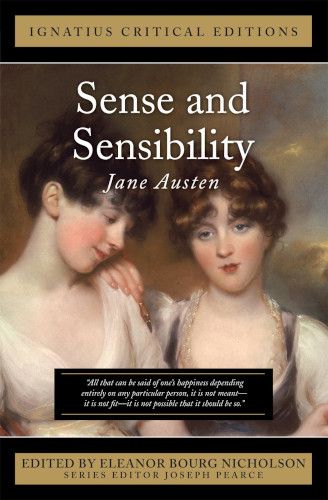
The third novel you have picked is Sense and Sensibility. The title may evoke two ideological movements. Sense evokes enlightenment rationality; sensibility, the Romantic movement, with its emphasis on emotion and sentiment as the gateway by which to access reality. Some have seen in Sense and Sensibility, a gentle satire of the sentimental novel: Richardson's Pamela, Lawrence Sterne's A Sentimental Journey, Rousseau's Julie or the New Heloise, Goethe's The Sorrows of the Young Werther. Is this the background of Sense and Sensibility? What would your own take on the novel be?
The short answer is, “Yes!” It is dealing with the sentimental novel and that tradition of understanding the drama of life. But she is also trying to tell a very human story and show how the point of view regarding sensibility arises in certain kinds of people, whether they have been reading those novels or not. In other words, it is a very human thing, although there is that important background from eighteenth century novels.
And have you chosen it for any other reasons?
Part of what I like about it is that it features that rivalry between those two points of view. In the novel they are the points of view of two sisters who do not feel like representatives of philosophical schools at all. They feel like real people, recognisable people whom we have met. They are real types.
There are some loose connections there to Jane Austen's own life. She lived her whole life with her sister, three years her elder. There are some interesting connections between their own life and this novel.
Putting that to the side, one of the things that is so interesting about this novel is that it shows how two people who are close can live with one another, have rival points of view, and how those two points of view, the stories you tell yourself about your life, your judgements, can put pressure on each other in everyday life. This is something that is as old as family life and friends.
Austen has these two sisters who represent these two points of view and who take them up. I do not want to say they are just allegories or walking symbols. But it is really interesting how the drama of rival points of view plays out under the pressure of real experience. It is working with that same philosophy of character judgement and narrative formation. The narrative falls apart. You have to reformulate it. You have to relearn how to judge the ethical truth of the world and so forth. Sense and Sensibility takes that same approach but draws out the way that it can unfold differently in two lives, right beside each other, and the way that they can create friction between people and test one another. Ultimately, one wins out.
That is very real. We have all kinds of tensions. We live in a very divided and divisive time where we regularly have great divisions of opinion, judgement, and of narrative: between ourselves and members of our own families, those close to us, and those we work with.
One of the things that is so powerful about MacIntyre’s After Virtue is that he dramatizes this experience of living with rival ethical traditions right next to each other and the way that you can be talking to each other and misunderstand each other over and over again. He dramatizes it at the level of entire traditions within a civilization, with multiple people occupying those traditions. But here, here in this novel, it is just in a family. But it is the same kind of thing.
So, it is a particularly timely novel for today's overly-politicised society.
Yes, I think it is. Alasdair MacIntyre says that we frequently have this experience of possessing our own worldview and having other things that we believe are true. As he says, these are embedded in the story that I think is unfolding: the story of my world and its relation to history. I have this world that I am living in. But then I meet people who are living in a different world and a different narrative. How do I even talk to them? How do we come to terms together?
The challenge for each narrative of the world is can it deal with the facts on the ground? Can it deal with the facts of life as we experience them? Can my philosophy of life, and the story that I tell about life, deal with what it is like to lose the one that I love, a failure in vocation, all the challenges, and highs and lows of life? Can it deal with the facts or not? That is what the story of life is, in a certain sense. MacIntyre thinks that is the question for each individual philosophy, narrative, or tradition. The way that we can come to meet one another in this world of rival narratives is to walk alongside one another and try to tell to help each other see, “How is your narrative understanding of the world actually accounting for the facts on the ground?” We can come to clarity that way. That is exactly what happens in Sense and Sensibility. One sister’s point of view ends up being unable to account for what is actually happening in the world. Thus, her narrative falls apart. The other sister is there, waiting to help her put the world back together again and to reconstruct her understanding of the truth.
That is something that really does happen.
The remaining titles on your list are books on Jane Austen rather than books by her. Obviously, the best thing to do is just read Jane Austen, but you have also chosen some guides to help us better understand her period and background.
I was torn about this because I love her other novels so much, especially Persuasion, her last novel. It is really rich and beautiful.
4.
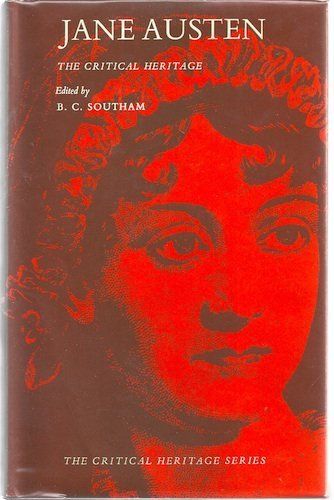
B.C. Southam's books reprint critical essays on Jane Austen from 1811-1940. Why are these essays and reviews still worth reading? Do you recommend one volume in particular?
Jane Austen: The Critical Heritage gives a sample of the way that people have understood her over the last 200 years, stopping in the middle of the twentieth century. It captures the high-points of the first 150 years of her reception. It is interesting and helpful because it shows the gradual shift and opening-up of appreciation for Jane Austen. Unsurprisingly, at first she was relegated to women's literature, just as today romantic comedies are bracketed there. Among many of my students today, she is still considered women's literature. I remember taking a graduate class on Jane Austen. There were fifteen or twenty women in the room, and just me and another guy.
From the start, she was bracketed in this way and written off by some as a romantic, small-scale, limited writer who wrote drawing-room fiction for ladies. You really catch that in Southam’s book.
“We know not whether Miss Austen ever had access to the precepts of Aristotle, but there are few, if any, writers of fiction who have illustrated them more successfully.” Richard Whately
What happens over the nineteenth-century and is caught by The Critical Heritage is that certain intelligent people start to see what is going on, the complexity that is underneath the surface of the Jane Austen novel.
Let me just give you an example or two from the early 1800s. In 1821, Richard Whately, afterwards the Anglican Bishop of Dublin, wrote one of the first great reviews of Jane Austen, in which he saw her Aristotelianism very clearly. Not that she was a great reader of Aristotle, but she read a number of books in which a certain kind of ethical Aristotelianism was undergirding and presumed. Among other things, he says, “We know not whether Miss Austen ever had access to the precepts of Aristotle, but there are few, if any, writers of fiction who have illustrated them more successfully.”
He understood her novels as dramatizing the process of prudential reasoning, described by Aristotle. He thought about her in this way because he was a college professor at Oxford at the time, teaching Aristotle to none other than John Henry Newman. He was John Henry Newman’s mentor at Oxford in the 1820s.
Whately and others start to say, “Hold on! Here are some of the most intelligent novels I have ever read. They are intelligent and deeply insightful about very intricate, small-scale psychological realities.”
Essentially, what The Critical Heritage opens up is that there is a deeper and deeper understandings of this terrain that Austen maps out and that other novelists of the period do not really get as well as she does. By the twentieth century, authors like Henry James, Virginia Woolf, and W.H. Auden all are saying that she is a world apart. They have a terrific appreciation for her and her practical intelligence about things that other people tend to miss.
I like this book because it provides us that context, that historical sense of an opening understanding of this author, over against the background of a prejudice that we still could understand today.
5.
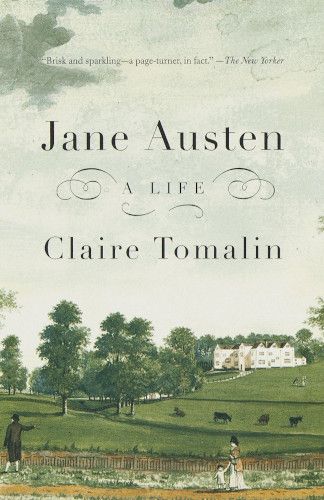
The next book on your list is Jane Austen: A Life by Claire Tomalin. This is a widely acclaimed biography. However some—for example, the Anglican clergyman, Rev. David Goodhew—have criticised Tomlin for keeping Austen’s faith out of the picture. Why do you think this is a good biography of Jane Austen?
I would agree that Claire Tomalin does not do adequate justice to religion. She is a mainstream writer of literary biographies and is relatively unsympathetic to religious faith, but not actively antagonistic, as far as I can tell. You can read it alongside Jane Austen’s Anglicanism, and that would be enough.
What do I think is good about Tomalin? Well, one thing is that she is just a terrific writer and gives a very full a biographical understanding of her life. She fills in blind spots that people at the time of Jane Austen in the nineteenth century did not quite see. She builds out the kind of social strata that would have been present but presumed at the time. We have become much more conscious of that since then. So, she is very good on social, cultural, and political context, and the geography of everything. Her brothers, cousins, and the people that she was writing to, were all constellated out around her. Tomalin gives you a more spatial sense of the way her life was unfolding and of the layers of society, and so forth.
She also goes to each place and tells you what each building and town feels like, the things that you can still see there. It is just a good, normal, modern biography.