One of the charisms that St. Paul lists is “the discernment of spirits” (1Cor 12:10) (diakrisis pneumatikōn, discretio spirituum), whereas St. John warns us, “Do not believe every spirit, but test the spirits” (1Jn 4:1). Indeed, Scripture continually describes how we are under the influence of both good and bad spirits. On the one hand, God influences us through his grace and angels. On the other hand, our own wounded nature and the fallen angels incline us towards sin, often subtly and under the semblance of the good. Discerning where certain motions within our soul come from and whether they point us towards God’s will is not only a difficult but a critical aspect of Christian life. Thankfully, the saints, by praying over Scripture and their own experiences, offer sure guidance on spiritual discernment. In his Spiritual Exercises, St Ignatius of Loyola provides one of the clearest summaries of these principles.
In this interview, Fr. Timothy Gallagher OMV will discuss some of the best books on spiritual discernment.
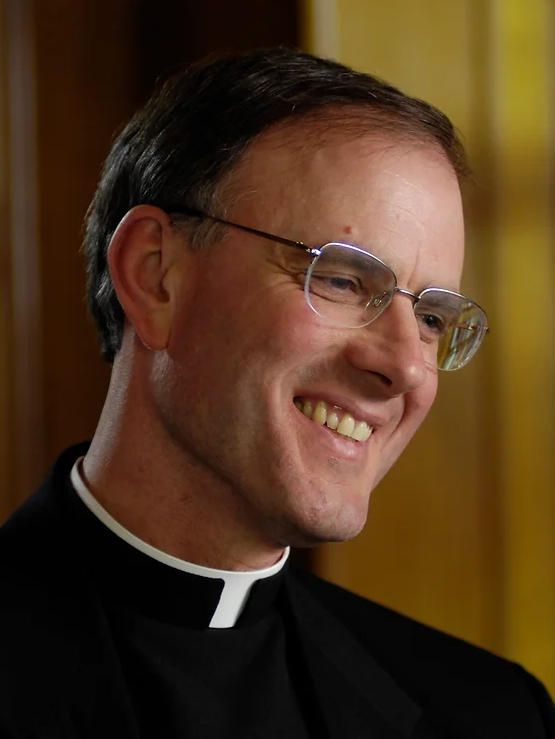
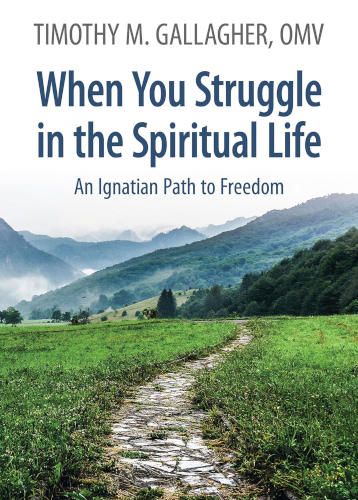
Fr Timothy M. Gallagher is a priest of the Congregation of the Oblates of the Virgin Mary. In 1983, he obtained his doctorate from the Pontifical Gregorian University and began his ministry as a spiritual director and retreat leader. He has taught at St. John's Seminary, Brighton, and Our Lady of Grace Seminary Residence, Boston, both in Massachusetts. Since 2015, he holds the St. Ignatius Chair for Spiritual Formation at St. John Vianney Theological Seminary in Denver. He has written over twenty books on spiritual themes, published in Catholic periodicals, and is in wide demand as a speaker. His books include When You Struggle in the Spiritual Life: An Ignatian Path to Freedom, A Handbook for Spiritual Directors, An Ignatian Introduction to Prayer: Scriptural Reflections According to the Spiritual Exercises, Meditation and Contemplation: An Ignatian Guide to Praying with Scripture and A Layman's Guide to the Liturgy of the Hours.
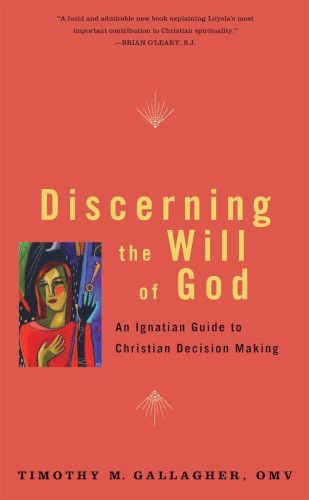
- Discerning the Will of God: An Ignatian Guide to Christian Decision Making
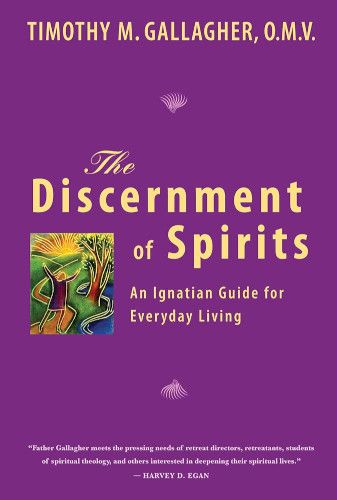
by Fr. Timothy M. Gallagher OMV - The Discernment of Spirits: An Ignatian Guide for Everyday Living
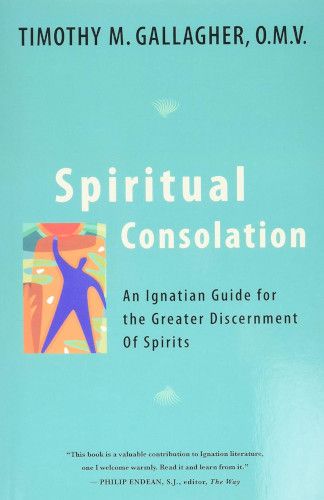
by Fr. Timothy M. Gallagher OMV - Spiritual Consolation: An Ignatian Guide for Greater Discernment of Spirits
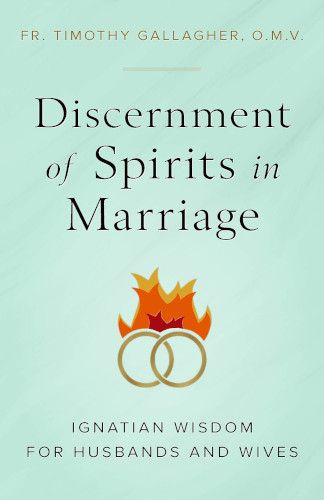
by Fr. Timothy M. Gallagher OMV - Discernment of Spirits in Marriage: Ignatian Wisdom for Husbands and Wives
by Fr. Timothy M. Gallagher OMV - Teaching Discernment: A Pedagogy for Presenting Ignatian Discernment of Spirits
by Fr. Timothy M. Gallagher OMV
...and a bonus recommendation... - The Screwtape Letters
by C.S. Lewis
You distinguish between the discernment of God's will and the discernment of spirits. What is the difference between the two?
They are different, but they overlap in one significant way.
They are different in that the discernment of spirits is about discerning what Ignatius calls the different movements (mociones) that we experience in our thoughts and hearts all day long. All kinds of things are going through our thoughts and hearts: various emotions of attraction; resistance, joy, anxiety, and so forth. This richness of fluctuating interior, affective, and cognitive experience is what Ignatius means by movements. We need to discern what, within this flux, is of God and what is not of God, so that we can embrace the former and reject the latter. That is the discernment of spirits.
Discernment of God's arises when we are faced with a choice: the choice of one’s vocation, career, or any decision of significance. We love the Lord, and we want to know and do his will. So, we engage in a process that leads us toward clarity about which of these options the Lord wills. That is the discernment of God's will.
They overlap at one very significant point. As St. Ignatius notes in his teaching on discerning God's will, one way God might choose to give us an answer is through the discernment of spirits: by understanding from our interior experience what is of God and where God is leading us; what is not of God and is to be rejected.
Where does the Bible talk of the discernment of spirits?
That is as big as the Bible.
We can go through the historical books. Think of Solomon, for example. His prayer, where he asks for a discerning heart to know what is good and what is not, is so pleasing to God.
Discernment runs through all the wisdom books.
It is everywhere in the Psalms. Think of Psalm 119, a long psalm about God's word and discernment: “give me understanding, that I may know thy testimonies!” (119:125).
The prophets are about discernment: knowing what is of God and what is not. Think of Jeremiah, or the distinction between true and false prophets.
In the gospel, the Lord speaks about it very often: “You know how to interpret the appearance of the sky, but you cannot interpret the signs of the times” (Matthew 16:3).
It is everywhere in Paul. Take Romans 12:2: “Do not be conformed to this world, but be transformed by the renewal of your mind, that by testing you may discern what is the will of God, what is good and acceptable and perfect.” With some more nuance, he mentions the gift or charism of discernment in his list of the gifts that the Spirit gives to the Church: “For to one is given by the Spirit the word of wisdom; to another, the word of knowledge by the same Spirit; to another faith by the same Spirit; to another gifts of healing by the same Spirit to another the working of miracles; to another prophecy; to another discerning of spirits” (1Corinthians 12:8-10).
Discernment is a central theme throughout Scripture.
More commonly, discernment is a virtue. Like all virtues, it is acquired through repeated exercise and by learning from those who are more experienced.
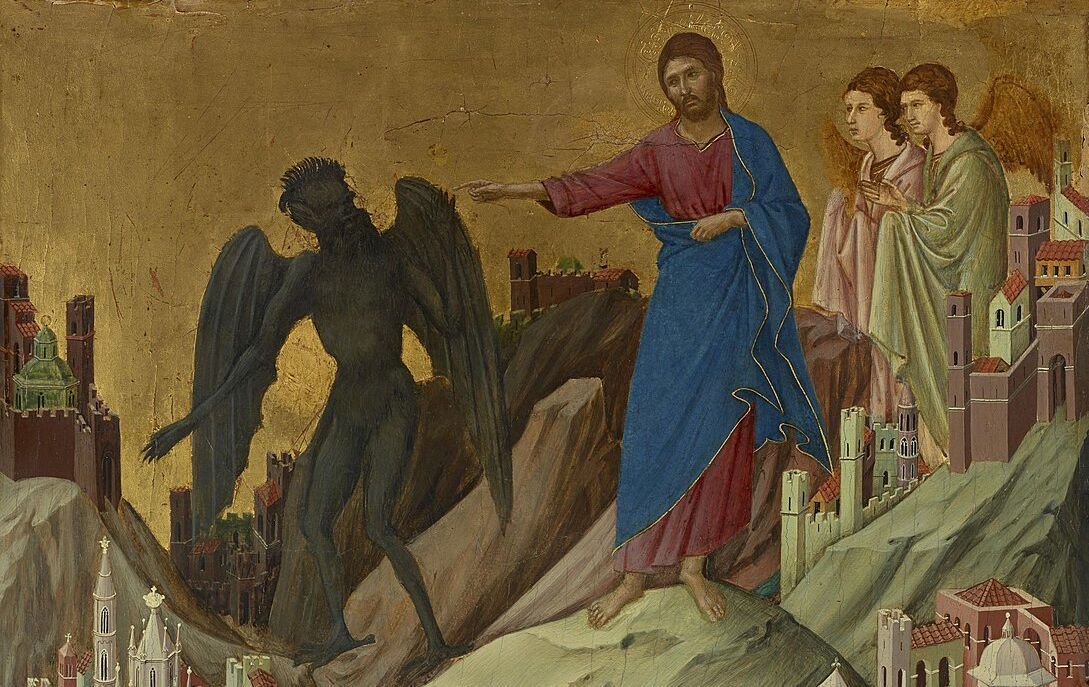
Does Our Lord give us an example of discernment of spirits when he is tempted in the wilderness?
That is an interesting question. You have the two different spirits. This is as clear, definitive, and sharp a discernment you will ever find. The tempter comes. Immediately, the Lord understands who it is. He responds quickly and firmly. The various temptations are over immediately. Then, the angels come to minister to him.
How does the discernment of spirits differ from the moral virtue of prudence?
Another great question. As a particular to the universal.
All true discernment is an exercise of the supernatural virtue of prudence. That is where St Thomas Aquinas would situate discernment.
Now, there are two different ways in which a person can exercise discernment.
One is as a gift. It is a charism (gratia gratis data) that God freely gives to an individual for the sake of the Church. Examples of this are St John Vianney, St. Pio of Pietrelcina, and many other saints. God gives them a great deal of light, as a freely given charism or gift, that they then exercise on behalf of the people that seek light and direction from them.
More commonly, discernment is a virtue.
Like all virtues, it is acquired through repeated exercise and by learning from those who are more experienced.
Discernment as a virtue falls under the supernatural virtue of prudence.
There are three acts of prudence: counsel, judgment, execution. You take wise counsel, you look at everything involved, and you come to a good judgement about what is the right option in this situation or the best means to the end. Then you put it into practice.
In the discernment of spirits, as Ignatius understands it, you have the same three acts.
This is exactly how he describes them in the title of his first fourteen rules for the discernment of spirits. “Rules for becoming aware and understanding the different movements that are caused in the soul.” It mentions counsel and judgment. Then, we take action. “If they are good, we receive (recibir) them; if they are bad, we reject (lanzar) them.” The two verbs he uses, recibir and lanzar have real energy. You thrust the bad movements away so that they can never harm you.
The discernment of spirits, done properly, on the basis of faith, in pursuit of our supernatural end—which is to love and serve God in this life, according to one’s vocation, and thereby enter into eternal joy with the Lord—is one form of exercising the supernatural virtue of prudence.
It regards a practical situation and a concrete choice to be made between means. The virtue of discernment, as we grow in it, makes it increasingly easy for us to see which means will best lead us to our supernatural end.
You mentioned St Thomas. He also teaches how the various theological and cardinal virtues are perfected by the gifts of the Holy Spirit, counsel in the case of prudence. How does the discernment of spirits differ from the gift of counsel?
Yes. Even with all our best efforts, our understanding is always imperfect. So, the Lord does not leave us to our own devices. alone. In the case of prudence and the discernment of spirits, he strengthens us with the gift of counsel.
St. Ignatius mentions an example of this when describing three different ways in which God may answer someone who is discerning his will. That person wants to know whether option A or option B is God's will. Though this does not occur frequently, sometimes God may simply make his will so clear to the person that he or she is left in no doubt whatsoever. Several people receive clarity from God in this way when discerning their vocation. This is a pure exercise of the gift of counsel. Normally, the path towards the counsel and right judgement is laborious. In this case, however, God steps in and, through the gift of counsel, supplies the necessary clarity, and makes it very clear to the individual which option he wills. He also gives us a certain delight in embracing that choice.
As with so many different things that we call ‘Ignatian’, he takes the tradition, upon which he depends and from which he has learned, and, by a gift of the Spirit, systematises it.
The desert fathers work out many of the principles of the discernment of spirits. They hand on to their disciples the lessons learnt during their own spiritual combat. So, for centuries the art of spiritual discernment was built up and handed down through monastic life. Nowadays, however, most turn to the first two sets of rules that St. Ignatius of Loyola appends to his Spiritual Exercises. Does he simply provide the best available systematization of the principles of spiritual discernment, or does he make a new contribution to the preceding tradition?
As with so many different things that we call ‘Ignatian’, he takes the tradition, upon which he depends and from which he has learned, and, by a gift of the Spirit, systematises it. He expresses it with such clarity, practicality, and usability that his systematization tends to dominate the tradition from that point on.
There is at least one way in which Ignatius does add something new to the Church’s understanding of discernment. I referred to it earlier. He understands that the discernment of spirits is one of the ways in which God may reveal his will when we are discerning it, and a choice is precisely. The rules that you mentioned equip us for that discernment of spirits.
For Ignatius, it is very clear that any legitimate discernment must be within “Our holy Mother, the hierarchical Church”.
In recent years, discernment has become a buzzword in the Catholic world. This is partly because more Catholics have learnt about spiritual discernment and its importance. In some cases, however, the term has been appropriated to denote, not the examination of my spiritual state and God’s concrete will for me within the Church, but a critique of the Church’s definitive magisterium regarding the deposit of faith. This expansive conception of spiritual discernment does not appear to attend to the last set of rules in St. Ignatius’s Spiritual Exercises: those on how to be in one mind with the Church (sentire cum Ecclesia). Has it become necessary to set the record straight about what counts as spiritual discernment and cut down any misunderstandings or misappropriations of the term?
Yes, that is foundational for any authentic discernment.
You are right. I have been sharing this teaching for about forty years now. It has never been as widespread as it is now. That is wonderful, but we do need to be Ignatian about it: solidly in the Church.
For Ignatius, it is very clear that any legitimate discernment must be within “Our holy Mother, the hierarchical Church”. He says that as a preface to his teaching on how we discern God's will and choices.
You also have the rules for feeling or thinking with the Church that he gives at the close of the Spiritual Exercises. Any discernment that involves something contrary to the teaching of the Church is no longer Ignatian: it is no longer authentic discernment.
We all go through periods of spiritual desolation. In the forty years that I have been sharing this teaching, not one person has ever said to me, “I do not know what you are talking about.”
What led you to your ministry as a spiritual director and retreat leader?
Well, this is the work of my community.
Our founder, the Venerable Bruno Lautieri, first as a seminarian and then as a young priest, had a saintly Jesuit as his spiritual director for twenty years. Venerable Bruno came to the conviction that there is nothing as powerful and effective in the Church for awakening the desire for holiness and serving the Lord as the Ignatian spiritual exercises. They can be adapted to any setting. They can be done as a formal retreat, in a retreat house. They can be done as parish missions. People can go through them with regular guidance in their daily life, without ever having to leave home. They can be adapted to any number of days people have available.
That was Venerable Bruno’s first conviction.
Second, he realised that the Jesuits had this incredibly powerful tool but were not founded specifically to give the spiritual exercises. Their charism is to be available for any need of the Church that the Holy Father sees fit. In practice, that has been education largely.
So, you have this uniquely powerful tool, but you have far too few priests who make it available. The Church needed a community of men who would be formed in giving the spiritual exercises, take that as their ministry, and make them available to the Church. Of course, no matter how many they are, it will never be enough.
That is how I got into my ministry as a spiritual director and retreat leader.
At one point, I realised that how rich the first set of fourteen rules for discernment are and decided to focus on them. Essentially, they are about understanding and overcoming discouragement in the spiritual life or what Ignatius calls spiritual desolation.
We all go through periods of spiritual desolation. In the forty years that I have been sharing this teaching, not one person has ever said to me, “I do not know what you are talking about.”
Currently, further factors cause a lot of discouragement. The pandemic, the direction in which the culture is going, the political situation, and many other things weigh upon people today.
At first, and somewhat hesitantly, I gave half-hour talks on spiritual desolation in retreats. It caught fire. People just wanted more of this. I was asked to do seminars on it, first for spiritual directors, and then in parishes, religious communities, dioceses, or any setting you can imagine.
It is not that I sat down at a certain point and planned to do this full time. I love doing it, but it happened because people realised that this teaching could help them understand their struggles in the spiritual life. Through Ignatius, most of them really understand for the first time what is going on. He supplies them with a wealth of suitably adapted tools, taken from our spiritual tradition, to overcome that discouragement in their spiritual life. Then they just cannot get enough of it.
I shall give one example.
In the first rule, Ignatius describes the person who is far from God and living a life of confirmed, serious sin. Think of Ignatius himself up until his conversion at the age of thirty or Augustine, before his conversion. Ignatius describes how the enemy tries to foster that way of life, filling the imagination with images of sensual pleasure, and so forth. Then he describes how the good spirit works: by stinging and biting the conscience. It leaves that sense of trouble that a person in that situation can never shake. It is described beautifully in Augustine, with his restlessness. The hope is that such a person will say, “I cannot go on like this. Something must change.” That becomes the beginning of one’s return to God.
Then, there is the second rule. This is most likely the rule that corresponds to the spiritual situation of those who want to learn about this teaching: the person who has many imperfections, the just one who falls seven times a day, but sincerely wants to sin no more, love God, and serve him. The enemy tries to hinder that by discouraging that person. The good spirit tries to encourage the person. Ignatius describes four tactics by which the enemy tries to discourage us; five by which the good spirit encourages us. We have all experienced them. This is the ordinary, undramatic stuff our ordinary spiritual life. That is precisely why it is so important. Almost all our spiritual life takes place on this level.
Once a woman heard me give this teaching and a few years later, at some other meeting, told me that, before she was acquainted with Ignatius’s roles, she would hear a voice. This woman was absolutely dedicated to the Lord and very faithful. Clearly, she was the kind of person described in the second rule. She would hear this voice within her telling her that she was not what she should be. “You do not pray well. You are self-indulgent. You miss opportunities to help others.” She thought that this was God's voice. You can imagine how encouraging it was to realise that it was not God's voice, but the voice of the enemy, who was trying to discourage her in her efforts to love and serve the Lord. She realised that she was called to firmly reject that voice and go forward. It changed her entire spiritual life.
Sometimes I speak to an audience of several one hundred people. It is beyond beautiful to see what happens in people's lives and hearts when, instructed by Ignatius’s clear, usable teaching, they understand what is going on in their spiritual life for the first time. They gain new hope. You cannot do much about something that you do not understand. Once you do understand it you are set free to take action.
Ignatius supplies the richest set of tools in our whole tradition for overcoming discouragement in the spiritual life.
People tell me, “Now I understand what was going on. Everybody should know this ten, twenty, thirty, forty, or fifty years ago. My life would have been very different.” This is also beautiful. It means that this teaching is hitting home.
So, Ignatius does not speak abstractly, but illuminates what we have experienced. I would love to see every Catholic know this teaching. It changes our lives dramatically.
I wrote the first book on discernment twenty years ago. I could not have foreseen how important this teaching would become, amid increasing desolation and discouragement. If we have been living in discouragement or desolation, then we should know, beyond any shadow of a doubt, that God never asks of us to live in captivity to these discouraging lies and tactics of the enemy. We are always called to be free from them and there is a clear, usable path to that freedom.
So, I wish everybody would learn these fourteen rules. That will make a blessed difference.
Did you begin to write your books on discernment because you recognised that there were no suitable ones available in English?
The first of the book then led to the others, but I had never thought of writing books on discernment.
I was giving a set of talks on the rules, and it was growing all the time. At one point, my provincial said, “You should turn this into a book.”
I did not listen but sometime later, he said it a second time. Later still, he said it a third time and it got through to me. “Lord, maybe you are saying something to me through this?”
So, I asked to meet with the provincial and asked him if he was serious about it. He said that he was. We set aside some time for this project and that is how I wrote the first book.
Some aspects needed a separate book-length treatment. That is how the whole series came about.
I never looked at the existing literature and thought that it had a gap. However, there was a gap. Providentially, I developed a way of presenting Ignatius’s rules that did not exist, at least not in the form I came up with.
My approach is based on two principles.
First, the best way to understand Ignatius’s teaching on discernment is to look at what he actually says: to parse it phrase by phrase, even word by word.
His fourteen rules are very dense and rich. They are 1231 words in the original Spanish, about 3½ double-spaced pages. That is not a very long text. However, St Ignatius is condensing an enormous amount in a few words. Most of us do not have the background that he presupposes. We need to unpack the rules.
That is the first thing, and it seems obvious. However, the only author I found that did that was in Spanish, a Uruguayan Jesuit’s marvellous commentary on the spiritual exercises and specifically on these rules for discernment. I learned that from reading him.
Second, the best way to make the rules understandable and help people apply them is to put them back in their original setting of lived spiritual experience. These rules were not written in a library. Ignatius knows the tradition. It was mediated to him through various sources. However, his formulation of it is a digest of spiritual experience: his own and that of the many people who, soon after his conversion, started to come to him for help.
The spiritual exercises are about living the spiritual life When you do not present the rules abstractly but situate them in lived experience, they burst into meaning for people.
For example, whenever I teach the first and second rules, I do not start with Ignatius’s text but St Augustine’s Confessions: the experience that leads to his dramatic conversion in the garden. Augustine is a master at describing spiritual experience. You see the action of both the enemy and the good spirit in one who is far from God. This is what Augustine experiences before his conversion. As soon as he strives to free himself from that and to live in communion with God, the enemy tries to discourage him, and the good spirit encourage him. Then we go to Ignatius’s text and Augustine’s experience illuminates it. Using both the text and experience really works.
What does this add to the existing literature? There were two forms of writing on Ignatius’s rules for discernment.
One was in-depth, academic, and technical. Some of it is excellent but, due to its nature, few people read it.
At the other end of the spectrum, quite a few authors would write five to ten pages on Ignatius’s rules for the discernment of spirits in a book on Ignatian spirituality or some other topic. That was very useful. Without writings of this kind, almost no one would have known that these rules even existed. However, such a short treatment cannot do justice to the full richness of Ignatius’s rules.
Simply by teaching them and putting that teaching onto paper, I have developed a complete, accessible treatment. That has led more to know and use these rules.
1.
Perhaps the first book of yours someone could read is Discerning the Will of God: An Ignatian Guide to Christian Decision-Making. Do you agree? Is that the book you would recommend as the place to start?
It would depend on why one is looking to Ignatius’s teaching on discernment. If someone faces a choice and needs to discern God's will, yes, that would be the right book to read.
2.
If someone recognises that there are these ups and downs in our daily spiritual life—what Ignatius calls spiritual consolation and spiritual desolation—and wants to understand this and how to respond to it, then the first book is the one to read. If you want the complete teaching, there is The Discernment of Spirits: An Ignatian Guide for Everyday Living.
If you want a shorter introduction to it and are married, there is Discernment of Spirits and Marriage: Ignatian Wisdom for Husbands and Wives. For priests, there is The Discerning Priest.
3.
You have also written a book on the second set of rules, Spiritual Consolation: An Ignatian Guide for Greater Discernment of Spirits. Do you have any suggestions on how one should read these two commentaries you have written on the two sets of rules for the discernment of spirits?
Everybody experiences the struggle with spiritual desolation from time to time, even frequently, and so needs the first set of rules. The Discernment of Spirits: An Ignatian Guide for Everyday Living is on these rules. Anybody can read that book. The only presupposition is that you are sincerely trying to live the Christian life and be a disciple of Jesus.
The first few pages would require a lot of attention, but once you are past the prologue, which is not that difficult, the rest of the book will be very easy to follow.
You will need to read it thoughtfully because Ignatius’s rules are deep. However, the book makes them accessible.
Now, Ignatius does have a second set of rules. To my knowledge, I am the first to have written separate books on the first and second sets of rules. I did that advisedly. We should not mix the two.
I can invite everyone to learn the first set because we all deal with discouragement in our spiritual life.
In the second set of rules, Ignatius is dealing with a different issue, one that, if it does arise, comes later in the spiritual life.
I do not want to get into this too deeply here because we should not confuse the two. Ignatius is very clear on this.
Whenever the first set of rules is helpful to a person, the second set of rules should not even be mentioned. Whenever the second set of rules comes into play, we do not need the first set anymore.
Anybody interested can read Spiritual Consolation.
More recently, I have published a book that applies the second set of rules to diocesan priests: The More Discerning Priest. I have another, that is about to come out, which applies them for spiritual directors.
Besides your book on the first set of rules of the discernment of spirits, you have written Setting Captives Free, where you offer the insights you have gained on them through your own experience. You have already mentioned some of those. Summing up, what are the main insights you have gained from your own experience?
This book came about fifteen years after I had written the first book and taught these rules more times than I can count.
Whenever you teach something, you learn something more about it. I had amassed a further set of examples for the rules and further issues that I did not get into in the first book.
It seemed it was time now to make this further learning available for those who would like to delve more deeply. That is what led to Setting Captives Free: Personal Reflections on Ignatian Discernment of Spirits.
We are going to change the title because there is a lot more in the book than my own experience of these rules. I do share some of my own experiences but there is a wealth of further experience in there. The book also explores some issues surrounding the interpretation of the rules. For example, can you be in spiritual consolation and spiritual desolation at the same time? This is one of several questions that occur to people who enter more deeply into discernment. I address them in the second book.
Such strength comes into a marriage if husband and wife are aware of this experience, understand it, and can accompany each other. They are not trying to be each other’s spiritual director, but spiritual friends and spouses.
4.
As you already mentioned, you have also written several books to guide people in discernment according to their state of Christian life. The Discerning Priest and The More Discerning Priest, are for presbyters. However, I would rather focus on the guide you have written for married couples. Priests normally learn the basics of discernment in the seminary, but most married couples do not know them or how they apply to their state of life. What prompted you to write Discernment of Spirits in Marriage?
We have reached a new stage now in the expansion of this teaching.
When I began, it was completely new for most people. No one had ever heard of these rules. That has changed, as have the settings in which I do this.
Last week, I went through this teaching during a five-day retreat with priests of the diocese in North Carolina for a five-day retreat. Ten years ago, that would have never happened.
The same is true in parishes, indeed almost every setting, where groups are learning the rules.
The study of the rule has become more widespread in seminaries too.
Now that large numbers of people have been exposed to this teaching, it is time to apply it specifically to each different vocation.
The first such book I wrote was for diocesan priests: The Discerning Priest. Then, I felt it was time to write one for married couples.
Many are asking for a book that applies the rules for teenagers, young children, religious life, and so forth. There are so many different applications.
However, marriage is such a widespread and fundamental vocation that this is a prime application. That is how Discerning Spirits in Marriage came to be.
The feedback that makes me happiest is when a married couple tells me that they have gone through the book together. They might tell me that they are speaking together at an unprecedented level. Now they understand the ups and downs of the daily spiritual experience and have a language for it. They can be each other's companion in a whole new way. I love hearing people tell me that.
What are the main lessons of Discernment of Spirits in Marriage that married couples need to follow to exercise spiritual discernment in their marriage?
Simply the lessons that Ignatius communicates in his fourteen roles.
There is a chapter for each of the fourteen rules.
The book looks at a married couple, Mark and Anne. They are not two specific people by that name. They are an amalgam of many people I have worked with over forty years. In the book, you watch them undergo the experiences described in each of the fourteen rules. Then, we interpret or explain it in the light of the corresponding rule.
For example, in rule five, Ignatius says. In time of desolation, when you know you are feeling discouraged and downhearted, you do not have energy for prayer or do not feel God's closeness. There is no shame in experiencing that. It is no surprise that we experienced this. In a sense, it is a good sign. The enemy only tries to discourage us when we are heading in the right direction. This tactic of the enemy is a sign that, essentially, our lives are heading the right way.
When both husband and wife understand that experience, then they can apply rule five: when you are in desolation, do not make any changes to what you plan to do in your spiritual life is while you're in the desolation, because this is when the enemy is trying to weaken you.
For example, the wife is scheduled to go to confession at 4:00 PM this coming day but she has a difficulty. She is a special-ed teacher, there is a tension with her teenage daughter, she becomes discouraged, and her prayer is slipping. It is Saturday morning, and she does not really want to go to confession at 4:00 PM. “Maybe I am not in the best condition to benefit the way I would like to from the sacrament. Maybe next week will be better.”
This is where rule five comes in. She is in a time of desolation and thinking of changing a spiritual proposal that she had in place before her current desolation. Rule five tells her to go to confession at 4:00 PM exactly as planned. Of course, the enemy wants her to change that because, if she does not go to confession, the desolation may well continue. If she does go, that probably will be the end of it.
The husband is getting closer to the Lord. He has started attending the men's prayer breakfast in the parish, but, during a time of desolation, wants to stop attending. Rule five tells him to go.
So, we are looking at how these fourteen rules apply specifically to husbands and wives. Each spouse is fifty percent of a marriage. This teaching can do a lot for a marriage, even if just one of the spouses follows it. When both do so, they can assist each other.
One couple told me that they have an agreement. If one, say the husband, is discouraged or desolate, then he texts his wife, she starts praying for him, and she texts him back. Such strength comes into a marriage if husband and wife are aware of this experience, understand it, and can accompany each other. They are not trying to be each other’s spiritual director, but spiritual friends and spouses. That is a beautiful thing.
5.
Another subset of your books deals with forming spiritual directors. Besides A Handbook for Spiritual Directors, you have written Teaching Discernment: A Pedagogy for Presenting Ignatian Discernment of Spirits. In the preceding answers, you have summed up that pedagogy: word by word exegesis of St. Ignatius’s rules, followed by concrete examples. Is there more to your pedagogy?
Those are the two essential pillars of the pedagogy, but there is a lot more to it.
Enough people have learned these rules and want to share them with others. They want to be equipped to do that. That is why I wrote the book. From long experience, I know that this pedagogy works and wanted to hand it on.
We now have an annual seminar for people who want to teach these rules in the same way, whether it be for a group, their parish, households that get together in a retreat or any other setting.
The book describes nine underlying principles that guide the teaching. Then, it goes through each of the fourteen rules in detail. It describes the essential content and ways of presenting it.
At the other end of the book, we cover things such as using PowerPoint, various examples, and so forth. The book leaves one well-equipped to do this.
Have you had any experience of sharing these rules beyond Catholic circles, say, with Protestants or Orthodox Christians?
Yes, I am glad you asked that.
There is a sense in which Protestants receive it with more enthusiasm than Catholics. Ignatius is speaking about our personal relationship with God and our experience of it. That is very much at the heart of the Protestant understanding of living the faith and our relationship with the Lord.
By contrast, we Catholics have maybe heard of Ignatius of Loyola, Jesuits, discernment, and such like, but this is completely new for our Protestant audience.
I have been doing this with groups of wonderful, devout, God-loving, Protestants. It is exciting because it opens a whole new understanding for them and engenders a lot of energy. At the same time, it reveals the depth of a two-thousand-year-old tradition of sanctity that is largely unknown to them. They really fall in love with it.
6.
So far, we have talked about your books. Another well-known book which touches upon discernment is C.S. Lewis’s The Screwtape Letters is a very entertaining exploration of the devil’s ploys. In your view, is it also an accessible, instructive guide to the discernment of spirits?
It is a wonderful book. One man tells me that he reads it every year, precisely for this purpose.
It is a short book and C.S. Lewis is always a wonderful writer. It is illuminating and reveals many of the enemy’s tactics and how the angels trying to lead one toward freedom from the enemy. It is not as thorough and applicable as Ignatius’s fourteen rules, but it is very useful and enlightening. I warmly recommend it.