
Typology is the consideration of how the events and prophecies of the biblical books of the Old Testament are brought to fulfilment in Christ. It is a fundamental principle in both the writing and reading of Sacred Scripture. Throughout the Gospels, Jesus explains how many events and prophecies of the Old Testament books refer to him and his works (see Luke 24:44). Under the guidance of the Holy Spirit, the apostles develop and hand on this Christological reading of Old Testament in their teaching and writings. The relevant Old Testament events and prophecies they call types or figures (Romans 5:14); their fulfilment in Christ, antitypes (1Peter 3:21). The typological reading of Scripture is not just a fundamental principle of patristic and medieval exegesis, but of sacred art, catechesis, preaching, and, above all, the liturgy.
In this interview, Dr. Andrew Swafford recommends some books for learning how to unpack biblical typology.
Dr. Andrew Swafford is Professor of Theology at Benedictine College. He is a national speaker on a variety of topics and co-author of A Catholic Guide to the Old Testament, Gift and Grit: How Heroic Virtue Can Change Your Life and Relationships (with his wife Sarah), and What We Believe: The Beauty of the Catholic Faith (with Marcellino D’Ambrosio) and co-host of Ascension’s video series filmed in Rome under the same title. He is general editor and contributor to Ascension’s Great Adventure Catholic Bible. Among his other publications are Ascension’s Bible studies on Romans and Hebrews, Spiritual Survival in the Modern World, and John Paul II to Aristotle and Back Again.

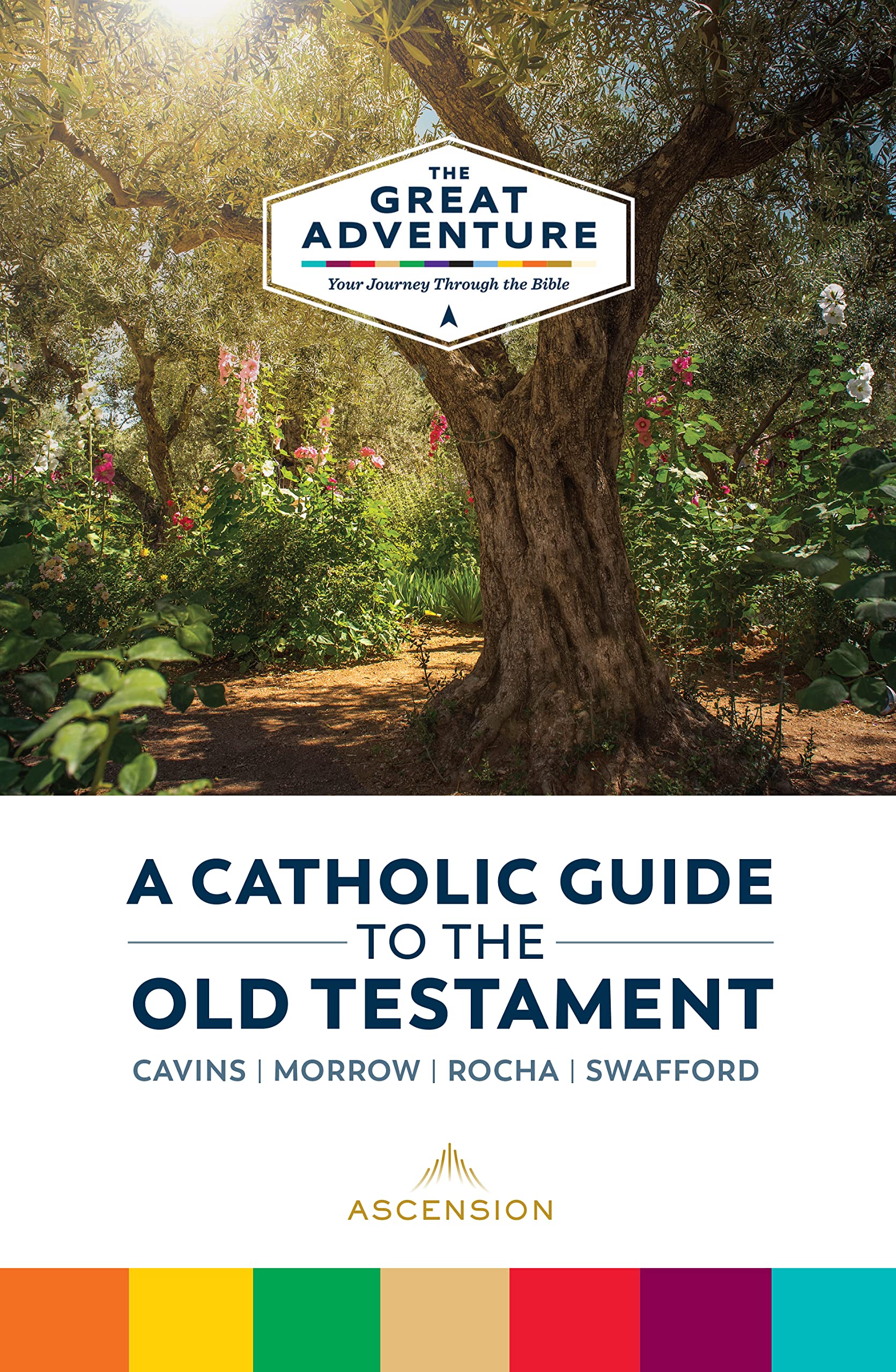
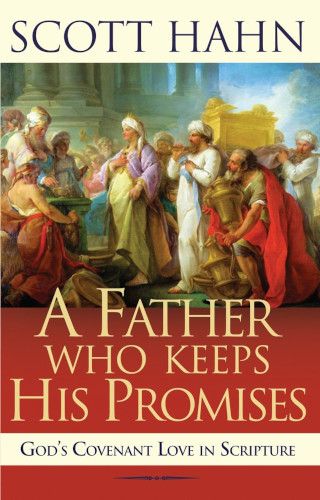
- A Father Who Keeps His Promises: God's Covenant Love in Scripture
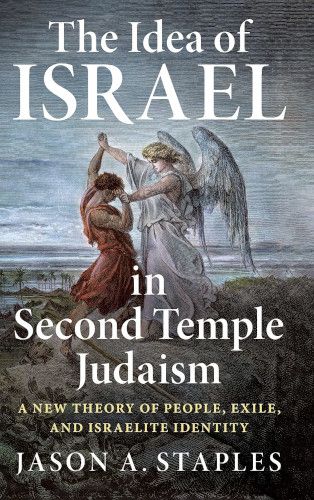
by Scott Hahn - The Idea of Israel in Second Temple Judaism: A New Theory of People, Exile, and Israelite Identity
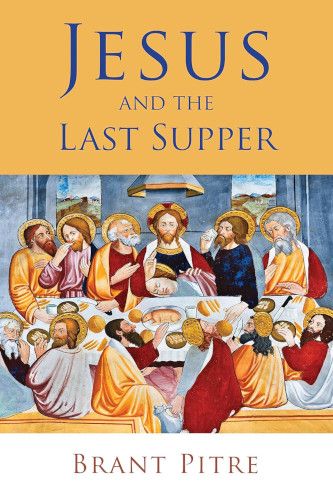
by Jason A. Staples - Jesus and the Last Supper
by Brant Pitre - Acts and the Isaianic New Exodus
by David W. Pao - God with Us: Encountering Jesus in the Gospel of Matthew
by Edward Sri
...and some extra recommendations... - Sin: A History
by Gary Anderson - Wages of Cross-Bearing and Debt of Sin
by Nathan Eubank - Sacramental Charity, Creditor Christology, and the Economy of Salvation in Luke's Gospel
by Anthony Giambrone - Paul and the Gift
by John M.G. Barclay
What is typology?
Typology is the study of how the persons, places, events, and institutions of the Old Testament prefigure greater realities that come in the New. It is the rhyme scheme of salvation history.
It goes even further than that. There is typology within the Old and the New Testaments. It crosses over from mere literary figure into the sacraments and the life of the Church.
For example, the feeding of the five thousand has a direct connection to the Eucharist. This miracle of Our Lord's prefigures the greater reality to come in the gift of the Blessed Sacrament of the Eucharist.
Primarily, typology moves from the Old Testament to the New. However, there are further layers of typology both within the Old Testament, taken by itself, and the New Testament by itself. Furthermore, typology is fulfilled not just in the New Testament as a literary text, but in the life of the Church and, ultimately, in the sacraments.
How does typology relate to the fourfold meaning of Sacred Scripture or overlap with it?
That is a great question because my students always ask why typology is not one of the four senses.
Traditionally, there are four senses of Scripture: the literal, the allegorical, moral, and the anagogical.
The literary-historical sense corresponds to what the human author intends to say. However, God speaks through and beyond the human author and so the meaning of biblical extends beyond their ancient context.
The allegorical sense is very like typology. It deals with the way in which things, such as the Passover lamb or the exodus, mean something in the Old Testament but point to something greater to come when read in the light of Christ.
There is the moral sense. What does this passage mean in terms of my life in Christ.
There is the anagogical sense. Anagogic means ‘to lead up to’. The anagogical sense of a passage is the way it points to my ultimate end in heaven.
I tend to think of typology as a way of unifying all four senses. This is how Aquinas explains it at the opening of the Summa theologiae (I, q. 1, a. 10). Like us, God can signify things with words. The word ‘dog’ signifies the concept of some reality. It signifies this four-legged animal that barks. However, in his providence, God can use beings to signify further things
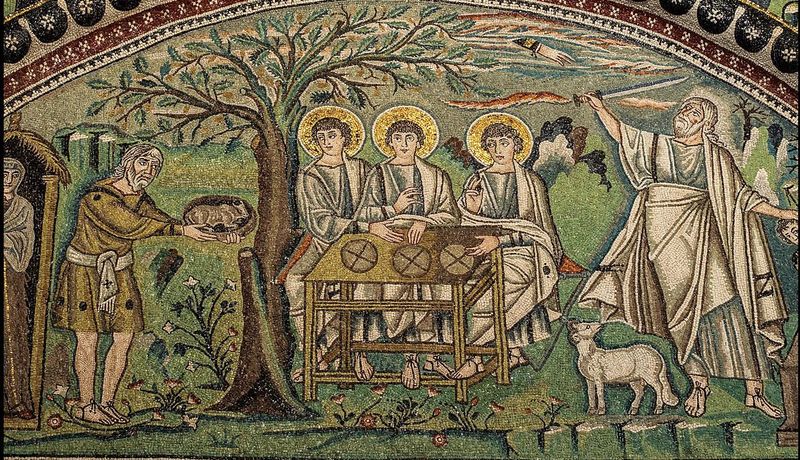
For example, the story of the Passover lamb in Exodus refers to a historic, Old Testament reality. However, the Lord uses that thing to point beyond itself toward something greater to come. God can do this because he is the Lord of history.
The anagogical sense is a kind of a vertical typology and indicates how the earthly signifies the heavenly.
Typology unifies the four senses. The literal sense points beyond itself, not only horizontally and historically, from the Old to the New, but also vertically and metaphysically. The promised land becomes a type of heaven itself. The battles fought to attain it become a type of our spiritual struggles to attain the ultimate promised land, heaven itself. As to the moral sense, Our Lord's life becomes a type for what the Spirit wants to do in us. That which happened to the head will be recapitulated in through the body.
"Typology is fulfilled not just in the New Testament as a literary text, but in the life of the Church and, ultimately, in the sacraments. "
You just mentioned how God also signifies through events or things, and that evokes an Augustinian scholastic concept of the thing and the sacrament, res et sacramentum. Does typology refer to the same thing as St. Paul’s teaching on Christ as the manifestation of God’s hidden plan (mysterion, sacramentum).
That is a great way to put it. There is St. Augustine’s great line, quoted in the Catechism (n. 129): “the New Testament lies hidden in the Old and the Old Testament is unveiled in the New.” The New is hidden in the Old by way of types or foreshadowings. The Old is unveiled in the New because we the reality that the type signified and foreshadowed.
This is a sacramental worldview. We can think of it philosophically. God’s creation comprises everything that we see. It is good but it points beyond itself. It participates in something even greater: God himself. The same occurs in Scripture. What we read is real and good—there is ontology there—but points beyond itself.
Upon hearing a discussion of biblical typology, some might think that it is the preserve of biblical scholars. Is it instead something that everyone needs to learn about and how to detect it, like the Ethiopian Eunuch that Phillip meets?
Yes. It makes the whole Bible come alive.
I love reading Augustine’s Confessions with students. In Book Five, he talks about how the Old Testament was a stumbling block for him and how, by teaching him to read the Old Testament spiritually, St. Ambrose really opened the door for his full conversion.
Think about how we read Exodus in the liturgical readings of Lent. We go through the wilderness because Exodus is not just about the past. It is also about the present and our life. When you are attentive to how the Old foreshadows the New and the New fulfils the Old, you look at the two together. This is what the spiritual senses do.
I tell my students that we need to read Scripture both historically and theologically. Scripture is rooted in time and place. The events narrated did not take place on Middle Earth. God did not drop down some philosophy for us. He became one of us. He entered space and time. Hence, history matters. However, you do not want to get stuck there and then and lose all sense of how Scripture speaks to us now. You also need to read it theologically and spiritually. The liturgy accomplishes this for us. The fourfold senses of Scripture help us to read Scripture as a living word of God's. Typology is front and centre for Catholics of all stripes. It allows them to enter Scripture, not just as a dead letter, but as a living word of God that needs to be read from the heart of the Church and from Sacred liturgy. The liturgy really makes salvation history present for each of us.
You have mentioned that there are layers of typology within Sacred Scripture. If I have understood you correctly, you are saying that there is not just the connection between the New and the Old Testaments. Typology is playing out within the Old Testament. For example, the prophets interpret their setting in the light of the God’s past interventions. The prophets look back at Sinai and foretell a New Covenant. They look back at David and foretell the sending of a new David, the Messiah. Is this a form of typology?
Exactly. First, there is the exodus out of Egypt. Then, Isaiah uses that language to describe the return to the promised land from the Babylonian exile. All this points to the ultimate, new exodus through our Lord Jesus Christ: an exodus from sin, death, and the evil one. There are all these layers.
Here is another exciting example. Ancient Israel comes out of Egypt. It is not just a political liberation. The exodus terminates in liturgy and worship. There is a great banquet setting in Exodus 24. After they come out of Egypt, the Sinai covenant is ratified. The word of God is proclaimed and Moses offers a sacrifice: “Behold the blood of the covenant” (24:8). This culminates with a banquet on on the top of Sinai where they eat, drink, and behold God (24:9-11).
Later, the prophets, see that event as a prototype of a messianic banquet in God’s presence that will be the culmination of the future new exodus (Isaiah 25:26). Of course, that is fulfilled in Jesus and the Last Supper. Still, Isaiah is already seeing this.
When the church reads the Bible typologically, it is simply imitating the way the Scriptures themselves read Scripture, whether it is Isaiah or the New Testament authors.
1.
You have recommended several academic books. Which book are your lists are more accessible to the non-specialist?
A Father Who Keeps His Promises by Scott Hahn is a timeless classic that is accessible to everybody. It deals with many of the ideas we are talking about. It gives an overview of salvation history. There is a lot on the Pentateuch, the five books of Moses. Starting with the foundational moments of salvation history—creation, Abraham, Moses— it shows howmany things to a head with David and the divided Kingdom. This sets the template for what our Lord does in the New Covenant, through the new exodus. This book is a great entryway into typology, the Bible, and thinking about Scripture theologically.
One my theological heroes is Matthias Scheeben, maybe the greatest nineteenth-century theologian no one has ever heard of, though he is making a comeback. He understand the reality of grace. What Our Lord has done for us is not simply a divine acquittal, but, through grace, we can share in the eternal sonship of our Lord Jesus Christ.
Scott Hahn describes his conversion as studying Scheeben and then studying the covenants.
"A covenant is a family bond, so when God brings us into this covenant, we are not just defendants who are now acquitted, nor employees who hope we do not get fired. God makes us his children and we become part of his family of God."
Hahn described this whole process as digging a tunnel from two sides: vertically and metaphysically with Scheeben concerning the order of grace; historically and horizontally with the covenants.
So, Hahn is not just a Scripture scholar, but one who is attentive to the deep philosophical and theological dimensions of scripture. That might sound lofty to the average Catholic, but it is very important and it is easy for Scripture scholars to lose sight of its theological and philosophical dimensions whenever they are looking only at its grammar, syntax, or the historical and cultural setting. Hahn gives you the whole package.
I cannot recommend A Father Who Keeps His Promises enough. I have seen high- schoolers, college students, and adults read it. It is timeless book that is very helpful.
"Over the last thirty or forty years, there has been a movement within scholarship that emphasises the Jewishness of Jesus, Paul, and the New Testament."
A first sight, there does not seem to be unifying criterion to the books you have selected. None of the books is on typology as such. Rather, each book focusses on a particular strand of typology. Is that an accurate description of your selection?
Yes, that is right. Hahn talks most directly about typology. So does another popular book that I have selected: Dr. Edward Sri’s God With Us, a revised edition of his Mystery of the Kingdom. It is a very accessible little commentary on Matthew. This book played a part in my conversion because it helped me connect Jesus to the Church. When Dr. Sri was my teacher, he used to say that you cannot love the king and hate the Kingdom.
When you see what Jesus has done and what the Kingdom means, you realise that it is the fulfilment of the story of ancient Israel. It helps you connect the dots not only between Jesus and Israel, but also between Jesus and the Church.
Many people say things like, “I love Jesus, but get that Church thing away from me!” or “I am spiritual, but not religious.” Sri’s God with Us can help us overcome that and see how Jesus and the Church are connected.
You are right to say that the other three books are more academic, with the possible exception of Pitre’s. His Jesus and the Last Supper is the academic version of his more widely known Jesus and the Jewish Roots of the Eucharist.
It is a fantastic book. Pitre told me once that it represents ten years of his life and you can tell when you read it. It is extremely well researched. It defends the historicity of Jesus, puts him in context, and makes sense of his Jewishness. At the same time, it shows how the Jewish Jesus is the Catholic Jesus.
Over the last thirty or forty years, there has been a movement within scholarship that emphasises the Jewishness of Jesus, Paul, and the New Testament. Previously, one could easily claim that Jesus was spiritual or religious and so against the priesthood, the liturgy, and the Church, as if he were some hippie prophet who told us just to love people. Of course, he does tell us to love people, but there is a lot more going on than that. With the Dead Sea Scrolls and all kinds of recovery of the Jewish context of the New Testament, even non-Christian scholars see the priestly Jesus, the liturgical Jesus, the sacramental Jesus, the ecclesial Jesus, and this all makes perfect sense given the Jewish context. It shows the continuity of the Jesus of the Catholic Church. For a long time,—and I do not mean this pejoratively—Protestants dominated biblical scholarship. They often looked on the Jews as cyphers for Proto- Catholics, focused on works, the law, priesthood, liturgy, and sacrifice. Over the last forty years scholars of all stripes have tried to debunk that. This has paved the way for seeing a Jewish Jesus as a Catholic Jesus.
There was this deep movement to regather all Israel and the twelve tribes. At the end of his book, Pitre speaks of the “Eucharistic restoration of all Israel.” The story of Israel finds its fulfilment in the Eucharist. This scholarship is not going to save the Church, but it can remove many obstacles for people in academic circles. We can see that there is a continuity between 200BC and 200AD, when Church Fathers, such as Ignatius of Antioch, say that the Eucharist is the flesh of Jesus Christ.
Jesus taps into the context, hopes, and expectations of the Jews of his day. He speaks beyond them and through them to something that transcends them.
That brings us into the theme of Second Temple Judaism, the background of some of your recommended books. What is Second Temple Judaism?
Babylon destroys the temple in 586 BC. Ostensibly, that ends the divided Kingdom, the Davidic dynasty. Second Temple Judaism spans the period from the rebuilding of the temple in 515 until the destruction of second temple by the Romans in 70 AD. It is the Judaism that leads up to Jesus and constitutes the background to the New Testament. Its cut-off is the Bar Kokhba revolt in 135 AD. The Dead Sea Scrolls, and various other Jewish texts that have been uncovered, give us a window into the Jewish backdrop of Jesus's day of Paul's day.
What is exciting about this scholarship is the discovery that there are many different strains within the Jewish hope. Some were hoping not just for a political kingdom but a messianic banquet, a new temple, a new sacrifice, a new liturgy, and new priests. They were on to the things that Jesus fulfils in a transcendent way.
2.
That ties into the next book on your list: The Idea of Israel in Second Temple Judaism by Jason A. Staples. He argues that Christianity develops some of the varied beliefs about Israel’s identity and restoration that were circulating during Our Lord’s lifetime. Which strands of biblical typology does this book help us understand.
The big idea in that book is that, strictly speaking, Israel and Jew do not mean the same thing in the ancient texts. We might use the word different today, but ‘Jew’ means one who comes from the tribe of Judah. Strictly speaking, not all Israelites are Jews. This is important.
The reign of David and Solomon is a high-point in the Old Testament narrative. They reign over all twelve tribes of Israel. God dwells in the temple that Solomon builds. The surrounding nations come to the temple. The. Queen of Sheba comes to it to hear the wisdom of Solomon. In 1Kings 8:41-43, Solomon is praying and makes the fifth of seven petitions: “Likewise when a foreigner, who is not of thy people Israel, comes from a far country for thy name’s sake (for they shall hear of thy great name, and thy mighty hand, and of thy outstretched arm), when he comes and prays toward this house, hear thou in heaven thy dwelling place, and do according to all for which the foreigner calls to thee.” During this brief period David and Solomon reign over all twelve tribes, God dwells in the Temple, and the surrounding nations are coming and joining God’s covenant family.
All this falls apart around 931 BC, when the Kingdom is divided. Nevertheless, the brief reign of David and Solomon is a golden age that sets a template for what Jesus will bring about. It prefigures in an imperfect, earthly way that which Jesus fulfils that in a heavenly way.
The Kingdom is divided. Then, in 722 BC, the Northern Kingdom is overrun by Assyria. The ten northern tribes are deported or scattered. Some of them go south, but basically you never hear of them again as the ten tribes. They are the lost tribes of Israel.
The Southern Kingdom continues until 586 BC. Though it consists mainly of Judah, it also comprises the tribe of Benjamin and some of the Levites. That kingdom is destroyed and taken into exile. When the Judahites return from Babylon, you are talking about a subset of ancient Israel.
Long story short, the story of Israel is inherently wrapped up with that of the nations for two reasons. With David and Solomon, it already had the aspiration of including all the nations. Indeed, it had started to include them. Two, when the Northern Kingdom is destroyed the scattered northern tribes are intermingled with the nations. The only way to regather all Israel is to regather the nations. Hence, when St Paul is evangelising the Gentiles in Corinth or Galatia, he thinks, as many scholars point out, that he is bringing to fulfilment the story of Israel. This is because the Israelites are scattered among the nations.
The deep, subterranean narrative of the Bible and the New Testament is the regathering of all Israel and the twelve tribes. The new temple, new priesthood, new leaders (the twelve apostles), and the new sacrifice are all wrapped up with the nation.
Israel and Jew do not mean the same thing. This is pivotal for understanding the New Testament. When St. Paul speaks of the Church, for example, you need to be careful to not fall into supersessionism and so into the antisemitism that has been part of the Christian tradition. When Paul refers to the Church as the Israel of God (Galatians 6:16) or the Jerusalem above as our mother (Galatians 4:26), or when he speaks of all Israel being saved (Romans 11:26), he is really talking about this eschatological gathering of the people of God, where Israel and the nations come together in Jesus Christ and into one new covenant family. That is really what is going on there.
Staples helps us see that the story of Israel typologically. The story of Israel, especially with David and Solomon, becomes a type of what Jesus is restoring and elevating in the New Covenant through the Kingdom of God. When we move from the Old Testament to the New, there is some discontinuity but, by way of typology, also a deep, underlying continuity.
3.
We have already spoken of the second book: Brant Pitre’s Jesus and the Last Supper. It focuses on the New Testament descriptions of the Eucharist. The New Testament authors underline how the Eucharist is the fulfilment of the Passover, the blood of the Sinaitic Covenant, the manna, the bread of the presence, and other events in the Old Testament. Pitre has also published a version for the non-specialist reader: Jesus and the Jewish Roots of the Eucharist. Do you recommend these books because biblical typology is essential to understanding the Eucharist, the sacraments, and the liturgy?
Absolutely. We can talk about how Christ is present among us in the Eucharist and how the eucharistic sacrifice makes present the Paschal mystery. However, we are not going to really enter the mystery of the Eucharist until we understand the things it presupposes: the Passover, the Manna, or the bread of the presence.
Typology is the divine pedagogy by which God teaches his people. Like a good teacher, he draws them from what they know to what he is trying to teach them. He prepares ancient Israel by way of types and foreshadowings. We do well to make that same journey: to understand the prefigurations of the Old Testament to better appreciate the great mystery of the Eucharist.
At an apologetic level, it allows us connect doctrine and history. Some may say, “Okay. You cite St Ignatius, St. Augustine, other Church Fathers, and the Catechism. How do I know that this is what Jesus and apostles taught?” Once again, bringing in Scripture and typology allows us to show that the Catholic Jesus is the Jewish Jesus. The Church is not making things up but is drawing on what Jesus revealed to us.
4.
Your fourth pick is on the Acts of the Apostles. According to this study, St. Luke describes how Christ our Redeemer and the Church fulfil Isaiah’s prophecy of a New Exodus. Why do we need to appreciate this connection between Isaiah and Acts?
This is the dissertation that David Pao wrote at Harvard, so it is an academic book.
Catholics may think that the Kingdom and the new creation exist in the future, in heaven, when all consumed at the end of time. In a sense, that is true. However, as we often say, it exists already, but not yet. St. Paul says that anybody who is in Christ is a new creation. There is a deep sense in which the Kingdom is already here. Wherever Jesus is, there is the Kingdom, and wherever the Eucharist is, there is the king.
Take one example: Acts 1:6. The apostles ask Jesus if he will now restore the Kingdom. Typically, we respond by supposing that the apostles are silly and still do not get it. However, as Acts 1:3 makes clear, Jesus has been talking to them about the Kingdom for forty days. They are not asking a silly question. Then, Jesus gives a roundabout answer (1:8): “You shall be my witnesses in Jerusalem and in all Judea and Samaria and to the end of the earth.” That is a Davidic roadmap. Jerusalem is the ancient capital of the Davidic Kingdom, which was then reduced to the Southern Kingdom. By being Christ’s witnesses in Jerusalem, they are restoring the Southern Kingdom. Samaria was the last capital of the Northern Kingdom. They are going to restore the Davidic Kingdom, with all twelve tribes. In Acts 1-7, the apostles are in Jerusalem. In Acts 8-9, they go to Samaria. Then there is the call and conversion of St. Paul. He takes the Gospel to the nations and ends up in Rome.
So, Acts 1:8 is about how, over the course of Acts, the Kingdom will be manifested systematically in the life of the Church.
As Pao explains in detail, St. Luke, the author of Acts, is showing how Isaiah's prophecy of a new exodus is fulfilled in the life of the Church. Luke shows how this this ancient hope and prophecy of the Kingdom and a new creation is not simply fulfilled in the future but is already here.
The Catechism (n. 1010) speaks of Christian death in this way. For a Christian, what is new about death, it says, is that “the Christian has already ‘died with Christ’ sacramentally, in order to live a new life; and if we die in Christ's grace, physical death completes this ‘dying with Christ’ and so completes our incorporation into him in his redeeming act:” However, do we believe that? Do we believe that, in Christ, the old age has come to an end and the new one has already dawned, notwithstanding the remnants of the old age.
Some of the ancient Jews distinguish between ‘this age’, the Haham Hazar, and ‘the age to come’, the Hallam Habah. What is new in Christ is that ‘the age to come’ is already here. We see this in the sacraments, in the Eucharist, and life of the Church. Heaven is not just a place we hope to get to. It is that. However, through grace, the seat of glory, we already share in that heavenly reality.
Indirectly, Pao’s book helps us to see that Isaiah’s ancient hopes are already fulfilled in the life of Jesus and, during Acts, in the Church.
5.
You have just talked about the Kingdom and the king. The Messiah is also the focus of the next book. Edward Sri’s God with Us focuses on Matthew’s presentation of Jesus as the Emmanuel, king, and Messiah. Why is this book on your list?
It helps us connect the dots between Israel and the Church.
When Peter makes his great confession of faith in Matthew 16— “You are the Christ, the Son of the living God”—Jesus says, ““Blessed are you, Simon Bar-Jona! For flesh and blood has not revealed this to you, but my Father who is in heaven. And I tell you, you are Peter, and on this rock I will build my church, and the powers of death shall not prevail against it. I will give you the keys of the kingdom of heaven, and whatever you bind on earth shall be bound in heaven, and whatever you loose on earth shall be loosed in heaven.”
We might think that the keys are a symbol of authority and associate this passage with the institution of the papacy. While all this is correct, it is worth recalling the Old Testament background of this passage. Sri does this in an exquisite and accessible way.
As many Protestant scholars note, Jesus is referring to Isaiah 22. In the Davidic kingdom, there was the office of Ba'al Ha-Bayit, literally, the one who is over the house. The holder of this office was second in command and had the authority to govern in the king's name whenever the king was away. In 2Kings 15:5, God smites King Azariah with leprosy and the Ba'al Ha-Bayit, who happens to be his son, rules in his stead. Joseph is second in command to Pharaoh and Genesis describes him as the Ba'al Ha-Bayit. Isaiah 22:22 states that the Ba'al Ha-Bayit’s authority is signified by “the key of the House of David,” and that he has the authority to open and to shut.
This parallels Matthew 16 directly. There, Jesus speaks of the keys to the kingdom of heaven and the authority to bind and loose. Jesus is the ultimate Davidic king and the Messiah. However, he is going to depart. So, he is setting up Peter as the new Ba'al Ha-Bayit in the Davidic kingdom. Hence, the Ba'al Ha-Bayit of the Old Testament become a precursor of Peter in the New. They also become a precursor of Peter’s successors because the keys signify an office, and an office lasts for as long as the kingdom does. It is an office that implies succession. So, the Ba'al Ha-Bayit of the Old Testament becomes a foreshadowing of the papacy.
Immediately after Matthew 16:13-20, Jesus starts to foretell his Passion. This episode occurs in Caesarea Philippi and is as far north of the Sea of Galilee as Jesus goes. From then on, he sets his eyes on Jerusalem, where he will die on the cross. N.T. Wright puts it this way. There has been a lot of talk about why Jesus died, but less talk about why he lived. What you start to see here is that he is establishing the Church, the family of God that is centred around the sacrament of Eucharist.
In a very accessible way, Sri’s book brings out how the Jewish backdrop of Jesus, which is connected to the story of Israel, shows how he is connected to the Church. The Church and the sacraments are not add-ons to Jesus, but central to what he give us.
Moreover, Jesus has not left us. He is still with us and continues to teach us through the bishops and the Church. Jesus did not drop a book and leave. He is with us: wherever two or three gathered in his name; in the poor; in the Scriptures; in the ordained priest; and, in a singular way, in the Blessed Sacrament.
"The Catechism is not separate from the Bible. It makes explicit and unpacks what is already there in the Scriptures."
You have given some extra recommendations. There seems to be a common thread running through them, beginning with Gary Anderson’s Sin: A History. It studies how sin is described initially in Scripture as a burden but, as in the Lord’s Prayer, comes to be conceived in terms of debt. He argues, moreover, that this is the basis for the biblical teaching on Redemption and merit. Nathan Eubank’s Wages of Cross-Bearing and Debt of Sin continues Anderson’s line of research. Eubank studies the Gospel of Matthew, a book to which Anderson gives scant attention. Indeed, Eubank argues that understanding Matthew’s talk of debt and wages is essential to a proper understanding of the first Gospel. Anthony Giambrone also focuses on how the Gospel According to Luke uses monetary language and almsgiving to explain the nature of charity and our redemption. In Paul and the Gift, John M.G. Barclay studies St. Paul’s teaching on grace and whether it stands in opposition to Second Temple Judaism or in continuity to it. How are these books on typology?
These books are very helpful. Gary Anderson's is probably the most accessible one, even though it is an academic book. Eubank’s was his dissertation. Giambrone is a Dominican.
These three are Catholics. In the wake of the Reformation, Catholics have become nervous about merit and of being accused of a righteousness of works. The Church still teaches about merit, as in the Catechism, for example. Moreover, Scripture provides a deep foundation for the doctrine of merit, not just in the New Testament, but also with its Jewish backdrop. This is picked up by the Church.
The Jewish backdrop is grounded in an order of grace. The Jews did not believe that they could earn their salvation. The whole gift of the covenant is predicated upon grace.
Sometimes, I compare it to the allowance that I might give my kids. I might even attach a condition to the allowance and only give it as reward for doing something. This occurs within the context of the family life and it is my way of helping them mature. The kid down the street could not do the exact same thing and expect to receive the reward or allowance. The point is that there is a place for merit, but it is not something mechanical. Dramatically, God always overpays. Fundamentally, Jesus merits our capacity to merit. Merit consists of the good works we perform in Christ, as part of God’s family: as sons and daughters of the Father. These works are meritorious in God's eyes and the father rewards them. Matthew speaks of wages (mistos), indeed heavenly wages. It is not a matter of our earning our salvation. Instead, it is a matter of God wanting us to be conformed to Christ. We receive the gift of salvation and of belonging to God’s family. With that gift, there is a place for our cooperation with grace. This is the place for works.
Anderson's book is about sin as debt. The flipside of that is that works are credit.
Anderson ends with St. Anselm. Does the Bible really teach that Christ, by dying on the cross, redeems and ransoms us from sin? Anderson shows that this idea is not the result of imposing a certain philosophical analysis upon the Scriptures but is Scriptural. We have become enslaved to the evil one through sin and we need to be brought back. That is what redemption means. Of course, God could have done this in any number of ways. One drop of the God-man’s blood would have been infinitely abundant and meritorious in God's eyes. However, he has wanted to come down to us, redeem us, and even to pay the debt.
We need to respond to that. Jesus did not go to cross so that will not have to. He went to the cross so that we can participate in that work: so that our suffering can also be redemptive. It is all about recapitulation. As St. Augustine says, whatever happened to the head, will happen to the body. Jesus goes the cross, not as substitute, but as our head and in solidarity with us. He goes to empower us to do the same.
The Catholic Church has always taught all this. These books show how these doctrines are grounded historically in the Scripture and not added onto it. They are an organic part of the biblical teaching.
John Barclay, the author of Paul and the Gift, is not a Catholic. Barclay shows that, though we tend to think that a real gift has no strings attached, this is not how the ancient world thought of gifts. Rather, a gift was the foundation of friendship. Gifts implied reciprocity.
Seneca talks about them as a game of catch. They keep the ball in the air. This is how friendship is built. Paul taps into this notion of gift when he employs the language of grace. The gift of the Holy Spirit is the gift of God that empowers our reciprocity. It empowers our good works. It does not come with no strings attached. Rather, it is a gift that empowers us. By giving us it and working through us, God expects us to make a gift of our lives in return.
Once again, we are back to the Catholic doctrines of grace, faith, and the need for good works. Here, however, they are shown in a deeply biblical way by a Protestant theologian. Exciting developments in biblical scholarship, such as this one, have changed the whole context of the debate over faith and works dramatically and in so many ways.
Barclay has also written a shorter, more accessible version of Paul and the Gift: Paul and the Power of Grace.
These books help Catholics know that their faith is biblical. It comes from Jesus and the apostles. The Catechism is not separate from the Bible. It makes explicit and unpacks what is already there in the Scriptures.